
About
How it works
Japan Trains Live is two things: a live map of trains moving across Japan's rail network, and an encyclopedia of the lines, trains, operators, and rolling stock behind it. Here is how both are built — and why a given train is, or isn't, on the map right now.
Why trains appear and disappear
The moving dots are not a GPS feed. Each train is placed by following its published timetable: the app takes the schedule for a service running today, finds the two stations it is travelling between at the current moment in Japanese time, and positions the dot along the actual track between them.
A train appears only while it is scheduled to be running. It joins the map when its departure time arrives and leaves once it completes its final stop. Because the clock runs in real Japan time, the active-train count rises and falls through the day — busiest at the morning and evening peaks, nearly empty overnight.
A line shows track but no trains when we don't yet have a timetable or a frequency estimate for it; coverage grows as more operators' schedules are added. You can also hide whole categories — Shinkansen, metro, regional, local — from the Trains panel, in which case those trains simply aren't drawn.
Scheduled vs Estimated
Every train carries a small badge showing where its schedule comes from:
- ● Scheduled — the train follows an official published timetable (a railway operator's website or timetable, or an operator-published open-data feed).
- ⚠ Estimated — no public timetable exists for that service, so its running pattern is estimated from typical service frequency (currently derived from OpenStreetMap). The dot still follows the real track, but the exact timing is approximate.
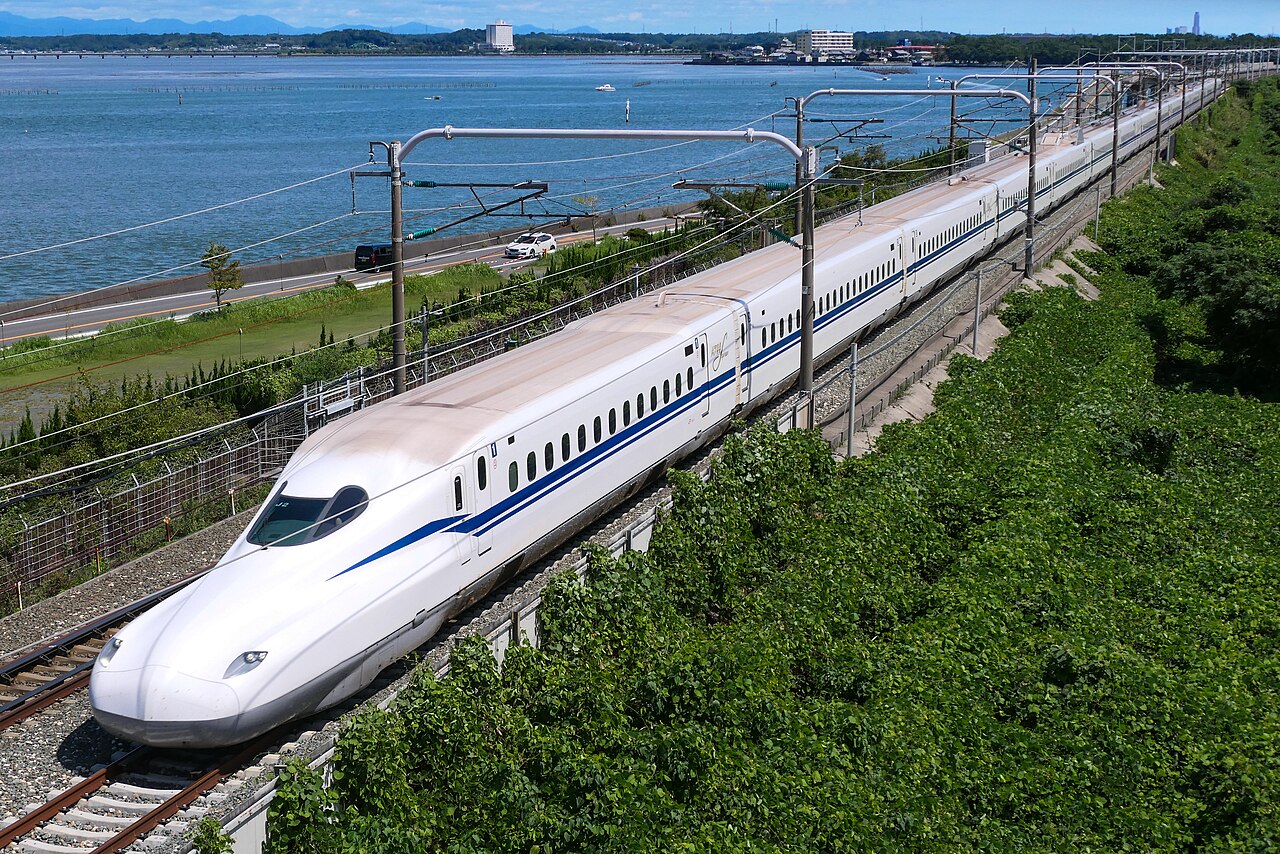
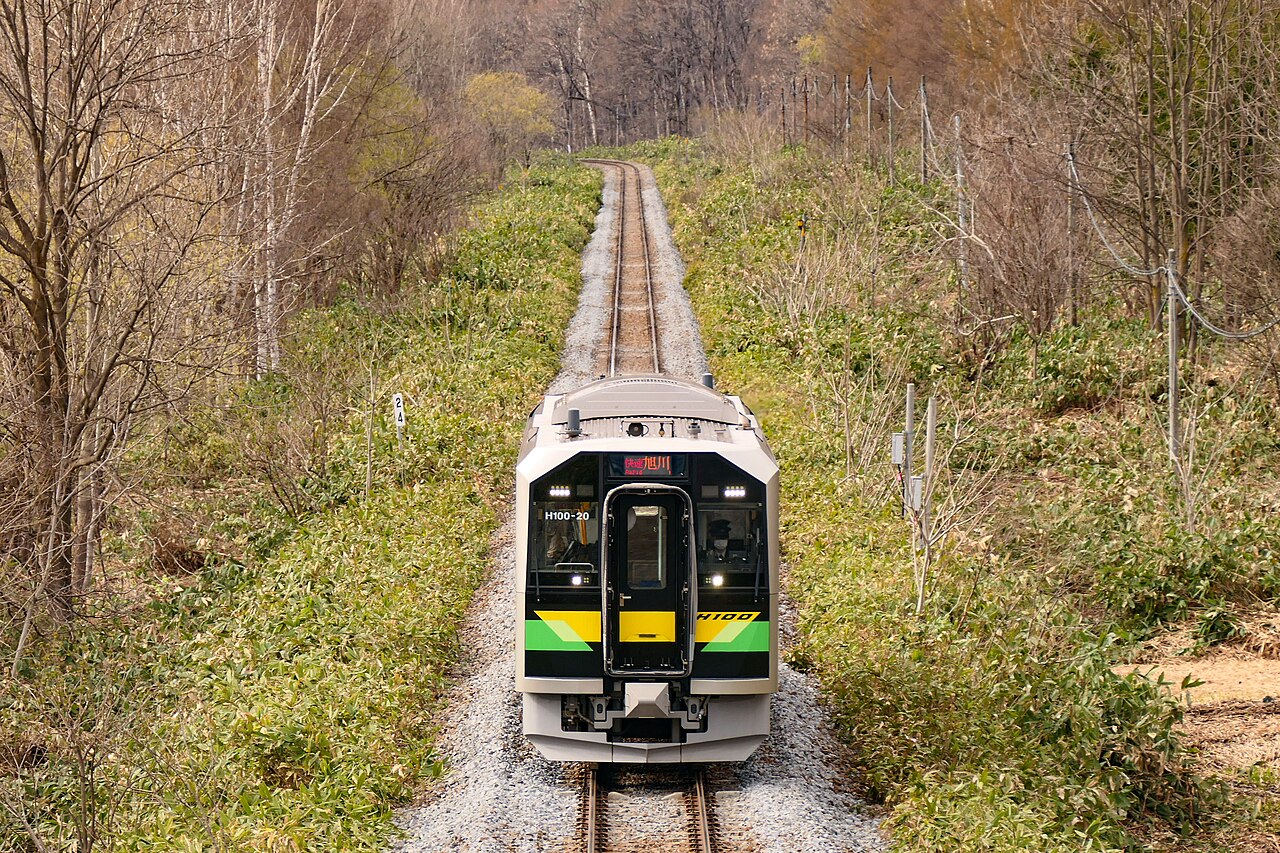
Open any train's card to see the specific source named in full.
Where the data comes from
- Train schedules — official timetables published by the railway operators themselves: the JR companies, the major private railways, and municipal subways, plus operator-published open-data feeds where available. Where no public timetable exists, a frequency estimate is used and clearly marked Estimated.
- The rail network — every line's shape and every station's location come from Japan's Ministry of Land, Infrastructure, Transport and Tourism (国土交通省) National Land Numerical Information, and from OpenStreetMap (CC BY-SA).
- The base map and terrain — Google Maps, with terrain imagery credited to NASA.
- The articles — line histories and rolling-stock, operator, and named-service profiles are written from the English and Japanese Wikipedia and Wikidata, and each article lists its sources.
- The photographs — from Wikimedia Commons. Every image is freely licensed (public domain or Creative Commons) and credited on the page to its photographer and licence.
How we keep it accurate
We work cite-or-skip: a fact appears in an article only if it can be traced to a source. If something can't be verified, it is left out rather than guessed. Article text is drafted from fixed Wikipedia revisions and then independently checked back against those same sources. Every photograph is individually verified to confirm it really shows the subject — and carries a free licence — before it is published. And anything that is an estimate rather than a confirmed schedule is labelled as one.