歴史
路線の発祥は馬車鉄道にある。1891年、川辺馬車鉄道が尼崎・伊丹付近に762ミリメートル軌間の馬車鉄道を開業させた。1893年には摂津鉄道と改称して蒸気動力を導入し、池田駅(現在の川西池田駅)まで延伸した。摂津鉄道の路線は、大阪から舞鶴までの鉄道を計画していた阪鶴鉄道に譲渡され、軌間が1067ミリメートルに改軌された上で、1897年に宝塚まで、1899年には福知山方面へと順次延伸された。1898年には官設鉄道の神崎駅(現在の尼崎駅)に乗り入れ、本来の尼崎方の区間は支線となった。
大阪と舞鶴を結ぶ直通運転は1904年11月3日に完成した。この日、阪鶴鉄道は現在の福知山駅まで延伸し、同日開業した官設鉄道の福知山駅 - 綾部駅 - 新舞鶴駅(現在の東舞鶴駅)間を借り入れた。阪鶴鉄道は1907年8月1日に国有化された。1912年に山陰本線の京都駅 - 出雲今市駅(現在の出雲市駅)間が開通したのを機に、神崎駅(現在の尼崎駅) - 福知山駅間が阪鶴線から分離され、1912年3月1日に福知山線と改称された。
20世紀を通じて福知山線は大阪と山陰方面を結ぶ亜幹線とされ、近代化は緩やかで、1980年代前半までは腕木式信号機が残っていた。設備の改良は1970年代後半からようやく進められた。1934年に複線化された尼崎駅 - 塚口駅間に続き、1979年から1980年にかけて塚口駅 - 宝塚駅間が複線化され、1981年に尼崎駅 - 宝塚駅間が電化された。画期的な変化は1986年で、宝塚駅 - 新三田駅間の複線化(全長2970メートルの名塩トンネルと新線切替を伴い、経路が1.8キロメートル短縮され西宮名塩駅が新設された)と、福知山駅までの全線電化が完成した。国鉄最後のダイヤ改正となる1986年11月1日に全面的に電車での営業が始まり、特急「北近畿」の運転が開始された。複線化は1996年にかけて篠山口方面へと延伸され、残る区間(新三田駅 - 広野駅間、古市駅 - 篠山口駅間)は1997年3月8日に完成した。
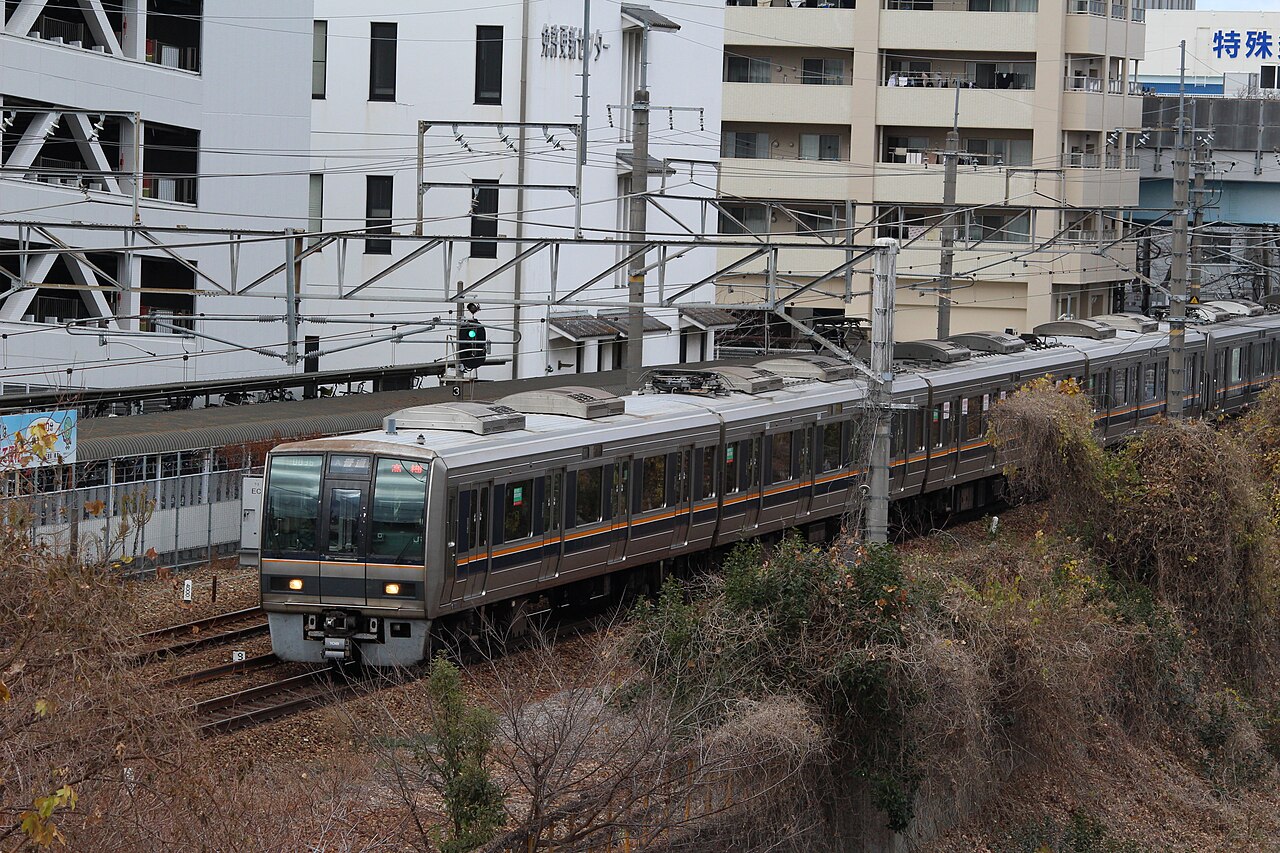
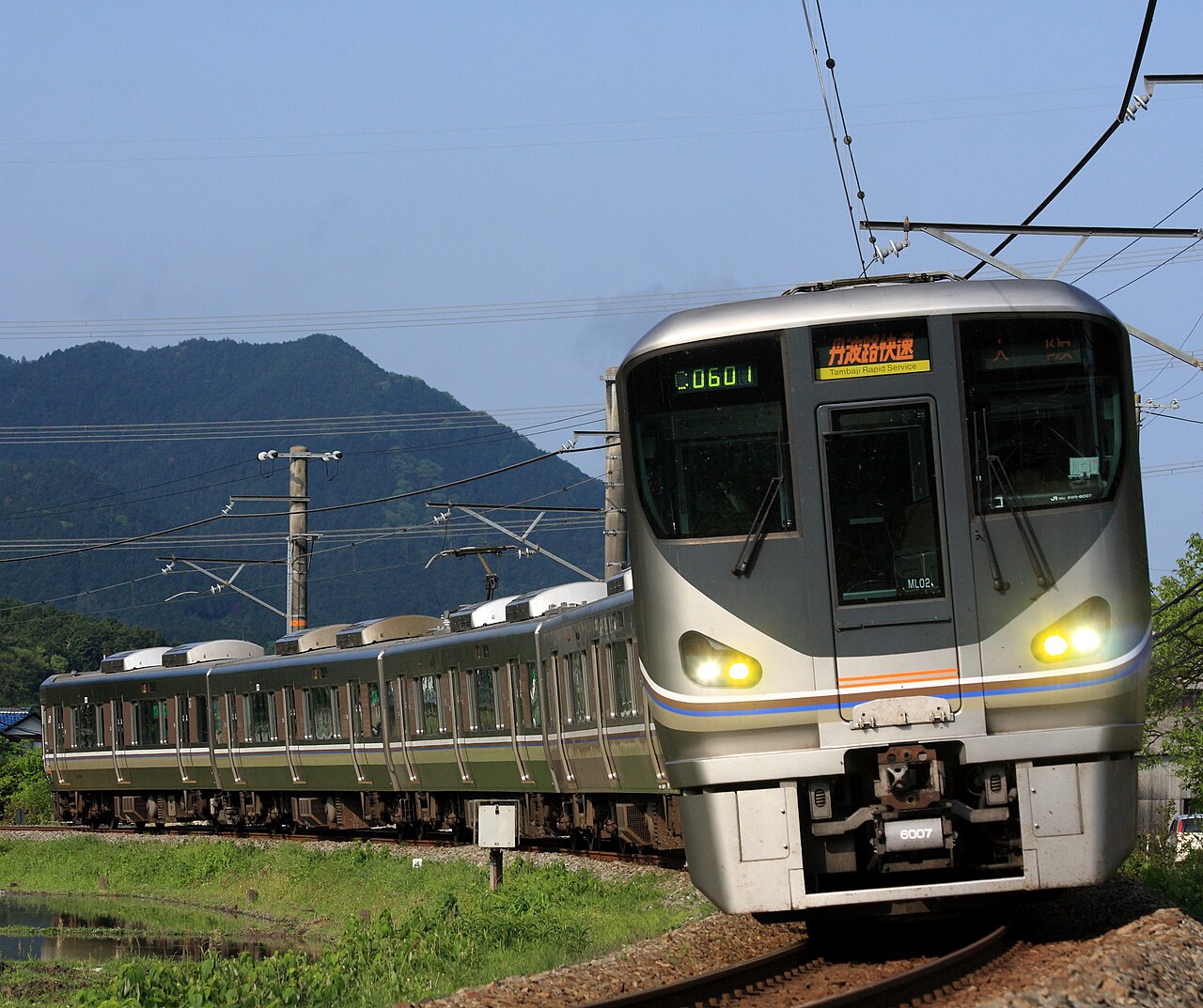
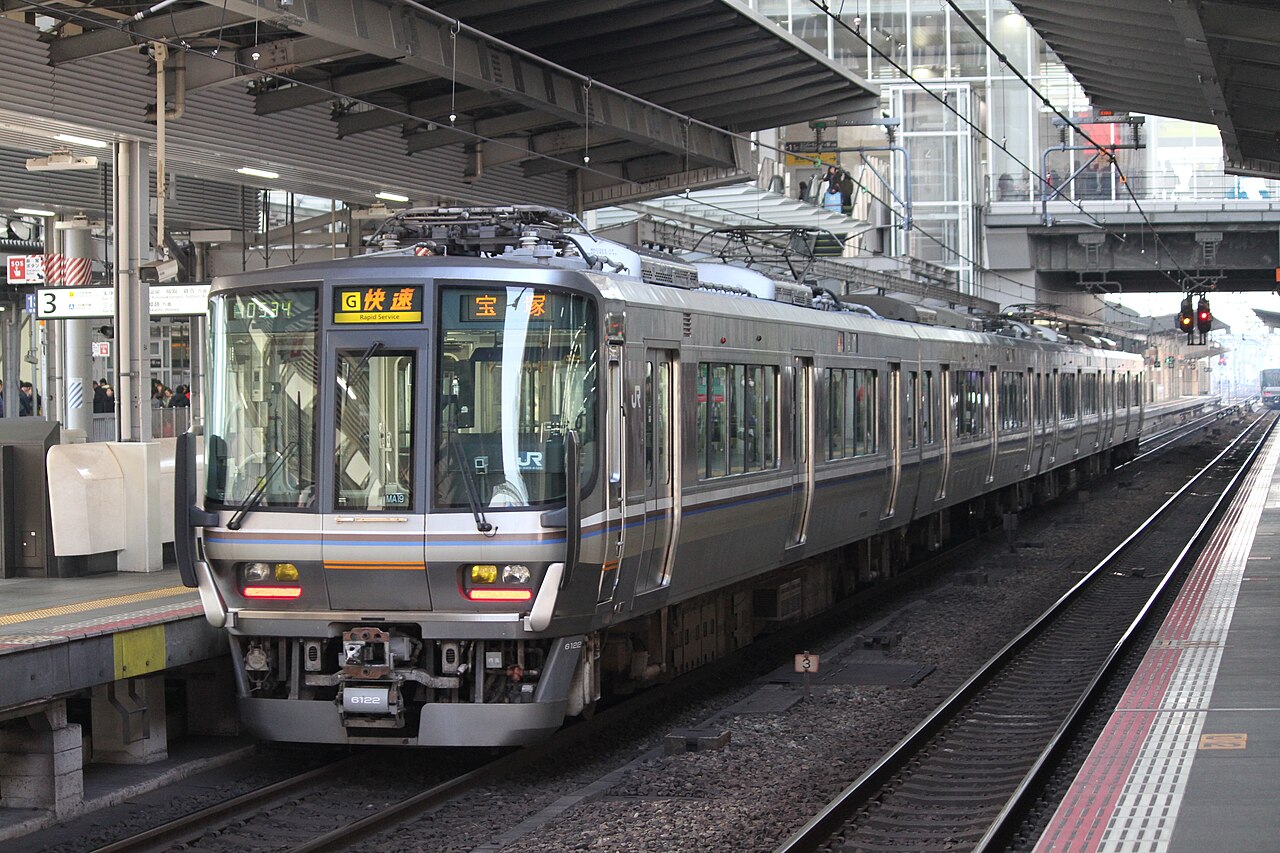
1987年4月1日の国鉄分割民営化により、路線はJR西日本が承継した。大阪駅 - 篠山口駅間はJR西日本のアーバンネットワークの一つに組み込まれ、「JR宝塚線」の愛称が付けられた。阪急にも宝塚線があるため、混同を避けるために「JR」が冠されている。JR西日本は1987年8月に大阪駅 - 新三田駅間の愛称を公募し、「JR宝塚線」は1988年3月13日から使用が開始され、後に地元自治体の要望により愛称区間は大阪駅 - 篠山口駅間に変更された。新型車両も投入され、1993年3月18日に207系電車が、2000年3月11日に丹波路快速(大阪 - 福知山)が、2005年12月1日に321系電車が運行を開始した。現在、全線をJR西日本近畿統括本部が管轄している。大阪駅 - 宝塚駅間では並行する阪急宝塚線と競合している。
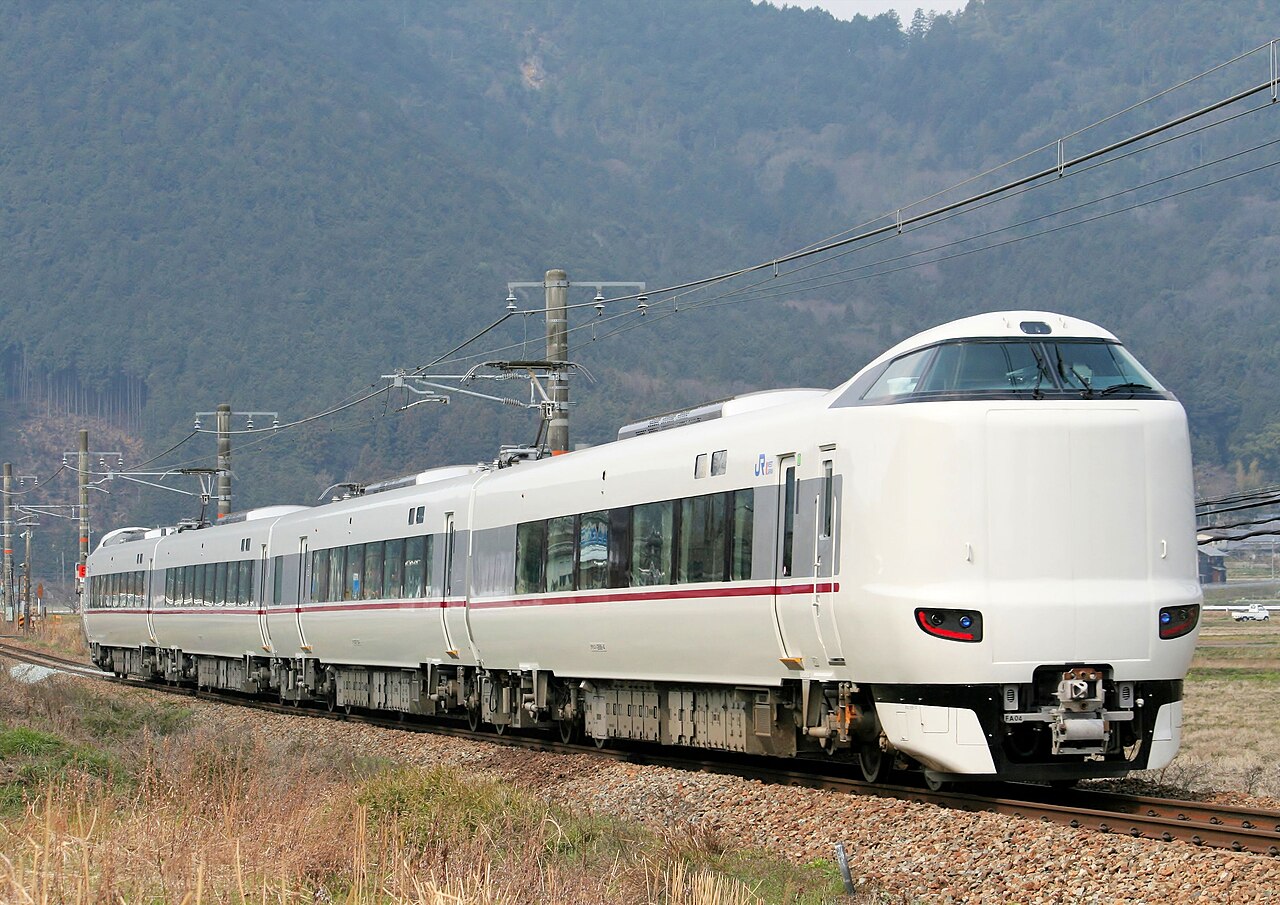
この路線では脱線事故(JR福知山線脱線事故)が発生した。2005年4月25日、JR東西線・片町線経由で同志社前へ向かっていた7両編成の207系電車の快速が、塚口駅 - 尼崎駅間で脱線しマンションに衝突した。英語版の出典によれば、107人の乗客が死亡した。被災した尼崎駅 - 宝塚駅間は試運転が始まる6月7日まで不通となり、旅客営業は6月19日に再開され、同時に尼崎駅 - 新三田駅間でATS-Pの使用が開始された。現在の路線では、普通・快速・区間快速・丹波路快速の通勤列車に加え、山陰方面へ直通する特急「こうのとり」が運行されている。
年表
- 1891The Kawabe Horsecar Railway opens a 762 mm gauge line in the Amagasaki–Itami area (JA: 24 July).
- 1893The operator is reorganised as the Settsu Railway, which introduces steam power and extends the line to Ikeda.
- 1897The Hankaku Railway regauges the line to 1,067 mm and extends it to Takarazuka.
- 1898The line is connected to Kanzaki Station (present-day Amagasaki) on the government railway, turning the original Amagasaki terminal stretch into a branch.
- 1899The line is extended toward Fukuchiyama (reaching Fukuchiyama-Minamiguchi).
- 19043 November: through running between Osaka and Maizuru is completed as the extension reaches the present Fukuchiyama Station and the government line to Shin-Maizuru is leased to the Hankaku Railway.
- 19071 August: the Hankaku Railway is nationalised.
- 19121 March: the Kanzaki (Amagasaki)–Fukuchiyama section is separated from the former Hankaku Line and renamed the Fukuchiyama Line.
- 1934The Amagasaki–Tsukaguchi section is double-tracked.
- 1956The Amagasaki–Tsukaguchi section is electrified.
- 1980The Tsukaguchi–Takarazuka section is double-tracked (1979–1980).
- 1981The Amagasaki–Takarazuka section is electrified (Tsukaguchi–Takarazuka on 31 March; Amagasaki–Tsukaguchi already electrified in 1956).
- 1986The Takarazuka–Shin-Sanda section is double-tracked with the 2,970 m Najio tunnel (shortening the route by 1.8 km); electrification to Fukuchiyama is completed; full electric operation begins on 1 November and the limited express Kita-Kinki is introduced.
- 19871 April: JNR is privatised; the line transfers to JR West.
- 198813 March: the nickname JR Takarazuka Line comes into use for the Osaka–Sasayamaguchi section (publicly solicited in August 1987).
- 199318 March: 207 series EMUs enter service.
- 19978 March: the final double-tracking sections (Shin-Sanda–Hirono and Furuichi–Sasayamaguchi) are completed; through running to the Katamachi (Gakkentoshi) Line via the JR Tōzai Line begins.
- 200011 March: the Tambaji Rapid (Osaka–Fukuchiyama) begins operation.
- 200525 April: a 207 series Rapid train derails between Tsukaguchi and Amagasaki (the Amagasaki derailment); 107 passengers killed (EN). Service resumes 19 June; ATS-P placed in use Amagasaki–Shin-Sanda. 321 series EMUs enter service on 1 December.
出典
事実確認日:2026年6月3日
ギャラリー 6枚
このページの全写真 ― 画像をタップすると原寸大で表示します。すべてウィキメディア・コモンズより(各写真の下にクレジット)。