History
The line's origins lie in a horse-drawn tramway. In 1891 the Kawabe Horsecar Railway (Kawabe Bashatetsudō) opened a 762 mm gauge line in the Amagasaki–Itami area. In 1893 the operator was reorganised as the Settsu Railway (Settsu Tetsudō), which introduced steam power and extended the line to Ikeda (the present-day Kawanishi-Ikeda). The Settsu Railway was then absorbed by the Hankaku Railway (Hankaku Tetsudō), a company whose plan was to build a railway between Osaka and Maizuru. The Hankaku Railway converted the line to 1,067 mm gauge and extended it to Takarazuka in 1897 and onward toward Fukuchiyama in 1899; in 1898 it connected the line to Kanzaki Station (the present-day Amagasaki Station) on the government railway, which turned the stretch to the original Amagasaki terminal into a branch.
Through running between Osaka and Maizuru was completed on 3 November 1904, when the Hankaku Railway's extension reached the present Fukuchiyama Station and the simultaneously opened government line from Fukuchiyama through Ayabe to Shin-Maizuru (the present Higashi-Maizuru) was leased to it. The Hankaku Railway was nationalised on 1 August 1907. Following the 1912 opening of the San'in Main Line between Kyoto and Izumo-Imaichi (the present Izumoshi), the Kanzaki (now Amagasaki)–Fukuchiyama section was separated from the former Hankaku Line and renamed the Fukuchiyama Line on 1 March 1912.
For much of the twentieth century the Fukuchiyama Line was treated as a secondary trunk route linking Osaka with the San'in region, and modernisation came slowly — semaphore signalling survived into the early 1980s. Improvement of the line's facilities finally accelerated from the late 1970s. The Amagasaki–Tsukaguchi section, double-tracked in 1934, was followed by double-tracking from Tsukaguchi to Takarazuka in 1979–1980; the Amagasaki–Takarazuka section was electrified in 1981. The decisive change came in 1986, with double-tracking of the Takarazuka–Shin-Sanda section — built in conjunction with the 2,970 m Najio tunnel and an associated route deviation that shortened the line by 1.8 km and added Nishinomiya-Najio Station — and completion of electrification all the way to Fukuchiyama. Full electric operation began with the final Japanese National Railways timetable revision on 1 November 1986, when the limited express Kita-Kinki was introduced. Double-tracking was extended toward Sasayamaguchi through 1996, with the remaining sections (Shin-Sanda–Hirono and Furuichi–Sasayamaguchi) completed on 8 March 1997.
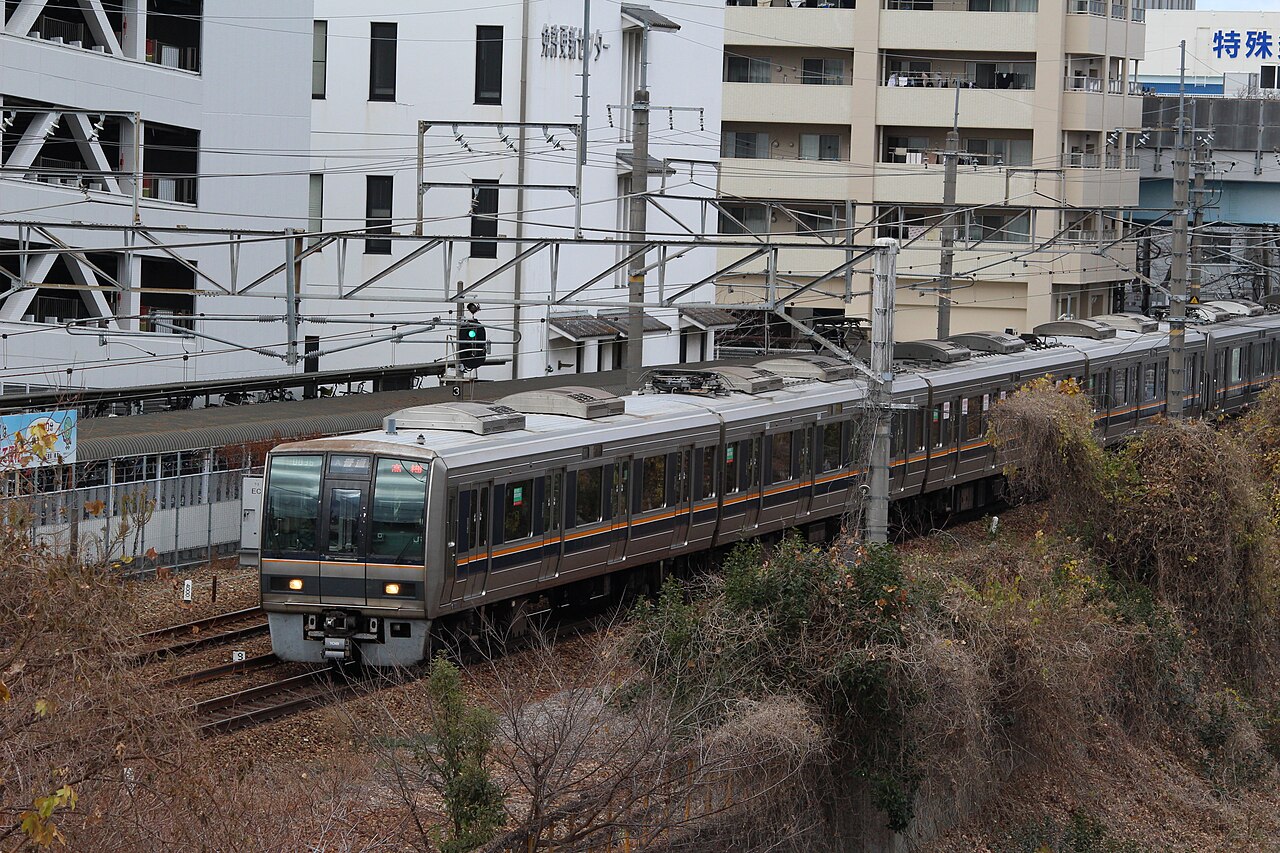
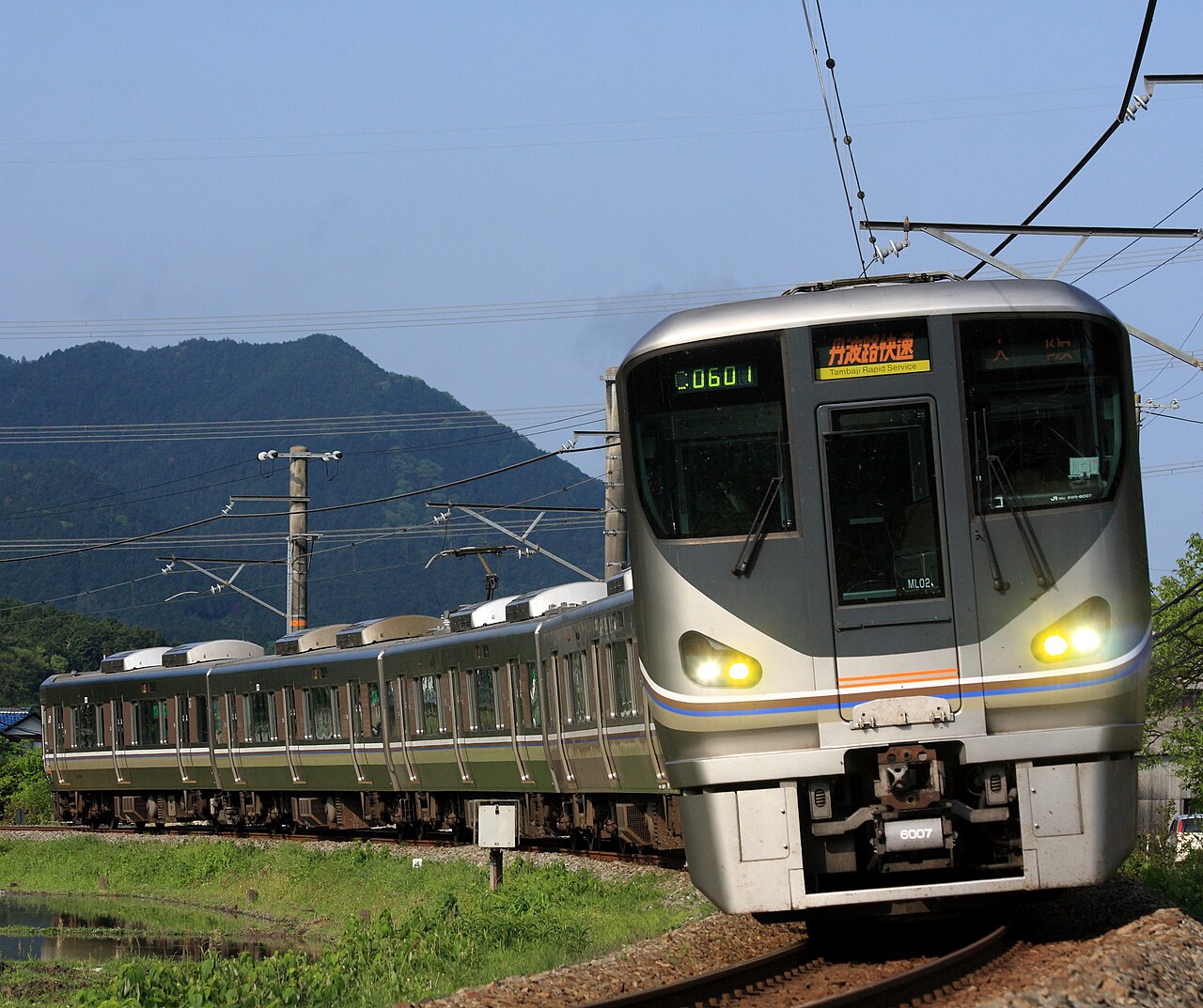
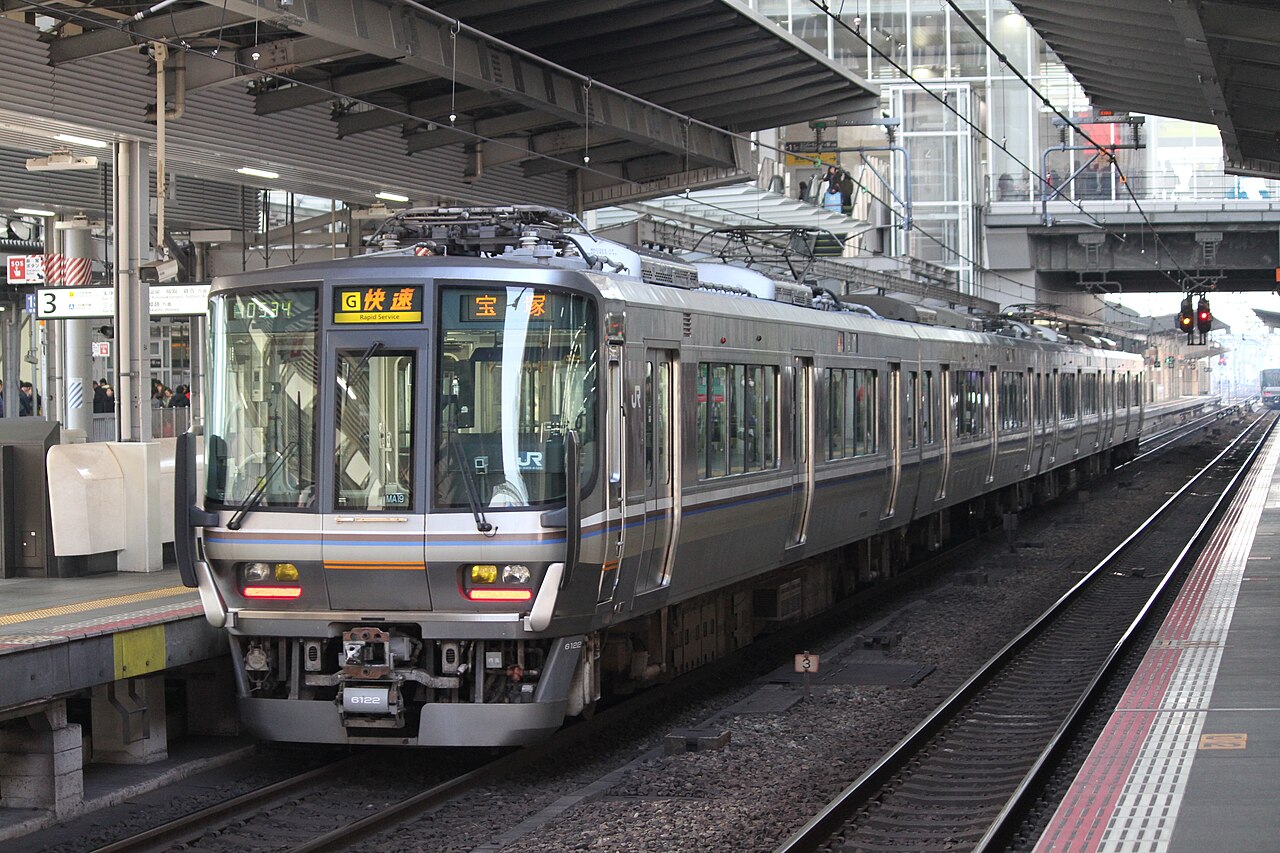
Japanese National Railways was privatised on 1 April 1987 and the line passed to JR West. The Osaka–Sasayamaguchi section was incorporated into JR West's "Urban Network" (the company's brand for the Osaka–Kobe–Kyoto metropolitan rail network) and given the nickname JR Takarazuka Line (JR宝塚線); the "JR" prefix was added to distinguish it from the Hankyu Takarazuka Line. JR West solicited a public nickname for the Osaka–Shin-Sanda section in August 1987, and the JR Takarazuka Line name came into use on 13 March 1988, with the branded section later adjusted to Osaka–Sasayamaguchi at the request of local governments. New rolling stock followed: 207 series EMUs entered service on 18 March 1993, the Tambaji Rapid (Osaka–Fukuchiyama) began on 11 March 2000, and 321 series EMUs entered service on 1 December 2005. Today the line is operated entirely by JR West's Kinki regional headquarters; on the Osaka–Takarazuka section it runs parallel to, and competes with, the Hankyu Takarazuka Line.
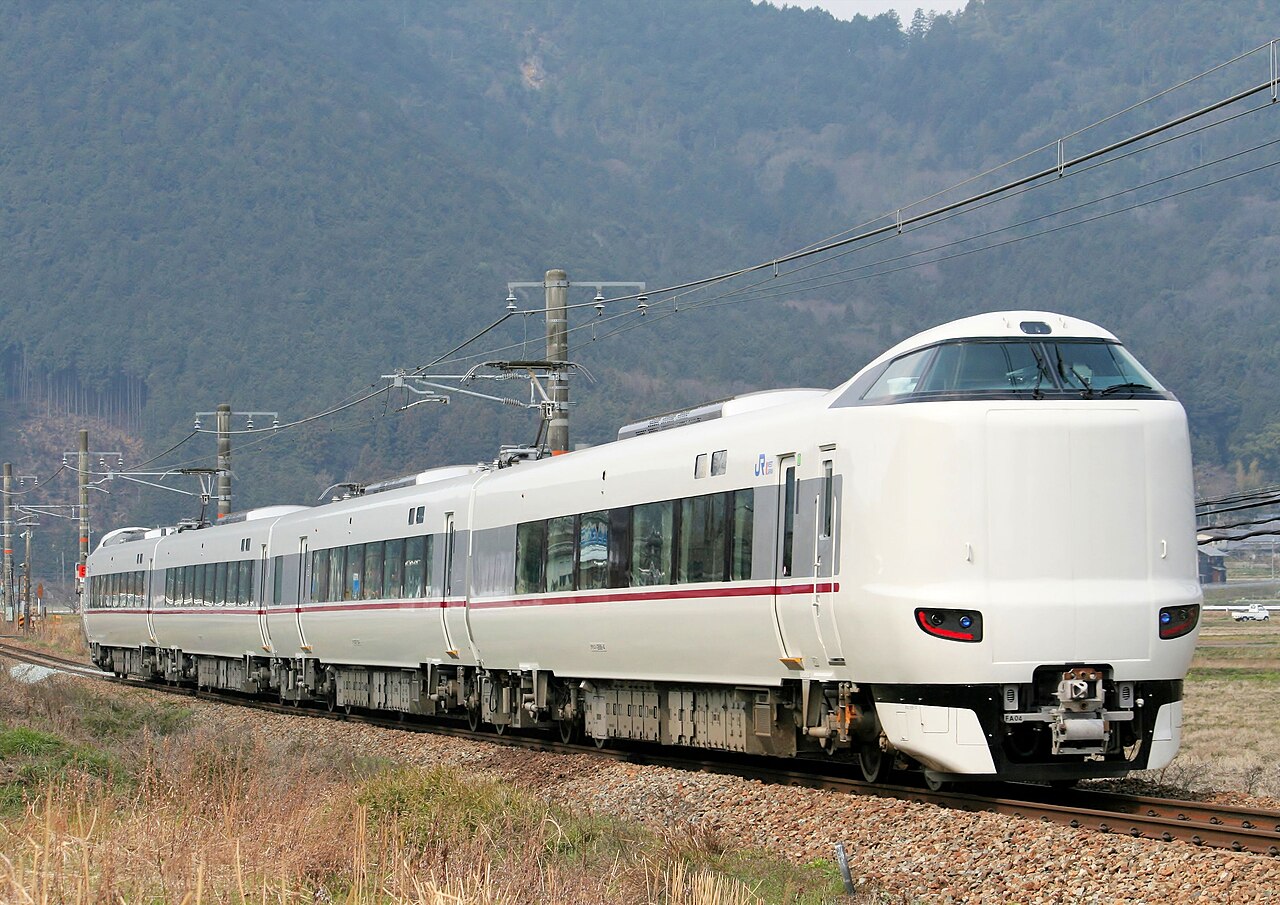
The line was the site of a fatal accident, the Amagasaki derailment. On 25 April 2005 a seven-car 207 series train working a Rapid service derailed and struck a building between Tsukaguchi and Amagasaki while bound for Dōshisha-mae via the JR Tōzai Line and the Katamachi Line. According to the English-language source, 107 passengers were killed. The affected Amagasaki–Takarazuka section was suspended until trial runs began on 7 June 2005, and passenger service resumed on 19 June 2005; ATS-P was placed into use on the Amagasaki–Shin-Sanda section at the same time. The present-day line carries local, Rapid, Regional Rapid and Tambaji Rapid commuter services together with limited express trains (the Kounotori) running through to the San'in direction.
Timeline
- 1891The Kawabe Horsecar Railway opens a 762 mm gauge line in the Amagasaki–Itami area (JA: 24 July).
- 1893The operator is reorganised as the Settsu Railway, which introduces steam power and extends the line to Ikeda.
- 1897The Hankaku Railway regauges the line to 1,067 mm and extends it to Takarazuka.
- 1898The line is connected to Kanzaki Station (present-day Amagasaki) on the government railway, turning the original Amagasaki terminal stretch into a branch.
- 1899The line is extended toward Fukuchiyama (reaching Fukuchiyama-Minamiguchi).
- 19043 November: through running between Osaka and Maizuru is completed as the extension reaches the present Fukuchiyama Station and the government line to Shin-Maizuru is leased to the Hankaku Railway.
- 19071 August: the Hankaku Railway is nationalised.
- 19121 March: the Kanzaki (Amagasaki)–Fukuchiyama section is separated from the former Hankaku Line and renamed the Fukuchiyama Line.
- 1934The Amagasaki–Tsukaguchi section is double-tracked.
- 1956The Amagasaki–Tsukaguchi section is electrified.
- 1980The Tsukaguchi–Takarazuka section is double-tracked (1979–1980).
- 1981The Amagasaki–Takarazuka section is electrified (Tsukaguchi–Takarazuka on 31 March; Amagasaki–Tsukaguchi already electrified in 1956).
- 1986The Takarazuka–Shin-Sanda section is double-tracked with the 2,970 m Najio tunnel (shortening the route by 1.8 km); electrification to Fukuchiyama is completed; full electric operation begins on 1 November and the limited express Kita-Kinki is introduced.
- 19871 April: JNR is privatised; the line transfers to JR West.
- 198813 March: the nickname JR Takarazuka Line comes into use for the Osaka–Sasayamaguchi section (publicly solicited in August 1987).
- 199318 March: 207 series EMUs enter service.
- 19978 March: the final double-tracking sections (Shin-Sanda–Hirono and Furuichi–Sasayamaguchi) are completed; through running to the Katamachi (Gakkentoshi) Line via the JR Tōzai Line begins.
- 200011 March: the Tambaji Rapid (Osaka–Fukuchiyama) begins operation.
- 200525 April: a 207 series Rapid train derails between Tsukaguchi and Amagasaki (the Amagasaki derailment); 107 passengers killed (EN). Service resumes 19 June; ATS-P placed in use Amagasaki–Shin-Sanda. 321 series EMUs enter service on 1 December.
Sources
Facts last verified 3 June 2026.
Gallery 6 photos
Every photo for this page — tap any image to view it full-size. All from Wikimedia Commons (credit under each).