歴史
前身である阪神急行電鉄により、宝塚駅 - 西宮北口駅間が1921年(大正10年)9月2日に単線で開業した。当初の路線名について、英語版は「西宝塚線(Nishi-Takarazuka Line)」、日本語版は「西宝線(さいほうせん)」と記している。1922年(大正11年)4月1日には開業区間の全線複線化が完成した。1926年(大正15年)12月18日に西宮北口駅 - 今津駅間が開業して全通し、このとき今津線に改称された。阪急の総帥・小林一三の指導のもと、甲東園などの沿線住宅開発が進められ、関西学院大学や神戸女学院大学が神戸市から西宮市の沿線に移転するなど学校の誘致も行われ、戦前の段階で今津線は通学路線となった。
1949年(昭和24年)12月13日には、今津線の電車が暴走して阪神本線に侵入し、久寿川駅まで走行する事故が発生した。その後、1967年(昭和42年)10月8日に架線電圧が600ボルトから1500ボルトに昇圧され、1978年(昭和53年)3月10日には全線が軌道法に基づく軌道から地方鉄道法に基づく鉄道に変更された。
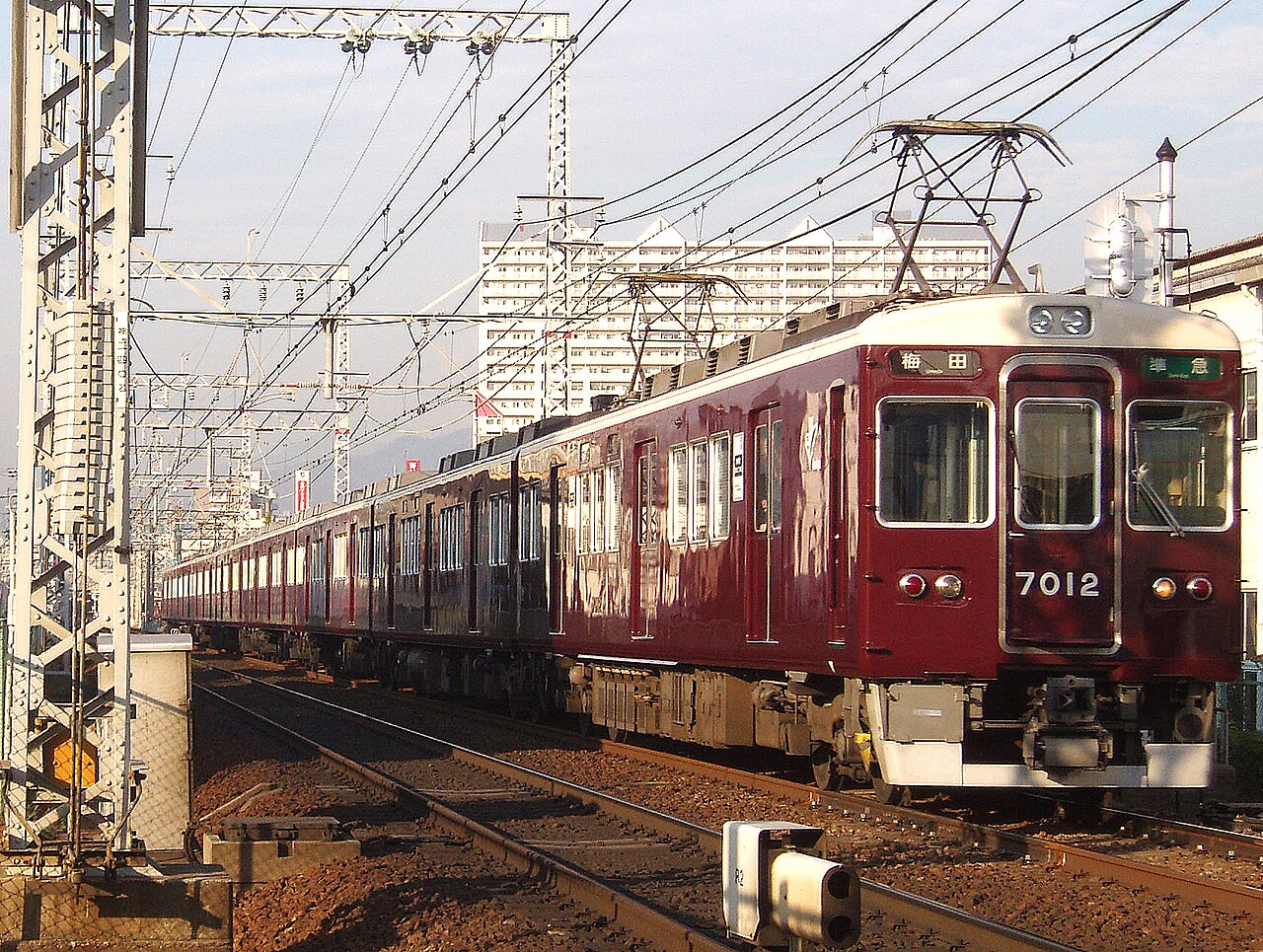
路線の性格を最も大きく変えたのは1984年(昭和59年)3月25日で、西宮北口駅構内で今津線と神戸本線が直角に平面交差していた「ダイヤモンドクロス」が安全上の理由で廃止された。これを機に今津線は西宮北口駅を境に、北側の宝塚駅 - 西宮北口駅間(今津北線)と南側の西宮北口駅 - 今津駅間(今津南線)に事実上分断され、1984年以降は一方の端からもう一方の端まで直通する列車は運行されていない。平日には宝塚駅から梅田駅(大阪側の阪急の主要ターミナル)まで、宝塚本線経由ではなく今津線・神戸線経由で運転される準急が少数あり、線路配置の都合で西宮北口駅には停車しない。この経路の宝塚 - 梅田間の距離は宝塚本線経由より短い。
その後も施設整備が続いた。1993年(平成5年)5月23日に今津駅が移転し、路線は0.2キロメートル短縮された。1995年(平成7年)1月17日の阪神・淡路大震災では、甲東園駅南で交差する山陽新幹線の高架橋や、門戸厄神駅 - 西宮北口駅間の国道171号の橋桁が線路上に落下し、宝塚南口駅北側では列車が脱線するなどして全線不通となったが、同年2月5日に全線で運転を再開した。今津南線は順次高架化が進められ、2010年(平成22年)12月5日に西宮北口駅 - 今津駅間の高架化が完了し、あわせて西宮北口駅 - 阪神国道駅間で速度向上と所要時間短縮が行われた。2013年(平成25年)12月21日には全駅に駅ナンバリングが導入された。
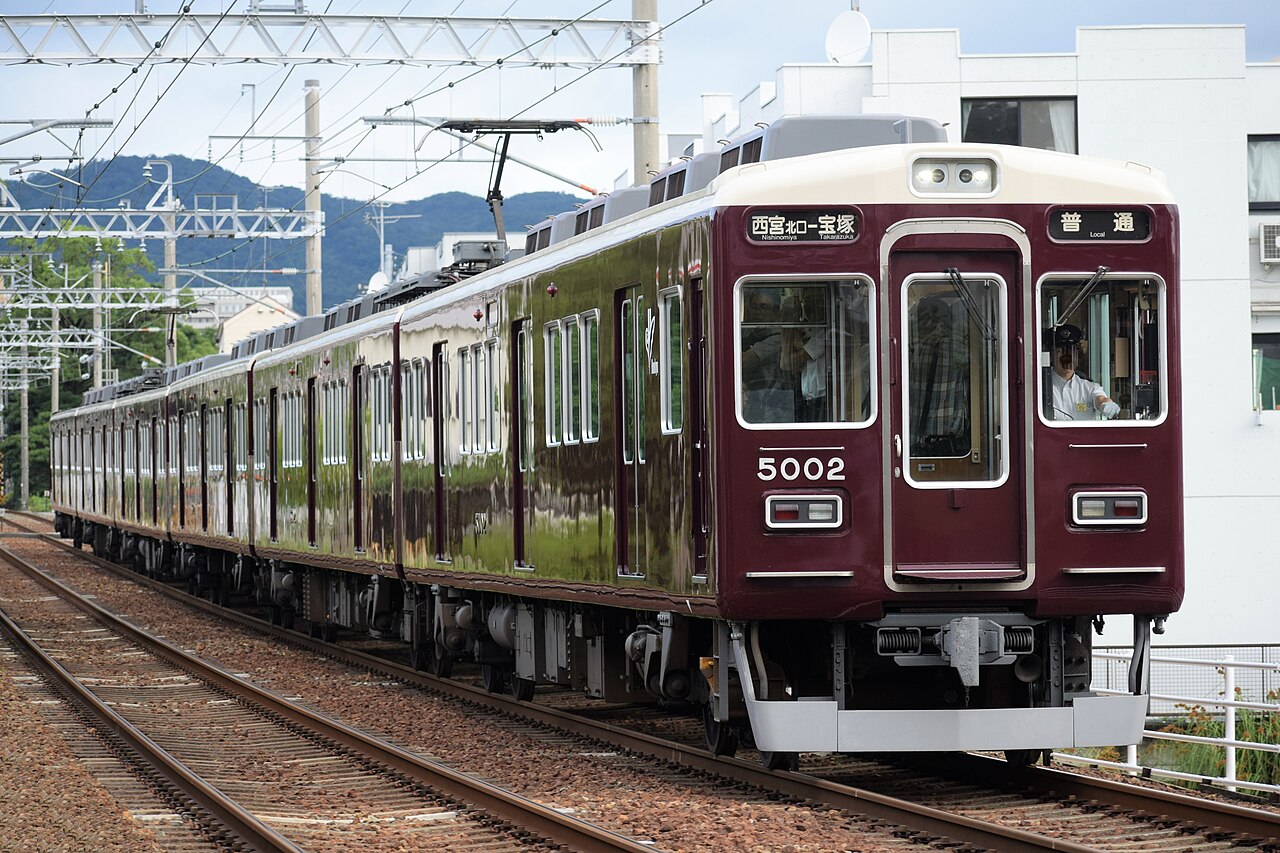
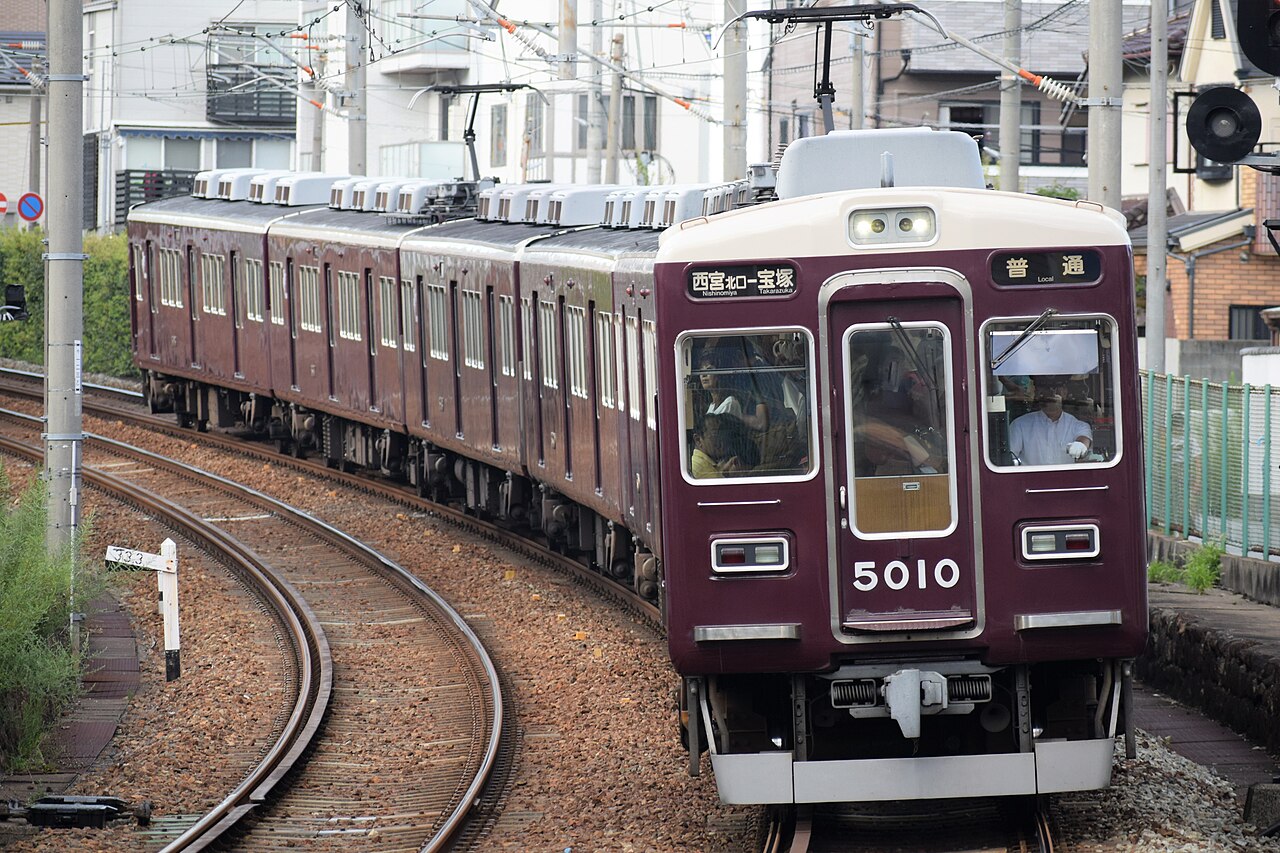
現在の今津線は、複線・標準軌(1435ミリメートル)・直流1500ボルト架空電車線方式、最高速度80キロメートル毎時、10駅の路線で、阪急電鉄が運営し、西宮車庫を車両基地としている。
年表
- 19212 September: the Takarazuka–Nishinomiya-Kitaguchi section opens as a single-track line. EN gives the original name as the Nishi-Takarazuka Line; JA records it as the Saihō Line (西宝線).
- 19221 April: double-tracking of the opened section is completed.
- 192618 December: the Nishinomiya-Kitaguchi–Imazu section opens, completing the through route, and the line is renamed the Imazu Line.
- 194913 December: an Imazu Line train runs out of control, enters the Hanshin Main Line and runs as far as Kusugawa Station.
- 19678 October: catenary voltage is raised from 600 V to 1,500 V.
- 197810 March: the whole line is reclassified from a tramway (Tramway Act) to a railway (Local Railway Act).
- 198425 March: the flat track crossing ("diamond cross") with the Kobe Line at Nishinomiya-Kitaguchi is abolished on safety grounds; the line is split into a north section (Imazu-kita) and a south section (Imazu-minami), and no train runs end-to-end thereafter.
- 199323 May: Imazu Station is relocated, shortening the line by 0.2 km.
- 199517 January: the Great Hanshin earthquake puts the whole line out of service (a Sanyo Shinkansen viaduct and a National Route 171 girder fall onto the track; a train derails near Takarazuka-Minamiguchi). Full service is restored on 5 February.
- 20105 December: grade separation (elevation) of the Nishinomiya-Kitaguchi–Imazu south section is completed, with a speed increase and shorter running times to Hanshin-Kokudō.
- 201321 December: station numbering is introduced across all stations.
出典
事実確認日:2026年6月3日
ギャラリー 5枚
このページの全写真 ― 画像をタップすると原寸大で表示します。すべてウィキメディア・コモンズより(各写真の下にクレジット)。