History
The line opened in stages under Hankyu's predecessor, the Hanshin Kyūkō Dentetsu company. The section between Takarazuka and Nishinomiya-Kitaguchi opened on 2 September 1921 as a single-track line; the English article gives its original name as the Nishi-Takarazuka Line, while the Japanese article records the contemporary name as the Saihō Line (西宝線). Double-tracking of the whole opened section was completed on 1 April 1922. The southern extension from Nishinomiya-Kitaguchi to Imazu opened on 18 December 1926, completing the through route, and the line was renamed the Imazu Line at that time. Under the direction of Ichizō Kobayashi, the head of the Hankyu group, the company developed residential neighbourhoods such as Kōtōen along the line and actively attracted schools — Kwansei Gakuin University and Kobe College both relocated from Kobe to sites along the line in Nishinomiya — so that the Imazu Line had already become a commuting-to-school line before the Second World War.
A notable early incident occurred on 13 December 1949, when an Imazu Line train ran out of control, entered the Hanshin Main Line and ran as far as Kusugawa Station; the episode was reported in the press at the time and is remembered locally. The line was upgraded over the following decades: the catenary voltage was raised from 600 V to 1,500 V on 8 October 1967, and on 10 March 1978 the whole line was reclassified from a tramway under the Tramway Act to a railway under the Local Railway Act.
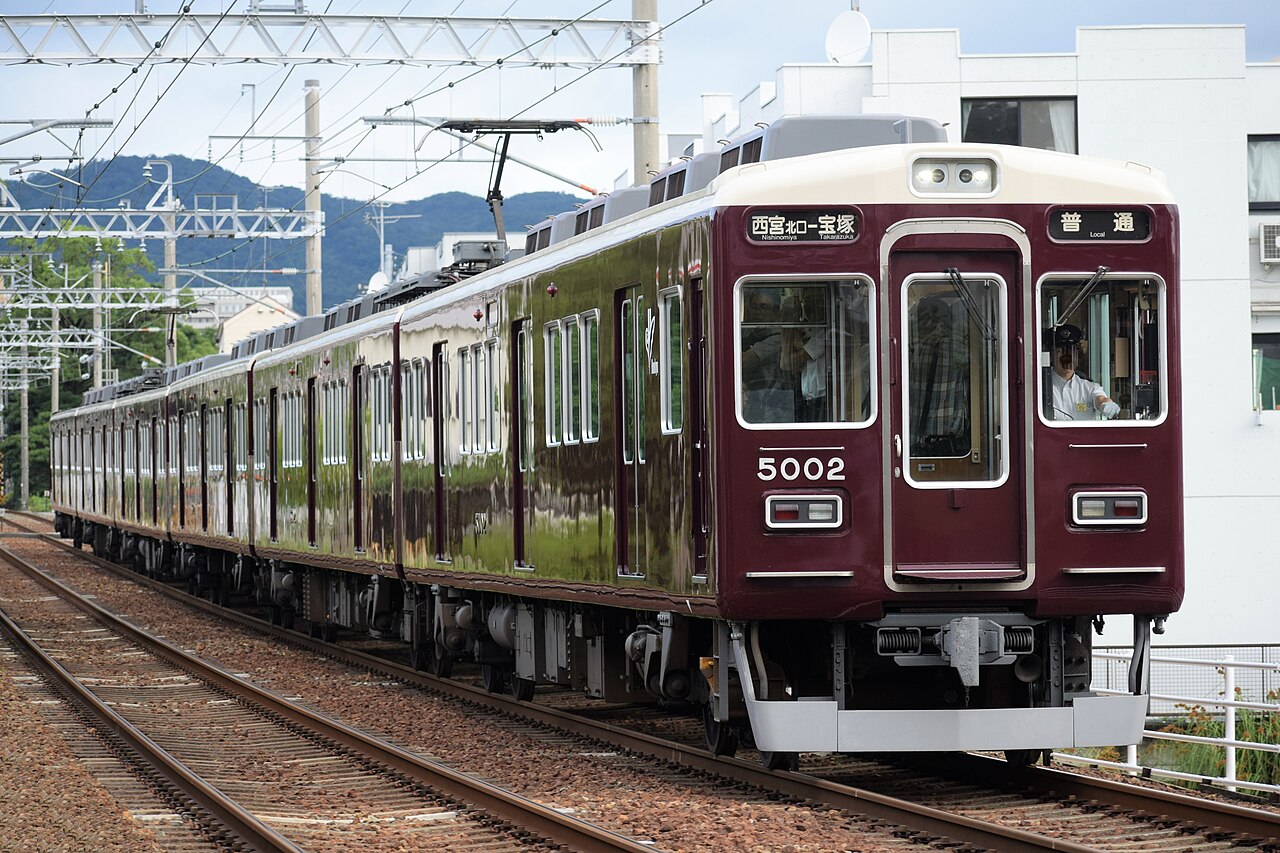
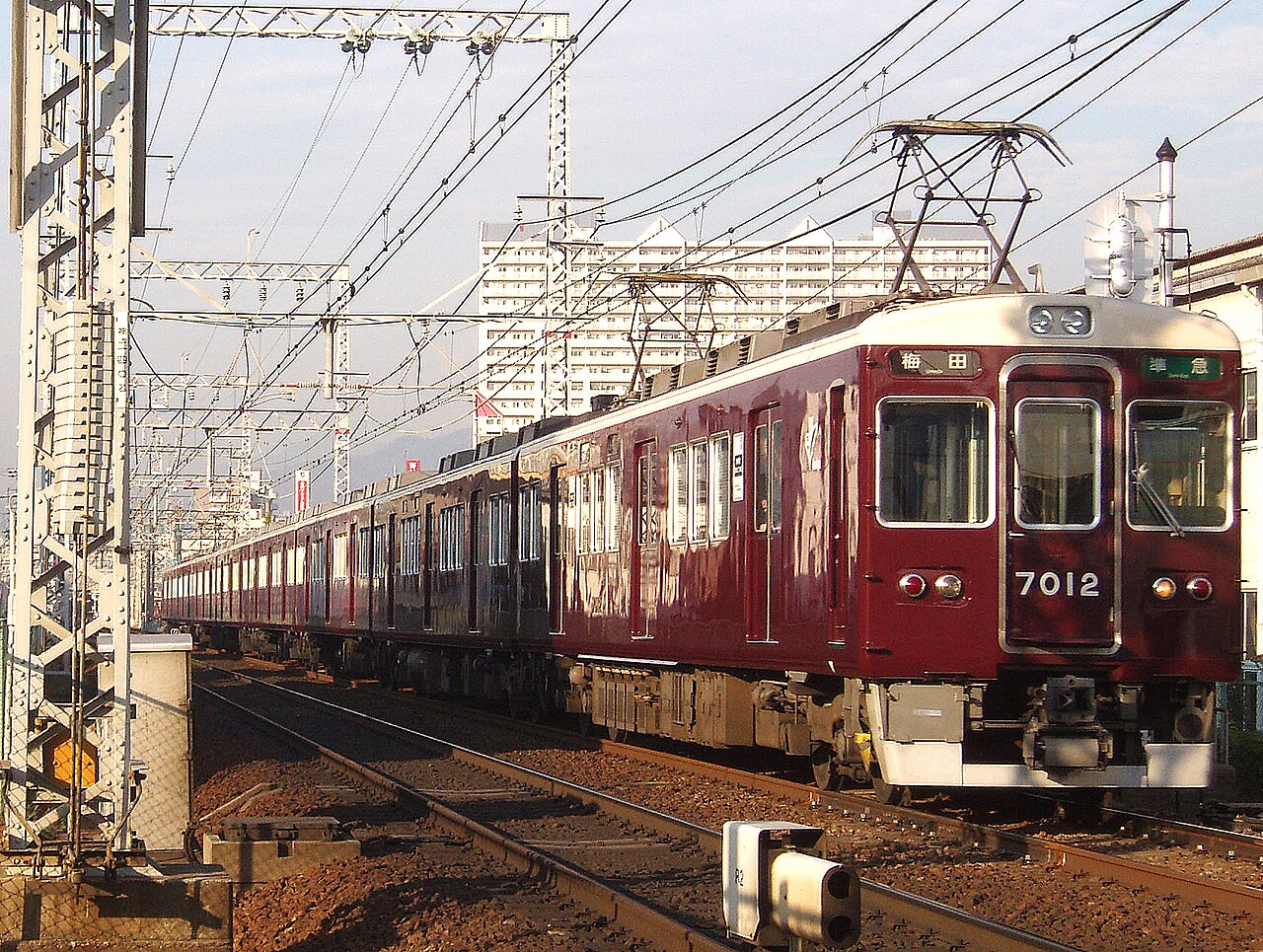
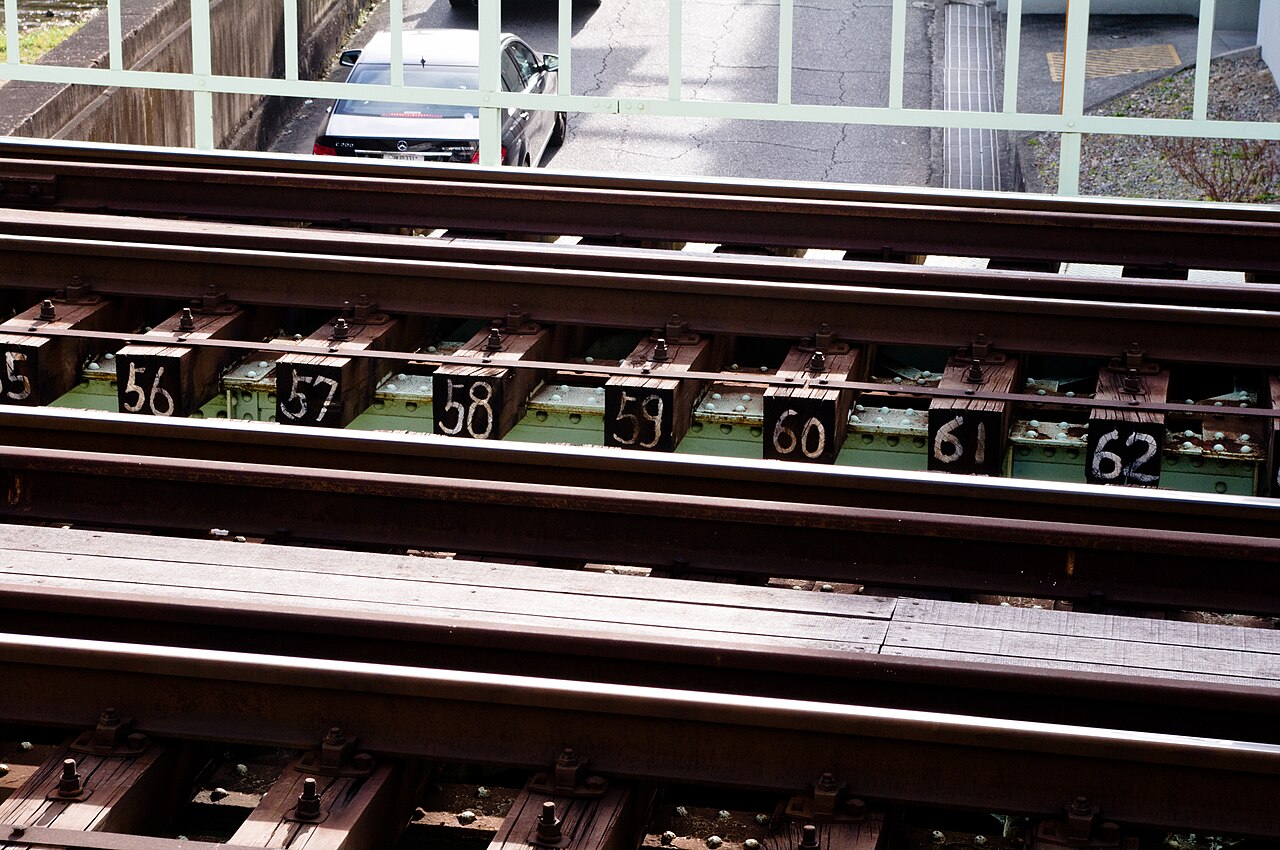
The single most consequential change to the line's character came on 25 March 1984, when the level (flat) track crossing inside Nishinomiya-Kitaguchi Station — where the Imazu Line crossed the Hankyu Kobe Line at right angles, the so-called "diamond cross" — was abolished on safety grounds. From that point the Imazu Line was effectively divided at Nishinomiya-Kitaguchi into a northern section (Takarazuka–Nishinomiya-Kitaguchi, informally the Imazu-kita Line) and a southern section (Nishinomiya-Kitaguchi–Imazu, the Imazu-minami Line); since 1984 no trains run directly from one end of the line to the other. Typical Imazu Line trains stop at every station between Imazu and Nishinomiya-Kitaguchi on the south section, or between Nishinomiya-Kitaguchi and Takarazuka on the north section. A small number of weekday Semi-Express (junkyū) trains run from Takarazuka to Umeda — Hankyu's main Osaka terminal — not via the Takarazuka Line but via the Imazu Line and the Kobe Line; because there is no through platform for them, these trains do not stop at Nishinomiya-Kitaguchi, and the Takarazuka–Umeda distance by this route is shorter than via the Takarazuka Line.
Further infrastructure work followed. Imazu Station was relocated on 23 May 1993, shortening the line by 0.2 km. In the Great Hanshin earthquake of 17 January 1995 the line was put entirely out of service — the Sanyo Shinkansen viaduct that crosses south of Kōtōen Station and a National Route 171 bridge girder between Mondo-Yakujin and Nishinomiya-Kitaguchi fell onto the tracks, and a train derailed on the north side of Takarazuka-Minamiguchi — and the whole line was restored to service on 5 February 1995. The southern section was progressively elevated, with full grade separation of the Nishinomiya-Kitaguchi–Imazu stretch completed on 5 December 2010, accompanied by a speed increase and shorter running times on the Nishinomiya-Kitaguchi–Hanshin-Kokudō stretch. Station numbering was introduced across all stations on 21 December 2013.
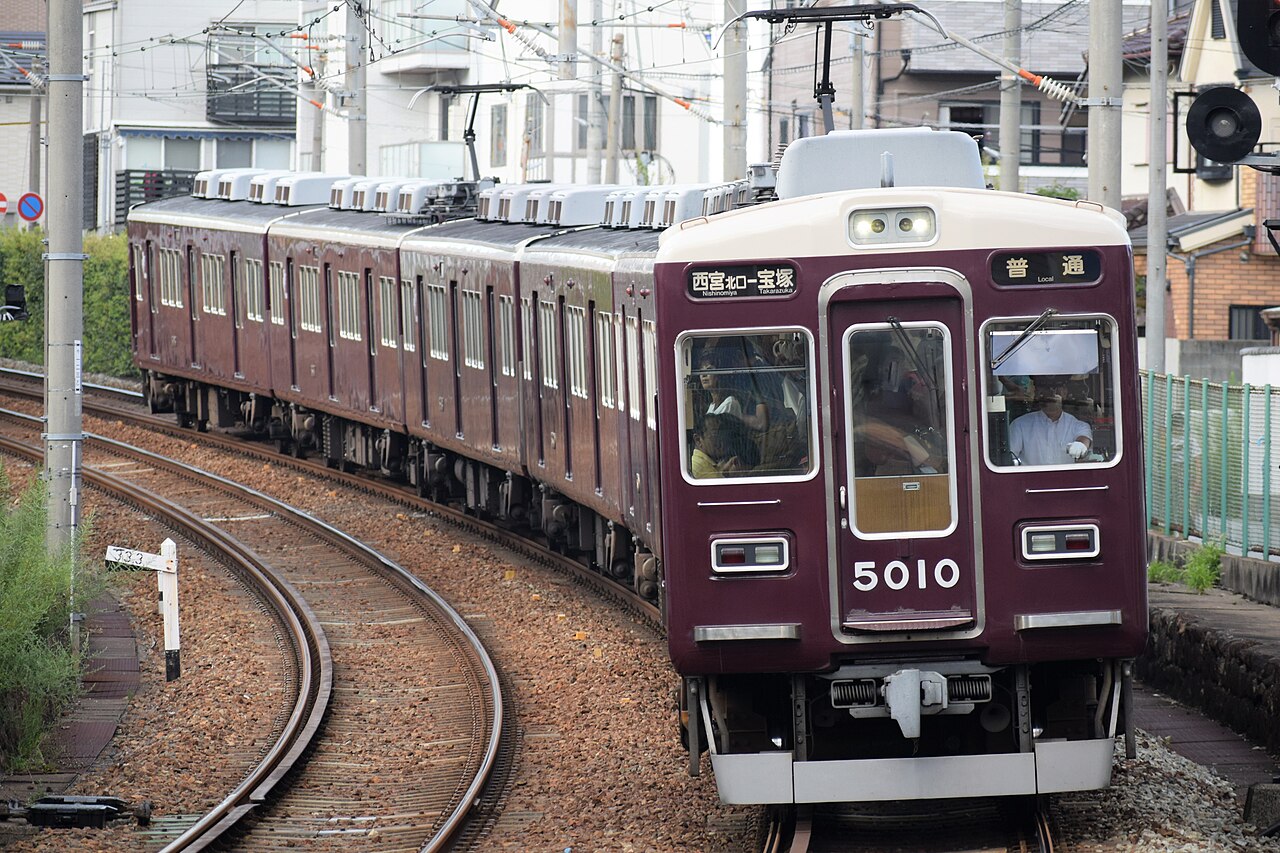
Today the Imazu Line is a double-track, 1,435 mm standard-gauge line electrified at 1,500 V DC overhead, with a maximum operating speed of 80 km/h and ten stations, served throughout by Hankyu Railway and operated out of the Nishinomiya Depot.
Timeline
- 19212 September: the Takarazuka–Nishinomiya-Kitaguchi section opens as a single-track line. EN gives the original name as the Nishi-Takarazuka Line; JA records it as the Saihō Line (西宝線).
- 19221 April: double-tracking of the opened section is completed.
- 192618 December: the Nishinomiya-Kitaguchi–Imazu section opens, completing the through route, and the line is renamed the Imazu Line.
- 194913 December: an Imazu Line train runs out of control, enters the Hanshin Main Line and runs as far as Kusugawa Station.
- 19678 October: catenary voltage is raised from 600 V to 1,500 V.
- 197810 March: the whole line is reclassified from a tramway (Tramway Act) to a railway (Local Railway Act).
- 198425 March: the flat track crossing ("diamond cross") with the Kobe Line at Nishinomiya-Kitaguchi is abolished on safety grounds; the line is split into a north section (Imazu-kita) and a south section (Imazu-minami), and no train runs end-to-end thereafter.
- 199323 May: Imazu Station is relocated, shortening the line by 0.2 km.
- 199517 January: the Great Hanshin earthquake puts the whole line out of service (a Sanyo Shinkansen viaduct and a National Route 171 girder fall onto the track; a train derails near Takarazuka-Minamiguchi). Full service is restored on 5 February.
- 20105 December: grade separation (elevation) of the Nishinomiya-Kitaguchi–Imazu south section is completed, with a speed increase and shorter running times to Hanshin-Kokudō.
- 201321 December: station numbering is introduced across all stations.
Sources
Facts last verified 3 June 2026.
Gallery 5 photos
Every photo for this page — tap any image to view it full-size. All from Wikimedia Commons (credit under each).