歴史
大阪環状線は単一の路線として建設されたものではなく、四つの区間と一つの新設連絡区間から成り立つ。東半分の大阪駅 - 京橋駅 - 天王寺駅間は、私鉄の大阪鉄道(初代)が1895年に2段階で開業した。すなわち5月28日に天王寺駅 - 玉造駅間(約3.8 km)、10月17日に玉造駅 - 梅田駅間(約7.0 km)が開業し、官設鉄道網と接続した。大阪鉄道は1900年に関西鉄道へ合併し、関西鉄道は鉄道国有法により1907年に国有化され、1909年にこの東側区間は城東線と命名された。1930年に営業距離がメートル法に改められて10.7 kmとなり、1933年に城東線は電化された。北西側の大阪駅 - 西九条駅間は西成鉄道が建設し、同社は港への鉄道アクセスを目的に1898年に大阪駅 - 安治川口駅間を開業、1904年に国に借り上げられ、1906年に国有化、1909年に西成線と命名され、1941年に電化された。南西側の天王寺駅 - 境川信号場間は、鉄道省が1928年に港湾地域への貨物線として建設し、関西本線の貨物支線に接続していた。
環状を完成させるため、日本国有鉄道(国鉄)が西九条駅 - 境川信号場間に新線を建設した。この区間が1961年に開業し、旧城東線、西成線のうち大阪駅 - 西九条駅間、新設の西九条駅 - 大正駅 - 天王寺駅間を合わせて大阪環状線と命名された。残る西成線の西九条駅 - 桜島駅間は桜島線として分離された。新設連絡区間である西九条駅 - 大正駅 - 天王寺駅間(7.4 km)は1961年4月25日に開業し、弁天町駅・大正駅も同時に開業した。当初は西九条駅で線路がつながっておらず、桜島駅 - 西九条駅 - 大阪駅 - 京橋駅 - 天王寺駅 - 西九条駅という逆「の」の字の形で運転されていたが、1964年に西九条駅付近の高架複線が完成して環状運転が始まり、このとき新今宮駅も開業した。1968年には天王寺駅 - 新今宮駅間が複々線化され、関西本線と運転が分離された。
現在、JR西日本はこの線で多層的な運行を行っている。普通列車は終日運転され、一周するものと、利用の多い東半分(大阪駅 - 京橋駅 - 天王寺駅間)のみを走るものがある。また、北側の東海道本線と南側の阪和線を結ぶバイパスとしても機能し、他のJR路線へ直通する列車が走る。関西本線(大和路線)への「大和路快速」「区間快速」は1973年に直通運転を開始し、阪和線方面への快速は1989年に始まった運転形態が、1994年の関西国際空港開港とともに大きく拡大して、特急「はるか」や関空快速が環状線を走るようになった。特急「はるか」(関西国際空港方面)や「くろしお」(和歌山方面)は、環状線内では原則として天王寺駅と西九条駅にのみ停車する。利用は西九条駅経由の西半分よりも、大阪駅 - 京橋駅 - 天王寺駅間の東半分の方が多い。貨物列車(日本貨物鉄道が運行)は、現在は福島駅 - 西九条駅間のみを走行する。
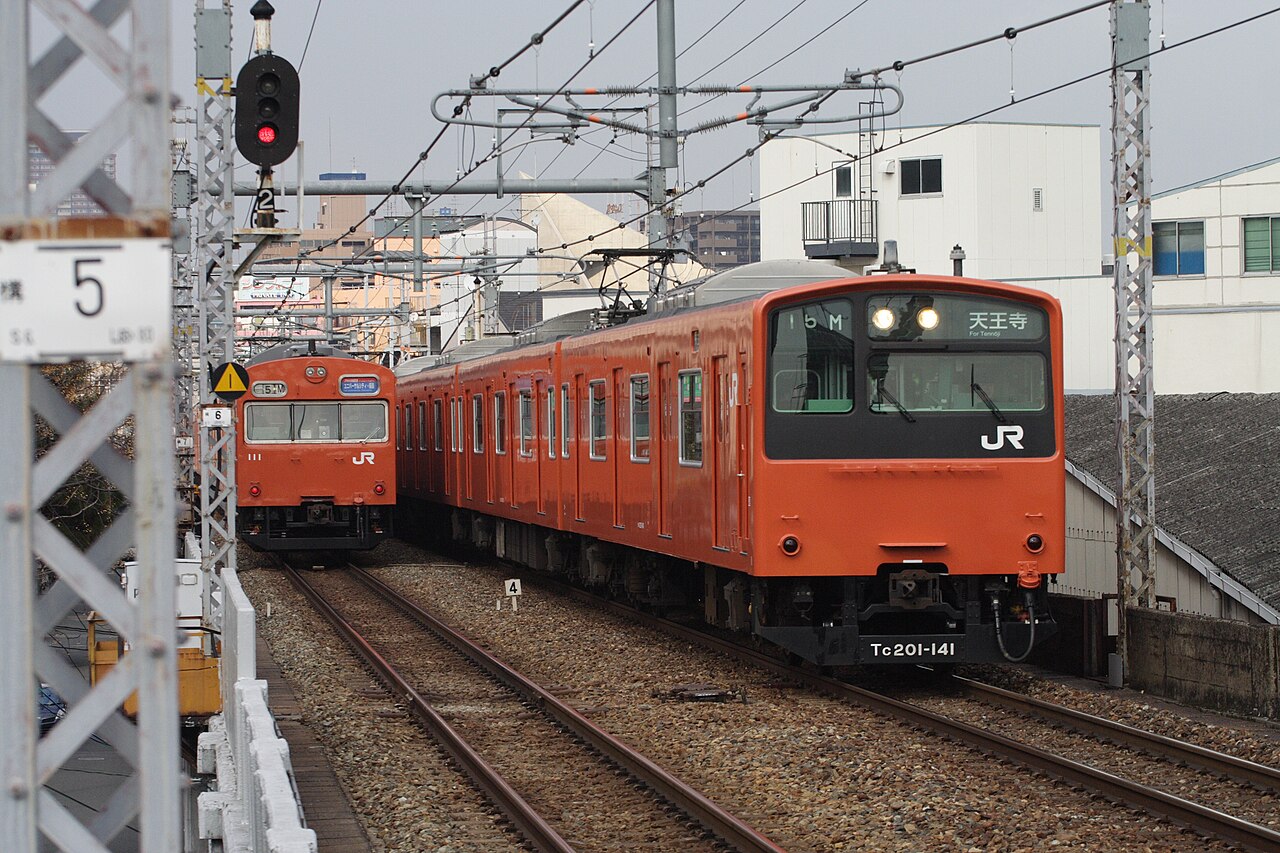
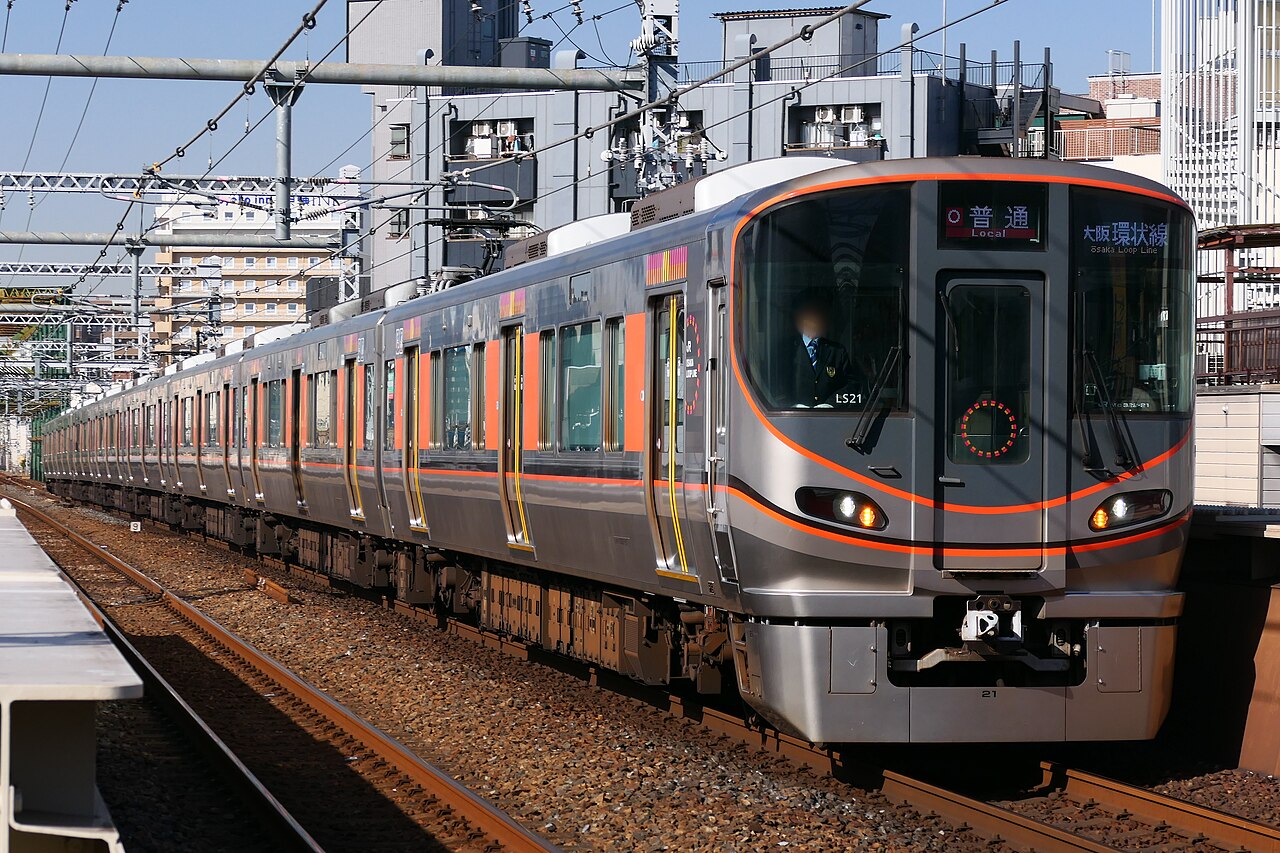
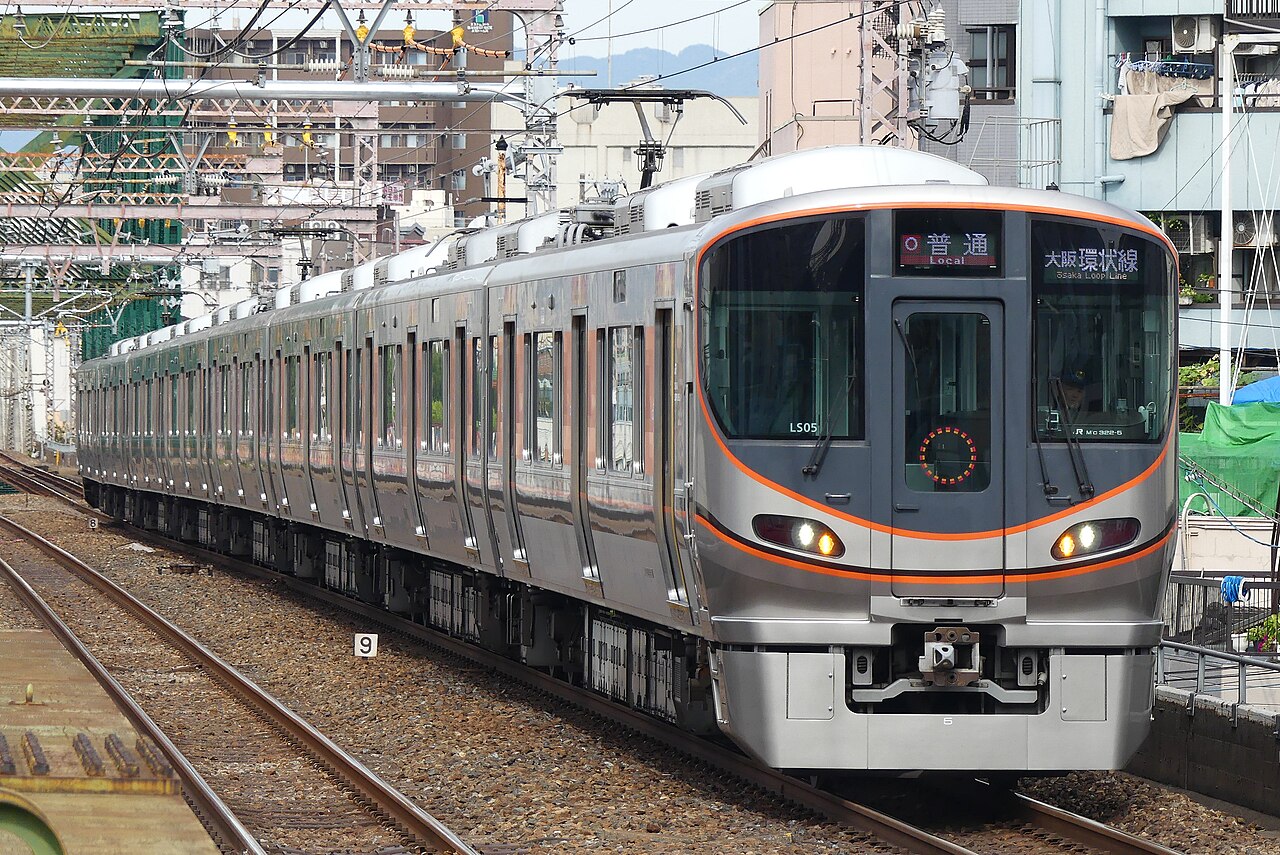
大阪環状線はJR西日本のアーバンネットワークの中心路線であり、JR西日本の在来線における利用者数は東海道本線に次ぐ第2位である。利用は2015年度で1日あたり984,395人、2019年度の1日平均通過人員は292,574人であった。車両は時代とともに移り変わり、1960 - 1961年頃に導入された101系、1969年からの103系、201系を経て、近年は大阪環状線初の専用新型車両である323系が用いられている。323系は2016年12月24日に営業運転を開始し、103系・201系を置き換える21編成(8両編成)の先頭として投入された。103系は2017年に、201系は2019年に環状線での運用を終え、JR西日本は2020年2月に同線で自動運転列車の試験走行を開始した。
年表
- 188914 May: Osaka Railway opens its main line Kashiwara–Tennōji–Minatomachi (present JR Namba), a short part of which (Tennōji–Imamiya) lies on the present loop.
- 1895Osaka Railway opens the eastern half (future Jōtō Line) in two stages: Tennōji–Tamatsukuri (~3.8 km) on 28 May and Tamatsukuri–Umeda (~7.0 km) on 17 October.
- 18985 April: the Nishinari Railway opens the Osaka–Ajikawaguchi line (future Nishinari Line), giving the port rail access; Fukushima and Noda stations open on the present loop.
- 19006 June: Osaka Railway merges into the Kansai Railway, unifying the Tennōji–Ōsaka line.
- 19061 December: the Nishinari Railway is nationalised under the Railway Nationalization Act.
- 19071 October: the Kansai Railway is nationalised under the Railway Nationalization Act.
- 190912 October: under the national line-naming, the eastern section is named the Jōtō Line and the Osaka–Nishi-Kujō section the Nishinari Line.
- 19281 December: the government railway opens the Kansai Main Line freight branch (Ōsaka Rinkō line) to the port area, forming the south-western portion of the future loop.
- 193316 February: the Jōtō Line (Tennōji–Ōsaka) is electrified and electric-train operation begins.
- 19411 May: the Nishinari Line (Ōsaka–Nishi-Kujō–Sakurajima) is electrified.
- 196125 April: the new Nishi-Kujō–Taishō–Tennōji section (7.4 km) opens and the combined route is named the Osaka Loop Line; the Nishi-Kujō–Sakurajima stretch is split off as the Sakurajima Line. Bentenchō and Taishō stations open.
- 196422 March: with the Nishi-Kujō elevation and full double-tracking complete, continuous loop operation begins and Shin-Imamiya Station opens.
- 196825 March: the Tennōji–Shin-Imamiya section is quadrupled, separating Loop Line operation from the Kansai Main Line.
- 196910 December: 103 series EMUs enter service on the line.
- 1973Through-running of Kansai Main Line (Yamatoji Line) rapid trains onto the loop begins.
- 1989The Hanwa Line rapid through-service pattern via the loop commences (Tennōji bypass track to the Kansai Main Line platforms completed).
- 19944 September: Kansai International Airport opens; the limited express Haruka and the Kansai Airport Rapid begin operating via the Osaka Loop Line.
- 201624 December: the 323 series — the first train type built specifically for the Osaka Loop Line — enters service, leading a fleet of 21 eight-car sets to replace the 103 and 201 series.
- 20173 October: the 103 series ends regular service on the line.
- 201817 March: station numbering (line symbol O) is introduced on the line.
- 20197 June: the 201 series ends service on the line; 323 series deployment is completed on 8 June.
- 2020February: JR West begins test running of automated-operation trains on the line. From 14 March all local and rapid services become eight-car formations.
出典
事実確認日:2026年6月3日
ギャラリー 3枚
このページの全写真 ― 画像をタップすると原寸大で表示します。すべてウィキメディア・コモンズより(各写真の下にクレジット)。