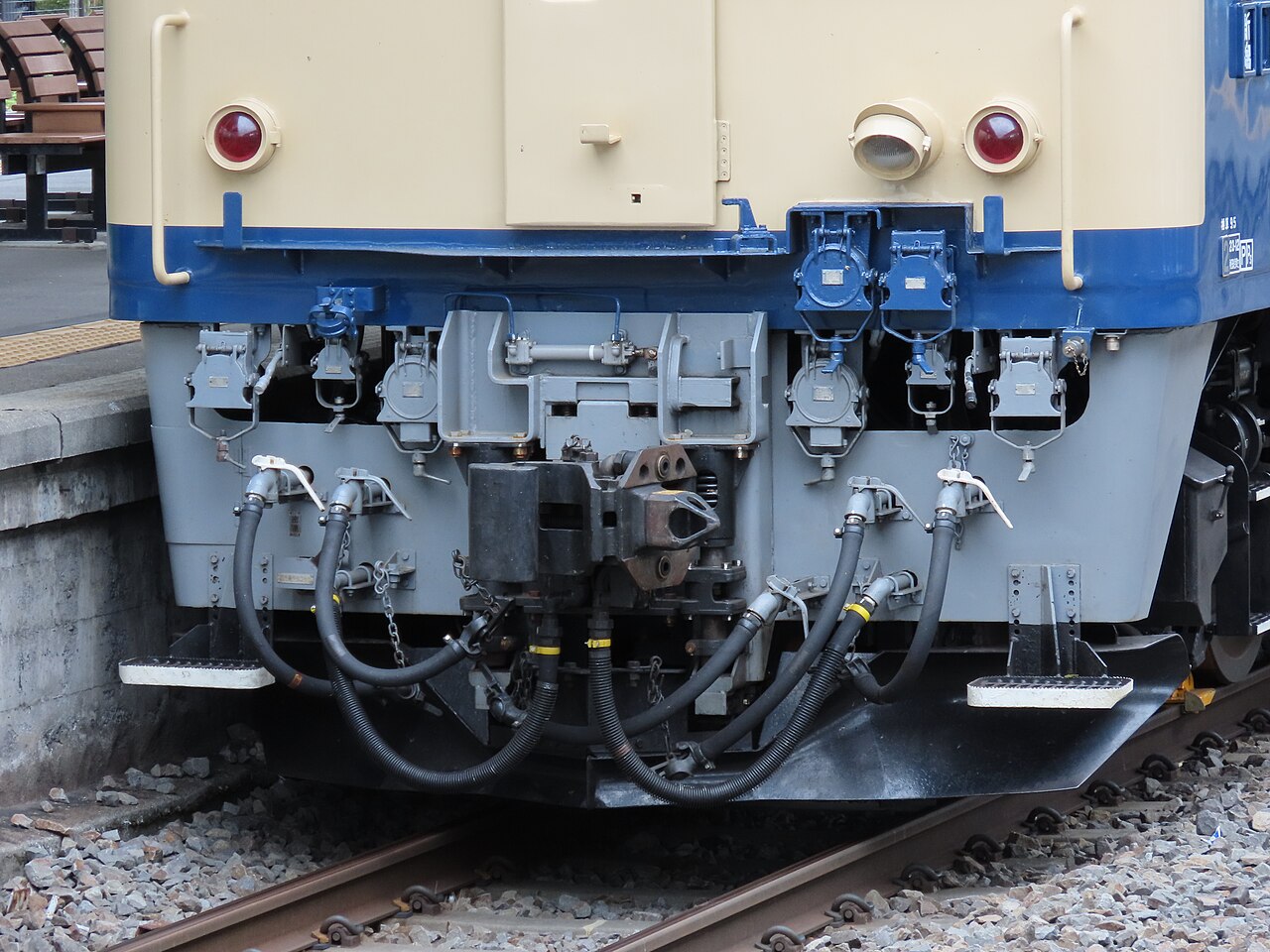
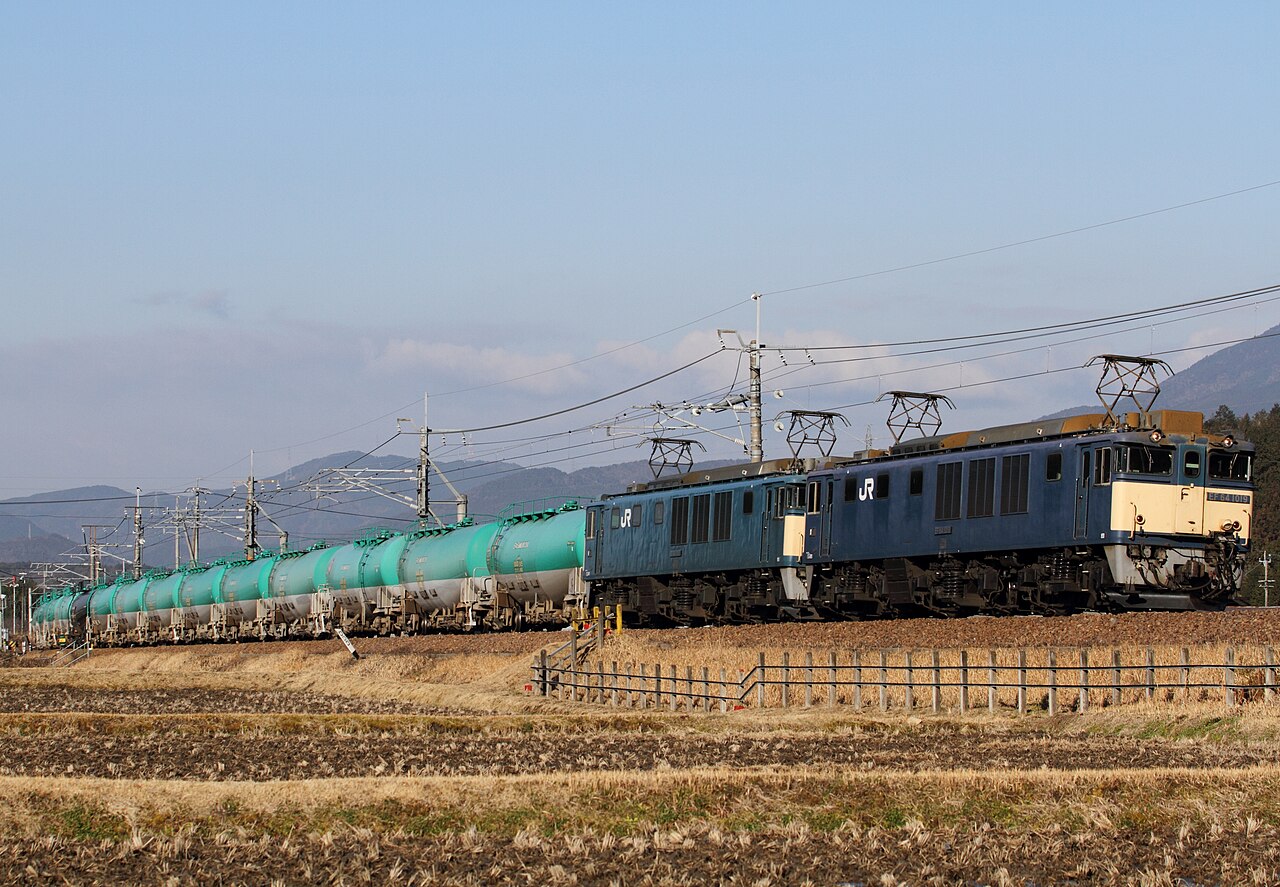
歴史
車体設計はEF62形をベースにしつつ、軸配置を一般的な「Bo-Bo-Bo」に戻し、歯車比を高速性能をやや重視した18:69=1:3.83に変更した。主電動機は直流直巻整流子電動機のMT52を6基搭載し、総定格出力は2,550 kW、最高速度は100 km/h(設計最高速度115 km/h)である。
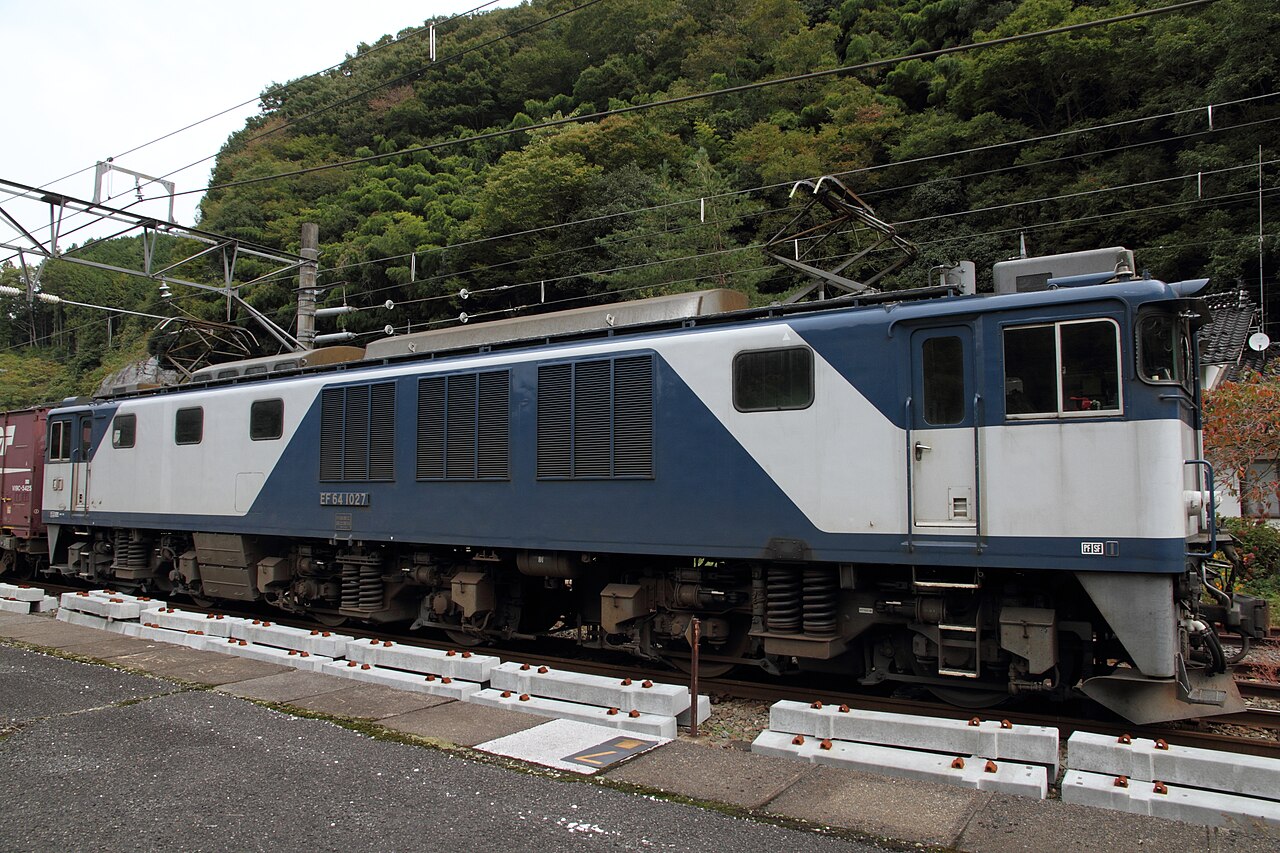
1964年(昭和39年)から1976年(昭和51年)の間に0番台(EF64 1–79)79両、1980年(昭和55年)から1982年(昭和57年)の間に大幅な設計変更を行った1000番台(EF64 1001–1053)53両の計132両が製造された。1000番台は1970年代末期に開発された国鉄最後の直流電気機関車で、上越線や高崎線のEF58形・EF15形・EF16形の置き換え用として1980年より投入された。ラストナンバーの1982年10月28日落成のEF64 1053は、国鉄最後の新製機関車となった。
1987年(昭和62年)の国鉄分割民営化では0番台・1000番台とも製造された全機がJRに承継され、JR貨物に全体の85パーセントに及ぶ113両(0番台68両・1000番台45両)、JR東日本に14両、JR東海に0番台3両、JR西日本に0番台2両がそれぞれ承継された。JR東海所属機は2009年(平成21年)1月16日付でEF64 2が廃車されて消滅し、JR西日本所属機も2009年までに2両とも廃車となった。
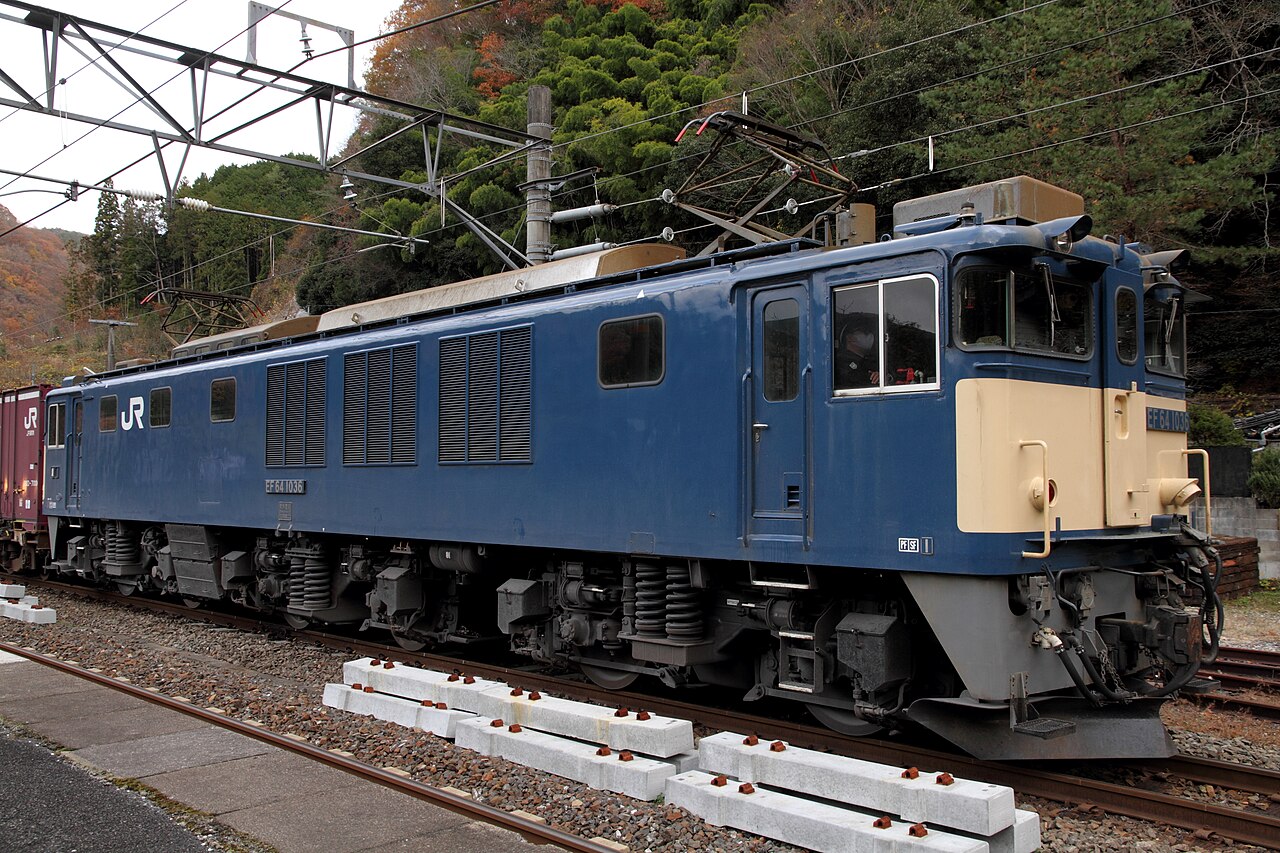
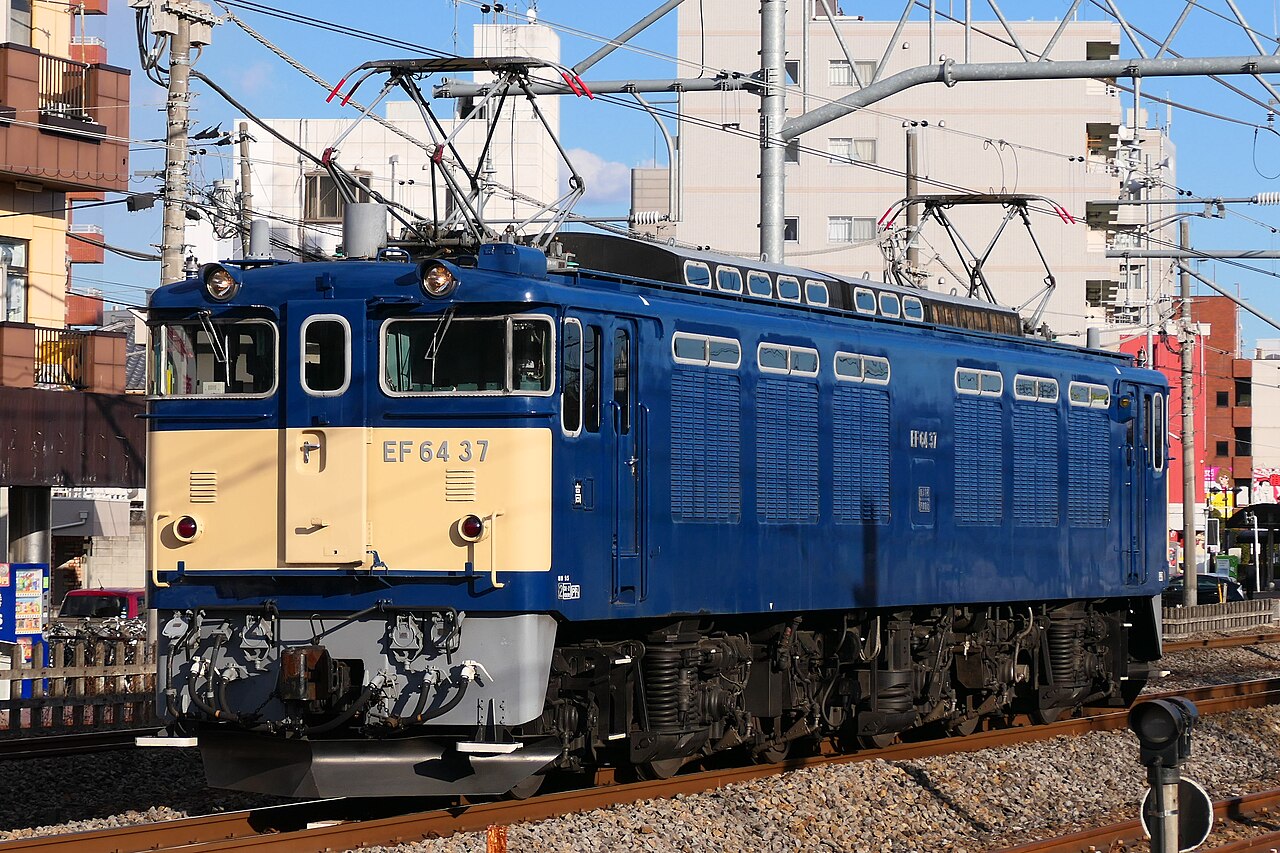
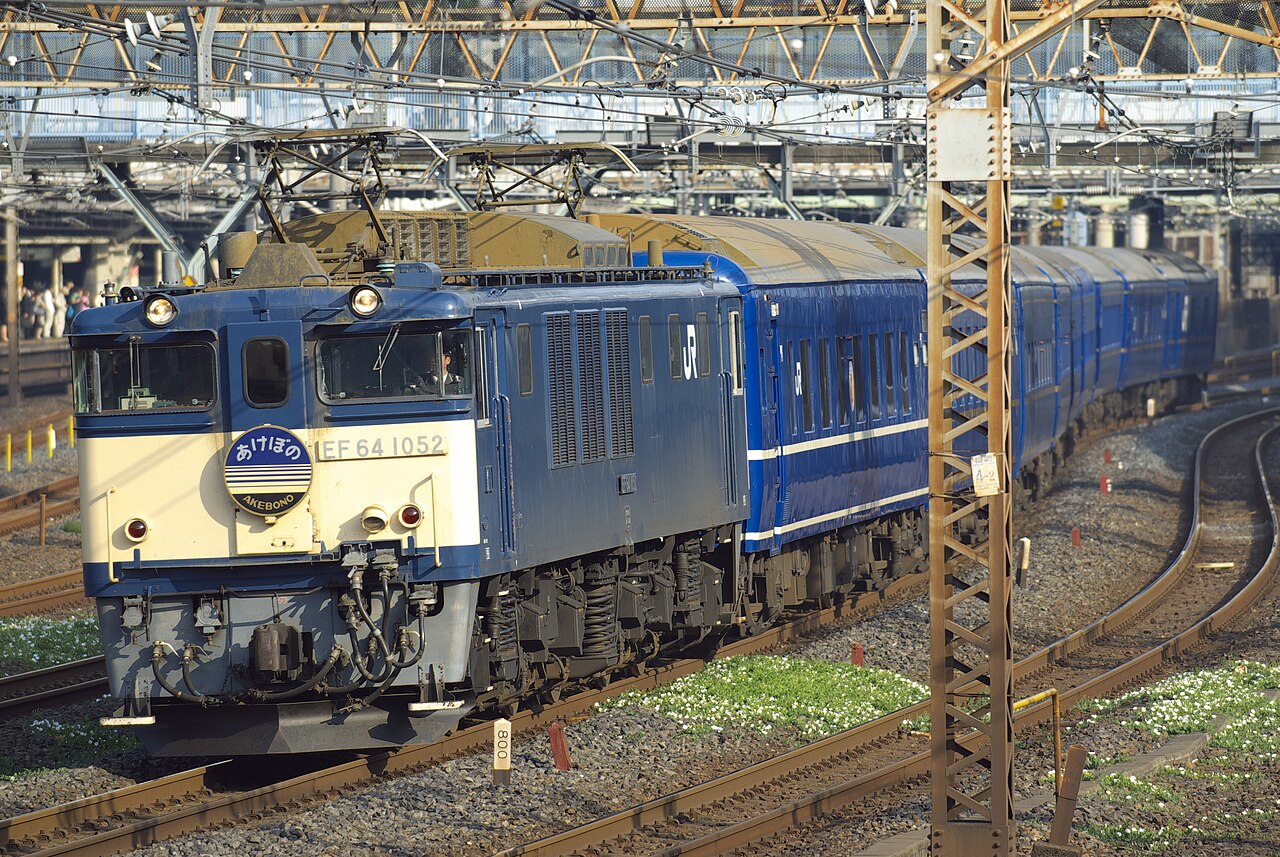
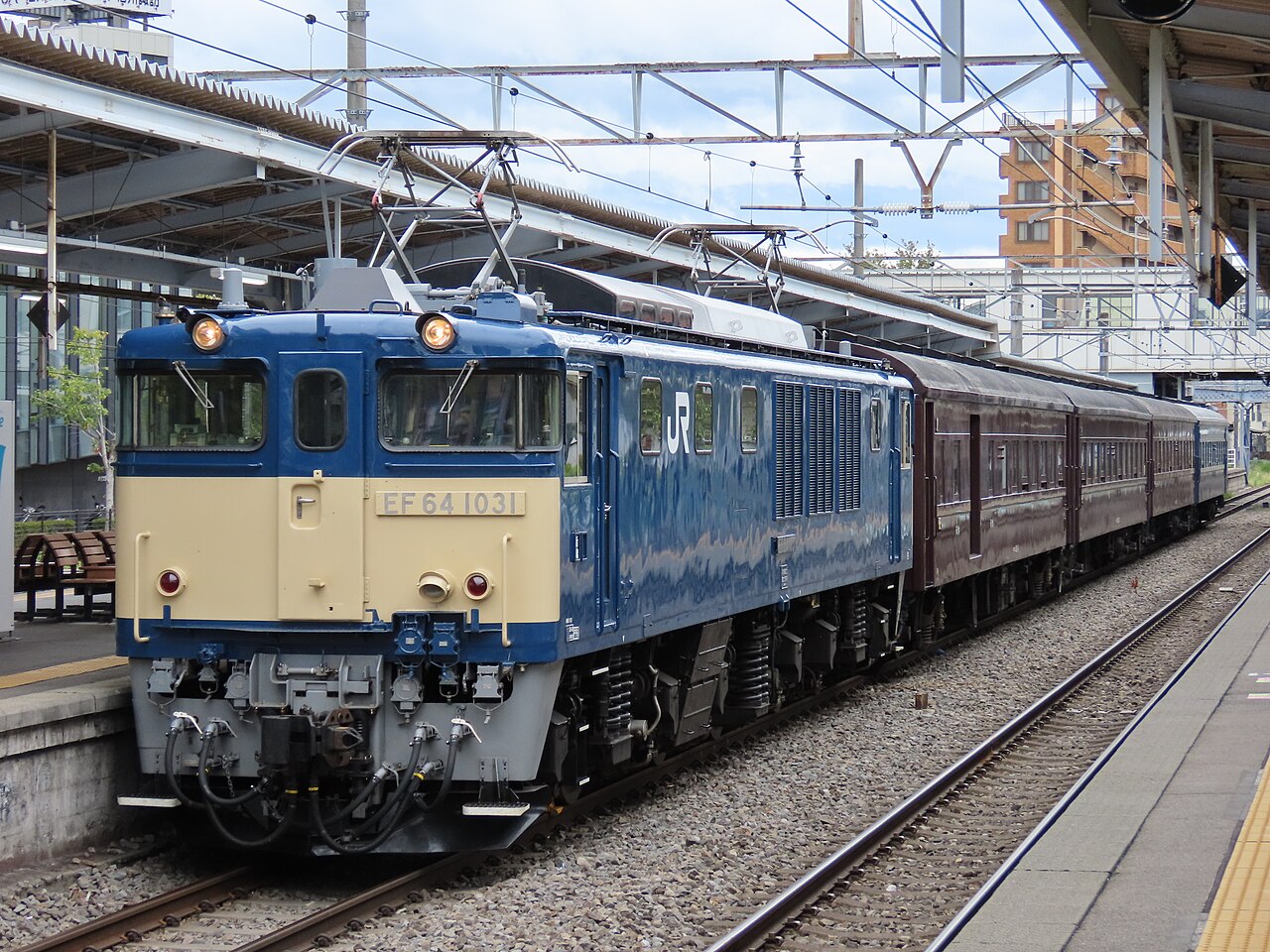
JR東日本では以前は寝台特急「あけぼの」などの牽引定期運用があったが、2021年(令和3年)11月にEF64 37・1052が廃車回送されて0番台が全機引退、2024年(令和6年)11月にEF64 1001・1053が、続いて2025年(令和7年)11月24日の「ありがとうEL号」でEF64 1030が営業運転を終了した。その後EF64 1031・1032も秋田総合車両センターへ廃車回送され、JR東日本所有のEF64形が消滅して旅客鉄道会社のEF64形の配置が無くなった。JR貨物では、後継機EH200形の開発により2003年(平成15年)に初の廃車が発生し、2013年(平成25年)3月をもって0番台が全機運用を離脱した。2026年(令和8年)3月14日のダイヤ改正により、中央西線の貨物運用から完全に撤退し、残るEF64形の定期運用は伯備線の3仕業のみとなった。
静態保存機としては、EF64 18(山梨県甲州市、勝沼ぶどう郷駅前の甚六桜公園)と、鳥取県八頭町に個人所有で保存されるEF64 22(カットボディ)がある。かつて保存されていたEF64 77(愛知機関区)はお召し列車牽引時の塗色に復元されていたが、2020年(令和2年)1月に解体された。
年表
- 1964The two prototype locomotives, EF64 1 and 2, are delivered, built by Toshiba and Kawasaki Sharyo respectively; the class is introduced to replace ageing EF16 locomotives on the steeply-graded Ōu and Chūō main lines.
- 1968With the conversion of the Ōu Main Line (Fukushima–Yonezawa, over the Itaya Pass) from 1,500 V DC to 20 kV AC, the first twelve EF64-0 locomotives end Ōu Main Line service and are transferred to the Chūō Main Line.
- 1980The redesigned EF64-1000 subclass enters service, beginning with EF64 1001, on the Joetsu Line, replacing ageing Class EF15, EF16 and EF58 locomotives; 53 EF64-1000s (numbers 1001–1053) are built by 1982 by Kawasaki and Toyo Electric.
- 1982Production ends with EF64 1053, completed on 28 October 1982 — the last newly-built locomotive made for Japanese National Railways. A total of 132 EF64s (79 of the EF64-0 subclass and 53 of the EF64-1000 subclass) were built between 1964 and 1982.
- 1987On the privatisation of Japanese National Railways, all EF64s pass to the JR Group: 113 (about 85 percent) to JR Freight, 14 to JR East, 3 to JR Central and 2 to JR West.
- 2003The first member of the class is withdrawn, following the introduction of the JR Freight Class EH200; there had been no accident-related withdrawals of EF64s.
- 2016As of 1 April 2016, 47 EF64s remain in service — eight (including the sole remaining EF64-0, EF64 37) with JR East and 39 EF64-1000s with JR Freight.
- 2026From the 14 March 2026 timetable revision, EF64s are completely withdrawn from Chūō West Line freight working (replaced by Classes EH200 and EF210); after JR East's last examples (EF64 1031 and 1032) are retired, no passenger railway company operates the class, and the only remaining regular EF64 duty is three workings on the Hakubi Line for JR Freight.
出典
事実確認日:2026年6月6日
ギャラリー 6枚
このページの全写真 ― 画像をタップすると原寸大で表示します。すべてウィキメディア・コモンズより(各写真の下にクレジット)。