History
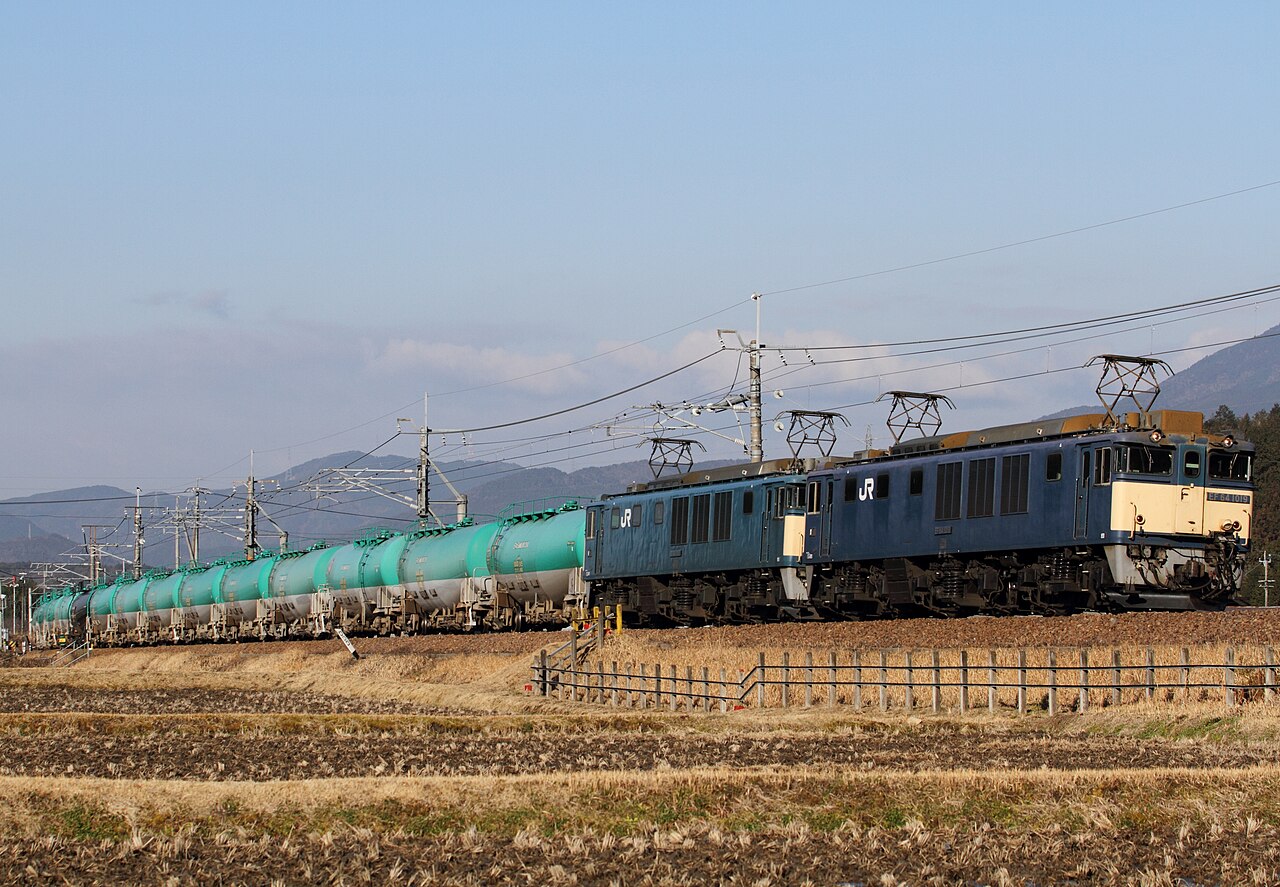
More specifically, it was conceived as a dynamic-brake-equipped F-class machine for the many DC-electrified routes with medium gradients of roughly 20 to 33 per mille, where the heavy steep-gradient gear of the Usui Pass types was unnecessary; on the Chūō Main Line in particular, double-headed ED61 locomotives using regenerative braking had suffered frequent brake failures attributed to wheel-diameter differences between the train locomotive and the banking locomotive, so an F-class type with reliable dynamic braking had been strongly sought. The two prototype locomotives, EF64 1 and 2, were delivered in 1964, built by Toshiba and Kawasaki Sharyo respectively; the basic body design was based on that of the earlier Class EF62 but used the more usual Japanese Bo-Bo-Bo wheel arrangement, and the gear ratio was raised from the EF62's 16:71 (1:4.44) to 18:69 (1:3.83) to give slightly greater emphasis to high-speed running.
Each locomotive carries six MT52 series-wound DC commutator traction motors, each rated 425 kW (one-hour rating at 750 V terminal voltage), for a total continuous output of 2,550 kW. To make the dynamic brake build up quickly, the EF64's reverser used armature-current switching rather than the field-current switching fitted to the Class EF60 and EF65. The livery from the start was all-over blue with the lower cab ends painted cream.
Full production ran from 1965 to 1976, ending with EF64 79 (the EF64-0 subclass, numbers 1–79). The first batch, EF64 1 to 12, was assigned to the Ōu Main Line between Fukushima and Yonezawa, where it assisted KiHa 80 Tsubasa DMUs over the steep gradients; with the conversion of the Ōu Main Line from 1,500 V DC to 20 kV AC in October 1968, those first twelve locomotives were transferred to the Chūō Main Line.
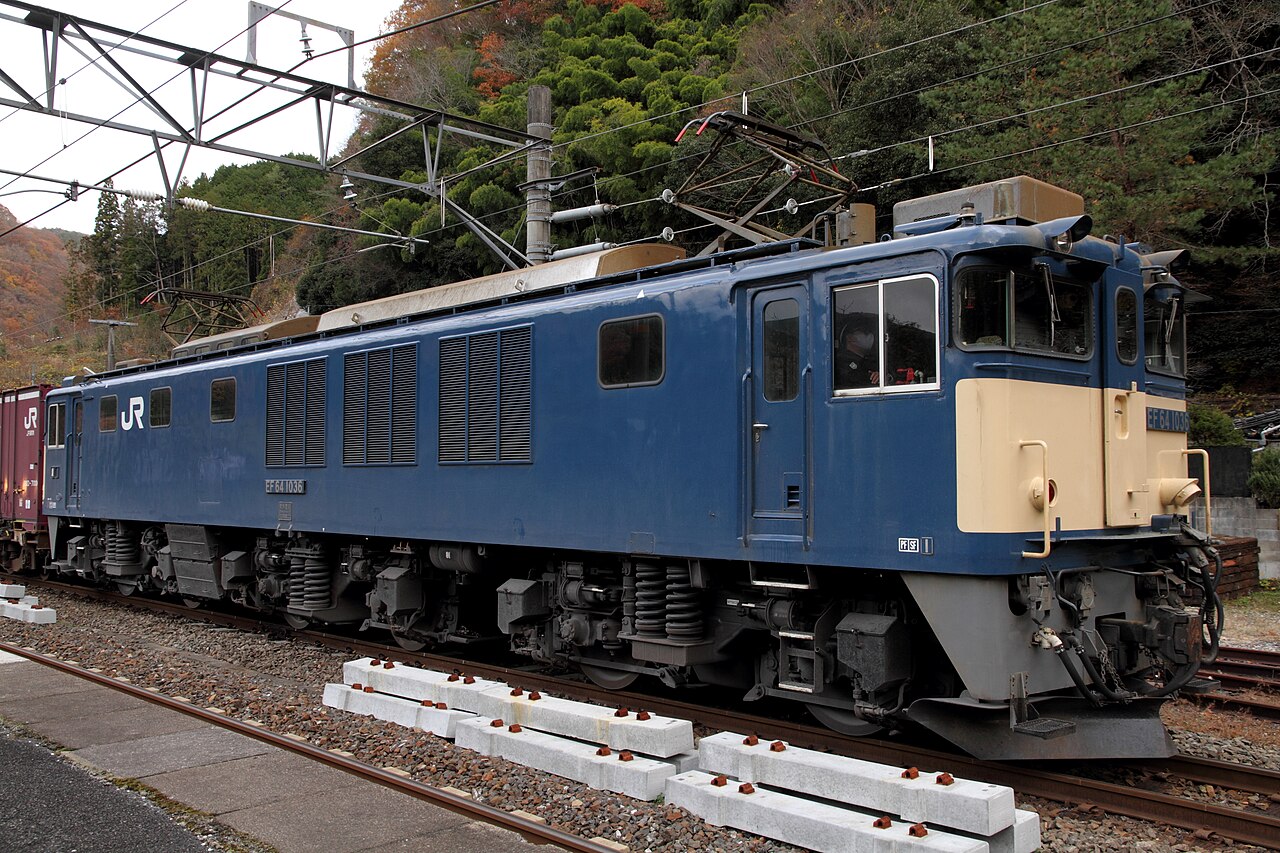
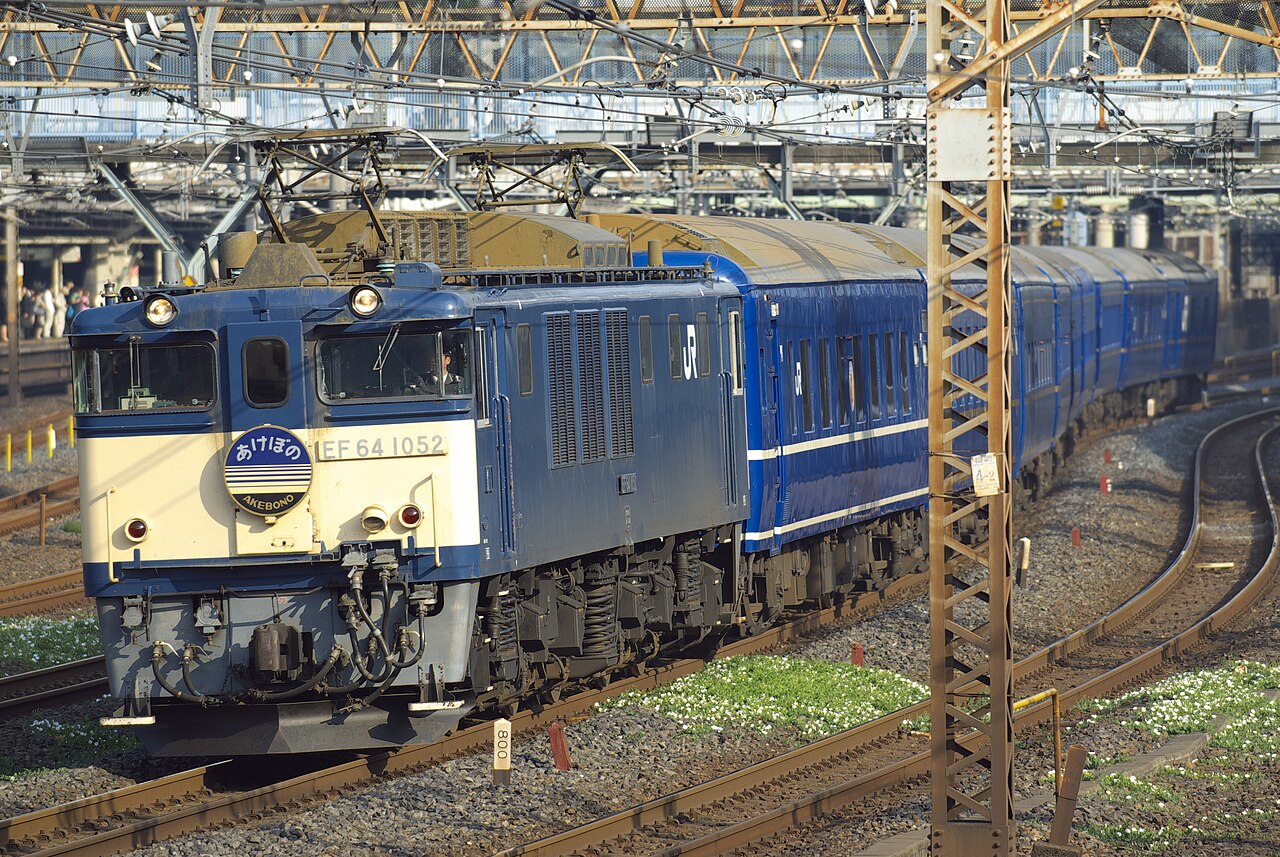
A redesigned EF64-1000 subclass (numbers 1001–1053) appeared from 1980, beginning with EF64 1001, for use on the Joetsu Line, replacing ageing Class EF15, EF16 and EF58 locomotives; the body was lengthened from 17,900 mm to 18,600 mm and given an asymmetrical appearance, and a total of 53 EF64-1000s were built by 1982 by Kawasaki and Toyo Electric. Although a new class designation had been possible for this substantially redesigned subclass, it was treated as a minor change — a new number-series of the existing class — to avoid the difficult negotiations with the labour unions that introducing a nominally new type of locomotive would have required.
The asymmetric, left-right-unequal body, unlike any other JNR electric, resulted from the heavy snow-protection measures adopted for the Joetsu Line's snow country: heat-generating equipment such as the main resistors and their blowers was concentrated in a central second equipment room so that resistor exhaust heat could be recirculated against snow and ice. One EF64-1000, EF64 1011, was Kawasaki Heavy Industries' 4,500th locomotive (counting steam, electric and diesel types together) and was marked with a commemorative ceremony at the Hyōgo Works.
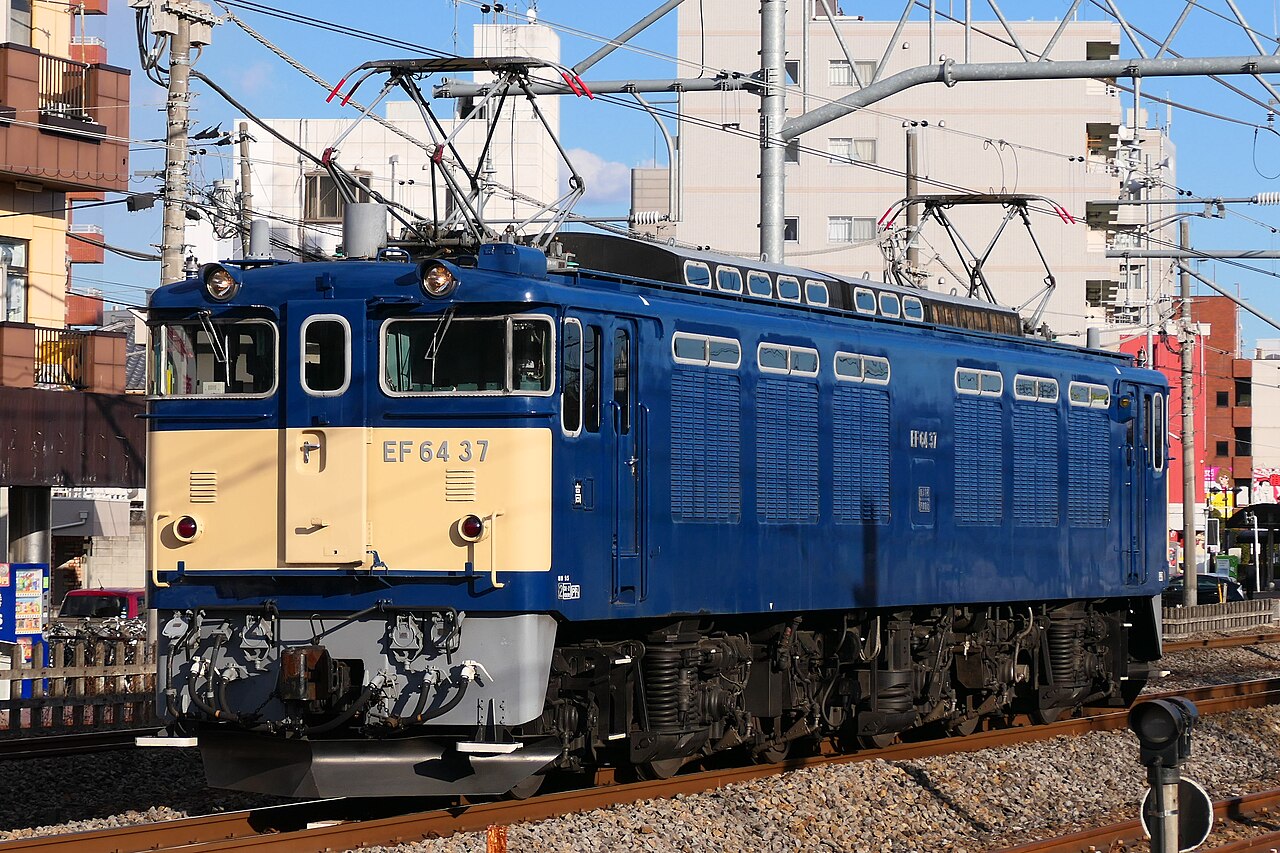
In total 132 locomotives were built between 1964 and 1982. The locomotive has a maximum speed of 100 km/h and a power output of 2.55 MW (2,550 kW). From 1996 the EF64-0s underwent a life-extension refurbishment programme, starting with EF64 67, carried out at Omiya and Hiroshima Works and accompanied by JR Freight liveries; the first EF64-1000, EF64 1015, was refurbished in 2003. There have been no accident-related withdrawals of the class, but the first member was withdrawn in 2003 following the introduction of the JR Freight Class EH200. As of 1 April 2016, 47 EF64s remained in service, with eight (including the sole remaining EF64-0, EF64 37) operated by JR East and 39 EF64-1000s operated by JR Freight.
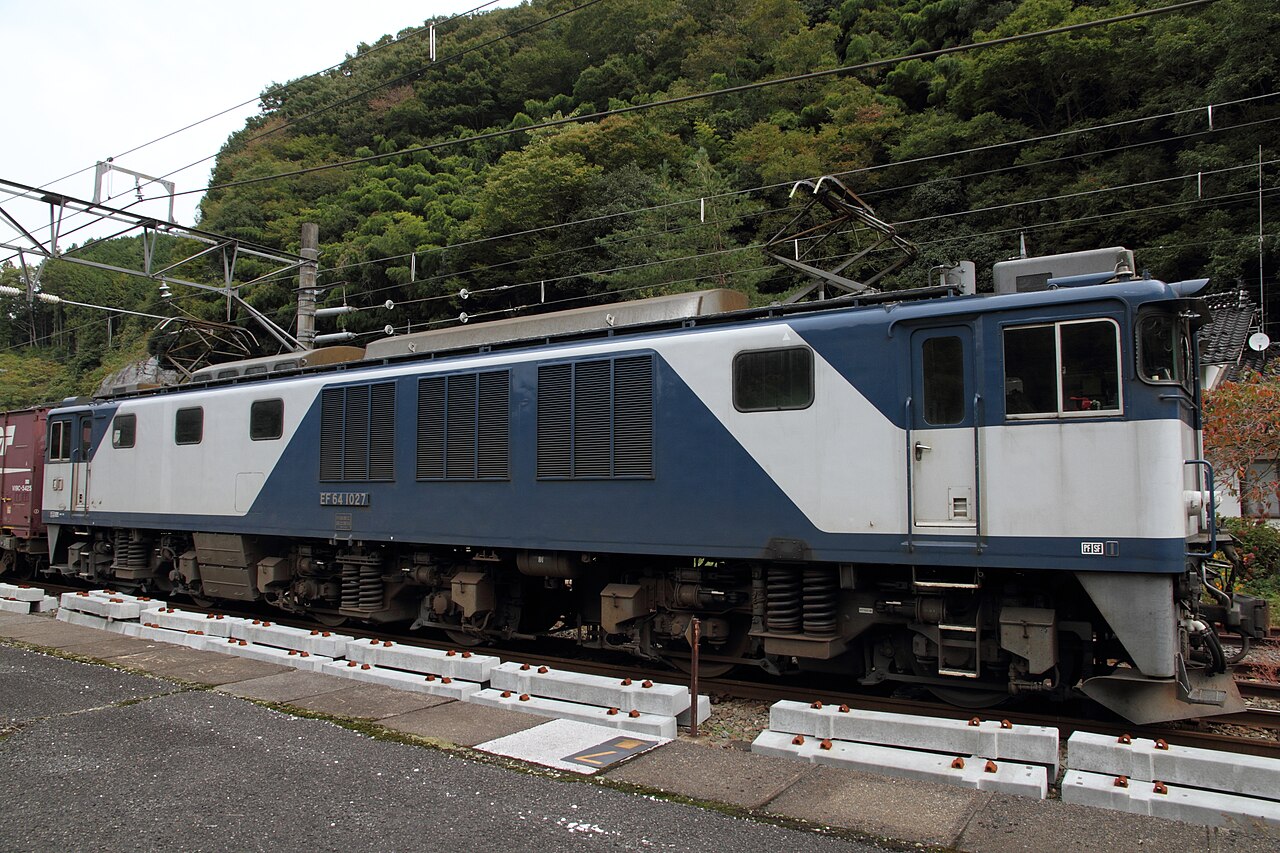
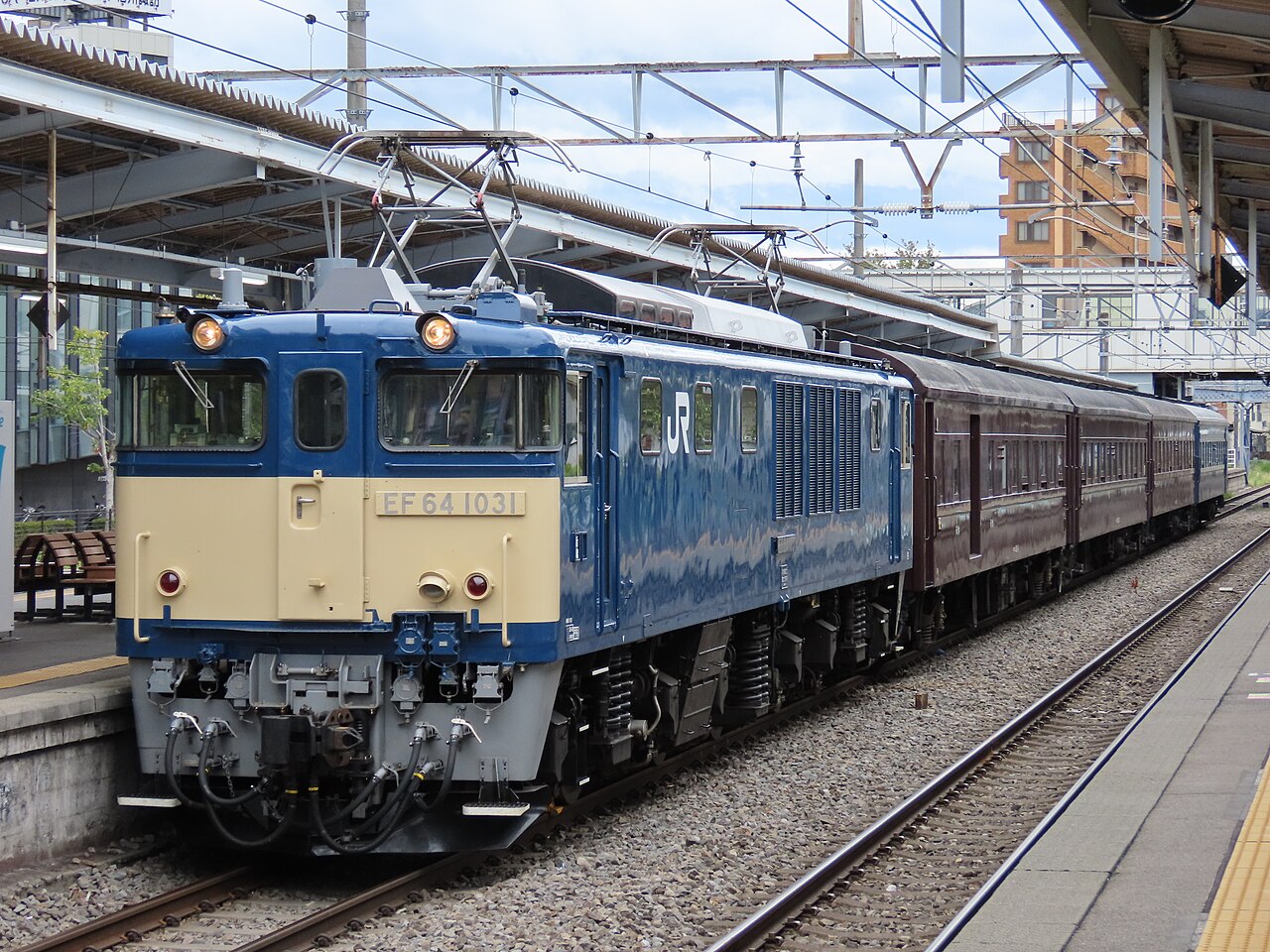
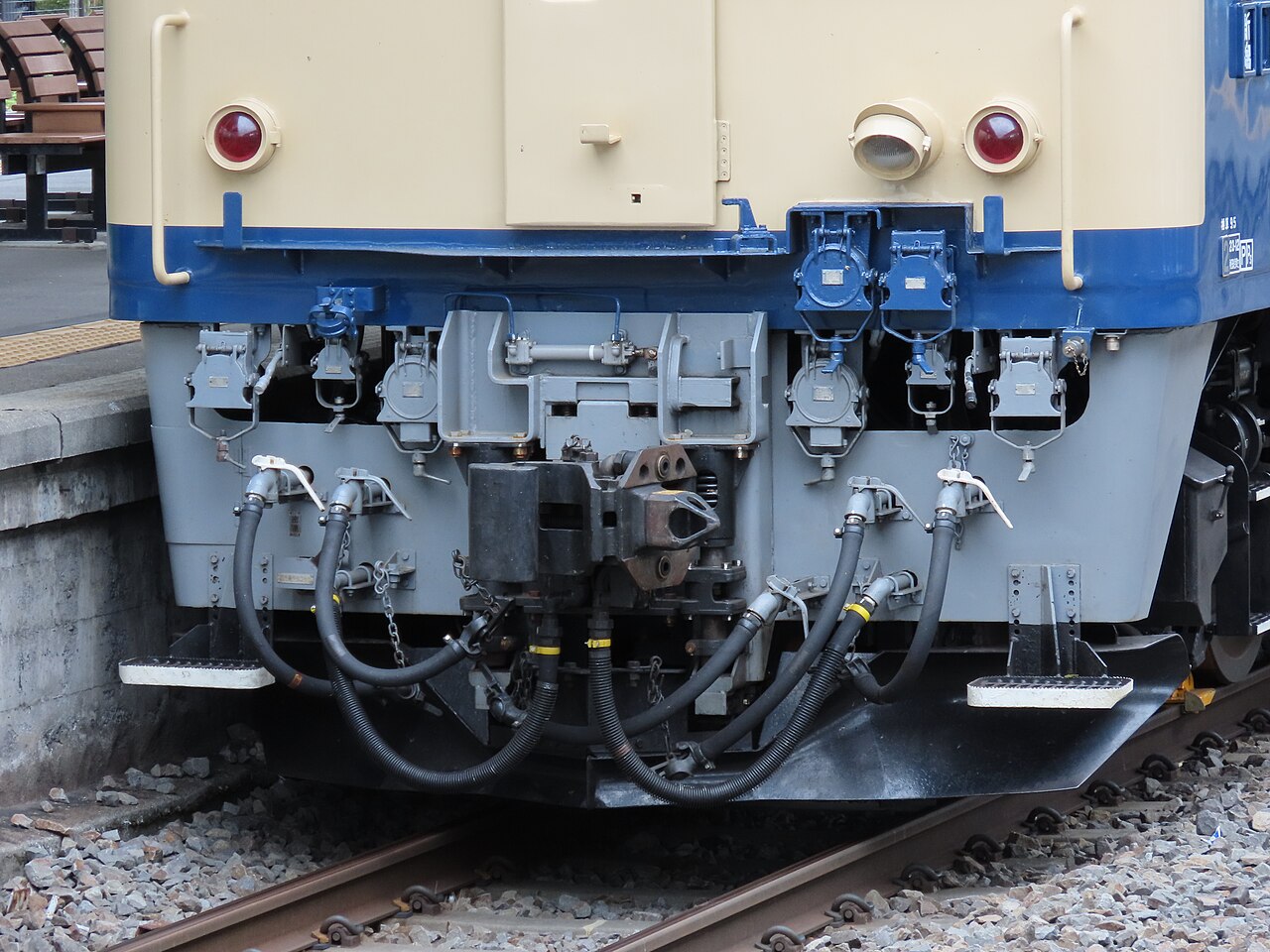
The type has worn several special liveries, including the white-and-blue Euroliner scheme (EF64 66 from 1985, the first EF64 to carry a livery other than standard blue, and EF64 35 from 1990) and all-over brown schemes on EF64 37 (2003) and EF64 41 (2006). Three JR East EF64-1000s (EF64 1030 to 1032) were fitted with dual-head couplers and brake-translation equipment to haul electric multiple units, and because they were also used to move withdrawn cars to scrapping they acquired the enthusiast nickname 'Shinigami' (Grim Reaper). As of 2014, two Class EF64 locomotives were preserved: EF64 18, in a park close to Katsunuma-budōkyō Station on the Chūō Main Line in Koshu, Yamanashi, and EF64 22, whose cab end only is privately preserved in Tottori Prefecture.
Timeline
- 1964The two prototype locomotives, EF64 1 and 2, are delivered, built by Toshiba and Kawasaki Sharyo respectively; the class is introduced to replace ageing EF16 locomotives on the steeply-graded Ōu and Chūō main lines.
- 1968With the conversion of the Ōu Main Line (Fukushima–Yonezawa, over the Itaya Pass) from 1,500 V DC to 20 kV AC, the first twelve EF64-0 locomotives end Ōu Main Line service and are transferred to the Chūō Main Line.
- 1980The redesigned EF64-1000 subclass enters service, beginning with EF64 1001, on the Joetsu Line, replacing ageing Class EF15, EF16 and EF58 locomotives; 53 EF64-1000s (numbers 1001–1053) are built by 1982 by Kawasaki and Toyo Electric.
- 1982Production ends with EF64 1053, completed on 28 October 1982 — the last newly-built locomotive made for Japanese National Railways. A total of 132 EF64s (79 of the EF64-0 subclass and 53 of the EF64-1000 subclass) were built between 1964 and 1982.
- 1987On the privatisation of Japanese National Railways, all EF64s pass to the JR Group: 113 (about 85 percent) to JR Freight, 14 to JR East, 3 to JR Central and 2 to JR West.
- 2003The first member of the class is withdrawn, following the introduction of the JR Freight Class EH200; there had been no accident-related withdrawals of EF64s.
- 2016As of 1 April 2016, 47 EF64s remain in service — eight (including the sole remaining EF64-0, EF64 37) with JR East and 39 EF64-1000s with JR Freight.
- 2026From the 14 March 2026 timetable revision, EF64s are completely withdrawn from Chūō West Line freight working (replaced by Classes EH200 and EF210); after JR East's last examples (EF64 1031 and 1032) are retired, no passenger railway company operates the class, and the only remaining regular EF64 duty is three workings on the Hakubi Line for JR Freight.
Sources
Facts last verified 6 June 2026.
Gallery 5 photos
Every photo for this page — tap any image to view it full-size. All from Wikimedia Commons (credit under each).