History
The oldest part of the line is the section between Tadotsu and Kotohira, opened in 1889 by the Sanuki Railway Company. According to the Japanese-language account, the Sanuki Railway was bought by the San'yō Railway on 1 December 1904 and then nationalised on 1 December 1906; the English account records the nationalisation simply as 1906. The line was assembled over the following six decades from several originally separate routes. The Kotohira–Awa Ikeda section opened in 1914 and connected to the Tokushima line. The Susaki–Kōchi–Kusaka section opened in 1924 and was extended northward in stages between 1925 and 1935, meeting the northern section at Minawa — the line from Awa Ikeda having been extended there in 1931. The western end was completed last: the Susaki–Tosakume section opened in 1939, with extensions to Kageno in 1947 and through to Kubokawa in 1951, the year the route reached its present full length.
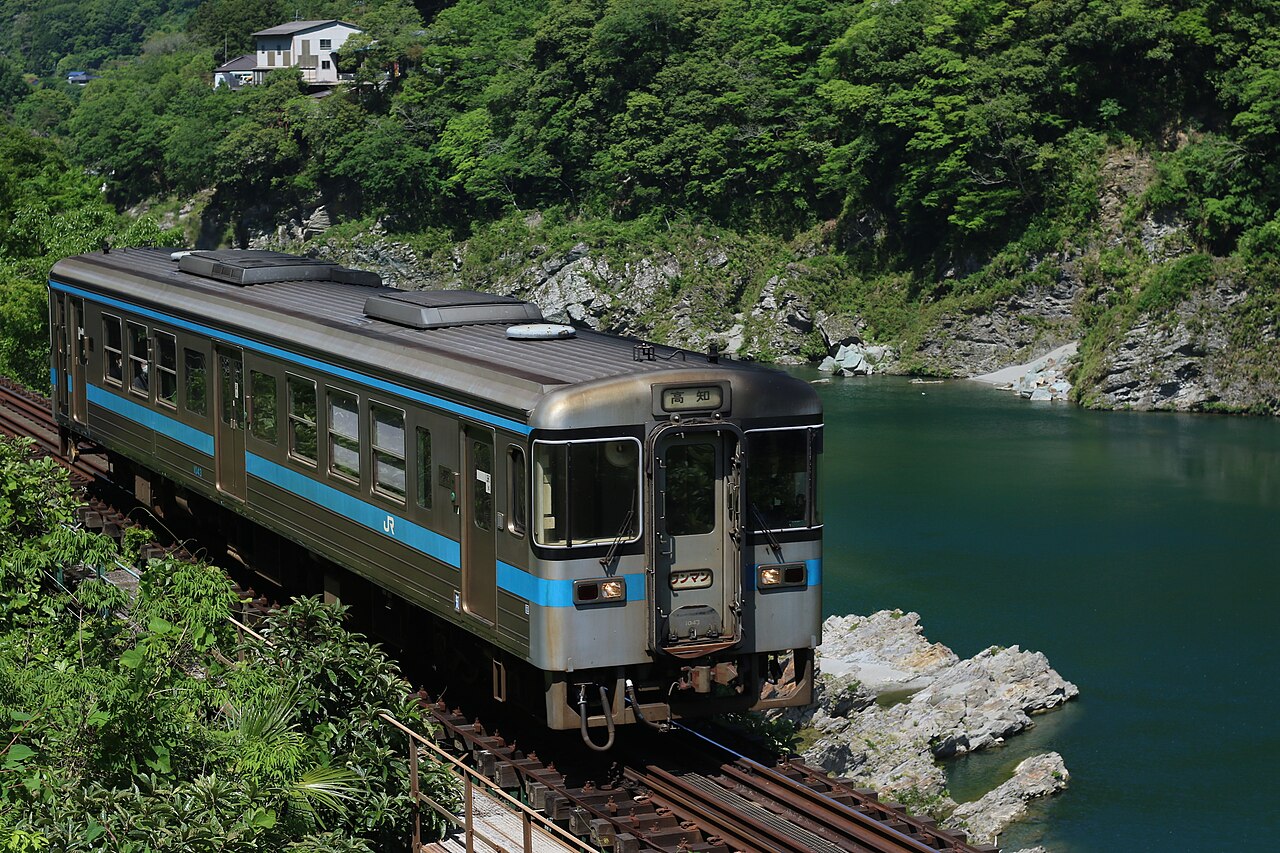
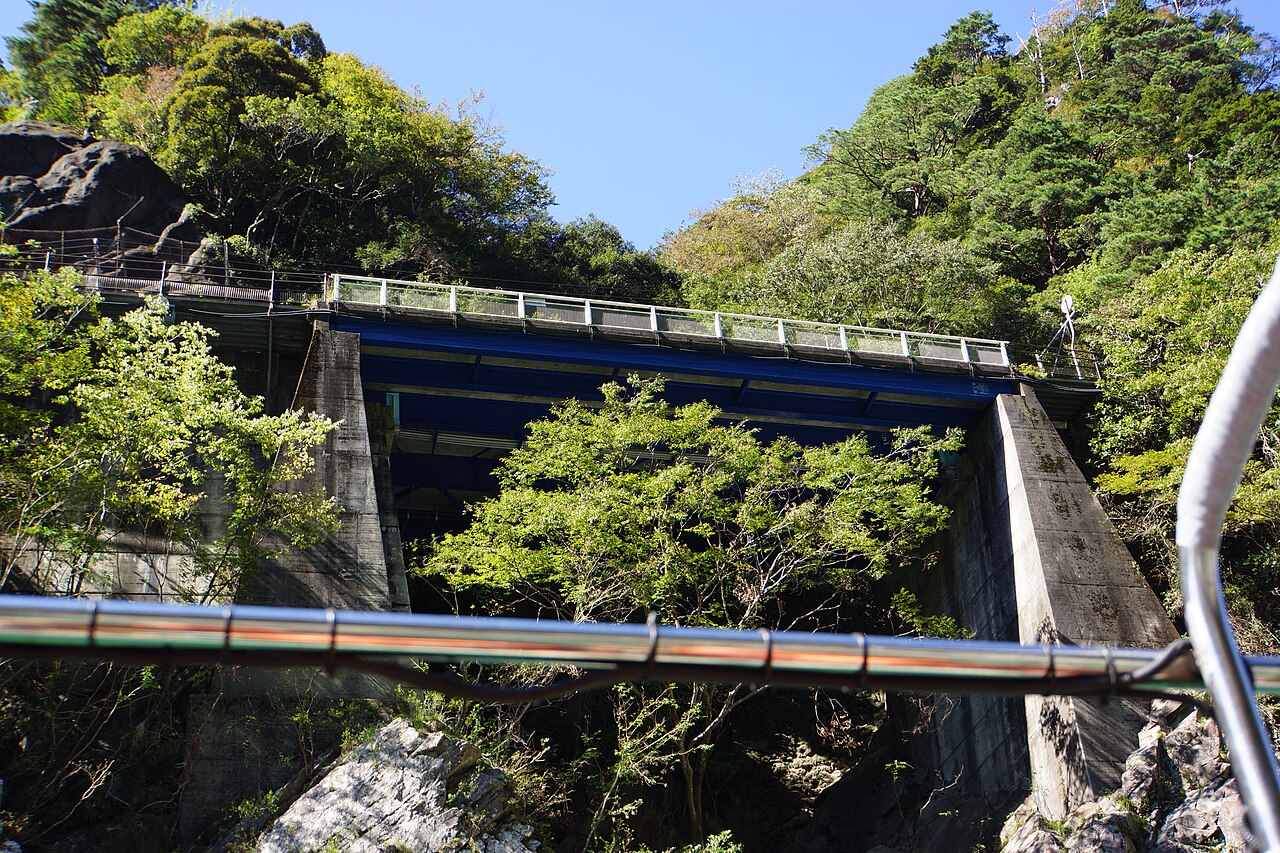
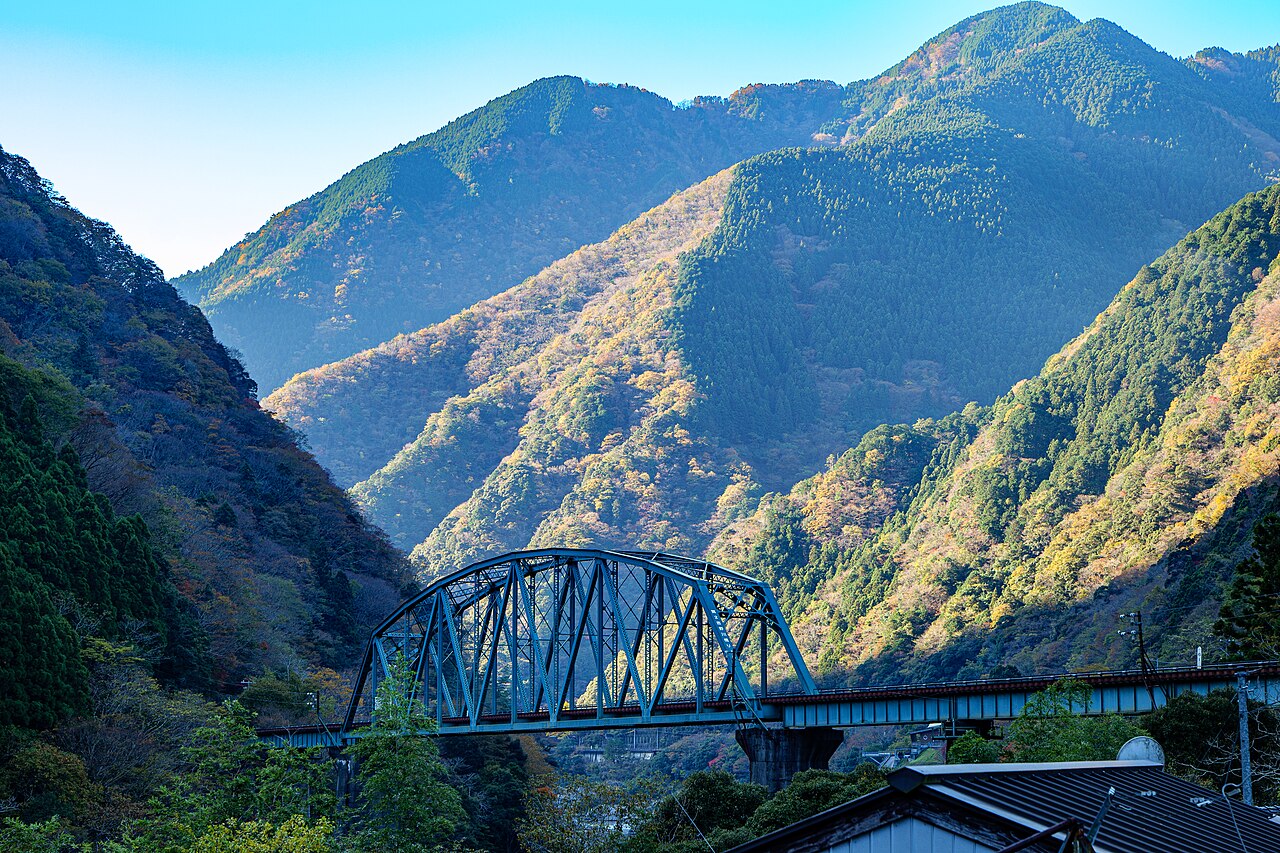
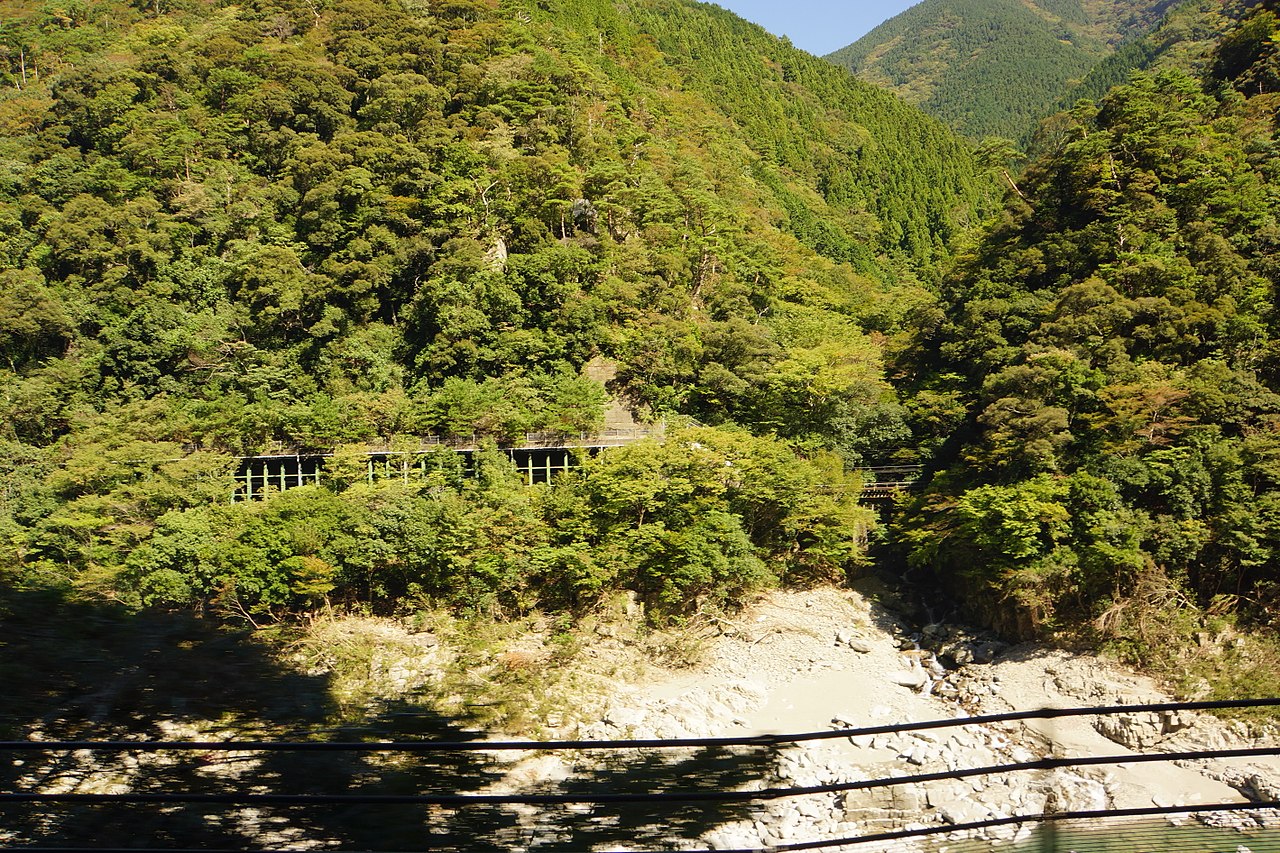
The central, mountainous stretch through the Tokushima–Kōchi prefectural border was a notoriously disaster-prone section. Following the Japanese-language source, it crosses the Sanbagawa metamorphic belt and was laid along steep slopes above the Yoshino River and its tributaries, so it was repeatedly struck by landslides and flood damage — disruptions severe enough that the line earned the grim nickname "Dosan-sen" written with the character for "tragedy" (土惨線). The single worst event was the Shigetō disaster of 5 July 1972, when a landslide of roughly 100,000 cubic metres swept the station and a stopped train; 60 people died, including four JNR staff, and the line was closed for 23 days. A long programme of disaster-prevention realignments responded to these hazards: a new alignment via the 4,180 m Ōboke Tunnel opened on 25 November 1968, and one via the 2,583 m Ōsugi Tunnel on 26 February 1973. When the Tosa-Kitagawa relocation opened in March 1986, the line's operating distance was revised from 198.9 km to 198.7 km.
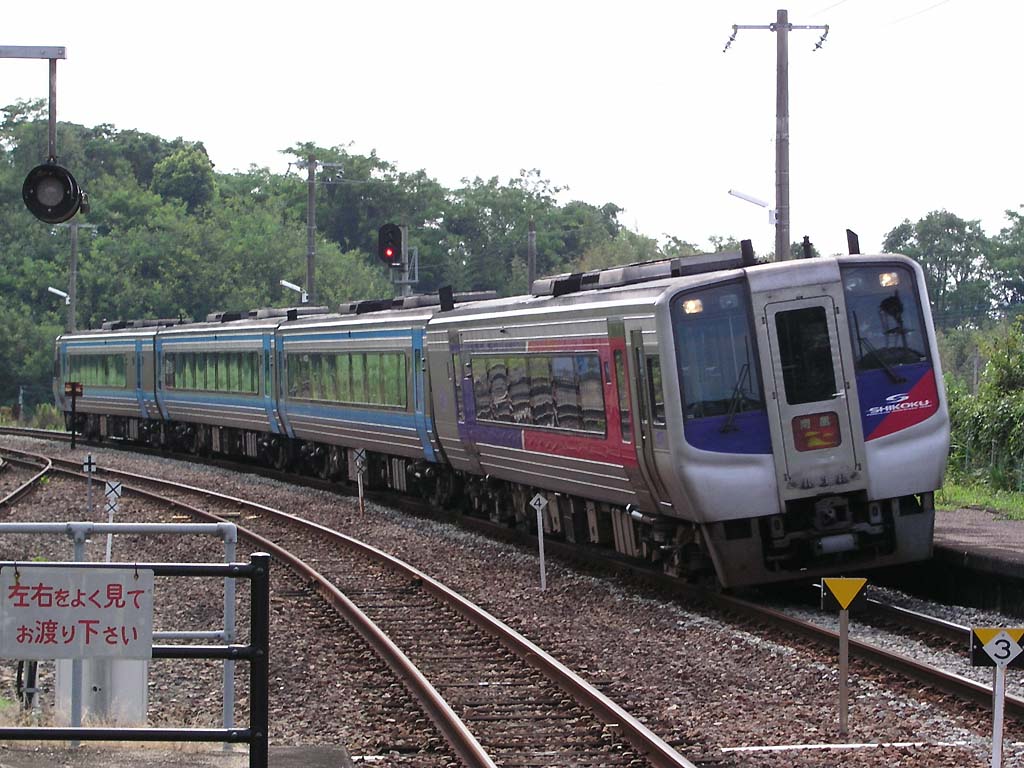
Signalling and traction modernised in parallel. Centralised traffic control (CTC) was commissioned on the Tadotsu–Kōchi section in 1967 and extended to Kubokawa in 1986. In 1987, ahead of the privatisation of Japanese National Railways, the Tadotsu–Kotohira section was electrified at 1,500 V DC (on 23 March 1987). Because that electrification used a low-cost direct-suspension catenary — a consequence of tight funds at the end of the JNR era — the maximum speed of electric trains on the section is held to 85 km/h; the diesel-powered limited-express JR Shikoku 2000 series can run at 120 km/h and ordinary diesel cars at 95 km/h, so the diesel trains are faster than the electric ones over the electrified stretch. During the JNR era the line was named the Dosan Main Line (土讃本線), a name it took on 18 December 1963 when the Nakamura Line opened; after privatisation JR Shikoku renamed it the Dosan Line under a line-name revision on 1 June 1988.
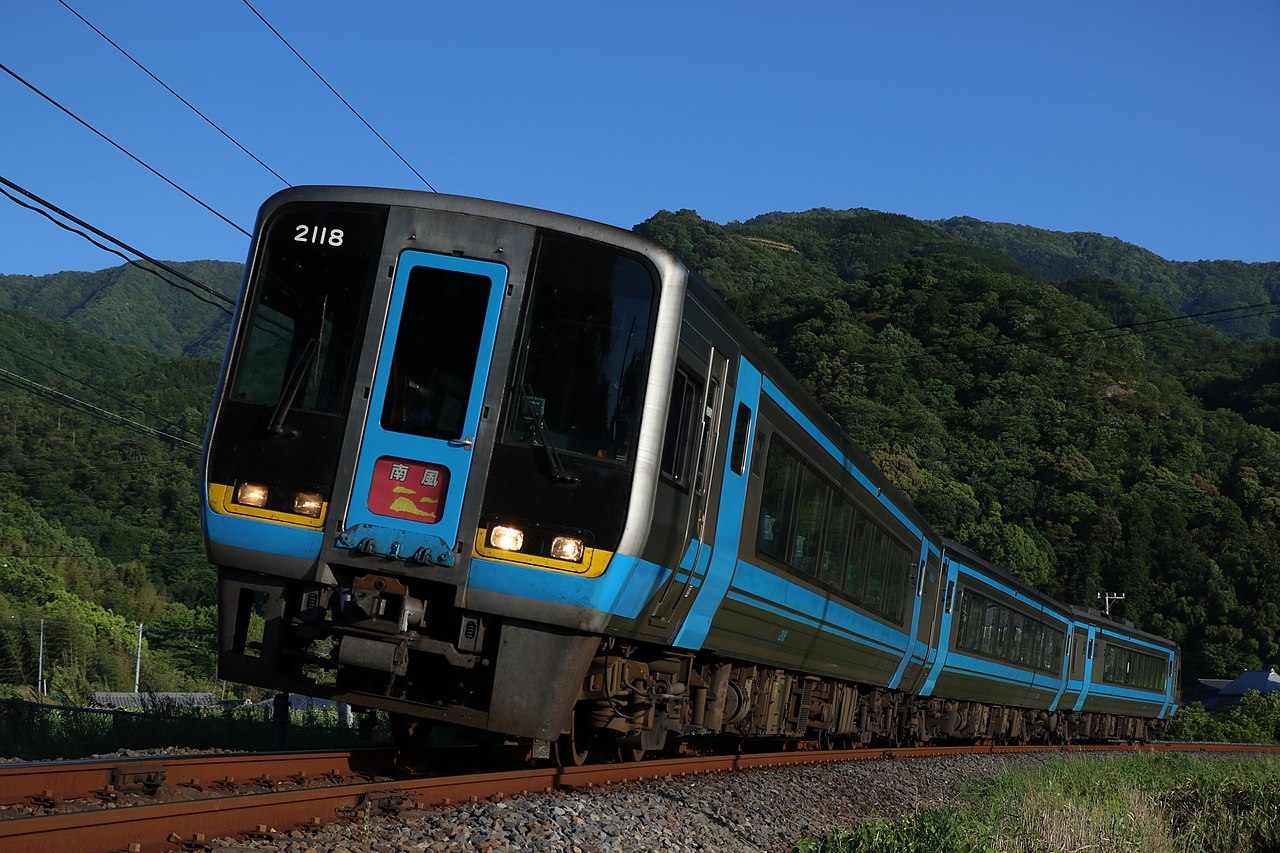
After privatisation a plan to electrify the Dosan Line onward toward Awa-Ikeda alongside the Yosan Line did not come to fruition: traffic south of Kotohira had fallen sharply, the return on investment was judged poor, and the many narrow tunnels made stringing overhead wire difficult, so JR Shikoku chose instead to introduce new high-speed diesel trains for limited-express service. In a 2006 submission to subcommittees of the Ministry of Land, Infrastructure, Transport and Tourism, JR Shikoku nonetheless listed electrification of the Kotohira–Kōchi section among its desired long-term investments. Freight services between Tadotsu and Kōchi ceased in 2005.
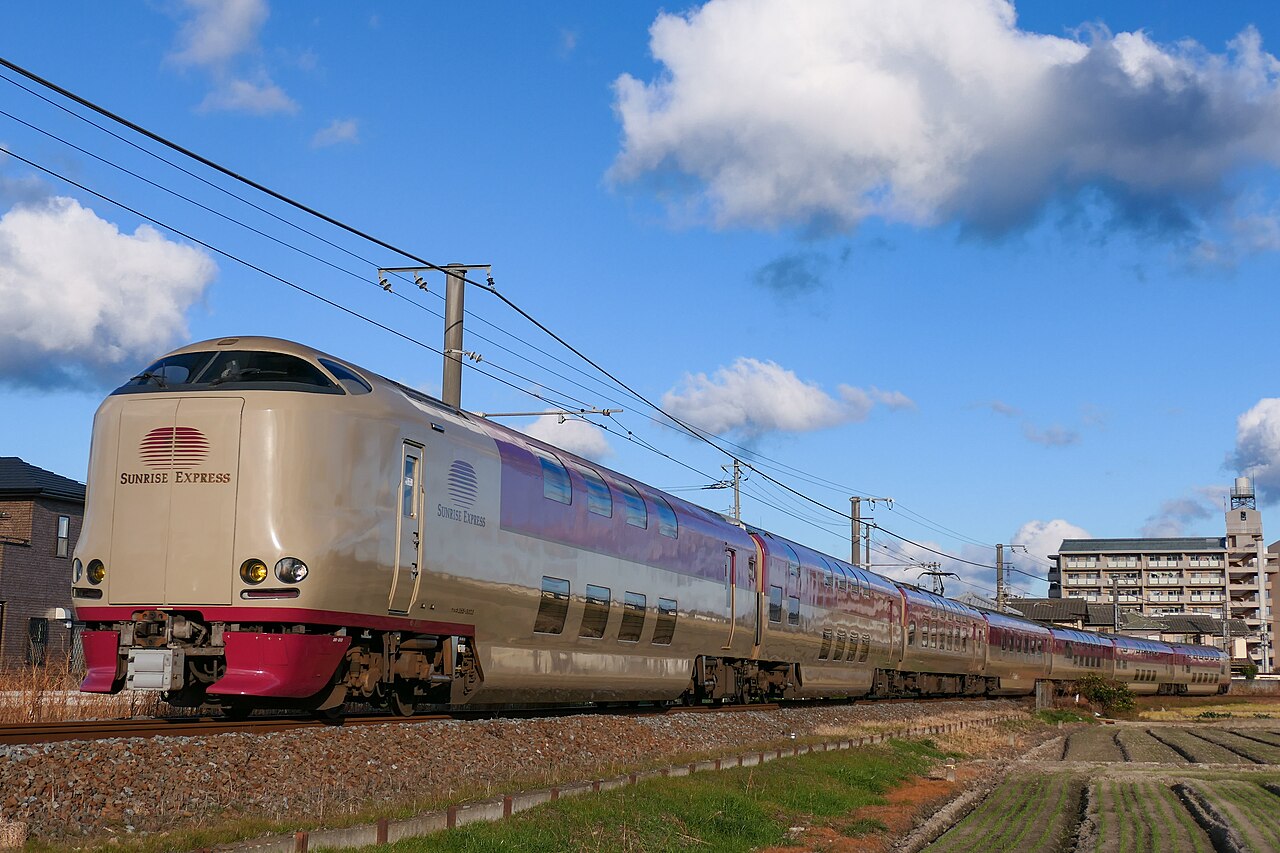
Today the line carries the Nanpū limited express, which makes 14 round-trips a day between Okayama and Kōchi, Nakamura or Sukumo, and the Shimanto limited express, which makes five round-trips a day between Takamatsu and Kōchi, Nakamura or Sukumo; the Sunport rapid service links Kotohira and Takamatsu once an hour. The maximum line speed is 120 km/h.
Timeline
- 1889The first section, between Tadotsu and Kotohira, opens; it was constructed by the Sanuki Railway Co.
- 1906The Sanuki Railway (by then via the San'yō Railway) is nationalised.
- 1914The Kotohira–Awa Ikeda section opens and connects to the Tokushima line.
- 1924The Susaki–Kōchi–Kusaka section opens (extended north in stages 1925–35).
- 1931The line from Awa Ikeda is extended to Minawa, where the northern and southern sections later meet.
- 1935The Minawa (Sanawa)–Toyonaga gap closes, making Tadotsu–Susaki continuous as the Dosan Line.
- 1939The Susaki–Tosakume section opens.
- 1947The line is extended to Kageno.
- 1951The western extension to Kubokawa is completed, giving the route its full 198.7 km length.
- 196318 December: the line is renamed the Dosan Main Line (土讃本線) on the opening of the Nakamura Line.
- 1967CTC signalling is commissioned between Tadotsu and Kōchi.
- 196825 November: a new alignment via the 4,180 m Ōboke Tunnel opens.
- 19725 July: the Shigetō disaster — a ~100,000 m³ landslide kills 60 people (incl. 4 JNR staff); the line is closed for 23 days.
- 197326 February: a new alignment via the 2,583 m Ōsugi Tunnel opens.
- 1986CTC signalling is extended to Kubokawa; the Tosa-Kitagawa relocation revises the operating distance from 198.9 to 198.7 km.
- 198723 March: the Tadotsu–Kotohira section is electrified at 1,500 V DC, just before JNR privatisation. 1 April: the line passes to JR Shikoku.
- 19881 June: JR Shikoku renames the line the Dosan Line (土讃線) under a line-name revision.
- 2005Freight trains cease operating between Tadotsu and Kōchi.
- 2006JR Shikoku cites electrification of the Kotohira–Kōchi section as a desired long-term investment in a submission to MLIT subcommittees.
Sources
Facts last verified 3 June 2026.
Gallery 6 photos
Every photo for this page — tap any image to view it full-size. All from Wikimedia Commons (credit under each).