History
The route belongs to a much older plan. The Aomori-to-Sapporo corridor was among the five so-called Seibi Shinkansen lines whose construction was set in motion by the nationwide Shinkansen development framework, with the development plan for these routes decided in 1973. The deteriorating finances of the former Japanese National Railways froze the work, and it was only in 2005 that construction began on the first stage, between Shin-Aomori and the provisionally named Shin-Hakodate. The railway facilities are built and owned by the Japan Railway Construction, Transport and Technology Agency (JRTT), while JR Hokkaido operates the service. On 26 March 2016 the Shin-Aomori to Shin-Hakodate-Hokuto section entered service, and trains began running through from the Tohoku Shinkansen under a reciprocal direct-operation arrangement, carrying passengers between the southern Hokkaido region and the Kanto and Tohoku areas.
The 1970s ambitions for Shinkansen in Hokkaido reached well beyond what has been built. Alongside the main corridor, two further routes were proposed: an extension from Sapporo to Asahikawa, and a Hokkaido South Route running Oshamambe-Muroran-Sapporo, with additional, unofficial ideas to reach Abashiri, Kushiro and the Nayoro/Wakkanai direction. Those plans have been shelved indefinitely. The line also arrived as one of the last pieces of an incomplete national picture in another sense: JR Hokkaido, together with JR Shikoku and the freight operator JR Freight, remain the parts of the JR Group that have not been privatised, a reminder that the northern network has long operated on a different financial footing from the trunk Shinkansen of Honshu.
What makes the line singular is its central engineering problem: the Seikan Tunnel. The tunnel is 53.85 km long, of which 23.30 km lie beneath the sea, and it had already carried conventional narrow-gauge traffic for decades before the Shinkansen arrived. To prepare for high-speed trains, the tunnel and its approaches — the roughly 82 km stretch between the Shin-Nakaoguni signal station and Kikonai, forming the shared section with the conventional Kaikyo Line — were converted to dual gauge, laid so that the Shinkansen's 1,435 mm standard gauge and the existing 1,067 mm narrow gauge share the same right of way using three-rail track. Three-rail track had been used before where the Shinkansen network touches conventional lines, on the Akita mini-Shinkansen, but the Hokkaido Shinkansen was the first full-standard Shinkansen line to adopt it. The exact dual-gauge length is given as 82.041 km, measured between the junction points managed within the Shin-Nakaoguni and Kikonai station limits.
Readying that shared corridor was a multi-year undertaking in its own right, and part of the work on the section shared with the Kaikyo Line was entrusted to JR Hokkaido. From the March 2008 timetable revision the late-night freight-free window on the Kaikyo Line was widened to four hours so the conversion could proceed: long rails were carried to site from track bases established within the Tsugaru-Imabetsu and Shiriuchi station areas, three-rail track was laid in the field, and tunnel tension balancers were fitted to regulate the catenary tension. The wider network fell into place in parallel — in December 2010 the opening of the Hachinohe-to-Shin-Aomori section completed the Tohoku Shinkansen, providing the Honshu trunk onto which the Hokkaido Shinkansen would later through-run. When the line opened in 2016, the parallel narrow-gauge Esashi Line between Goryokaku and Kikonai was transferred from JR Hokkaido to a newly created third-sector operator, the South Hokkaido Railway Company, and rebranded as the Isaribi Line.
Sharing track with freight forced a deep compromise on speed. A Shinkansen running at full speed through the tunnel produces a pressure wave strong enough to destabilise a narrow-gauge freight train passing in the opposite direction, so trains in the shared section were originally held to 140 km/h, far below the line's 260 km/h ceiling. About fifty freight trains a day use the dual-gauge section, and they are spread across the timetable rather than confined to gaps between Shinkansen, which is why the restriction could not simply be scheduled away. In March 2019 the limit through the section was raised to 160 km/h. Because of the constraint, the fastest journey between Tokyo and Shin-Hakodate-Hokuto stands at three hours and fifty-seven minutes.
The restriction has since been eased in stages, but only at the margins of the calendar. During holiday periods such as the New Year, Obon and Golden Week, when freight traffic thins out and passenger demand rises, JR Hokkaido sets aside windows in which only Shinkansen trains run through the tunnel — a time-band-separation method — and allows higher speeds. The scheme was first applied over the 2020-21 New Year holiday and again during Golden Week in early May 2021, when speeds in the dual-gauge section were lifted to 210 km/h. In January 2024 JR Hokkaido announced that during major holiday periods the maximum would be raised further, to the full 260 km/h, inside the Seikan Tunnel itself. Reaching that speed in normal everyday operation would require additional measures, among them a system to automatically slow a Shinkansen when it passes a narrow-gauge train, or the loading of freight onto specially built standard-gauge carrier vehicles — a train-on-train concept engineered to withstand the passing pressure waves. Such a system, if built, has been estimated to cut about twelve minutes from the journey.
The shared-running problem in the Seikan Tunnel has been studied as a defined policy question rather than left to improvisation. A range of approaches has been weighed: separating the operating windows of high-speed and conventional trains; having the Shinkansen decelerate when passing a freight train; introducing a freight-dedicated Shinkansen such as the train-on-train system; building a second Seikan tunnel; and installing a partition wall between the up and down tracks. An interim policy on the shared-running issue, set out on 29 March 2013, aimed under the time-band-separation approach to achieve one daily high-speed round trip from around spring 2018, contingent on verification of the required safety technology once sound-barrier and related works were complete. The staged easing of the tunnel speed limit in the years since has followed from this groundwork.
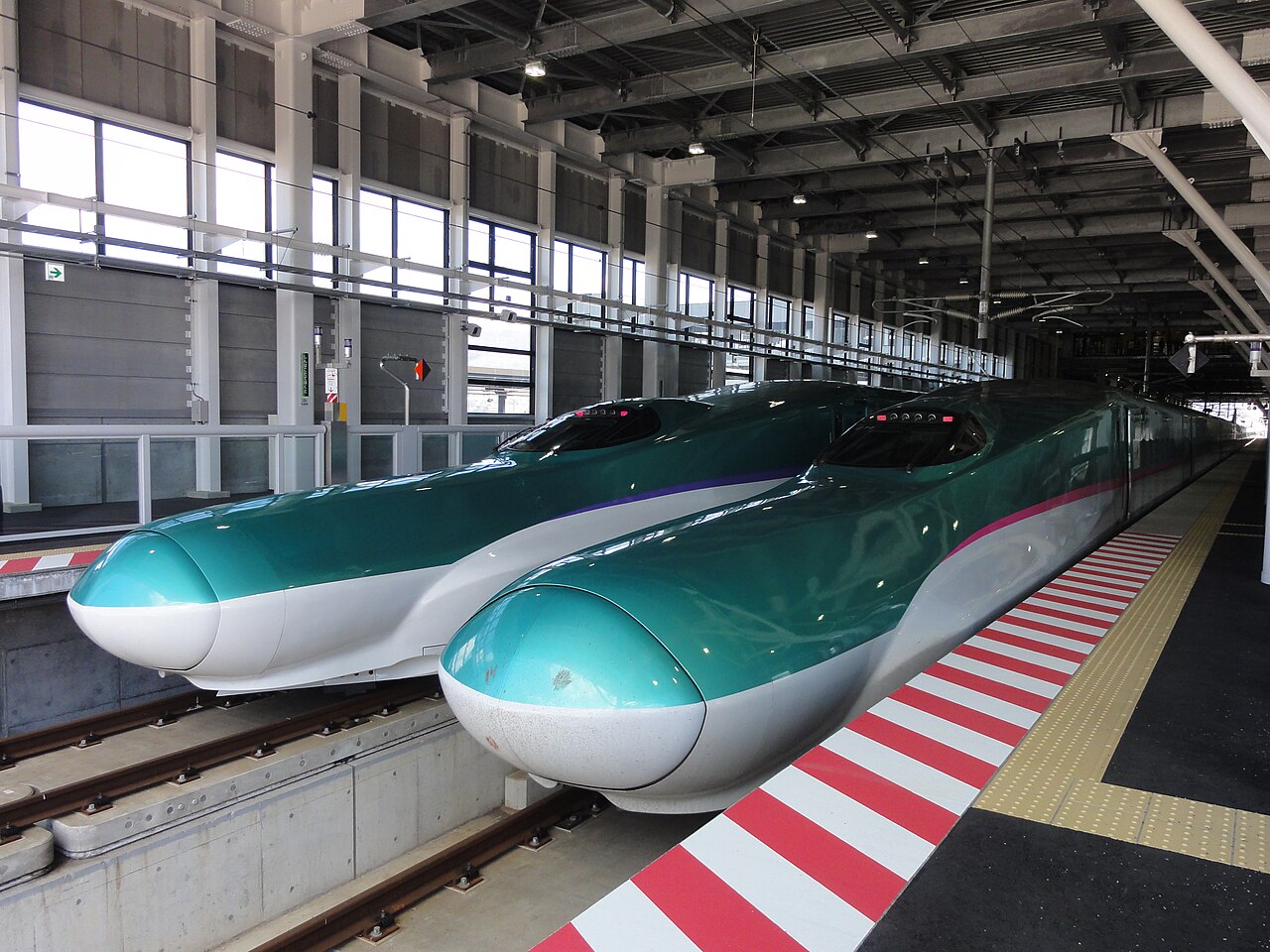
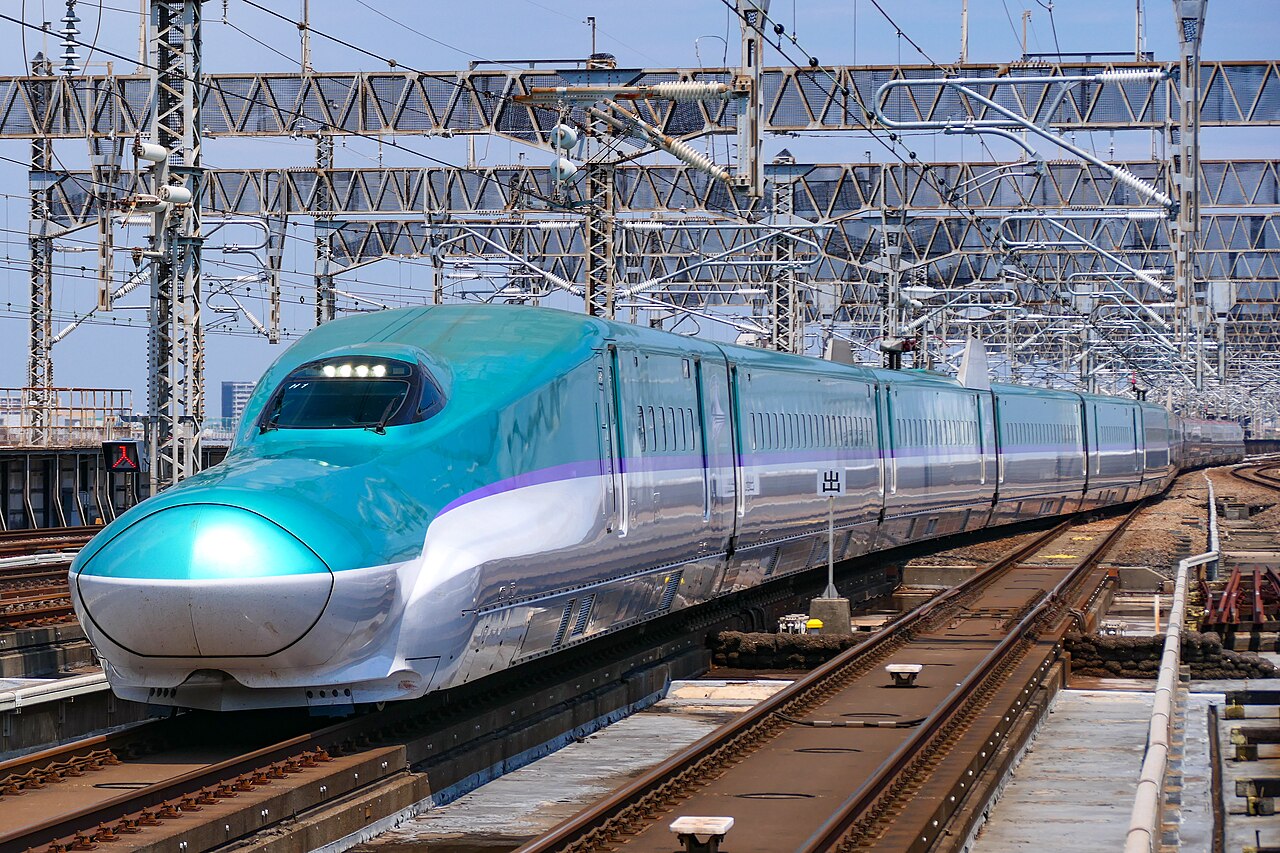
All services are formed of ten-car trainsets: JR East's E5 series and JR Hokkaido's own H5 series, which is closely based on the E5 design that JR East had been running since 2011. JR Hokkaido placed its order for four ten-car H5 sets in February 2014, for use from the March 2016 opening; the trainsets carry interior touches such as a snowflake motif suited to the northern setting. Two named services run on the line: the faster Hayabusa, which links Shin-Hakodate-Hokuto and Shin-Aomori with through trains continuing to Sendai or Tokyo over the Tohoku Shinkansen, and the Hayate, a more local service between Shin-Hakodate-Hokuto and Shin-Aomori with some trains carrying on to Morioka. The initial timetable provided ten daily Hayabusa round trips between Tokyo and Shin-Hakodate-Hokuto, plus a single daily round trip between Sendai and Shin-Hakodate-Hokuto, with the Hayate adding round trips from Morioka and from Shin-Aomori. The line is double-tracked throughout, electrified at 25,000 V 50 Hz, and signalled with cab signalling under DS-ATC train protection.
In its first year the line drew well above the modest pre-opening forecast. JR Hokkaido reported about 2.292 million users in fiscal 2016, an average of roughly 6,300 per day, which was 164 percent of the figure for the predecessor conventional service in the previous year and comfortably ahead of the pre-opening expectation of 5,000 a day, at an average seat-occupancy of 32 percent. The shift it produced in the Tokyo-area-to-southern-Hokkaido market is sharper still: rail use on that corridor had been about 220,000 in fiscal 2005 and 170,000 in fiscal 2014, but rose to about 550,000 in fiscal 2016 after the line opened — roughly 3.3 times the pre-opening level — and held at about 380,000 in fiscal 2017, above its former level. The competitive context is the air corridor between the Sapporo area and Tokyo, which in 2024 ranked as the second-busiest passenger air route in the world; a faster rail link is expected to draw some of that traffic onto the train, as earlier Shinkansen openings have done elsewhere in Japan.
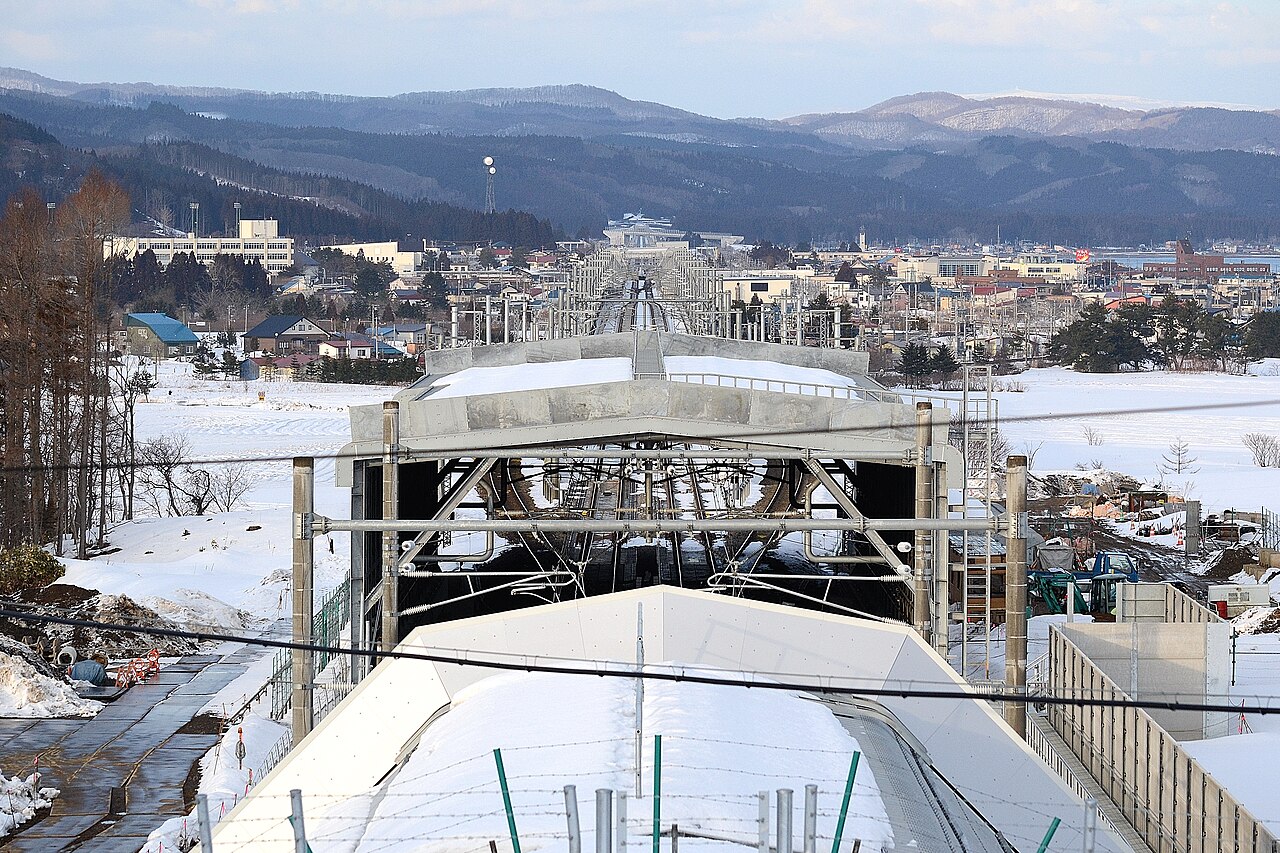
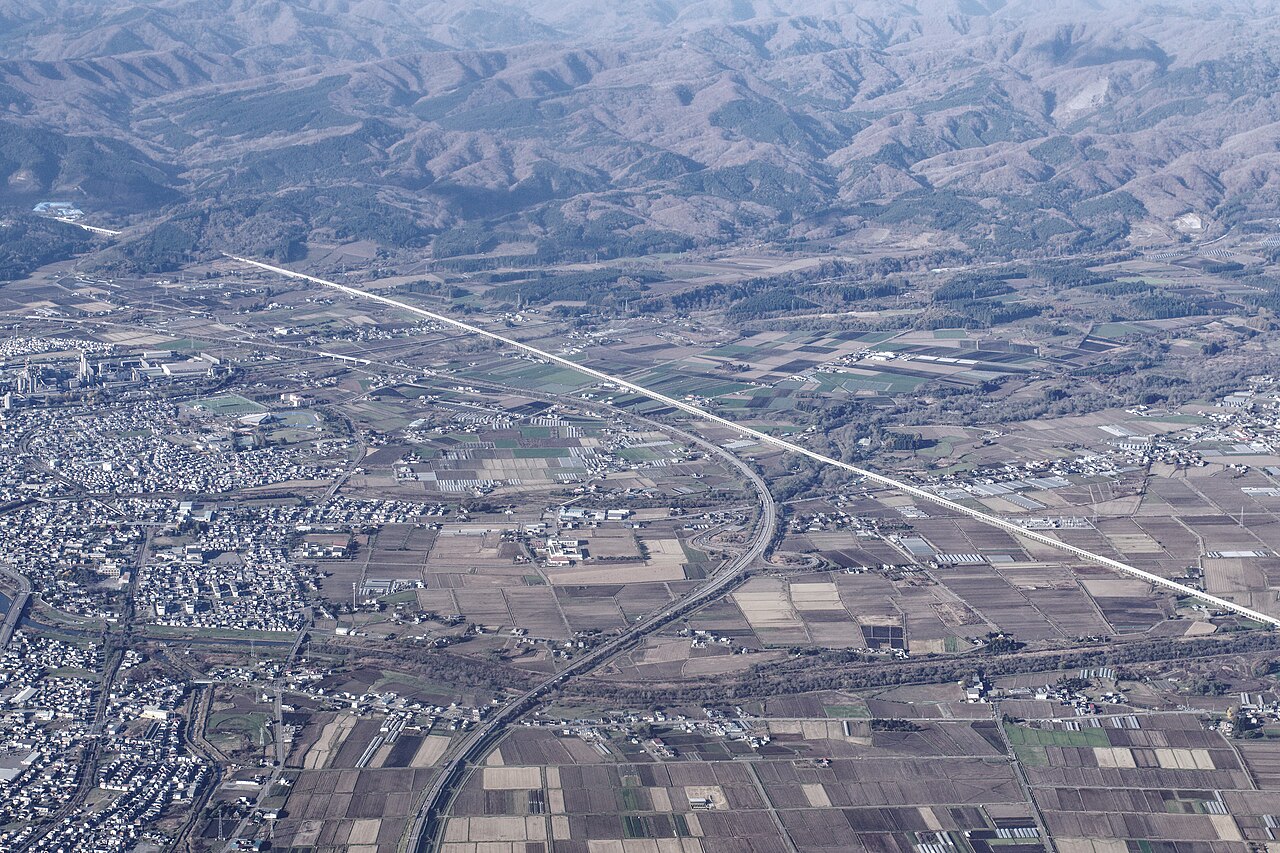
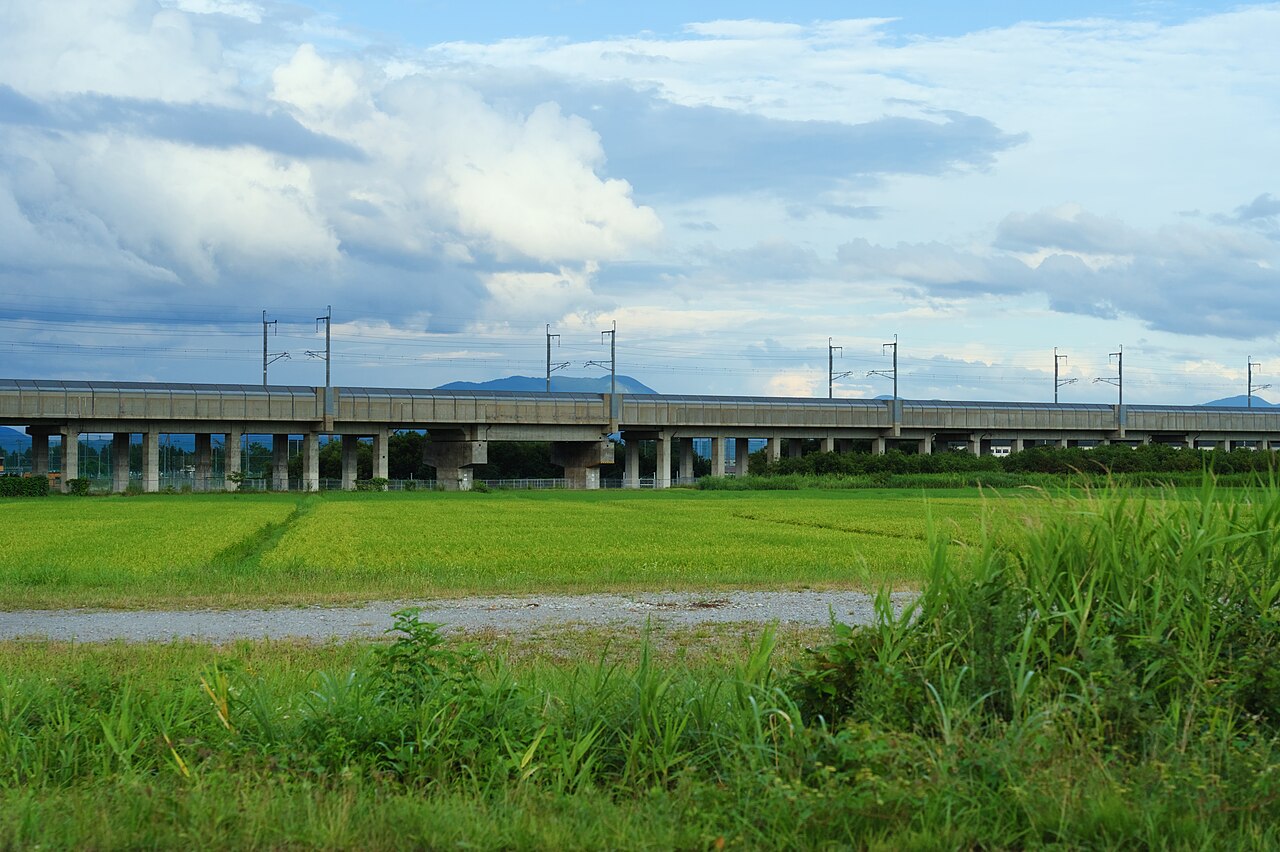
The approach to opening was deliberate and heavily tested. Track-laying between Shin-Aomori and Shin-Hakodate-Hokuto was marked by a rail-joining ceremony at Kikonai on 1 November 2014, and test running on the Hokkaido-side tracks began on 1 December 2014, starting at low speed and reaching the line's maximum of 260 km/h later that month. Test running was then extended through the Seikan Tunnel as far as Okutsugaru-Imabetsu in December 2014, and from 21 April 2015 it was carried south of Okutsugaru-Imabetsu, with a test train reaching Shin-Aomori Station for the first time. The in-service section is dominated by tunnelling: on the Shin-Aomori-to-Shin-Hakodate-Hokuto stretch the route is about 65 percent tunnel, with the remainder split among viaduct, embankment and bridge. There are four stations on the open line — Shin-Aomori, Okutsugaru-Imabetsu, Kikonai and Shin-Hakodate-Hokuto — with Shin-Aomori managed by JR East as the junction with the Tohoku Shinkansen; only Shin-Aomori and Shin-Hakodate-Hokuto see every train stop, while some services pass through the two intermediate stations. Measured in operating distance, Shin-Hakodate-Hokuto lies 148.8 km from Shin-Aomori and 862.5 km from Tokyo.
Winter shapes operations on the line in ways unfamiliar to the Shinkansen of warmer regions. Running through districts of heavy snowfall, trains contend with snow that can damage equipment, cause a moving train to miss a switch, and above all accrete on the bogies, where build-up has been significant enough to cause damage or delays; estimates based on weather data point to as much as a few centimetres of accretion on the bogies by the time a train reaches a station. The season also weighs on demand: in January and February, recorded seat occupancy has fallen to a low of around 19 percent, the seasonal trough of a line whose first-year average occupancy was 32 percent.
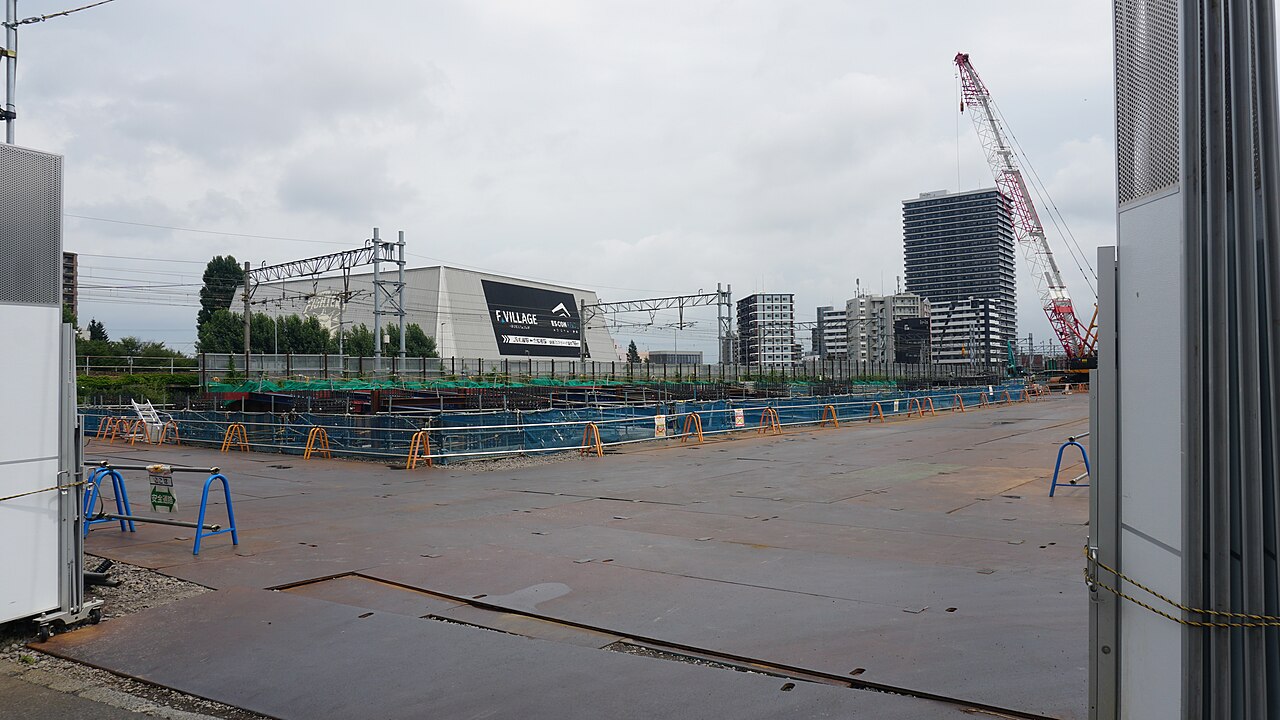
The line's future turns on the long-planned extension north to Sapporo, which would add a further stretch of new line and is under construction. JRTT had targeted an opening at the end of fiscal 2030, but on 8 May 2024 it reported to the Ministry of Land, Infrastructure, Transport and Tourism that opening by the end of fiscal 2030 had become extremely difficult, citing the slow progress of tunnelling. A subsequent report by a ministry expert panel in 2025 framed a prospective opening around the end of fiscal 2038 under the current work programme, while explicitly withholding a firm new opening date and warning that considerable uncertainty remained, including the possibility of further multi-year delays. In April 2026, the Ministry of Finance estimated that rising construction costs had reduced the extension's cost-benefit ratio to 0.6, below the 1.0 threshold normally required for new Shinkansen construction. On the still-to-be-built Shin-Hakodate-Hokuto to Sapporo segment, JR Hokkaido has announced that it will fund, at its own expense, a raising of the maximum speed to 320 km/h. A 2023 reassessment of the extension projected that, once it opens, the Tokyo-Sapporo journey would fall from 7 hours 44 minutes (as of March 2023) by about 2 hours 55 minutes to 4 hours 49 minutes — assuming the Tohoku Shinkansen's Morioka-to-Shin-Aomori section is also raised to 320 km/h — while the Hakodate-Sapporo time would drop from 3 hours 33 minutes to 1 hour 22 minutes, with further reductions sought through the higher design speed and the speed-up of the shared Seikan section. Beyond Sapporo, the corridor onward to Asahikawa has had a basic plan in place since 1973 but no concrete construction steps, remaining at the stage of local promotion campaigns.
For now the Hokkaido Shinkansen is a single in-service stage of a much larger map — a 148.8 km line of four stations — that nonetheless did something none of its predecessors had: it took the Shinkansen under the sea and onto the northern island, joining Hokkaido to the national high-speed network for the first time, and it did so while sharing its most demanding stretch of track, deep beneath the Tsugaru Strait, with the freight trains that still run through the Seikan Tunnel.
Timeline
- 1973The development plan for the Aomori-Sapporo corridor is decided as one of the Seibi Shinkansen routes; the corridor onward to Asahikawa also has a basic plan from this year.
- 2005Construction begins on the first stage, between Shin-Aomori and the provisionally named Shin-Hakodate, after an earlier freeze tied to JNR's finances.
- 2014February: JR Hokkaido orders four ten-car H5 series trainsets, based on JR East's E5 series, for the March 2016 opening.
- 20141 November: a rail-joining ceremony at Kikonai marks completion of track-laying on the Shin-Aomori-Shin-Hakodate-Hokuto section. Test running on the Hokkaido side begins 1 December, reaching 260 km/h later that month and extending through the Seikan Tunnel to Okutsugaru-Imabetsu.
- 201521 April: test running is extended south of Okutsugaru-Imabetsu, with a test train reaching Shin-Aomori Station for the first time.
- 2010December: the opening of the Hachinohe to Shin-Aomori section completes the Tohoku Shinkansen, providing the Honshu trunk for later through-running.
- 201626 March: the Shin-Aomori to Shin-Hakodate-Hokuto section (148.8 km) opens; through running with the Tohoku Shinkansen begins, worked by E5/H5 sets. The dual-gauge section is limited to 140 km/h. The parallel Esashi Line (Goryokaku-Kikonai) passes to the new third-sector South Hokkaido Railway as the Isaribi Line.
- 2016Fiscal 2016: JR Hokkaido reports about 2.292 million annual users (~6,300/day), 164% of the predecessor conventional service and above the 5,000/day pre-opening forecast (32% average occupancy).
- 2019March: the maximum speed through the dual-gauge Seikan Tunnel section is raised from 140 km/h to 160 km/h.
- 2021The holiday-period time-band-separation scheme (first used over the 2020-21 New Year) lifts the dual-gauge section to 210 km/h during Golden Week, 3-6 May.
- 2024January: JR Hokkaido announces that during major holiday periods the maximum speed inside the Seikan Tunnel will be raised to 260 km/h.
- 20248 May: JRTT reports to MLIT that opening the Sapporo extension by the end of fiscal 2030 has become extremely difficult, citing slow tunnelling progress.
- 2024December: per the EN article, the Sapporo extension opening was revised to the end of FY2038.
- 2025A MLIT expert-panel report gives a prospective Sapporo-extension opening around the end of fiscal 2038 under the current work programme, while withholding a firm new opening date and warning of considerable remaining uncertainty.
- 2026April: the Ministry of Finance estimates that rising construction costs have reduced the Sapporo extension's cost-benefit ratio to 0.6 — below the 1.0 threshold normally required for new Shinkansen construction.
Sources
Facts last verified 3 June 2026.
Gallery 3 photos
Every photo for this page — tap any image to view it full-size. All from Wikimedia Commons (credit under each).