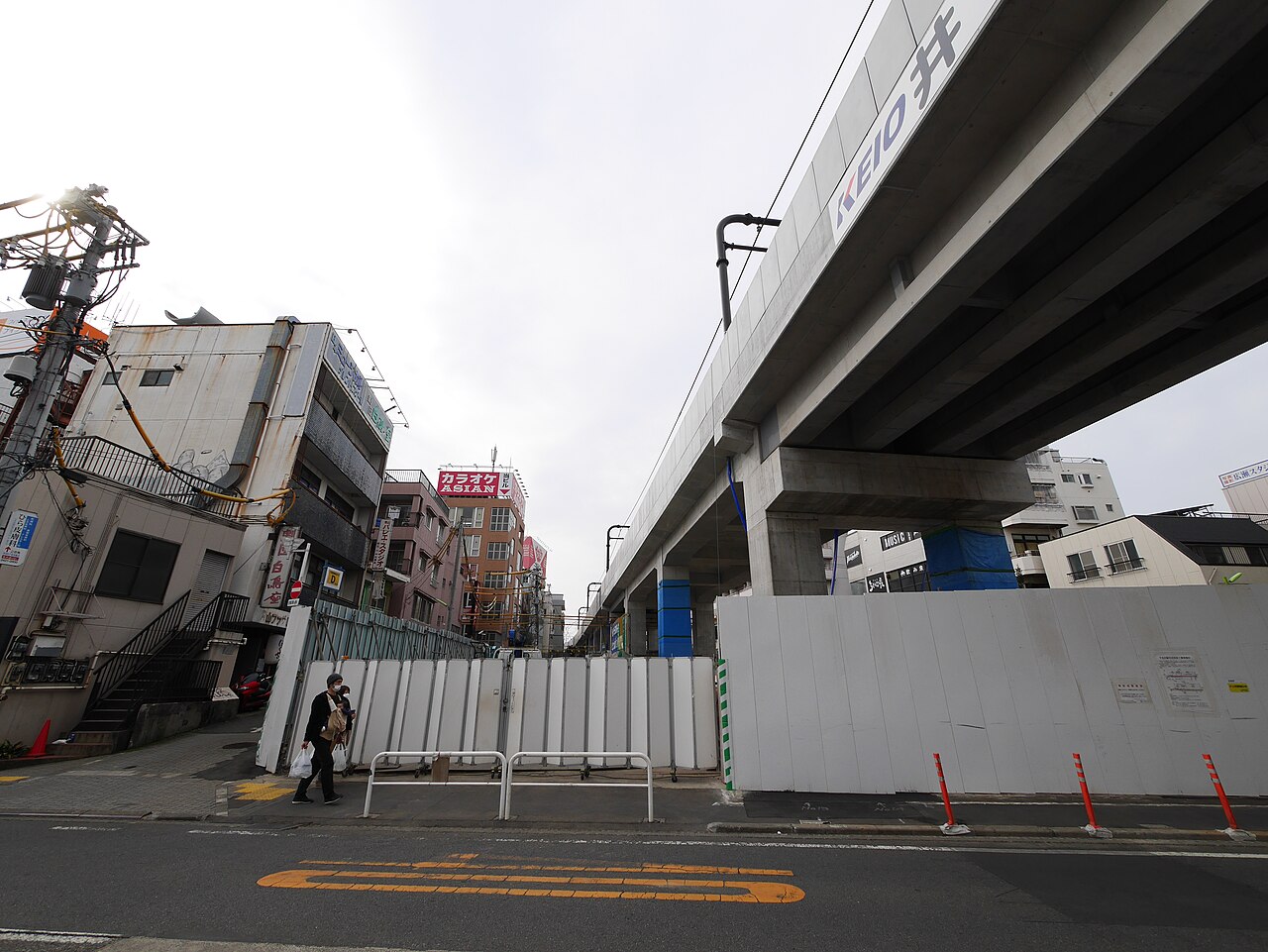
History
The line traces its roots to the Tokyo Yamate Express Railway (Tōkyō Yamate Kyūkō Dentetsu), which in 1927 obtained a licence for a roughly 50-kilometre outer loop intended to form a second ring beyond the Yamanote Line, but the Shōwa financial crisis made that scheme unworkable. The enterprise was inherited by Rikō Tsurumatsu of Kinugawa Hydroelectric, who prioritised the more profitable Shibuya–Kichijōji segment and renamed the operating company Teito Electric Railway (Teito Dentetsu). The line opened in stages: on 1 August 1933 a double-track section ran from Shibuya to Inokashira-kōen (12.1 km), and on 1 April 1934 the final 0.7 km extension to Kichijōji completed the route. Because Teito Electric Railway was part of the Odakyu Group, the line was built to 1,067 mm narrow gauge to match Odakyu's lines — and it remains the only Keio line built to 1,067 mm, every other Keio line using the 1,372 mm gauge. Power was originally supplied at 600 V DC. Opening comparatively late among Tokyo's radial suburban railways, it was modern for its era, built largely on viaduct and in cuttings with all-steel rolling stock and automatic doors.
The line's corporate identity then passed through a rapid sequence of wartime consolidations. In May 1940 Teito Electric Railway merged into the Odawara Express Railway, which became its Teito Line; in March 1941 the parent Kinugawa Hydroelectric absorbed Odawara Express Railway to form Odakyu Electric Railway; and on 1 May 1942 Odakyu was itself merged into the Tokyo-Yokohama Electric Railway to create the wartime conglomerate Tokyo Kyuko Electric Railway (the "Greater Tokyu"), at which point the Teito Line was renamed the Inokashira Line — the name it still carries. When the Greater Tokyu was broken up after the Second World War, a business decision paired the former Teito assets with the old Keio Electric Tramway, and the separated company was named Keio Teito Electric Railway; on 1 June 1948 the Inokashira Line became Keio property. The company adopted its present name, Keio Corporation, in 1998.
The war left a direct mark on the line. During the Tokyo air raids the Eifukuchō depot was hit on 25 May 1945, destroying 24 of its 31 cars; to bring in relief vehicles a temporary connecting track, the Daita Link Line, was laid that June between Daita-nichōme (now Shindaita) and the Odakyū Odawara Line. With the line otherwise physically isolated from the rest of the network, that link was the only rail connection until it was abolished in September 1953. Postwar development followed: three-car operation began in 1949 and reached the whole line by 1952, four-car trains from 15 November 1961, and on 11 July 1965 the separate Tōdaimae and Komaba stations were consolidated into the new Komaba-Tōdaimae Station — the only station added after the prewar route was completed. After the voltage was raised to 1,500 V DC, air-conditioned trains were introduced from 25 February 1969. Five-car operation began on 30 April 1971, and on 15 December 1971 a passing loop was added at Eifukuchō and limited-stop Express services started, initially at a maximum speed of 80 km/h. On 21 March 1984 every train was air-conditioned, achieving a 100% air-conditioning rate — the Japanese-language source notes the Inokashira Line was the first among the private railways of the Kantō region to do so.
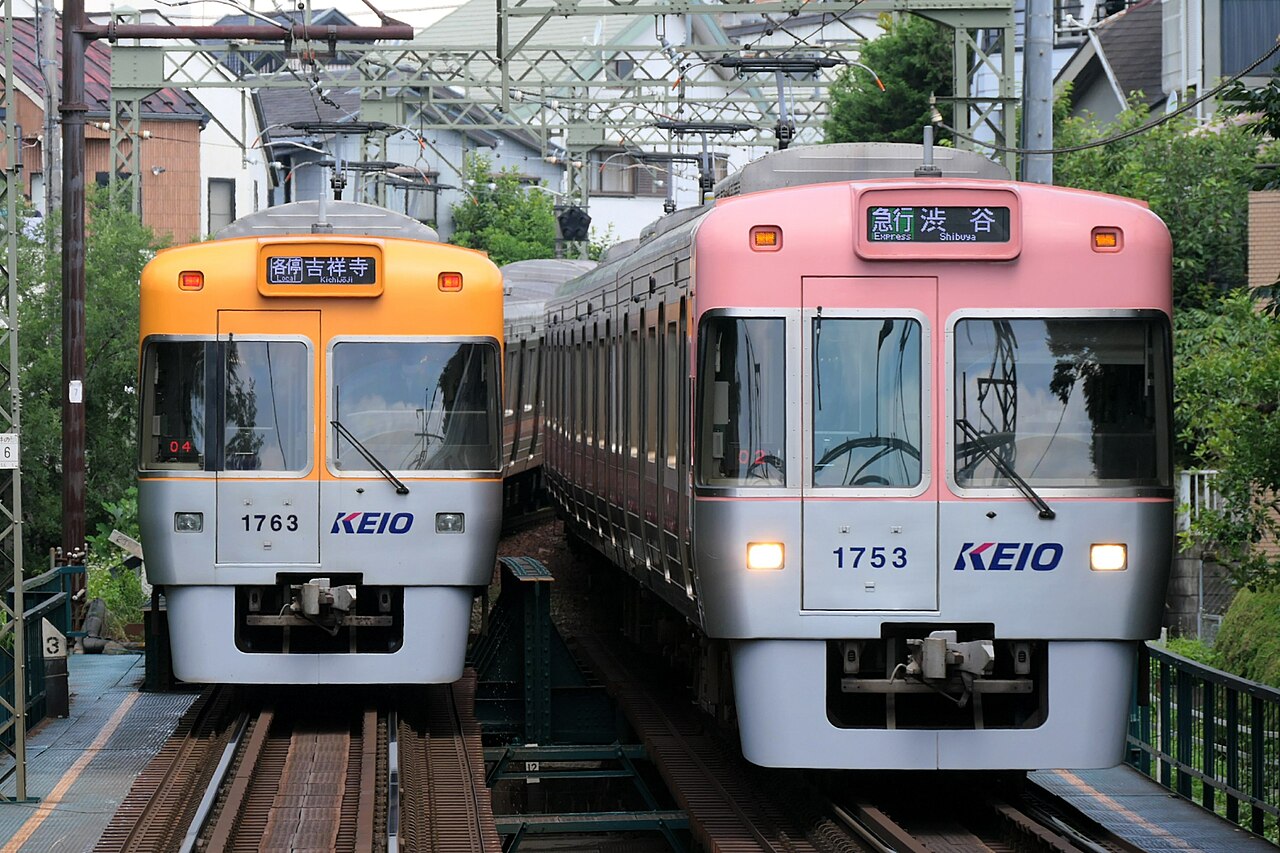
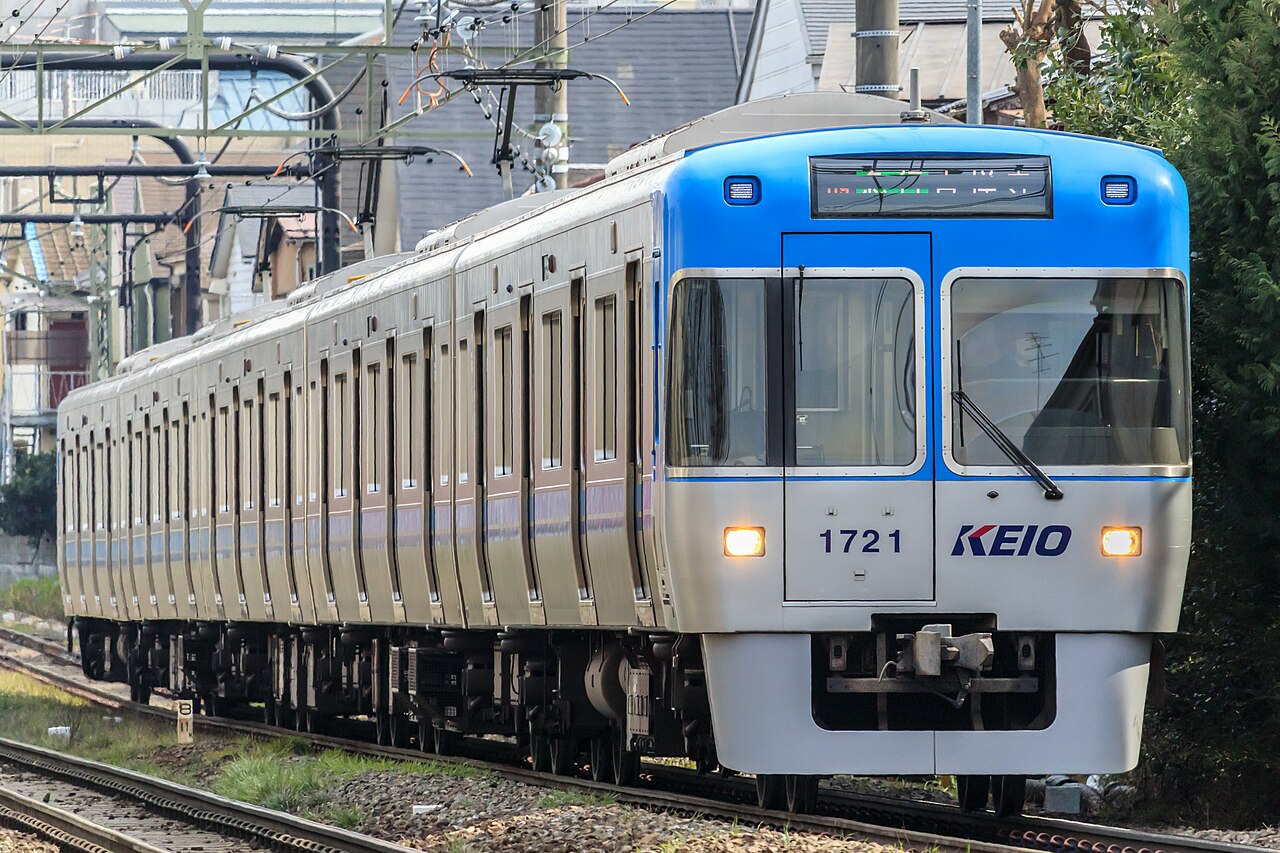
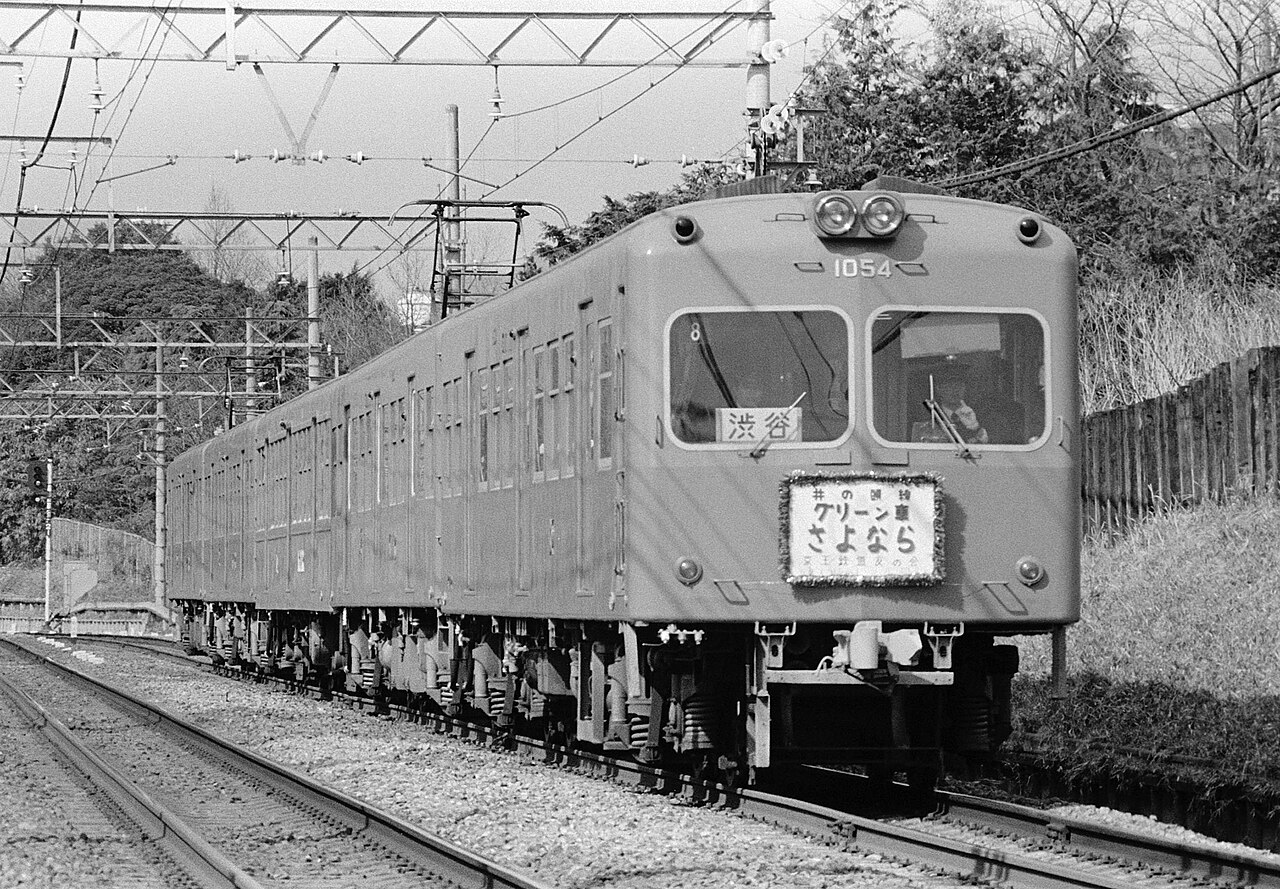
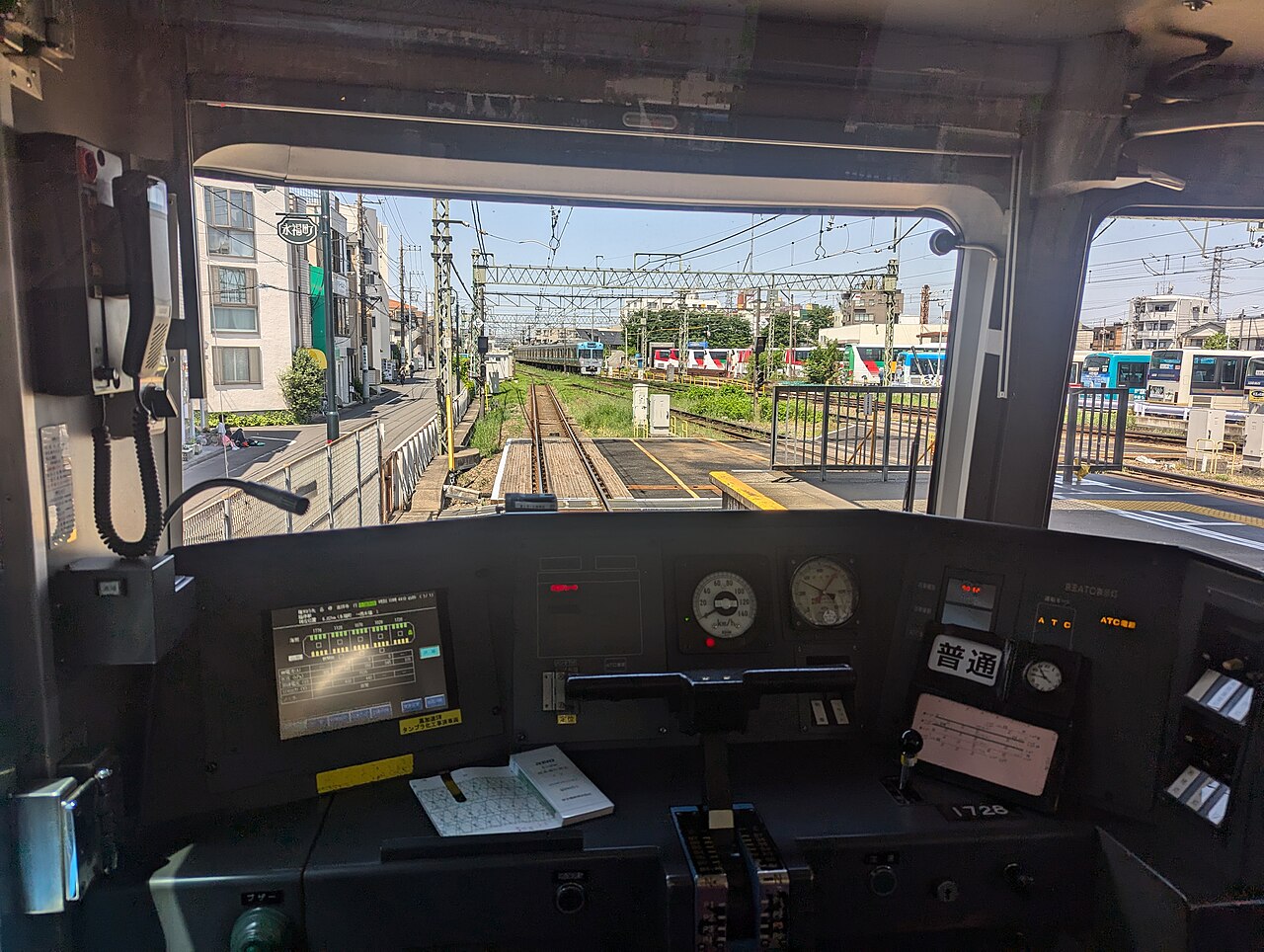
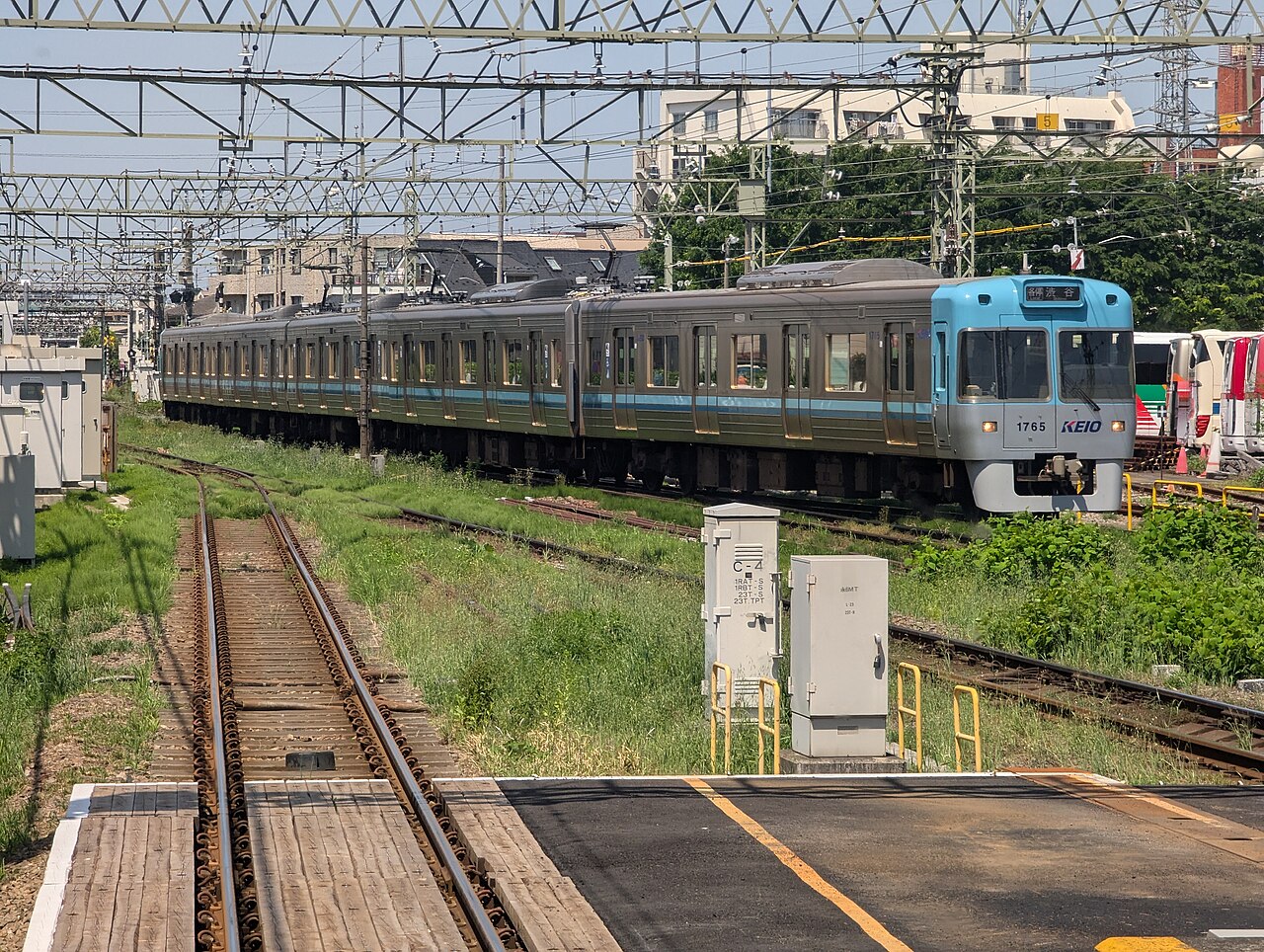
Keio operates two service types today: all-stations Local services and limited-stop Express services, with one of each running every eight minutes during the daytime off-peak. The current rolling stock is the second-generation Keio 1000 series five-car EMU, in passenger service since 9 January 1996; it replaced the Keio 3000 series stainless-steel EMUs, which ran from 30 December 1962 until December 2011 and were known for their multi-coloured "rainbow" front panels, a livery scheme unique to the Inokashira Line and not used on the Keio Main Line. Station numbering with the prefix "IN" was introduced from 22 February 2013, and a new ATC signalling system entered use on 3 March 2013. The maximum line speed is 90 km/h; Express running was raised from its original 80 km/h to 90 km/h after March 2001. The line is double-tracked throughout and runs entirely across the Musashino Terrace, climbing almost continuously from Shibuya to Kichijōji, with stations averaging just 0.8 km apart. Ridership is heavy for so short a line: the English-language source records a daily ridership of 547,845 in 2010, while the Japanese-language infobox gives a daily figure of 967,866 for fiscal year 2019, with Shibuya the busiest station at a daily average of 286,940 boarding-and-alighting passengers in fiscal 2024. A legacy of the line's Odakyu origins persisted at Shimo-Kitazawa, the transfer with the Odakyū Odawara Line, where passengers could change inside the ticket gates until 15 March 2019.
Timeline
- 1927The Tokyo Yamate Express Railway obtains a licence for a ~50 km outer loop line; the scheme is later derailed by the Shōwa financial crisis.
- 19331 August: the line opens as a double-track route from Shibuya to Inokashira-kōen (12.1 km), built by Teito Electric Railway (part of the Odakyu Group) to 1,067 mm gauge at 600 V DC.
- 19341 April: extended 0.7 km from Inokashira-kōen to Kichijōji, completing the Shibuya–Kichijōji route.
- 1940May: Teito Electric Railway merges into the Odawara Express Railway, becoming its Teito Line.
- 19411 March: Kinugawa Hydroelectric absorbs the Odawara Express Railway to form Odakyu Electric Railway.
- 19421 May: Odakyu is merged into the Tokyo-Yokohama Electric Railway to form Tokyo Kyuko (the 'Greater Tokyu'); the Teito Line is renamed the Inokashira Line.
- 194525 May: the Eifukuchō depot is hit in the Tokyo air raids, destroying 24 of 31 cars. In June the temporary Daita Link Line is laid to the Odakyū Odawara Line to bring in relief cars.
- 19481 June: on the break-up of the Greater Tokyu, the Inokashira Line passes to Keio Teito Electric Railway (later Keio Corporation).
- 1953September: the Daita Link Line is abolished, leaving the Inokashira Line physically isolated from the rest of the network.
- 196115 November: four-car operation begins.
- 196230 December: the Keio 3000 series stainless-steel EMUs enter service.
- 196511 July: Tōdaimae and Komaba stations are consolidated into the new Komaba-Tōdaimae Station — the only station added after the prewar route was completed.
- 196925 February: following the voltage being raised to 1,500 V DC, air-conditioned trains are introduced.
- 197130 April: five-car operation begins. 15 December: a passing loop is added at Eifukuchō and limited-stop Express services start, initially at a maximum speed of 80 km/h.
- 198421 March: all trains are air-conditioned, achieving a 100% air-conditioning rate (JA source: first among Kantō private railways to do so).
- 19969 January: the second-generation Keio 1000 series five-car EMUs enter passenger service.
- 19981 July: the operator changes its name to Keio Corporation.
- 2001After March: the Express maximum speed is raised from 80 km/h to 90 km/h.
- 2011December: the Keio 3000 series is withdrawn from service.
- 201322 February: station numbering (prefix 'IN') is introduced. 3 March: a new ATC signalling system enters use.
- 201915 March: the inside-the-gates transfer with the Odakyū Odawara Line at Shimo-Kitazawa ends. FY2019 daily ridership recorded as 967,866.
Sources
Facts last verified 3 June 2026.
Gallery 5 photos
Every photo for this page — tap any image to view it full-size. All from Wikimedia Commons (credit under each).