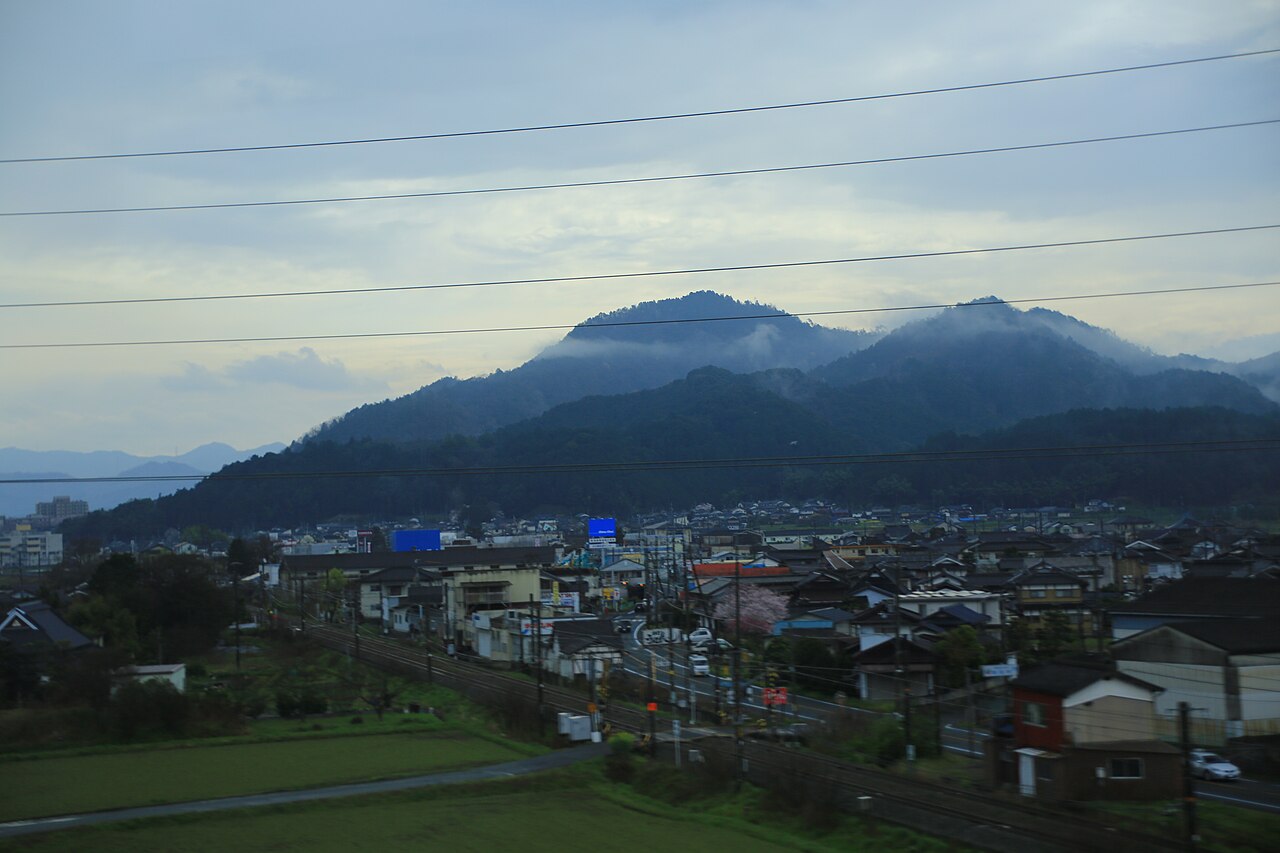
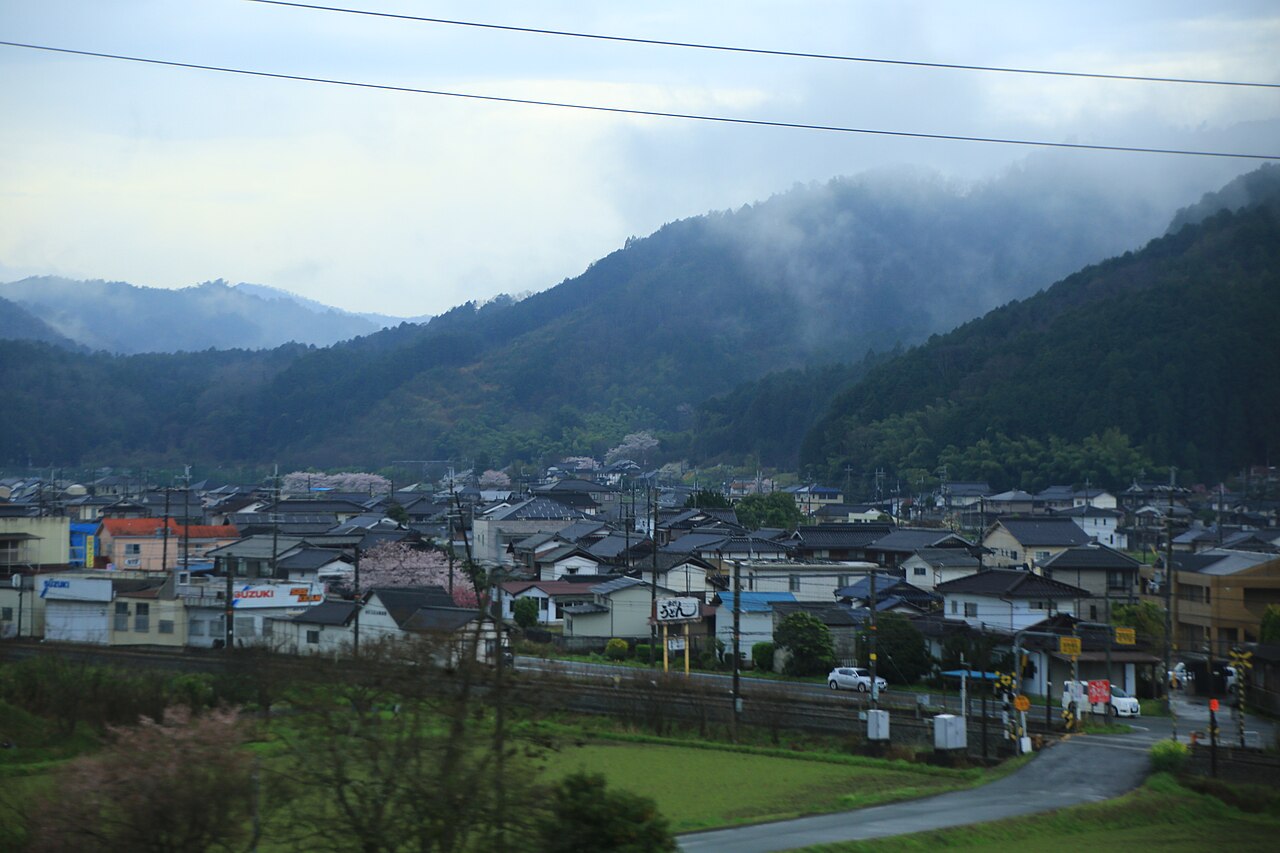
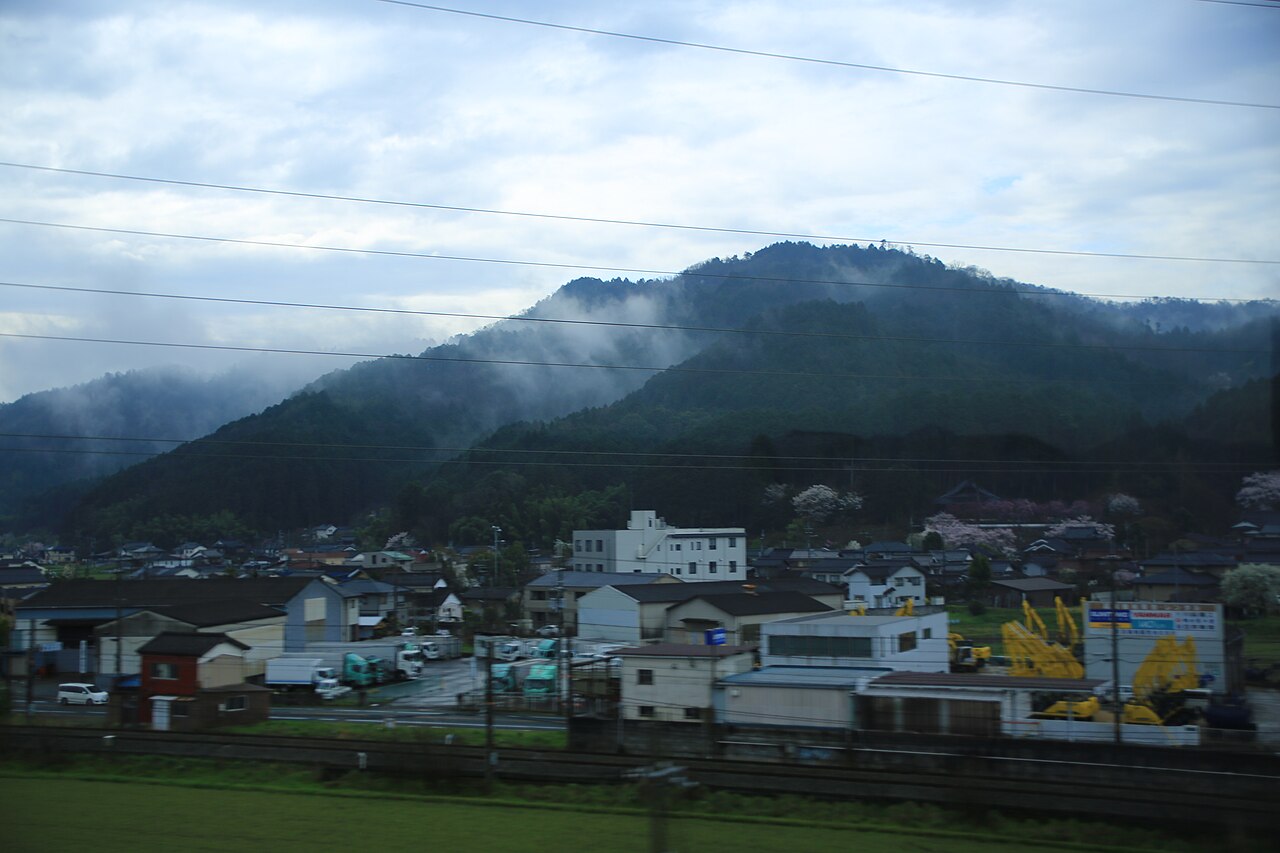
History
The line was not built as a single project. It was assembled from sections constructed by three different private companies, which were subsequently nationalised and connected by the Japanese Government Railways (JGR). At the Kyoto end, the Kyoto Railway opened the section to Sonobe between 1897 and 1899; the line's official opening date is recorded as 15 February 1897. The Bantsuru Railway opened the Ayabe-to-Fukuchiyama section — today part of the Maizuru Line — in 1904, and both of these companies were nationalised in 1907. The JGR's own first section, between Yonago and Mikuriya, opened in 1902, after which the line was progressively extended eastward, reaching Tottori in 1907 and Iwami in 1908. Construction worked toward the centre from several directions at once: the Sonobe-to-Ayabe section opened in 1910 and Fukuchiyama-to-Wadayama the following year, while extension westward from Yonago reached Matsue in 1908 and Izumoshi in 1910. When the eastern and central works met in 1912 the result was a continuous line of 385 km. At the western end, the Choshu Railway opened the Hatabu-to-Kogushi section in 1914 and was itself nationalised in 1925. From Izumoshi the line was pushed steadily westward — to Masuda in 1923 and Todakohama in 1925 — and after the Kogushi-to-Takibe section opened in 1925, construction continued from both directions until the two ends were joined in 1933, completing the line as it exists today.
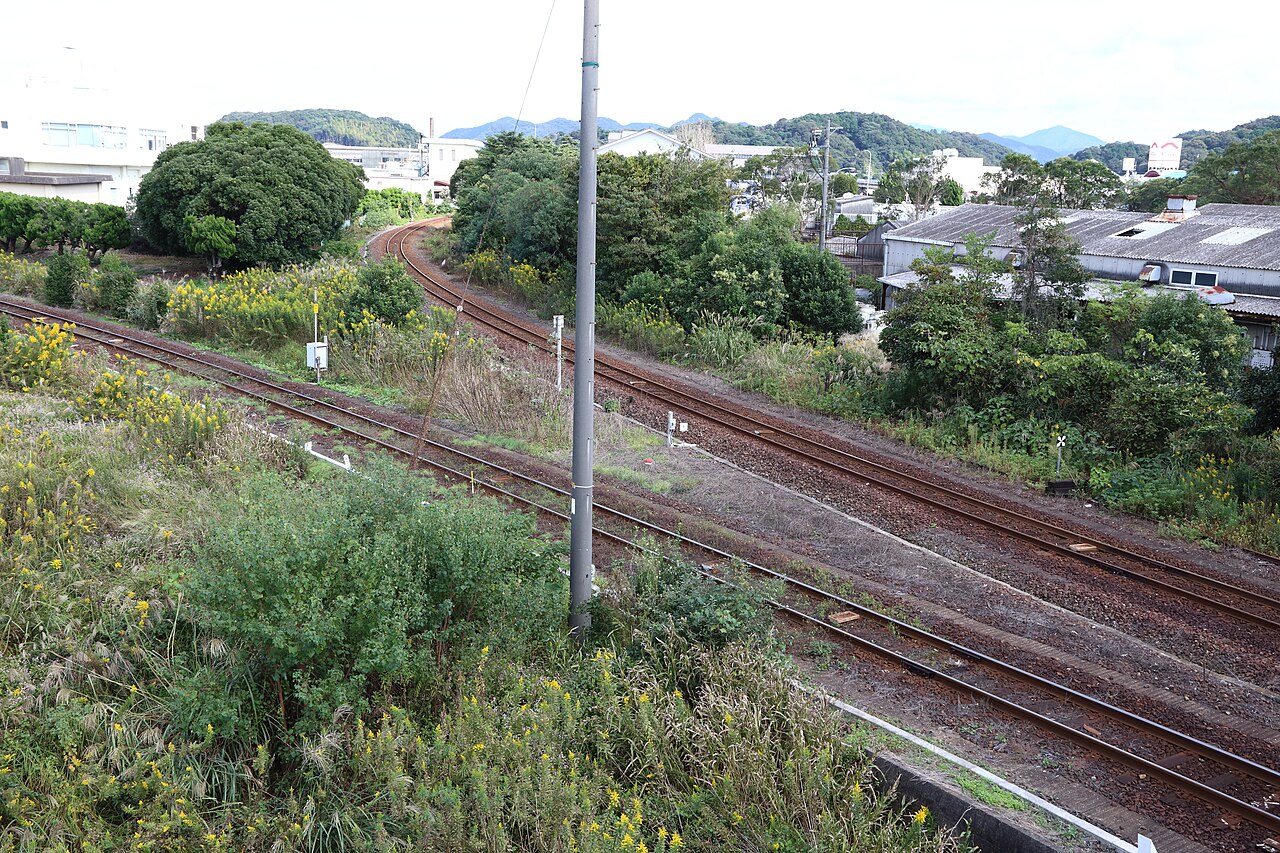
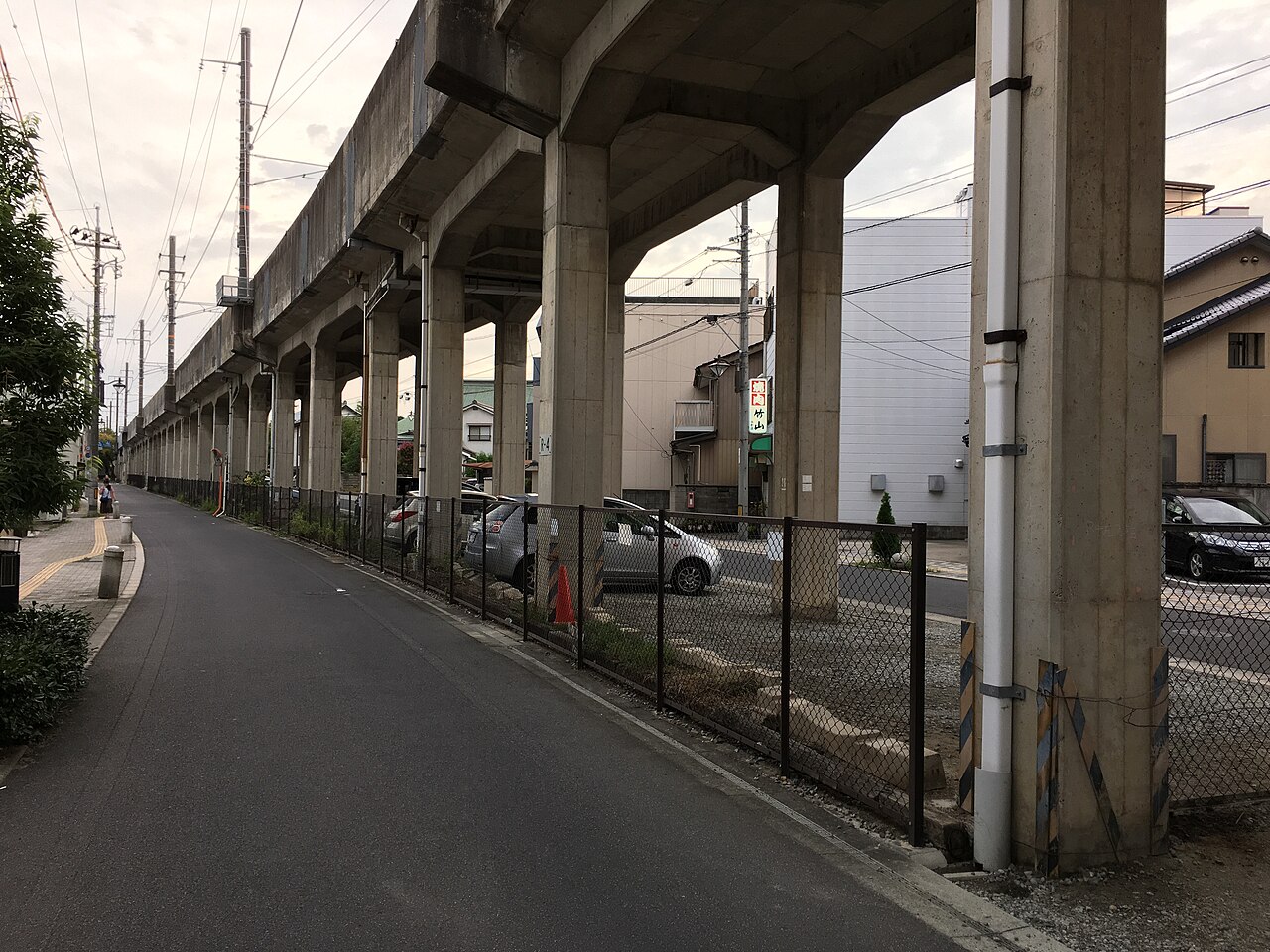
The line uses 1,067 mm narrow gauge throughout. Once complete, it was upgraded in stages over the following decades. Double-tracking was carried out piecemeal: the Yonago-to-Hōki-Daisen section between 1962 and 1966, Ayabe-to-Fukuchiyama in 1968-1969, Tamatsukuri-Onsen-to-Kimachi in 1970, Matsue-to-Higashi-Matsue in 1979 and Yonago-to-Yasugi in 1980. The original Saga-Arashiyama-to-Umahori segment had been built along the banks of the Hozugawa in a narrow gorge; a new double-track alignment opened in 1989, and the original alignment was repurposed as the Sagano Scenic Railway. Further double-tracking continued until the entire Kyoto-to-Sonobe section was double-tracked by 2010. Electrification likewise came late and in pieces: the Hōki-Daisen-to-Izumoshi section was electrified in 1982 in conjunction with the Hakubi Line, the Fukuchiyama-to-Kinosaki section in 1986 alongside the Fukuchiyama Line, the Sonobe-to-Fukuchiyama section between 1985 and 1986, and the Kyoto-to-Sonobe section in 1990. Even after this work, the line remains a mixture of double- and single-track and of electrified and non-electrified sections, electrified at 1,500 V DC only between Kyoto and Kinosaki-Onsen and between Hōki-Daisen and Nishi-Izumo; the Japanese source contrasts this with the parallel San'yō Main Line along the Inland Sea, which is fully double-tracked and electrified.
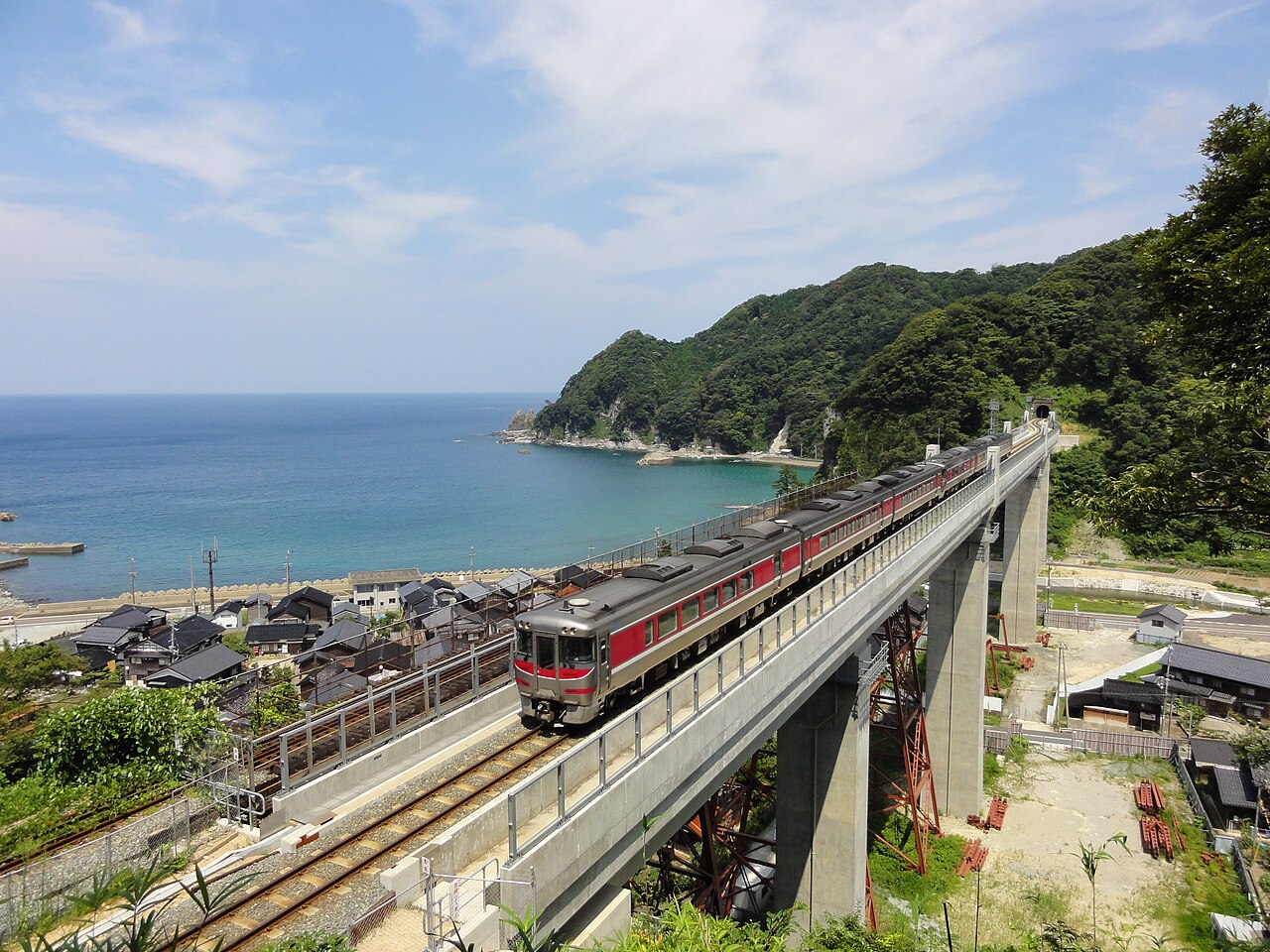
Today the line is operated by JR West as a Category 1 railway, with Japan Freight Railway (JR Freight) holding Category 2 freight-operating rights over certain sections. The section between Kyoto and Sonobe, which links Kyoto with its northern suburbs and serves the Arashiyama and Sagano sightseeing districts, forms part of JR West's Urban Network and is nicknamed the Sagano Line. The maximum speed in service varies considerably along the route, reaching 130 km/h on the fastest stretches (Saga-Arashiyama to Umahori and Ayabe to Fukuchiyama) and falling to as little as 85 km/h on the Nagatoshi-to-Senzaki branch. The Japanese source also notes that the line passes through 176 tunnels totalling 60.3 km — the second-greatest number on any line in the JR Group after the Kisei Main Line's 180, and the most of any line operated end-to-end by a single company.
Timeline
- 189715 February: the line's official opening; the Kyoto Railway opens its section toward Sonobe (built out 1897-1899).
- 1902The JGR opens its first section of the line, between Yonago and Mikuriya.
- 1904The Bantsuru Railway opens the Ayabe-to-Fukuchiyama section (today part of the Maizuru Line).
- 1907The Kyoto Railway and Bantsuru Railway are nationalised; the eastward extension reaches Tottori.
- 1908Extension reaches Iwami in the east and Matsue in the west.
- 1910Sonobe-to-Ayabe section opens; westward extension reaches Izumoshi.
- 1912Eastern and central works are connected, producing a 385 km continuous line.
- 1914The Choshu Railway opens the Hatabu-to-Kogushi section at the western end.
- 1925The Choshu Railway is nationalised; the Kogushi-to-Takibe section opens; the line reaches Todakohama.
- 193324 February: the final sections are connected, completing the line as it exists today (full opening).
- 1966Double-tracking of the Yonago-to-Hōki-Daisen section is completed (begun 1962).
- 1982The Hōki-Daisen-to-Izumoshi section is electrified, in conjunction with the Hakubi Line.
- 1986The Fukuchiyama-to-Kinosaki section is electrified (Sonobe-to-Fukuchiyama electrified 1985-1986).
- 1989A new double-track alignment opens on the Saga-Arashiyama-to-Umahori section; the original alignment becomes the Sagano Scenic Railway.
- 1990The Kyoto-to-Sonobe section is electrified.
- 2010The entire Kyoto-to-Sonobe section (the Sagano Line) is double-tracked.
Sources
Facts last verified 3 June 2026.
Gallery 7 photos
Every photo for this page — tap any image to view it full-size. All from Wikimedia Commons (credit under each).