History
The oldest part of the line is the section north of Higashi-Murayama Station, toward Hon-Kawagoe. It was built by the Kawagoe Railway (川越鉄道) as a freight feeder for the Kōbu Railway (甲武鉄道), which had already opened its Shinjuku–Tachikawa line (now the Chūō Main Line); the plan was to connect at Kokubunji and carry the produce of western Musashi Province into Tokyo. A provisional licence was applied for in December 1890, and the Kawagoe Railway was incorporated in 1891 as an affiliate of the Kōbu Railway. The first segment, Kokubunji to Kumegawa (provisional), opened on 21 December 1894 as the non-electrified Kawagoe Railway Kawagoe Line; that 8.0 km portion is today the Seibu Kokubunji Line. The northward extension from Kumegawa (provisional) to Kawagoe Station (now Hon-Kawagoe) opened on 21 March 1895, and it is this 21.7 km section — the part north of Higashi-Murayama — that became the present Seibu Shinjuku Line. Higashi-Murayama Station opened on 6 August 1895.
The 1906 Railway Nationalization Act nationalised the connecting Kōbu Railway, severing the Kawagoe Railway's through route into central Tokyo. As the rival Tōjō Railway (now the Tōbu Tōjō Line) and Musashino Railway (now the Seibu Ikebukuro Line) opened, competition for traffic between Tokyo and western Saitama intensified, and after a series of mergers with electric-power interests the Kawagoe Railway became the (old) Seibu Railway. Seeking its own route into the city centre, Seibu obtained licences for the Iogi–Takadanobaba (1925) and Takadanobaba–Waseda (1926) sections, and on 16 April 1927 opened the Murayama Line (村山線) between Takadanobaba (provisional) and Higashi-Murayama, 23.7 km, as a double-track line electrified at 1,500 V DC. At the same time the Higashi-Murayama–Kawagoe section was electrified and through operation between Takadanobaba and Kawagoe began. Because the Murayama Line ran between the Chūō Main Line and the Musashino Railway, competition sharpened further; the rivalry ended only when wartime consolidation of private railways merged Seibu with the Musashino Railway to form the present Seibu Railway. The Takadanobaba terminus reached its permanent location in 1928, and Kawagoe Station was renamed Hon-Kawagoe on 22 July 1940.
In the postwar period Seibu extended the line the final 2.0 km from Takadanobaba to Seibu-Shinjuku Station, which opened on 25 March 1952; at that point the line was renamed the Shinjuku Line, integrating the Murayama Line and the northern Kawagoe-line section (Higashi-Murayama–Hon-Kawagoe). The Seibu-Shinjuku terminal was built as a temporary station because Seibu intended to extend into what is now the Lumine Est building on the east side of Shinjuku Station; that plan was scrapped for lack of space to handle trains longer than six cars, and the line never reached JR Shinjuku Station. Seibu-Shinjuku Station was rebuilt with a 25-storey station building and hotel completed in 1977.
The line was progressively double-tracked over four decades. The Higashi-Murayama to Tokorozawa section was double-tracked between 1950 and 1958, the Tokorozawa to Irimagawa (now Sayamashi) section between 1967 and 1975, and the remainder — except for the stretch between Wakita Signal Box and Hon-Kawagoe — between 1980 and 1991. That final stretch toward Hon-Kawagoe remains single track. Station numbering with the prefix "SS" (for Seibu Shinjuku) was introduced across Seibu lines in fiscal 2012.
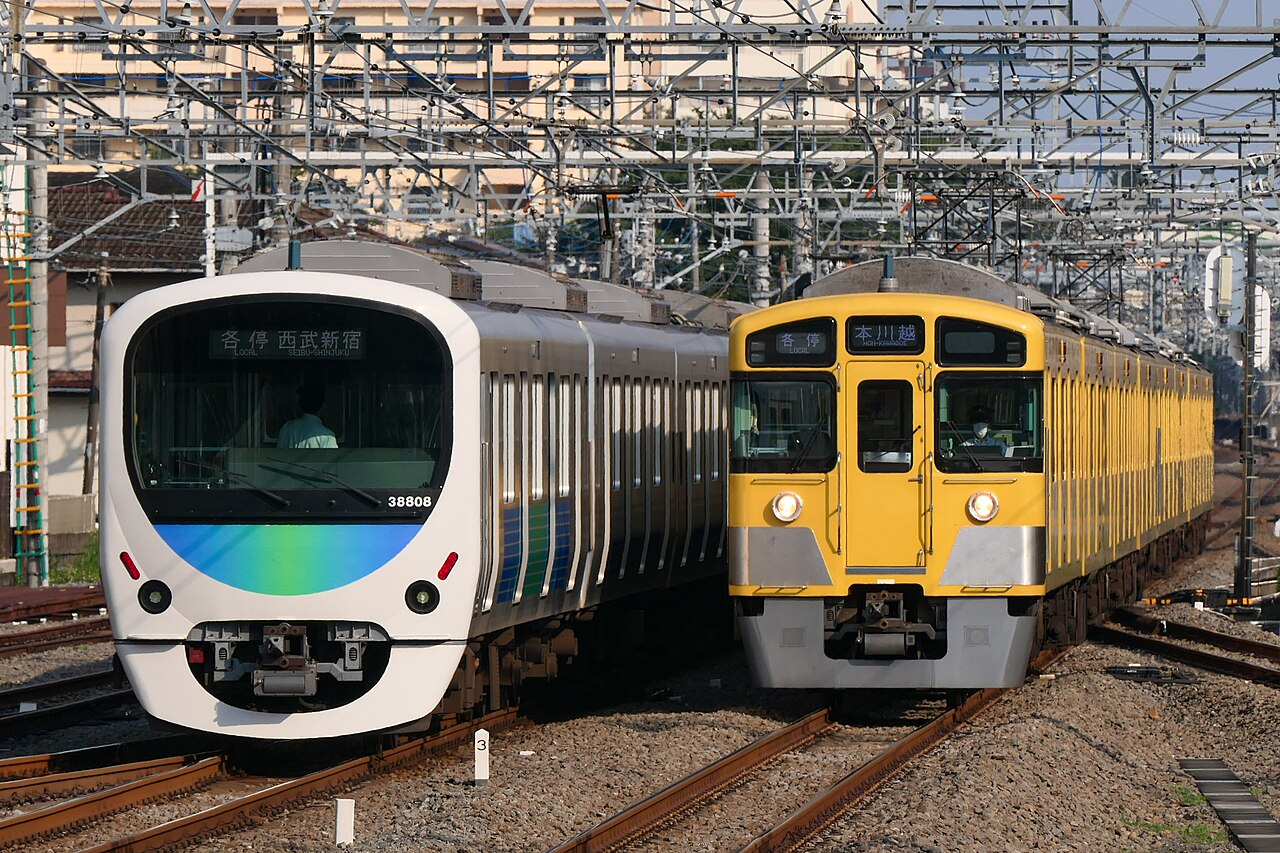
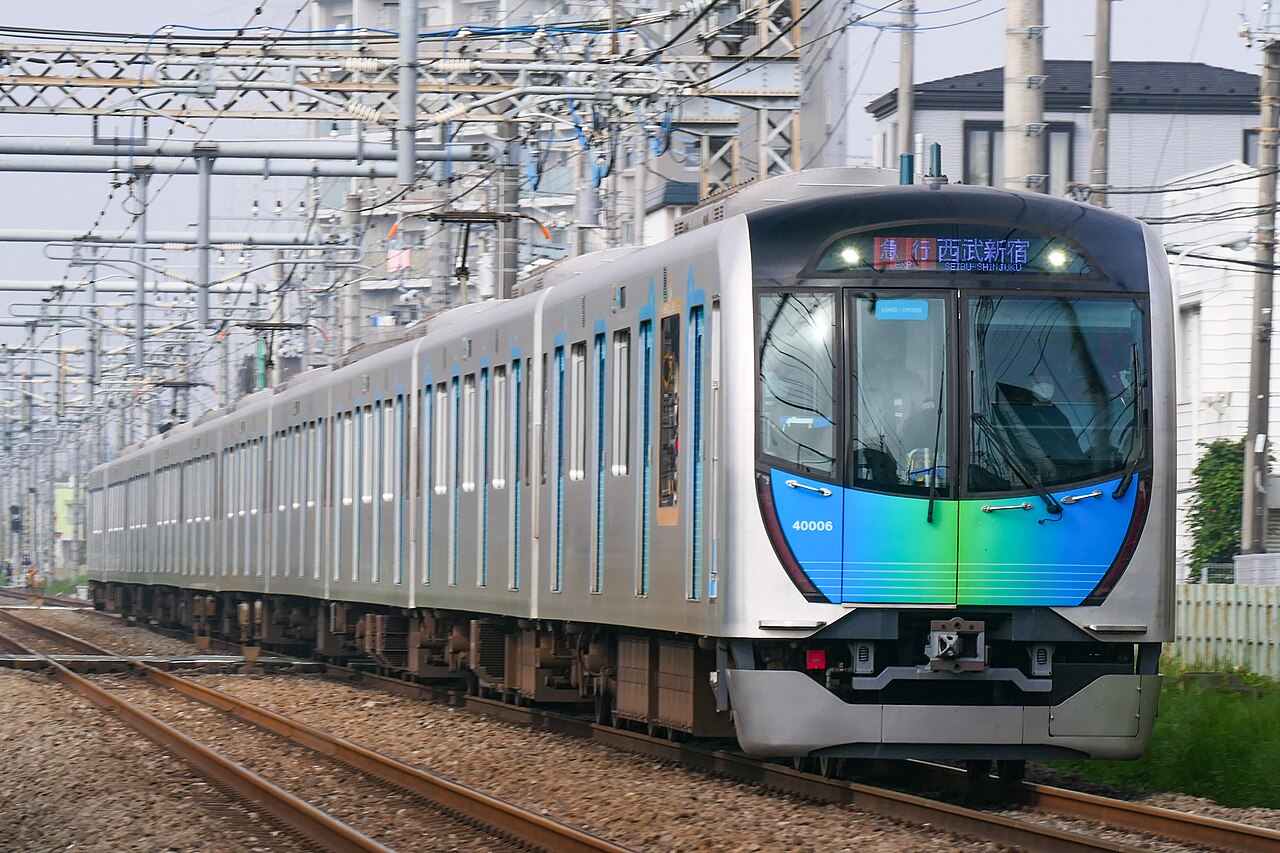
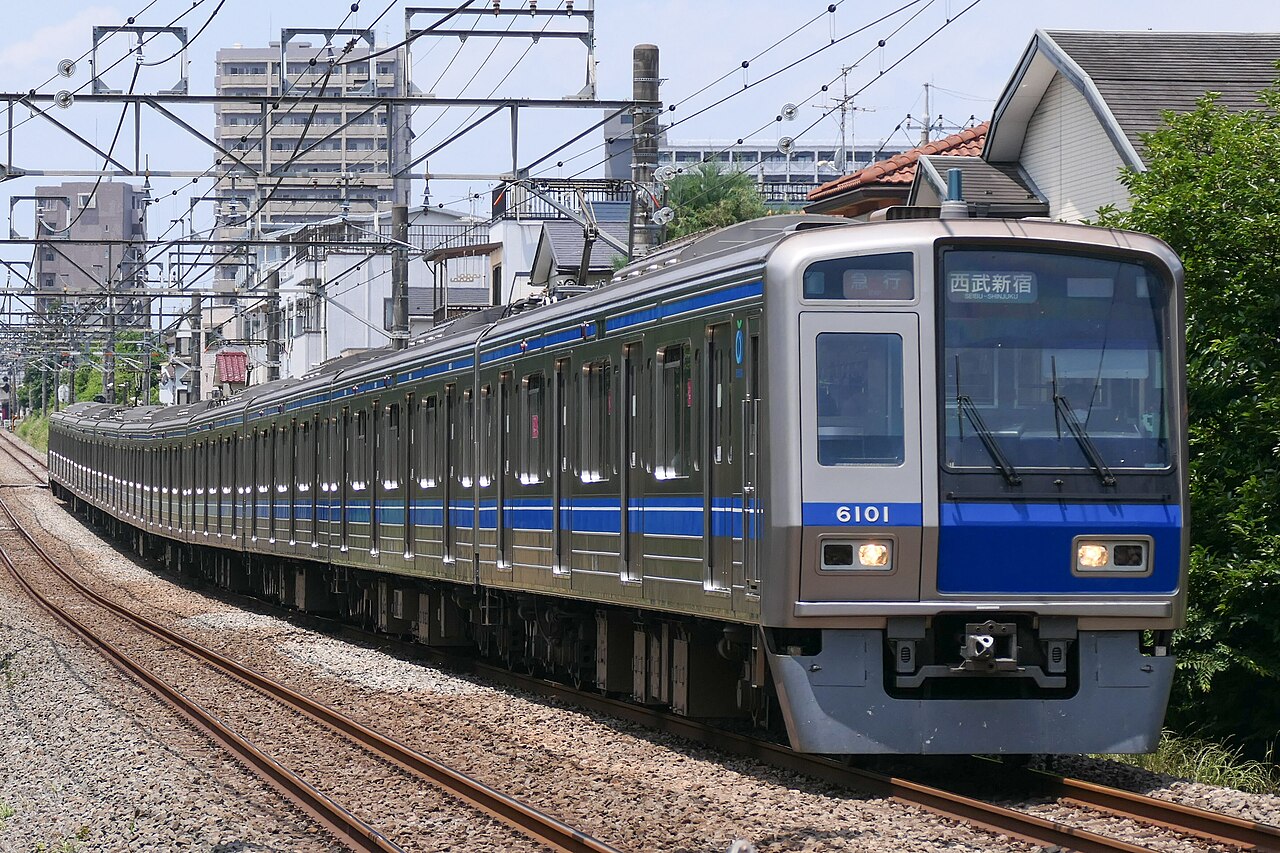
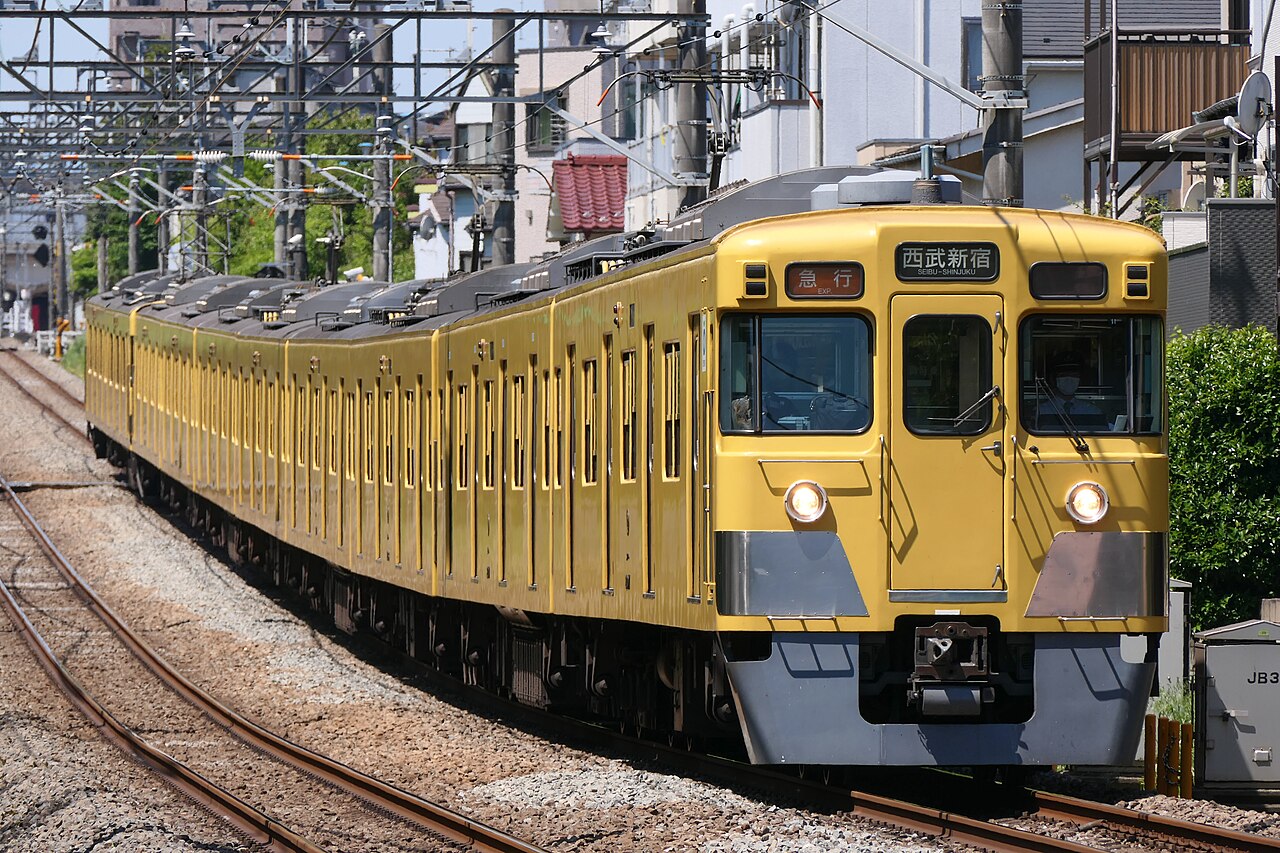
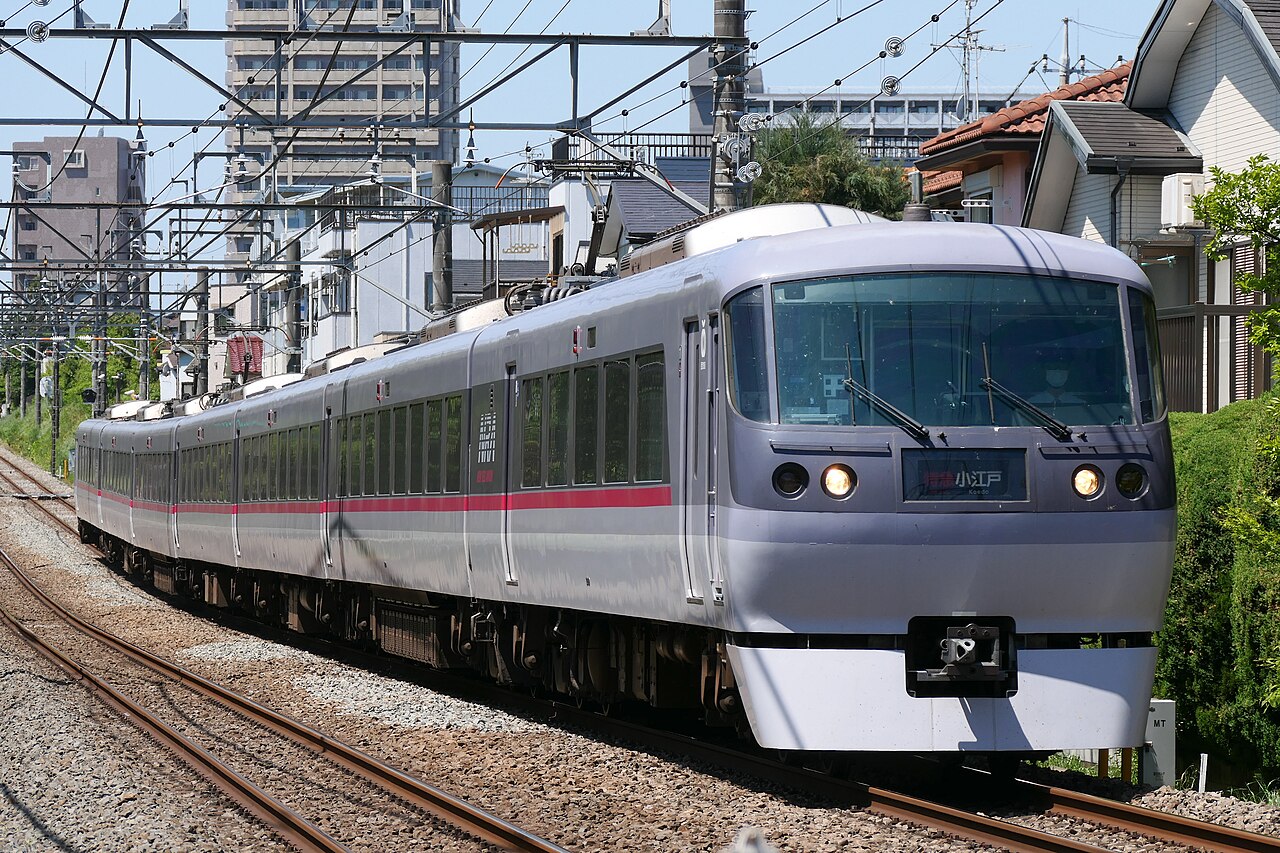
Today the Seibu Shinjuku Line carries Local, Semi Express, Express, Commuter Express, Rapid Express, the all-reserved Haijima Liner and the Koedo limited express; the Koedo limited express between Seibu-Shinjuku and Hon-Kawagoe began on 6 December 1993, and the Haijima Liner, using Seibu 40000 series stock, began on 10 March 2018. Limited-express services use Seibu 10000 series "Red Arrow" trains. There are regular through services onto the Seibu Haijima Line. The Seibu Shinjuku Line is one of the few major commuter lines in Tokyo with no through service to the Tokyo Metro or Toei Subway network; Takadanobaba is the busiest station on the line, where passengers interchange with the Tokyo Metro Tōzai Line and the JR Yamanote Line. Daily ridership was 945,302 in fiscal 2010 (figure sourced to Seibu). A long-running plan from the 1980s to build an underground express line between Seibu-Shinjuku and Kami-Shakujii was indefinitely postponed in 1995 and formally cancelled by the Tokyo Metropolitan Government in 2019; grade-separation works at several points along the line, including around Higashi-Murayama and between Nakai and Nogata, are in progress.
Timeline
- 189421 December: the Kawagoe Railway opens Kokubunji–Kumegawa (provisional), 8.0 km, non-electrified, as the Kawagoe Railway Kawagoe Line — the section that is today the Seibu Kokubunji Line.
- 189521 March: Kumegawa (provisional)–Kawagoe (now Hon-Kawagoe), 21.7 km, opens — the section north of Higashi-Murayama that became the present Seibu Shinjuku Line. Higashi-Murayama Station opens 6 August.
- 1906The Railway Nationalization Act nationalises the connecting Kōbu Railway, cutting the Kawagoe Railway's through route into central Tokyo.
- 192716 April: the (old) Seibu Railway opens the Murayama Line, Takadanobaba (provisional)–Higashi-Murayama, 23.7 km, double-track and electrified at 1,500 V DC; the Higashi-Murayama–Kawagoe section is electrified and Takadanobaba–Kawagoe through service begins.
- 192815 April: the Takadanobaba terminus reaches its permanent location (Takadanobaba–Takadanobaba provisional, 0.5 km).
- 194022 July: Kawagoe Station is renamed Hon-Kawagoe.
- 1950Double-tracking of the Higashi-Murayama–Tokorozawa section begins (completed 1958).
- 195225 March: the 2.0 km Takadanobaba–Seibu-Shinjuku extension opens; the line is renamed the Shinjuku Line, integrating the Murayama Line and the Higashi-Murayama–Hon-Kawagoe section. The JR Shinjuku Station extension is dropped for lack of space.
- 1977The 25-storey Seibu-Shinjuku station building with hotel is completed.
- 1991Double-tracking of the line is completed except for the Wakita Signal Box–Hon-Kawagoe stretch, which remains single track (Sayamashi–Shin-Sayama section double-tracked 27 July 1991).
- 19936 December: the Koedo limited express begins between Seibu-Shinjuku and Hon-Kawagoe.
- 1995The 1980s plan for an underground express line / quadruple-tracking between Seibu-Shinjuku and Kami-Shakujii is indefinitely postponed.
- 201124 December: a local train derails at Higashi-Murayama Station; the Kodaira–Tokorozawa section is suspended until the last train.
- 2012Station numbering with the "SS" prefix is introduced on the line during fiscal 2012. From 30 June the Rapid Express and Haijima Rapid services are abolished in a timetable revision.
- 201810 March: the all-reserved Haijima Liner begins, using Seibu 40000 series EMUs.
- 2019Through service onto the Seibu Kokubunji Line is suspended (16 March) for the elevation works at Higashi-Murayama Station; the Tokyo Metropolitan Government formally cancels the long-postponed quadruple-tracking plan.
- 202014 March: the limited-stop Rapid Express is reinstated for weekend and holiday services.
Sources
Facts last verified 3 June 2026.
Gallery 6 photos
Every photo for this page — tap any image to view it full-size. All from Wikimedia Commons (credit under each).