History
The line was originally built as part of a link between mainland Japan and Karafuto (the southern half of Sakhalin Island), then a Japanese northern frontier. From Wakkanai Port a rail-connected ferry to Ōdomari (present-day Korsakov) operated until the end of World War II. Construction began under the Hokkaido Government Railway, which opened the first segment from Asahigawa (present Asahikawa) to Nagayama on 12 August 1898 as the Teshio Line. The railway was extended to Nayoro in 1903, after which construction continued under the state-run Imperial Japanese Government Railways following the line's transfer to government operation on 1 April 1905. In 1922 the railway reached Wakkanai — present Minami-Wakkanai — along the route that later became the Tempoku Line, running via Hamatombetsu. The present alignment via Horonobe was opened separately as the Teshio Line, with the southern (Teshio South) and northern (Teshio North) sections connected in 1926.
The line carried several layers of naming as it grew: the Asahikawa–Onnenai section was renamed from Teshio Line to Sōya Line in September 1912, the title Sōya Main Line first appeared in 1919, and after a series of further renamings the whole Teshio Line was incorporated into the Sōya Main Line on 1 April 1930, at which point the Hamatombetsu-route section was separated off as the Kitami Line (later the Tempoku Line). Beyond carrying traffic to the Sakhalin ferry, the railway and its many branch lines were an important freight artery, moving timber, coal and other minerals and marine products out of northern Hokkaido in place of river transport on the Teshio River, which the line parallels between Shibetsu and Horonobe.
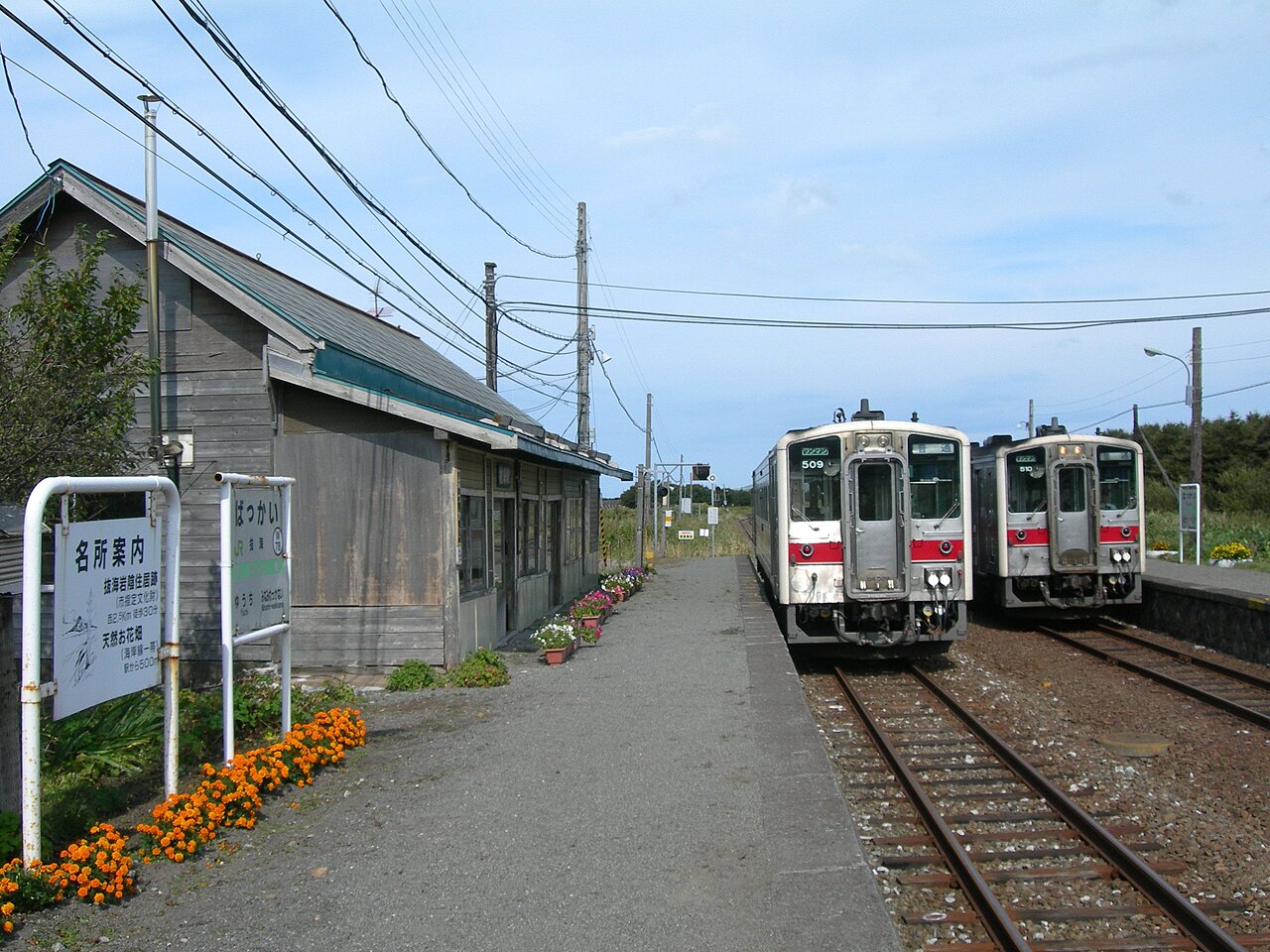
After Japan's defeat in the war the line lost its function as a link to Sakhalin when the Chihaku ferry ceased operation in August 1945, but it remained important as a trunk route into northern Hokkaido. From around 1955 many local trains were converted to diesel railcars. Over the following decades the Sōya Main Line gradually lost all of its branch lines — among them the Nayoro Main Line (closed 1989), the Shinmei Line (1995), the Haboro Line (1987), the Bikō Line (1985) and the Tempoku Line (1989) — and today it constitutes a long branch extending from the Hakodate Main Line. One of the abandoned projects connected with the line, an extension of the Bifuka branch toward Kitami Esashi, had some 13.3 billion yen expended on it before being abandoned in 1979 (per the English Wikipedia account).
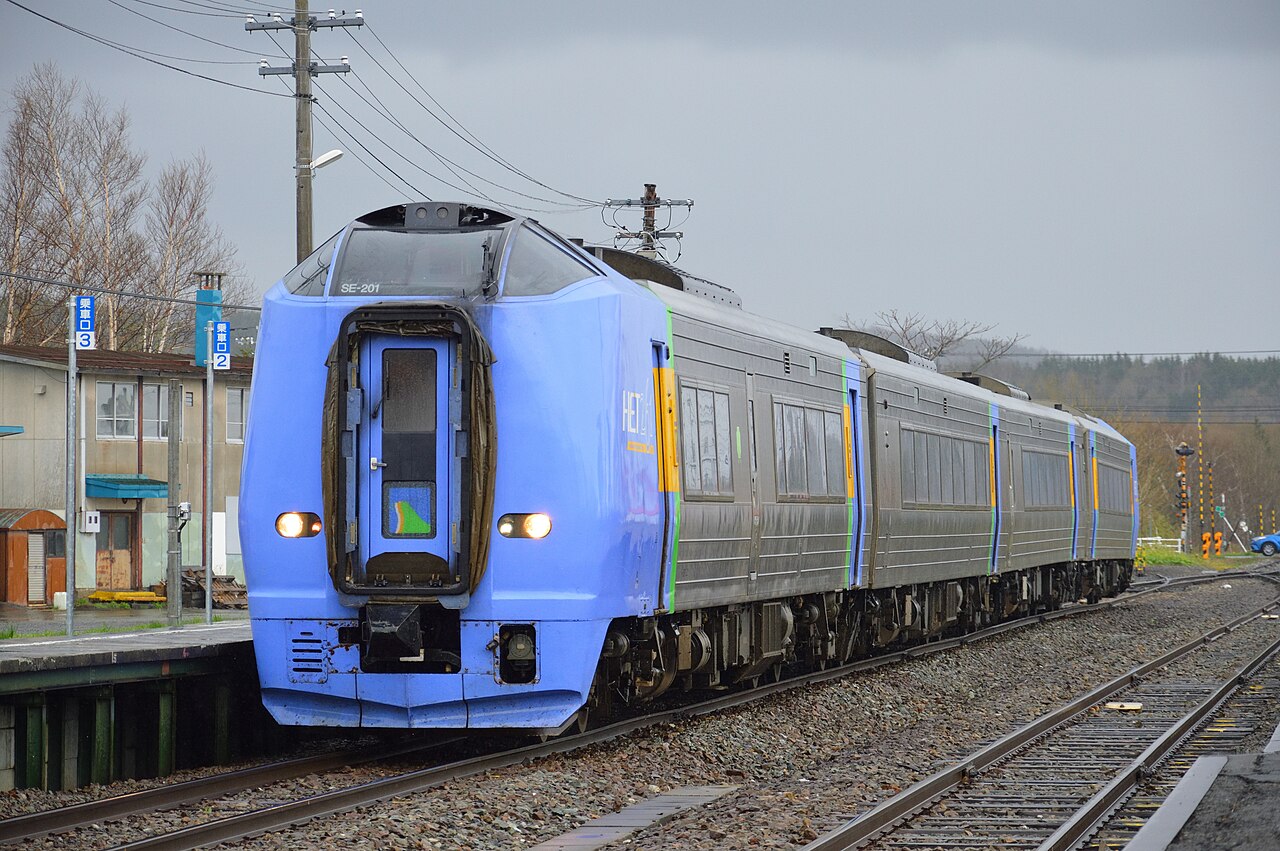
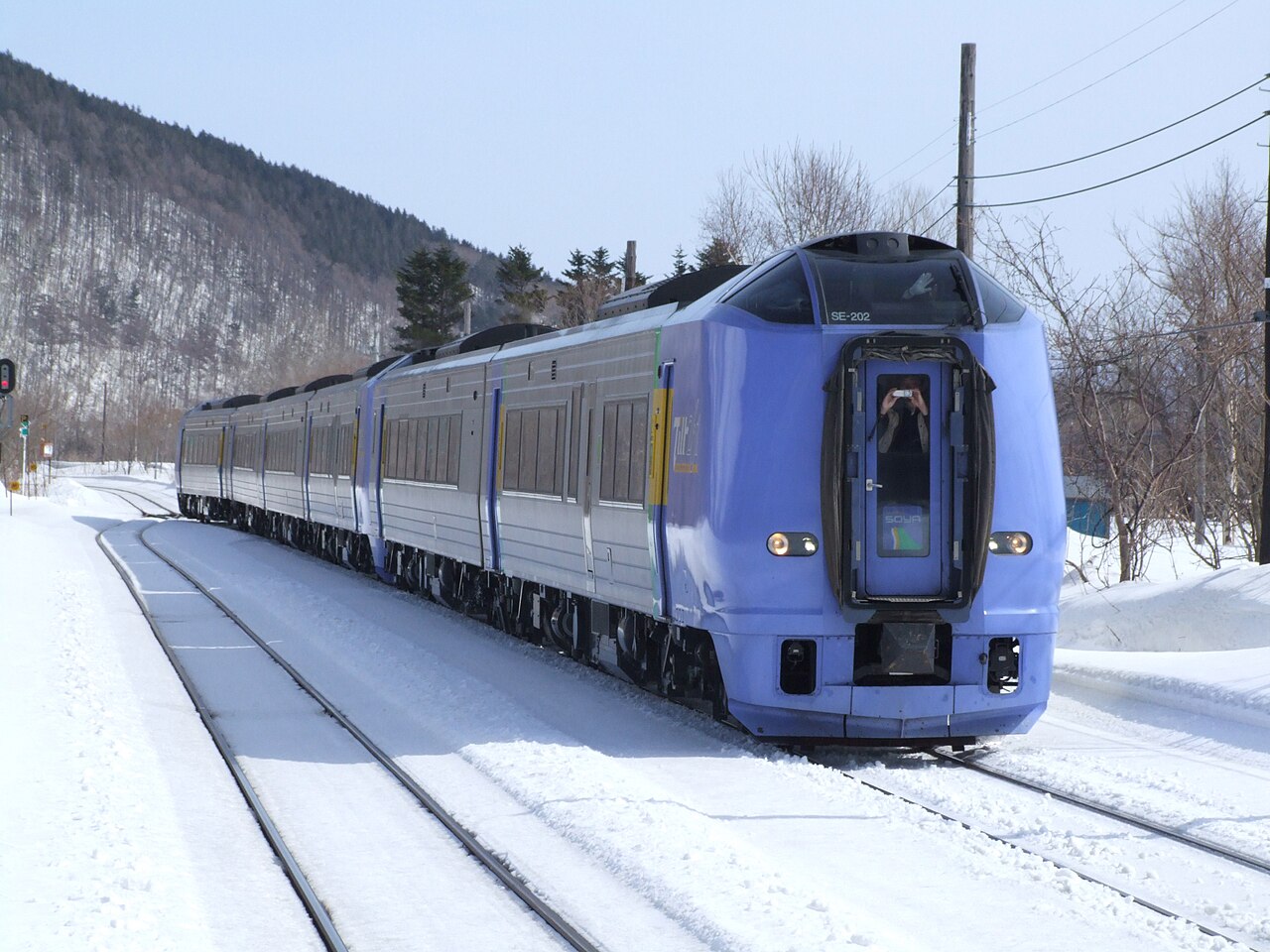
Operationally the line was modernised in stages: an automated block system was introduced in 1984 and centralized traffic control in 1986, leaving most stations unstaffed. On 1 April 1987 Japanese National Railways was privatised and JR Hokkaido succeeded to the whole line as a Category 1 operator, with Japan Freight Railway as a Category 2 operator between Asahikawa and Nayoro. A high-speed upgrade of the Asahikawa–Nayoro section was completed on 11 March 2000, raising the maximum speed on that section from 95 to 130 km/h and launching the line's first regular limited express services — Super Sōya, Sarobetsu and Rishiri. The Super Sōya was later slowed, and from 15 March 2014 the maximum speed between Asahikawa and Nayoro was reduced to 120 km/h. In a 4 March 2017 timetable revision the limited express network was reorganised into one Sōya round trip between Sapporo and Wakkanai and two Sarobetsu round trips between Asahikawa and Wakkanai, all worked by KiHa 261 series trains.
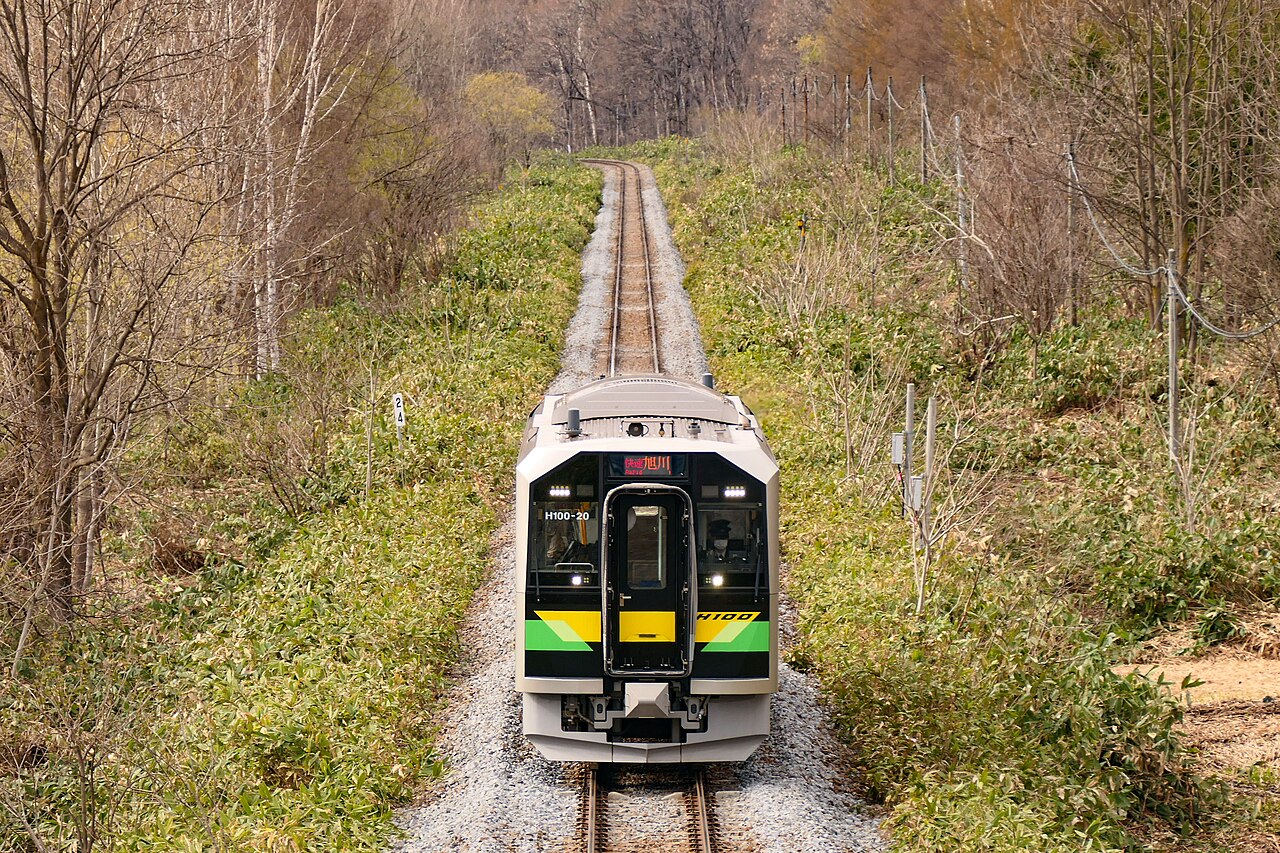
Today JR Hokkaido runs one Sōya limited express each way daily between Sapporo and Wakkanai and two Sarobetsu limited expresses each way between Asahikawa and Wakkanai, supplemented by all-stations local trains (roughly every 1–2 hours between Asahikawa and Nayoro, and every 3–4 hours between Nayoro and Wakkanai) and four Rapid Nayoro services each way daily. The current maximum speed is 120 km/h between Asahikawa and Nayoro and 95 km/h between Nayoro and Wakkanai. The line passes through sparsely populated country, and its future has come into question: on 19 November 2016 JR Hokkaido's president announced plans to rationalise the network by as much as 1,237 km — about half of the company's railways — and the Nayoro–Wakkanai section was among those flagged, with proposals ranging from third-sector operation to closure if local governments did not agree. The Japanese Wikipedia article notes that, excluding the disputed Northern Territories, Wakkanai is the northernmost municipality in Japan, and describes the Sōya Main Line as the longest of Japan's designated 'local' (chihō kōtsū-sen) lines. A historical note attached to the line is the February 1909 runaway-carriage accident on the Shiokari Pass, in which a railway employee was killed; the incident became the subject of Ayako Miura's novel Shiokari Pass.
Timeline
- 189812 August: opens as the Teshio Line of the Hokkaido Government Railway between Asahigawa (present Asahikawa) and Nagayama.
- 1903Extended to Nayoro (3 September, per JA).
- 19051 April: transferred to the (Imperial) Japanese Government Railways.
- 190928 February: a runaway-carriage accident on the Shiokari Pass kills a railway employee; later the subject of Ayako Miura's novel Shiokari Pass.
- 191221 September: Asahikawa–Onnenai section renamed from Teshio Line to Sōya Line.
- 191920 October: the name Sōya Main Line is used for the first time.
- 19221 November: completed to Wakkanai (present Minami-Wakkanai) via the route that later became the Tempoku Line, through Hamatombetsu.
- 192625 September: the Teshio South and North lines (the present route via Horonobe) are connected, completing that alignment.
- 19301 April: the entire Teshio Line is incorporated into the Sōya Main Line; the Hamatombetsu-route section is separated as the Kitami Line (later the Tempoku Line).
- 194525 August: the Chihaku (Wakkanai–Ōdomari) ferry ceases operation when all of Sakhalin passes to the Soviet Union.
- 196515 July: the 1,256 m Shimodaira Tunnel and a realignment open to avoid an avalanche trouble-spot.
- 19871 April: JNR is privatised; JR Hokkaido takes the whole line as a Category 1 operator and JR Freight operates Asahikawa–Nayoro as a Category 2 operator.
- 200011 March: the Asahikawa–Nayoro upgrade is completed, raising the maximum speed there from 95 to 130 km/h; the Super Sōya (with Sarobetsu and Rishiri) limited expresses begin.
- 201415 March: with the Super Sōya slowed, the maximum speed between Asahikawa and Nayoro is reduced to 120 km/h.
- 201619 November: JR Hokkaido's president announces plans to rationalise up to 1,237 km (~50% of the network); the Nayoro–Wakkanai section is flagged for third-sector operation or possible closure.
- 20174 March: limited expresses reorganised into one Sōya round trip (Sapporo–Wakkanai) and two Sarobetsu round trips (Asahikawa–Wakkanai), all using KiHa 261 series.
Sources
Facts last verified 3 June 2026.
Gallery 4 photos
Every photo for this page — tap any image to view it full-size. All from Wikimedia Commons (credit under each).