History
The railway's origins lie not in a single company but in three separate ventures that were eventually stitched together. The oldest segment opened on 9 May 1911 as the Chiba Prefectural Railway Noda Line, running from Nodamachi (now Nodashi) to Kashiwa — a distance of 14.7 kilometres (9 miles 10 chains) worked by steam. The line existed largely to serve Noda's soy-sauce brewers, who had previously depended on river transport; the brewing association underwrote the prefectural bonds that financed construction, and successfully pressed for the line to be laid to 1,067 mm gauge rather than a narrower light-railway gauge so that freight wagons could run through onto the national railway at Kashiwa.
In 1923 the prefecture sold the line into private hands. The operator, named the Hokusō Railway (unrelated to the present-day Hokusō Railway), took over the Noda Line and on 27 December 1923 opened its own Funabashi Line between Funabashi Station and Kashiwa, a distance of 19.6 km (12 miles 14 chains). The company then pushed the route westward, reaching the Tobu Railway's Kasukabe station and the government line's Ōmiya Station in 1929. Because the line now extended beyond northern Shimōsa into both the Sō and Musashi regions, the company renamed itself the Sōbu Railway (unrelated to the present Sōbu Main Line) on 22 November 1929. The whole route was completed in 1930, when the bridge over the Edo River was finished and through electric trains began running between Ōmiya and Kashiwa on 1 October.
Electrification advanced alongside the extensions. The new Kasukabe–Ōmiya line opened already electrified in November–December 1929, the company's first electric operation, and electric running on the Shimizu-kōen–Kashiwa section began at the end of December 1929. The Kashiwa–Funabashi section was still unelectrified when Tobu took over in 1944, and was electrified by 1 March 1947.
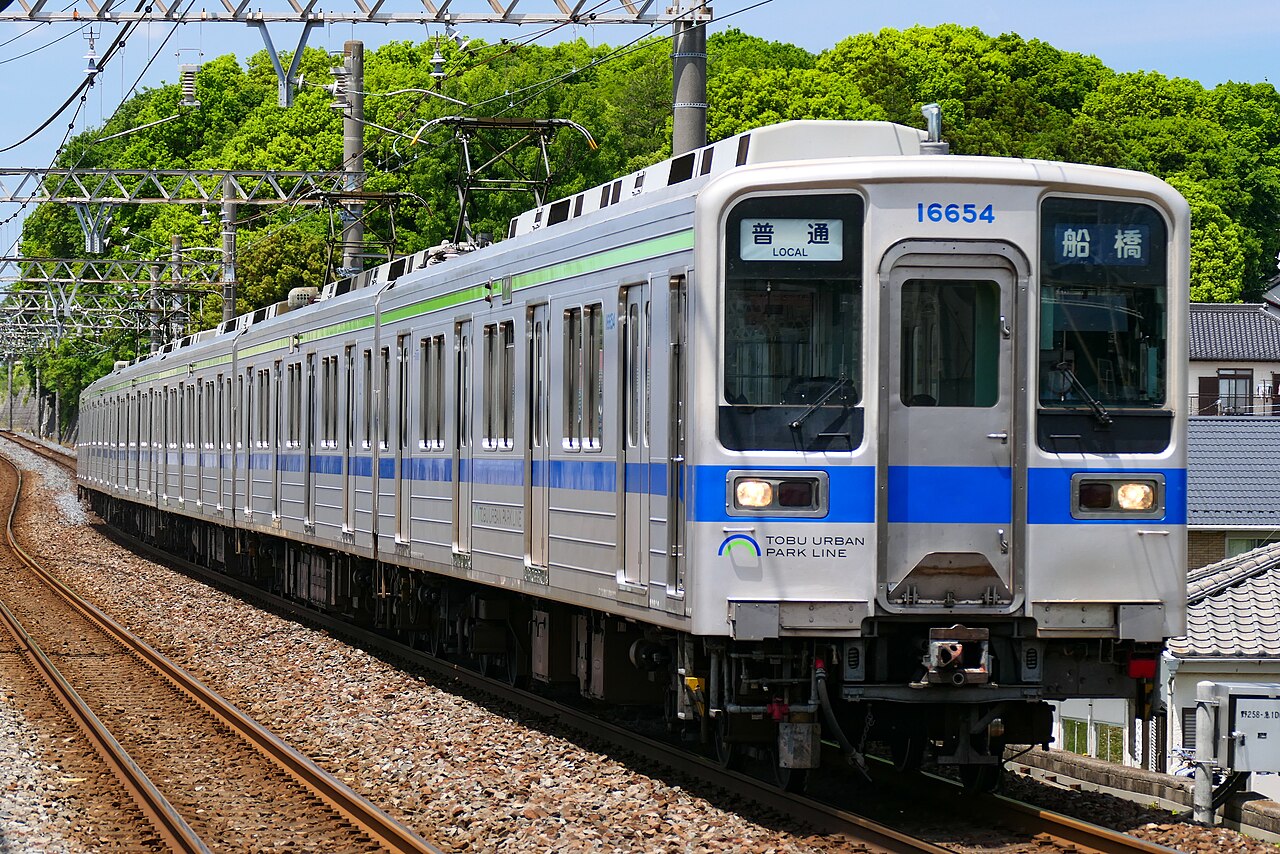
The defining corporate change came on 1 March 1944, when the Sōbu Railway merged into Tobu Railway and the route became the Tobu Noda Line. The merger was driven in part by wartime land-transport consolidation policy. The Ōmiya–Kashiwa and Funabashi–Kashiwa portions were at first treated as two separate lines — the Noda Line and the Funabashi Line — and were unified under the single "Noda Line" name in 1948.
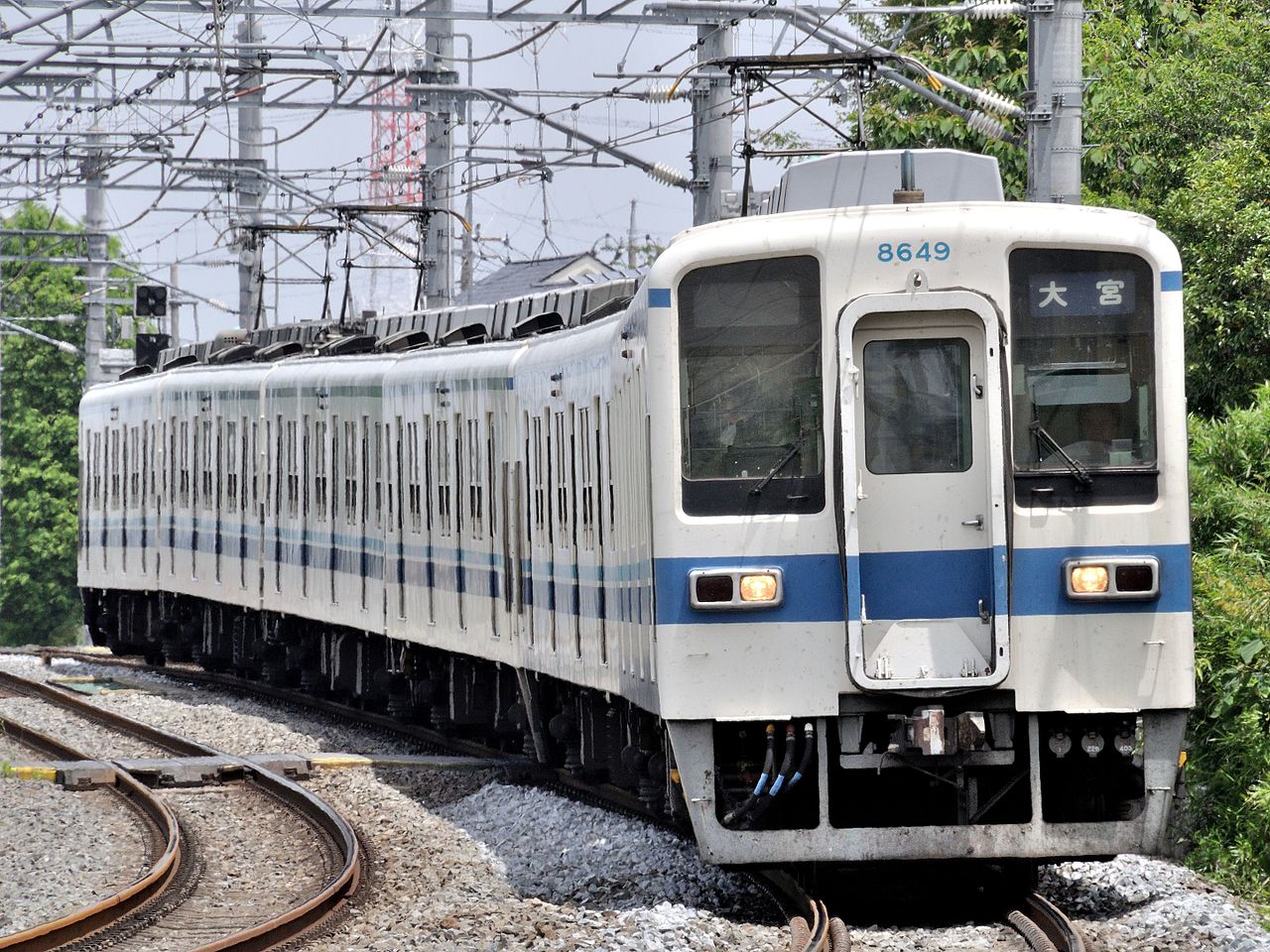
Modernisation proceeded steadily in the postwar decades. Double-tracking began in 1957 with the Kita-Ōmiya–Ōmiya-kōen section and spread progressively from the busy Ōmiya, Kashiwa and Funabashi areas. Rolling stock was renewed through successive generations — 3000-series rebuilds, 8000 series, 5000-series rebuilds and 2080 series — and by 1992 the displacement of the last 2080 and 3000-series sets by 8000 series left the line operated entirely by 20-metre cars. Six-car 8000 series sets were phased in from 1997. On 19 October 2004, with a timetable revision that retired the last 5070-series trains, the line's maximum speed was raised from 90 km/h to 100 km/h. Station numbering with the "TD" prefix was introduced across the line on 17 March 2012.
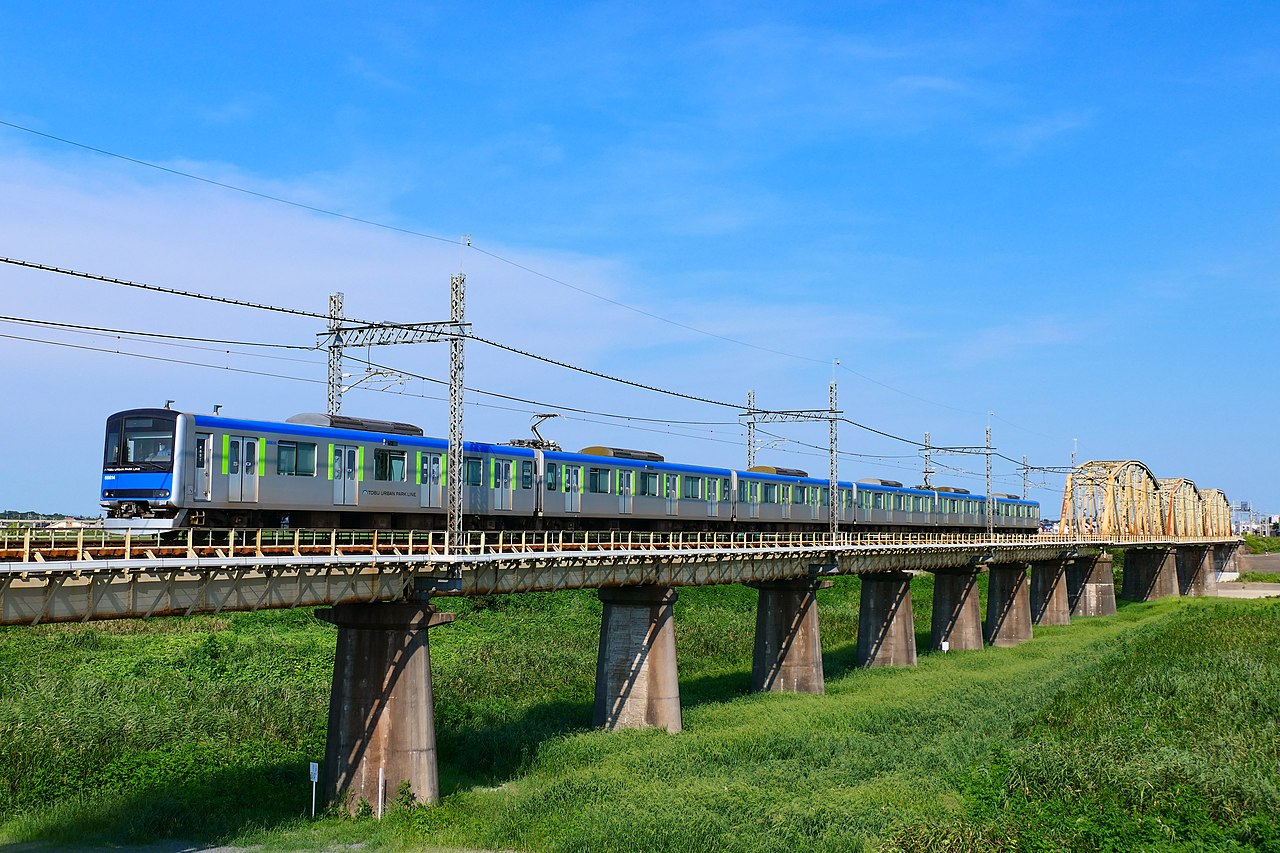
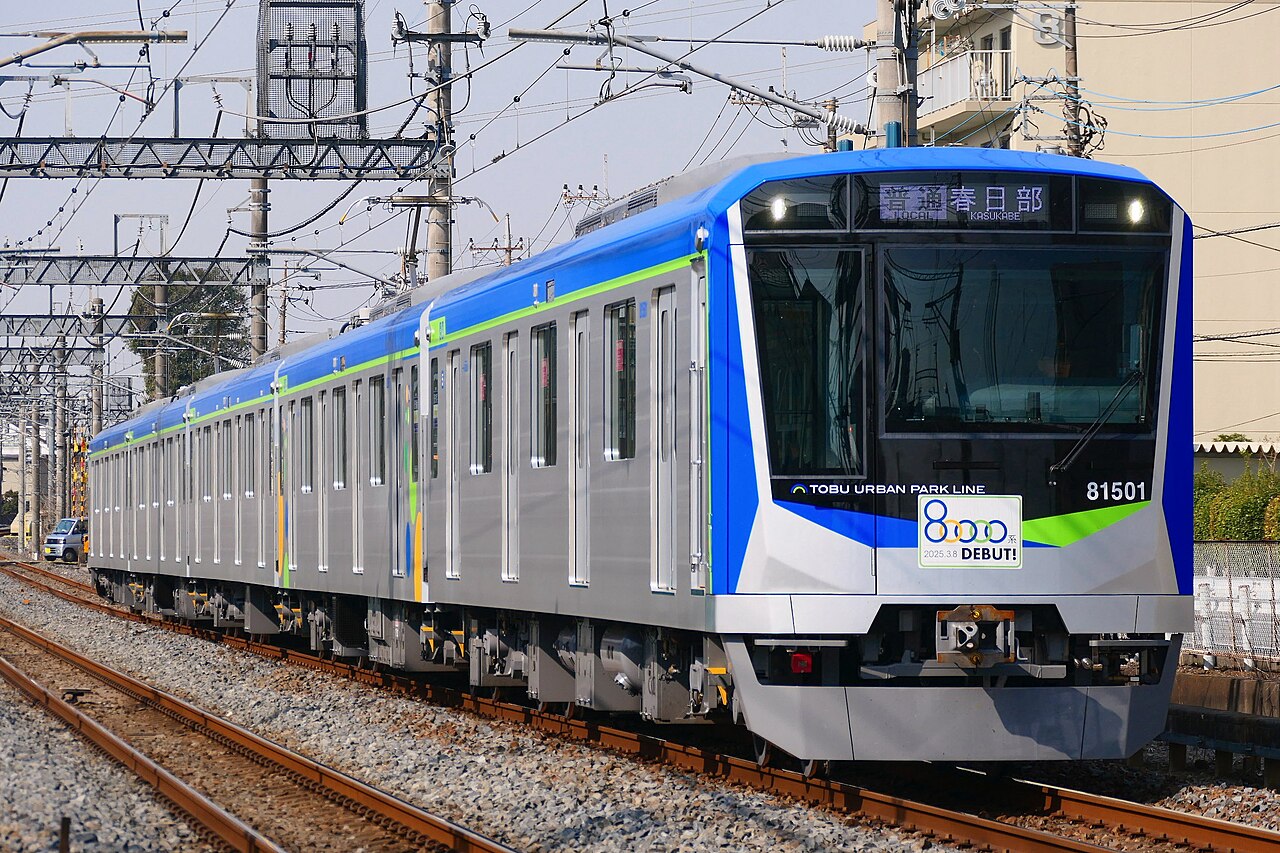
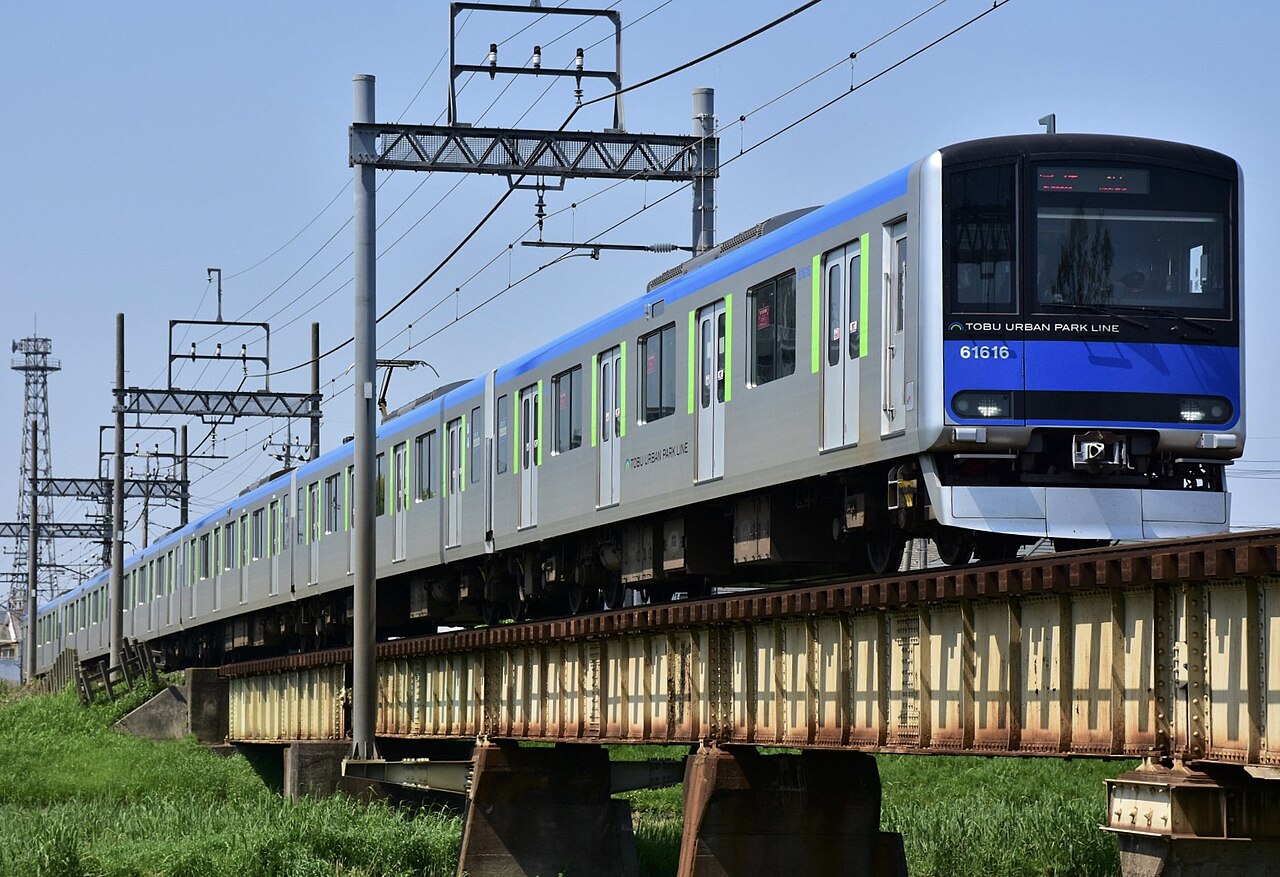
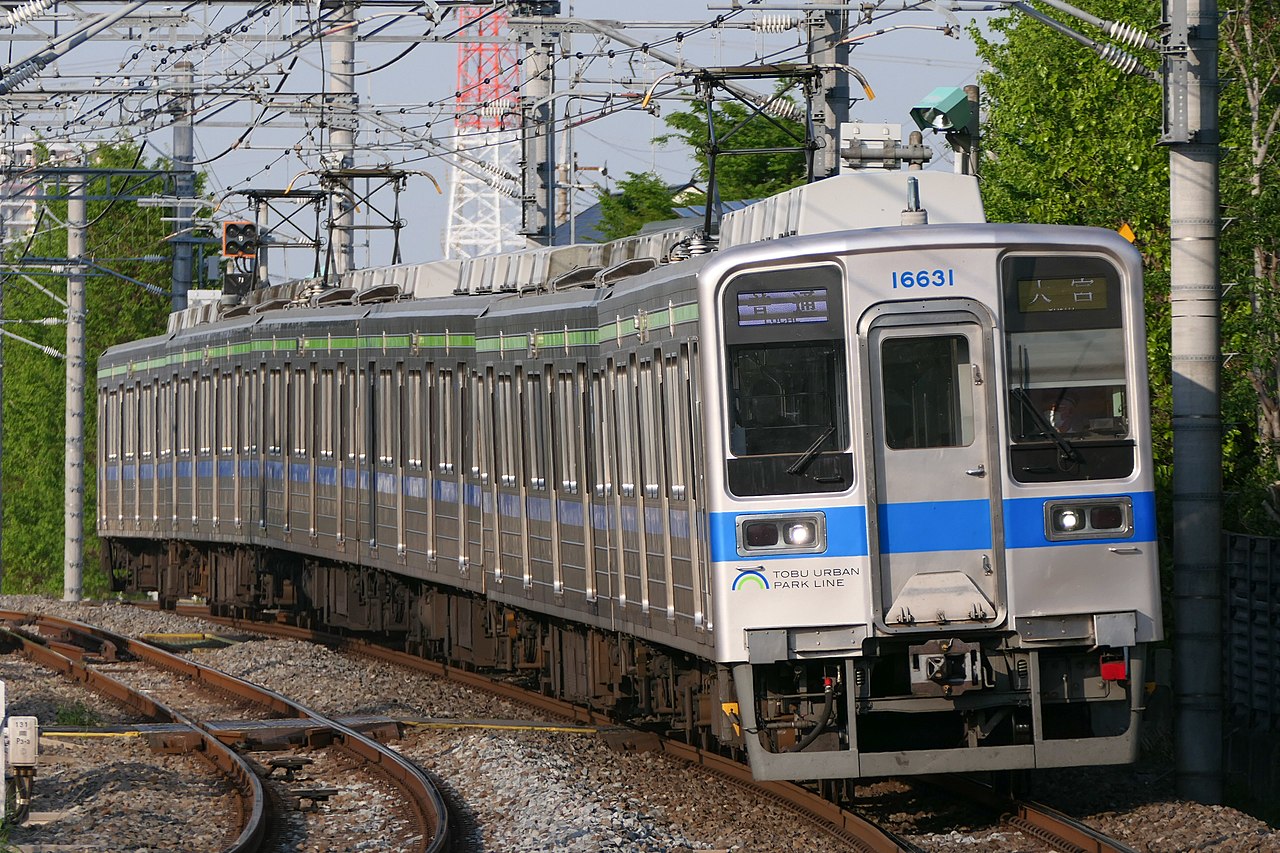
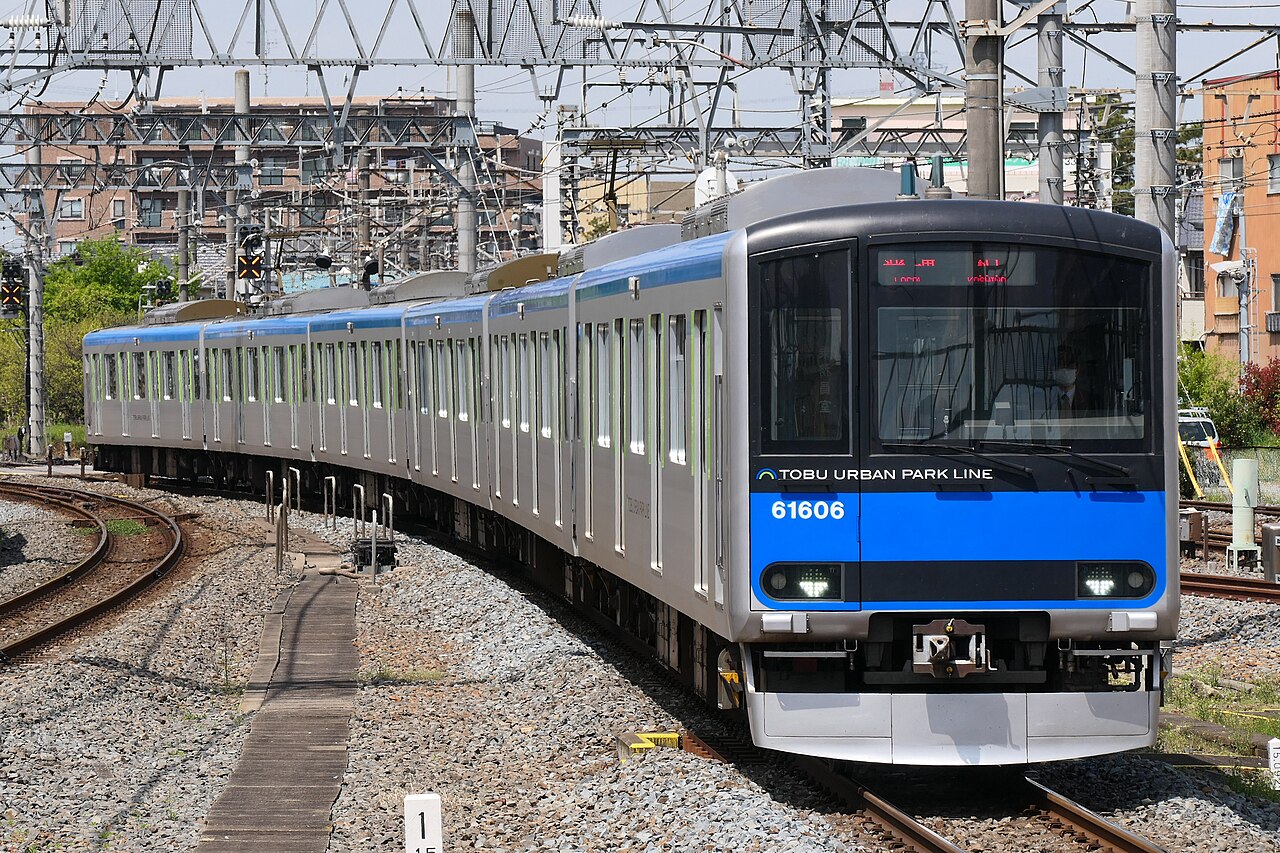
The "Tōbu Urban Park Line" nickname was adopted on 1 April 2014; the underlying official name remains the Tobu Noda Line. The first new rolling stock since the Tobu merger — the 10030 series (in revenue service from 20 April 2013) and the purpose-built 60000 series (from 15 June 2013) — arrived around this time, and the newest type, the five-car 80000 series, debuted on 8 March 2025. Until 2016 every service was an all-stations "Local"; limited-stop "Express" services were introduced on 26 March 2016, and from 21 April 2017 new Tobu 500-series trains began operating "Urban Park Liner" limited-express services on the line. After double-tracking of the Takayanagi–Mutsumi section was completed in 2019, Express services were extended from Kashiwa through to Funabashi in March 2020, cutting journey time on that stretch by a further eleven minutes. During the daytime the line runs six trains per hour. Tobu Railway announced in April 2024 that 25 five-car 80000-series sets would be introduced to replace all remaining 8000- and 10000-series trains on the line, with the existing 60000-series sets to be shortened from six cars to five.
Timeline
- 19119 May: the line opens as the Chiba Prefectural Railway Noda Line, Nodamachi (now Nodashi) to Kashiwa, 14.7 km, steam-worked.
- 1923The Noda Line is privatised under the Hokusō Railway, which opens its own Funabashi Line (Funabashi–Kashiwa, 19.6 km) on 27 December.
- 1929The line is extended toward Ōmiya; the Kasukabe–Ōmiya section opens electrified (November–December). On 22 November the company renames itself the Sōbu Railway.
- 19301 October: the route is completed with the Edo River bridge; through Ōmiya–Kashiwa electric services begin.
- 19441 March: the Sōbu Railway merges into Tobu Railway; the route becomes the Tobu Noda Line.
- 19471 March: the Kashiwa–Funabashi section, still unelectrified at the 1944 takeover, is electrified.
- 1948The Noda Line and the Funabashi Line are unified under the single "Noda Line" name.
- 1957Double-tracking begins with the Kita-Ōmiya–Ōmiya-kōen section.
- 200419 October: timetable revision retires the last 5070 series; maximum speed raised from 90 km/h to 100 km/h.
- 201217 March: station numbering with the "TD" prefix introduced across the line.
- 201310030 series enters revenue service (20 April); purpose-built 60000 series enters service (15 June).
- 20141 April: the "Tōbu Urban Park Line" nickname is adopted (official name remains Tobu Noda Line).
- 201626 March: limited-stop "Express" services introduced on the line.
- 201721 April: Tobu 500-series trains begin operating "Urban Park Liner" limited-express services.
- 2020March: after Takayanagi–Mutsumi double-tracking (completed 2019), Express services are extended from Kashiwa to Funabashi, cutting that stretch by ~11 minutes.
- 20258 March: the five-car 80000 series debuts on the line.
Sources
Facts last verified 3 June 2026.
Gallery 6 photos
Every photo for this page — tap any image to view it full-size. All from Wikimedia Commons (credit under each).