History
The line opened in stages from the late 1920s. On 6 July 1927 the Meguro-Kamata Electric Railway opened the first section, between Ōimachi and Ōokayama, and according to the Japanese-language record it carried the name Ōimachi Line from the outset. On 1 November 1929 the same company opened the stretch between Jiyūgaoka (then written Jiyūgaoka/Jiyūgaoka) and Futako-tamagawa as the separate Futako-Tamagawa Line, and on 25 December 1929 the opening of the Ōokayama–Jiyūgaoka segment completed the route; the Futako-Tamagawa Line was then merged into the Ōimachi Line and through operation between Ōimachi and Futako-tamagawa began. Corporate consolidation followed: on 29 June 1938 the Meguro-Kamata company was absorbed into the Tokyo-Yokohama Electric Railway, an ancestor of today's Tokyu Corporation.
Infrastructure improvements continued through the mid-twentieth century. On 15 January 1958 the line's supply voltage was raised from 600 V to 1,500 V DC. A significant renaming came on 11 October 1963, when the Ōimachi Line — together with the section south of Futako-tamagawa — was redesignated the Den-en-toshi Line, and the name "Ōimachi Line" temporarily disappeared. Through running between Shibuya and Nagatsuta began on 16 November 1977. The Ōimachi name was restored on 12 August 1979, when the Ōimachi–Futako-tamagawaen segment was separated out again as the Ōimachi Line, distinct from the Den-en-toshi Line south of Futako-tamagawa.
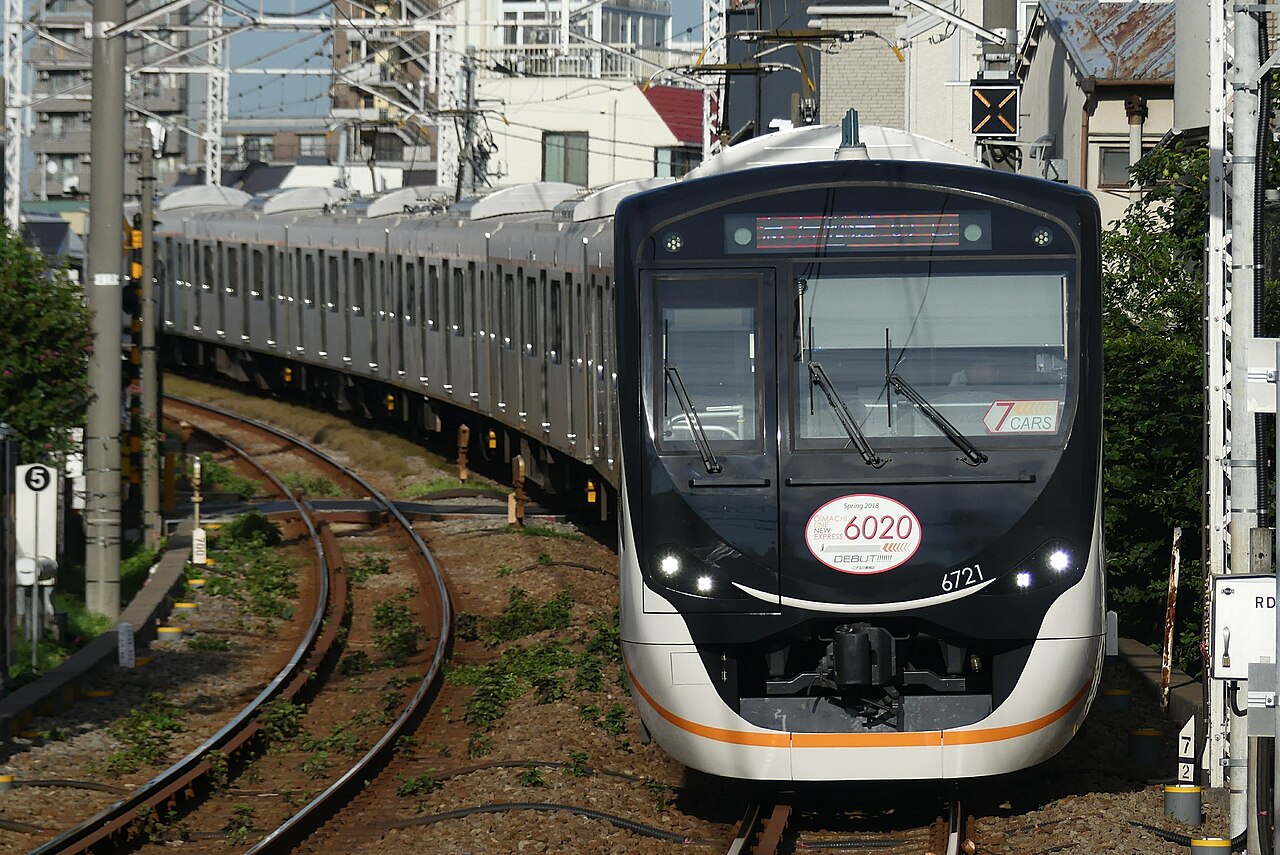
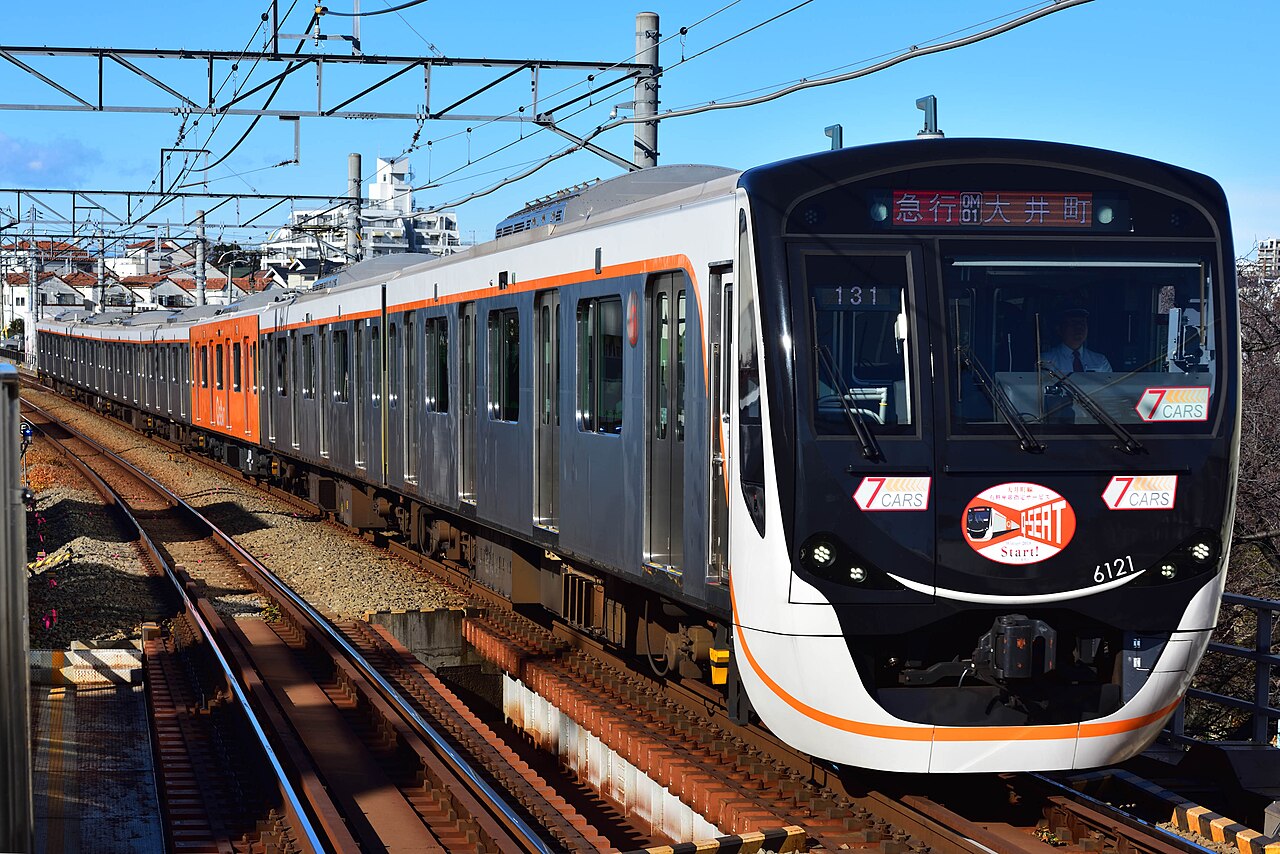
The twenty-first century brought the line's most visible modernisation. On 23 February 2008 the signalling was upgraded from Tokyu's ATS to ATC (recorded on the Japanese side as ATC-P), and on 28 March 2008 limited-stop Express services were introduced on the line, with 6000 series trains entering service. On 11 July 2009 the Ōimachi Line was extended from Futako-tamagawa to Mizonokuchi, and two grades of all-stations "Local" service — distinguished by blue and green class colours — began operating; the green local runs on the express track between Futako-tamagawa and Mizonokuchi and skips Futako-shinchi and Takatsu. Express trains were lengthened from six to seven cars over fiscal 2017 (the conversion beginning 4 November 2017 and completing 9 February 2018), with platforms at Ōimachi, Hatanodai and Jiyūgaoka extended to handle the longer sets, and 6020 series trains entered service from 28 March 2018. Since 14 December 2018, paid reserved-seat "Q Seat" cars have been offered on some weekday evening express services that run through to Nagatsuta on the Den-en-toshi Line.
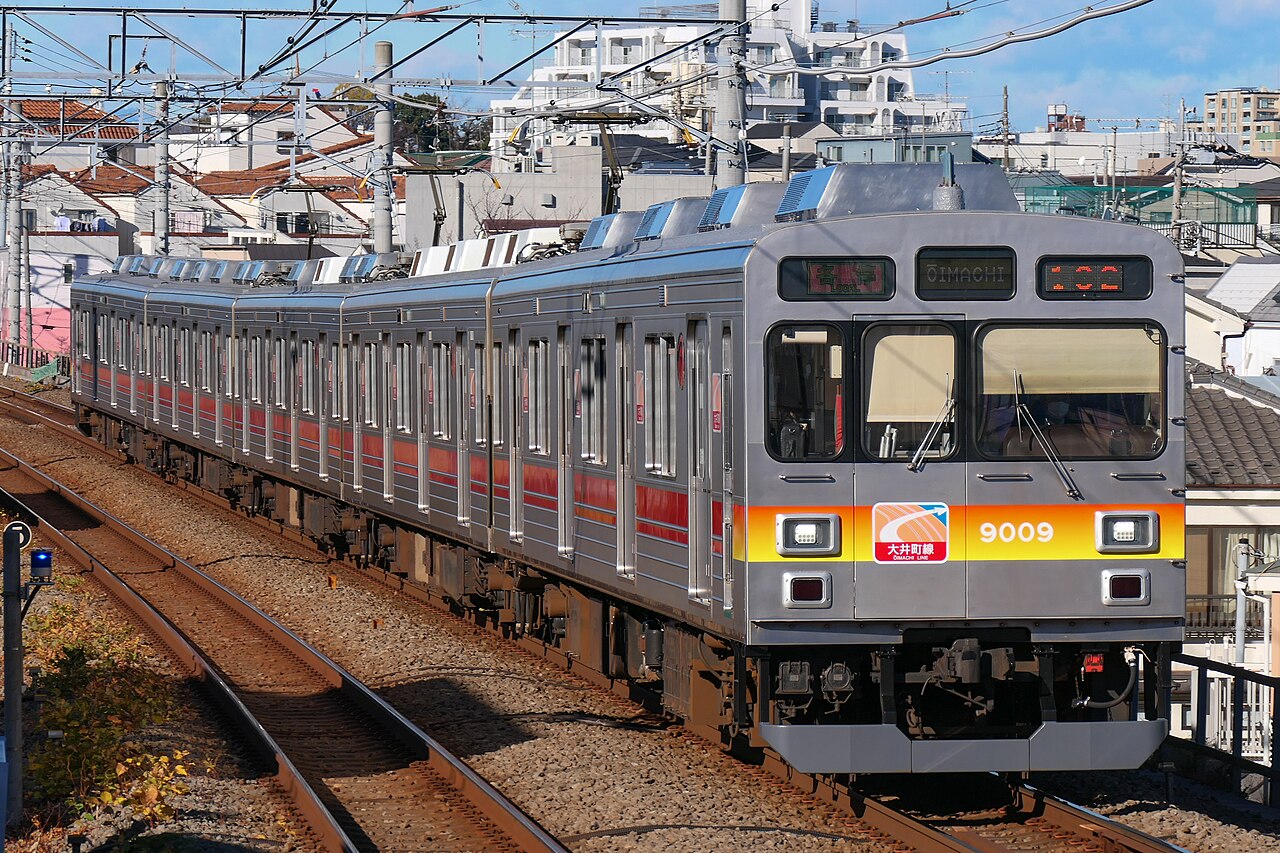
Today the Ōimachi Line carries heavy commuter traffic. Daily ridership was 511,214 in fiscal 2018 according to Tokyu Corporation figures. In fiscal year 2019 the most-congested section during the morning peak was Kuhombutsu to Jiyūgaoka, where the peak-hour (07:30–08:30) congestion rate was 156 percent per Japan's Ministry of Land, Infrastructure, Transport and Tourism; the line's historical peak in the same section reached 177 percent in 1980. Express services through-run onto the Den-en-toshi Line, with some weekend and holiday workings reaching Nagatsuta and Chūō-rinkan.
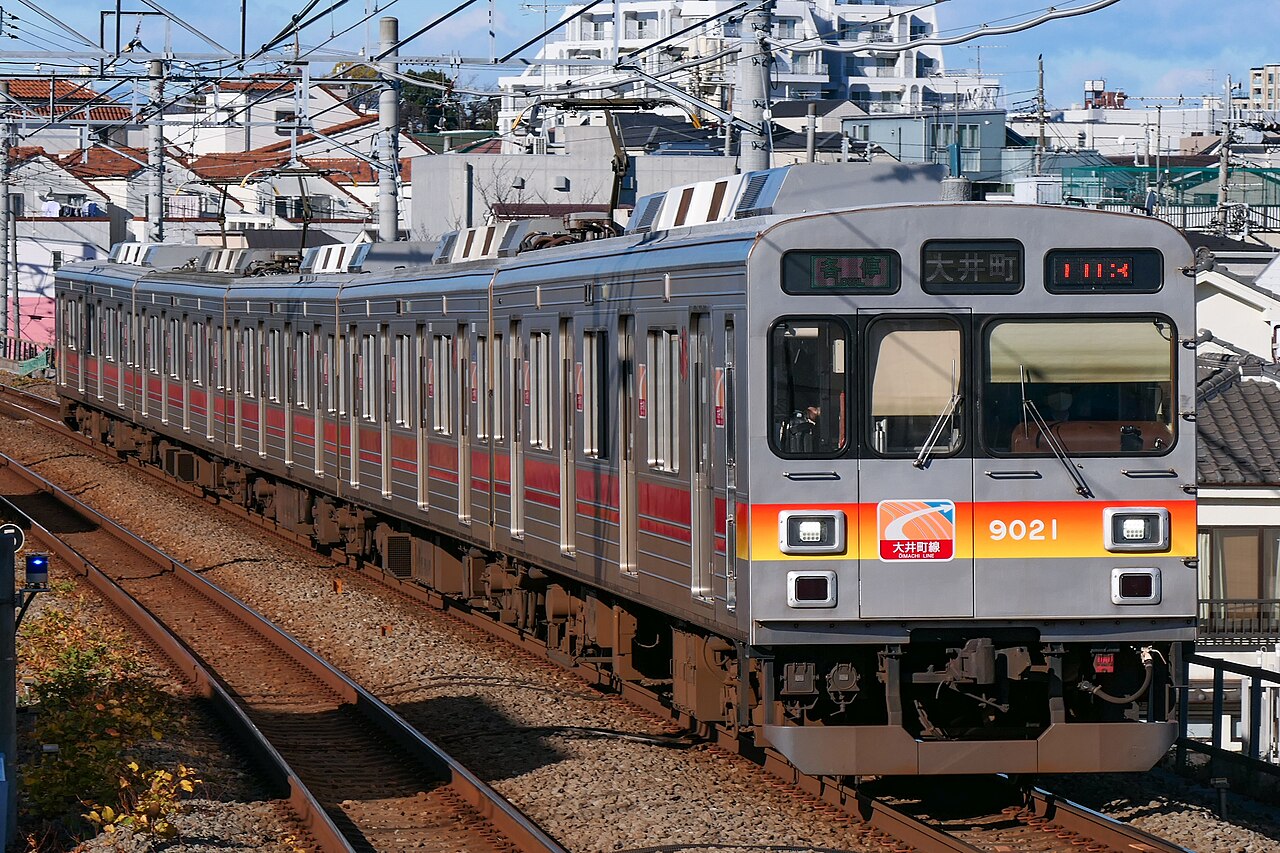
The line's record includes a serious safety incident. On 11 March 2006 a door on an 8000 series train (set 8005F) opened while the train was moving, an event investigated as a serious incident by Japan's Aircraft and Railway Accidents Investigation Commission. More recently, after a collision-derailment caused by a signal-system setting error at Kajigaya on the Den-en-toshi Line on 5 October 2025, Tokyu's review found the same design error at Futako-tamagawa — a station shared with the Ōimachi Line — on 10 October 2025, with the signal system repaired by 20 October 2025.
Timeline
- 19276 July: the Meguro-Kamata Electric Railway opens the first section, between Ōimachi and Ōokayama; the line is named the Ōimachi Line from the start.
- 19291 November: Jiyūgaoka–Futako-tamagawa opens as the Futako-Tamagawa Line. 25 December: Ōokayama–Jiyūgaoka opens, completing the route; the Futako-Tamagawa Line is merged into the Ōimachi Line.
- 193829 June: the Meguro-Kamata Railway is absorbed into the Tokyo-Yokohama Electric Railway.
- 195815 January: supply voltage raised from 600 V to 1,500 V DC.
- 196311 October: the line is renamed the Den-en-toshi Line (with the section south of Futako-tamagawa); the name 'Ōimachi Line' temporarily disappears.
- 197716 November: through running starts between Shibuya and Nagatsuta.
- 197912 August: the line is renamed the Ōimachi Line and separated from the Den-en-toshi Line south of Futako-tamagawa.
- 200611 March: a door on an 8000 series train (set 8005F) opens while moving; investigated as a serious incident by the Aircraft and Railway Accidents Investigation Commission.
- 200823 February: signalling upgraded from Tokyu ATS to ATC (ATC-P). 28 March: limited-stop Express services begin; 6000 series enters service.
- 200911 July: the Ōimachi Line is extended from Futako-tamagawa to Mizonokuchi; two grades of all-stations Local service (blue and green) begin.
- 2017Express services lengthened from six to seven cars over fiscal 2017 (conversion begins 4 November); platforms at Ōimachi, Hatanodai and Jiyūgaoka extended.
- 20189 February: seven-car express conversion completed. 28 March: 6020 series enters service. 14 December: paid 'Q Seat' reserved seating begins on some express services to Nagatsuta.
- 202510 October: after a Den-en-toshi Line collision-derailment at Kajigaya (5 October), Tokyu finds the same signal-system design error at Futako-tamagawa (shared with the Ōimachi Line); repaired by 20 October.
Sources
Facts last verified 3 June 2026.
Gallery 6 photos
Every photo for this page — tap any image to view it full-size. All from Wikimedia Commons (credit under each).