歴史
開業は1910年(明治43年)4月15日で、この日に天満橋駅 - 五条駅(現在の清水五条駅)間が複線の電気鉄道として開業した。当初は4月1日開業の予定だったが、直前の守口変電所での変圧器の火災により15日延期され、開業当日も車両故障で当時の新聞に酷評されたため、3日間運賃を半額にして対応した。大阪側は本来高麗橋を起点とする計画であったが、大阪市の圧力で天満橋に変更され、大阪中心部への乗り入れは長年の悲願となった。創業期の発展は速く、1914年5月15日には日本初の急行電車の運転を開始し、1915年4月1日には日本で初めて色灯三位式自動閉塞信号機を導入した。1915年10月27日には五条駅 - 三条駅間が延伸開業し、大阪 - 京都間が全通した。
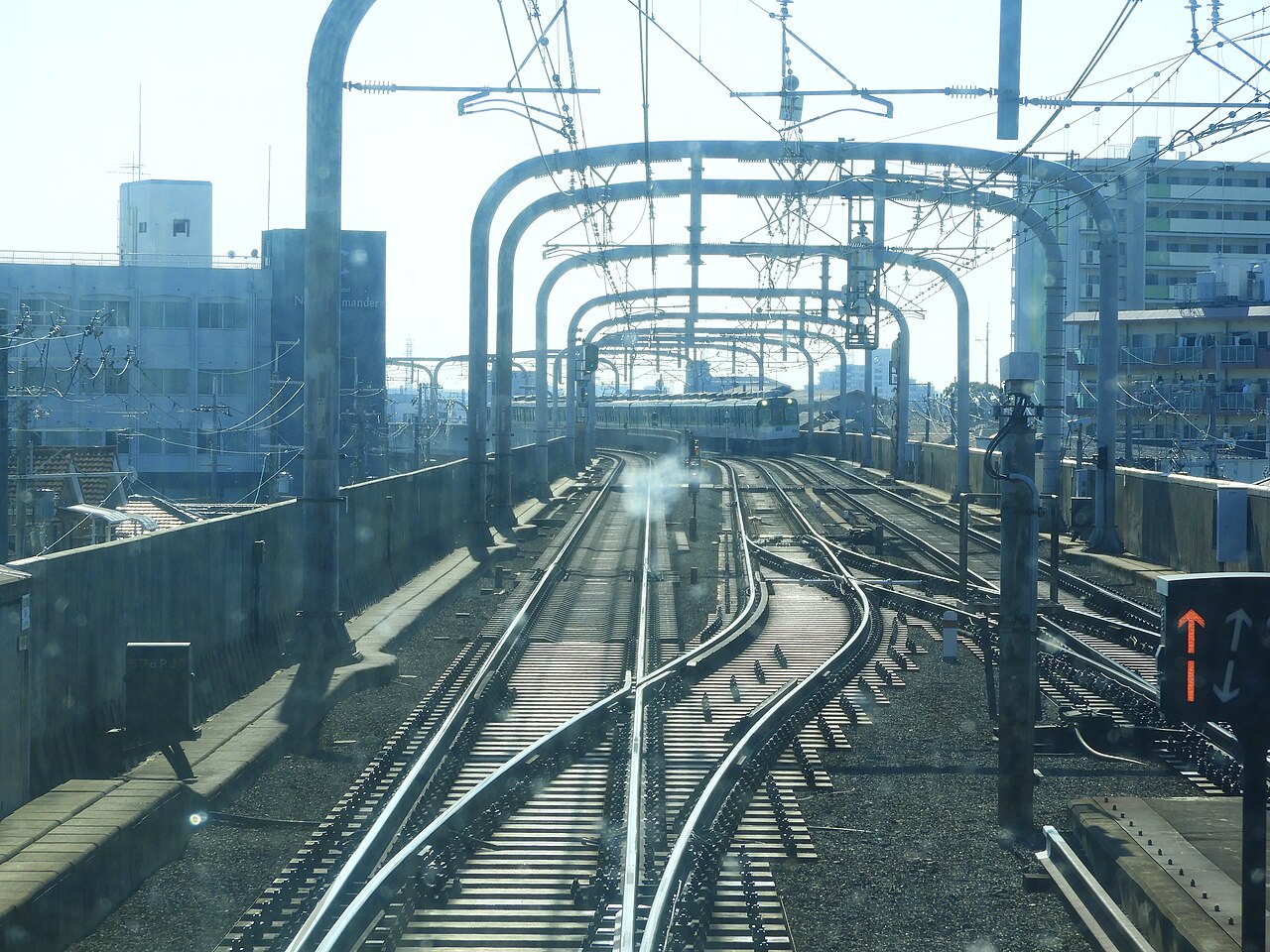
大阪中心部の淀屋橋への乗り入れには半世紀を要し、天満橋駅 - 淀屋橋駅間の地下延伸は1963年(4月16日)に開業して現在の大阪側ターミナルが成立した。1960年代から1980年代にかけて立体交差化と複々線化が順次進められ、1970年に天満橋駅 - 蒲生信号所間の高架複々線化が始まり、1982年には土居駅 - 寝屋川信号所間の複々線高架化が竣工した。天満橋駅 - 寝屋川信号所間の12.5 kmの複々線は関西大手私鉄で最長であり、列車種別ごとに走行線路を使い分けることで高密度のダイヤを可能としている。
1983年12月4日には、架線電圧が600 Vから1,500 Vに昇圧され(当時の大手私鉄14社のうち最後)、最高速度も105 km/hから110 km/hに向上した。京都市内では1987年に東福寺 - 三条間の地上区間が地下線に切り替えられ、1989年(10月5日)には本線の実質的な延長である京阪鴨東線への直通により、現在の北側終点である出町柳駅まで運転区間が延びた。その後、枚方市駅が1993年、寝屋川市駅が1999年、淀駅が2011年に高架化された。2008年10月19日には京阪中之島線が開業して本線と直通運転を開始し、同日に五条駅が清水五条駅、四条駅が祇園四条駅に改称された。
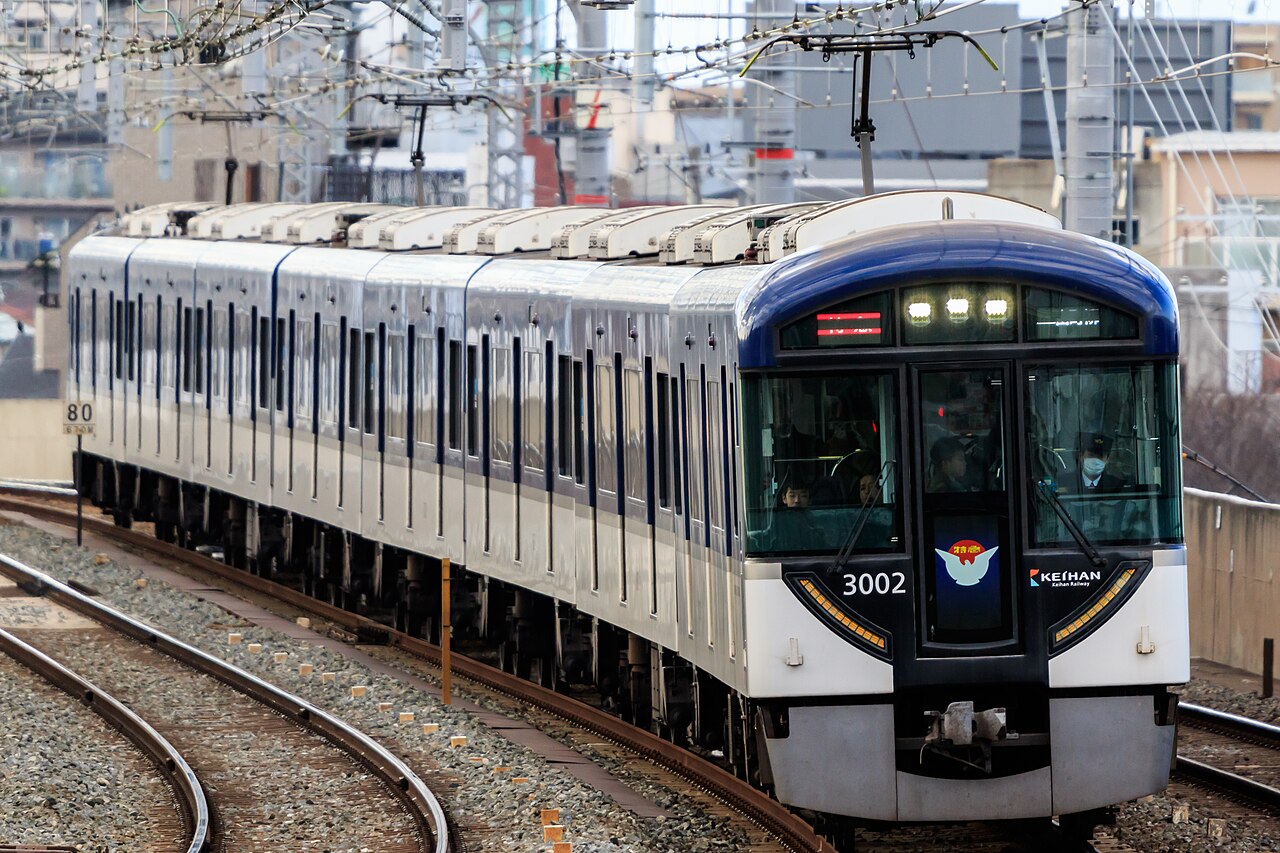
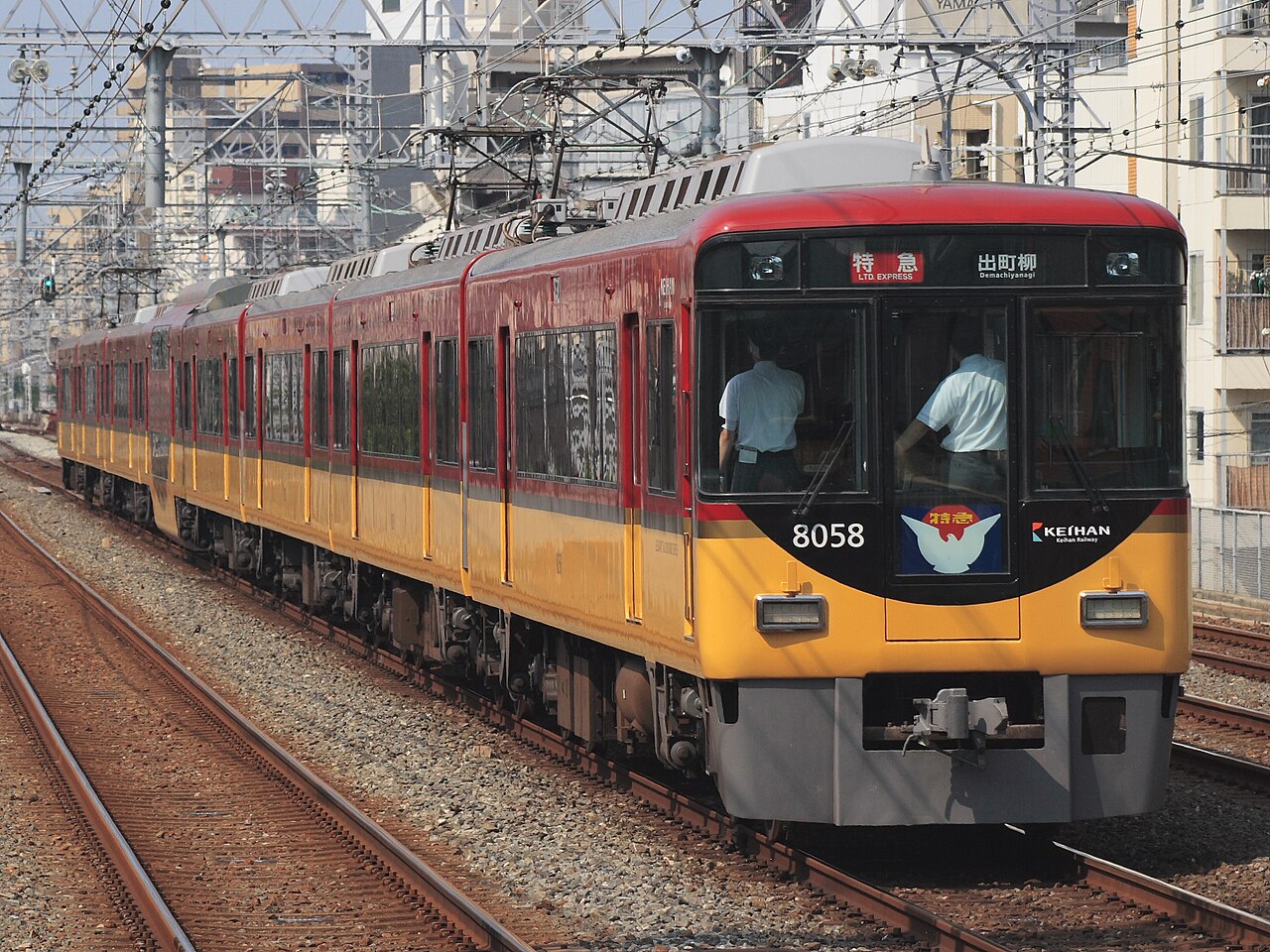
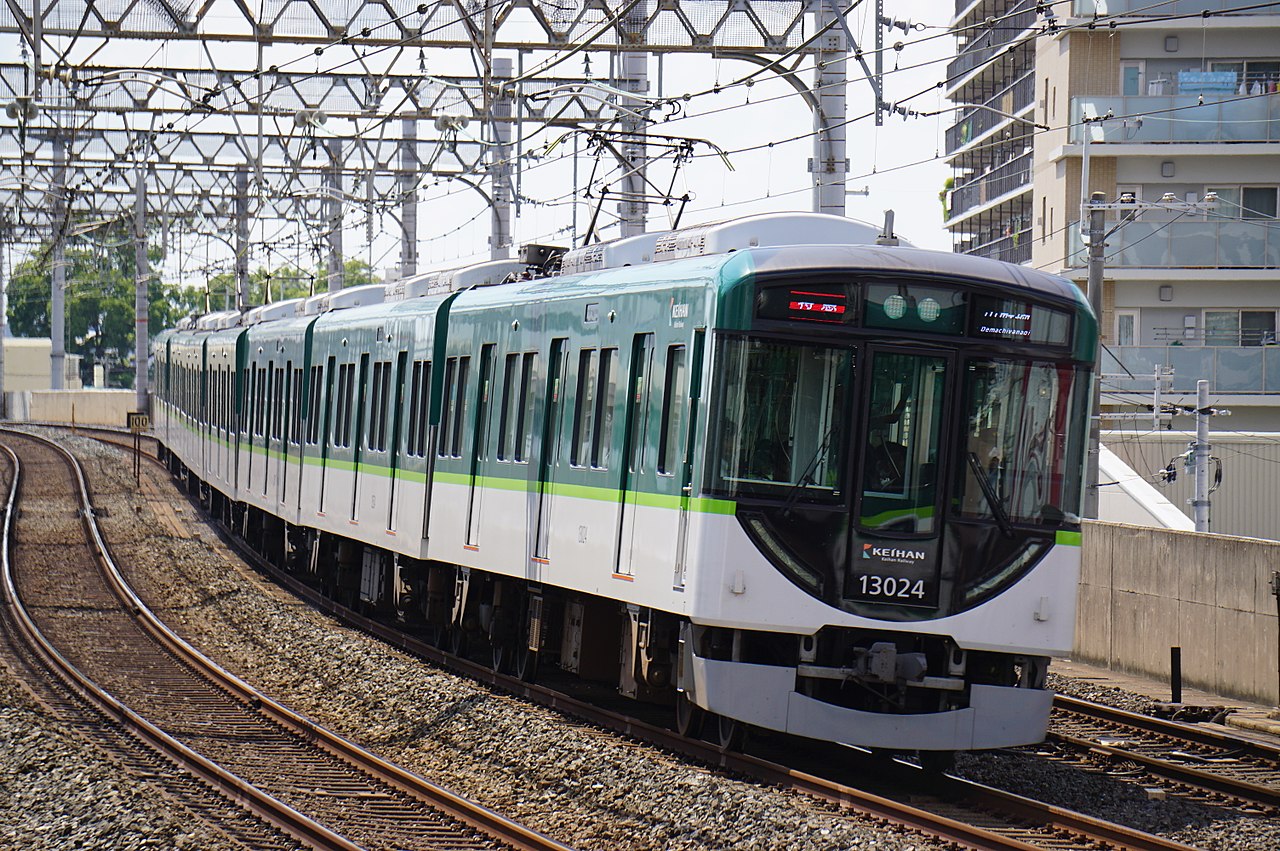
現在の京阪本線は、大阪と京都を結ぶ通勤・通学・観光路線である。三条駅からは鴨東線に直通して出町柳駅まで一体的なダイヤで運行され、一部列車は天満橋駅から中之島線にも直通する。2025年3月時点では、全車座席指定の「ライナー」、快速特急「洛楽」、特急、快速急行、急行、準急、区間急行、普通などが運行されている。2017年8月20日には8000系特急車に有料座席指定の「プレミアムカー」が導入された。長く軌道法に基づく軌道であった東福寺駅 - 三条駅間は、2013年12月20日許可で鉄道事業法に基づく鉄道に変更された。
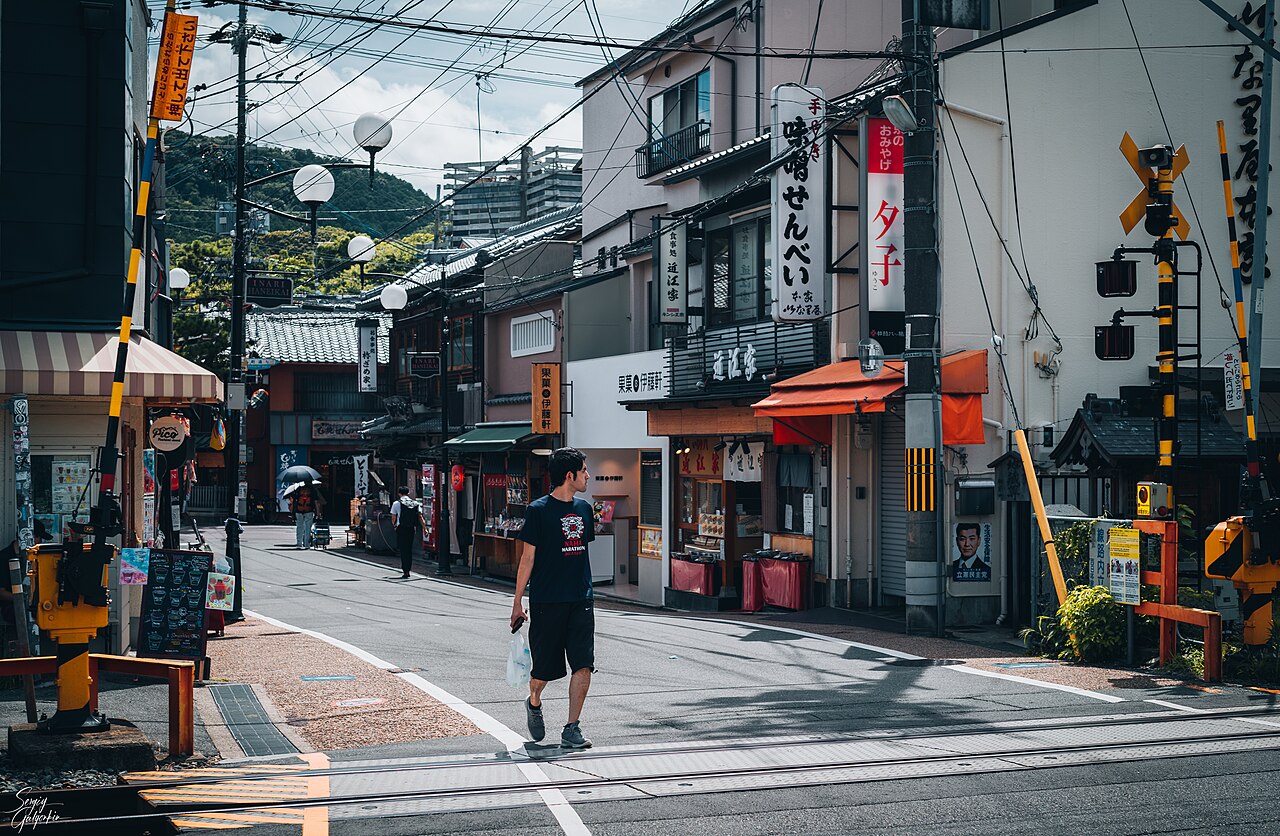
沿線が河川に沿うことから、水害や事故の歴史もある。1917年には深草車庫の火災で19両を焼失し、同年秋の「大正大水害」では堤防が決壊して枚方東口以北が不通となった。1966年8月3日に蒲生信号所で急行が停車中の普通電車に追突し51名が負傷した事故は、急行列車運転士の赤信号見落としが原因で、これを機に関西私鉄初のATS導入が図られた。立体交差化は現在も続いており、寝屋川市駅 - 枚方市駅間の残る地上区間を高架化する工事が2022年9月に本格化した。この事業は2028年度以降に完了する予定である。
年表
- 191015 April: the line opens between Temmabashi and Gojō (now Kiyomizu-Gojō) as a double-tracked electric railway; opening had been delayed 15 days by a transformer fire at the Moriguchi substation.
- 191415 May: Japan's first express electric train begins operation, running nonstop Temmabashi–Gojō.
- 19151 April: Japan's first three-aspect colour-light automatic block signals introduced. 27 October: the line is extended from Gojō to Sanjō, completing the Osaka–Kyoto route.
- 1917A fire at the Fukakusa depot (17 January) destroys 19 vehicles; the autumn 'Taishō great flood' breaches embankments and cuts services north of Hirakata Higashiguchi.
- 196316 April: the underground extension from Temmabashi to Yodoyabashi opens, establishing the present Osaka terminus.
- 19663 August: an express collides with a stationary local at the Gamo Signal Box, injuring 51; the driver had missed a red signal. ATS is subsequently adopted — the first on a Kansai private railway.
- 1970Quadruple-tracking and elevation of the Temmabashi–Gamo Signal Box section begins (Temmabashi–old Gamo Signal Box, 3.4 km, completed 1 November).
- 198229 March: the Doi–Neyagawa Signal Box quadruple-track elevation is completed.
- 19834 December: the overhead voltage is raised from 600 V to 1,500 V (the last of the era's 14 major private railways to do so); maximum speed rises from 105 to 110 km/h.
- 1987The street-level Tōfukuji–Sanjō section in Kyoto is replaced by a tunnel (Shichijō–Sanjō put underground, 24 May).
- 19895 October: the Keihan Ōtō Line opens and through-services extend to Demachiyanagi, the current northern terminus.
- 1993Hirakatashi Station is elevated.
- 1999Neyagawashi Station is elevated (20 November), completing grade separation over 15.3 km from Yodoyabashi.
- 200819 October: the Keihan Nakanoshima Line opens with through-running from the Main Line; Gojō and Shijō stations are renamed Kiyomizu-Gojō and Gion-Shijō.
- 2011Yodo Station is elevated (28 May, up platform).
- 201320 December: the Tōfukuji–Sanjō section is reclassified from a tramway (Tramways Act) to a railway (Railway Business Act).
- 201720 August: reserved-seat 'Premium Car' accommodation is introduced on 8000-series limited-express trains; the all-reserved 'Liner' service also begins.
- 2022September: construction begins to elevate the remaining at-grade Neyagawashi–Hirakatashi section, aiming to eliminate 21 level crossings; work expected to finish by 2027 with services switching to elevated tracks in 2028 (JA gives a fiscal-2028-or-later completion target).
出典
事実確認日:2026年6月3日
ギャラリー 4枚
このページの全写真 ― 画像をタップすると原寸大で表示します。すべてウィキメディア・コモンズより(各写真の下にクレジット)。