History
The line opened on 15 April 1910, when the section from Temmabashi to Gojō (the present Kiyomizu-Gojō) was placed in service as a double-tracked electric railway. Opening had been scheduled for 1 April but was put back fifteen days after a transformer fire at the Moriguchi substation, and rolling-stock failures on the first day drew harsh newspaper notices, prompting the company to halve fares for three days. The Osaka end had originally been planned to start at Kōraibashi but was forced inland to Temmabashi under pressure from the City of Osaka, and reaching the city centre remained a long-held ambition. The line was developed rapidly in its early years: Japan's first express electric train began running on 15 May 1914, and on 1 April 1915 the railway introduced Japan's first three-aspect colour-light automatic block signals. On 27 October 1915 the line was extended from Gojō to Sanjō, completing the through route between Osaka and Kyoto.
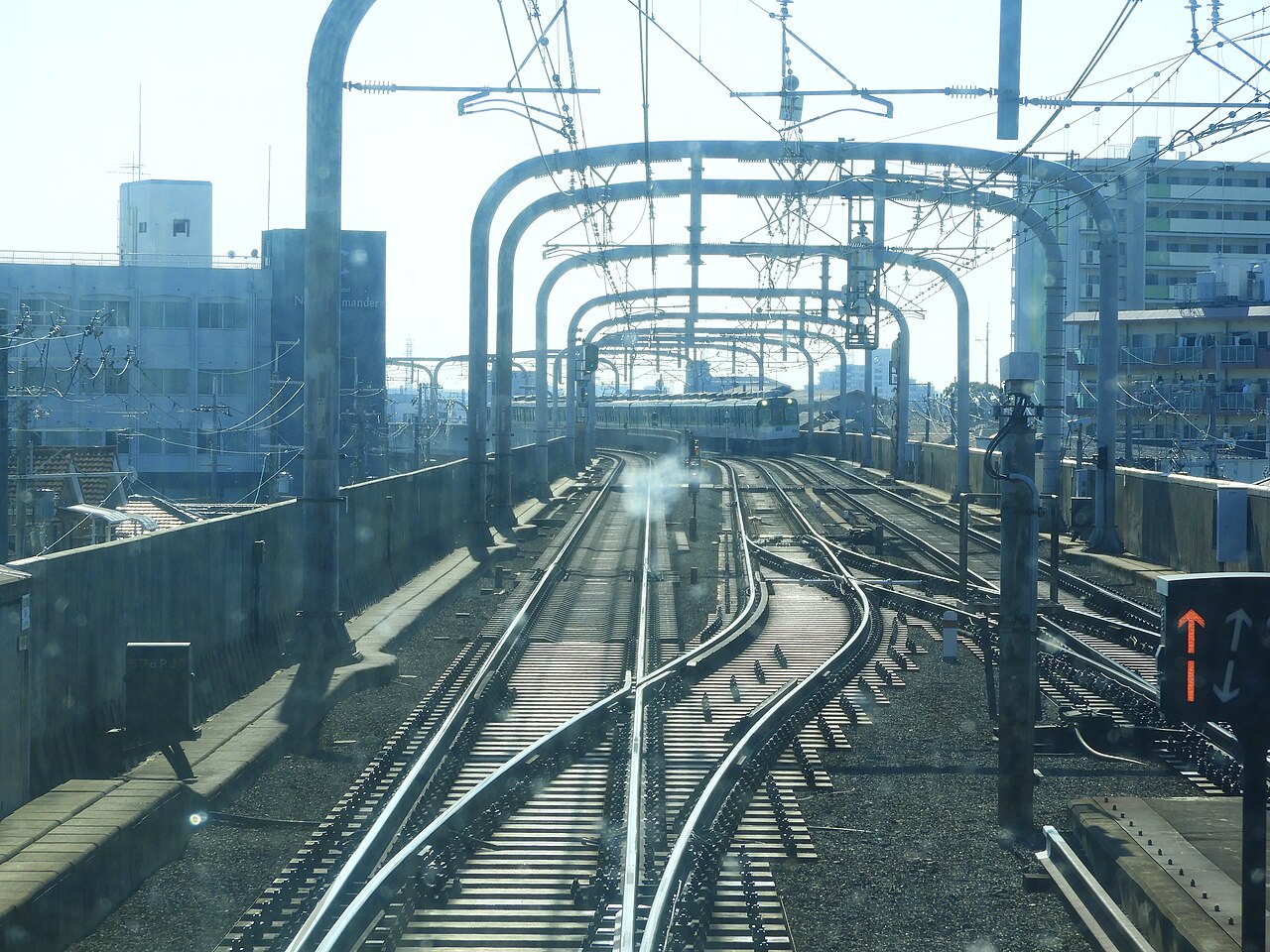
Reaching deeper into central Osaka took half a century: the underground extension from Temmabashi to Yodoyabashi finally opened in 1963 (16 April), establishing the present Osaka terminus. Across the 1960s to 1980s the line was progressively grade-separated and quadruple-tracked. Quadruple-tracking and elevation of the Temmabashi–Gamo Signal Box section began in 1970, and the Doi–Neyagawa Signal Box quadruple-track elevation was completed in 1982. The 12.5 km quadruple-tracked stretch between Temmabashi and the Neyagawashi Signal Box is the longest quadruple-track section among the major private railways of the Kansai region; running different train classes on the inner and outer pairs of tracks allows a dense timetable.
A major change came on 4 December 1983, when the overhead voltage was raised from 600 V to 1,500 V — the last of the fourteen major private railways of the era to make the change — and the maximum speed was lifted from 105 km/h to 110 km/h. In Kyoto, the street-level section from Tōfukuji to Sanjō was replaced by a tunnel in 1987, and in 1989 (5 October) through-services were extended to the current northern terminus, Demachiyanagi, over the connecting Keihan Ōtō Line, which functions as an effective extension of the Main Line. Several stations were subsequently elevated: Hirakatashi in 1993, Neyagawashi in 1999 and Yodo in 2011. On 19 October 2008 the Keihan Nakanoshima Line opened with through-running from the Main Line, and the same day Gojō and Shijō stations were renamed Kiyomizu-Gojō and Gion-Shijō.
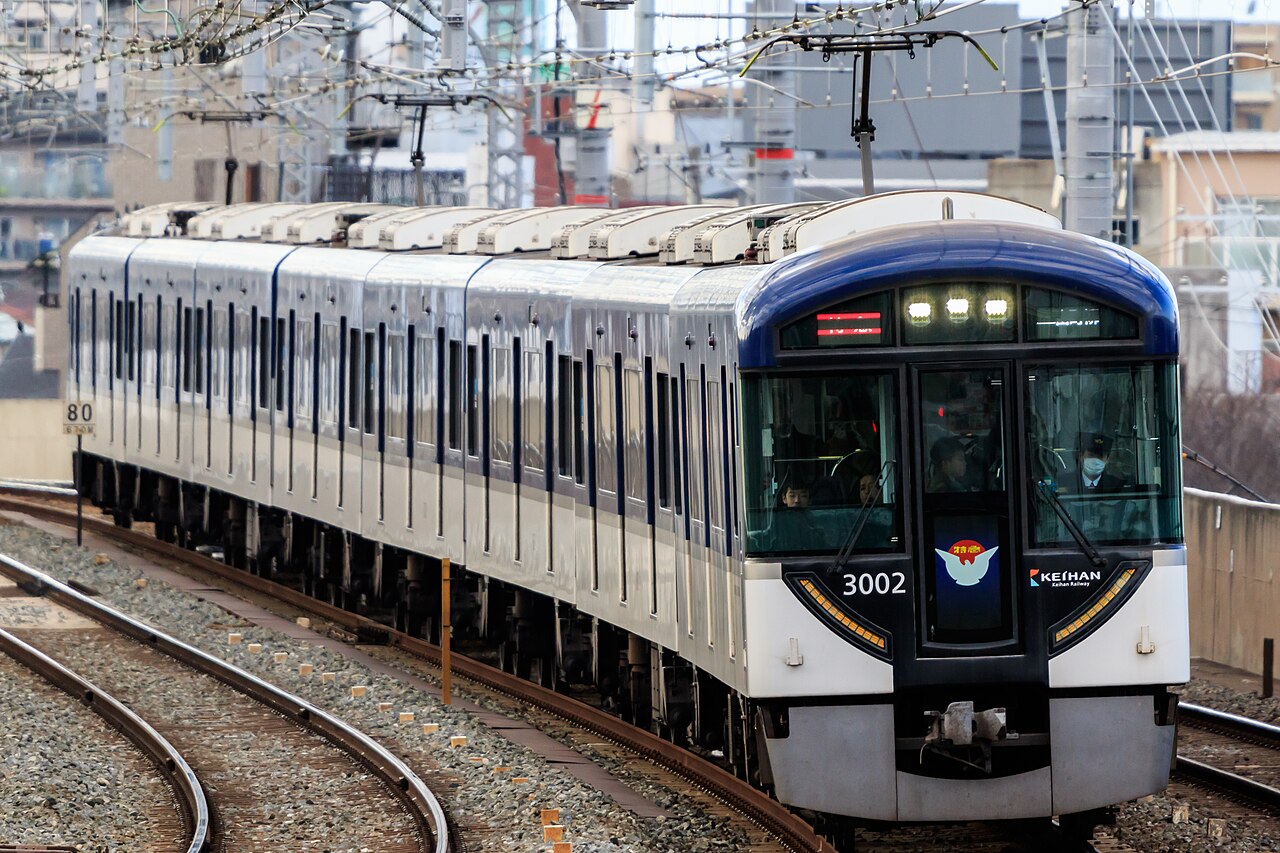
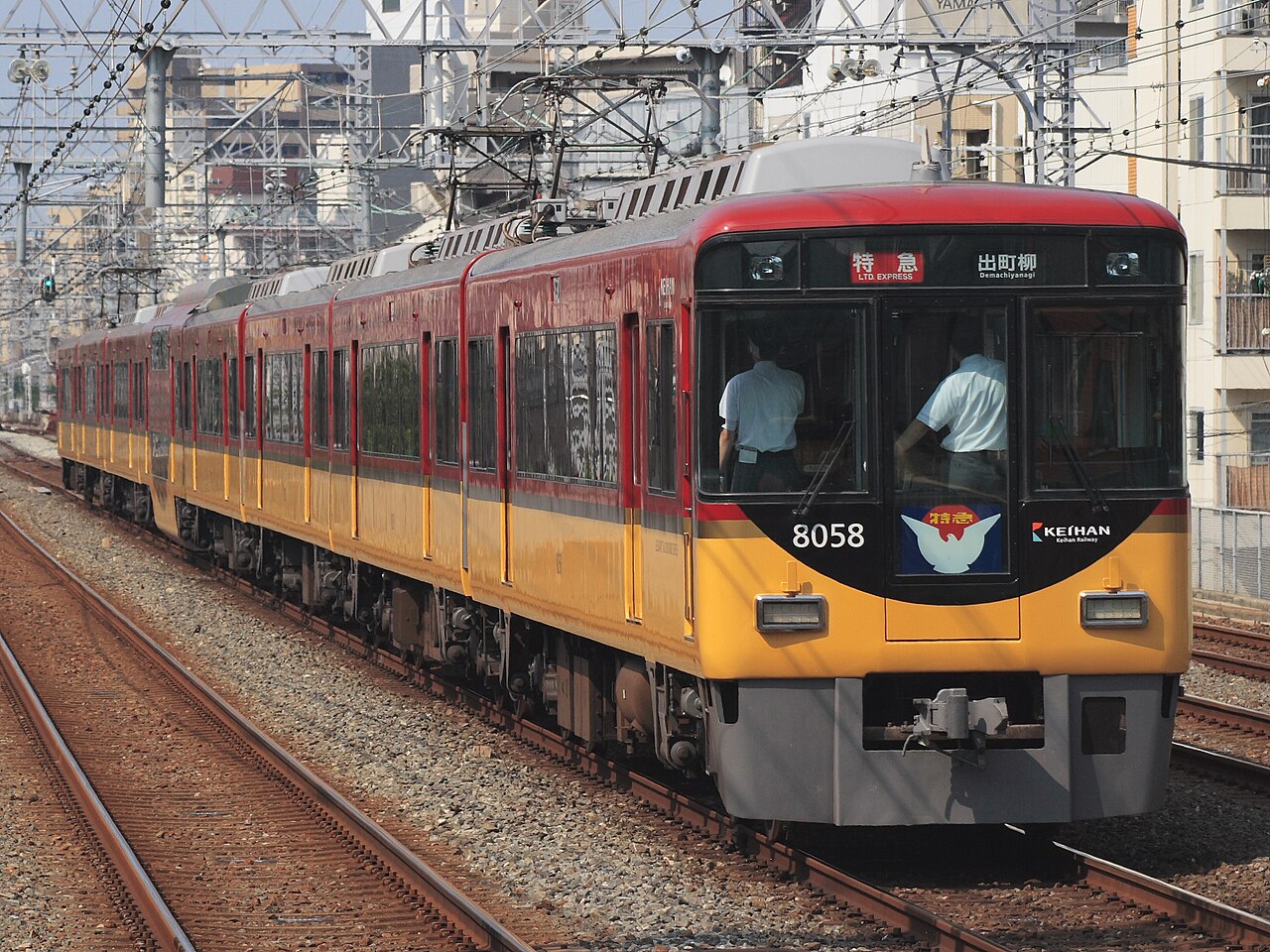
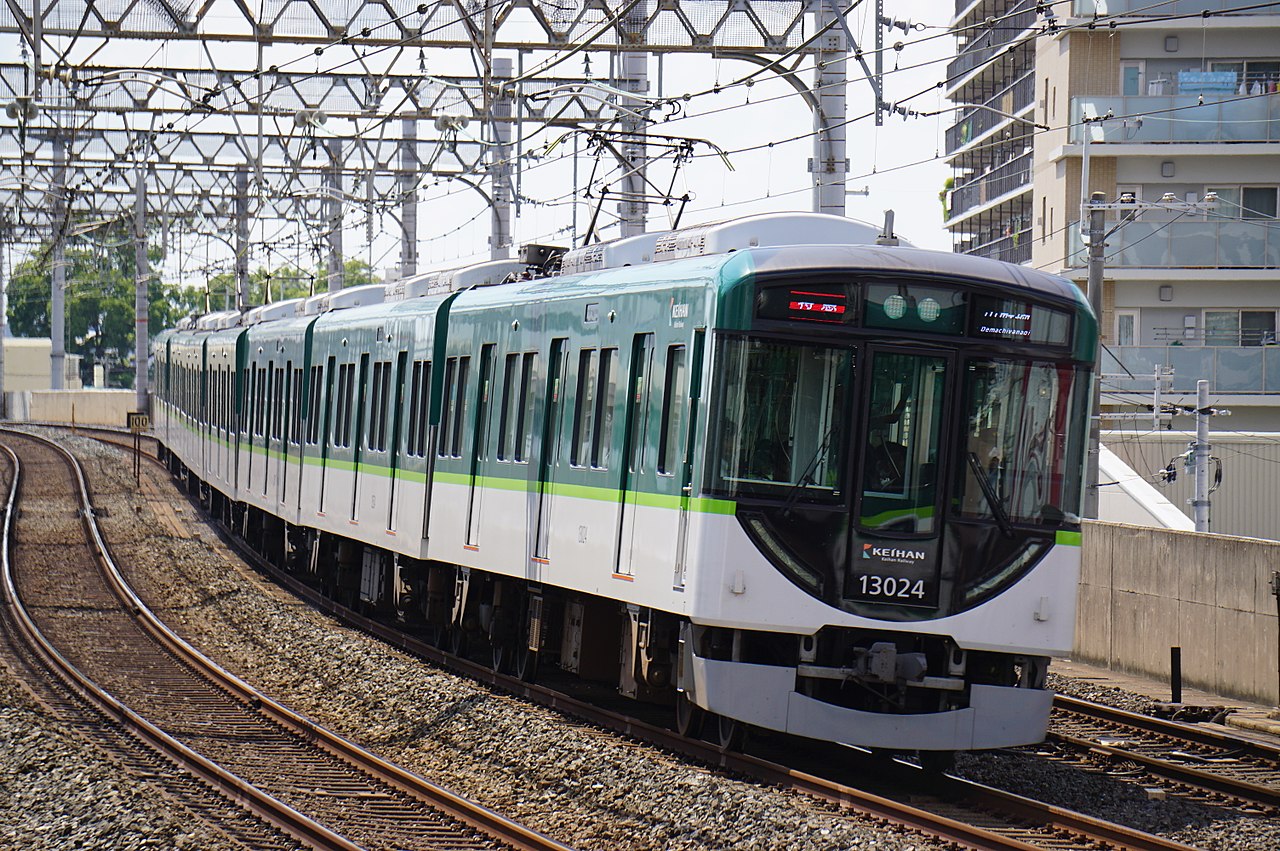
Today the Main Line carries commuter, school and tourist traffic between Osaka and Kyoto. From Sanjō, trains continue onto the Ōtō Line to Demachiyanagi under a unified timetable, and some services run through onto the Nakanoshima Line from Temmabashi. As of March 2025 the line operates a range of services including the all-reserved Liner, the Rapid Limited Express "Rakuraku," Limited Express, Rapid Express, Express, Sub-express, Semi-express and Local trains; reserved-seat "Premium Car" accommodation was introduced on 8000-series limited-express trains on 20 August 2017. The Tōfukuji–Sanjō section, long classified as a tramway under the Tramways Act, was reclassified as a railway under the Railway Business Act on 20 December 2013.
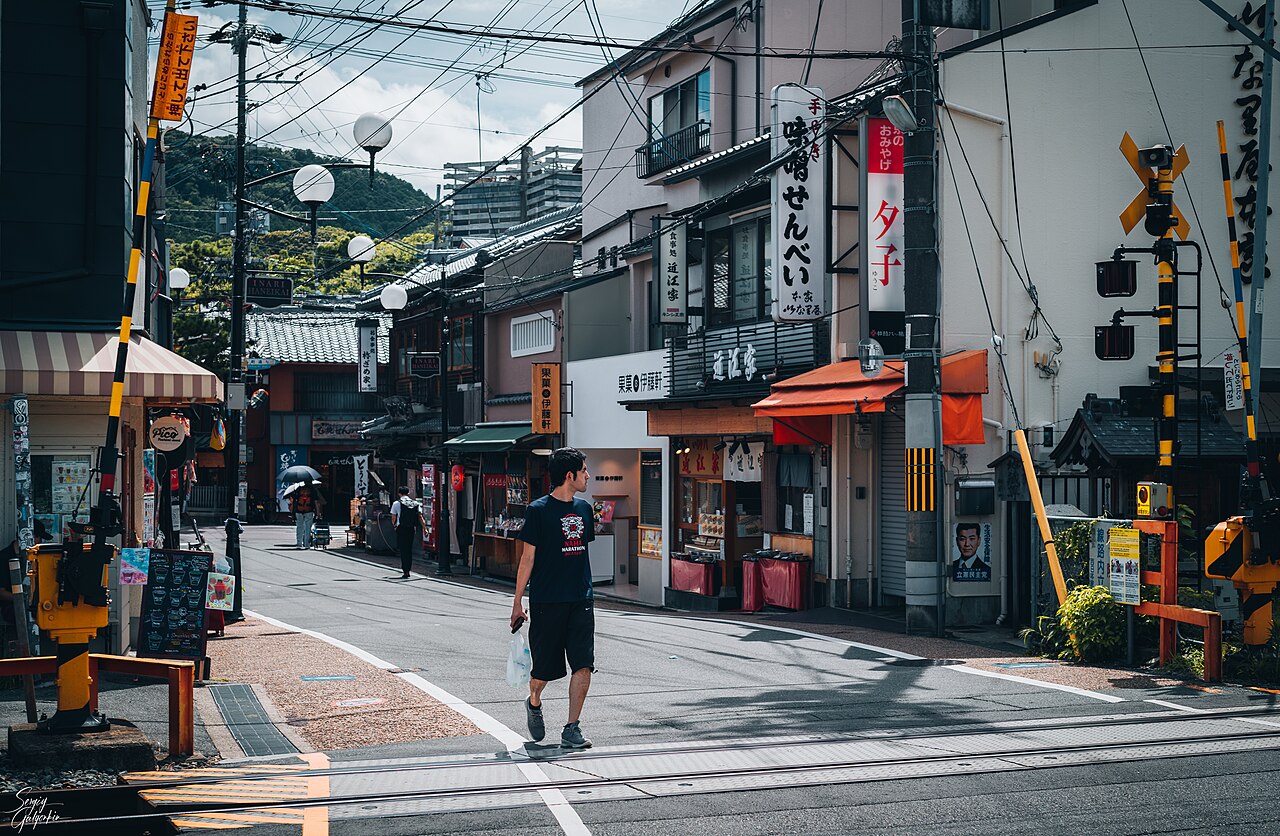
The line has a history of flooding and accidents tied to the rivers it follows. In 1917 a fire at the Fukakusa depot destroyed 19 vehicles, and the "Taishō great flood" that autumn breached embankments and cut services north of Hirakata Higashiguchi. A collision at the Gamo Signal Box on 3 August 1966, in which an express ran into a stationary local and injured 51 people, was caused by the express driver missing a red signal and led the company to adopt automatic train stop (ATS) — the first installation on a Kansai private railway. Grade-separation work continues: construction to elevate the remaining at-grade section between Neyagawashi and Hirakatashi began in September 2022, aiming to eliminate 21 level crossings, with work expected to finish by 2027 and the switch of services to the elevated tracks planned for 2028 (a completion target of fiscal 2028 or later).
Timeline
- 191015 April: the line opens between Temmabashi and Gojō (now Kiyomizu-Gojō) as a double-tracked electric railway; opening had been delayed 15 days by a transformer fire at the Moriguchi substation.
- 191415 May: Japan's first express electric train begins operation, running nonstop Temmabashi–Gojō.
- 19151 April: Japan's first three-aspect colour-light automatic block signals introduced. 27 October: the line is extended from Gojō to Sanjō, completing the Osaka–Kyoto route.
- 1917A fire at the Fukakusa depot (17 January) destroys 19 vehicles; the autumn 'Taishō great flood' breaches embankments and cuts services north of Hirakata Higashiguchi.
- 196316 April: the underground extension from Temmabashi to Yodoyabashi opens, establishing the present Osaka terminus.
- 19663 August: an express collides with a stationary local at the Gamo Signal Box, injuring 51; the driver had missed a red signal. ATS is subsequently adopted — the first on a Kansai private railway.
- 1970Quadruple-tracking and elevation of the Temmabashi–Gamo Signal Box section begins (Temmabashi–old Gamo Signal Box, 3.4 km, completed 1 November).
- 198229 March: the Doi–Neyagawa Signal Box quadruple-track elevation is completed.
- 19834 December: the overhead voltage is raised from 600 V to 1,500 V (the last of the era's 14 major private railways to do so); maximum speed rises from 105 to 110 km/h.
- 1987The street-level Tōfukuji–Sanjō section in Kyoto is replaced by a tunnel (Shichijō–Sanjō put underground, 24 May).
- 19895 October: the Keihan Ōtō Line opens and through-services extend to Demachiyanagi, the current northern terminus.
- 1993Hirakatashi Station is elevated.
- 1999Neyagawashi Station is elevated (20 November), completing grade separation over 15.3 km from Yodoyabashi.
- 200819 October: the Keihan Nakanoshima Line opens with through-running from the Main Line; Gojō and Shijō stations are renamed Kiyomizu-Gojō and Gion-Shijō.
- 2011Yodo Station is elevated (28 May, up platform).
- 201320 December: the Tōfukuji–Sanjō section is reclassified from a tramway (Tramways Act) to a railway (Railway Business Act).
- 201720 August: reserved-seat 'Premium Car' accommodation is introduced on 8000-series limited-express trains; the all-reserved 'Liner' service also begins.
- 2022September: construction begins to elevate the remaining at-grade Neyagawashi–Hirakatashi section, aiming to eliminate 21 level crossings; work expected to finish by 2027 with services switching to elevated tracks in 2028 (JA gives a fiscal-2028-or-later completion target).
Sources
Facts last verified 3 June 2026.
Gallery 4 photos
Every photo for this page — tap any image to view it full-size. All from Wikimedia Commons (credit under each).