歴史
房総半島を一周する鉄道のうち東京湾側の路線として、1912年(明治45年)3月28日に蘇我駅 - 姉ケ崎駅間が木更津線として開業したのが始まりである。以後小刻みに延伸を重ね、1919年(大正8年)に安房北条駅(現在の館山駅)に達したところで北条線と改称し、1925年(大正14年)7月11日に安房鴨川駅まで延伸して現在の内房線の区間が全通した。1929年(昭和4年)には房総半島東側で建設されていた房総線が安房鴨川駅まで延伸して北条線を編入し、千葉 - 大網 - 安房北条 - 木更津 - 蘇我を結ぶ房総線となった。1933年(昭和8年)4月1日に蘇我駅 - 安房鴨川駅間が房総西線として再び分離され、1972年(昭和47年)7月15日に現在の内房線に改称された。
戦後、線路設備の近代化が進んだ。1954年(昭和29年)に1往復を除き気動車化された後、蘇我駅 - 君津駅間は1964年から1970年にかけて順次複線化され(1964年7月1日の蘇我 - 浜野間に始まり、1970年3月24日の木更津 - 君津間で完成)、君津駅以南の安房鴨川駅までは現在も単線である。直流1,500 Vによる電化も段階的に行われ、1968年7月13日に千葉 - 蘇我 - 木更津間、1969年7月11日に木更津 - 千倉間、1971年7月1日に千倉 - 安房鴨川間が電化されて全線の電化が完成した。1969年7月10日には館山駅行きの135列車(C57-105号機牽引)が運転され、蒸気機関車牽引の定期旅客列車の運用がなくなった。1972年7月15日の内房線への改称に合わせて183系電車による特急「さざなみ」の運転が始まり、同日に総武快速線(錦糸町 - 東京間)も開業した。1987年(昭和62年)4月1日の国鉄分割民営化によりJR東日本が承継した。なお、貨物営業は1982年に木更津 - 安房鴨川間、1986年に蘇我 - 木更津間で廃止された。蘇我 - 木更津間ではその後もJR貨物が第二種鉄道事業免許を有していたが、1996年に廃止された。
江見駅 - 太海駅間にある鋼製の山生橋梁は、2012年11月22日に土木学会選奨土木遺産に認定された(千葉県内の鉄道施設としては初)。また、国土地理院鹿野山測地観測所の近傍では、直流電化が地磁気観測に支障を生じたため、岩手県水沢(現・奥州市)に新たな観測所を開設するとともに、当該区間では通電区間を細分化する直直デッドセクション方式により観測への影響を抑えている。
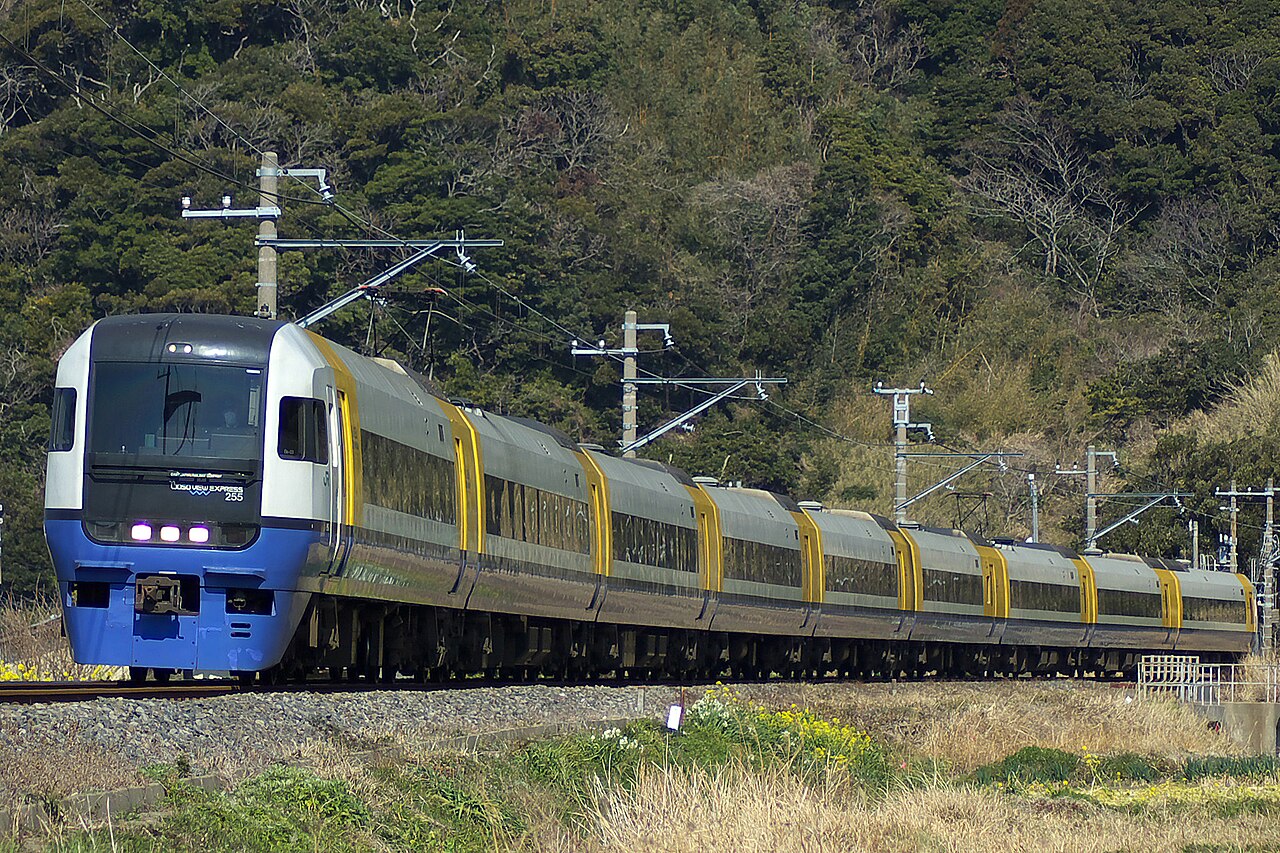
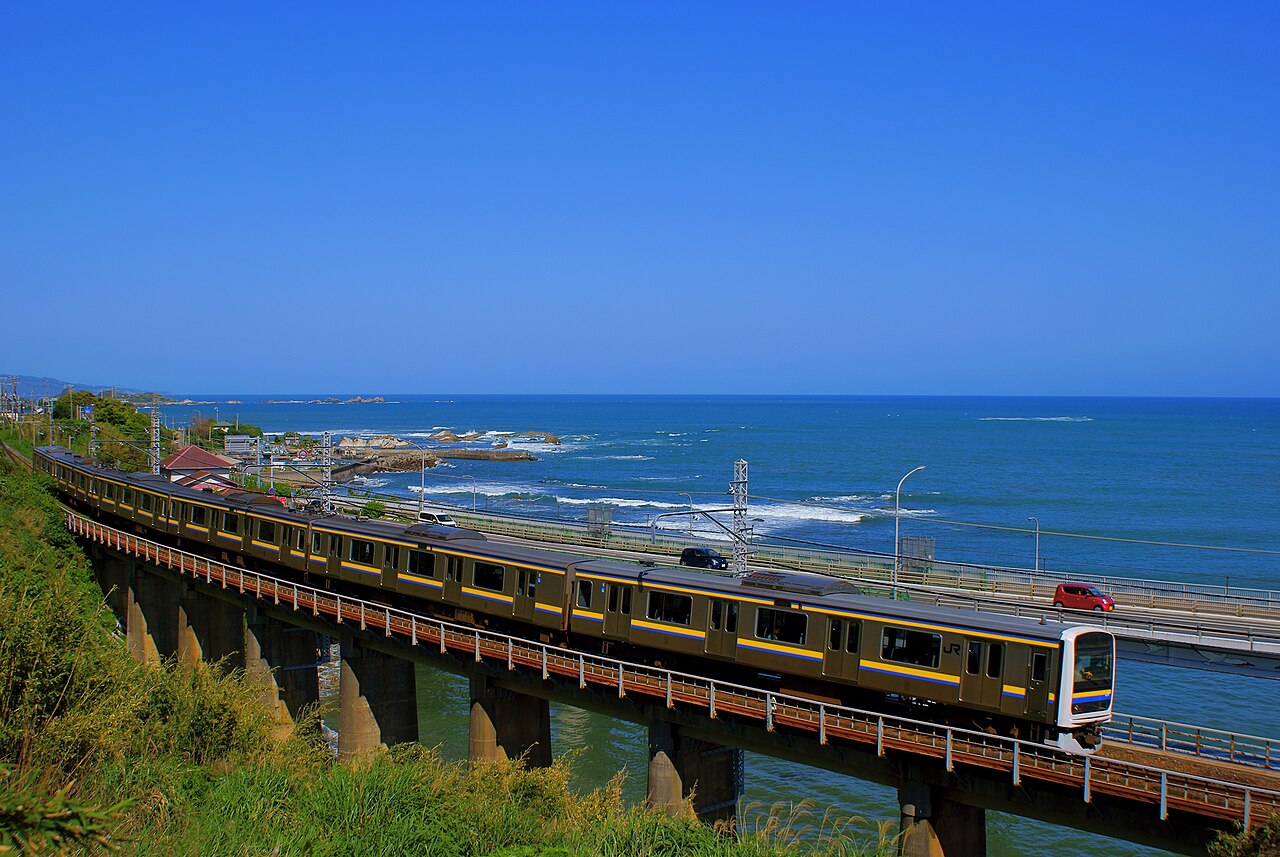
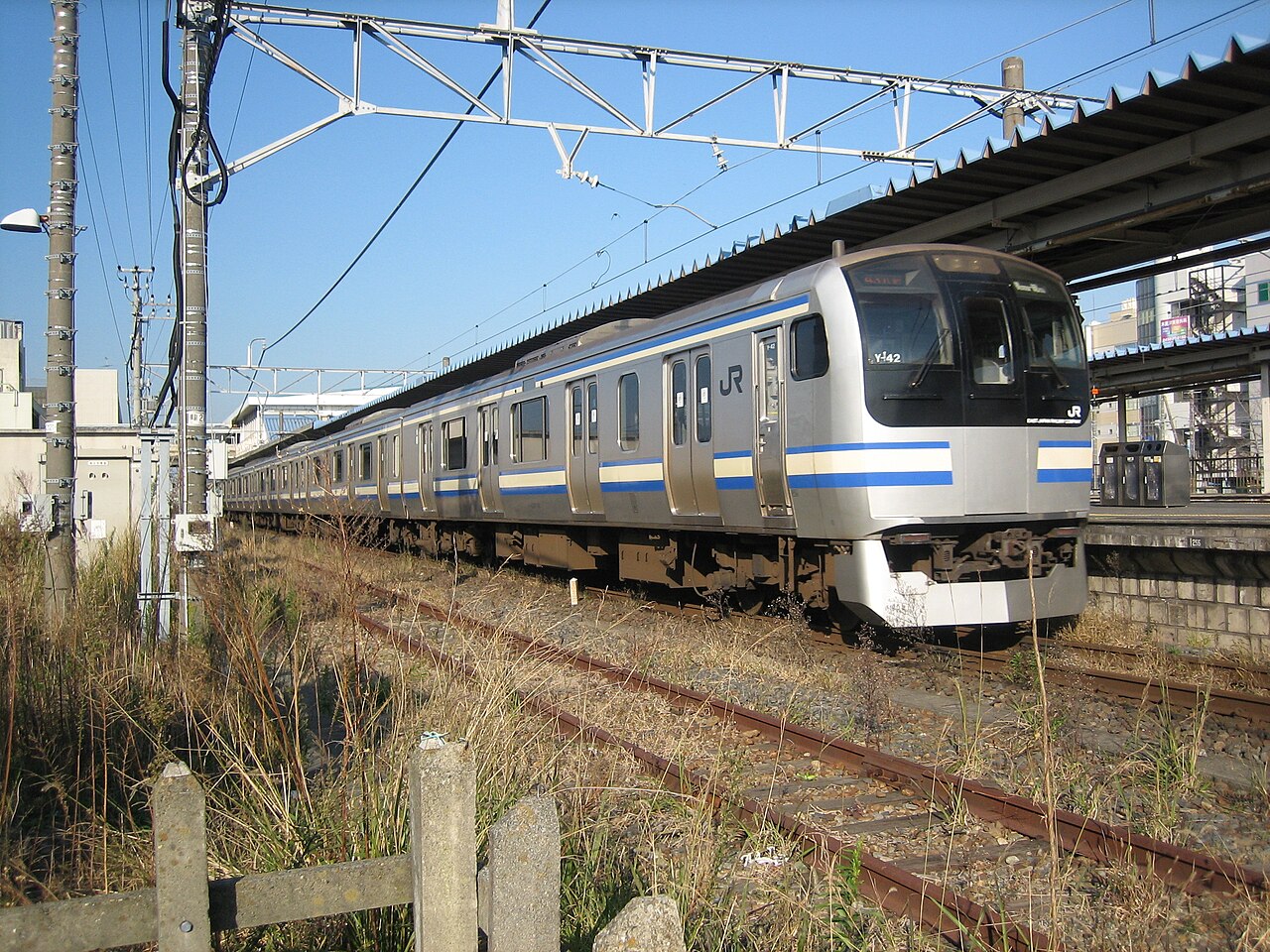
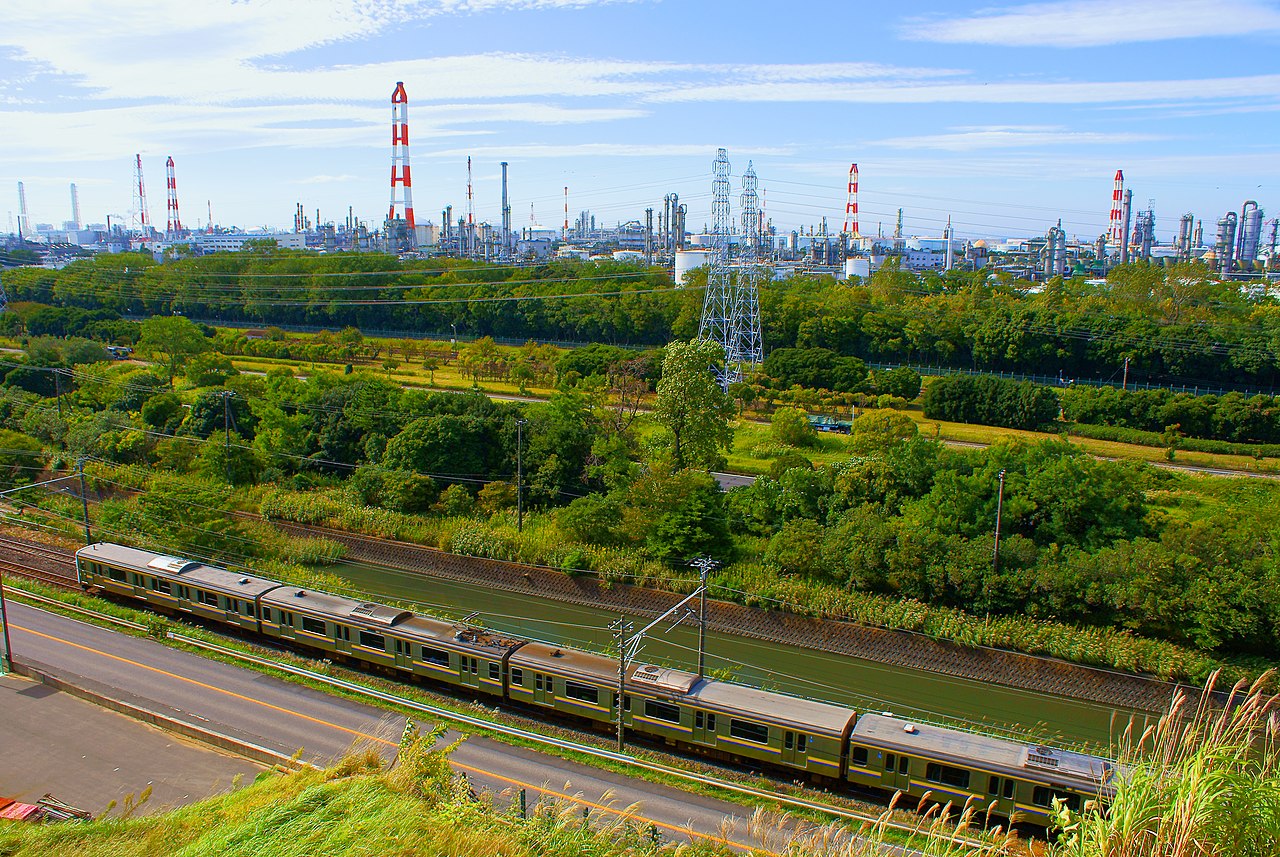
現在はJR東日本が運営し、全線が千葉支社の管轄であるが、2026年7月1日には房総事業本部へ移管される予定とされる。運転系統としては、京葉線直通を除く普通・快速列車が外房線を介して千葉駅まで乗り入れ、快速は総武快速線(一部は横須賀線)に直通して東京方面へ向かう。特急や一部の普通・快速は蘇我駅から京葉線に入り東京駅発着で運行される。日中の普通列車は複線区間の千葉 - 木更津・君津間が中心で、君津以南は本数が少ない。特急「さざなみ」は京葉線経由で東京駅から君津駅まで(多客期は館山駅まで)運転され、臨時の「新宿さざなみ」が週末などに新宿 - 館山間で運転される。「ビューさざなみ」は2005年12月10日改正で「さざなみ」に統合され、2015年3月14日改正で定期「さざなみ」は平日朝上り・夜下りのみとなった。日本語版は、この縮小の背景に東京湾アクアラインや館山自動車道・富津館山道路の開通とそれに伴う高速バスへの利用転移があるとする。特別快速は2017年3月4日、京葉線直通の通勤快速は2024年3月15日をもって運転を終了した。車両は、普通列車にE131系(2021年3月13日に木更津 - 安房鴨川間でワンマン運転・外房線直通とともに投入)と209系2000・2100番台(2009年運用開始)、総武・横須賀快速直通にE235系1000番台、特急にE257系500番台が使用されている。2023年度(令和5年度)の全線の平均通過人員は1日あたり18,191人で、複線の蘇我 - 君津間が約51,576人であるのに対し、館山 - 安房鴨川間は1,381人にとどまり、君津以南で輸送量が大きく減少している(全線では1987年度の25,097人から減少している)。
年表
- 191228 March: the Kisarazu Line (木更津線) opens its first section, Soga to Anegasaki. (Anegasaki to Kisarazu followed on 21 August 1912.)
- 191924 May: extended from Nako-Funakata to Awa-Hōjō (present-day Tateyama) and renamed the Hōjō Line (北条線).
- 192511 July: extended from Futomi to Awa-Kamogawa, completing the present Uchibō Line alignment.
- 1929The Bōsō Line is extended to Awa-Kamogawa and the Hōjō Line is incorporated into it. (JA dates this 15 April; EN's timeline gives 15 August — the JA referenced chronology is followed.)
- 19331 April: the Soga–Awa-Kamogawa section is separated from the Bōsō Line and renamed the Bōsō West Line (房総西線).
- 19541 October: all trains except one round trip are converted to diesel railcars and an hourly pattern timetable is introduced.
- 19641 July: the first double-track section, Soga to Hamano, opens (with automatic signalling); double-tracking of the Soga–Kimitsu section continues through 1970.
- 196813 July: the Chiba–Soga–Kisarazu section is electrified at 1,500 V DC.
- 196910 July: train 135 (hauled by C57-105) makes the last regularly scheduled steam-hauled passenger run. 11 July: Kisarazu–Chikura is electrified.
- 197024 March: the Kisarazu–Kimitsu section is double-tracked, completing double track from Soga to Kimitsu.
- 19711 July: the final Chikura–Awa-Kamogawa section is electrified, completing electrification of the whole line.
- 197215 July: renamed the Uchibō Line; the 183-series limited express "Sazanami" begins, and the Sōbu Rapid Line (Kinshichō–Tokyo) opens, enabling rapid through service to Tokyo.
- 198215 November: freight service between Kisarazu and Awa-Kamogawa is discontinued.
- 19861 November: freight operations on the remaining Soga–Kisarazu section are discontinued.
- 19871 April: following the division and privatisation of JNR, the line is taken over by JR East. (EN adds that JR Freight became a Class-2 operator between Soga and Kisarazu.)
- 199010 March: with the full opening of the Keiyō Line, through service to Tokyo Station via the Keiyō Line begins.
- 19961 November: JR Freight's second-class railway operating right over the Soga–Kisarazu section is withdrawn.
- 2001ATS-P comes into use Soga–Iwane (4 February) and Iwane–Kimitsu (18 March).
- 20091 October: 209-2000/2100 series EMUs enter service on local trains.
- 201222 November: the Yamanama Bridge (Emi–Futomi) is designated a Selected Civil Engineering Heritage by the Japan Society of Civil Engineers — reported as the first railway structure in Chiba Prefecture so designated.
- 201316 October: Typhoon No. 26 causes a slope failure near the Minato River bridge; the Sanukimachi–Hamakanaya section is suspended until 19 October.
- 201514 March: the regular limited express "Sazanami" is cut back to weekday morning up-trains and evening down-trains only, with a weekday Special Rapid added between Tokyo and Tateyama as a substitute.
- 20174 March: Special Rapid services (Tokyo–Tateyama) are discontinued (last run 3 March), and daytime services are split at Kisarazu, reducing the Chiba–Kisarazu daytime frequency from four to three trains per hour.
- 202113 March: E131 series EMUs enter service between Kisarazu and Awa-Kamogawa with one-man operation and through service onto the Sotobō Line (Awa-Kamogawa–Kazusa-Ichinomiya).
- 2024Keiyō Line Commuter Rapid through services end (last day 15 March; EN gives discontinued from 16 March).
出典
事実確認日:2026年6月3日
ギャラリー 3枚
このページの全写真 ― 画像をタップすると原寸大で表示します。すべてウィキメディア・コモンズより(各写真の下にクレジット)。