History
The line began as a coastal route around the Bōsō Peninsula on the Tokyo Bay side. The first section, Soga to Anegasaki, opened on 28 March 1912 as the Kisarazu Line (木更津線). It was extended south in small steps over the following years; on 24 May 1919 it reached Awa-Hōjō (the present Tateyama Station) and was renamed the Hōjō Line (北条線), and on 11 July 1925 the extension to Awa-Kamogawa completed the alignment that the line still follows today. In 1929 the Bōsō Line, which had been built along the eastern side of the peninsula, was extended to Awa-Kamogawa and absorbed the Hōjō Line, creating a single Bōsō Line looping from Chiba via Ōami, Awa-Hōjō and Kisarazu back to Soga. On 1 April 1933 the Soga–Awa-Kamogawa portion was separated out again and renamed the Bōsō West Line (房総西線), and on 15 July 1972 it took its present name, the Uchibō Line.
The postwar decades brought the modernisation that defines the line today. After the line had been almost entirely worked by diesel railcars from 1954, the Soga–Kimitsu section was progressively double-tracked between 1964 and 1970, beginning with Soga–Hamano on 1 July 1964 and completing at Kimitsu on 24 March 1970; the section south of Kimitsu to Awa-Kamogawa remains single track. Electrification at 1,500 V DC followed in stages: the Chiba–Soga–Kisarazu section was energised on 13 July 1968, Kisarazu–Chikura on 11 July 1969, and the final Chikura–Awa-Kamogawa stretch on 1 July 1971, completing electrification of the whole line. The end of steam came on 10 July 1969, when train 135 to Tateyama, hauled by a class C57 locomotive (C57-105), made the last regularly scheduled steam-hauled passenger run on the line. When the line was renamed the Uchibō Line on 15 July 1972, the 183-series limited express "Sazanami" began running, coinciding with the opening of the Sōbu Rapid Line (Kinshichō–Tokyo) that allowed rapid through services from the line to reach Tokyo. Following the division and privatisation of Japanese National Railways on 1 April 1987, the line passed to JR East. Freight operations had been withdrawn between Kisarazu and Awa-Kamogawa in 1982 and on the remaining Soga–Kisarazu section in 1986; JR Freight retained a second-class operating right over Soga–Kisarazu after the 1987 reorganisation, and that right was withdrawn in 1996.
According to the Japanese-language account, the steel Yamanama Bridge (山生橋梁) between Emi and Futomi was designated a Selected Civil Engineering Heritage by the Japan Society of Civil Engineers on 22 November 2012 — reported as the first railway structure in Chiba Prefecture to receive the designation. The line also has an unusual electrification arrangement: because direct-current operation near the Geospatial Information Authority's Kanozan geodetic observatory interfered with geomagnetic measurement, a new observatory was opened at Mizusawa (in present-day Ōshū, Iwate Prefecture) and the affected section uses a subdivided DC supply to limit interference.
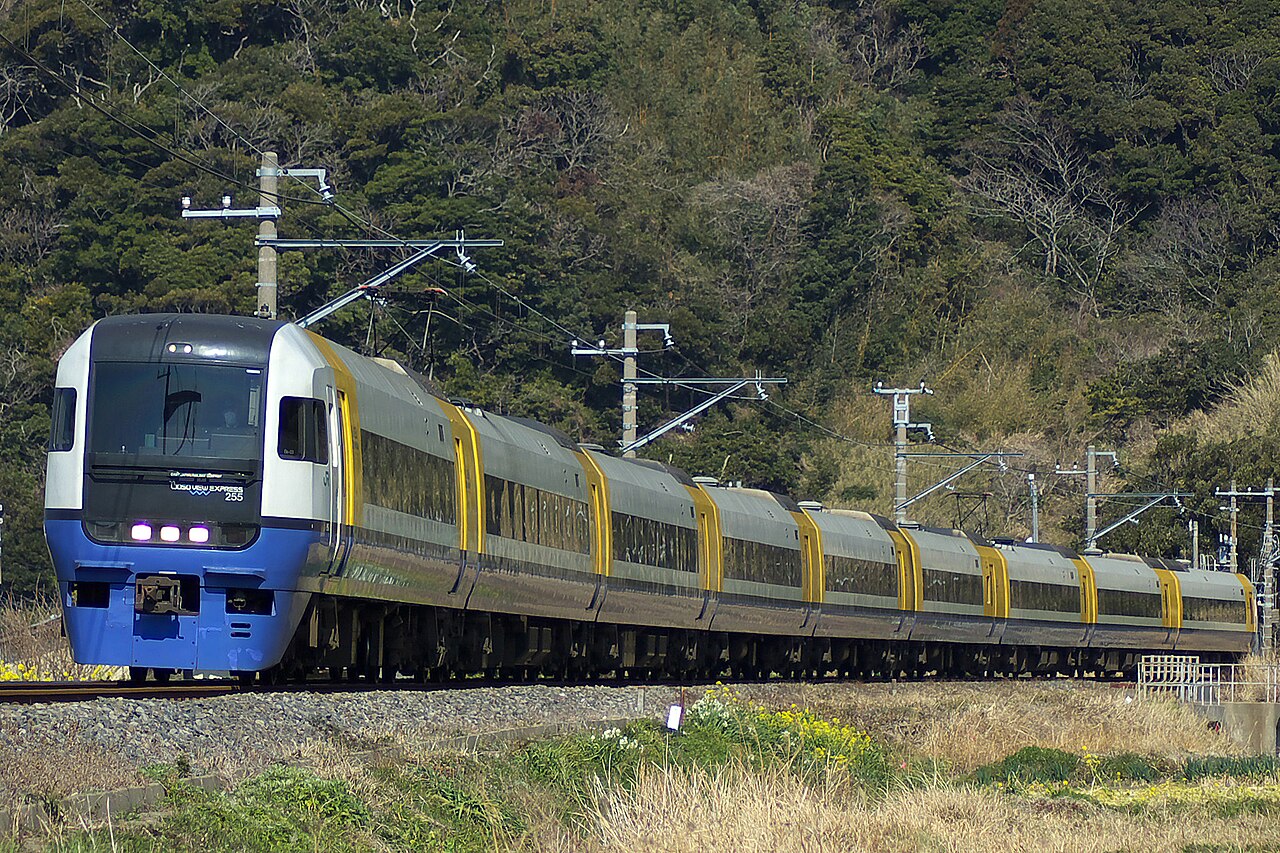
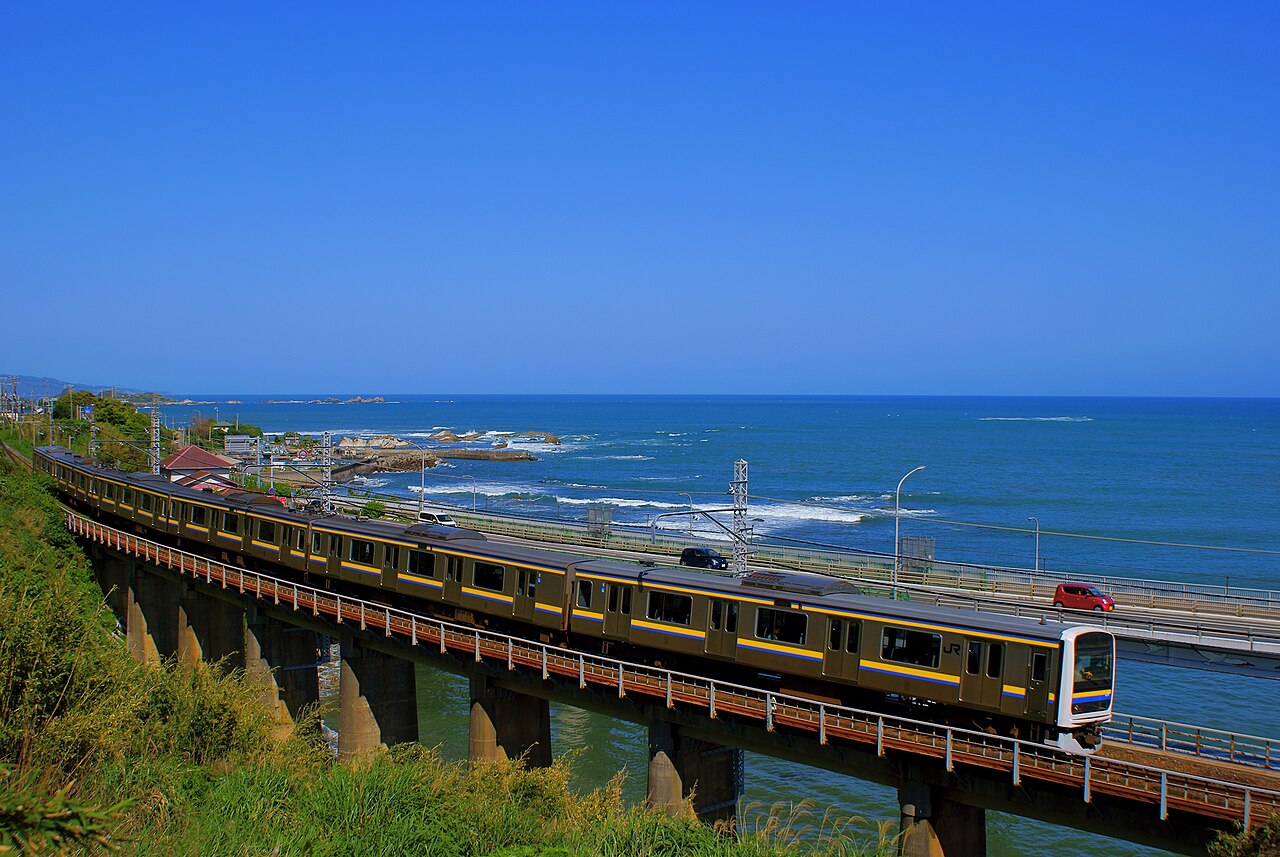
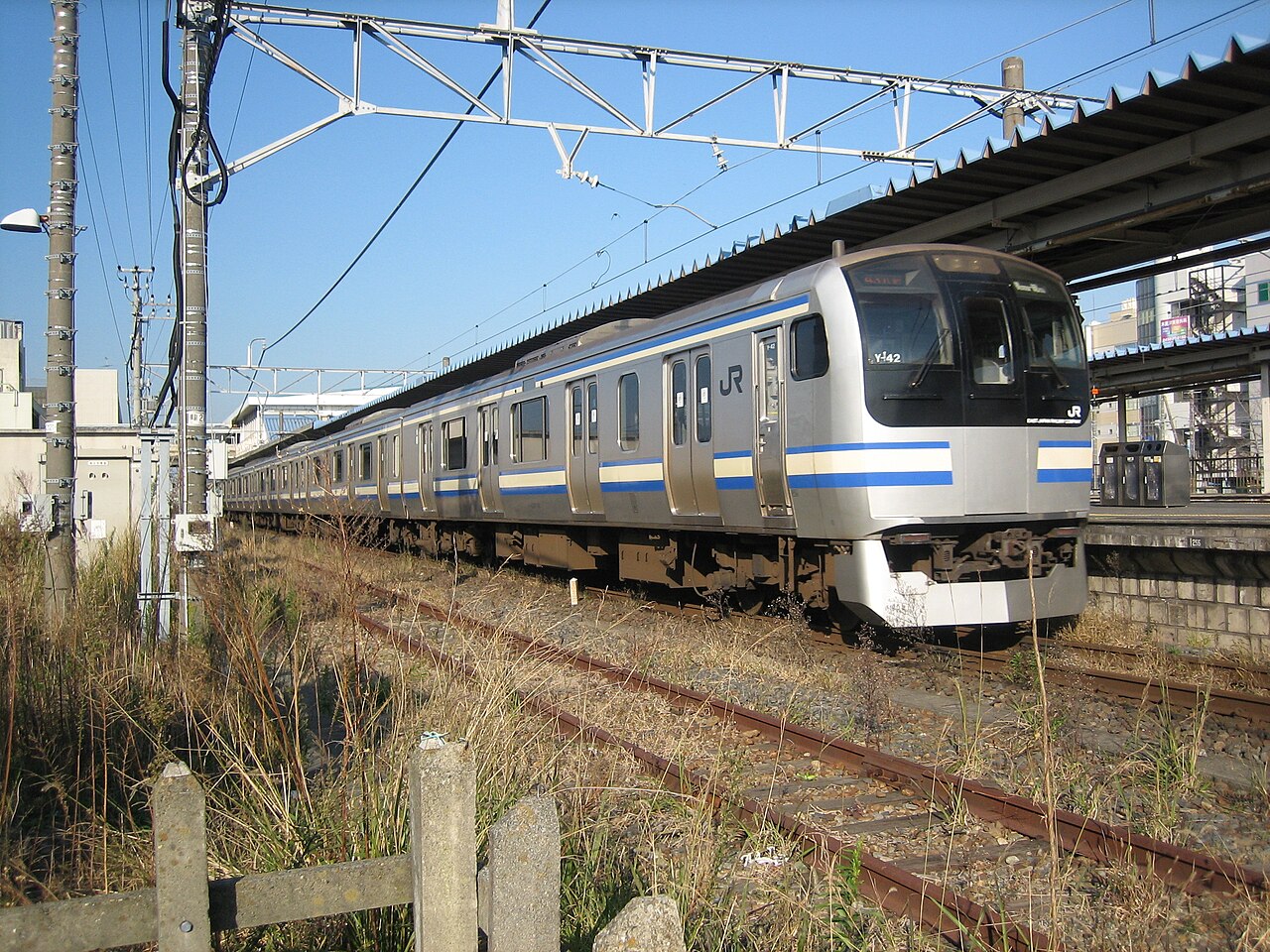
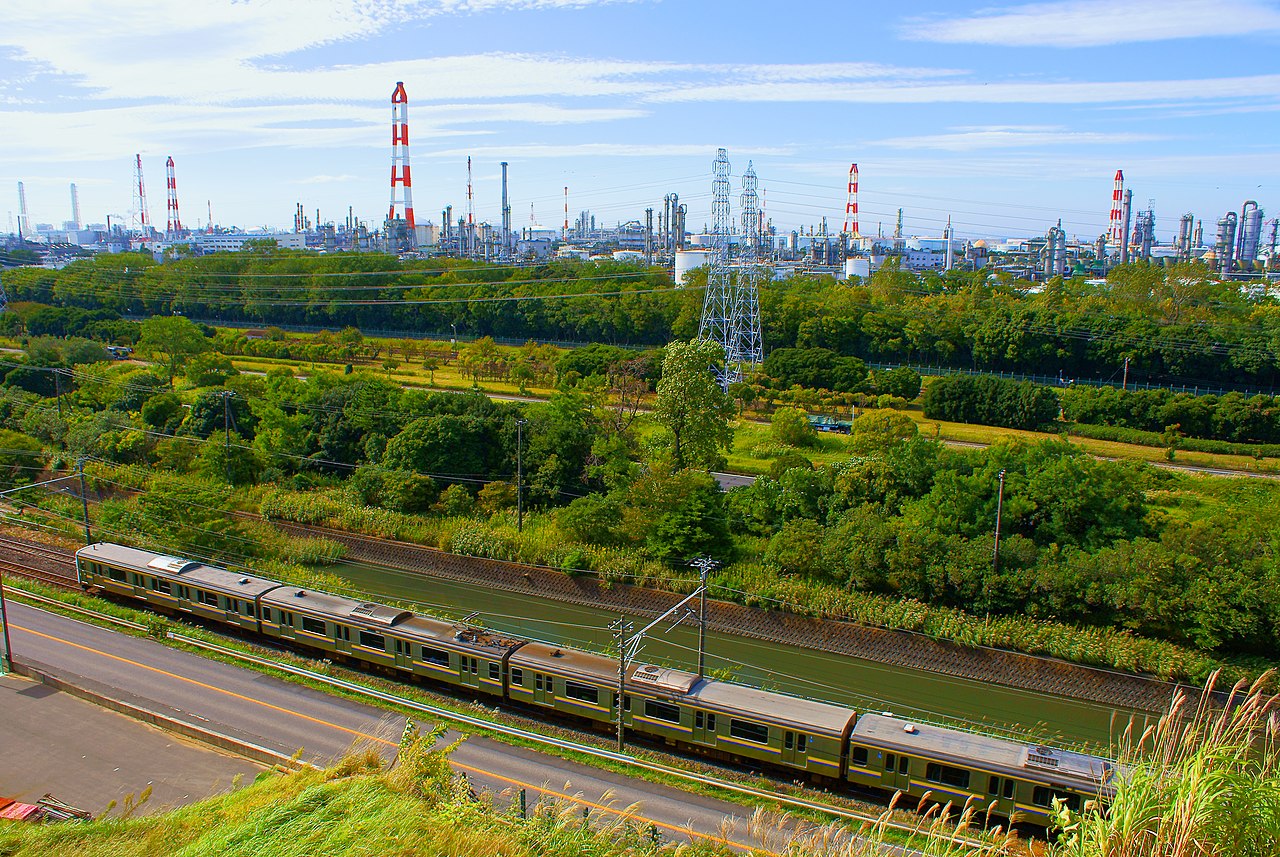
Today JR East operates the line, with all stations within its Chiba branch; from 1 July 2026 the Japanese-language article notes that responsibility is planned to move to a new Bōsō business headquarters. As an operating system, "Uchibō Line" trains generally run through to Chiba Station over the Sotobō Line between Soga and Chiba, and rapid trains continue onto the Sōbu Rapid Line — and some onto the Yokosuka Line — towards Tokyo; limited express, rapid and some local trains also run via the Keiyō Line from Soga to Tokyo Station. Daytime local service is concentrated between Chiba and Kisarazu/Kimitsu on the double-track section, with sparser service south of Kimitsu. The limited express "Sazanami" runs from Tokyo via the Keiyō Line to Kimitsu (extending to Tateyama in busy periods), and the seasonal "Shinjuku Sazanami" runs from Shinjuku to Tateyama on weekends and peak periods. The earlier "View Sazanami" was merged into the "Sazanami" at the 10 December 2005 timetable revision, and from the 14 March 2015 revision the regular "Sazanami" was cut back to weekday morning up-trains and evening down-trains only; the Japanese article attributes this contraction to competition from the Tokyo Bay Aqua-Line and the Tateyama and Futtsu-Tateyama expressways and the highway-bus services they enabled. Special Rapid services were discontinued from 4 March 2017, and Keiyō Line Commuter Rapid through services ended on 15/16 March 2024. Rolling stock includes E131-series two-car EMUs (introduced on 13 March 2021 between Kisarazu and Awa-Kamogawa with one-man operation and through service to the Sotobō Line) and 209-2000/2100-series sets (from 1 October 2009) on local services, with E235-1000 series on Sōbu/Yokosuka rapid through services and E257-500 series on the "Sazanami". The line's whole-line average passenger volume was 18,191 passengers per day in fiscal 2023; the figure was about 51,576 on the double-track Soga–Kimitsu section but only 1,381 on the southern Tateyama–Awa-Kamogawa section, illustrating how sharply traffic falls south of Kimitsu (whole-line volume was 25,097 in fiscal 1987).
Timeline
- 191228 March: the Kisarazu Line (木更津線) opens its first section, Soga to Anegasaki. (Anegasaki to Kisarazu followed on 21 August 1912.)
- 191924 May: extended from Nako-Funakata to Awa-Hōjō (present-day Tateyama) and renamed the Hōjō Line (北条線).
- 192511 July: extended from Futomi to Awa-Kamogawa, completing the present Uchibō Line alignment.
- 1929The Bōsō Line is extended to Awa-Kamogawa and the Hōjō Line is incorporated into it. (JA dates this 15 April; EN's timeline gives 15 August — the JA referenced chronology is followed.)
- 19331 April: the Soga–Awa-Kamogawa section is separated from the Bōsō Line and renamed the Bōsō West Line (房総西線).
- 19541 October: all trains except one round trip are converted to diesel railcars and an hourly pattern timetable is introduced.
- 19641 July: the first double-track section, Soga to Hamano, opens (with automatic signalling); double-tracking of the Soga–Kimitsu section continues through 1970.
- 196813 July: the Chiba–Soga–Kisarazu section is electrified at 1,500 V DC.
- 196910 July: train 135 (hauled by C57-105) makes the last regularly scheduled steam-hauled passenger run. 11 July: Kisarazu–Chikura is electrified.
- 197024 March: the Kisarazu–Kimitsu section is double-tracked, completing double track from Soga to Kimitsu.
- 19711 July: the final Chikura–Awa-Kamogawa section is electrified, completing electrification of the whole line.
- 197215 July: renamed the Uchibō Line; the 183-series limited express "Sazanami" begins, and the Sōbu Rapid Line (Kinshichō–Tokyo) opens, enabling rapid through service to Tokyo.
- 198215 November: freight service between Kisarazu and Awa-Kamogawa is discontinued.
- 19861 November: freight operations on the remaining Soga–Kisarazu section are discontinued.
- 19871 April: following the division and privatisation of JNR, the line is taken over by JR East. (EN adds that JR Freight became a Class-2 operator between Soga and Kisarazu.)
- 199010 March: with the full opening of the Keiyō Line, through service to Tokyo Station via the Keiyō Line begins.
- 19961 November: JR Freight's second-class railway operating right over the Soga–Kisarazu section is withdrawn.
- 2001ATS-P comes into use Soga–Iwane (4 February) and Iwane–Kimitsu (18 March).
- 20091 October: 209-2000/2100 series EMUs enter service on local trains.
- 201222 November: the Yamanama Bridge (Emi–Futomi) is designated a Selected Civil Engineering Heritage by the Japan Society of Civil Engineers — reported as the first railway structure in Chiba Prefecture so designated.
- 201316 October: Typhoon No. 26 causes a slope failure near the Minato River bridge; the Sanukimachi–Hamakanaya section is suspended until 19 October.
- 201514 March: the regular limited express "Sazanami" is cut back to weekday morning up-trains and evening down-trains only, with a weekday Special Rapid added between Tokyo and Tateyama as a substitute.
- 20174 March: Special Rapid services (Tokyo–Tateyama) are discontinued (last run 3 March), and daytime services are split at Kisarazu, reducing the Chiba–Kisarazu daytime frequency from four to three trains per hour.
- 202113 March: E131 series EMUs enter service between Kisarazu and Awa-Kamogawa with one-man operation and through service onto the Sotobō Line (Awa-Kamogawa–Kazusa-Ichinomiya).
- 2024Keiyō Line Commuter Rapid through services end (last day 15 March; EN gives discontinued from 16 March).
Sources
Facts last verified 3 June 2026.
Gallery 3 photos
Every photo for this page — tap any image to view it full-size. All from Wikimedia Commons (credit under each).