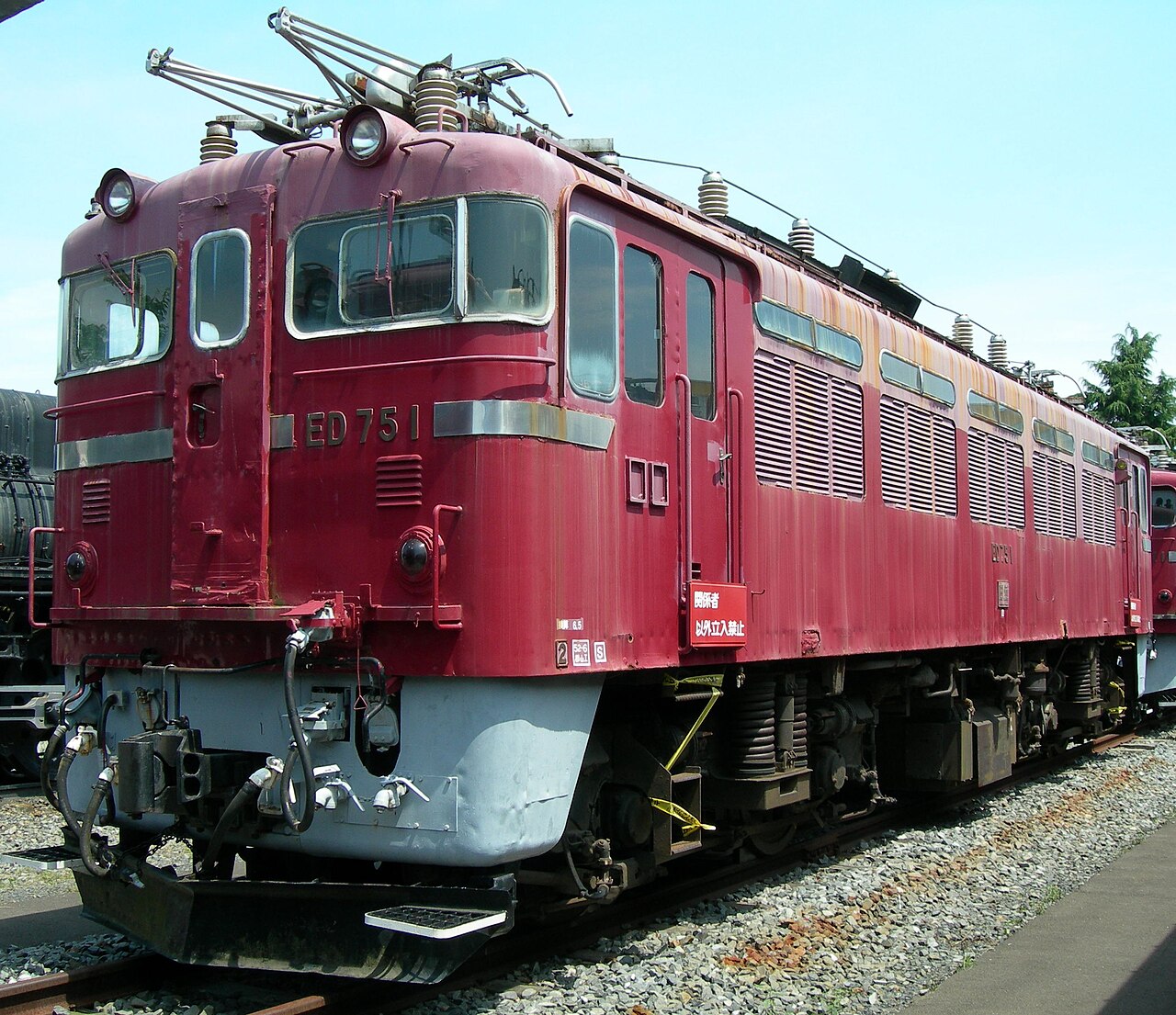
1963Two prototypes, ED75 1 and ED75 2, are delivered, built by Hitachi and Mitsubishi, as the AC successor to Class ED71 for the newly AC-electrified Joban Line.
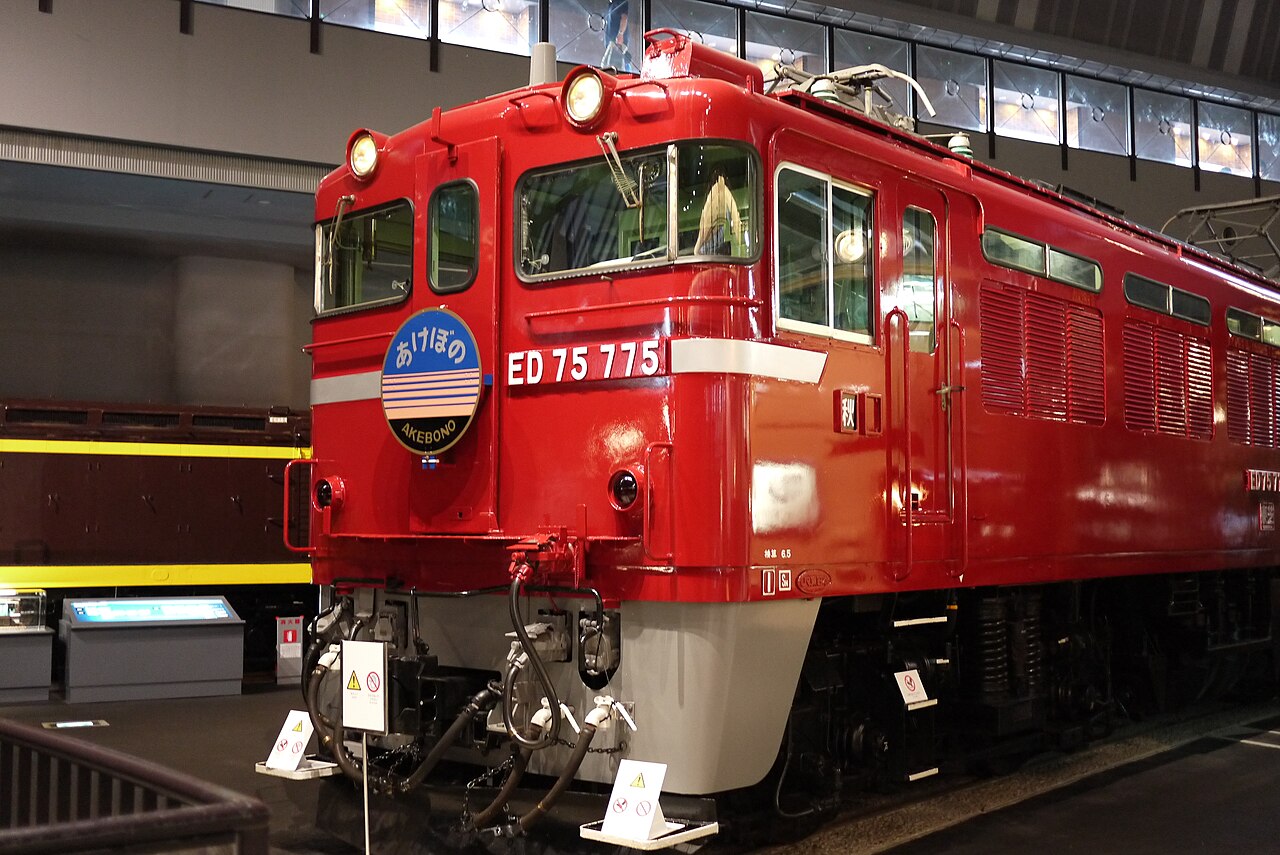
1971Production of the salt- and snow-resistant ED75-700 sub-class begins for the Ou Main Line and Uetsu Main Line; 91 locomotives (701-791) are built through 1976.
198634 ED75-700 locomotives are rebuilt into Class ED79 locomotives for services through the undersea Seikan Tunnel between Honshu and Hokkaido.
2012From the 17 March timetable revision the remaining scheduled JR Freight ED75 workings, operating in pairs, are completely replaced by Class EH500 locomotives; JR Freight's last ED75 are withdrawn, with all scrapped by June.
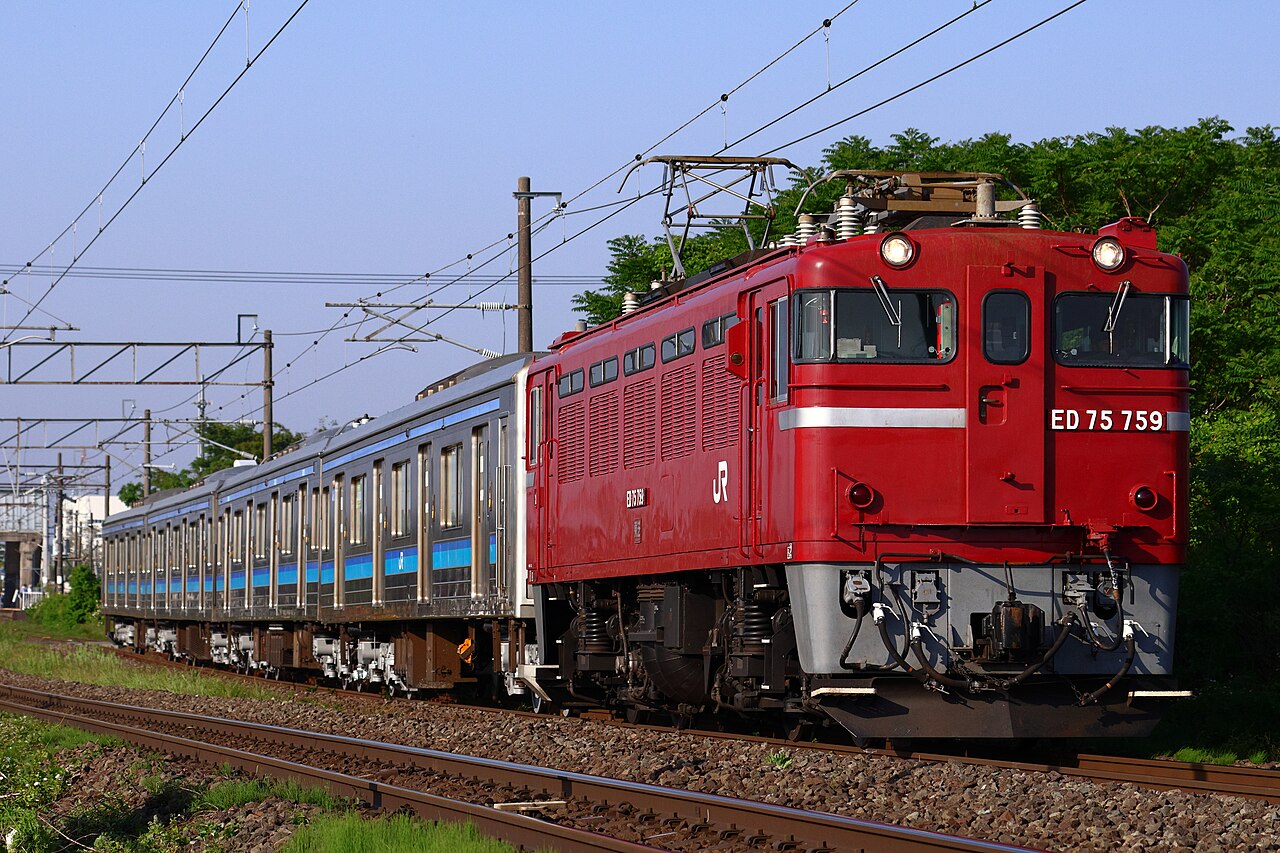
2025The last surviving units, ED75-700 machines 758 and 759 operated by JR East, are hauled away for scrapping; ED75 759 is struck off the register on 13 September, marking the extinction of the class.
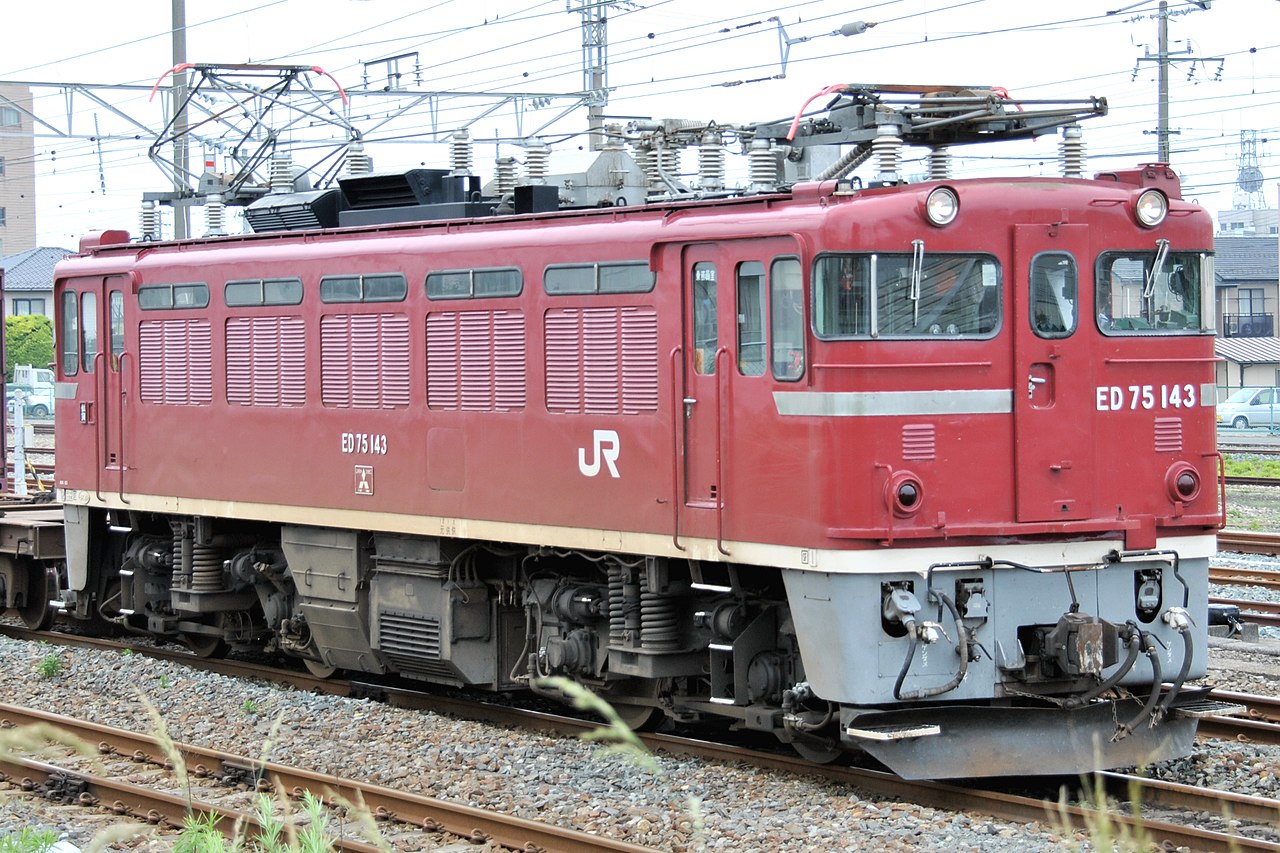
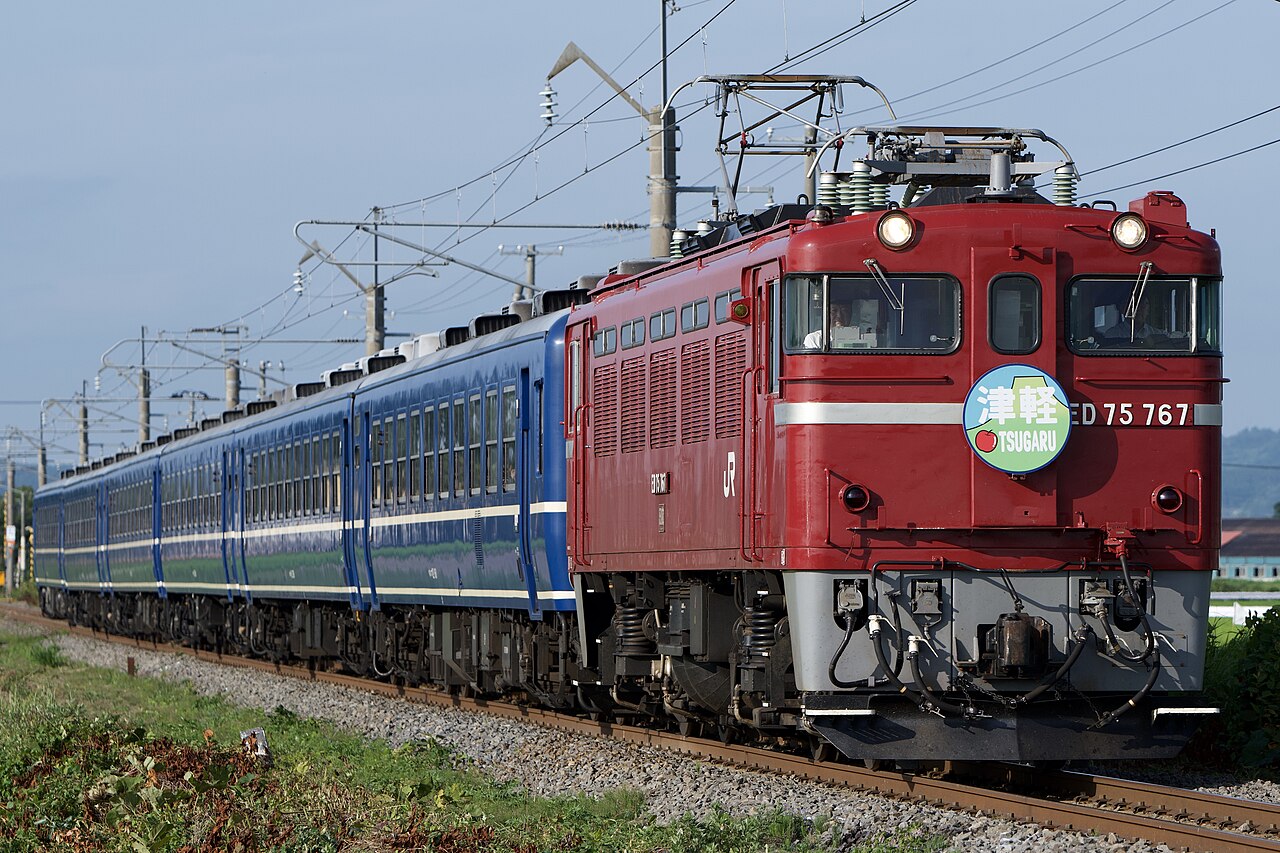
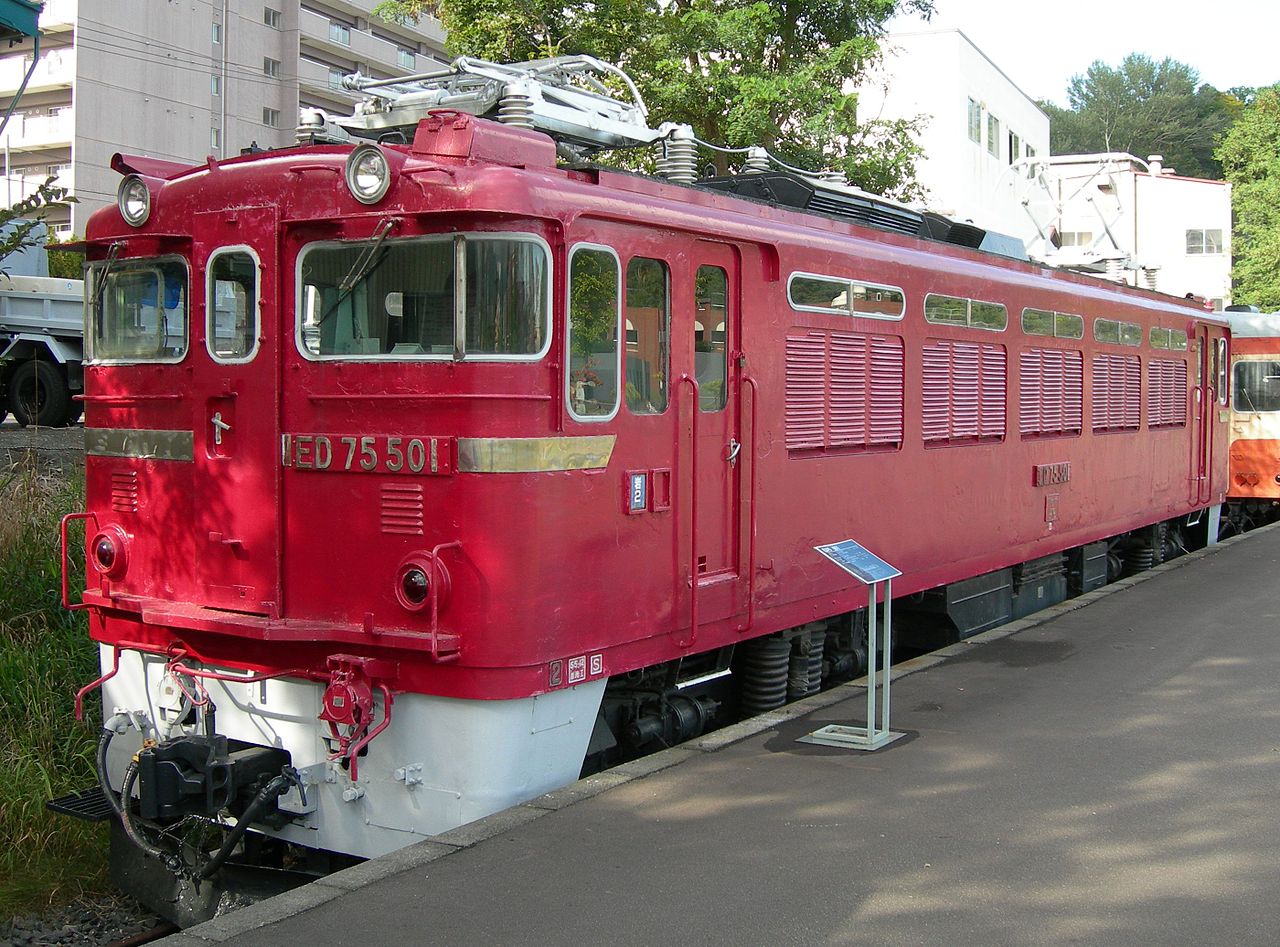
JR Freight refurbished Class ED75 electric locomotive ED75 143.Kuha455405 · CC BY-SA 3.0 · Wikimedia CommonsED75 767 hauling 12 series coaches on a revival 'Express Tsugaru' between Namioka and Kita-Tokiwa.こっくんんんん · CC BY-SA 4.0 · Wikimedia CommonsPreserved Class ED75 electric locomotive ED75 1 at the Sendai Shinkansen depot in Rifu, Miyagi.Rsa · CC BY-SA 3.0 · Wikimedia CommonsClass ED75-500 electric locomotive ED75-501 preserved at the Otaru City Museum, Hokkaido.Rsa · CC BY-SA 3.0 · Wikimedia CommonsED75-759 electric locomotive hauling a trainはんきゅ~7015 · CC BY-SA 4.0 · Wikimedia CommonsJNR Class ED75-700 locomotive ED75 775 preserved at the Railway MuseumUka0310 · CC BY 2.0 · Wikimedia Commons