History
The design descended from the silicon-rectifier ED74 and adopted low-voltage tap-changing controlled by magnetic amplifiers to secure adhesion, with provision for later conversion to thyristor control. Because the locomotive was distinguished from other control types by this magnetic-amplifier system, the base sub-classes became known as the "M" type. To work the Tohoku Main Line, where 1,200-tonne loads had to be hauled over gradients exceeding 20‰ scattered along the route, the type was designed for double-heading under multiple-unit control and fitted with a front gangway door. Its external livery was the standard AC-locomotive colour, Red No. 2.
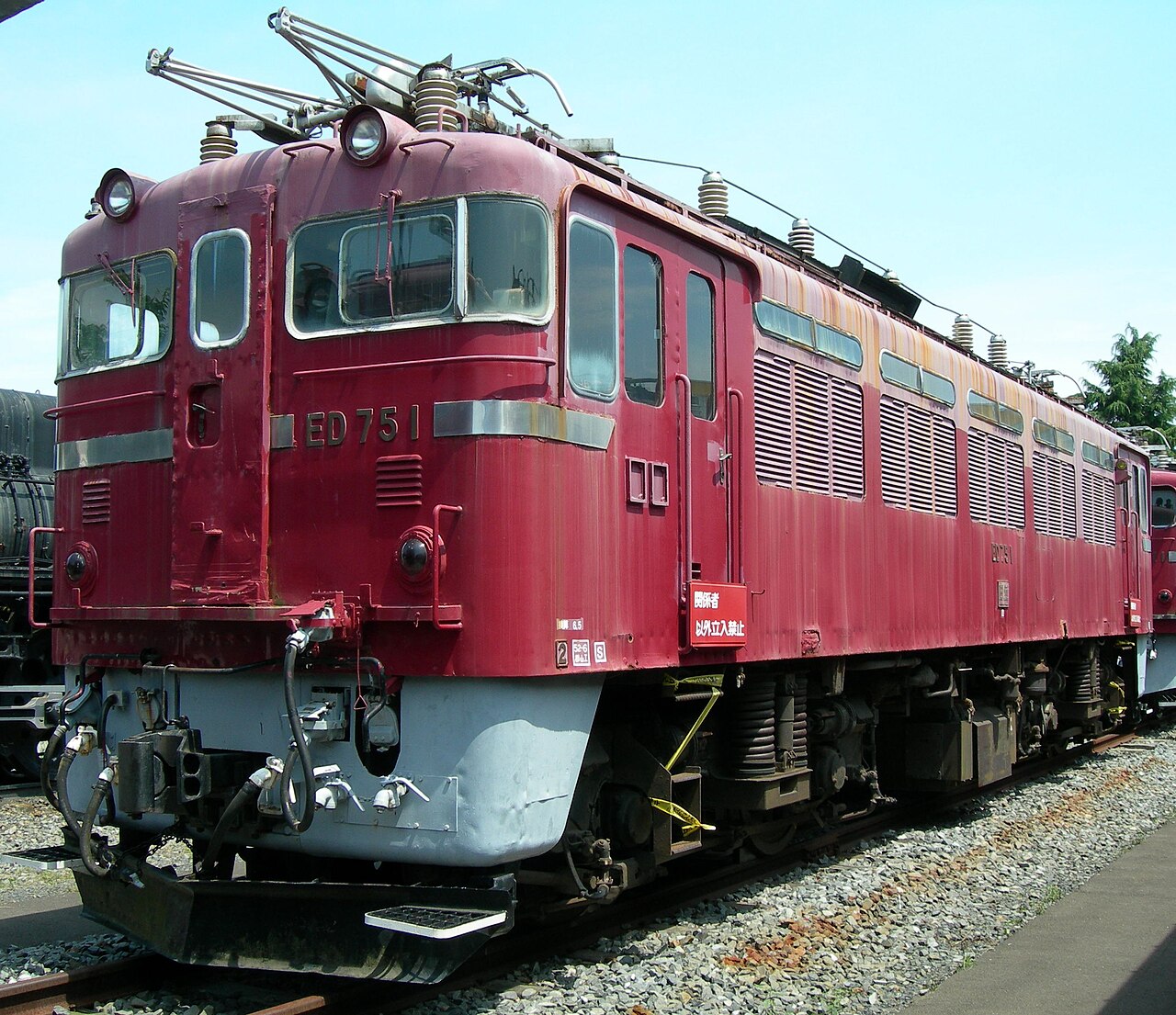
Two prototypes, ED75 1 and 2, were delivered in 1963, after which a further 158 locomotives were built from 1964; numbers 50 to 100 were equipped for cold regions and fitted with icicle cutters above the cab windows. Several sub-classes followed. Eleven ED75-300 machines (301–311) were built from 1965 to 1968 for Kyushu, the only members supplied for a 60 Hz supply.
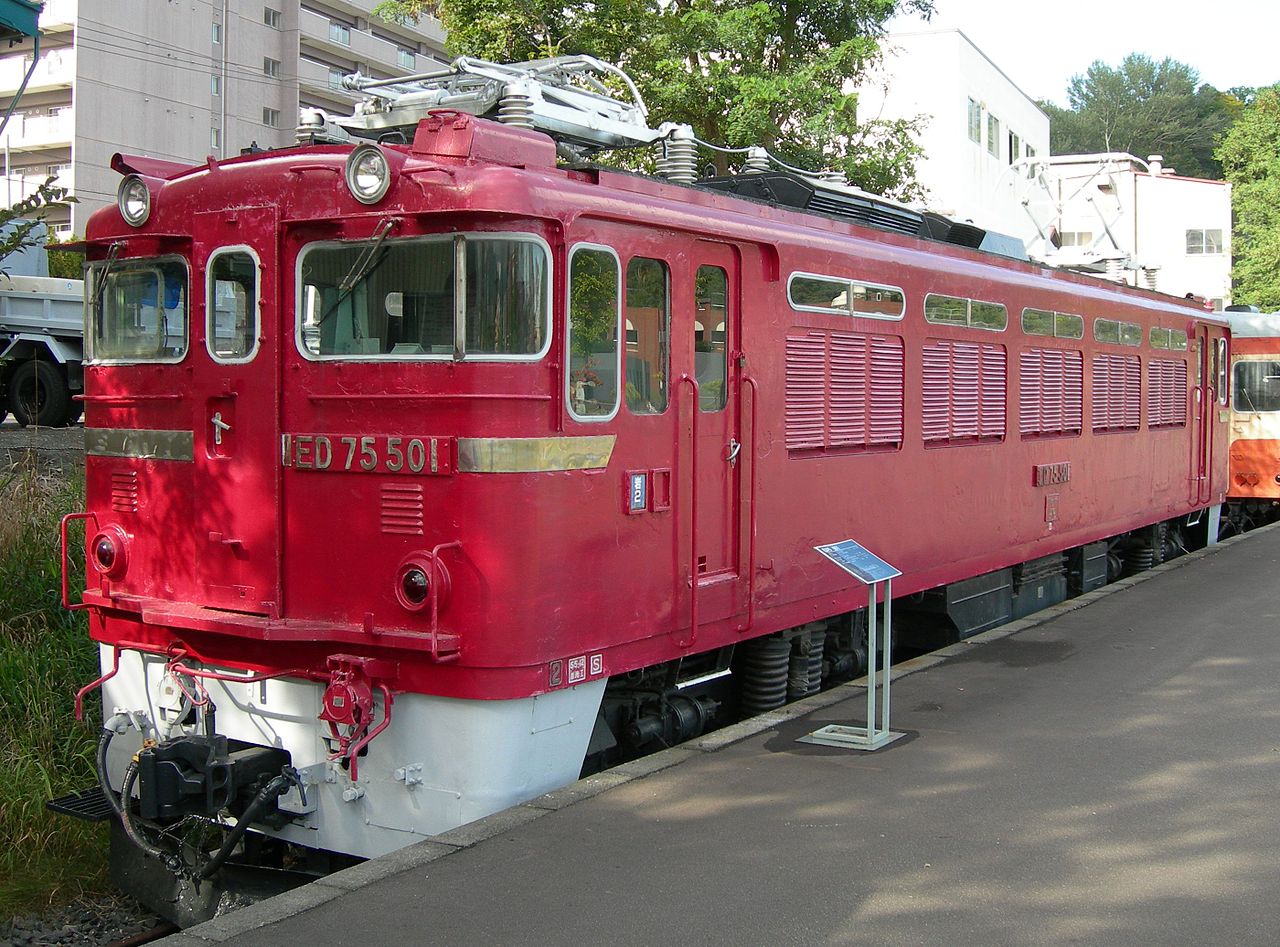
A single experimental ED75-500 (501) was built in 1966 by Mitsubishi Heavy Industries for the newly electrified Hakodate Main Line in Hokkaido; it used all-thyristor phase control in place of the M type's low-voltage tap-changing and, as the sole machine so equipped, was nicknamed the "S" type. Its specialised cold-region equipment made it 300 mm longer than the rest of the class, at 14,600 mm. No more were built because Class ED76-500 was chosen for that route instead: the thyristor control produced harmonics that caused severe inductive interference with signalling and communications, and the type lacked the steam train-heating generator the route required, so the production version (the ED76-500) was fitted with a steam generator.
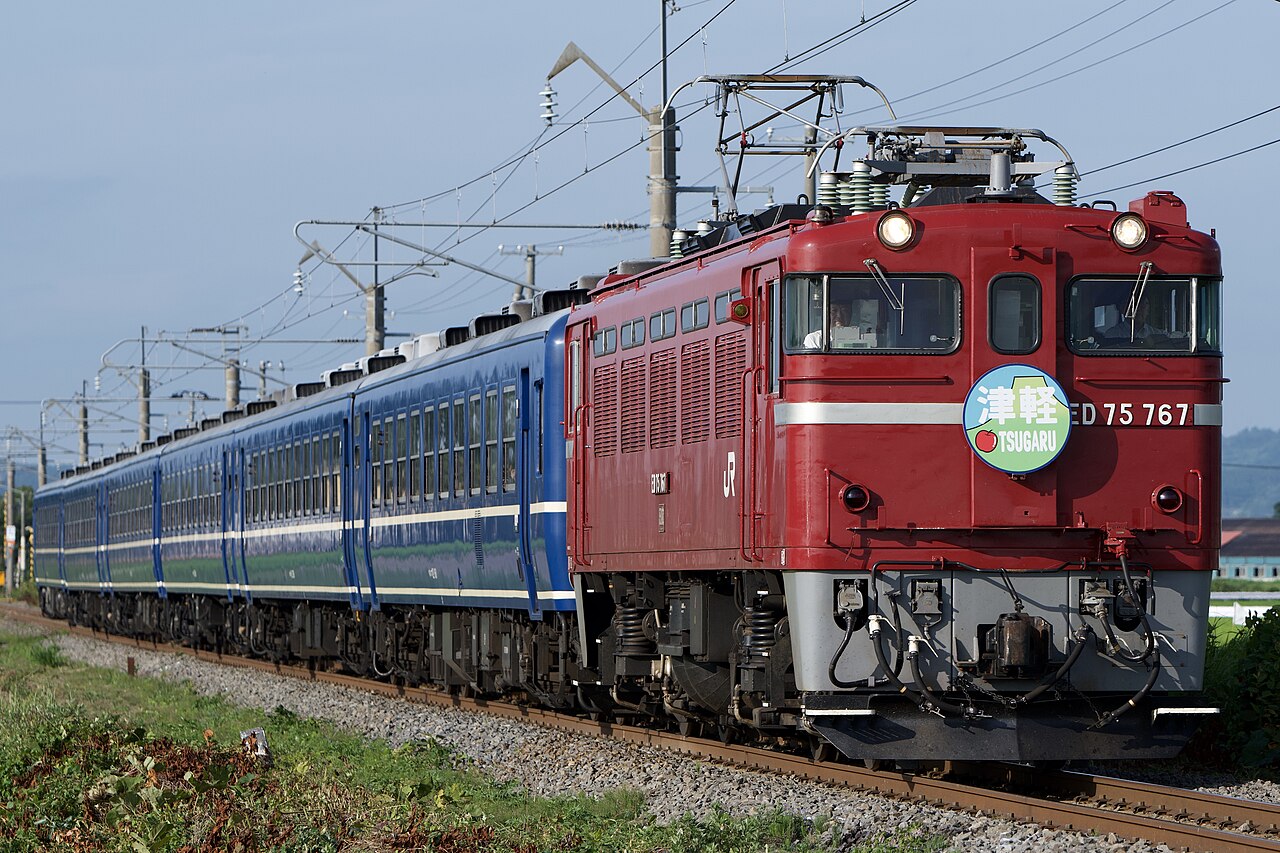
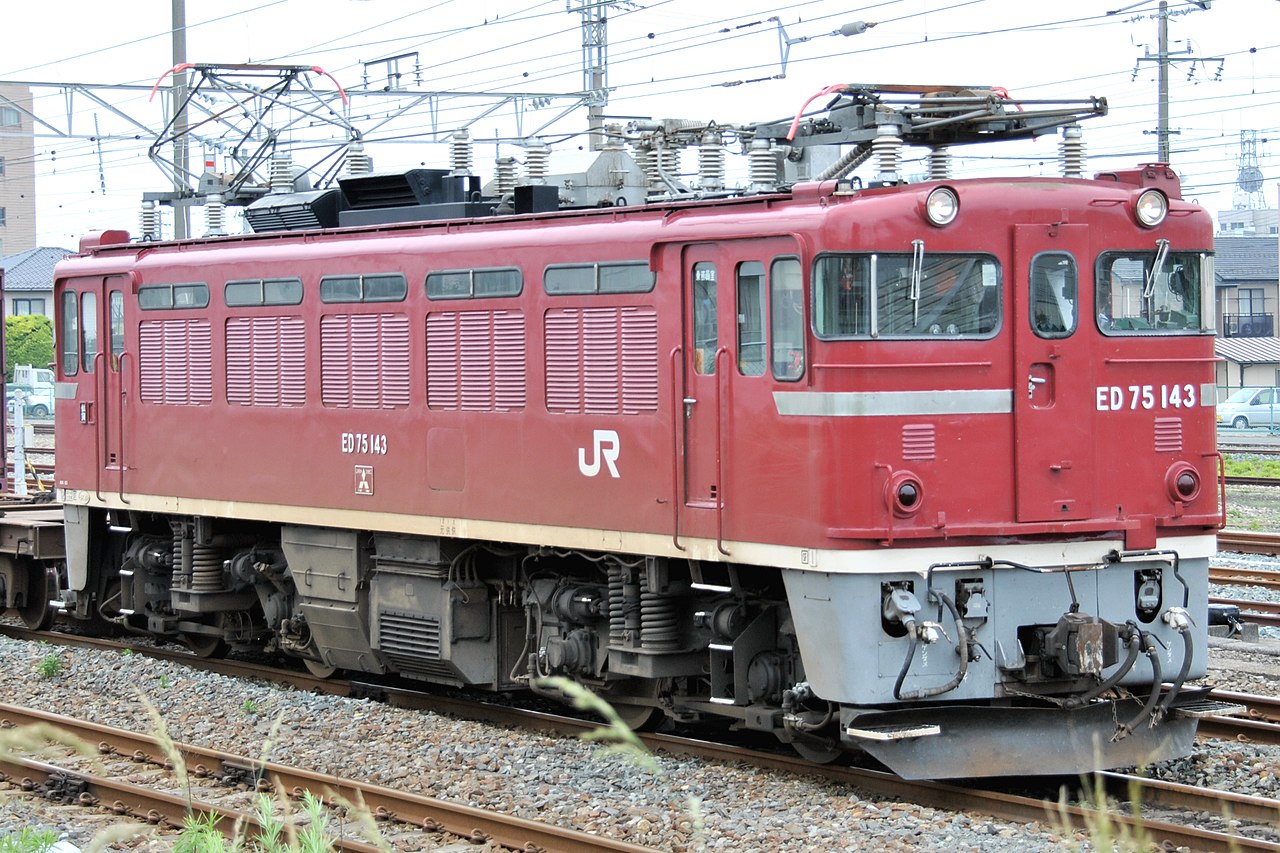
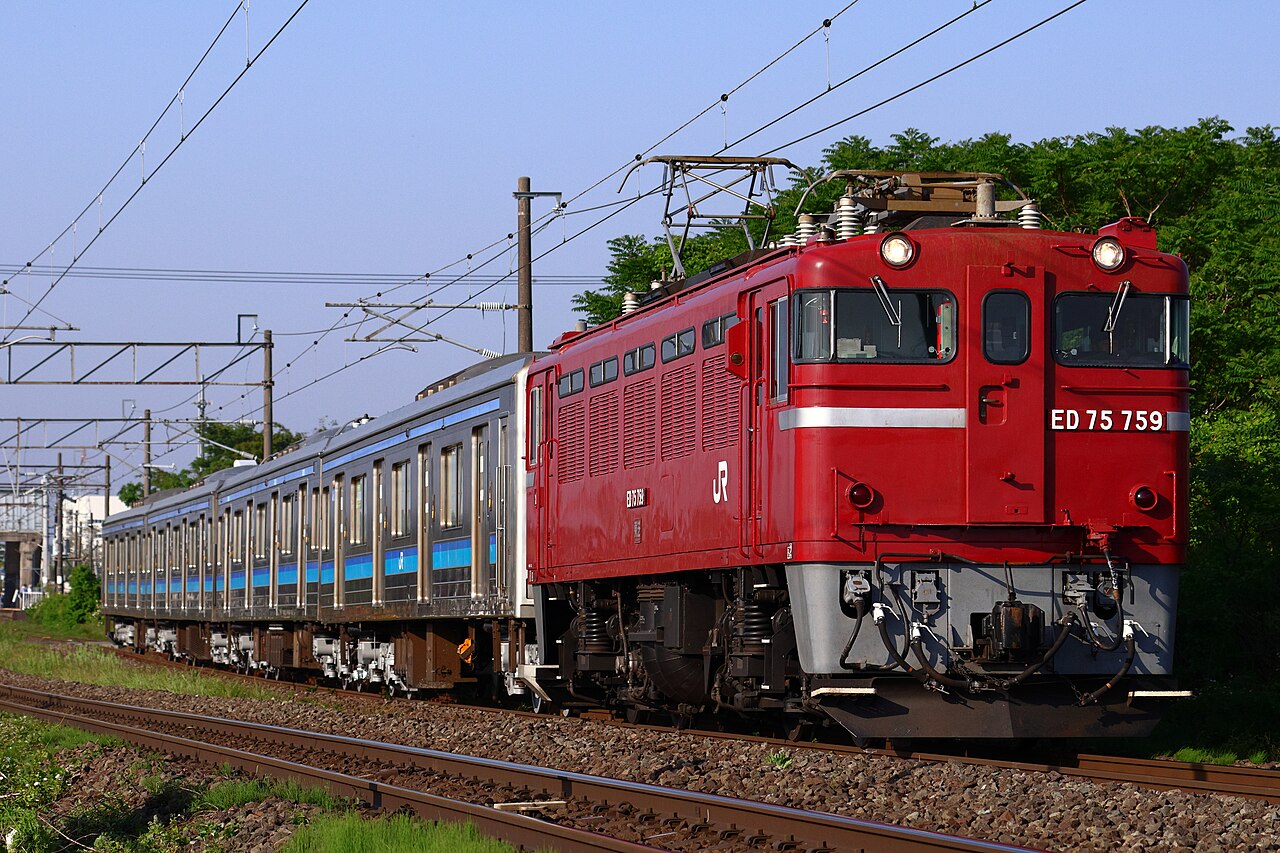
Ninety-one ED75-700 locomotives (701–791) were built from 1971 to 1976 for the Ou Main Line and Uetsu Main Line, distinguished by PS103 cross-arm pantographs and salt-corrosion countermeasures; because unit 736 was written off in 1974 after a derailment caused by a landslide on the Uetsu Main Line, all ninety-one were never in service at the same time. 34 of them were rebuilt into Class ED79 locomotives in 1986 for services through the undersea Seikan Tunnel. The ED75-1000 sub-class, built from 1968 for high-speed freight and 20-series sleeper trains, totalled 39 machines (1001–1039) and was nicknamed the "P" type; JR Freight began a life-extension refurbishment programme from 1993.
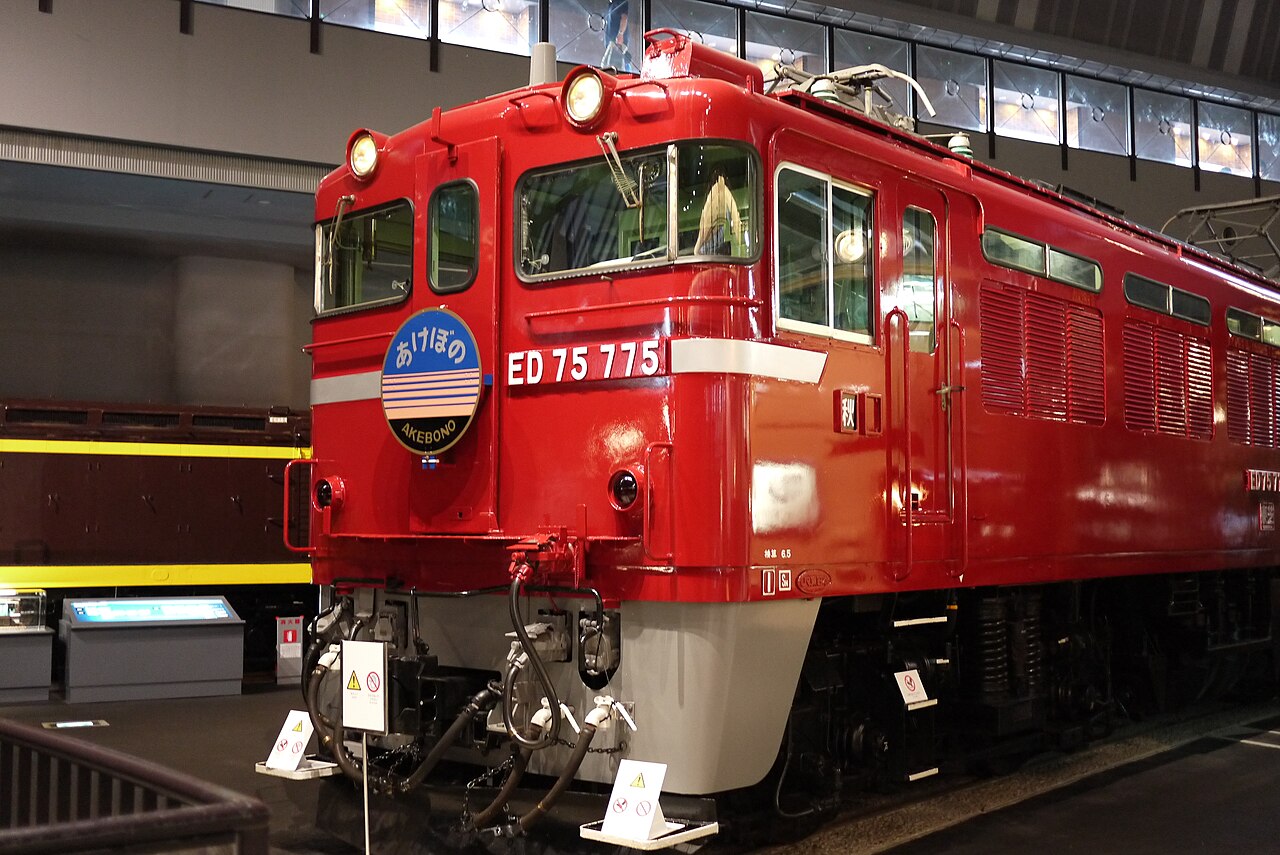
From the 17 March 2012 timetable revision the remaining scheduled JR Freight workings, which operated in pairs, were completely replaced by Class EH500 locomotives, and all were withdrawn by June 2012. As of 1 April 2016, just five locomotives — all ED75-700 machines operated by JR East, with three based at Sendai and two at Akita — remained in service. The class became extinct in 2025. As of 2014, three examples were preserved: ED75 1 at Sendai Shinkansen Depot in Rifu, Miyagi; ED75 501 at the Otaru City Museum in Otaru, Hokkaido; and ED75 775 at The Railway Museum in Saitama. ED75 1 and ED75 39 have since been scrapped, leaving ED75 501 and ED75 775 preserved. The ED75 design was also exported: it formed the basis of China Railways' Type 6K (derived from the EF66 and the ED75) and of the Congo/Zaïre Railways Class 2500.
Timeline
- 1963Two prototypes, ED75 1 and ED75 2, are delivered, built by Hitachi and Mitsubishi, as the AC successor to Class ED71 for the newly AC-electrified Joban Line.
- 1971Production of the salt- and snow-resistant ED75-700 sub-class begins for the Ou Main Line and Uetsu Main Line; 91 locomotives (701-791) are built through 1976.
- 198634 ED75-700 locomotives are rebuilt into Class ED79 locomotives for services through the undersea Seikan Tunnel between Honshu and Hokkaido.
- 2012From the 17 March timetable revision the remaining scheduled JR Freight ED75 workings, operating in pairs, are completely replaced by Class EH500 locomotives; JR Freight's last ED75 are withdrawn, with all scrapped by June.
- 2025The last surviving units, ED75-700 machines 758 and 759 operated by JR East, are hauled away for scrapping; ED75 759 is struck off the register on 13 September, marking the extinction of the class.
Sources
Facts last verified 6 June 2026.
Gallery 5 photos
Every photo for this page — tap any image to view it full-size. All from Wikimedia Commons (credit under each).