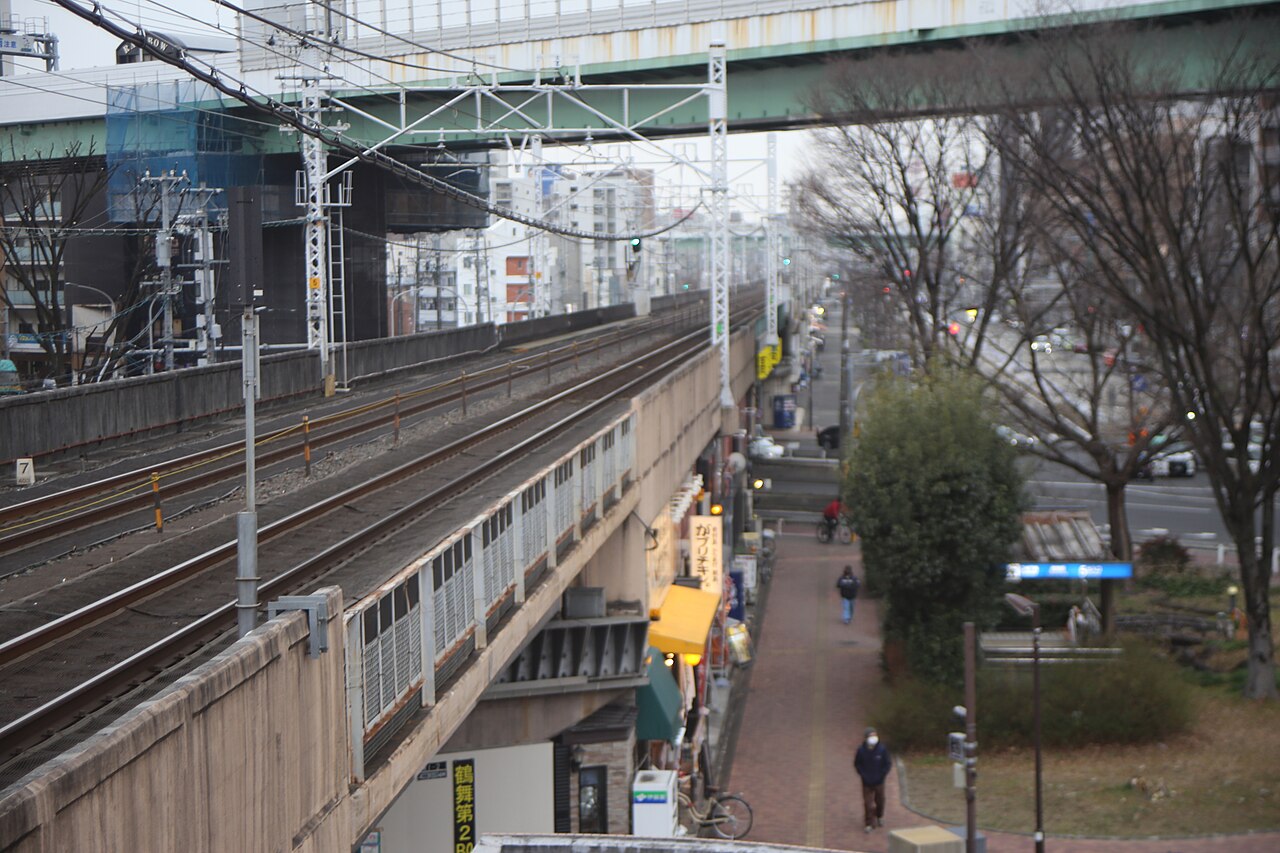
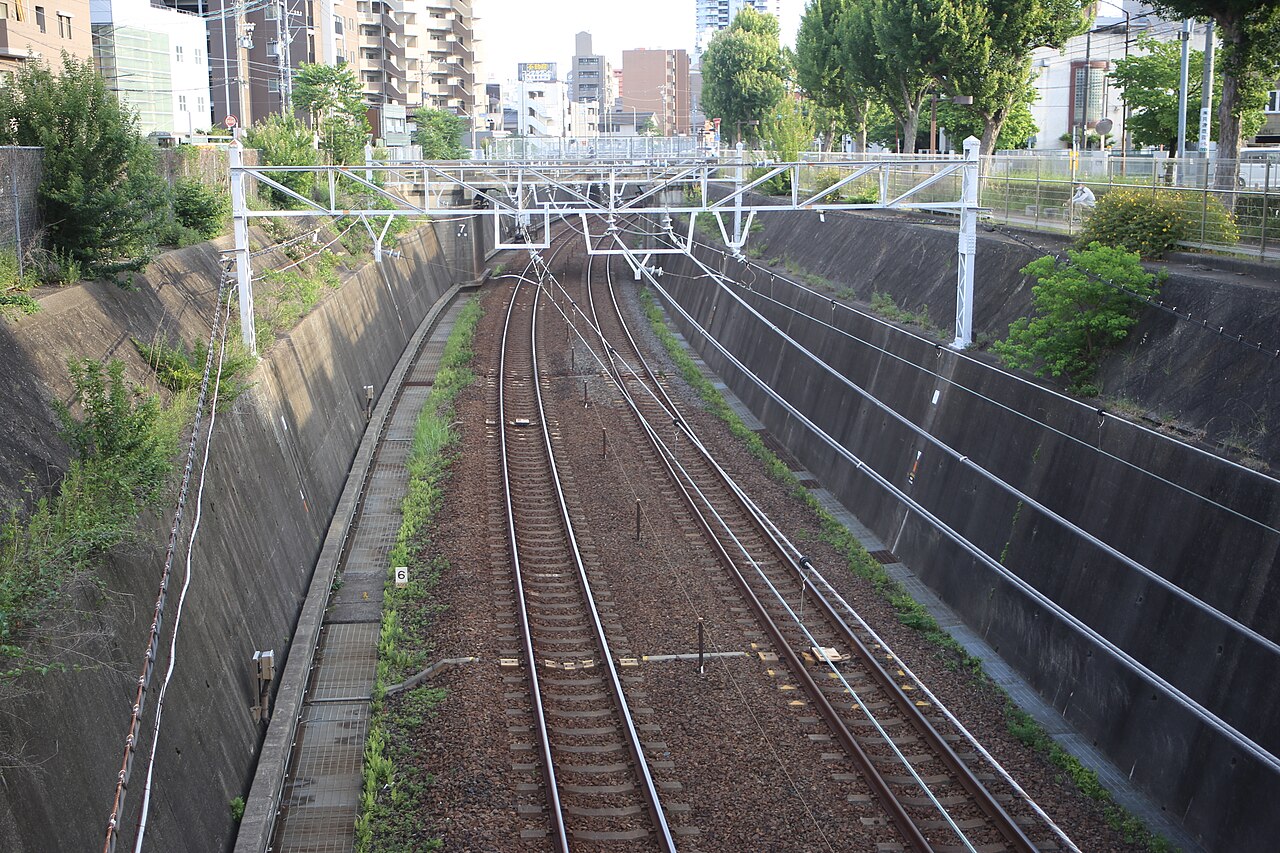
History
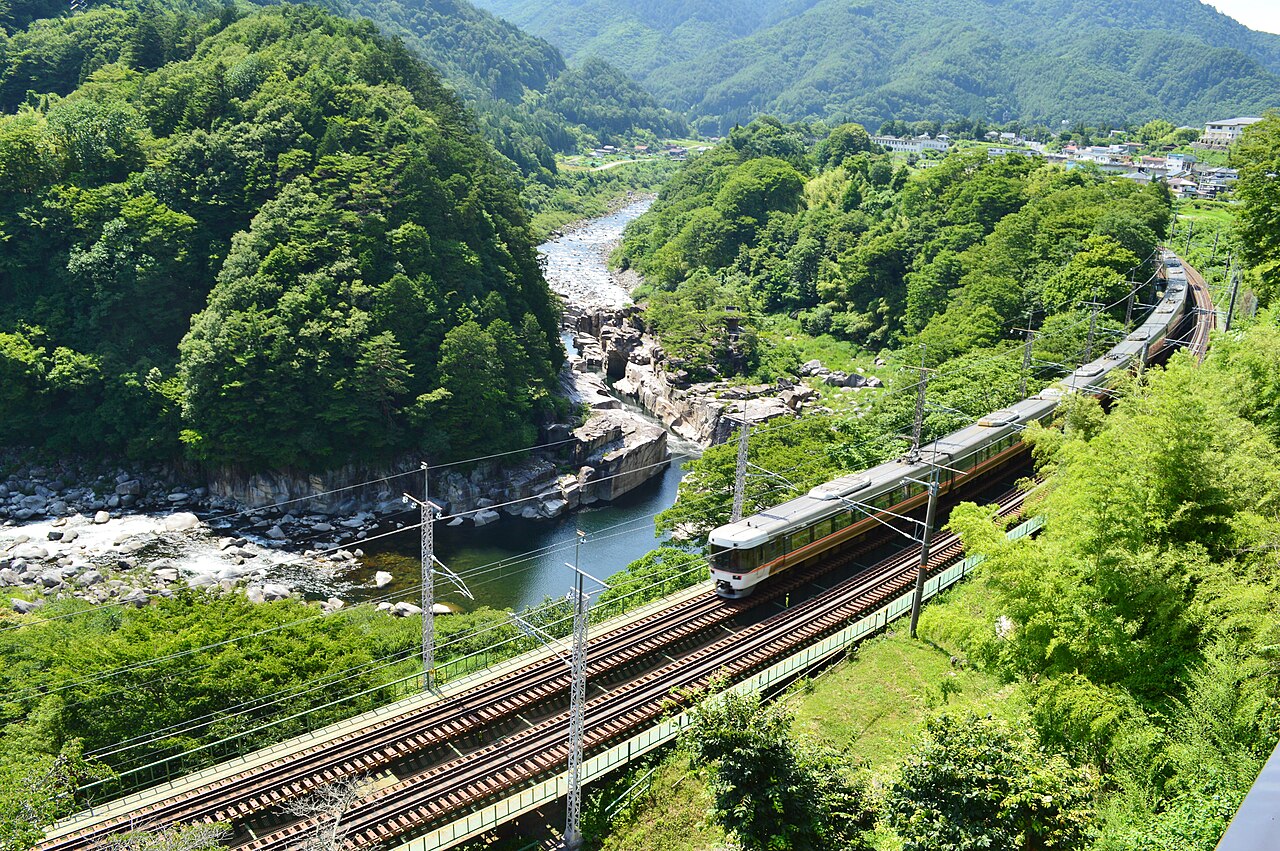
The route is shared by two operators, divided at Shiojiri Station. The eastern portion, the Chūō East Line (Chūō-tōsen), is run by the East Japan Railway Company (JR East), and the western portion, the Chūō West Line (Chūō-saisen), by the Central Japan Railway Company (JR Central); Japan Freight Railway (JR Freight) also operates freight services. At Shiojiri, limited-express trains from both operators continue north onto the Shinonoi Line towards Matsumoto and Nagano. By contrast with the dense urban areas at each end, the central Shiojiri–Nakatsugawa corridor is lightly used, served by only one limited express and one local service per hour. The English Wikipedia gives the entire route (Tokyo–Nagoya, including the Tatsuno branch) as 424.6 km, with the East Line (Tokyo–Shiojiri) at 222.1 km and the West Line (Shiojiri–Nagoya) at 174.8 km.
The line's origins lie with a private company, the Kōbu Railway, which opened the first section from Shinjuku to Tachikawa on 11 April 1889 and extended it to Hachiōji on 11 August 1889. The Kōbu Railway pushed both westward and eastward (towards central Tokyo) until it was nationalised in 1906 under the Railway Nationalisation Act. Meanwhile a government-built line had begun reaching westward from Hachiōji on 1 August 1901, and construction also proceeded from the Nagoya end, where the first section opened in 1900. After nationalisation the Japanese Government Railways continued the work, reaching Shiojiri and, in 1908, central Tokyo at Shōheibashi Station. The eastern and western halves were joined on 1 May 1911, the date the through Tokyo–Nagoya line was completed. A line-name reorganisation in October 1909 had named the eastern part the Chūō East Line and the western part the Chūō West Line; when the two were connected in 1911 the Shiojiri–Shinonoi section was separated as the Shinonoi Line and the remaining route was unified as the Chūō Main Line.
Electrification came early to the Tokyo end. In 1904 the section between Iidamachi Station (then located between today's Suidōbashi and Iidabashi stations) and Nakano Station became the first urban electric railway in Japan, using 600 V DC. Electrification was extended in 1919 and 1922; the voltage was raised to 1,200 V DC when the line was extended to Tokyo Station in 1927, boosted again to 1,500 V DC in 1929, and reached Kōfu in 1931. Electrification from the Nagano end was commissioned in stages from 1966, and the entire line was electrified by 1973. Over the same decades the route was progressively double-tracked. One of the most significant later changes came in the Okaya–Shiojiri section: the original alignment opened in 1906 looped roughly 28 km via Tatsuno (a detour nicknamed the "Daihachi loop" after the politician who lobbied for it), but on 5 July 1983 a new 11.7 km shortcut through the Shiojiri Tunnel via Midoriko Station opened, cutting the distance to about 12 km and substantially reducing journey times; the older Tatsuno alignment was retained as a branch line.
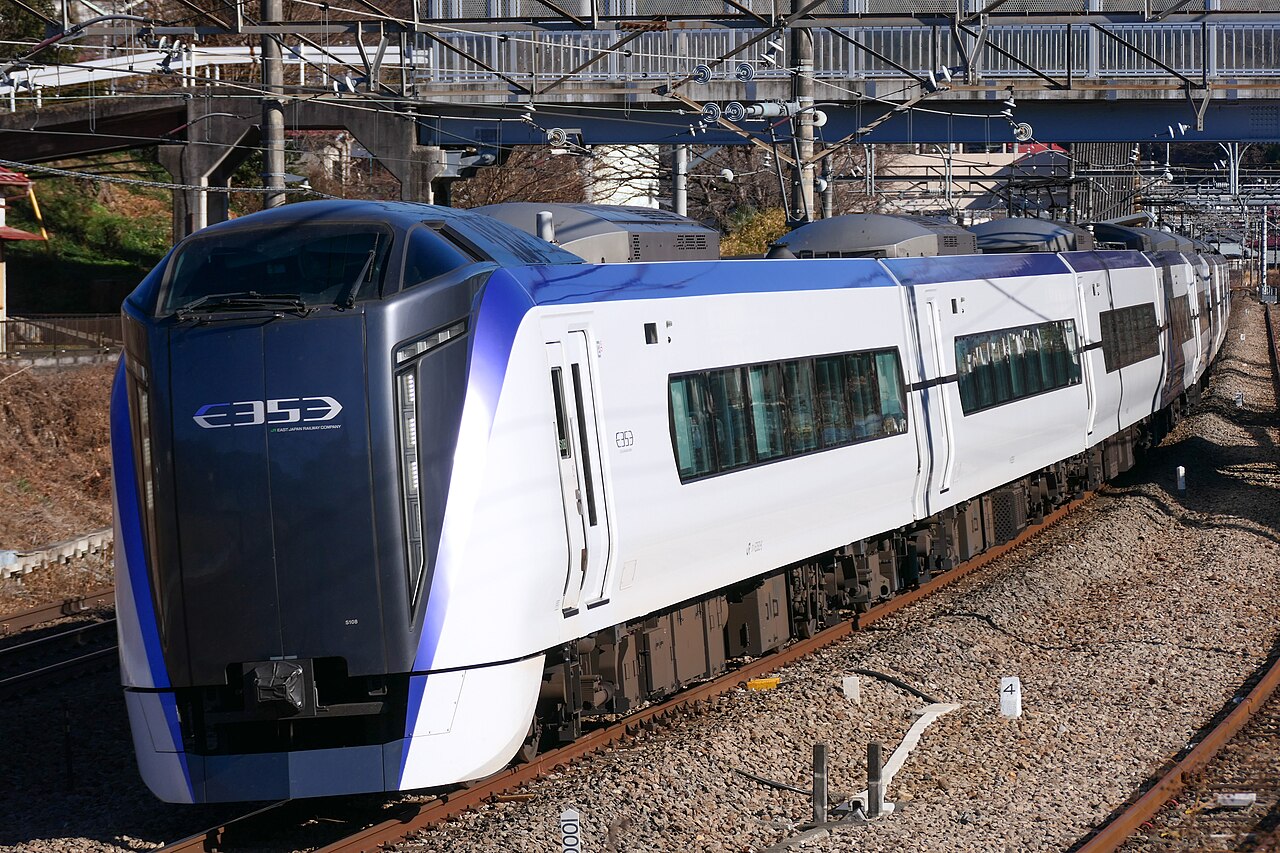
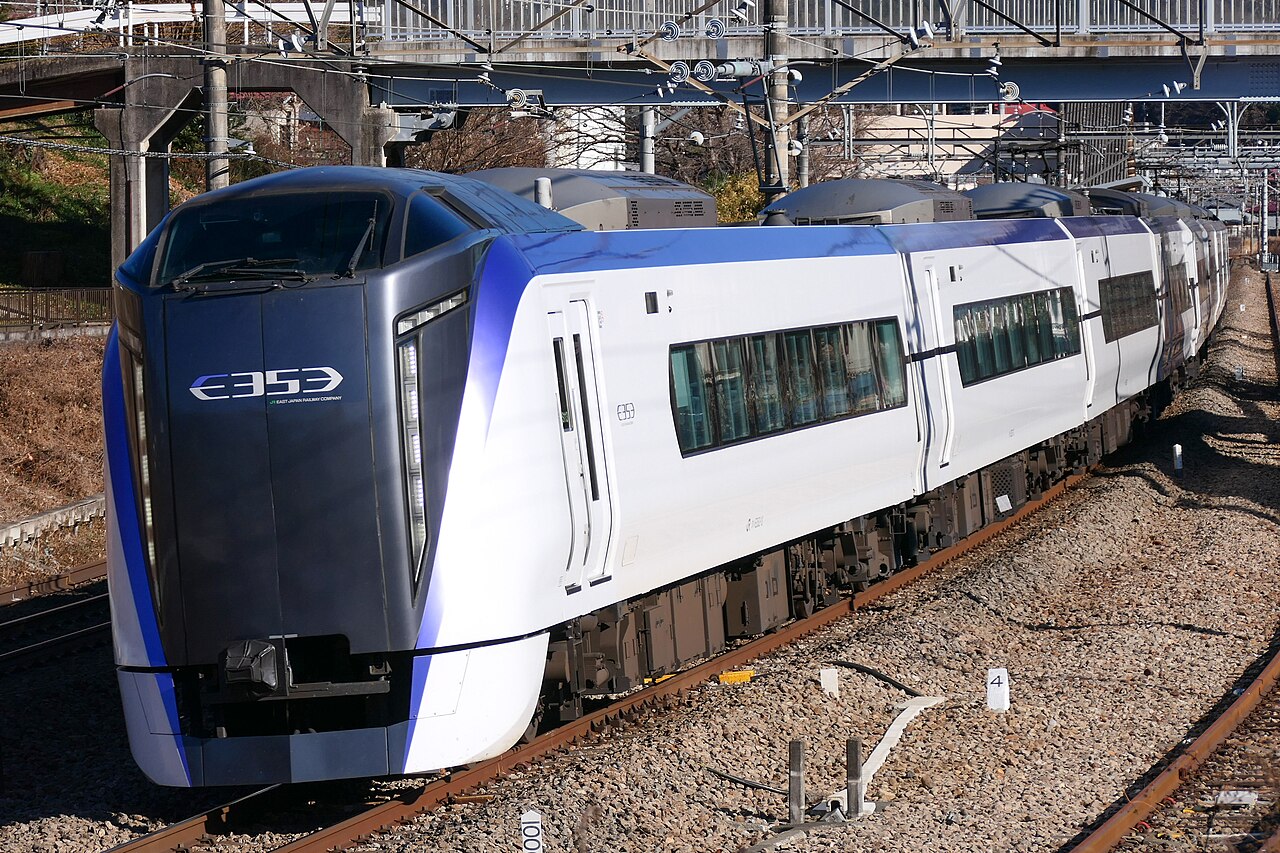
On 1 April 1987 Japanese National Railways was privatised. JR East took over the Kanda–Yoyogi, Shinjuku–Shiojiri and Okaya–Tatsuno–Shiojiri sections, while JR Central took over the Shiojiri–Nagoya section, with JR Freight becoming the Type-2 freight operator across the line. Today the line carries frequent limited-express services from both ends: on the JR East side the E353 series works the Azusa, Kaiji and related limited expresses (introduced from 2017, replacing the E351 and E257 series), with 211 and E127 series on local trains; on the JR Central side the 383 series operates the Shinano limited express, with 211, 213, 311, 313 and 315 series on local and regional services. New E233 series commuter trains entered Tokyo-area service from 26 December 2006, replacing 201 series stock introduced in 1981. Both city ends carry heavy commuter traffic, and JR Freight runs freight trains over the route.
The Chūō Main Line has seen serious incidents. On 12 September 1997 a Super Azusa limited express bound for Matsumoto collided with a 201 series local train that had failed to stop at a red signal while passing through Ōtsuki Station, according to the English Wikipedia article.
Timeline
- 188911 April: the Kōbu Railway opens the first section, Shinjuku–Tachikawa; Tachikawa–Hachiōji follows on 11 August.
- 1900The first section of the line built from the Nagoya end opens.
- 19011 August: the government railway opens Hachiōji–Uenohara, beginning the westward extension from Hachiōji.
- 1904The Iidamachi–Nakano section becomes the first urban electric railway in Japan, using 600 V DC.
- 1906The Kōbu Railway (Ochanomizu–Hachiōji) is nationalised under the Railway Nationalisation Act; the government railway reaches Shiojiri the same year.
- 1908The line reaches central Tokyo at Shōheibashi Station (19 April).
- 1909October: the line-name designation names the eastern part the Chūō East Line and the western part the Chūō West Line.
- 19111 May: the eastern and western halves are joined; Shiojiri–Shinonoi is split off as the Shinonoi Line and the route is unified as the Chūō Main Line, completing the through Tokyo–Nagoya line.
- 19191 March: Tokyo–Manseibashi opens and Kanda Station opens; electrification is also extended.
- 1927Overhead voltage on Tokyo–Kokubunji raised from 600 V DC to 1,200 V DC as the line is extended to Tokyo.
- 1929Overhead voltage on Tokyo–Kokubunji raised from 1,200 V DC to 1,500 V DC.
- 19311 April: Asakawa (now Takao)–Kōfu electrified; electric-locomotive operation begins.
- 1966Electrification of the Nagoya-end section begins (Tajimi–Nagoya, 14 May); the 181 series 'Azusa' limited express also begins Shinjuku–Matsumoto (12 December).
- 197327 May: Shiojiri–Nakatsugawa electrified, completing electrification of the entire line.
- 198217 May: Shiojiri Station is relocated.
- 19835 July: a new 11.7 km line through the Shiojiri Tunnel via Midoriko opens, shortening Okaya–Shiojiri to about 12 km; the Tatsuno route becomes a branch.
- 19871 April: JNR is privatised; JR East takes Kanda–Yoyogi / Shinjuku–Shiojiri / Okaya–Tatsuno–Shiojiri, JR Central takes Shiojiri–Nagoya, and JR Freight becomes the Type-2 freight operator.
- 19961 December: the 'Shinano' limited express is replaced by the 383 series.
- 199712 September: a Super Azusa limited express collides with a 201 series local train that passed a red signal at Ōtsuki Station.
- 200626 December: E233 series commuter trains enter Tokyo-area service, replacing 201 series stock introduced in 1981.
- 2017E353 series EMUs are introduced on Azusa and Super Azusa limited expresses, replacing the E351 and E257 series.
Sources
Facts last verified 3 June 2026.
Gallery 6 photos
Every photo for this page — tap any image to view it full-size. All from Wikimedia Commons (credit under each).