History
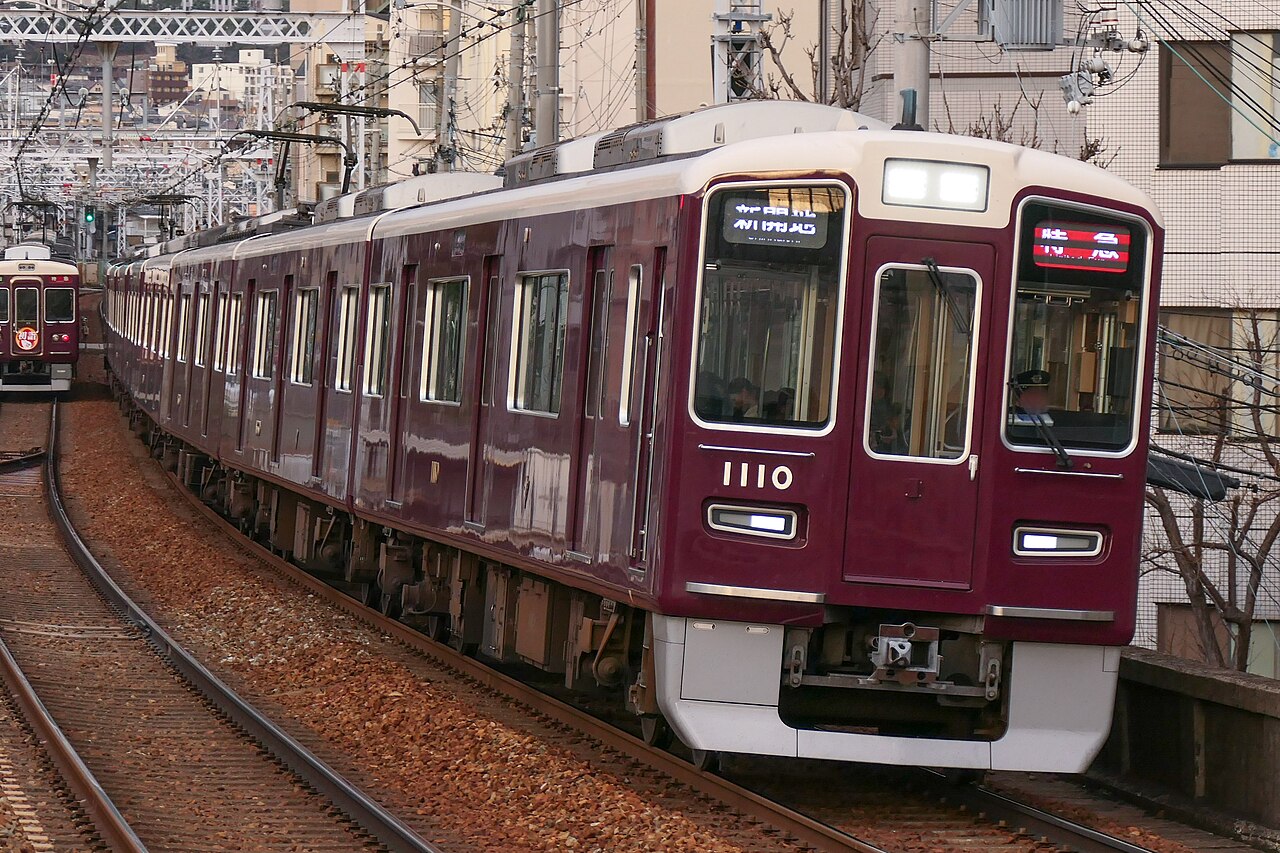
The corridor between Osaka and Kobe was already served by two railways when the Kobe Main Line opened — the government's Tokaido Main Line (today nicknamed the JR Kobe Line) and the Hanshin Electric Railway Main Line. The Hankyu line was conceived in the Taisho era to compete on speed against the curve-heavy Hanshin Main Line, and was deliberately built to run between Osaka and Kobe as directly as possible; as a result it follows an almost straight alignment on the higher, inland (yamate) side of the two rival routes. Its corridor through the foothill districts of Higashinada-ku in Kobe and the cities of Ashiya and Nishinomiya developed into some of the Kansai region's most prestigious residential areas, and the surrounding culture later came to be known as Hanshinkan Modernism.
The predecessor of the line was the Minoo Arima Electric Tramway, which had opened the Takarazuka and Minoo lines in 1910 and applied in 1912 for a licence to build toward the Osaka–Kobe area. The company renamed itself Hanshin Kyuko Electric Railway in 1918, and on 16 July 1920 opened the section from Juso to its first Kobe terminus at a station then called “Kobe” (later Kamitsutsui). The Umeda–Juso section had already opened in 1910 as part of the Takarazuka Line, and Kobe Line trains ran into Umeda over the Takarazuka Line tracks. The new line was laid as a 1,435 mm standard-gauge line electrified at 600 V DC. Built under the Tramways Act like the Takarazuka Line, it was nevertheless authorised to run at 35 mph (about 56 km/h), faster than the Act's usual 25 mph limit, thanks to its straight alignment, and stations were spaced more widely than on the parallel Hanshin Main Line.
Both of the line's original terminals were problematic: the Umeda–Juso bottleneck, where Kobe trains shared the Takarazuka Line, and the Kobe terminus at Kamitsutsui, which stopped short of the city centre. The Osaka end was resolved in 1926, when a separate elevated double-track line between Umeda and Juso was completed, dividing the Kobe and Takarazuka lines. The Kobe end took longer, because Kobe city council insisted that railways entering the city be built underground; only after the government line was elevated near Sannomiya did the council accept elevation, and in 1936 the line was extended to the present Kobe-Sannomiya (then named “Kobe”). Until 1936 the Kobe terminus had been Kamitsutsui; the roughly 1 km remnant between Oji-Koen and Kamitsutsui became the Kamitsutsui branch line, providing a connection to the Kobe tram network until it closed (the branch ceased in 1940, and the tram connection ended in 1941).
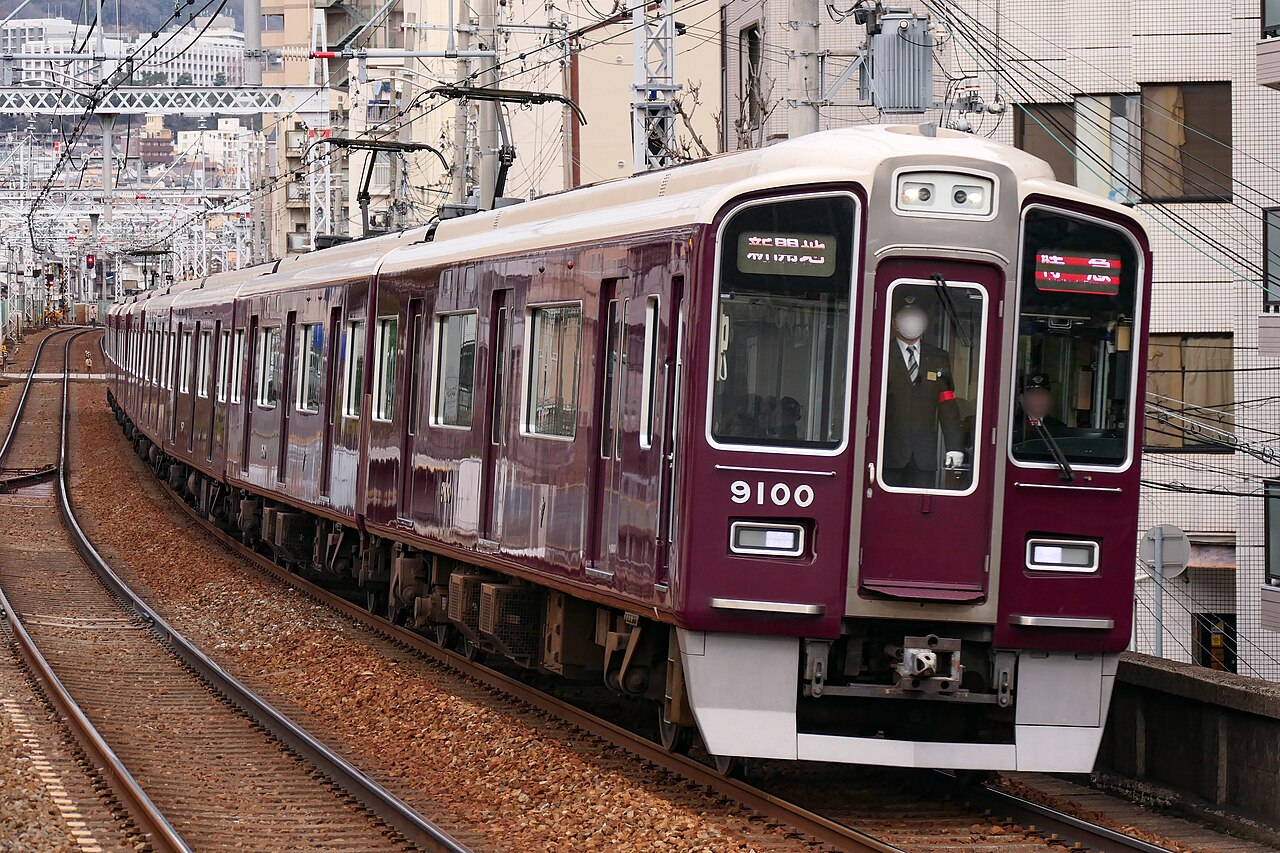
Speed was the line's defining selling point. At its 1920 opening the run from Umeda to Kobe took 50 minutes (60 minutes for the first five days), already beating the government and Hanshin services. The company progressively accelerated the line: pantographs replaced trolley poles in 1922, and a limited express stopping only at Nishinomiya-kitaguchi, introduced on 1 April 1930 with the powerful 900-series cars, cut the time to 30 minutes. Further reductions followed to 28 minutes in 1931 and to 25 minutes on 1 July 1934, a time advertised at Umeda as “Kobe by limited express, 25 minutes.” When through running to Sannomiya began in 1936 the 25-minute schedule was maintained with higher-output 920-series cars despite the longer distance. This express running continued until 1944, when the wartime situation forced its suspension; it resumed after the war in 1949, after which all limited expresses stopped at Juso. A maximum speed of 110 km/h was authorised in December 1949. In 1953 a daytime pattern of limited expresses and locals every 10 minutes was introduced, a frequency that has been sustained ever since.
The line's electrification was raised from 600 V DC to 1,500 V DC on 8 October 1967, and on 10 March 1978 the whole line was reclassified from a tramway under the Tramways Act to a railway under the Local Railway Act. Through services have repeatedly extended its reach: after the Kobe Rapid Railway opened in 1968, Hankyu trains ran through to Sanyo Electric Railway's Sumaura-koen and Sanyo trains ran in as far as Rokko, an arrangement that continued until Hankyu's through running onto the Sanyo line was discontinued in February 1998. Today some trains continue from Kobe-Sannomiya through onto the Kobe Rapid Railway's Kobe Kosoku Line to Shinkaichi.
On 17 January 1995 the Great Hanshin earthquake (the Southern Hyogo Prefecture Earthquake) struck the line hard. Because the Kobe Main Line was more heavily elevated than the parallel JR line, many of its viaducts collapsed; the Nishinomiya-kitaguchi–Shukugawa section was worst hit, with about 1.6 km of viaduct brought down and rebuilt in steel-reinforced concrete, and it was the last section to reopen. The line reopened in stages from 18 January 1995, and full service was restored on 12 June 1995; the reopening was accompanied by a timetable revision that, among other changes, made all limited expresses stop at Okamoto. Station numbering was introduced on 21 December 2013, when Sannomiya was renamed Kobe-Sannomiya, and Umeda was renamed Osaka-Umeda on 1 October 2019.
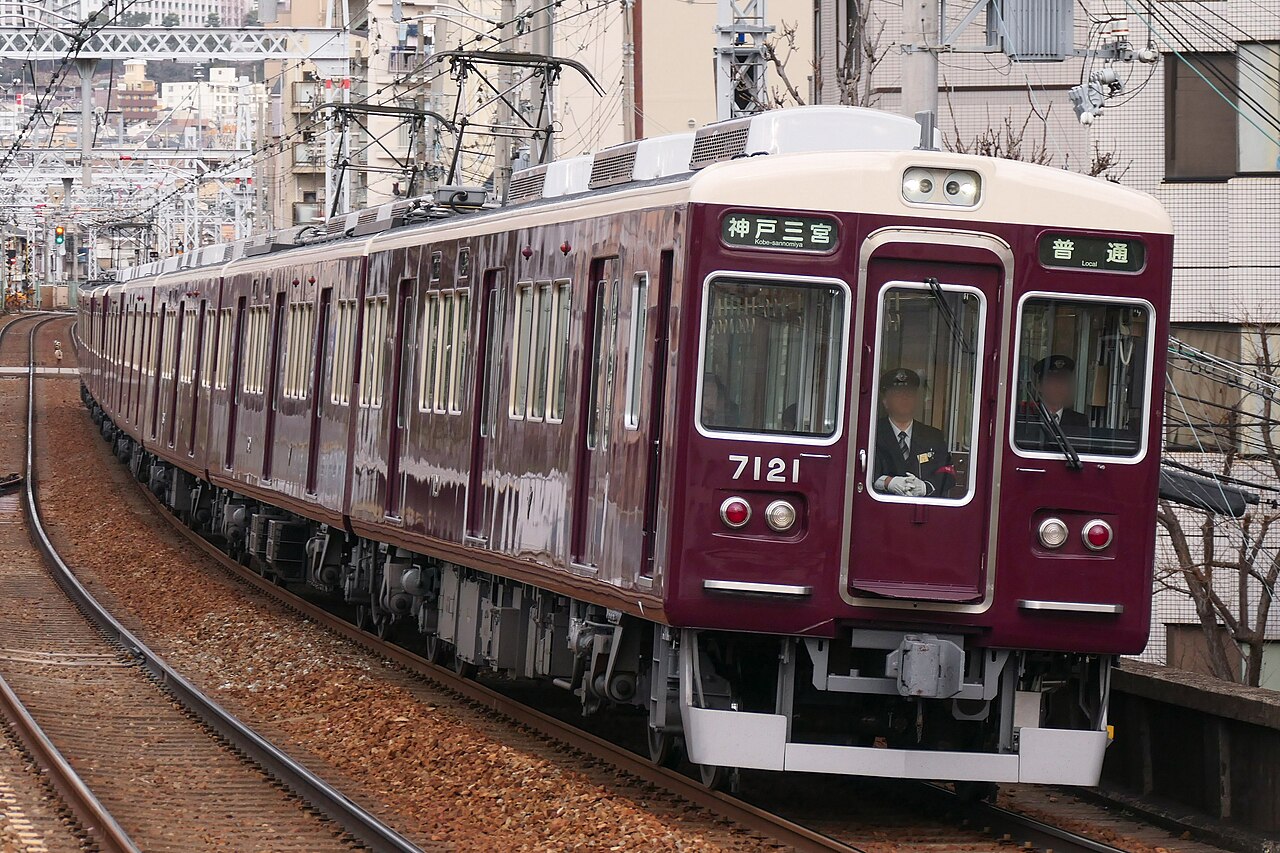
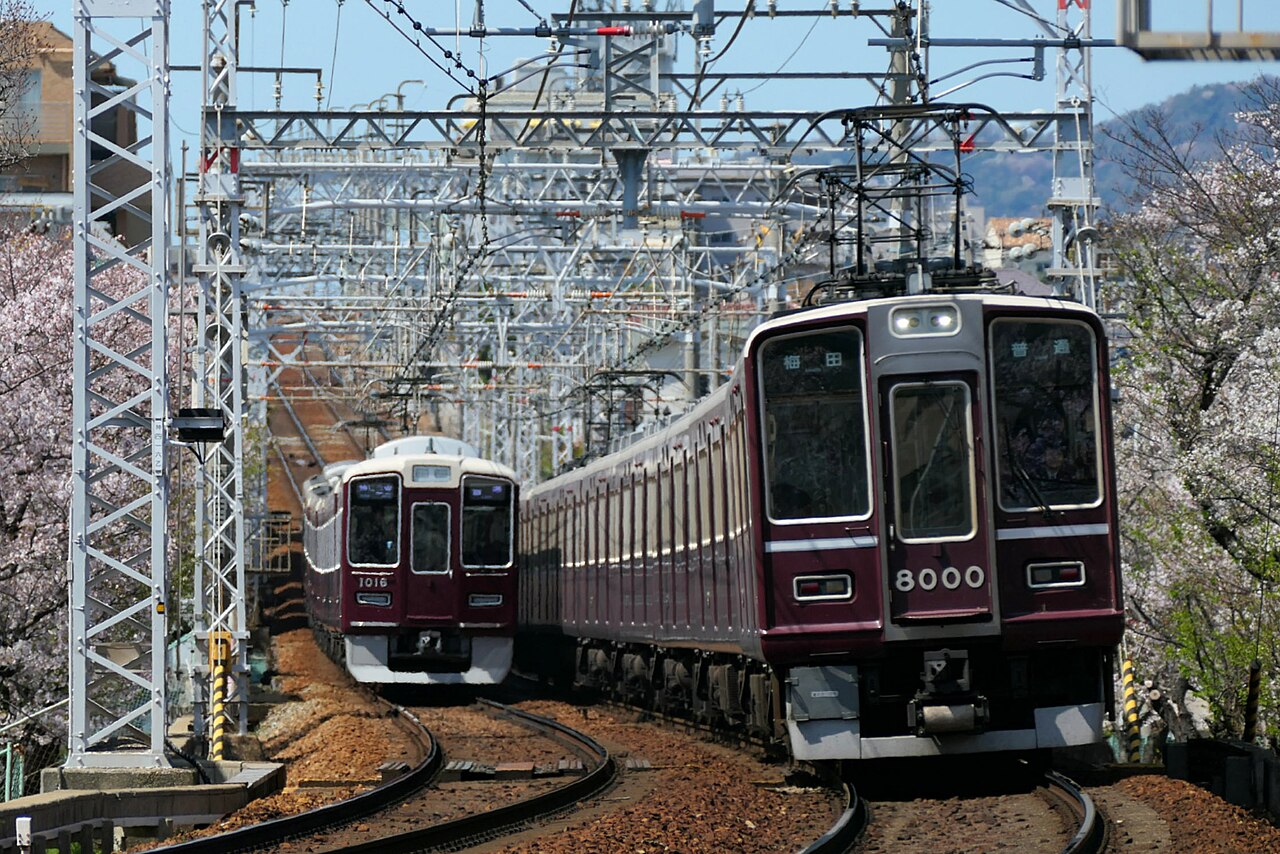
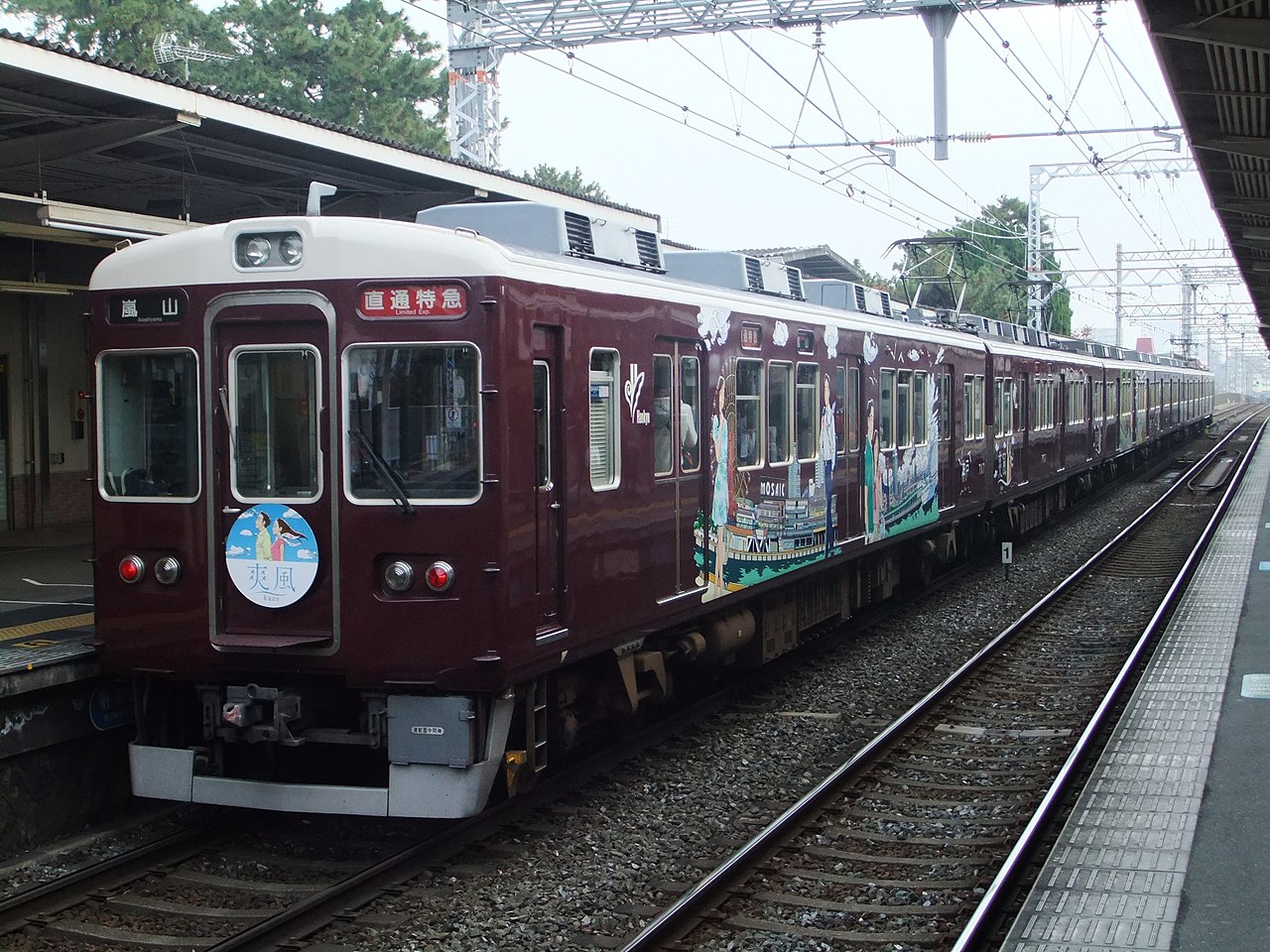
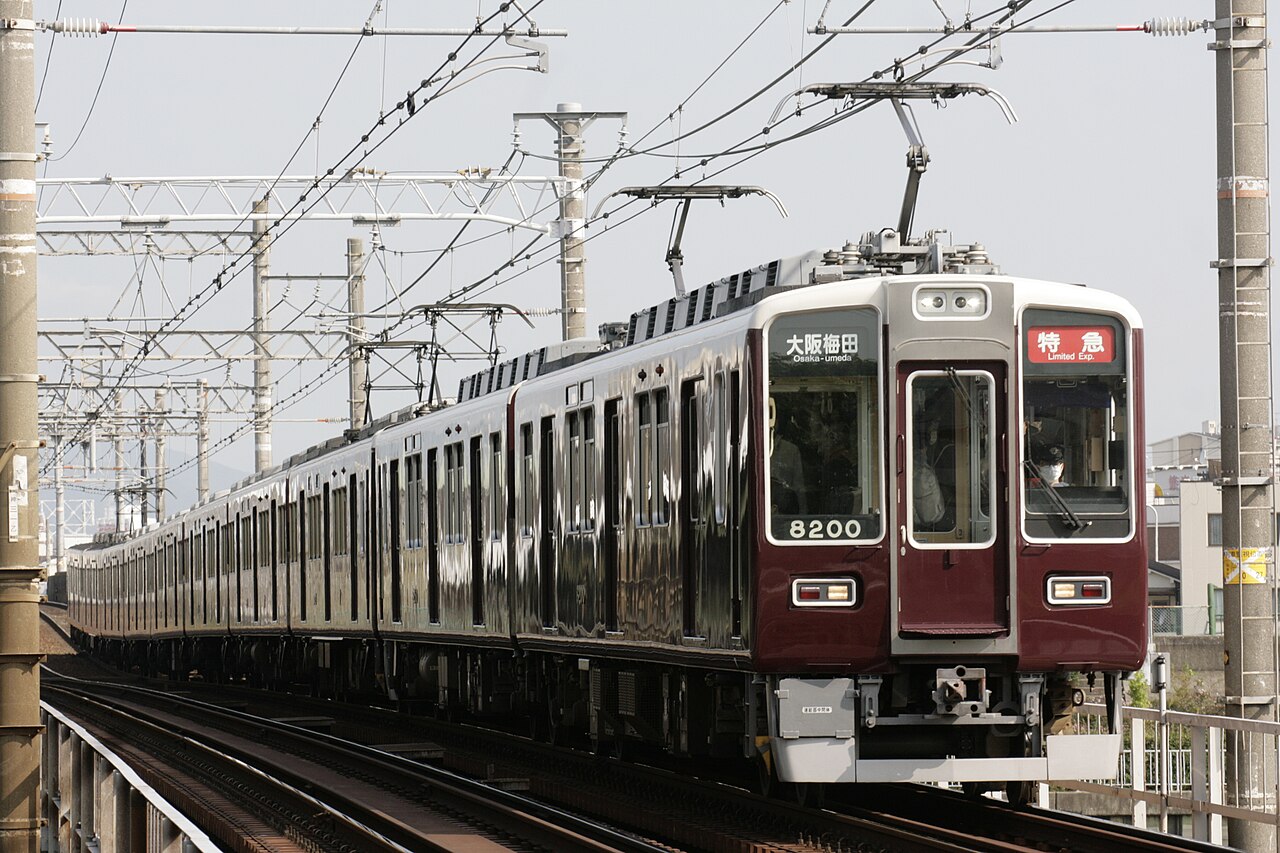
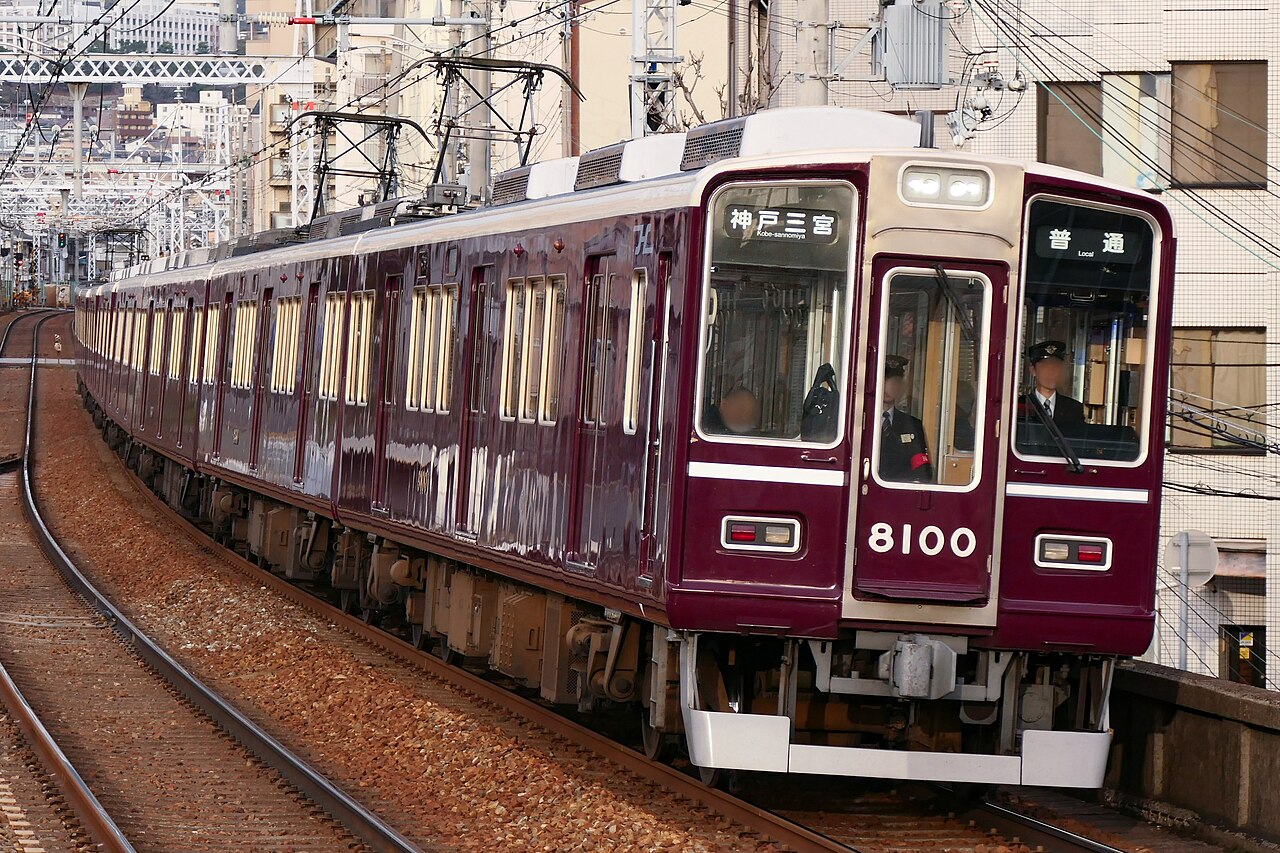
The Kobe Main Line remains one of Hankyu's three trunk lines and a busy commuter and inter-city (interurban) railway. By day it runs mainly all-stations local trains and limited expresses that call only at major stations, with commuter and express services added in the early morning, peak commuting hours and late at night. Its operator today is Hankyu Corporation. In fiscal 2024 the morning peak's most-congested section was Kanzakigawa to Juso, with a peak-hour congestion rate of 141 percent — among the most crowded lines in the Kansai region. Once a rival of the Hanshin Electric Railway, with which it competed fiercely for passengers and lineside development, Hankyu was brought together with Hanshin under the single holding company Hankyu Hanshin Holdings in 2006.
Timeline
- 1910The Umeda–Juso section opens as part of the Takarazuka Line; Kobe Line trains would later run into Umeda over these tracks.
- 192016 July: Hanshin Kyuko Electric Railway opens the Juso–Kobe (later Kamitsutsui) section as a 1,435 mm standard-gauge line electrified at 600 V DC, entering the Osaka–Kobe market. Umeda–Kobe took 50 minutes (60 minutes for the first five days).
- 1922May: pantographs replace trolley poles, ahead of other private railways; the Umeda–Kobe time is cut to 40 minutes in December.
- 19265 July: a separate elevated double-track line opens between Umeda and Juso, dividing the Kobe and Takarazuka lines and removing the Osaka-end bottleneck.
- 19301 April: limited-express service begins, stopping only at Nishinomiya-kitaguchi, using 900-series cars and cutting Umeda–Kobe to 30 minutes.
- 19341 July: the limited express is accelerated to 25 minutes, advertised at Umeda as “Kobe by limited express, 25 minutes.”
- 19361 April: the line is extended to the present Kobe-Sannomiya (then “Kobe”); the former Kobe terminus is renamed Kamitsutsui and the Nishinada–Kamitsutsui remnant becomes the Kamitsutsui branch line. The 25-minute express schedule is maintained with 920-series cars.
- 193612 September: Sonoda Station opens.
- 193720 October: Mukonoso Station opens.
- 194020 May: the Kamitsutsui branch line closes (the connection to the Kobe tram network ended in 1941).
- 1949Postwar limited-express service resumes (suspended in 1944); all limited expresses now stop at Juso. A maximum speed of 110 km/h is authorised in December.
- 19531 April: a daytime pattern of limited expresses and locals every 10 minutes is introduced, a frequency sustained ever since.
- 19678 October: the line's electrification is raised from 600 V DC to 1,500 V DC.
- 1968After the Kobe Rapid Railway opens, through running begins with Sanyo Electric Railway (Hankyu trains to Sumaura-koen, Sanyo trains to Rokko); the Kobe terminus “Kobe” is renamed Sannomiya.
- 197810 March: the whole line is reclassified from a tramway (Tramways Act) to a railway (Local Railway Act).
- 199517 January: the Great Hanshin earthquake severely damages the line, collapsing many viaducts (about 1.6 km on the Nishinomiya-kitaguchi–Shukugawa section). Service is restored in stages from 18 January and fully reopens on 12 June, with a timetable revision making all limited expresses stop at Okamoto.
- 1998February: Hankyu's through running onto the Sanyo Electric Railway is discontinued; trains instead run through to Shinkaichi on the Kobe Rapid Railway.
- 200628 October: the daytime maximum speed on the Kanzakigawa–Nishinomiya-kitaguchi section is raised to 115 km/h, and limited expresses begin stopping at Shukugawa.
- 201321 December: station numbering is introduced and Sannomiya is renamed Kobe-Sannomiya.
- 20191 October: Umeda Station is renamed Osaka-Umeda.
Sources
Facts last verified 3 June 2026.
Gallery 5 photos
Every photo for this page — tap any image to view it full-size. All from Wikimedia Commons (credit under each).