History
The origins of the line lie with Keihan Electric Railway, which had opened the present-day Keihan Main Line between Osaka and Kyoto in 1910 as an interurban developed from street-railway practice; laid out along highway townscapes with much running on the road, it was full of curves and ill-suited to high speed. To build a faster, straighter route on the right bank of the Yodogawa, Keihan's subsidiary the Shin-Keihan Railway constructed what it called the Shin-Keihan Line as a bypass of the Keihan Main Line. The corridor was assembled in phases. The Jūsō–Awaji section opened first, on 1 April 1921, built by the Kita-Osaka Electric Railway, whose railway business was transferred to Shin-Keihan in 1923. The Tenjinbashi–Awaji section opened in 1925, and in 1928 the line was extended to Kyoto-Saiin (present-day Saiin); a temporary Saiin terminus was hastily arranged so the line could open in time for the enthronement ceremony of the Shōwa Emperor. Shin-Keihan was merged into Keihan Electric Railway in 1930, becoming Keihan's Shin-Keihan Line. The extension underground to Keihan-Kyoto (present-day Ōmiya) was completed in 1931; according to the Japanese-language source this Saiin–Ōmiya section was the first underground railway line in the Kansai region, predating the opening of the Osaka Municipal Subway (now Osaka Metro) in 1933.
Because the line passed through sparsely populated country — Takatsuki had not even attained city status at the time — it placed its emphasis on fast inter-city transport between Osaka and Kyoto, running high-speed services including a 'super-express' that linked Tenjinbashi and Ōmiya non-stop in 34 minutes. A well-known anecdote holds that the railway's P-6 type cars on these fast services outpaced the Railway Ministry's fastest limited express of the day, the Tsubame. During the wartime transport-control consolidation, Keihan Electric Railway and Hanshin Kyūkō Electric Railway merged in 1943 to form Keihanshin Kyūkō Electric Railway (the present-day Hankyu Railway), and the Shin-Keihan Line passed to that company. When Keihan was separated out again in 1949, the former Keihan side argued for a return to the pre-merger state, but — citing the running of Shin-Keihan trains into Hankyu's Umeda Station begun in 1944 — the former Hankyu side argued that the line should belong to Hankyu, and it was retained as a Keihanshin Kyūkō line. It was at this point that the line took its present name, the Kyoto Main Line.
The long-desired extension from Ōmiya to Kawaramachi Station (present-day Kyoto-kawaramachi) opened on 17 June 1963, finally carrying the line into central Kyoto. With it the limited express was increased from a 30-minute to a 15-minute interval. In 1964 the 2800 series — Hankyu's first dedicated limited-express car — was built, and in 1971 the fastest Osaka-umeda–Kawaramachi run reached 38 minutes (30 minutes Jūsō–Ōmiya), which the Japanese source records as the fastest time achieved up to the present day. The 6300 series replaced the 2800 series on limited-express duties by 1979. As populations along the line grew, the service pattern was reshaped: from the 1997 timetable revision all limited expresses began stopping at Takatsuki-shi, and the 24 March 2001 revision overhauled stopping patterns and renamed the service tiers. New stations have been added on the longer gaps between stops, including Rakusaiguchi, Settsu-shi and Nishiyama-Tennōzan; station numbering was introduced across all Hankyu stations on 21 December 2013.
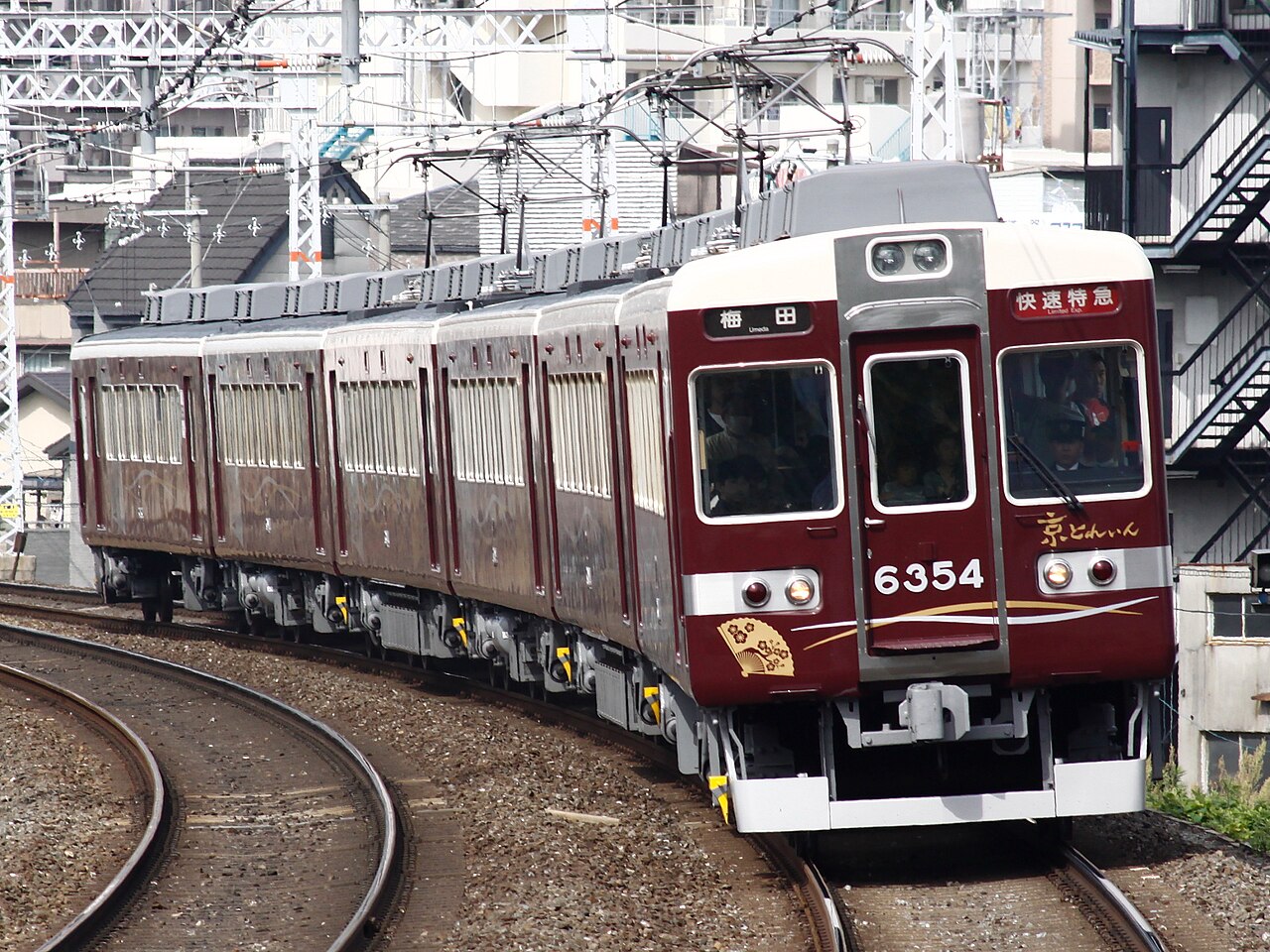
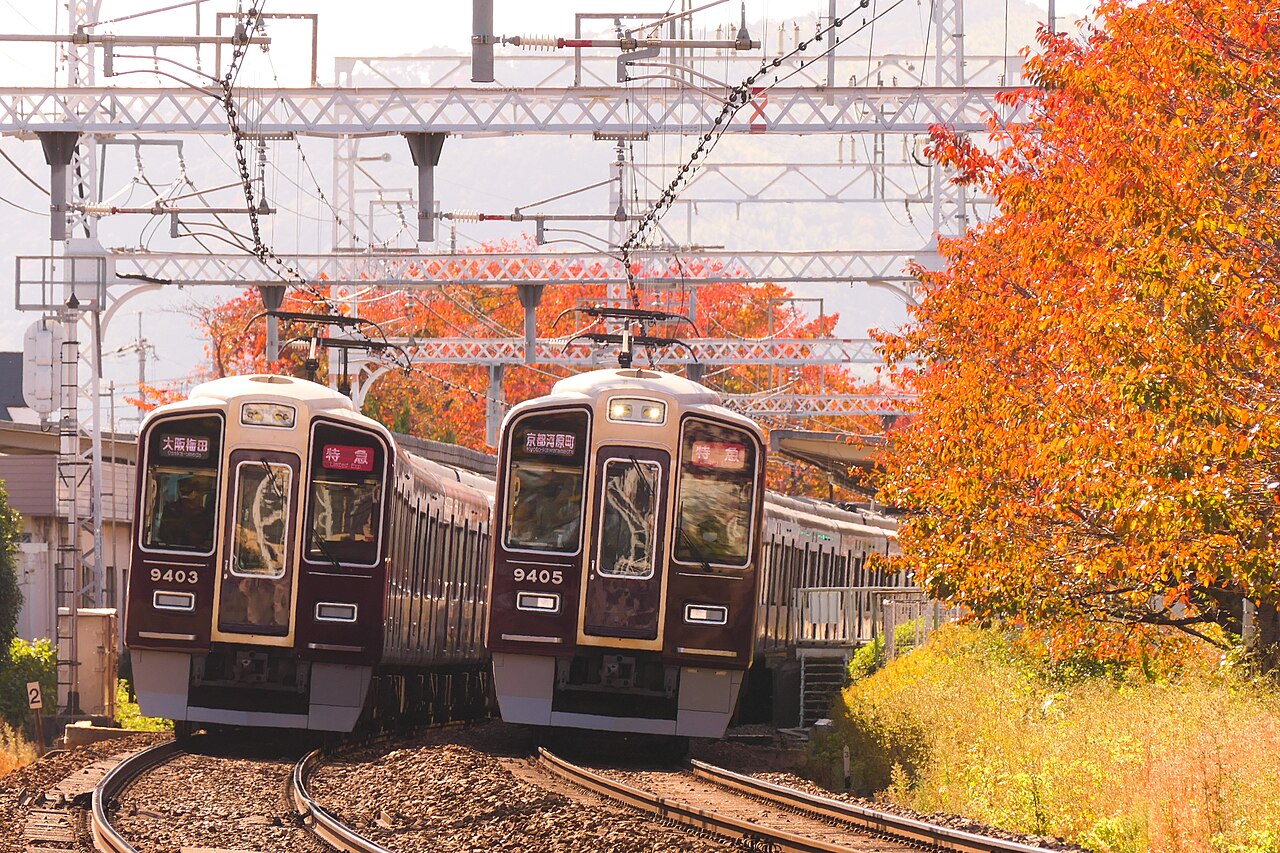
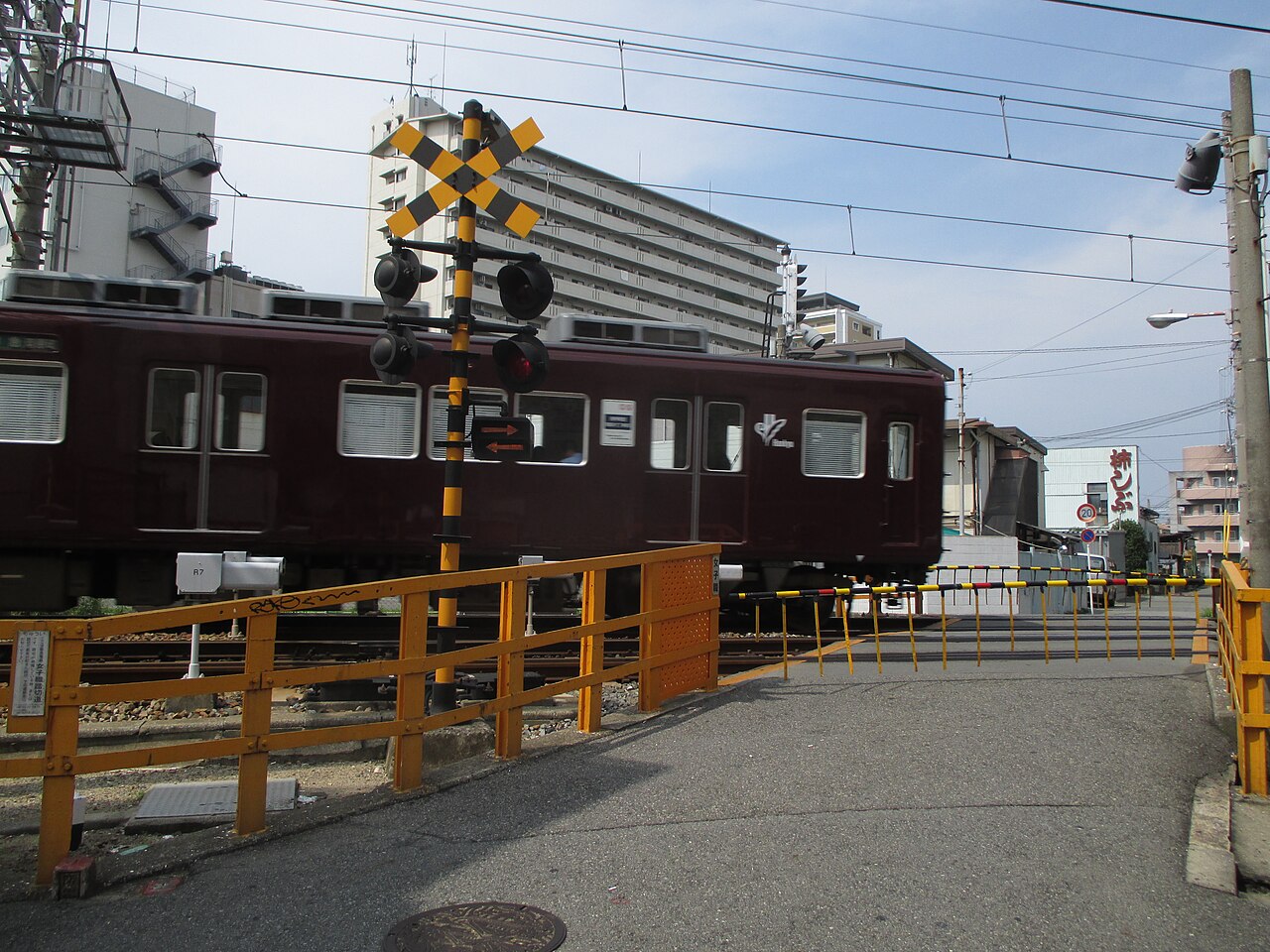
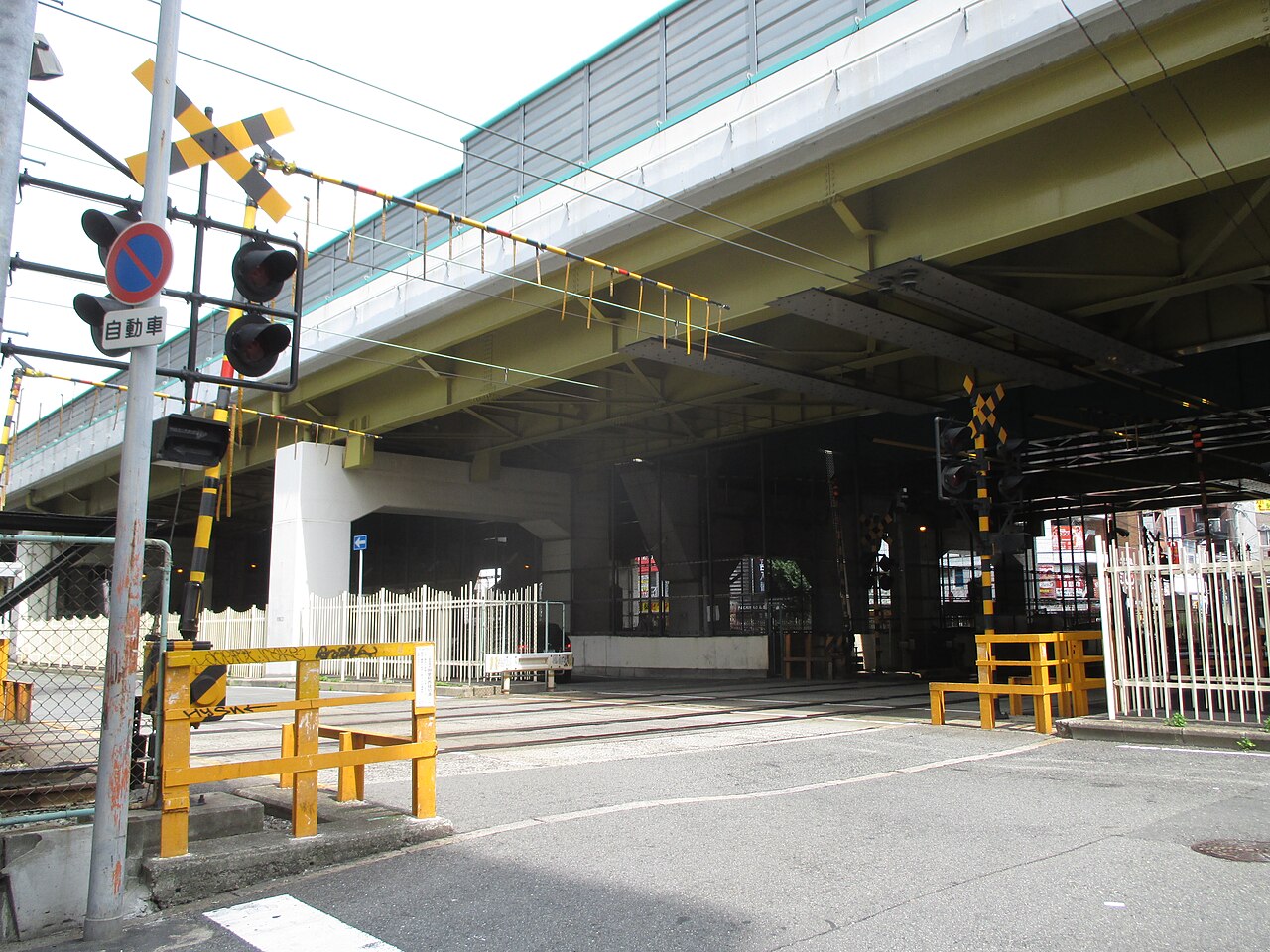
Today Hankyu Railway operates a tiered service of Limited Express, Commuter Limited Express, Semi-Limited Express, Rapid Limited Express, Express, Semi-Express and Local trains, with section runs terminating at intermediate stations. A 'Kyo-train Garaku' Rapid Limited Express runs four round trips on weekends and holidays for sightseeing passengers, using a dedicated six-car set rebuilt from a 7000 series and requiring only an ordinary ticket with no surcharge. Reserved-seat 'PRiVACE' cars are coupled into trains formed of the 2300 series and some 9300 series. Through services operate to the Hankyu Senri Line at Awaji, and some Senri Line trains continue onto the Osaka Metro Sakaisuji Line as far as Tengachaya. In the 2024 fiscal year the most congested section during the morning rush was Kami-Shinjō to Awaji, with a peak congestion rate of 113 percent between 07:33 and 08:33. A continuous grade-separation project is under way to elevate track in the vicinity of Awaji and Sōzenji stations; originally planned for an elevated switch-over in fiscal 2024 and completion in fiscal 2027, delays in land acquisition have pushed the elevated switch-over to fiscal 2028 and full completion of the project to fiscal 2031.
Timeline
- 19211 April: the Jūsō–Awaji section opens, built by the Kita-Osaka Electric Railway.
- 1925The Tenjinbashi–Awaji section opens.
- 1928The line is extended to Kyoto-Saiin (present-day Saiin), with a temporary terminus arranged for the Shōwa enthronement ceremony.
- 1930Shin-Keihan Railway is merged into Keihan Electric Railway, becoming its Shin-Keihan Line.
- 193131 March: the Saiin–Keihan-Kyoto (present-day Ōmiya) underground section is completed — the first underground railway line in the Kansai region, predating the Osaka Municipal Subway (1933).
- 1943Keihan and Hanshin Kyūkō merge into Keihanshin Kyūkō Electric Railway (present-day Hankyu Railway) under wartime transport control; the Shin-Keihan Line passes to that company.
- 1949Keihan is separated out again; the line is retained by Hankyu and renamed the Kyoto Main Line.
- 195918 February: the additional Takarazuka Main Line double tracks between Umeda (present-day Osaka-umeda) and Jūsō come into exclusive use by the Kyoto Main Line.
- 196317 June: the Ōmiya–Kawaramachi (present-day Kyoto-kawaramachi) extension opens, reaching central Kyoto; the limited express is increased to a 15-minute interval.
- 1971The fastest Umeda–Kawaramachi run reaches 38 minutes (30 minutes Jūsō–Ōmiya) — the fastest time recorded up to the present day.
- 19972 March: all limited expresses begin stopping at Takatsuki-shi.
- 200124 March: a timetable revision overhauls stopping patterns and reorganises the service tiers.
- 201321 December: station numbering is introduced across all Hankyu stations.
- 2024Most congested morning section is Kami-Shinjō→Awaji, peak congestion rate 113% (07:33–08:33).
Sources
Facts last verified 3 June 2026.
Gallery 3 photos
Every photo for this page — tap any image to view it full-size. All from Wikimedia Commons (credit under each).