History
The line opened on 12 April 1905, when Hanshin Electric Railway began operating between Deiribashi in Osaka and Kobe (the original Kobe terminus, initially signed as Kobe-Kumoidori). Because the government-run Tōkaidō Main Line already paralleled the corridor, a licence under the Private Railways Act was unlikely, so the company instead obtained authorisation under the Tramways Act and built much of the line with street-running sections — a regulatory route that made it, in the words of both the English and Japanese articles, the first interurban (inter-city electric railway) in Japan. The English Wikipedia records that this approach inspired other operators — Keihan Electric Railway, the Minoo Arima Electric Tramway (today part of Hankyu Hanshin Holdings), Osaka Electric Tramway (today Kintetsu) and Keihin Electric Railway (today Keikyu) — to build their first lines the same way. Following coastal towns such as Amagasaki and Nishinomiya, the alignment was deliberately curved to capture passenger settlements, in contrast to the straighter national line.
The route reached its modern extent in stages. The Osaka-side terminus was pushed to Umeda on 21 December 1906. On the Kobe side the line was extended to Kanōchō (Takimichi) in 1912, moved onto a new underground alignment between Iwaya and Kobe on 17 June 1933 (a limited-express service over the line beginning the same day), and finally extended to Motomachi on 18 March 1936 — the date the Japanese Wikipedia infobox records as full opening. Umeda Station itself was placed underground on 21 March 1939.
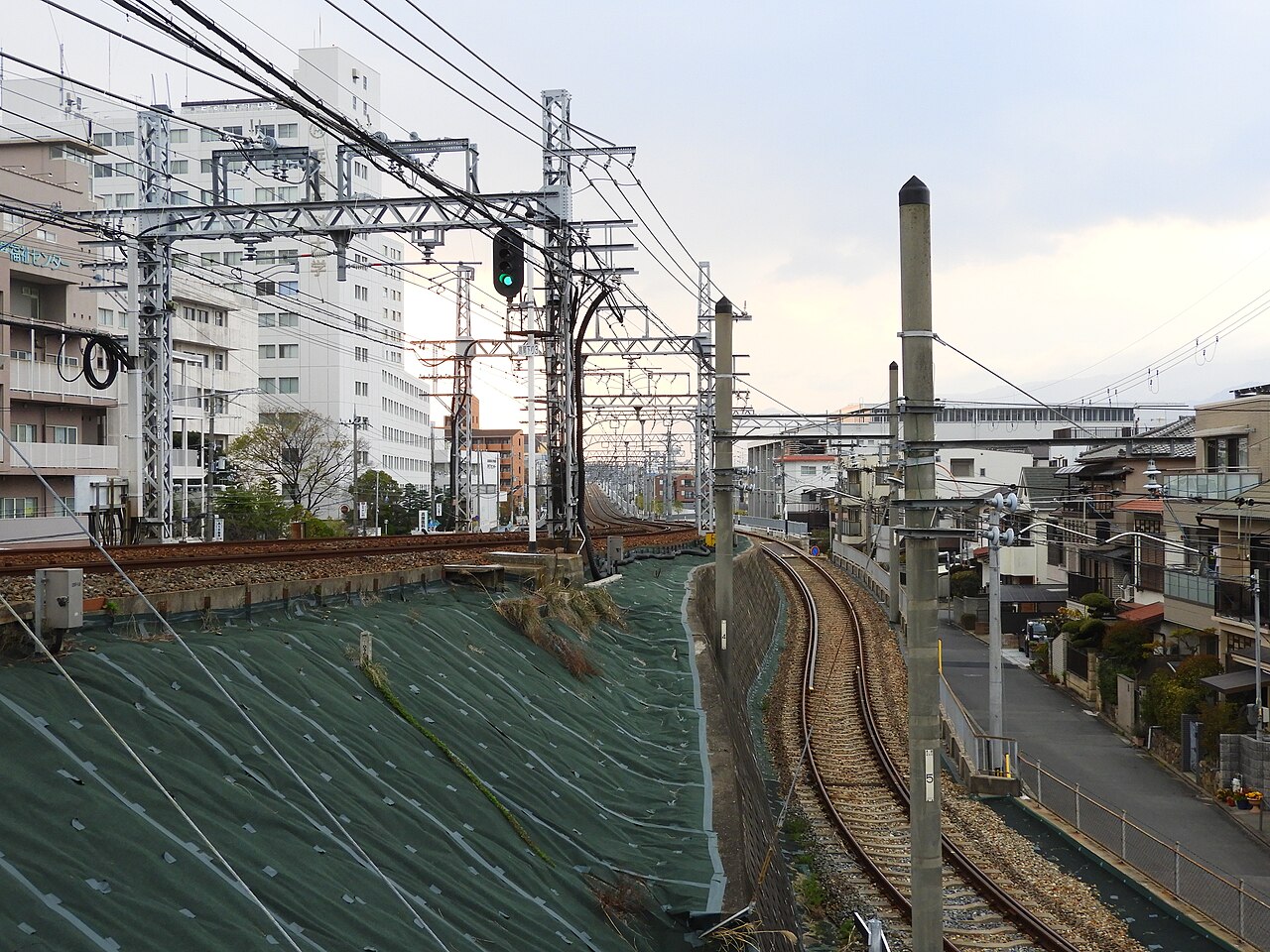
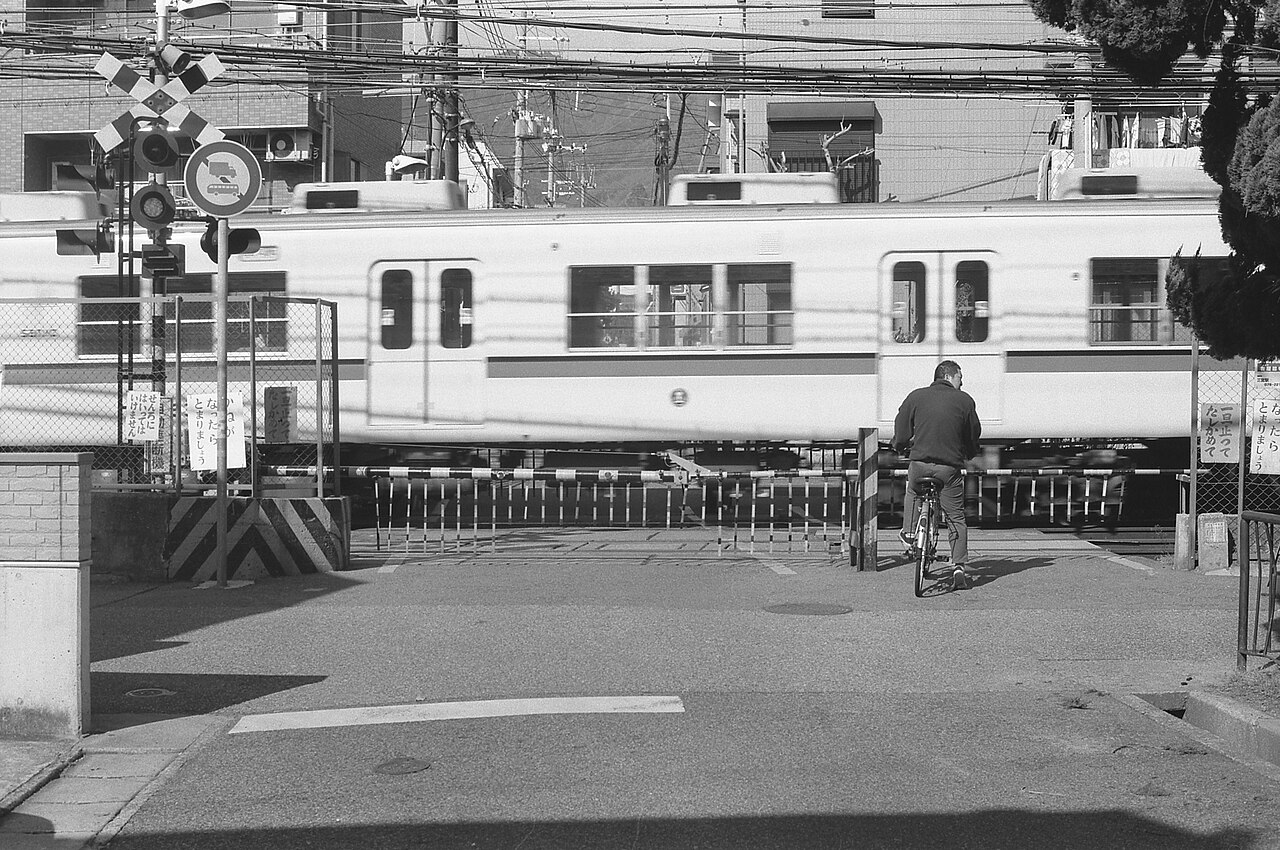
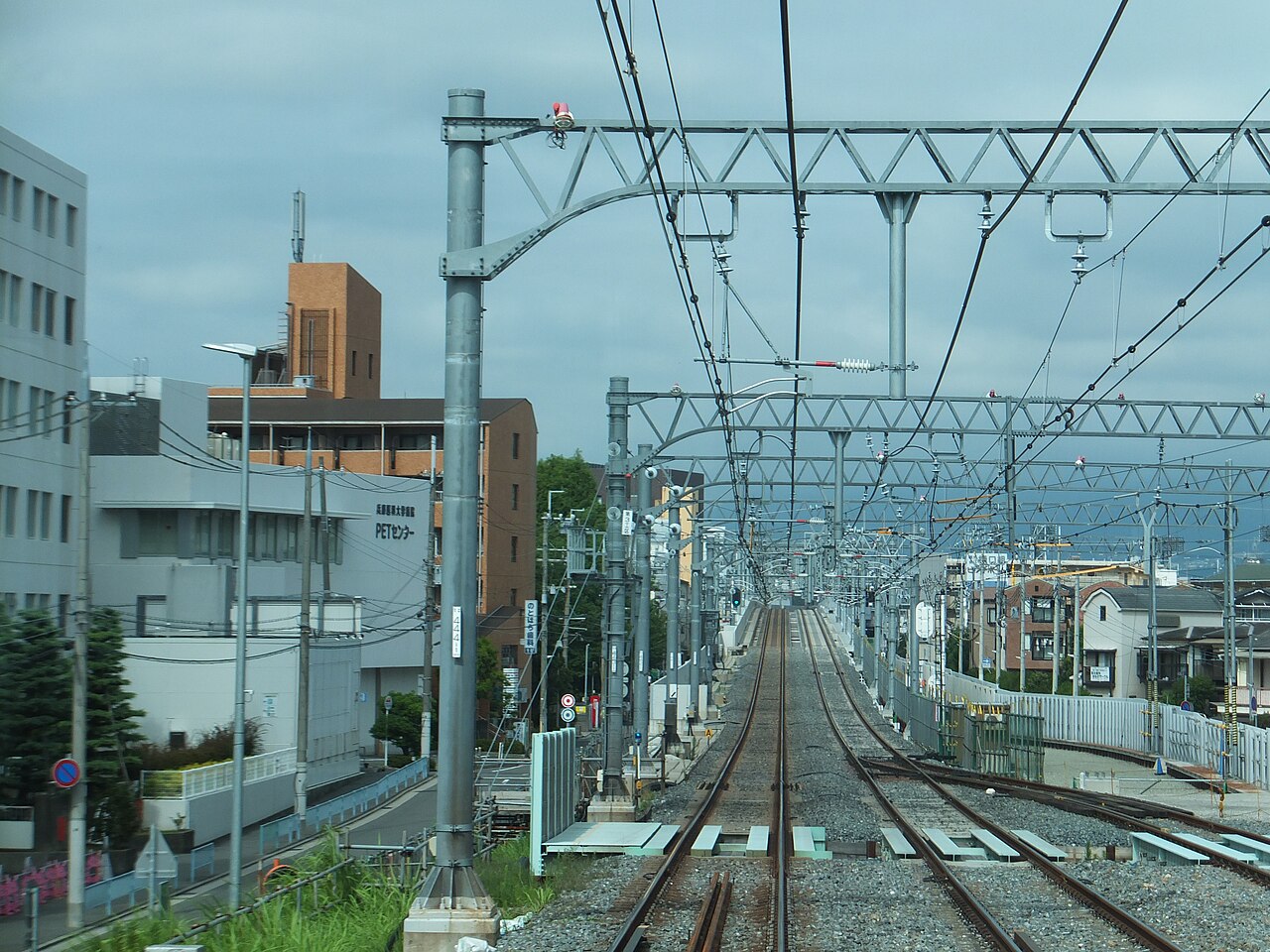
Development was driven by competition. After the rival Hanshin Kyuko (Hankyu) opened its Kobe Main Line in 1920 marketing "the fast and uncrowded Hankyu train," Hanshin upgraded its interurban into a more railway-like operation: two-car running was permitted line-wide from 1921, street-running track was progressively replaced by dedicated right-of-way, and by 1933 the company was running a 35-minute limited express over a fully segregated alignment. The overhead voltage was raised from 600 V to 1,500 V on 12 November 1967. On 27 December 1977 the entire line was reclassified from a tramway under the Tramways Act to a railway under the Local Railways Act. Decades of continuous grade-separation work followed; the Japanese Wikipedia states that, as of 2019, roughly 95 percent of the line's length was elevated or underground, leaving only nine level crossings on the whole route.
The line suffered catastrophic damage in the Great Hanshin earthquake (the 1995 Southern Hyōgo Prefecture Earthquake) on 17 January 1995, which closed the entire line; service was restored in phases, with the last segment between Mikage and Nishi-Nada reopening and the whole line returning to operation on 26 June 1995.
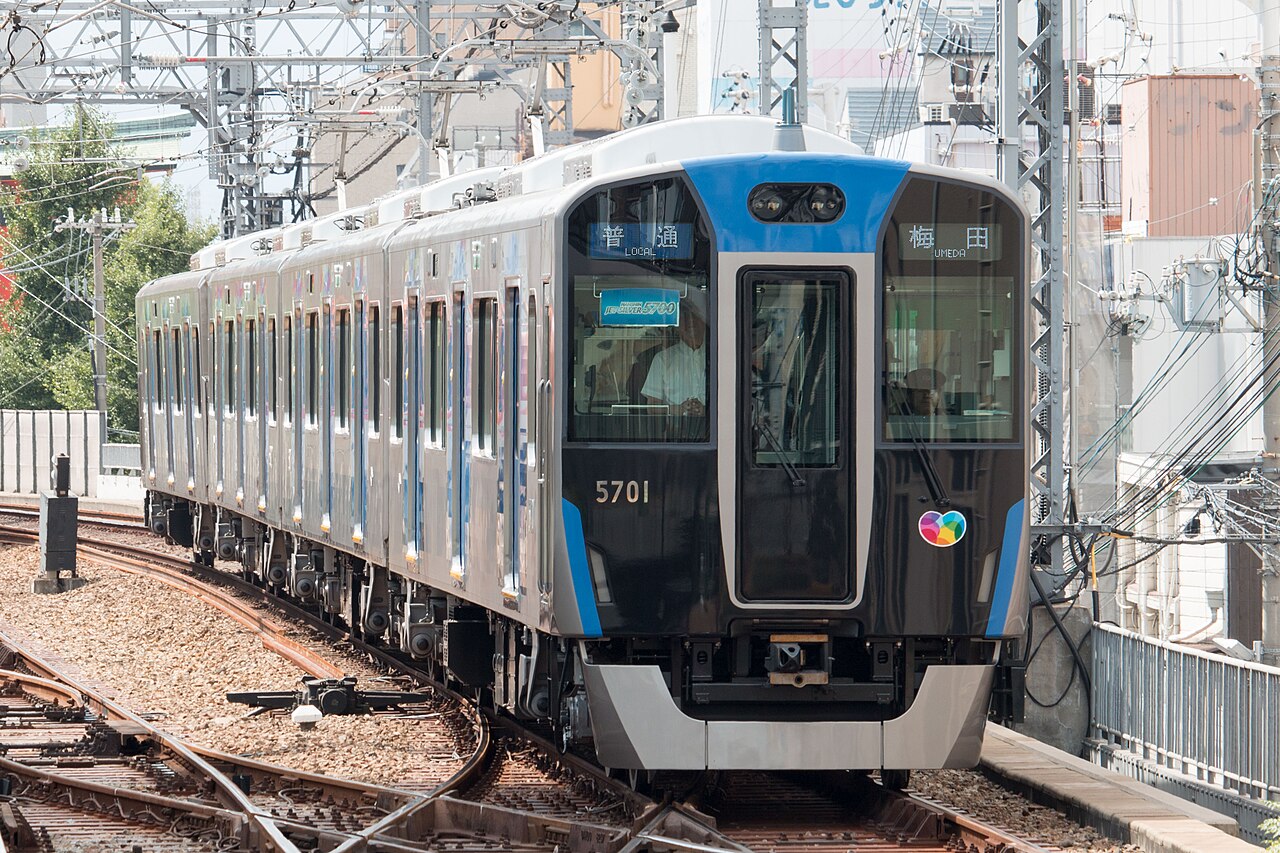
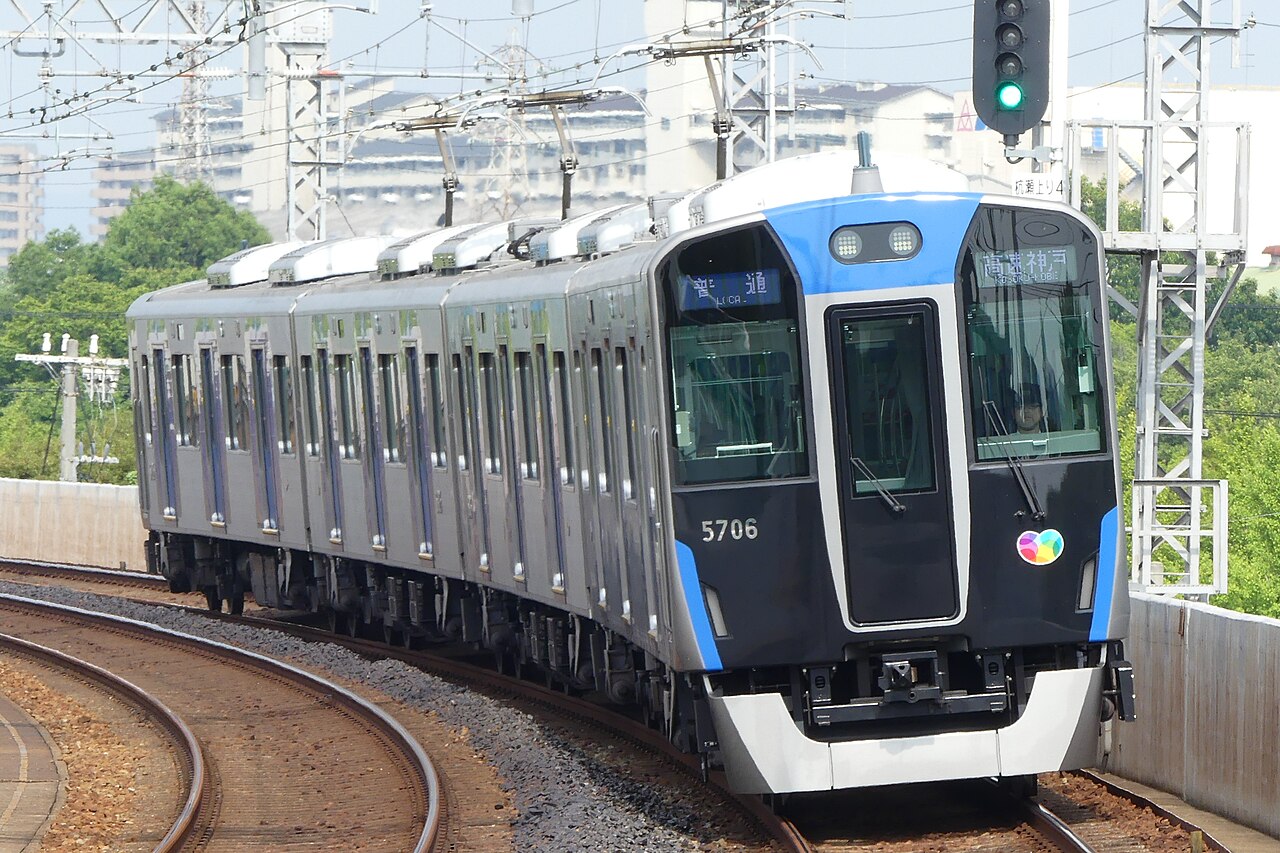
Today the Hanshin Main Line is operated by Hanshin Electric Railway, which since 2006 has been part of Hankyu Hanshin Holdings after its long-time competitor Hankyu and Hanshin combined under a single holding company. The line is the southernmost (most seaward) of the three Osaka–Kobe railways and the one with the most stations; the Japanese Wikipedia notes that its average signal-block interval of 240 m is the shortest among Japan's major private railways. Beyond Motomachi, trains continue over the Hanshin Kobe Kosoku Line — where Hanshin operates as a Category-2 railway operator — and onto the Sanyo Electric Railway Main Line, with Direct Limited Express services running through from Osaka-Umeda to Sanyo-Himeji; via the Hanshin Namba Line from Amagasaki, Rapid Express trains run through to Kintetsu Nara. The English Wikipedia notes the line operates eight types of trains, one of the most among Japanese railways. Sannomiya was renamed Kobe-Sannomiya and station numbering introduced across the line on 1 April 2014, and Umeda was renamed Osaka-Umeda on 1 October 2019.
Timeline
- 190512 April: Hanshin Electric Railway begins operation between Deiribashi (Osaka) and Kobe (initially signed Kobe-Kumoidori), opening as a tramway and becoming the first interurban in Japan.
- 190621 December: extended Umeda–Deiribashi; the Osaka-side terminus becomes Umeda.
- 19121 November: Kobe-side terminus extended from Kumoidori (Sannomiya) to Kanōchō (Takimichi); the former Kobe (Kumoidori) station is renamed Sannomiya.
- 1920Rival Hanshin Kyuko (Hankyu) opens its Kobe Main Line; Hanshin responds by upgrading its interurban toward a faster, more railway-like operation.
- 1921Two-car operation permitted line-wide; first express service introduced (7 November).
- 193317 June: new underground line on the Kobe side (Iwaya–Kobe) opens; a 35-minute limited express over the fully segregated alignment begins the same day.
- 193618 March: Kobe-side terminus extended to Motomachi (full opening per the JA infobox); Kobe Station renamed Sannomiya.
- 193921 March: Umeda Station placed underground (extended 0.3 km).
- 196712 November: overhead voltage raised from 600 V to 1,500 V.
- 1968Through-operation with Kobe Rapid Railway and the Sanyo Electric Railway Main Line begins (revenue through-running from 7 April).
- 197727 December: the entire line is reclassified from a tramway (Tramways Act) to a railway (Local Railways Act).
- 199517 January: the Great Hanshin earthquake (Southern Hyōgo Prefecture Earthquake) closes the entire line; phased restoration follows, with the whole line reopening on 26 June.
- 199815 February: Direct Limited Express service introduced between Umeda and Sanyo-Himeji.
- 2001Through limited express services to Sanyo-Himeji expanded; all Direct Limited Express / Limited Express trains stop at Amagasaki and Uozaki.
- 2006Hanshin and its long-time rival Hankyu combine under a single holding company, Hankyu Hanshin Holdings.
- 200920 March: the Hanshin Namba Line (Nishikujo–Osaka Namba) opens; through-operation with the Kintetsu Namba/Nara Lines begins, with Rapid Express trains to Kintetsu Nara.
- 20141 April: Sannomiya renamed Kobe-Sannomiya; station numbering introduced across all stations.
- 20191 October: Umeda renamed Osaka-Umeda and Naruo renamed Naruo–Mukogawa-joshidai-mae. As of 2019, ~95% of the line is elevated or underground (JA), leaving nine level crossings.
Sources
Facts last verified 3 June 2026.
Gallery 4 photos
Every photo for this page — tap any image to view it full-size. All from Wikimedia Commons (credit under each).