History
The line's origins lie in a project entirely distinct from the destination it now reaches. It opened on 20 January 1924 (Taishō 13) as the Dempō Line (伝法線), running between Daimotsu and Dempō; the Dempō–Chidoribashi section followed later the same year, and in December 1928 (Shōwa 3) the Amagasaki–Daimotsu section — running parallel to the Hanshin Main Line — was added. This early line was constructed as an advance portion of the planned "Second Hanshin Line" (第二阪神線), a high-speed bypass of the Main Line that was to branch off at the Main Line's Deiribashi Station (since closed) and run via Chidoribashi toward Daimotsu and Amagasaki. The Deiribashi–Chidoribashi section was never built — the Shōwa financial crisis intervened — and that portion of the scheme became an unbuilt line.
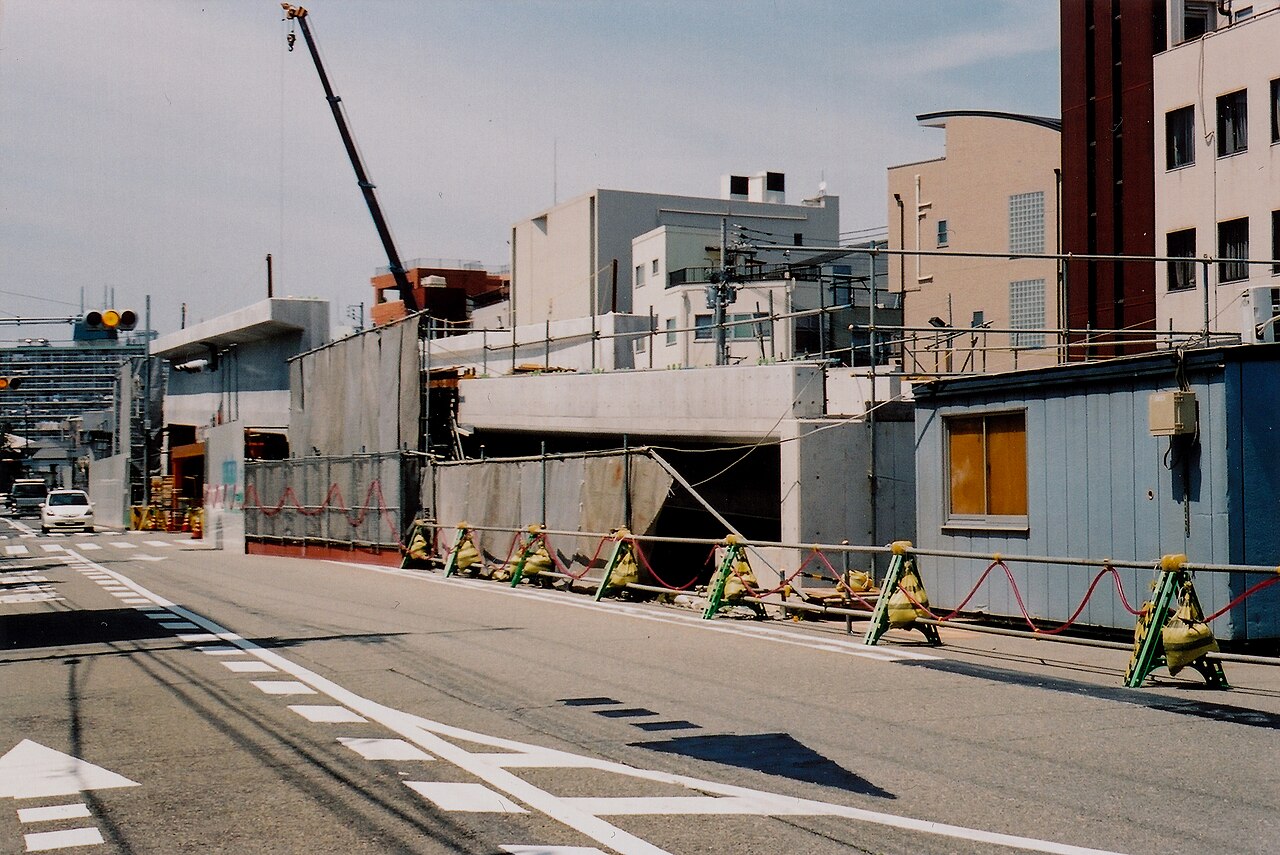
A later plan instead extended the line eastward from Chidoribashi toward Namba. As a first stage, construction of the Chidoribashi–Nishikujō extension began in June 1960; the line was renamed the Nishi-Osaka Line (西大阪線) on 20 May 1964, and the Chidoribashi–Nishikujō section opened the following day, 21 May 1964. A Nishi-Osaka limited express service began in September 1965 but was discontinued on 1 December 1974. The overhead line voltage was raised from 600 V to 1,500 V on 12 November 1967. The push toward Namba then stalled: the second-stage Nishikujō–Kujō work, begun in August 1967, was suspended in September 1967, and the extension remained dormant for decades amid local opposition and the effects of the oil shock.
The project revived in the Heisei era. Nishi-Osaka Hayasoku Railway (西大阪高速鉄道) was established on 10 July 2001 as the third-sector entity to own the extension's infrastructure and resume construction, and work on the Nishikujō–Namba extension restarted on 7 October 2003 with a ceremony at the Osaka Dome. On 20 March 2009 the Nishikujō–Ōsaka Namba section opened; on the same day the line was renamed the Hanshin Namba Line and Kintetsu's Namba terminus was renamed Ōsaka Namba Station. The new name deliberately retained the word "Hanshin" — to signal both the operating company and the line's reach toward the Hanshin region and Kobe, and to distinguish it from the connecting Kintetsu Namba Line. The line was awarded the 8th Japan Railway Award on 14 October 2009.
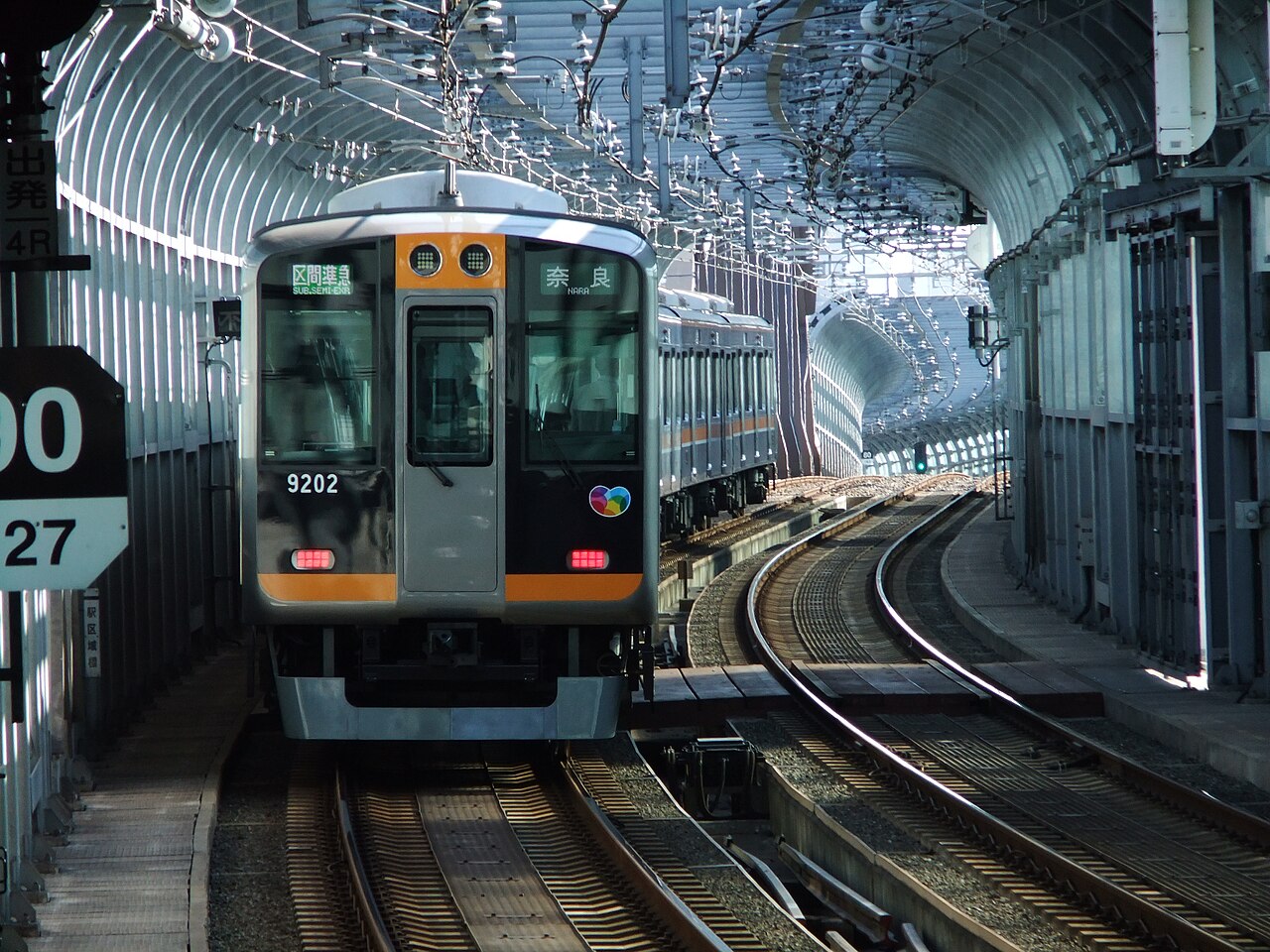
Ownership and operation are split along the route. Hanshin Electric Railway is the Class 1 railway operator for the Amagasaki–Nishikujō section (6.3 km); for the Nishikujō–Ōsaka Namba section (3.8 km) Hanshin operates as Class 2 operator while Nishi-Osaka Hayasoku Railway holds the infrastructure as Class 3 operator. The maximum operating speed is 106 km/h and the longest train formation is ten cars.
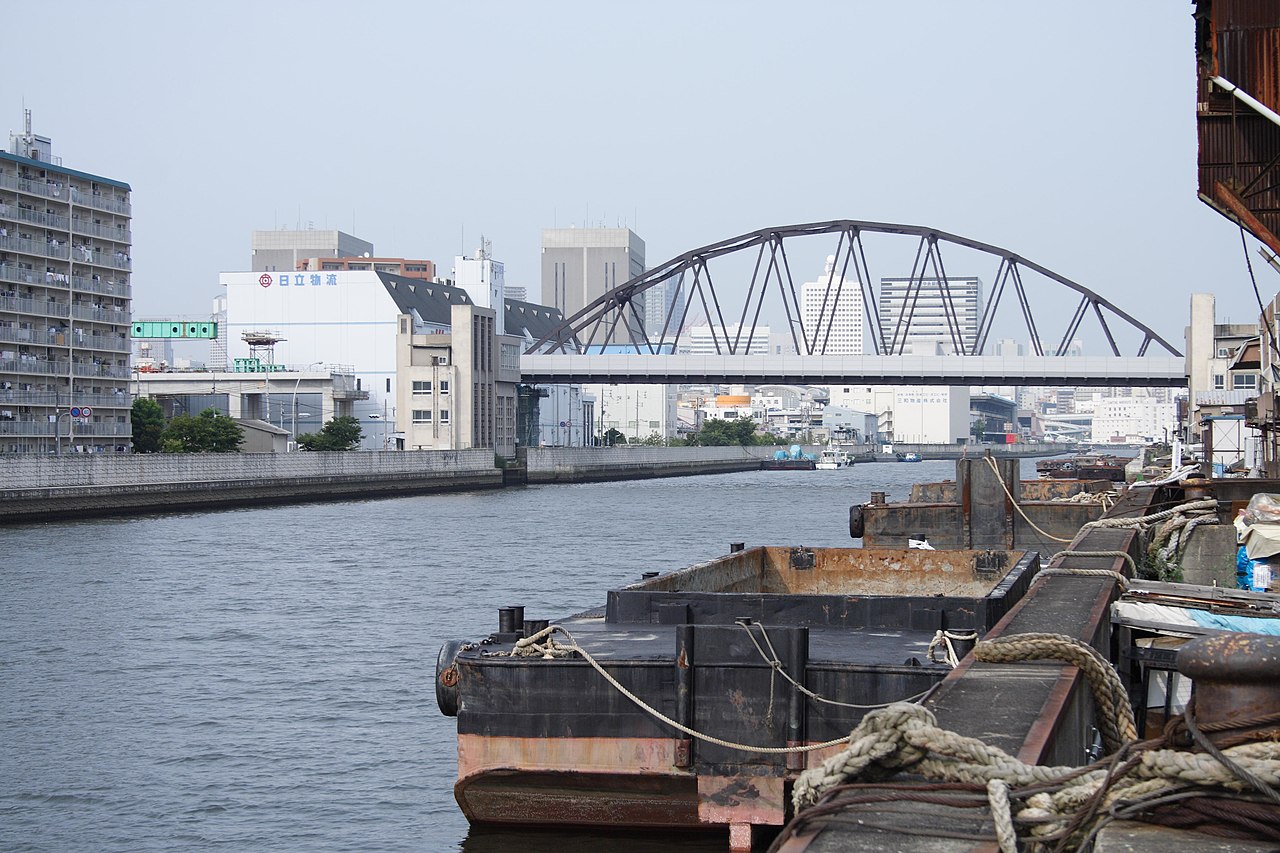
The extension's principal engineering work lay in the Nishikujō–Ōsaka Namba section, which rises on a viaduct to cross the Osaka Loop Line and the Ajigawa river before descending into a tunnel from around Kujō to Ōsaka Namba. The arch bridge over the Ajigawa, weighing 530 tonnes, was prefabricated off-site, assembled on a barge, and floated into place using the ebb tide of Osaka Bay, because the dense surrounding housing and factories ruled out conventional crane erection. The total project cost of the Nishi-Osaka extension was initially estimated at ¥107.1 billion (1,071億円); it was later recorded as ¥89.0 billion (890億円) on Nishi-Osaka Hayasoku Railway's official site.
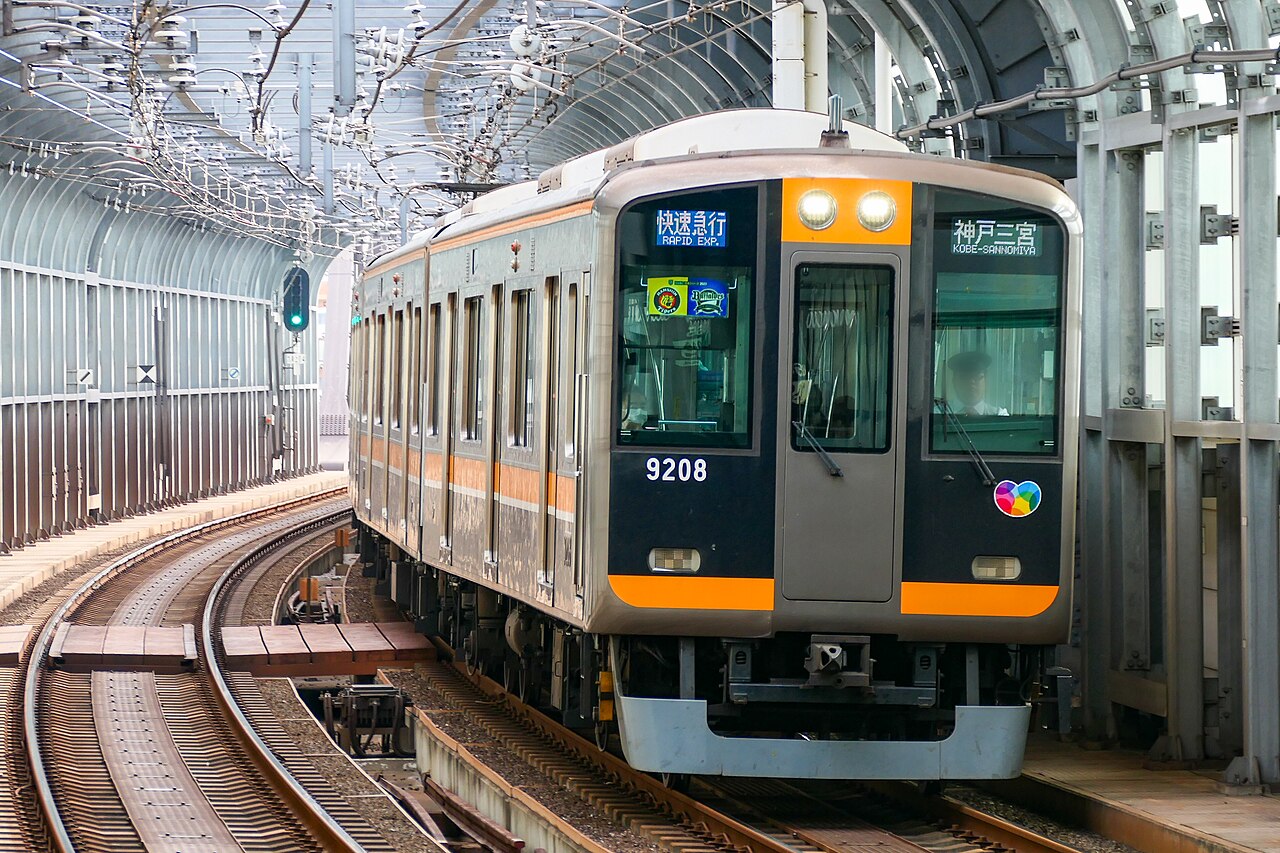
The opening of the Nishikujō–Ōsaka Namba section made the line a bypass from the Hanshin Main Line corridor toward western and southern Osaka, and — most significantly — enabled through-running with the Kintetsu Namba and Nara lines. This created a broad-area Kansai access route directly linking the Kobe and Sannomiya direction with Nara and the Kintetsu corridor via Osaka and Namba; the opening catchphrase was "Kobe, Namba, Nara — connected." Today there are through rapid-express services between Kobe Sannomiya on the Hanshin Main Line and Kintetsu Nara Station on the Kintetsu Nara Line via the Hanshin Namba Line, alongside through local and semi-express services between Amagasaki and Kintetsu Nara. The congestion rate on the line was 73% in fiscal year 2020, measured on the Chidoribashi→Nishikujō section between 7:32 and 8:32.
Timeline
- 192420 January: the Dempō Line opens (Daimotsu–Dempō); the Dempō–Chidoribashi section opens later the same year.
- 192828 December: the line is extended Amagasaki–Daimotsu, running parallel to the Hanshin Main Line.
- 1960June: first-stage construction of the Namba extension begins (Chidoribashi–Nishikujō).
- 196420 May: line renamed the Nishi-Osaka Line. 21 May: the Chidoribashi–Nishikujō first-stage extension opens.
- 1965September: Nishi-Osaka limited express service begins.
- 1967August: second-stage Nishikujō–Kujō work begins, suspended in September. 12 November: overhead voltage raised from 600 V to 1,500 V.
- 19741 December: Nishi-Osaka limited express service is discontinued.
- 200110 July: Nishi-Osaka Hayasoku Railway is established as the Class 3 operator to resume the Nishikujō–Namba extension.
- 20037 October: construction of the Nishikujō–Namba extension restarts with a ceremony at the Osaka Dome.
- 200920 March: the Nishikujō–Ōsaka Namba section opens; the line is renamed the Hanshin Namba Line and through-running with the Kintetsu Nara Line begins. 14 October: awarded the 8th Japan Railway Award.
Sources
Facts last verified 3 June 2026.
Gallery 3 photos
Every photo for this page — tap any image to view it full-size. All from Wikimedia Commons (credit under each).