History
The line grew out of two separately promoted railways. In 1892 the Nanhō Railway was founded to build a line from Ōita toward Inukai, and on the Kumamoto side the Tōhi Railway was formed to build from Kumamoto toward Ōzu; both companies struggled to continue, and construction was taken over and completed by the government as light railways (keiben-sen). Both opened in 1914. On the Ōita side, the Inukai Light Line (犬飼軽便線) opened its first segment, Ōita–Naka-Handa, on 1 April 1914; on the Kumamoto side, the Miyaji Light Line (宮地軽便線) opened Kumamoto–Higo Ōzu on 21 June 1914. The branch of the Miyaji Line from Tateno to Takamori also opened in this period.
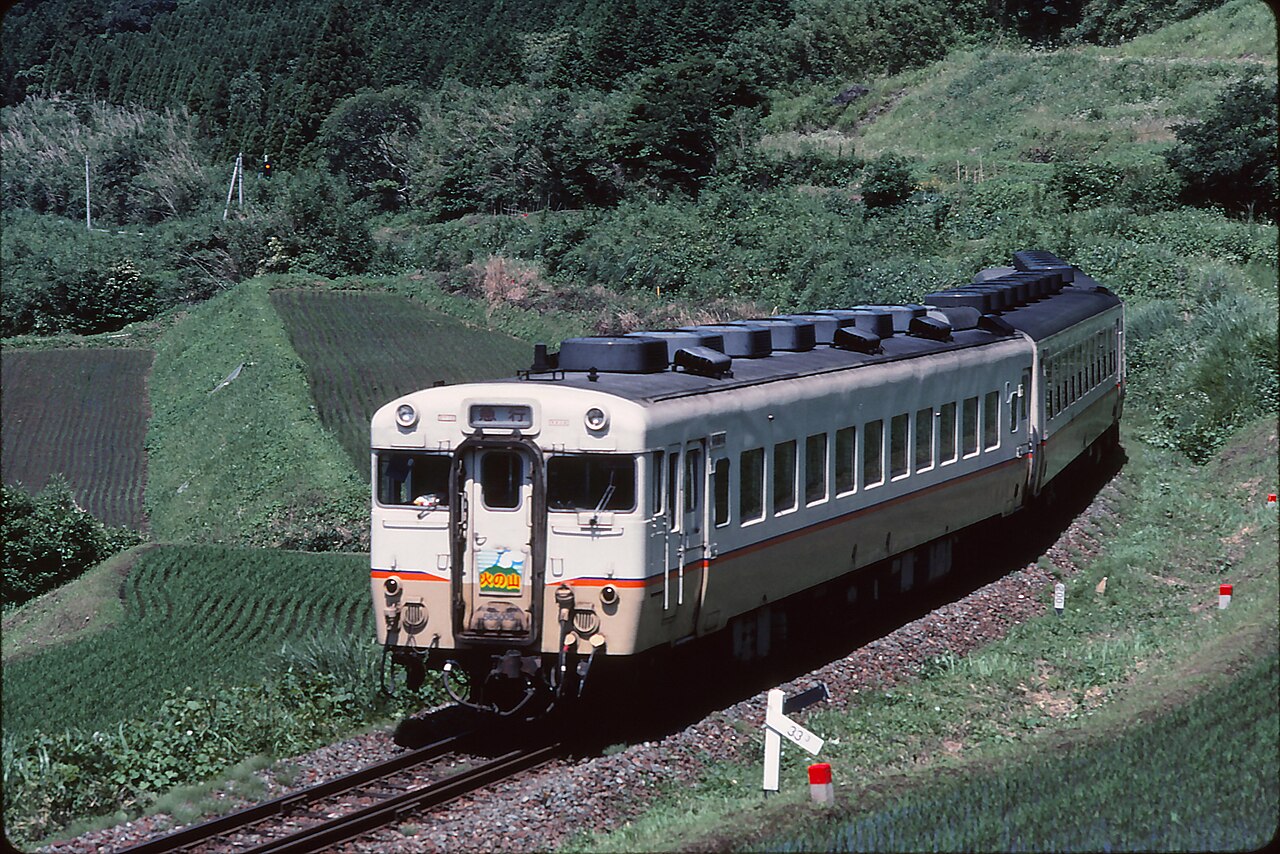
The two lines were extended over the following years and finally joined when the last section, Tamarai–Miyaji, opened in 1928, completing the through route between Ōita and Kumamoto. At that point the Miyaji Line and the Inukai Line were combined to form the Hōhi Main Line; the Tateno–Takamori branch became the separate Takamori Line (today operated by the Minami Aso Railway, which was spun off in 1986). Modernisation of operations followed in the postwar decades: steam locomotives were withdrawn from the line in 1973, and centralised traffic control (CTC) was commissioned over the entire line in 1983, with control offices established at Tateno and Ōita.
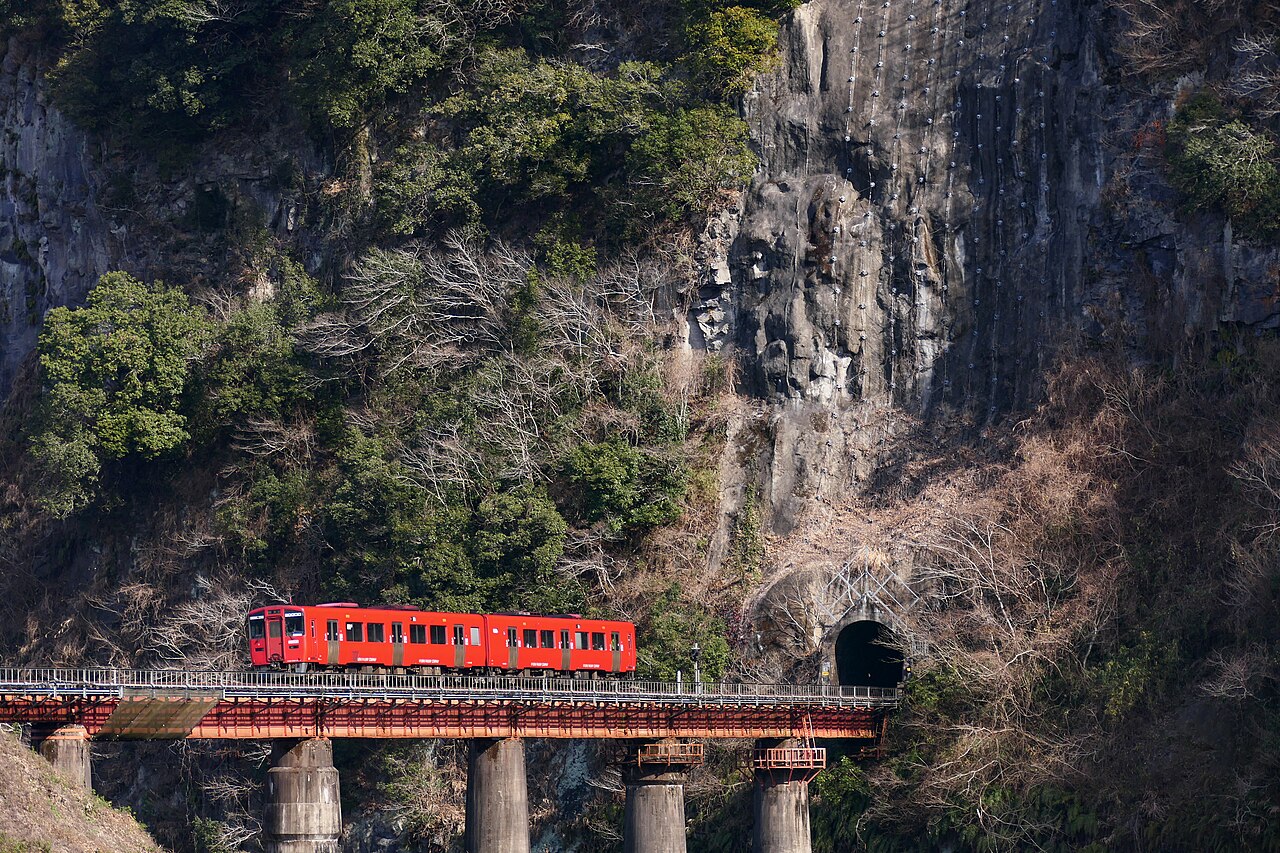
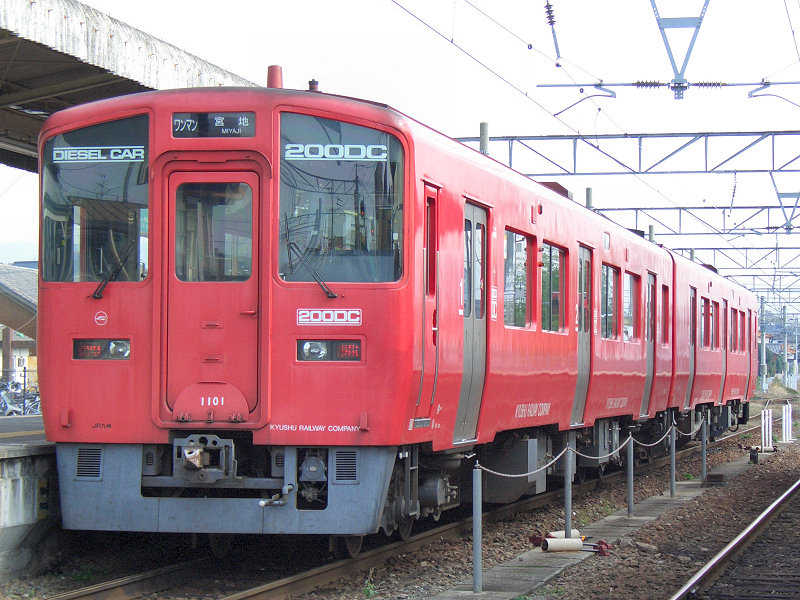
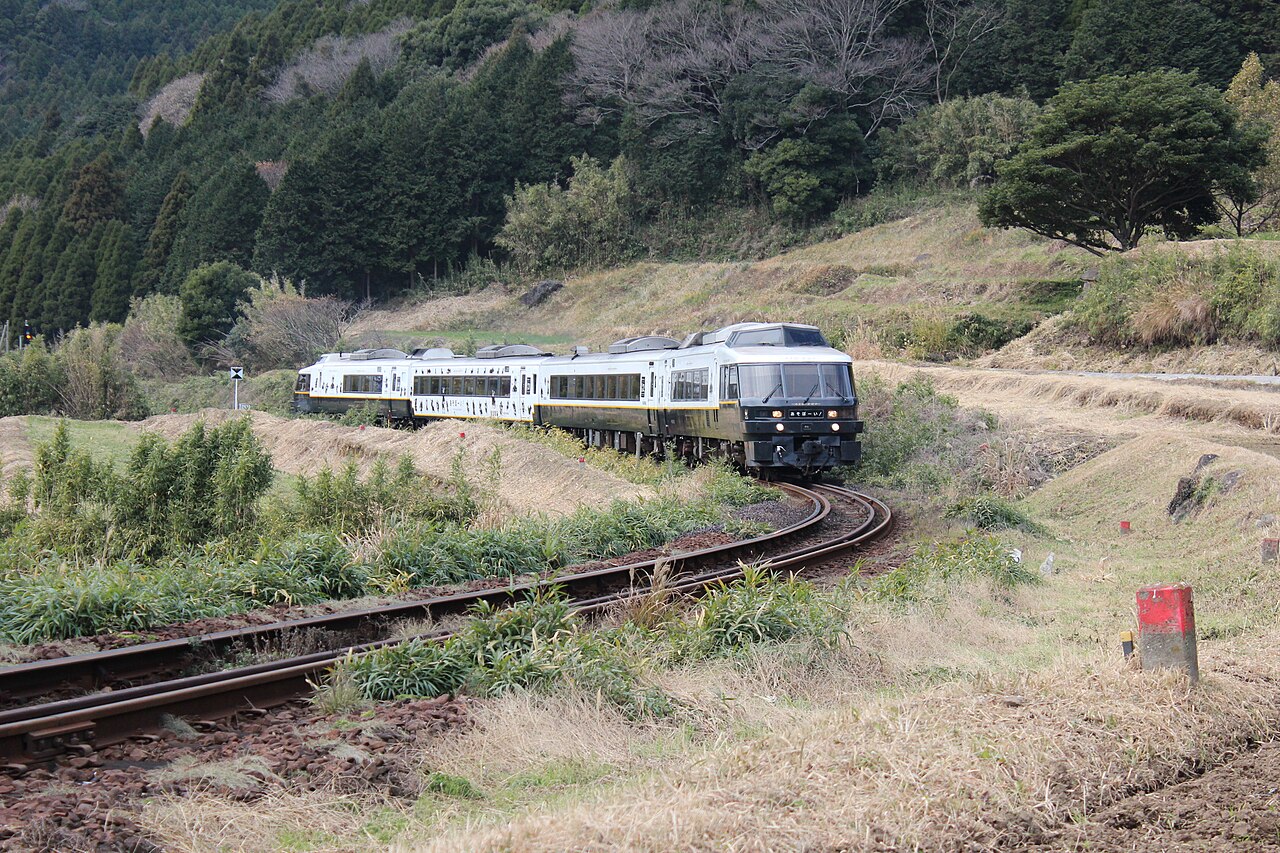
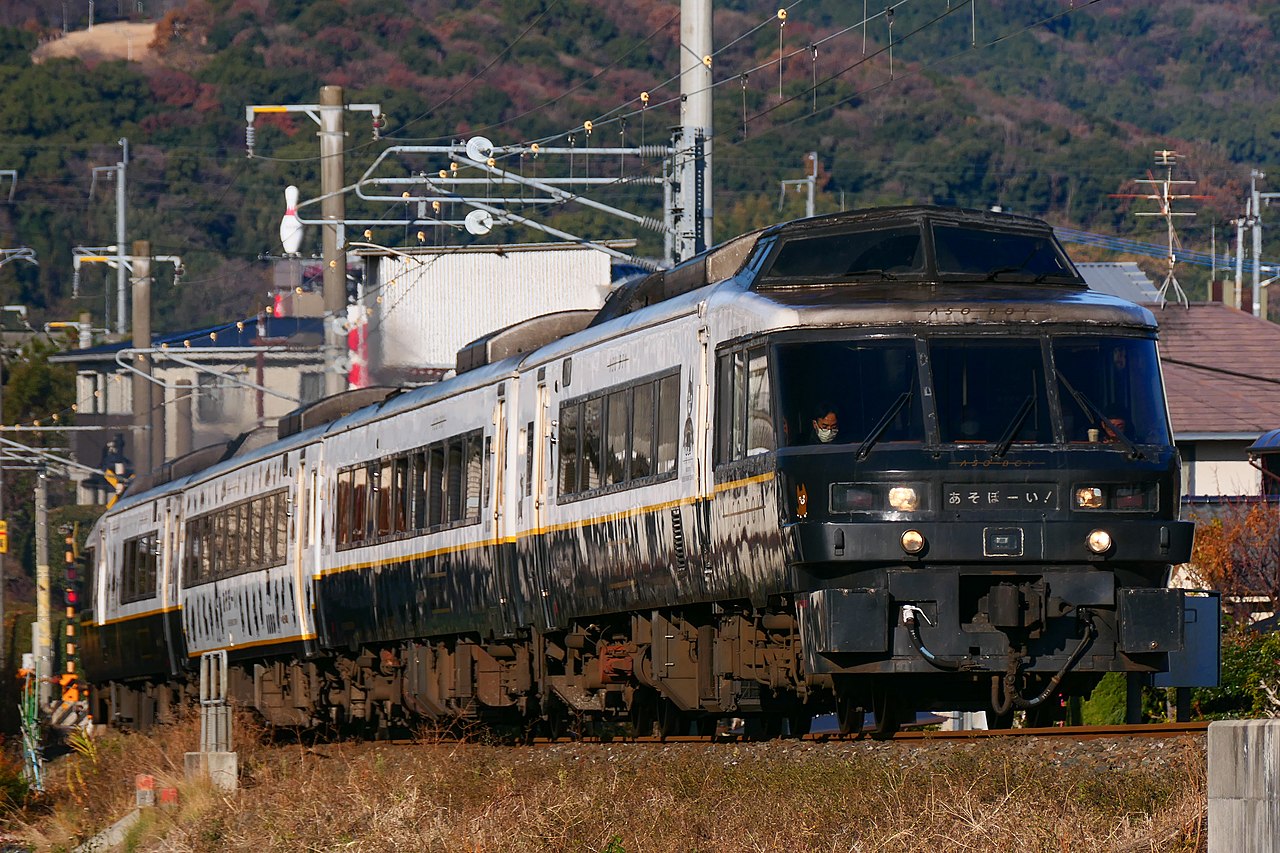
In 1999 the 22.5 km Kumamoto–Higo Ōzu section was electrified at 20 kV AC (60 Hz), timed to coincide with the 54th National Sports Festival (the Kumamoto Kokutai), and served thereafter by electric multiple units. East of Higo Ōzu the line remains non-electrified and is worked by diesel railcars; a short stretch at the Ōita end, between Ōita Station and Shimogōri Signal Box, is also electrified, but only because it doubles as the access line to JR Kyushu's Ōita vehicle depot — all revenue services over that stretch are diesel. Today JR Kyushu runs local trains in the Kumamoto commuter belt and tourist limited-express services across the line.
Because it runs through the high-rainfall mountain country around Aso and Taketa, the Hōhi Main Line has repeatedly been cut by torrential rain, landslides and earthquakes, often for months at a time and sometimes for more than a year. After the torrential rain of 2 July 1990 the Ogata–Miyaji section was severed and took one year and three months to restore. Typhoon No. 13 on 2 September 1993 cut the Miemachi–Bungo-Kiyokawa section, and full restoration took eight months. In September 2004 a landslide at the Momoeda tunnel between Miemachi and Bungo-Kiyokawa closed the line until December, with buses substituting in the interim. The northern-Kyushu torrential rain of 12 July 2012 caused embankment collapses, washed-out bridges and earth inflows; the worst-hit Bungo-Taketa–Miyaji section did not reopen until 4 August 2013, after 388 days, and was rebuilt with strengthened track-bed, tunnels and debris-flow defences. In April 2016 the Kumamoto earthquakes triggered a large landslide between Akamizu and Tateno that washed away the railway together with the parallel National Route 57 and derailed a train near Akamizu; the Aso–Higo Ōzu section was closed for a prolonged period. The entire line was reopened on 8 August 2020, four years after the earthquake, when a tourist limited-express was welcomed back at Tateno Station by local residents.
Timeline
- 1892The Nanhō Railway is founded to build a line from Ōita toward Inukai; construction is later taken over and completed by the government.
- 19141 April: the Inukai Light Line opens Ōita–Naka-Handa. 21 June: the Miyaji Light Line opens Kumamoto–Higo Ōzu. Both predecessor lines are built as government light railways.
- 1928The final Tamarai–Miyaji section opens, completing the Ōita–Kumamoto through route; the Miyaji and Inukai lines are combined to form the Hōhi Main Line. The Tateno–Takamori branch becomes the Takamori Line.
- 1973Steam locomotives are withdrawn from the line.
- 1983Centralised traffic control (CTC) is commissioned over the entire line, with control offices at Tateno and Ōita.
- 19861 April: the Takamori Line is separated to the Minami Aso Railway.
- 19902 July: torrential rain severs the Ogata–Miyaji section; restoration takes one year and three months.
- 19932 September: Typhoon No. 13 cuts the Miemachi–Bungo-Kiyokawa section; full restoration takes eight months.
- 1999The 22.5 km Kumamoto–Higo Ōzu section is electrified at 20 kV AC (60 Hz), timed to the 54th National Sports Festival (Kumamoto Kokutai).
- 2004September: a landslide at the Momoeda tunnel (Miemachi–Bungo-Kiyokawa) closes the line until December, with bus substitution.
- 201212 July: northern-Kyushu torrential rain causes embankment collapses and washed-out bridges; the line is severed.
- 20134 August: the worst-hit Bungo-Taketa–Miyaji section reopens after 388 days, rebuilt with strengthened track-bed and debris-flow defences.
- 2016April: the Kumamoto earthquakes trigger a major landslide between Akamizu and Tateno, washing away the line with National Route 57 and derailing a train; the Aso–Higo Ōzu section closes.
- 20208 August: the entire line reopens, four years after the earthquake.
Sources
Facts last verified 3 June 2026.
Gallery 5 photos
Every photo for this page — tap any image to view it full-size. All from Wikimedia Commons (credit under each).