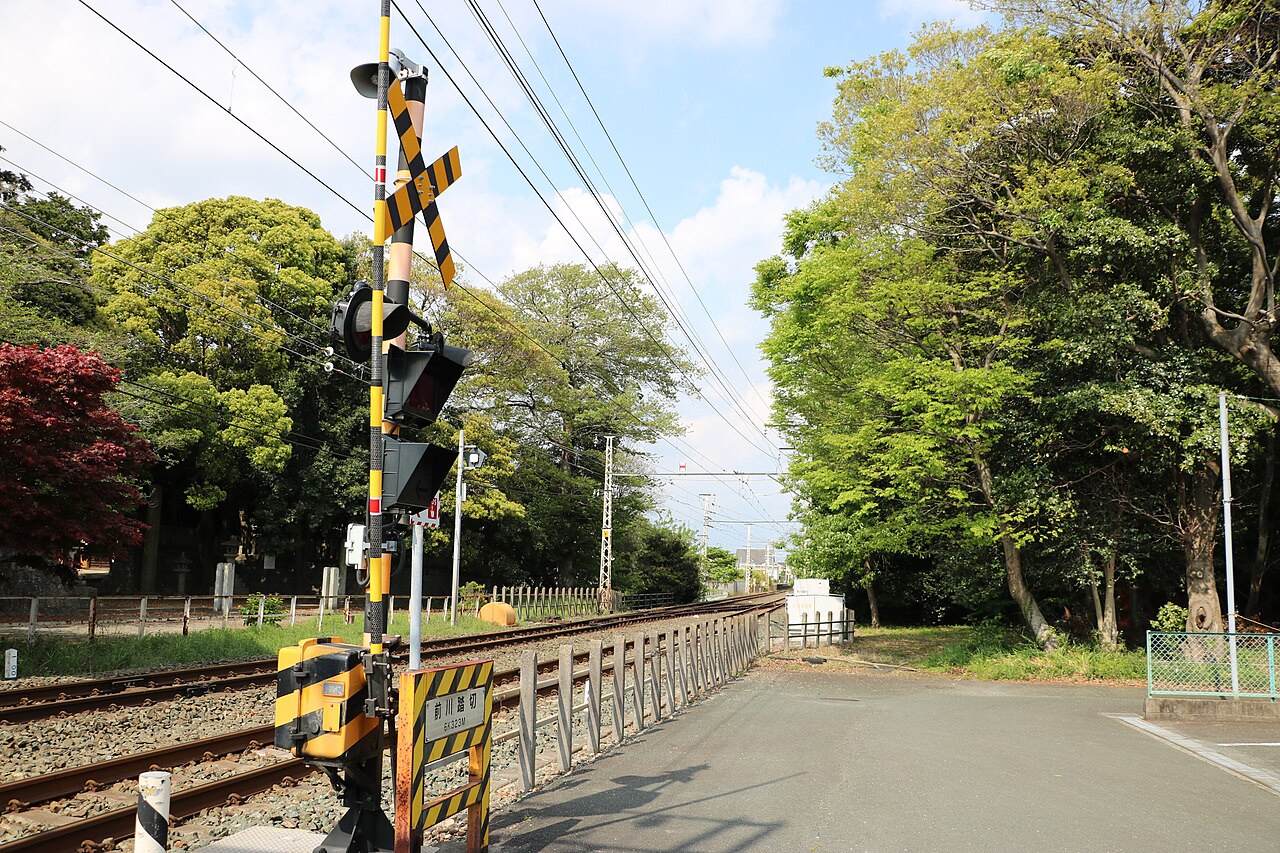
History
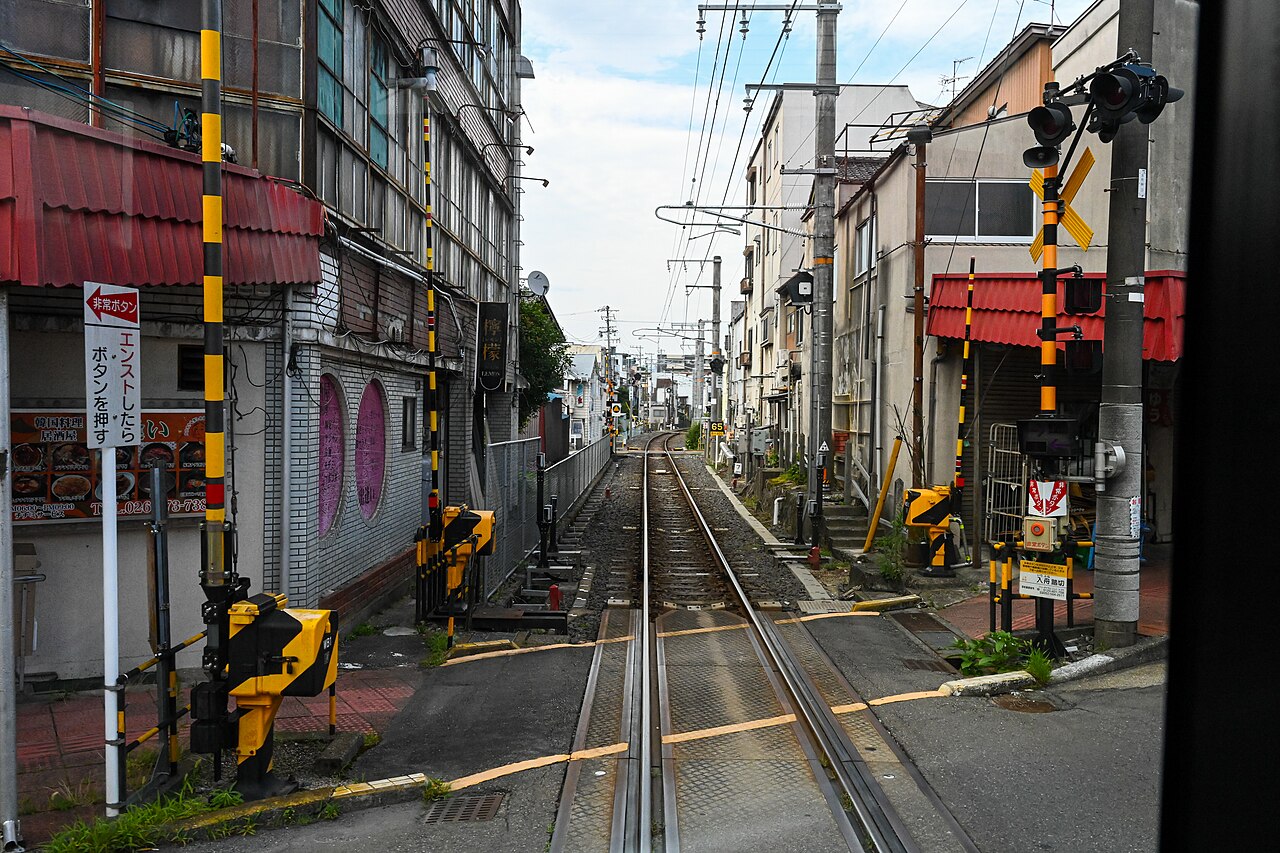
The Iida Line was not built as a single project but assembled from four independent private railways that were nationalised and merged during the Second World War. At the southern end, the Toyokawa Railway opened the first section, Toyohashi (then Yoshida) to Toyokawa, on 15 July 1897, reaching Omi by 1900; this section was fully electrified in 1925, and the following year the Aichi Electric Railway — a forerunner of the present-day Meitetsu — began running through onto it. The Horaiji Railway, an affiliate of the Toyokawa Railway, opened the Omi to Mikawa-Kawai section in 1923 and electrified it in 1925. At the northern end, the Ina Electric Railway (which began as the Ina Electric Tramway, partly running on street trackage) opened its first stretch from Tatsuno to Matsushima (now Ina-Matsushima) in 1909, progressively converting from tramway to railway and reaching Tenryukyo by 1927. The hardest segment to build was the central Mikawa-Kawai to Tenryukyo gorge, undertaken by the Sanshin Railway, a company founded in 1927 and backed by electric-power interests that wanted the railway to carry materials for hydroelectric development on the Tenryu River. Construction through the fragile geology of the Median Tectonic Line and the sheer cliffs of the Tenryu gorge proved exceptionally difficult and costly; the Japanese Wikipedia account describes the work as among the most harrowing in Japanese railway history. The Sanshin Railway opened Tenryukyo to Kadoshima on 30 October 1932 — provisionally electrified at 1,200 V using power supplied by the Ina Electric Railway — and finally closed the last gap, between Ozore and Kowada, in 1937, completing a continuous electric railway from Toyohashi to Tatsuno some forty years after the Toyokawa Railway's first section had opened. The infobox records the line's full opening on 20 August 1937.
On 1 August 1943 the four companies — the Ina Electric Railway, the Sanshin Railway, the Horaiji Railway and the Toyokawa Railway — were bought out and nationalised, and the combined route was named the Iida Line. The Horaiji and Toyokawa companies, having lost their railways, were absorbed by the Nagoya Railroad (Meitetsu) the following year. Because the constituent lines had placed a station at almost every settlement along the way, the new national line inherited the very short station spacing that still characterises it. In 1955 two significant changes occurred: the catenary voltage of the Tenryukyo-Tatsuno section was raised from 1,200 V to 1,500 V DC on 15 April, unifying the line's electrification; and on 11 November the construction of the Sakuma Dam, which would have submerged the existing track, forced the abandonment of the 13.3 km Sakuma-Tenryu-Yamamuro-Ozore alignment in favour of a new 17.3 km line routed via Misakubo, which opened the stations of Aizuki, Shironishi, Mukaichiba and Misakubo. Centralised traffic control (CTC) was introduced in stages, on the Iida-Tatsuno section in February 1983 and on the Toyohashi-Iida section in February 1984. Until 1983 the line was famous among railway enthusiasts as a 'treasure house' of pre-war electric multiple units.
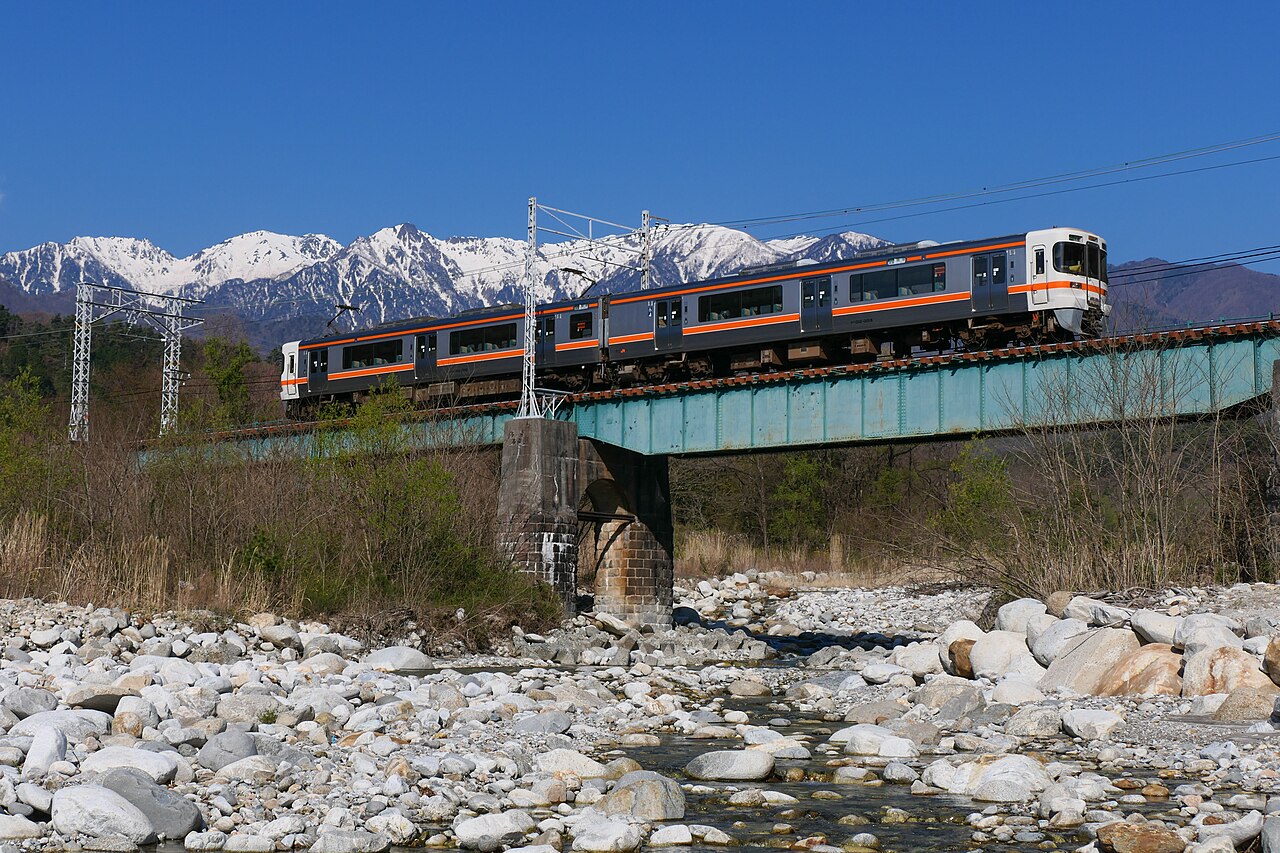
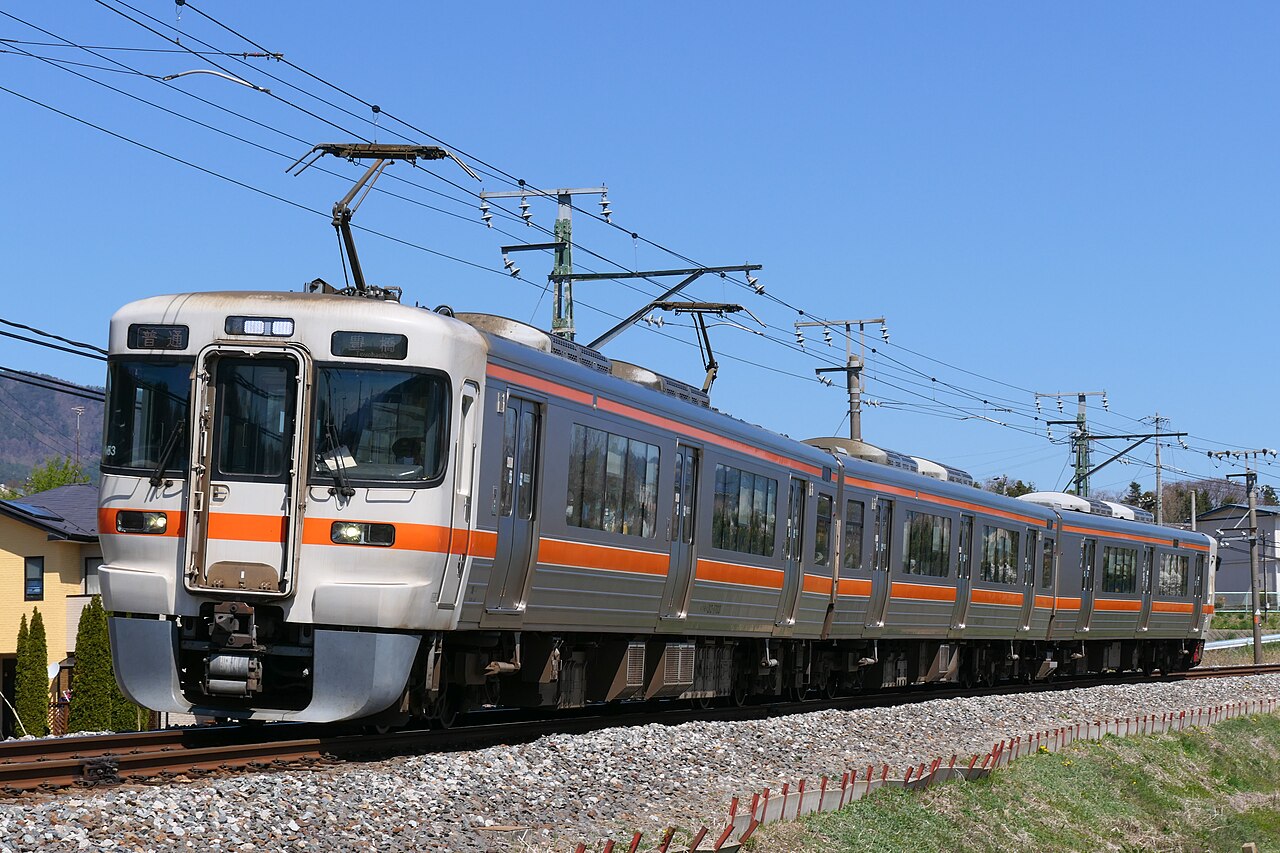
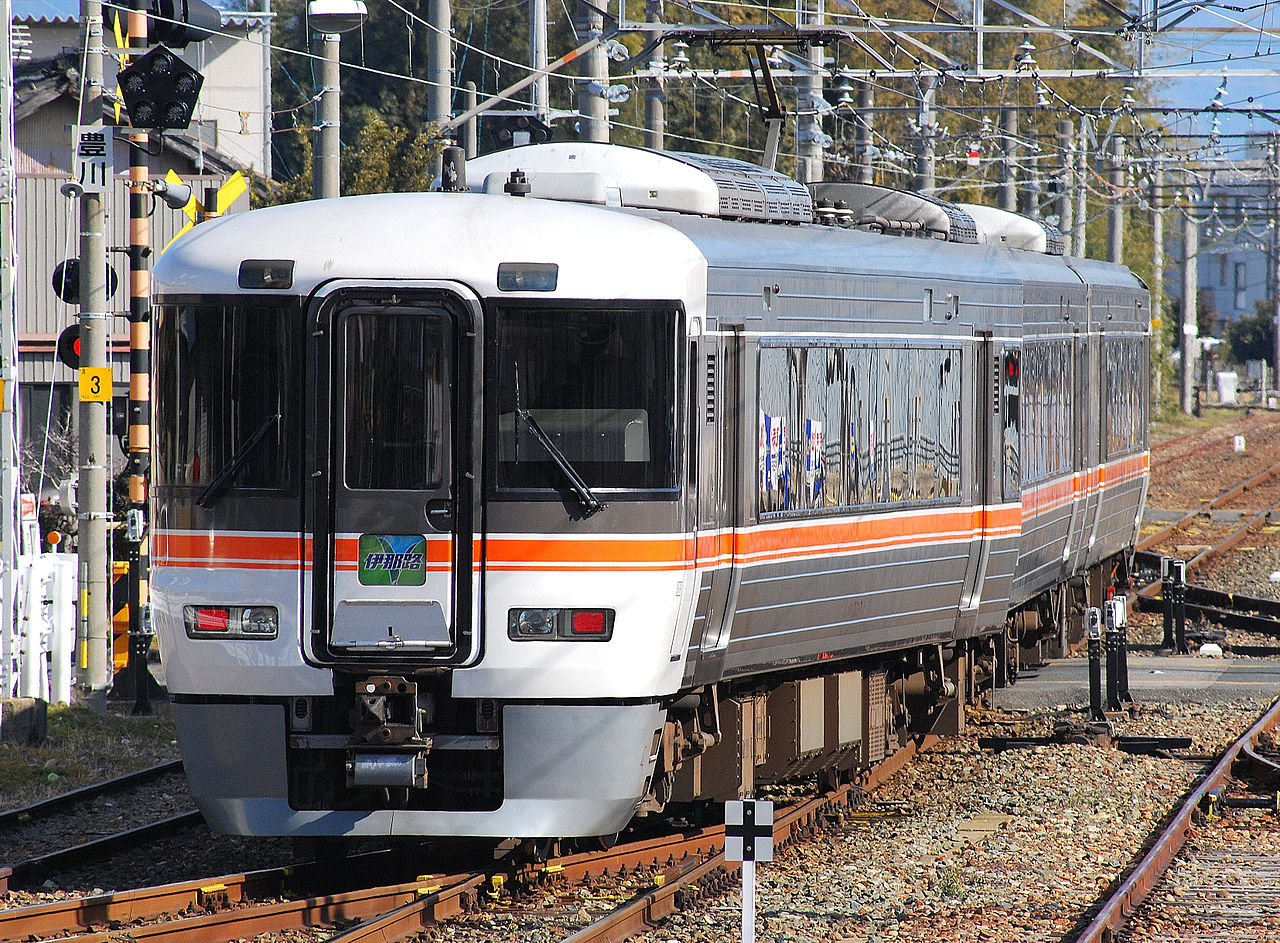
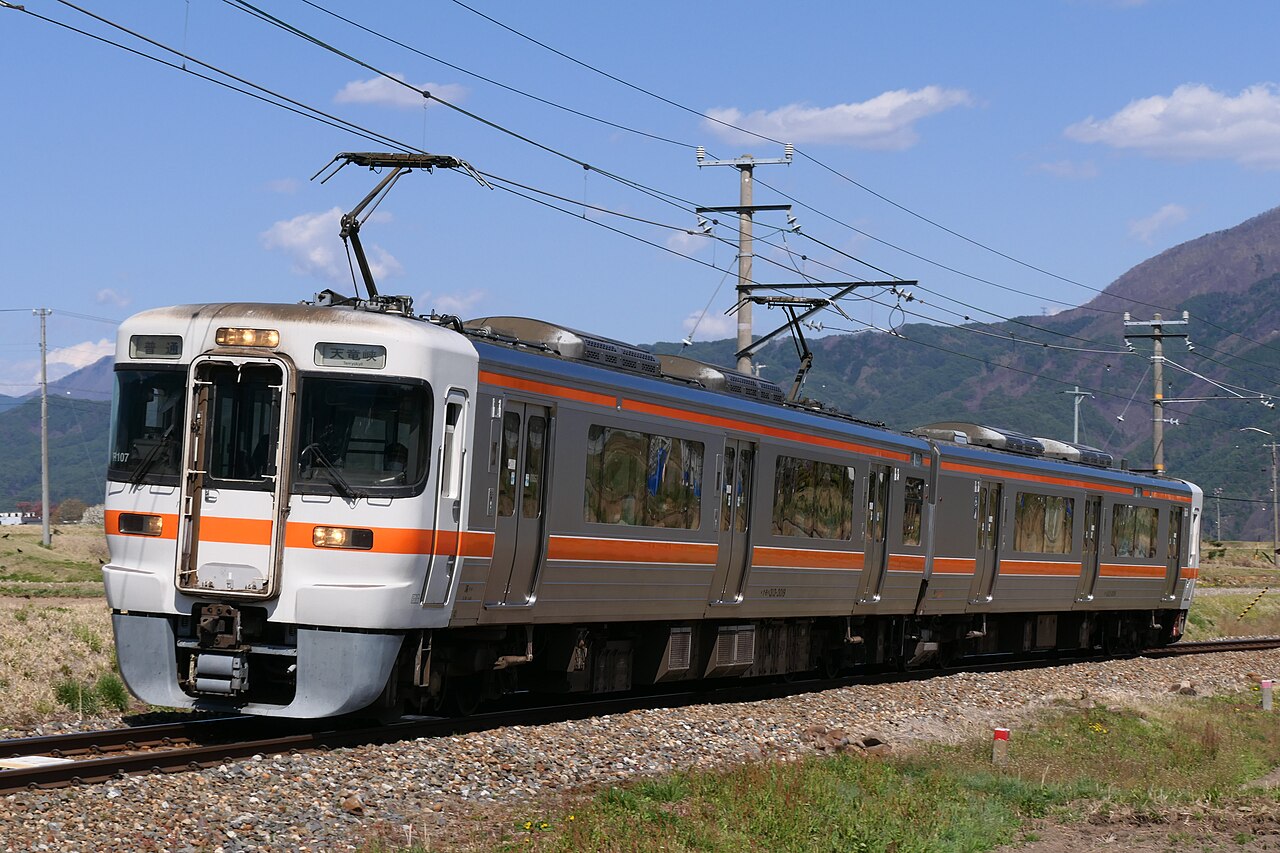
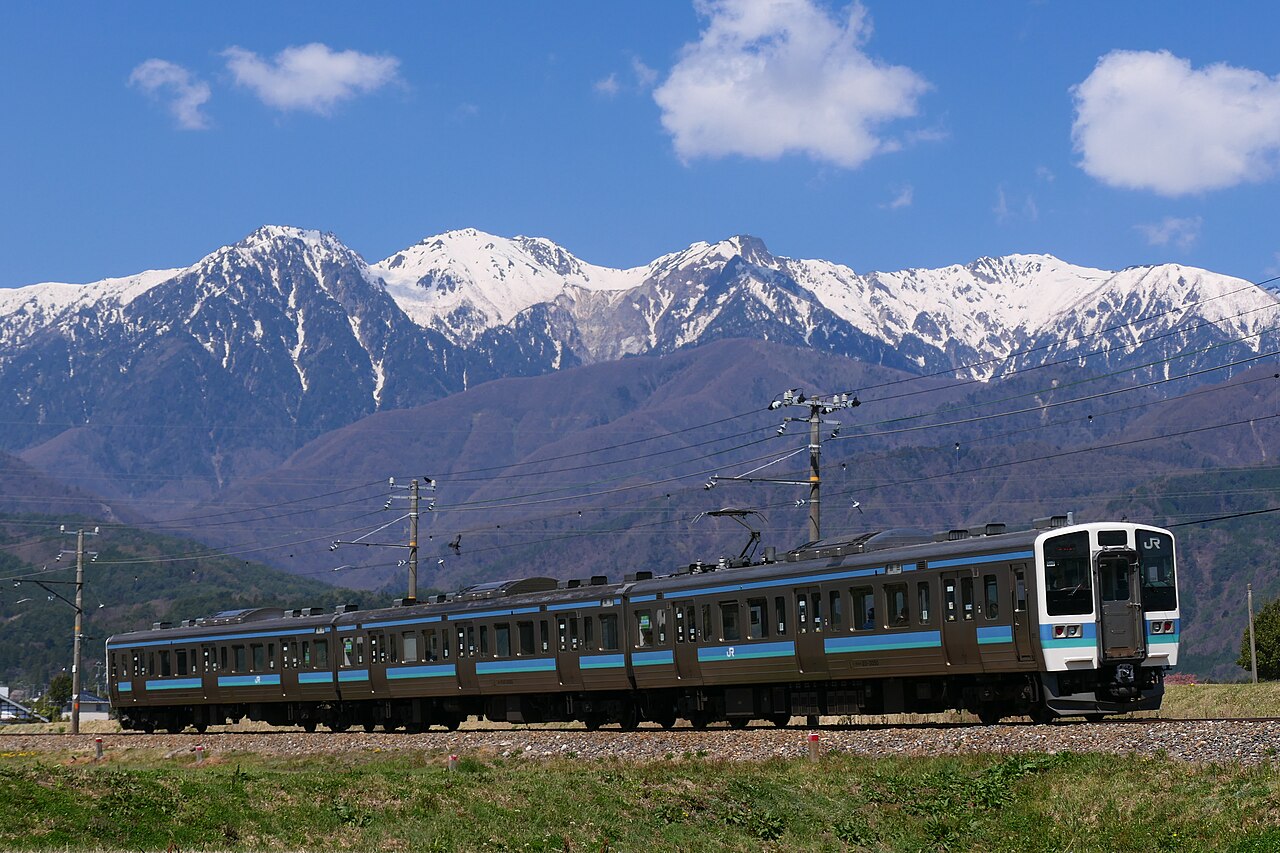
With the privatisation of Japanese National Railways on 1 April 1987, the Iida Line passed to JR Central; the Japan Freight Railway Company (JR Freight) became the second-category operator over the Toyohashi-Toyokawa and Motozenkoji-Tatsuno sections. The limited express Inaji, which had run as a seasonal service from 1992, became a regular limited express on 16 March 1996, and freight operation on the Motozenkoji-Tatsuno section ended on 30 September that year. In March 2018 JR Central introduced its sky-blue line colour and station numbering (line symbol 'CD') on the Toyohashi-Toyokawa section. Today the Iida Line is operated entirely by JR Central, although JR East owns the railway assets at the northern terminus, Tatsuno. As of January 2026 the principal services are the limited express Inaji, which makes two round trips a day between Toyohashi and Iida, and the rapid Misuzu, which makes one round trip a day between Iida, Tatsuno and Nagano, running through onto the Chuo Main Line (Tatsuno Branch), the Chuo Main Line, the Shinonoi Line and the Shin'etsu Main Line; most local trains continue beyond Tatsuno to and from Okaya. Local service is densest at the Toyohashi end — roughly every 15 minutes as far as Toyokawa — and thins to one train every one to three hours through the lightly populated mountain section between Hon-Nagashino and Tenryukyo. Rolling stock today includes JR Central 213-5000, 313-3000 and 373 series electric multiple units, plus JR East 211 series sets on inter-running services (introduced 14 March 2014); the long-serving 119 series, introduced in 1983, was withdrawn on 31 March 2012.
The Iida Line is best known today for two things. The first is its extraordinary collection of so-called 'hikyo-eki' or 'unexplored-region stations' — isolated, little-used halts such as Kowada and Tamoto whose surrounding communities have largely vanished through depopulation; the English-language Wikipedia article, citing the Asahi Shimbun, describes the line as the 'holy land for those who love touring hikyo-eki' (the term hikyo-eki itself was coined in 1999). JR Central runs a dedicated tourist excursion, the 'Iida Line Hikyo-Eki' train, for visitors to these stations. The second is sheer length of journey: for a distance of 187 km between Toyokawa and Tatsuno the line does not intersect any other railway, and according to the English-language Wikipedia article it hosts, as of 2025, the longest local (all-stations) train service in Japan — the 14:38 departure from Toyohashi reaches Okaya at 21:37 after 6 hours 59 minutes (419 minutes) and 96 station stops. The line's steep, slide-prone course through the Tenryu gorge has also produced serious accidents over its history, including a National Railways replacement bus that plunged into the Tenryu River during a service suspension on 15 July 1951 with roughly 28 deaths, a rockfall on 20 January 1955 between Tamoto and Kadoshima that derailed a two-car train into the Tenryu River (two killed and 27 injured), and a head-on collision of trains at Kitatono Station on 13 April 1989 that injured well over a hundred people.
Timeline
- 189715 July: the Toyokawa Railway opens the first section, Toyohashi (Yoshida) to Toyokawa; the line's oldest segment.
- 1900The Toyokawa Railway extends from Toyokawa to Omi.
- 1909The Ina Electric Tramway (later Ina Electric Railway) opens its first section, Tatsuno to Matsushima (now Ina-Matsushima), at the northern end.
- 1923The Horaiji Railway opens the Omi to Mikawa-Kawai section.
- 1925The Toyokawa Railway is fully electrified, and the Horaiji Railway's section is electrified the same year.
- 1926The Aichi Electric Railway (a Meitetsu forerunner) begins through-running onto the Toyokawa Railway.
- 1927The Ina Electric Railway reaches Tenryukyo, completing its line. The Sanshin Railway is founded to build the central Tenryu gorge section.
- 193230 October: the Sanshin Railway opens Tenryukyo to Kadoshima, provisionally electrified at 1,200 V with power from the Ina Electric Railway.
- 193720 August: the last gap (Ozore to Kowada) opens, completing a continuous electric railway from Toyohashi to Tatsuno about 40 years after the first section.
- 19431 August: the four private railways (Ina Electric, Sanshin, Horaiji, Toyokawa) are nationalised and merged into the Iida Line. Horaiji and Toyokawa are absorbed by Meitetsu the following year.
- 195515 April: the Tenryukyo-Tatsuno catenary is raised from 1,200 V to 1,500 V DC. 11 November: the Sakuma Dam forces rerouting of the Sakuma-Ozore section onto a new 17.3 km line via Misakubo.
- 1983The 119 series EMUs enter service (14 February); CTC is introduced on the Iida-Tatsuno section. Until this year the line was a noted 'treasure house' of pre-war EMUs.
- 1984February: CTC is introduced on the Toyohashi-Iida section.
- 19871 April: JNR is privatised; the Iida Line passes to JR Central, with JR Freight as second-category operator on two sections.
- 198913 April: a head-on collision of trains at Kitatono Station injures well over a hundred people.
- 199616 March: the Inaji becomes a regular limited express. 30 September: freight operation on the Motozenkoji-Tatsuno section ends.
- 201231 March: the 119 series EMUs are withdrawn after service from 1983.
- 201414 March: JR East 211 series EMUs are introduced on inter-running services north of Iida, replacing the 115 series.
- 2018March: JR Central introduces the sky-blue line colour and station numbering (line symbol 'CD') on the Toyohashi-Toyokawa section.
Sources
Facts last verified 3 June 2026.
Gallery 6 photos
Every photo for this page — tap any image to view it full-size. All from Wikimedia Commons (credit under each).