History
The line was opened in sections by the Mito Railway between 1889 and 1905. The first segment, from Mito to Oyama, began operation on 16 January 1889. On 1 March 1892 the Mito Railway became part of the Nippon Railway, and construction continued northward and southward over the following years: the Iwaki Line from Mito to Taira (present-day Iwaki) opened on 25 February 1897, and on 23 August 1898 the final link from Kunohama to Odaka was completed, connecting Tabata and Iwanuma. The present-day route was finished on 1 April 1905, when the Mikawashima-Nippori connection opened and Nippori and Mikawashima stations came into service. After the Nippon Railway was nationalised on 1 November 1906, the route passed into state hands; on 12 October 1909 the government railway line-naming reorganisation formally designated the Nippori-Iwanuma section, together with its freight branches, as the Jōban Line.
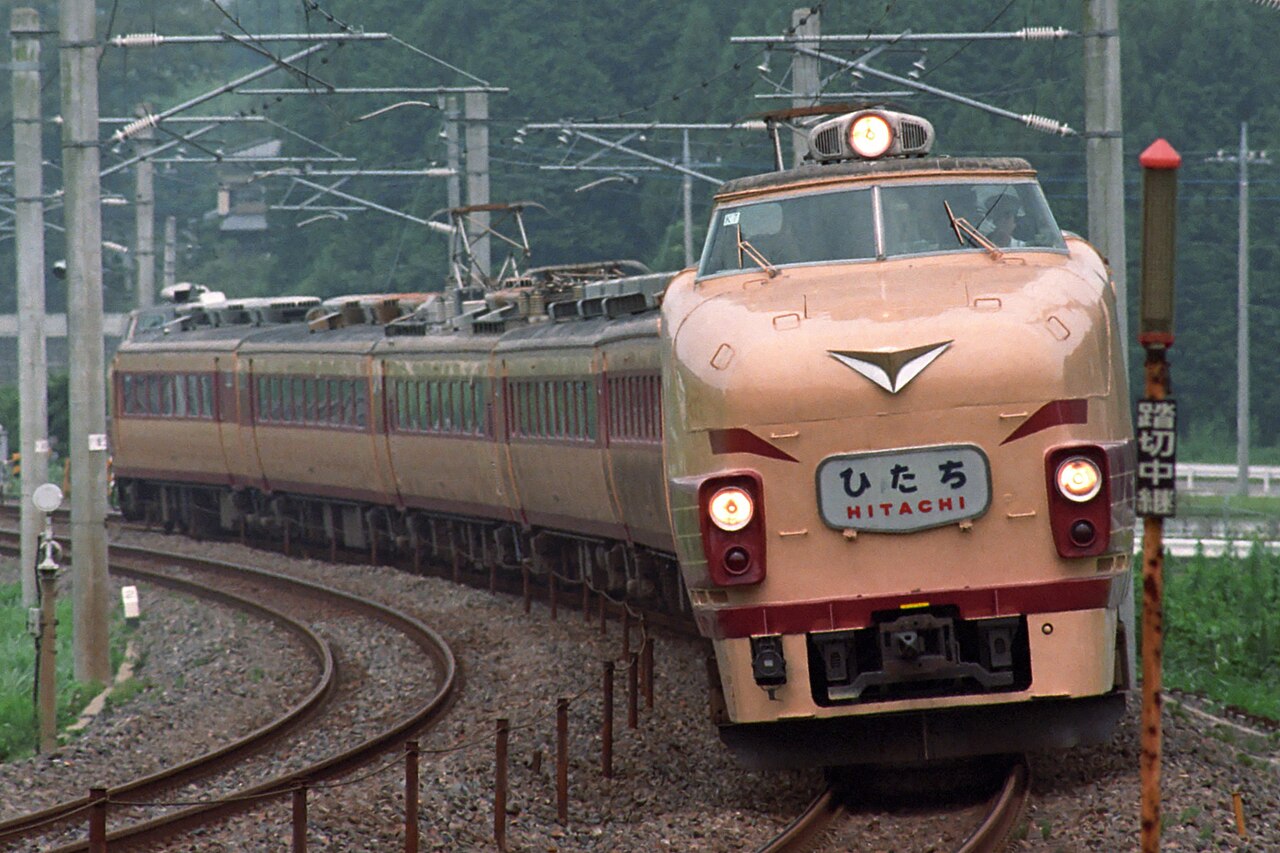
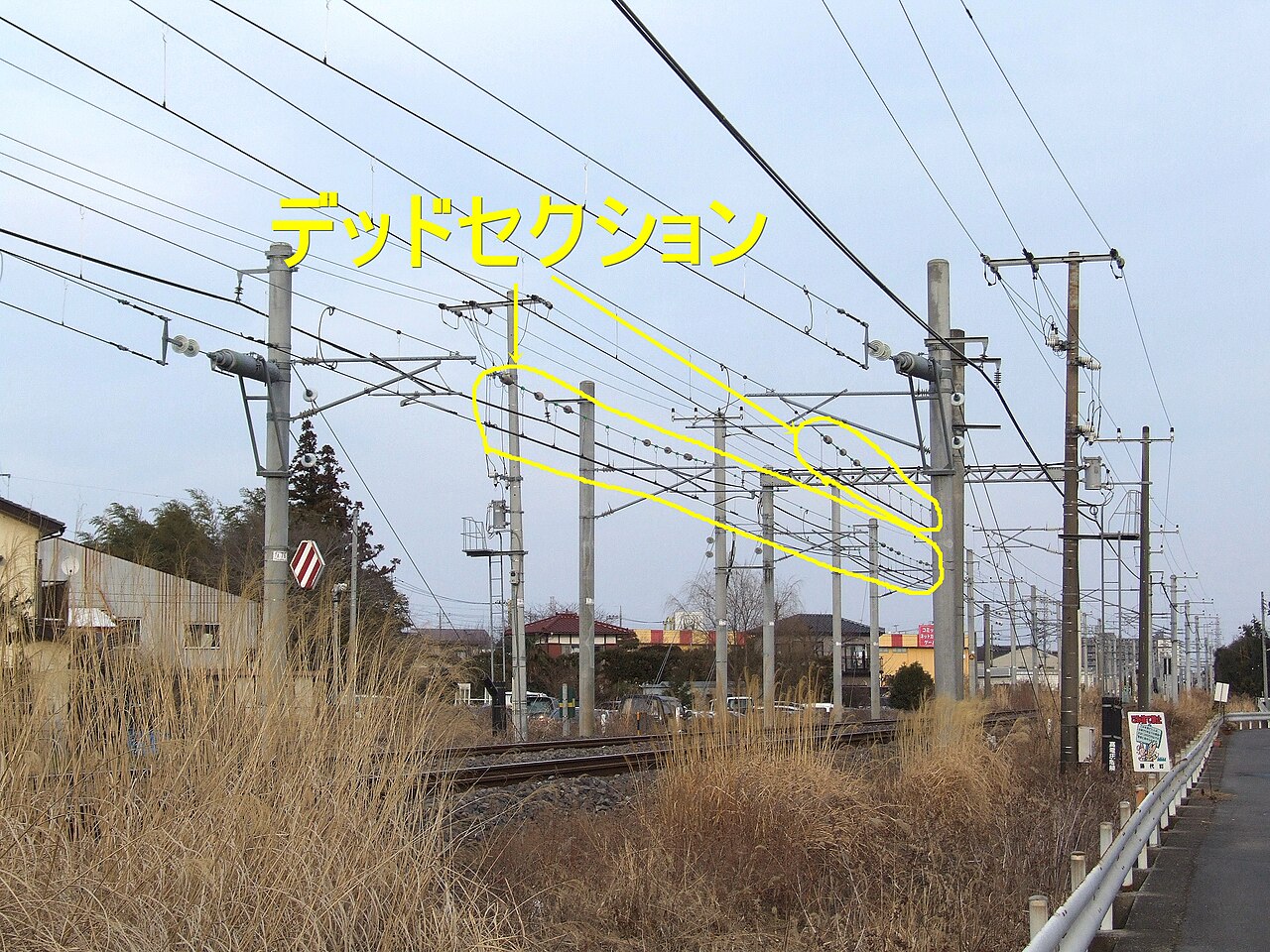
From 1910 a programme of double-tracking commenced, with the 219 km section between Nippori and Yotsukura completed in 1925; the Hirono-Kido and Ono-Futaba sections were double-tracked as late as 1976. Electrification followed in stages. The first section electrified was Nippori-Matsudo, at 1,500 V DC, in 1936 (the Nippori-Matsudo tracks were energised on 11 December 1936), extended to Toride in 1949. The Toride-Kusano section was electrified at 20 kV AC between 1961 and 1963, and with the electrification of the Kusano-Iwanuma tracks on 20 August 1967 the entire Jōban Line became electrified. The use of alternating current on the northern section was adopted to avoid interference between direct-current operation and a nearby installation, and a dead section was provided between Toride and Fujishiro to separate the two electrification systems. The Jōban Line carried a range of named services over its history, including the semi-express Tokiwa, which began operation on 1 June 1958, and the limited express Hatsukari (Ueno-Aomori), which began on 10 October 1958 and called at Ueno, Mito, Taira and Sendai while running over Jōban Line tracks.
The line was the site of two notable incidents. On 6 July 1949, in what became known as the Shimoyama incident, the then-president of Japanese National Railways, Shimoyama Sadanori, was found dead between Kita-Senju and Ayase stations under circumstances that were never resolved. On 3 May 1962 the Mikawashima rail crash occurred between Mikawashima and Minami-Senju, when an Iwaki-bound passenger train ran into the wreckage of an earlier collision between a Ueno-bound passenger train and a Ueno-bound freight train; according to the English-language account, 160 people died and 296 were injured.
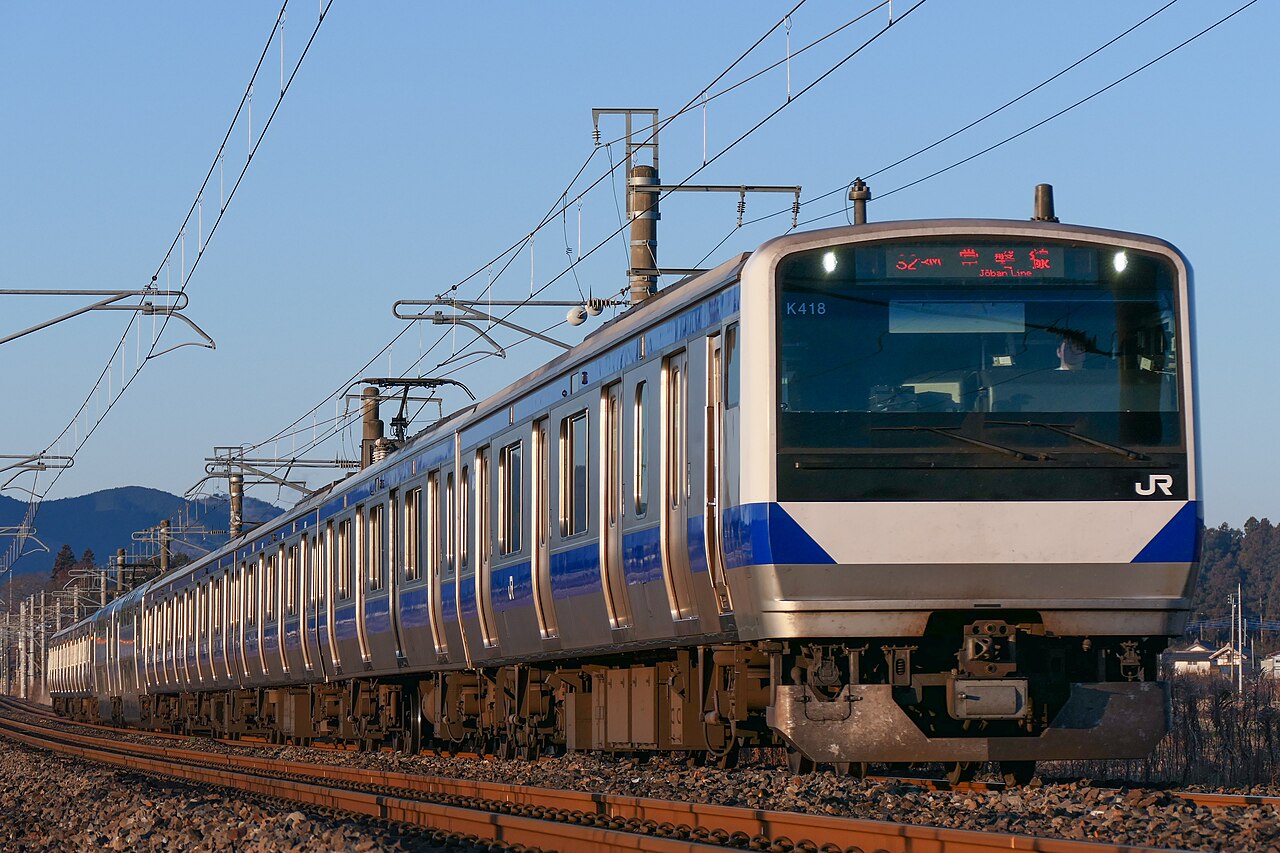
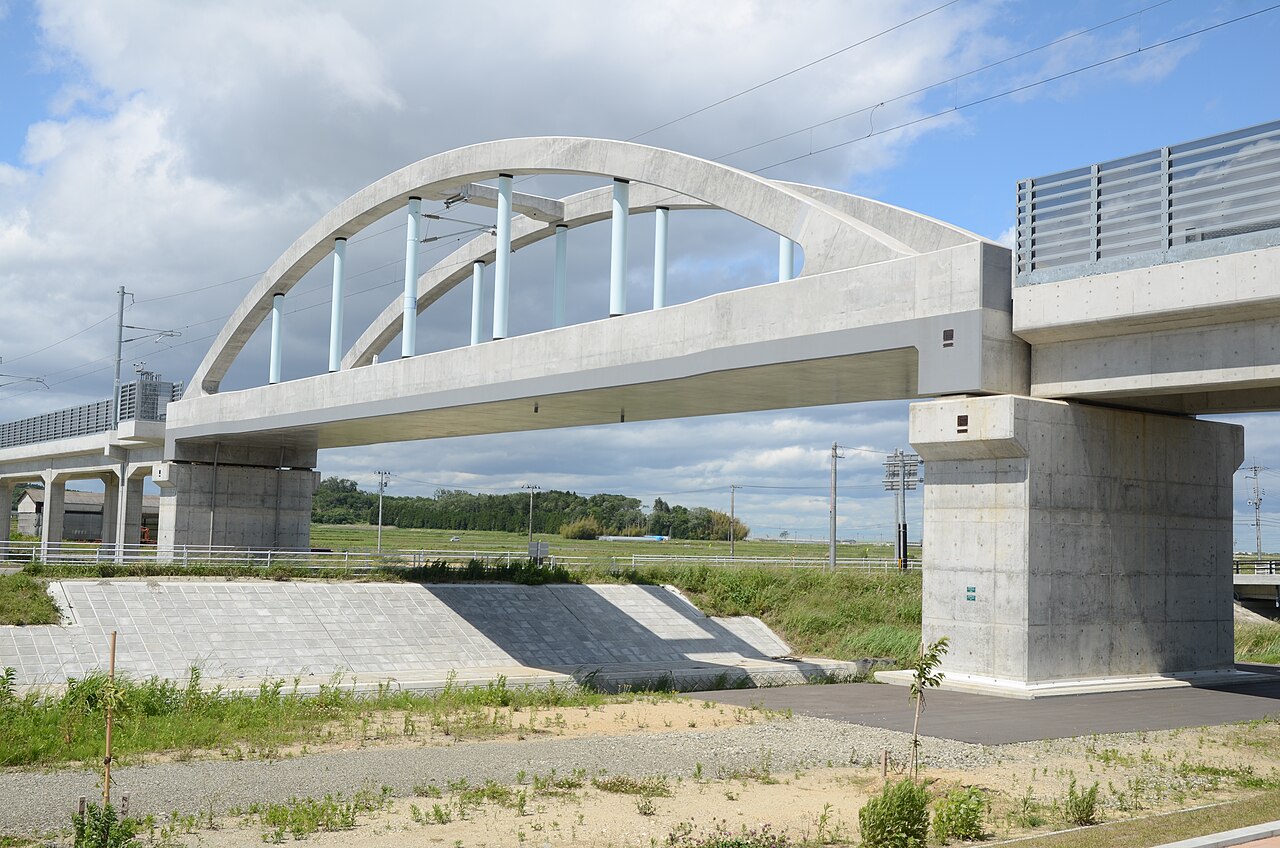
On 1 April 1987, with the privatisation of Japanese National Railways, the Jōban Line was succeeded by JR East. The 2011 Tōhoku earthquake and tsunami caused severe disruption to the line, and the section between Tomioka and Namie, which passes through the exclusion zone surrounding the Fukushima Daiichi nuclear meltdown, was closed in the wake of the disaster. Service was restored in stages over the following years — for example, services to Iwaki (209.4 km from Nippori) were re-established by 17 April 2011, and the Hamayoshida-Soma section was rebuilt at a higher, tsunami-resistant level and reopened on 10 December 2016 — and the line fully reopened on 14 March 2020, after nine years without through service.
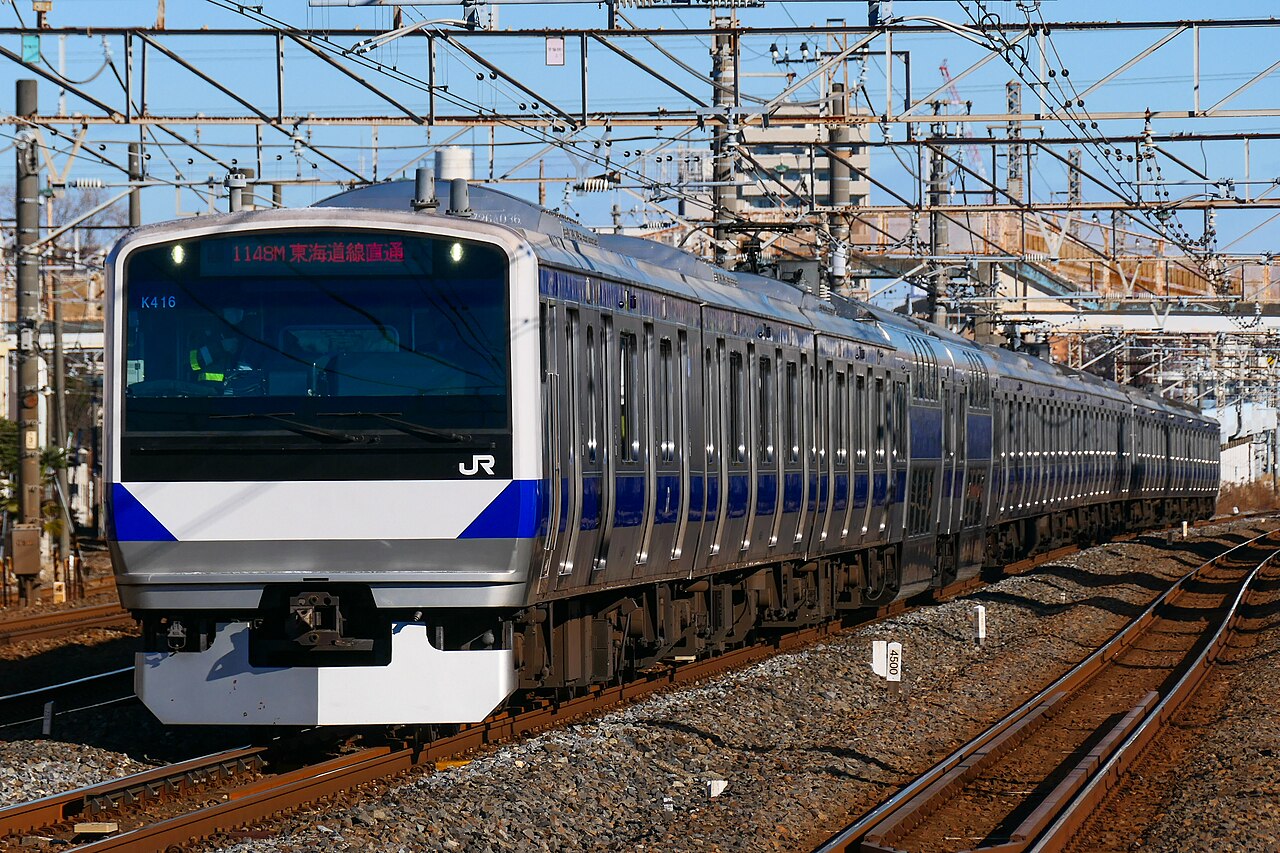
Today the Jōban Line is operated by JR East, with freight handled by JR Freight over most of the route. Per the Japanese-language article, citing the official railway register, the operating line length from Nippori to Iwanuma is 343.7 km (excluding branches) with 80 stations, and the maximum line speed is 130 km/h; the English-language infobox gives a track length of 368.0 km and counts 85 stations on the Jōban Line plus four on the Ueno-Tokyo Line. The Japanese-language article notes that, at 343.7 km, the Jōban Line is the longest JR line that bears neither the designation "Main Line" (本線) nor "Shinkansen" in its name.
Timeline
- 188916 January: the Mito Railway opens its first section, Mito to Oyama; the line is opened in sections by the Mito Railway between 1889 and 1905.
- 18921 March: the Mito Railway becomes part of the Nippon Railway.
- 189725 February: the Iwaki Line from Mito to Taira (present-day Iwaki) begins operation.
- 189823 August: the Kunohama-Odaka section opens, connecting Tabata and Iwanuma (the full Tabata-Iwanuma route is through-connected).
- 19051 April: with the completion of the Mikawashima-Nippori connection the present-day route is finished; Nippori and Mikawashima stations open. The infobox gives year-completed as 1 April 1905.
- 19061 November: the Nippon Railway is nationalised.
- 190912 October: the government railway line-naming reorganisation designates the Nippori-Iwanuma section and its freight branches as the Jōban Line.
- 1925Double-tracking (begun in 1910) reaches completion on the 219 km Nippori-Yotsukura section.
- 193611 December: the Nippori-Matsudo section is electrified at 1,500 V DC — the first section of the line to be electrified.
- 19496 July: the Shimoyama incident — JNR president Shimoyama Sadanori is found dead between Kita-Senju and Ayase stations. The same year, electrification is extended Matsudo-Toride.
- 19581 June: the semi-express Tokiwa begins operation. 10 October: the limited express Hatsukari (Ueno-Aomori) begins operation, calling at Ueno, Mito, Taira and Sendai on Jōban Line tracks.
- 19623 May: the Mikawashima rail crash occurs between Mikawashima and Minami-Senju; per the EN account 160 people die and 296 are injured (JA records 160 deaths).
- 196720 August: with the electrification of the Kusano-Iwanuma tracks (20 kV AC), the entire Jōban Line becomes electrified.
- 19871 April: with the privatisation of Japanese National Railways, the Jōban Line is succeeded by JR East.
- 2011The Tōhoku earthquake and tsunami severely disrupt the line; the Tomioka-Namie section, through the Fukushima exclusion zone, closes. Services to Iwaki (209.4 km from Nippori) are re-established by 17 April.
- 201610 December: the Hamayoshida-Soma section, rebuilt at a higher tsunami-resistant level, reopens.
- 202014 March: the line fully reopens after nine years without through service.
Sources
Facts last verified 3 June 2026.
Gallery 6 photos
Every photo for this page — tap any image to view it full-size. All from Wikimedia Commons (credit under each).