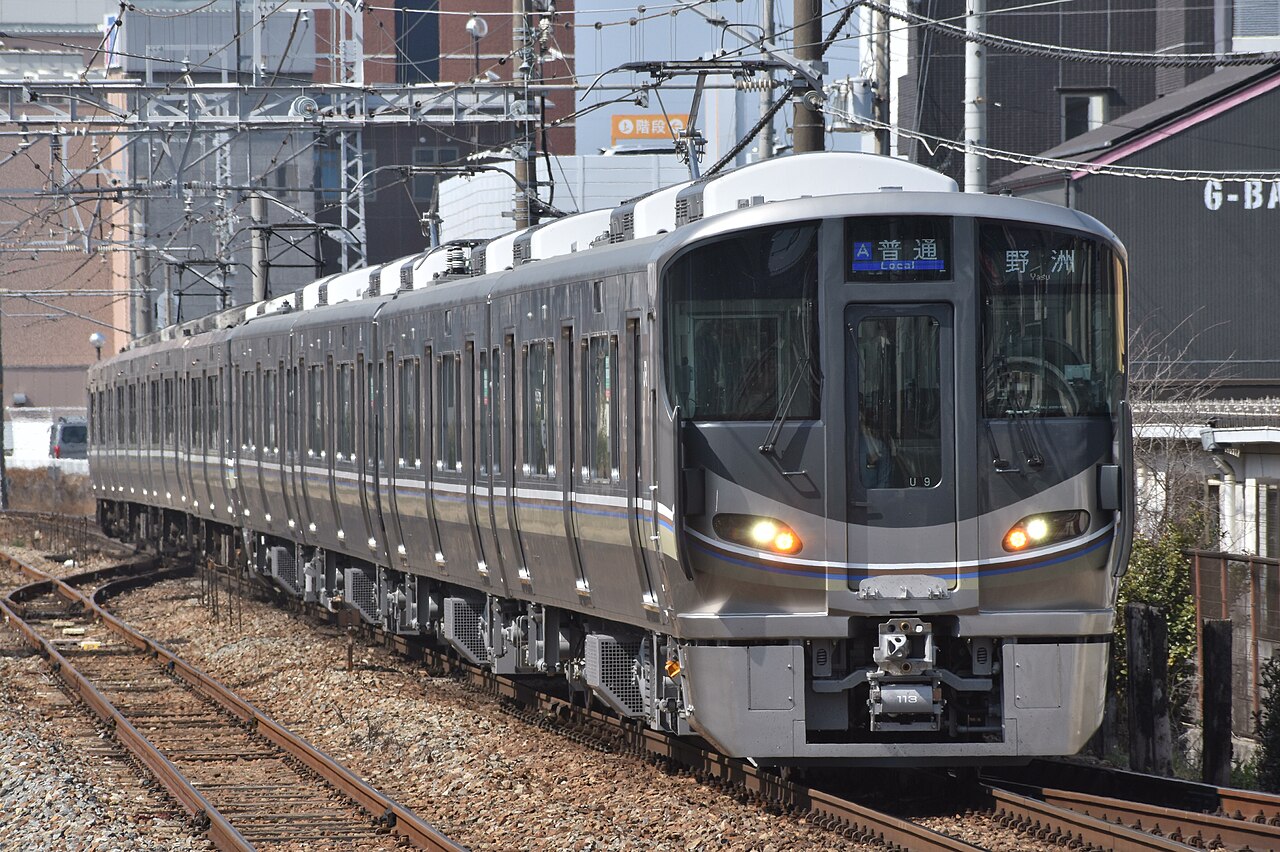
History
The two halves have markedly different origins. The Osaka–Kobe stretch of the Tōkaidō Main Line opened on 11 May 1874 as a national-policy, state-run government railway; per a Kobe City history, it was the second-oldest railway in Japan, after the Shinbashi–Yokohama line that had opened in 1872. The Kobe–Himeji stretch of the San'yō Main Line, by contrast, was built later and privately, by the San'yō Railway, between 1888 and 1889, and that company was nationalised on 1 December 1906. This split heritage is why the line is still officially the Tōkaidō Main Line east of Kobe and the San'yō Main Line west of it, even though, as the JR Kōbe Line, trains run as a single uninterrupted timetable and Kobe Station is merely an intermediate stop.
Electrification and capacity expansion came over many decades. The Osaka–Suma section was electrified and electric-train operation began on 20 July 1934; Suma–Akashi was electrified on 20 September 1934. Akashi–Nishi-Akashi was electrified in 1944 (when Nishi-Akashi Station opened on 1 April), Nishi-Akashi–Himeji on 10 April 1958. Track was progressively multiplied: quadruple-tracking advanced section by section through the 1920s and 1930s, and the Takatori–Nishi-Akashi segment was quadruple-tracked on 28 March 1965. Today the line carries quadruple track from Osaka to Nishi-Akashi and double track from Nishi-Akashi to Himeji, and is electrified throughout at 1,500 V DC overhead. The gauge is the 1,067 mm narrow gauge standard of the legacy network. Japanese National Railways was privatised on 1 April 1987, transferring the route to JR West, and the JR Kōbe Line nickname for the Osaka–Himeji corridor was introduced the following year, on 13 March 1988.
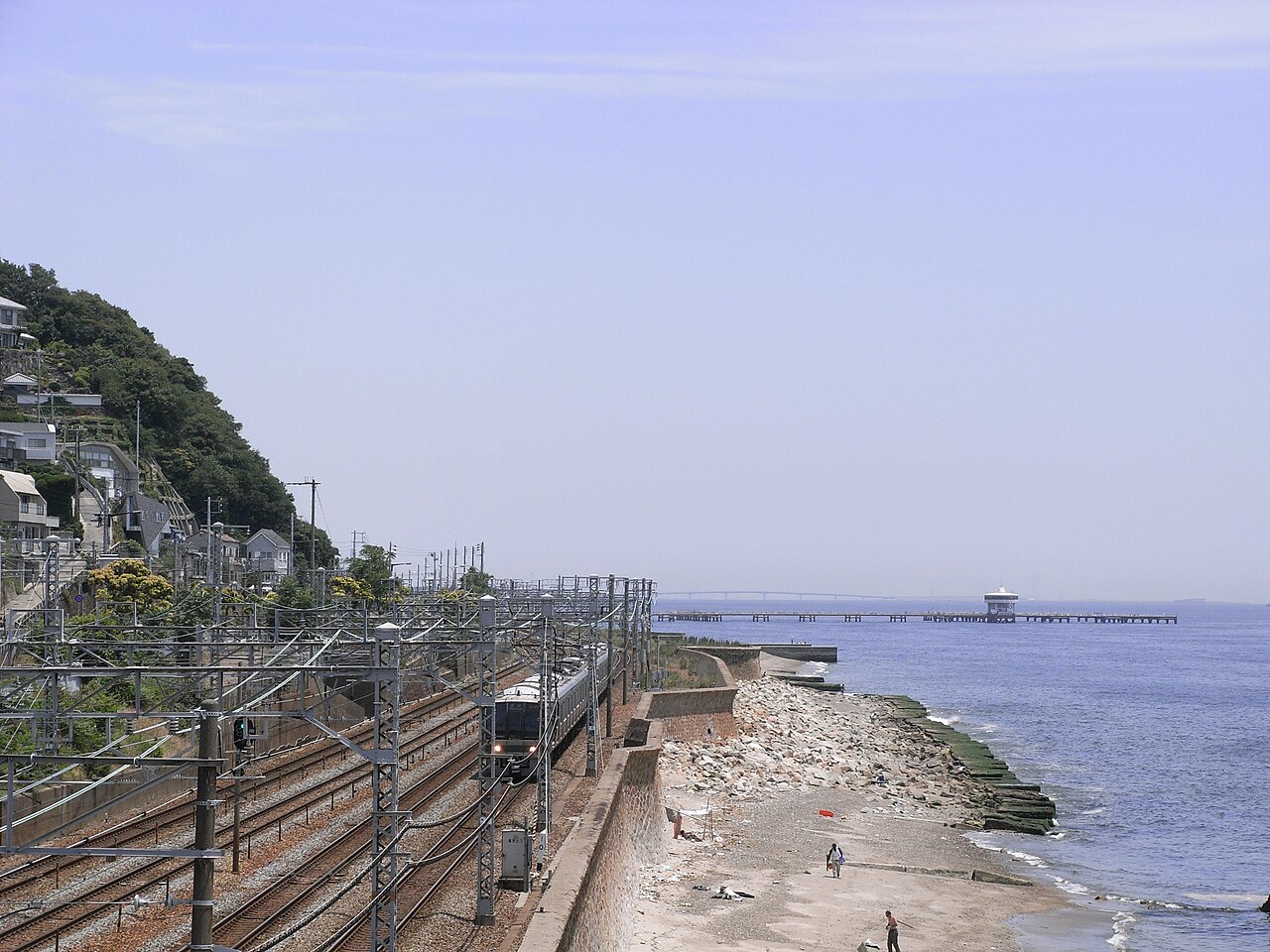
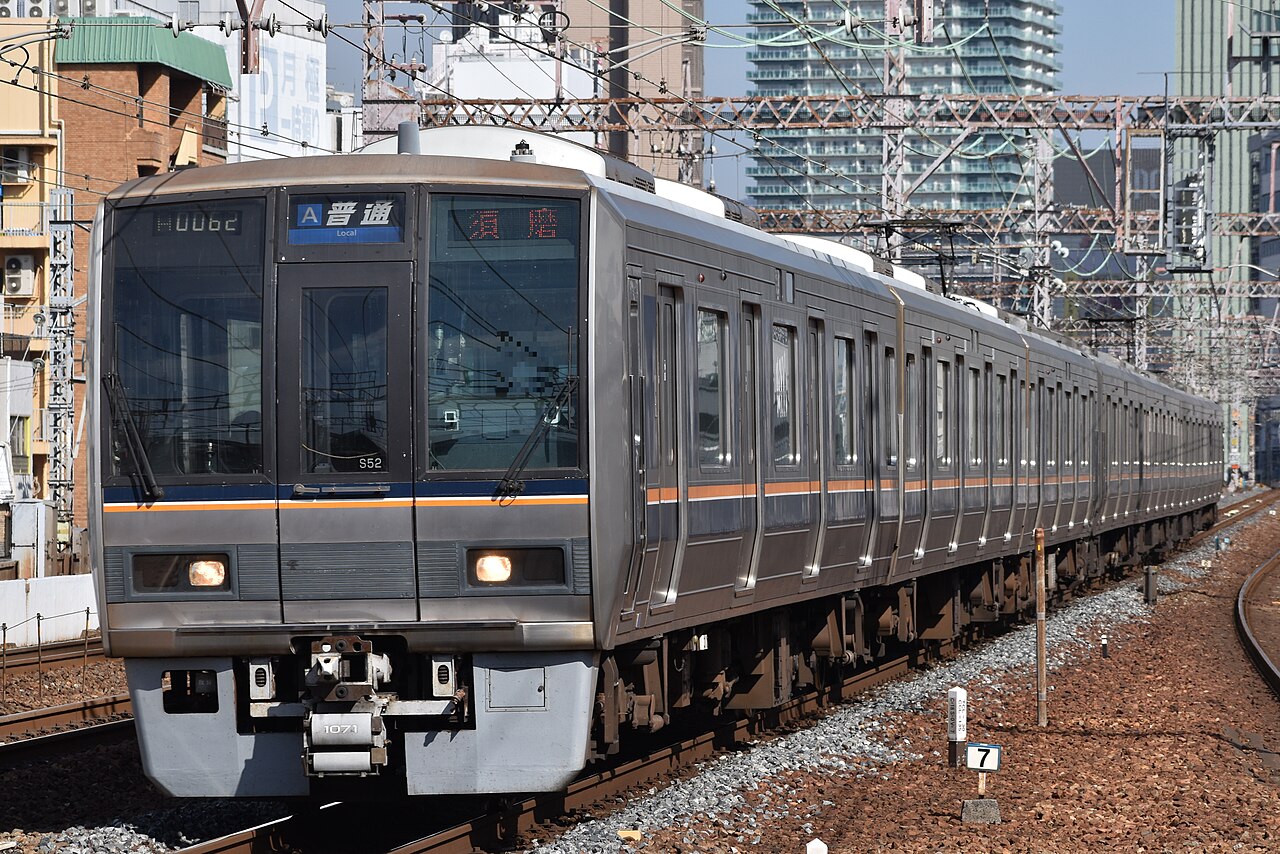
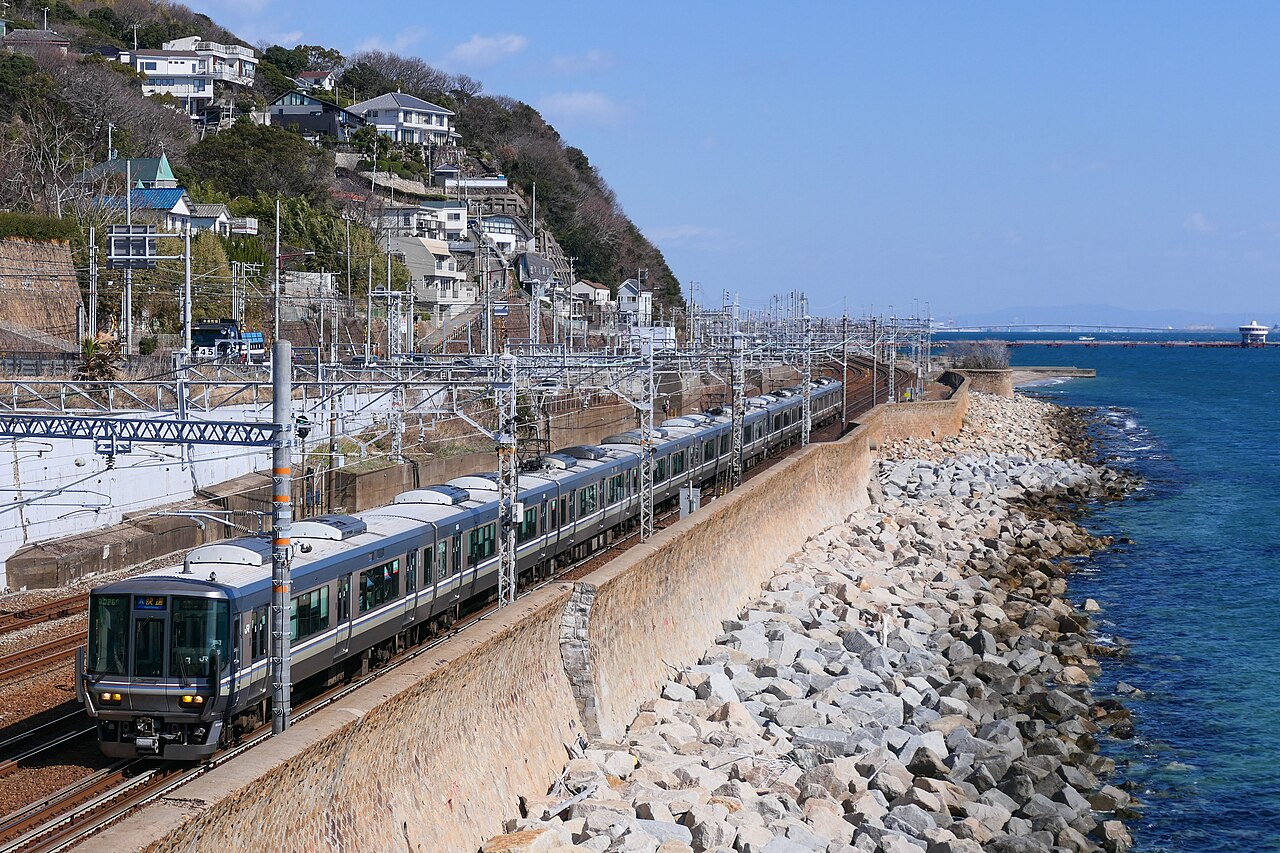
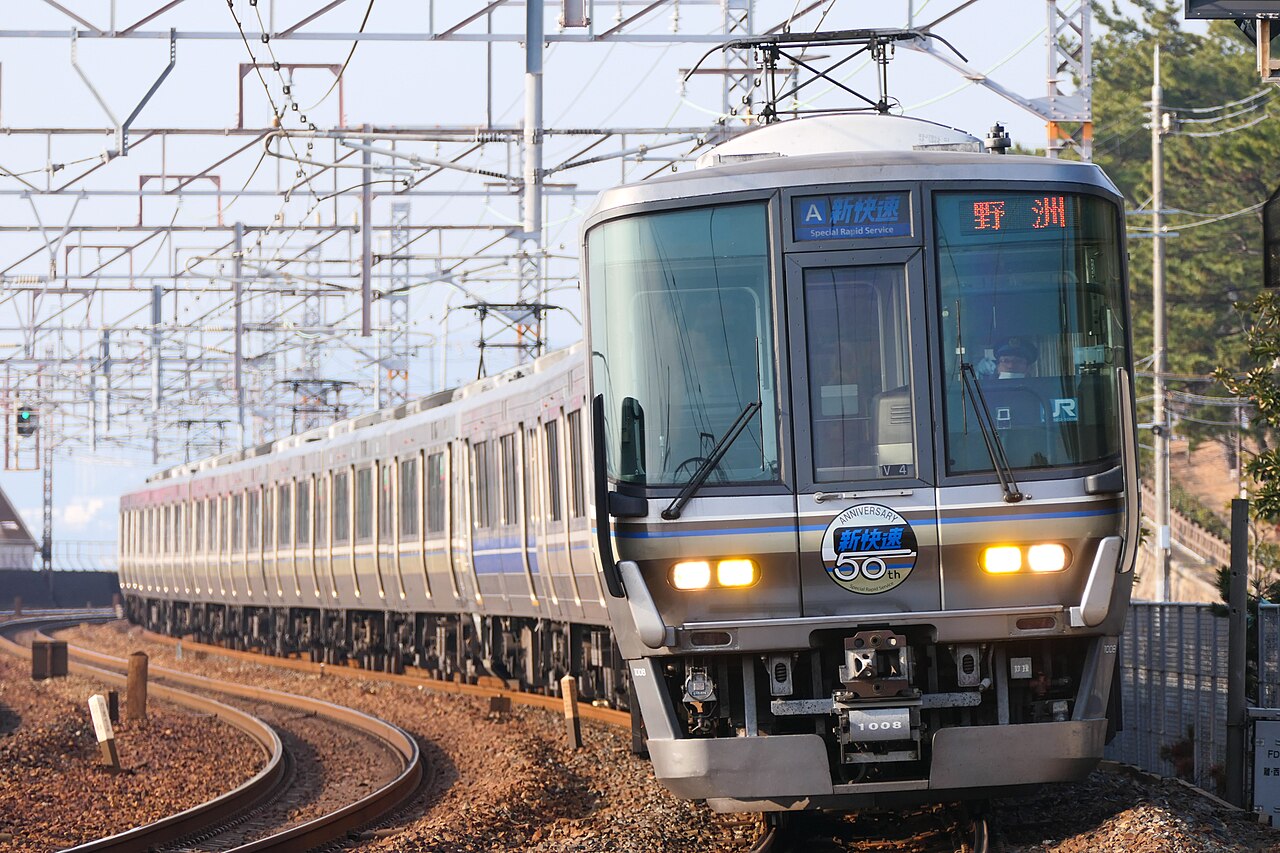
The line is one of the core routes of JR West's Urban Network in the Keihanshin (Osaka–Kobe–Kyoto) region; its line colour is blue (the JR West corporate colour) and its line symbol is A, with G additionally assigned over the Osaka–Amagasaki segment shared with Fukuchiyama Line (JR Takarazuka Line) trains. Most trains do not terminate within the line: from Osaka they continue onto the JR Kyōto Line (and some, via Kyoto, onto the Biwako and Kosei lines), while others run west of Himeji onto the San'yō Main Line toward Kamigōri and the Akō Line to Banshū-Akō; trains also branch at Amagasaki onto the JR Tōzai Line and the Gakkentoshi (Katamachi) Line. JR West's flagship Special Rapid (shin-kaisoku) service operates at high speed and high frequency, covering Osaka–Sannomiya (30.6 km) in as little as 21 minutes, Osaka–Akashi (52.5 km) in 37 minutes, and Osaka–Himeji (87.9 km) in 60 minutes — a schedule speed comparable to limited-express trains. The maximum line speed is 130 km/h on the train tracks (120 km/h on the inner electric-car tracks). Services range from Local and Rapid trains up to the Special Rapid, alongside limited expresses including the Hamakaze and Super Hakuto, the commuter limited express Rakuraku Harima (from 18 March 2019), and the overnight Sunrise Seto / Sunrise Izumo sleeper.
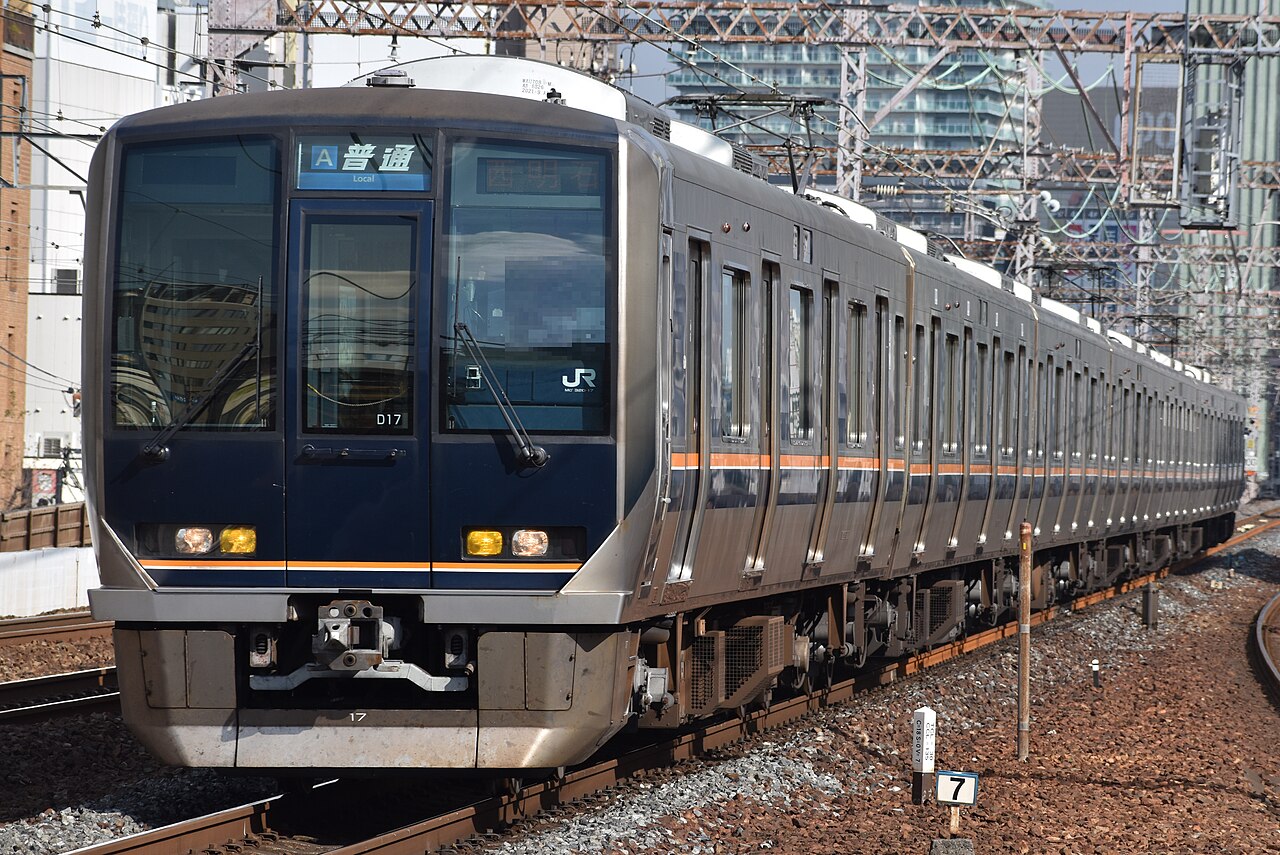
By ridership the corridor is exceptionally heavy. Per a 2021 guide cited by Japanese Wikipedia, the Tōkaidō Main Line (Osaka–Kobe) section carried a daily average of 385,099 passengers — far above the parallel Hankyū Kōbe Main Line (176,056) and Hanshin Main Line (137,670) on the same corridor — the most within JR West's network and, across the whole JR Group, seventh after JR East's Sōbu Main Line. The most severe event in the line's modern history was the Great Hanshin (Kobe) Earthquake of 17 January 1995, which cut the entire line; eight trains, freight included, derailed in the Nishinomiya–Suma area, and 39 cars derailed or overturned at the Takatori Works. Service was restored in stages from 18 January, and the last blocked segment, Sumiyoshi–Nada, reopened on 1 April 1995, fully reconnecting the line. Later milestones include ICOCA IC-card service across the line from 1 November 2003, the opening of several infill stations (Sakura-Shukugawa in 2007, Maya and Higashi-Himeji in 2016), station numbering on 17 March 2018, and the 1 April 2025 expansion of the discounted "urban-train special section" fare zone from Osaka–Nishi-Akashi to the whole Osaka–Himeji line.
Timeline
- 187411 May: the Osaka–Kobe section (≈32.74 km) opens as a state-run government railway, part of the future Tōkaidō Main Line; Osaka, Nishinomiya, Sannomiya and Kobe stations open. Per Kobe City, the second-oldest railway in Japan after Shinbashi–Yokohama (1872).
- 1888The private San'yō Railway opens Hyōgo–Akashi (1 November) and Akashi–Himeji (23 December), forming the future San'yō Main Line section.
- 18891 September: the Kobe–Hyōgo link opens, connecting the San'yō Railway to the government railway at Kobe.
- 19061 December: the San'yō Railway is nationalised.
- 193420 July: Osaka–Suma is electrified and electric-train operation begins; Tsukamoto, Tachibana, Kōshienguchi, Rokkōmichi and Motomachi open. 20 September: Suma–Akashi electrified.
- 19441 April: Nishi-Akashi Station opens and Akashi–Nishi-Akashi is electrified.
- 195810 April: Nishi-Akashi–Himeji is electrified.
- 196528 March: Takatori–Nishi-Akashi is quadruple-tracked.
- 19871 April: JNR is privatised; the route passes to JR West.
- 198813 March: the 'JR Kōbe Line' nickname enters use for the Osaka–Himeji corridor.
- 199517 January: the Great Hanshin (Kobe) Earthquake cuts the whole line; eight trains (freight included) derail in the Nishinomiya–Suma area and 39 cars derail/overturn at the Takatori Works. Staged reopening begins 18 January.
- 19951 April: the last blocked segment, Sumiyoshi–Nada, is restored and the line is fully reconnected.
- 20031 November: ICOCA IC-card service begins across the line.
- 200718 March: Sakura-Shukugawa Station opens; Nishinomiya (西ノ宮) Station is renamed 西宮.
- 201626 March: Maya and Higashi-Himeji stations open.
- 201817 March: station numbering is introduced across the line.
- 201918 March: the commuter limited express Rakuraku Harima begins running between Himeji and Osaka (weekdays).
- 202415 March: 221 series operation on the line ends.
- 20251 April: the discounted urban-train special-section fare zone is expanded from Osaka–Nishi-Akashi to the whole Osaka–Himeji line.
Sources
Facts last verified 3 June 2026.
Gallery 5 photos
Every photo for this page — tap any image to view it full-size. All from Wikimedia Commons (credit under each).