History
The track itself is one of the oldest in Japan. On 26 July 1876 — only four years after the country's first railway opened — the Japanese Government Railways opened the segment between Ōsaka and Mukōmachi, with an intermediate station at Takatsuki. Stations at Yamazaki, Ibaraki and Suita followed on 9 August 1876, and the line was extended to Kyoto Station on 6 February 1877. For most of its life this was simply part of the Tōkaidō Main Line, the trunk route linking Tokyo, Nagoya, Kyoto and Osaka.
Operational stewardship passed to Japanese National Railways (JNR) on 1 June 1949. The corridor was progressively upgraded into one of the busiest commuter axes in the Keihanshin (Osaka–Kobe–Kyoto) region: the entire line is laid out as directional quadruple track, allowing fast and slow trains to be separated. On 1 October 1964 Shin-Ōsaka Station opened on the line, providing the interchange with the newly inaugurated Tōkaidō Shinkansen; Shin-Ōsaka sits one stop north of Osaka Station across the Yodogawa. Special Rapid Service (Shin-Kaisoku) operation began on 1 October 1970, establishing the fast inter-city pattern that still defines the line.
With the privatisation and break-up of JNR, JR West became the operator on 1 April 1987, and on 13 March 1988 it introduced the marketing name "JR Kyōto Line" for the Kyoto–Osaka section. The "JR" prefix was added deliberately to distinguish the line from the parallel and similarly named Hankyu Kyoto Main Line and the Kintetsu Kyoto Line, which JR West's line meets at Osaka and Kyoto respectively. The line shares JR West's corporate blue as its line colour, reflecting its status — alongside the Biwako Line and the JR Kōbe Line — as a core route of the company's "Urban Network."
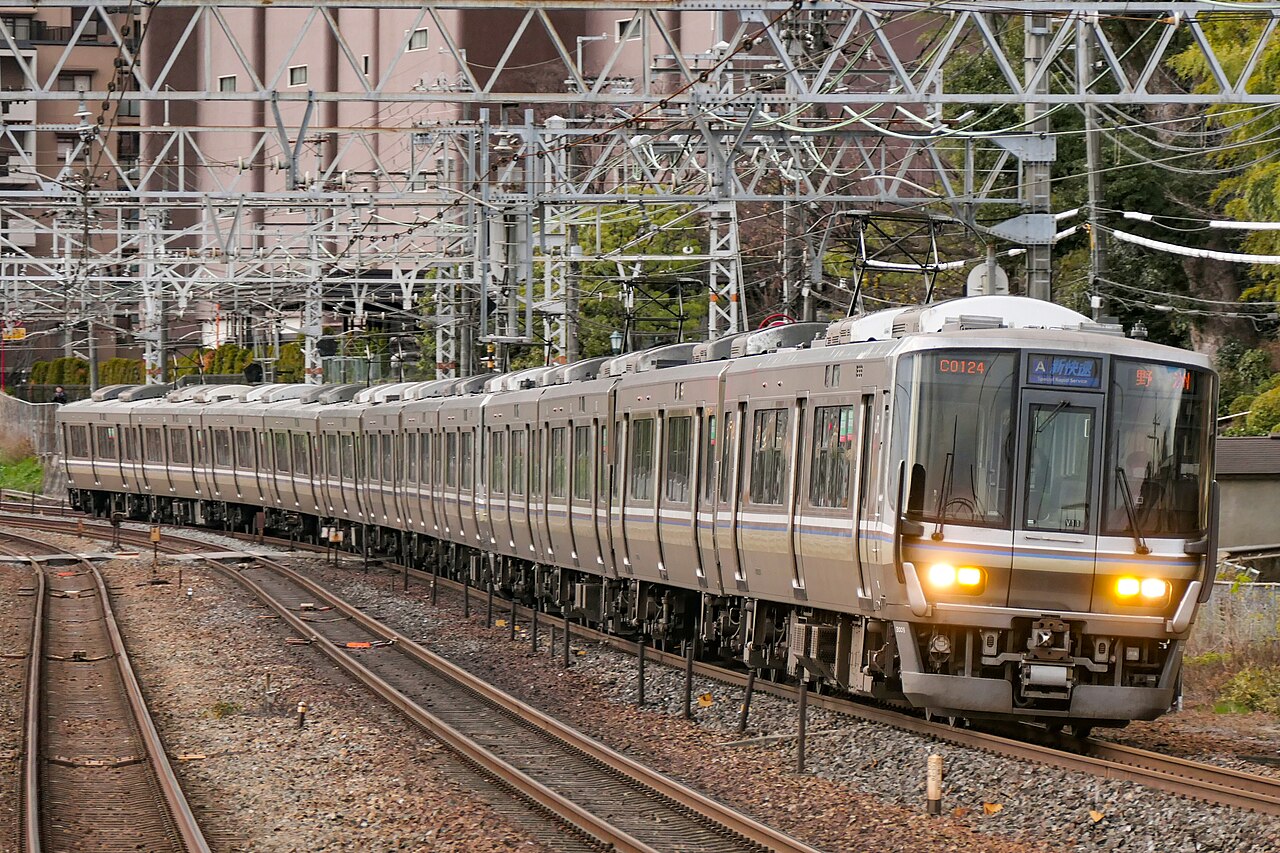
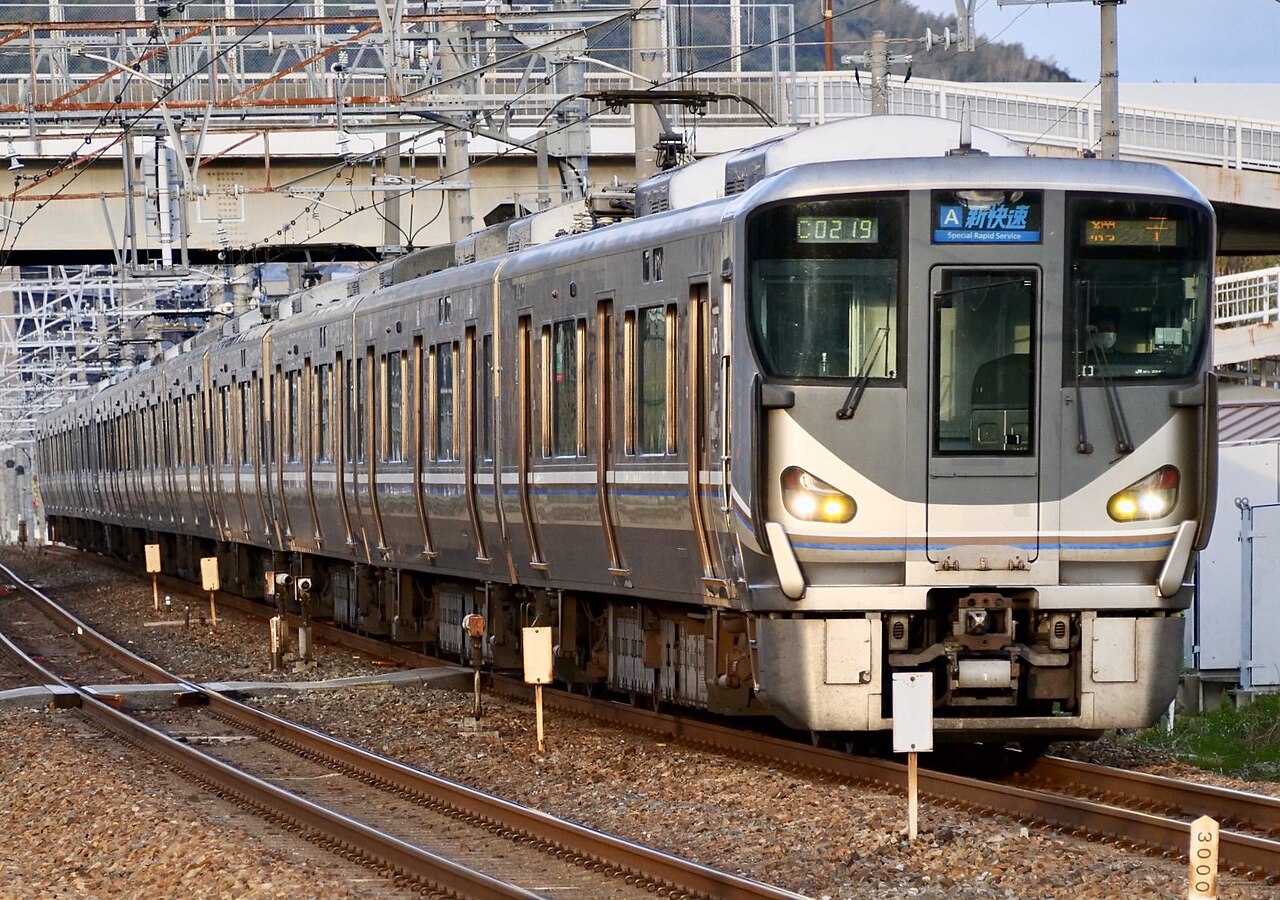
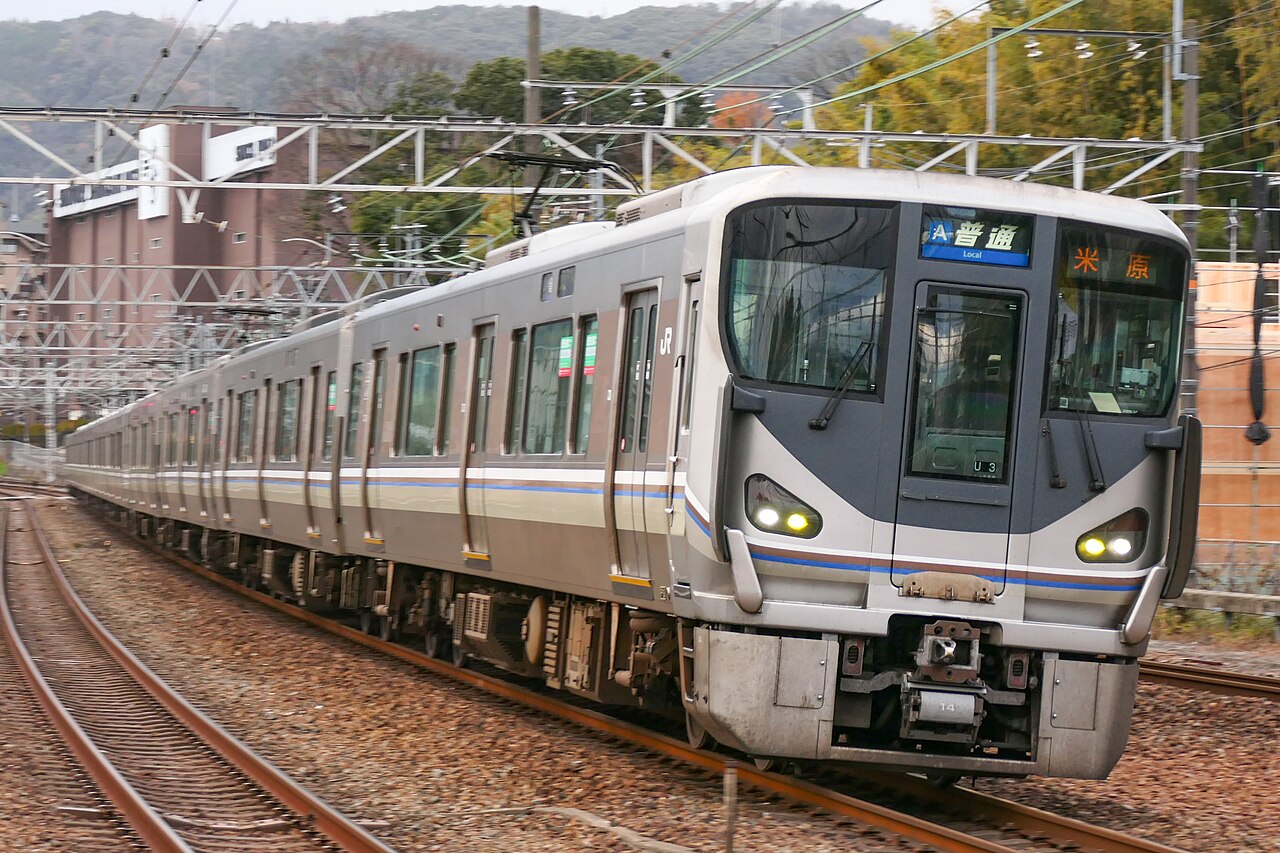
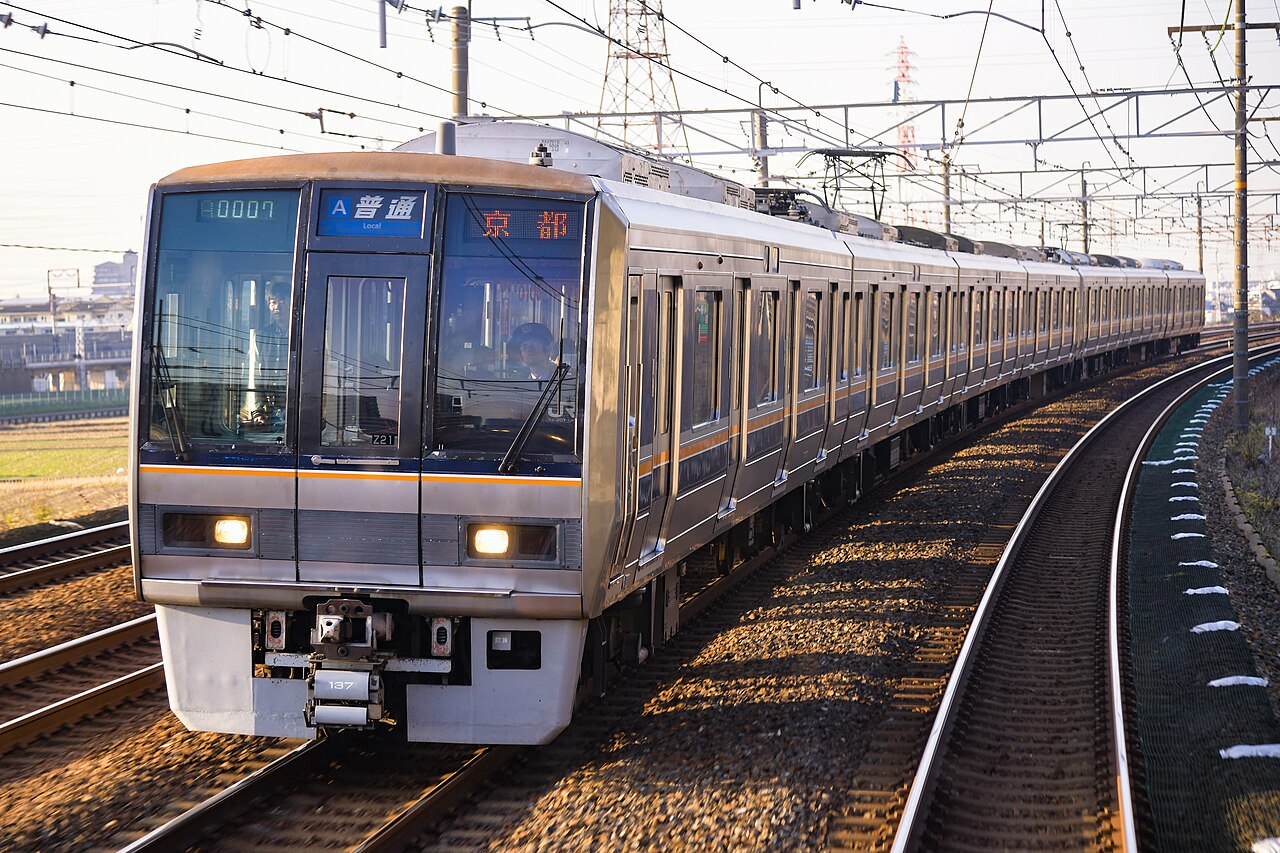
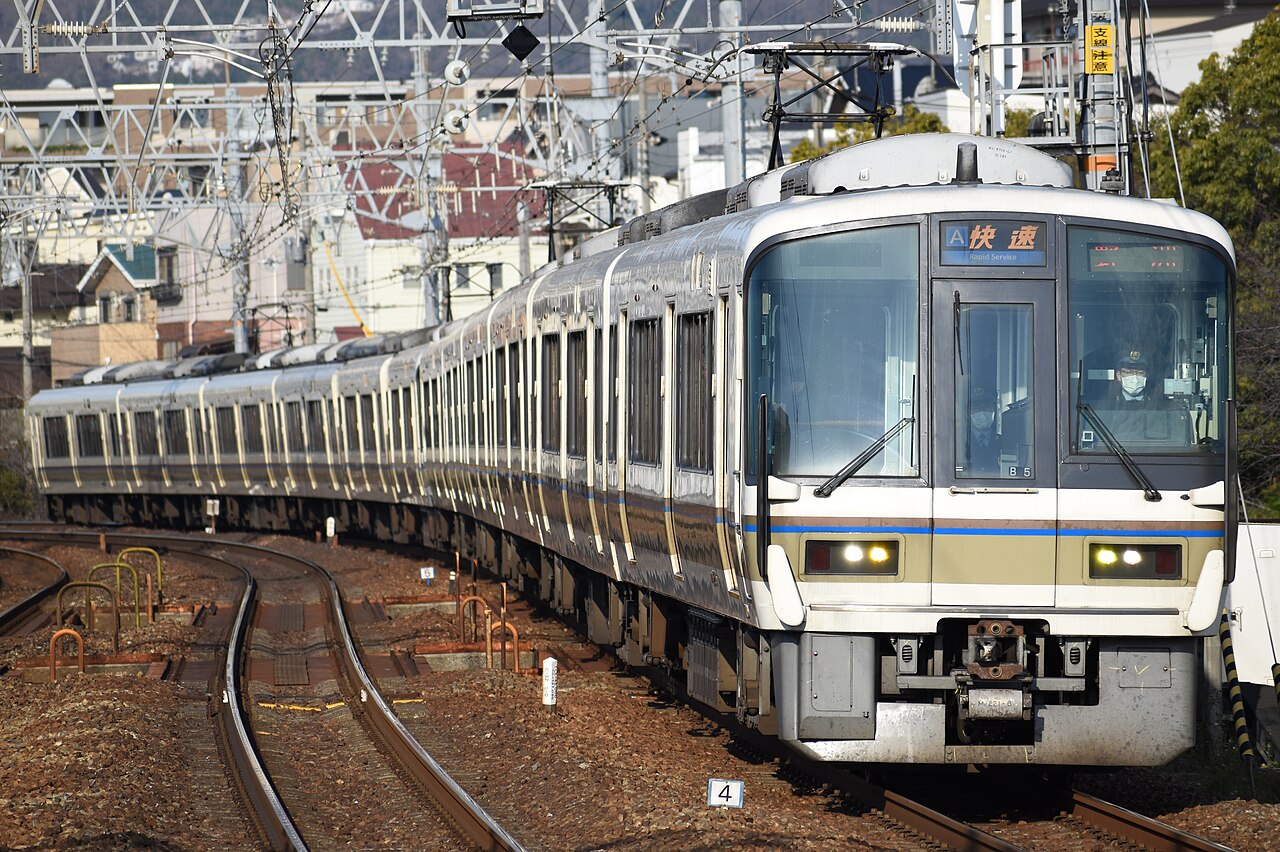
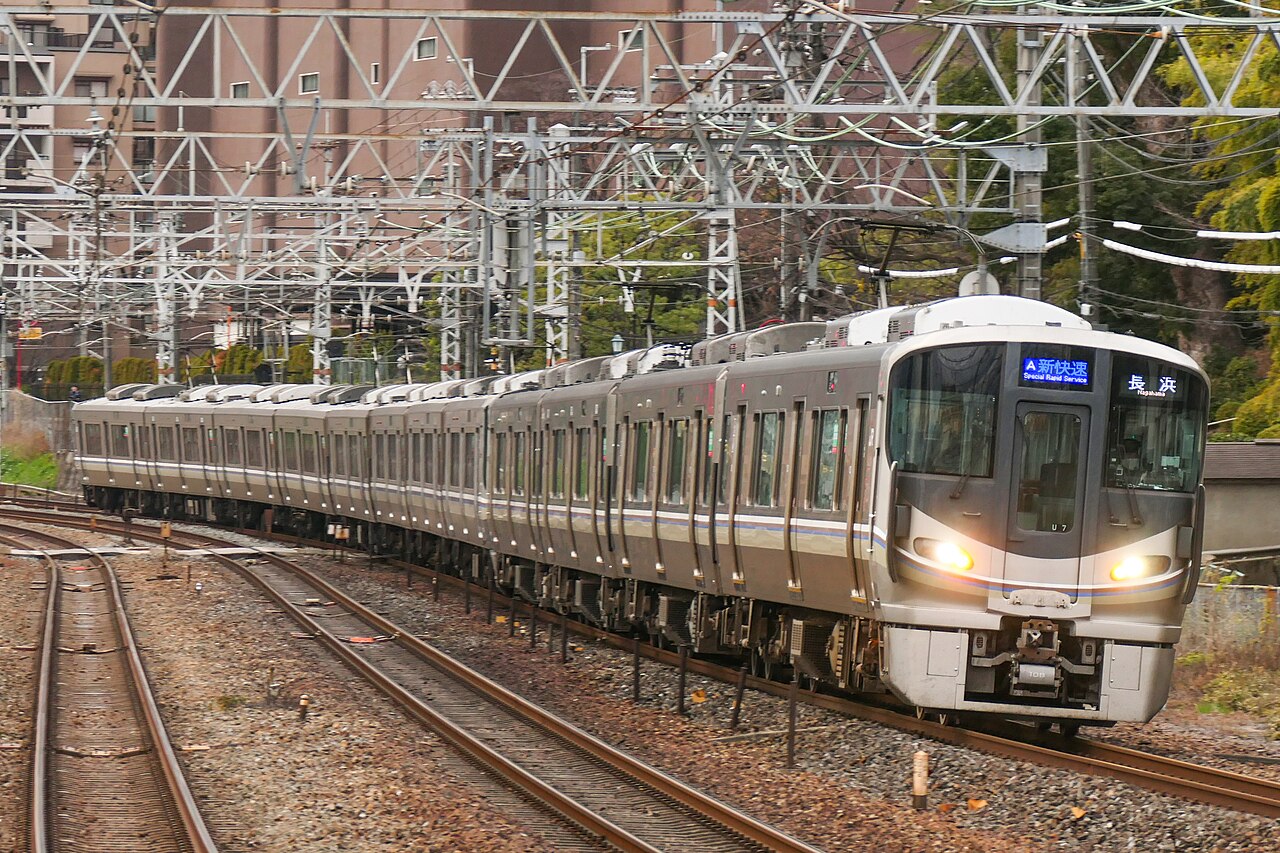
Today the JR Kyōto Line runs along the right bank of the Yodogawa, broadly parallel to the Tōkaidō Shinkansen and the Hankyu Kyoto Main Line, carrying inter-city commuter and school traffic between Kyoto and Osaka. Three classes of commuter train run: the Special Rapid Service (223 and 225 series electric multiple units), which stops only at Kyōto, Takatsuki, Shin-Ōsaka and Ōsaka and departs every 15 minutes during the day, covering Kyōto to Ōsaka in 28 minutes; the Rapid Service (221, 223 and 225 series); and all-stations Local services (207 and 321 series). Many of these run through onto the Biwako Line, the Kosei Line, the JR Kōbe Line and the JR Takarazuka Line. The route also forms part of the Nihonkai Jūkan corridor and carries long-distance limited expresses — including the Haruka to Kansai International Airport and the Thunderbird toward the Hokuriku region — as well as freight trains, which use separate freight lines near Osaka Station.
The line's intensity of use is striking within its own corridor. According to a 2021 reference cited by the Japanese-language article, the JR Kyōto Line carried a one-day average of 350,717 passengers between Kyōto and Ōsaka, which the source describes as overwhelmingly more than the two parallel competitors on the same city-pair — the Hankyu Kyoto Main Line (180,954) and the Keihan Main Line (162,479). The same source notes the Special Rapid's scheduled speed of 92 km/h over the Kyōto–Ōsaka run, comparable to a limited-express train.
Timeline
- 187626 July: the Japanese Government Railways opens the Ōsaka–Mukōmachi section (intermediate station at Takatsuki). Yamazaki, Ibaraki and Suita stations open on 9 August. This track later becomes the JR Kyōto Line.
- 18776 February: Kyoto Station opens, completing the Kyoto–Osaka section.
- 19491 June: operation of the line is taken over by Japanese National Railways (JNR).
- 19641 October: Shin-Ōsaka Station opens on the line, with a Tōkaidō Shinkansen connection.
- 19701 October: Special Rapid Service (Shin-Kaisoku) operation begins.
- 19871 April: following the privatisation of JNR, JR West becomes the operator of the line.
- 198813 March: JR West introduces the line name "JR Kyōto Line" for the Kyoto–Osaka section of the Tōkaidō Main Line.
Sources
Facts last verified 3 June 2026.
Gallery 5 photos
Every photo for this page — tap any image to view it full-size. All from Wikimedia Commons (credit under each).