History
Despite carrying the grand designation "Main Line," for much of its length it is a very local route, with mostly single-track sections and no regular express services. It was originally built in the 1890s by the private Kansai Railway (which later passed under the Japanese Government Railways and then Japanese National Railways) as an alternate route from south Osaka to Nara and on to Nagoya. The line name itself derives from that founding company.
The present route was assembled from three constituent builders. The Osaka Railway Co. opened the Minatomachi (now JR Namba) to Nara section between 1889 and 1892 and merged into the Kansai Railway Co. in 1900. The Nara Railway Co. opened the Nara to Kizu section in 1896 and merged into the Kansai Railway Co. in 1905. The Kansai Railway Co. itself opened the Nagoya to Kizu section between 1890 and 1897, completing the through line, and the company was nationalised in 1907. The Japanese Wikipedia account adds dated detail to the same story: the Osaka Railway opened Minatomachi–Kashiwara (about 16.29 km) on 14 May 1889 — the date carried in the Japanese infobox as the line's opening — with Minatomachi, Tennoji, Hirano, Yao and Kashiwara among the first stations; after acquiring the Osaka and Nara railways, the Kansai Railway abolished the steeply graded Kamo–Daibutsu–Nara section in 1907 and rerouted its main line via Kizu, fixing today's alignment. Under the national railway line-naming standard of 12 October 1909, the Nagoya–Nara–Minatomachi route was formally designated the Kansai Main Line.
The corridor's early decades were shaped by fierce competition. Before nationalisation the Kansai Railway fought the government-run Tokaido Main Line for Nagoya–Osaka traffic; the Japanese article records the private company beating the state line's journey time and resorting to flamboyant tactics such as souvenir give-aways and 50-percent fare discounts, a contest that subsided around 1904 and ended when the Railway Nationalisation Act took effect in 1907. After nationalisation the line was valued as a bypass for the congested Tokaido Main Line, and through trains spanning the whole route ran until the 1970s. A semi-express running Nagoya–Minatomachi was introduced on 1 December 1935, cutting the time to roughly three hours; it was revived after the Second World War (later becoming the Kasuga) and was an early adopter of diesel railcar operation.
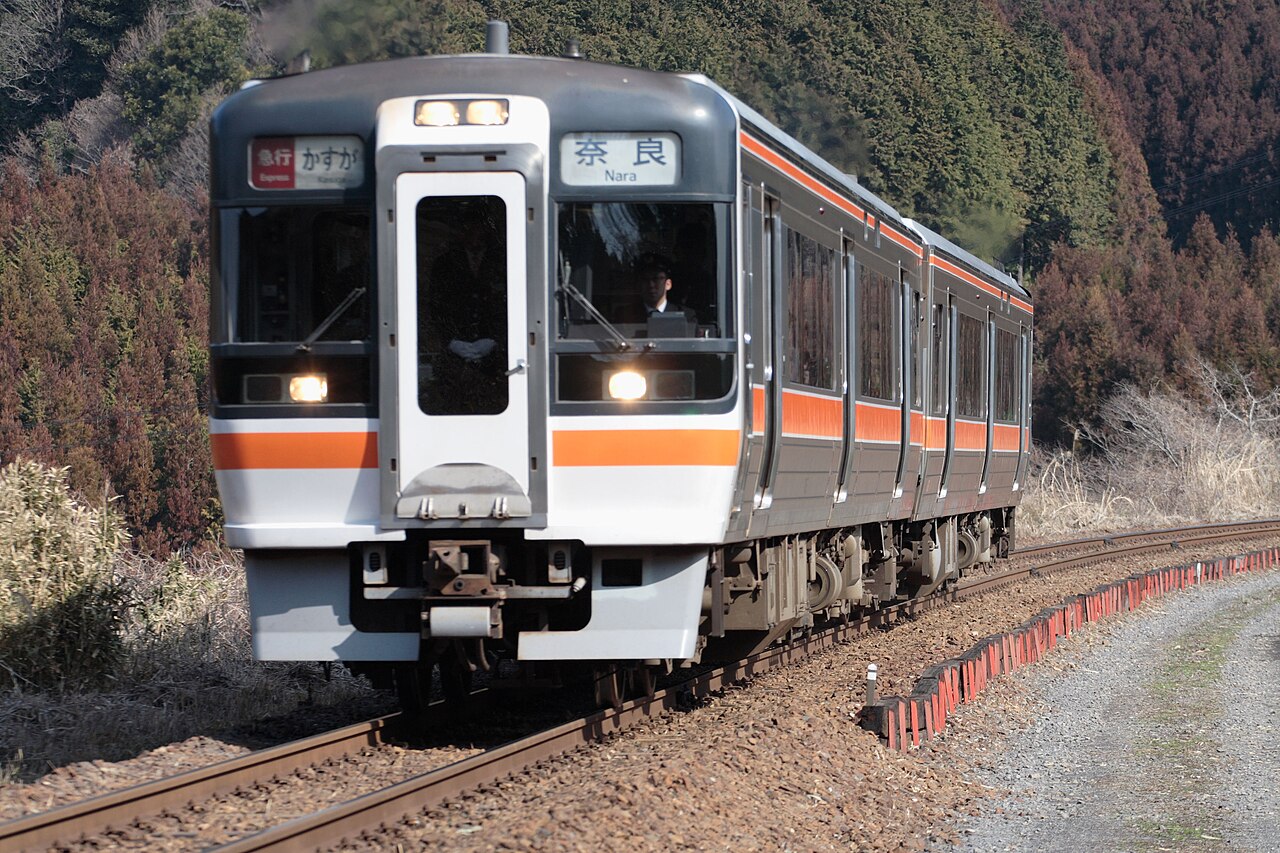
Modernisation came section by section. On the Osaka side the Minatomachi to Nara section was electrified in 1973, extended to Kizu in 1984 and to Kamo in 1988. On the Nagoya side the Nagoya–Hatta section was electrified in 1979 and electrification was extended to Kameyama in 1982. Double-tracking proceeded piecemeal: the Minatomachi–Tennoji section was duplicated in 1903 and extended to Kashiwara in 1908, while on the Nagoya side the Tomita–Kuwana section was duplicated in 1973 and the Yokkaichi–Tomidahama section in 1993. CTC signalling was commissioned between Kizu and Kameyama in 1983 and extended to Nagoya in 2001.
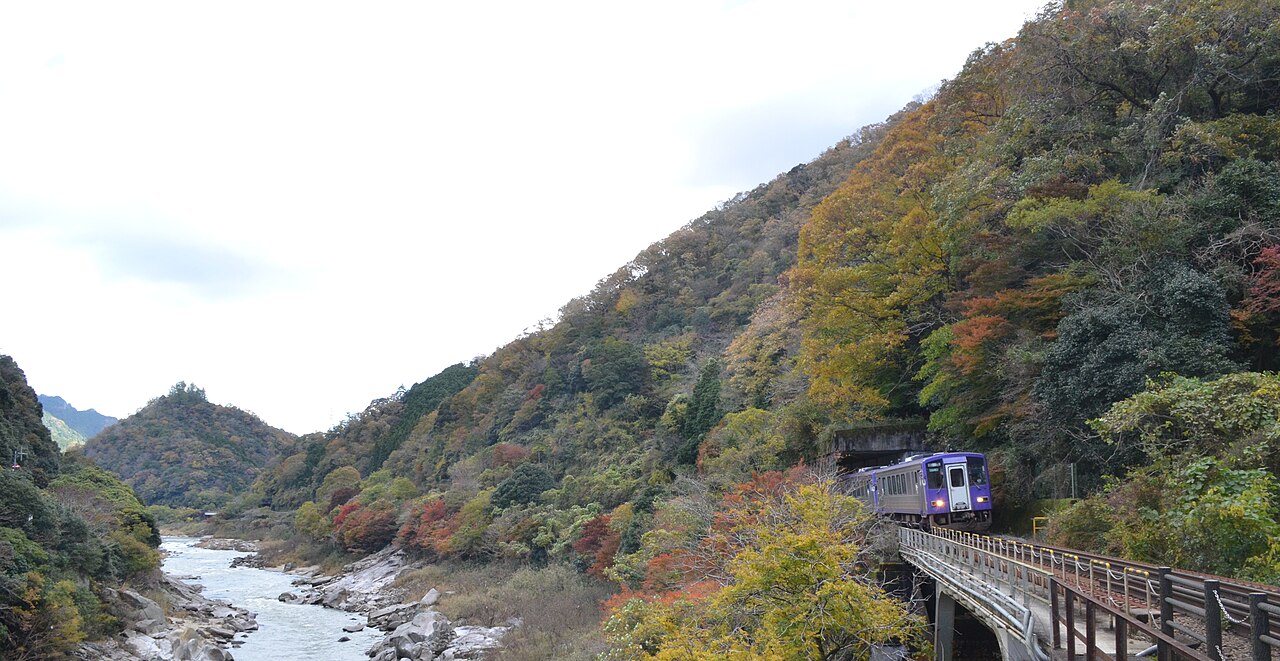
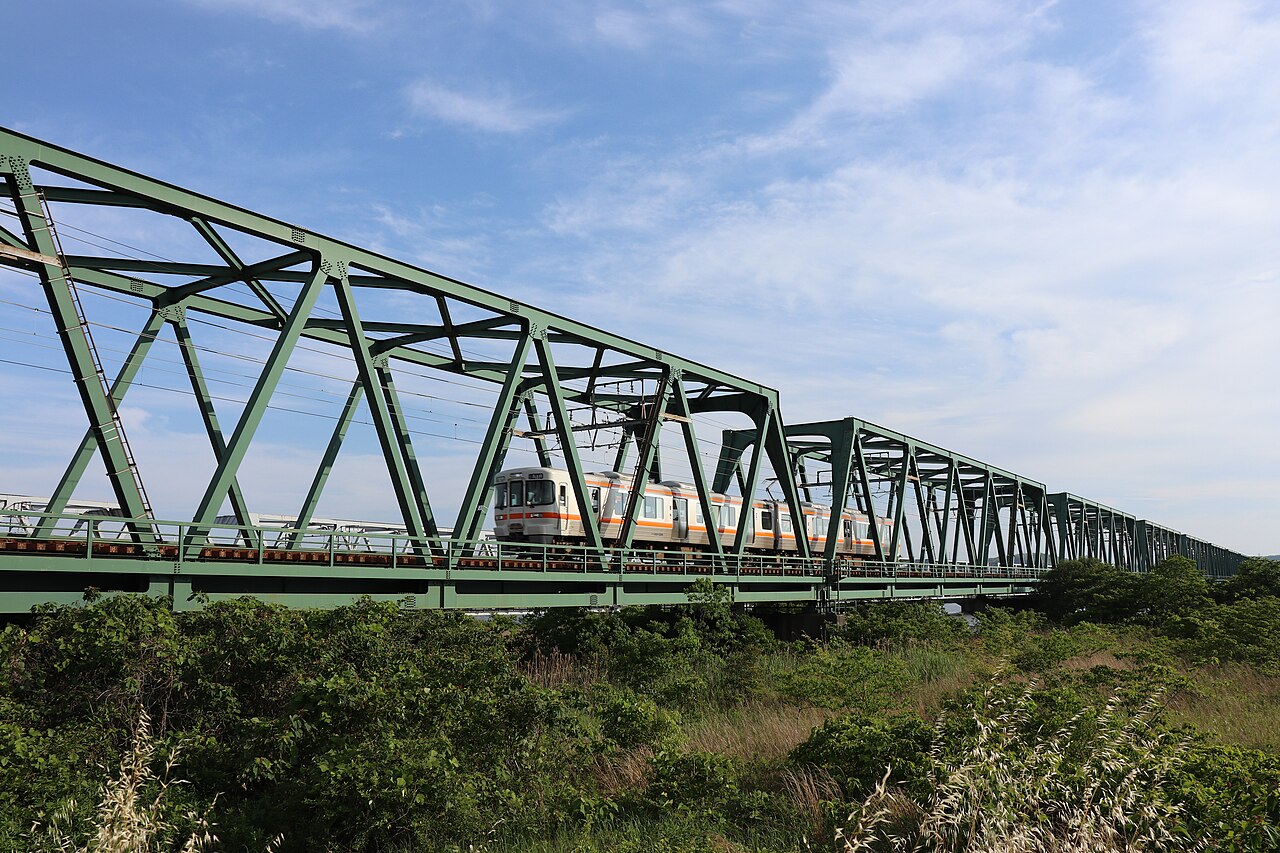
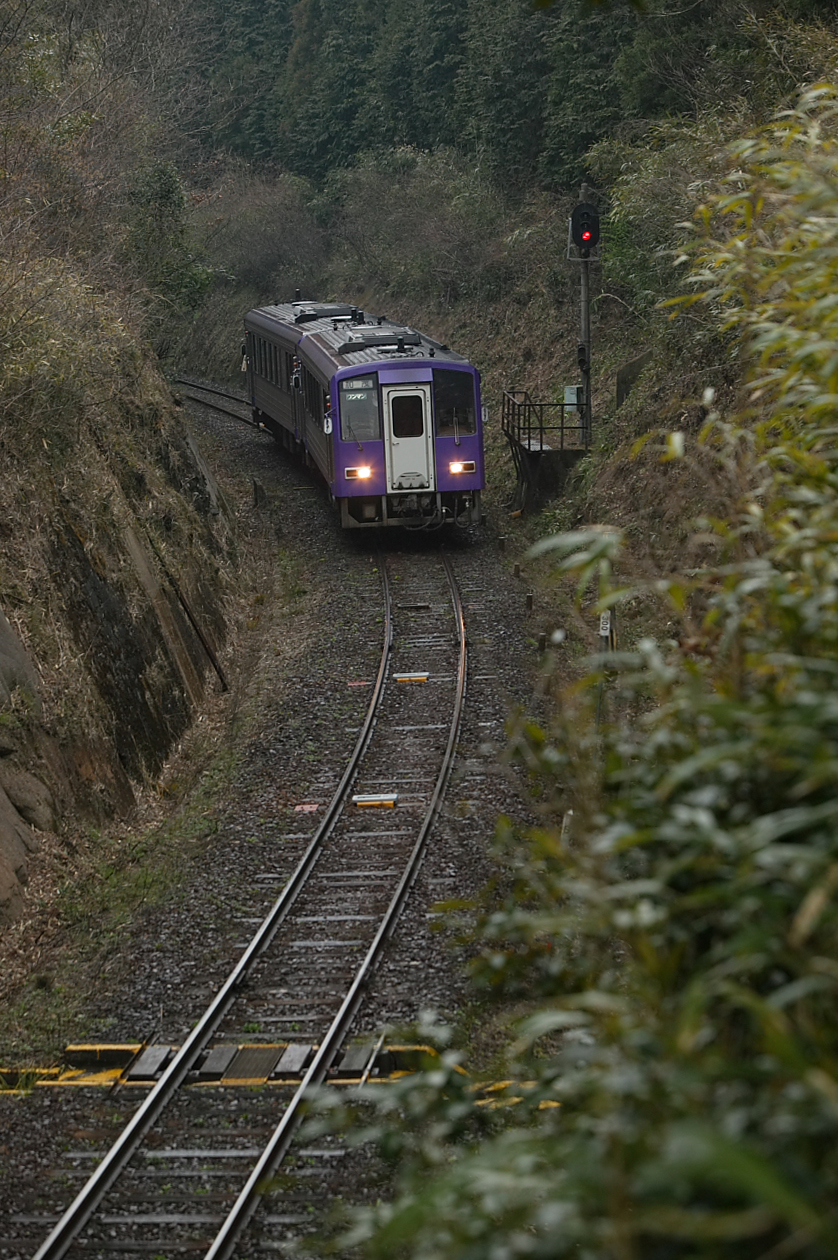
In 1994 Minatomachi Station was renamed JR Namba to coincide with the opening of the Kansai Airport Line, and in 1996 the station and its approach were relocated underground to eliminate a number of level crossings. From March 1988 the electrified Kamo–JR Namba section was given the nickname "Yamatoji Line" and folded into JR West's "Urban Network" of Osaka-area commuter routes; the JR Central section from Nagoya to Kameyama serves as a Nagoya-area commuter line. The middle Kameyama–Kamo segment, by contrast, is a single-track, non-electrified rural stretch worked by one- and two-car diesel railcars.
What ended the line's inter-city role was the rise of competing options: the fully electrified Tokaido Main Line, the Tokaido Shinkansen, Kintetsu's Meihan limited expresses, and the spread of motorisation via the Meishin Expressway and the Meihan National Highway together pushed the Kansai Main Line out of the front rank of Nagoya–Osaka transport. The Kasuga express, the last regularly scheduled service running through across the operational boundaries from Nagoya to Nara, was discontinued in March 2006, after which the line's character as a Tokaido bypass and inter-city Nagoya–Osaka route disappeared entirely. The line today is split operationally into three sections at Kameyama and Kamo, each serving its own local market.
Timeline
- 188914 May: the Osaka Railway opens Minatomachi (now JR Namba)–Kashiwara (about 16.29 km), opening Minatomachi, Tennoji, Hirano, Yao and Kashiwara stations. This is the opening date in the JA infobox.
- 1889The Osaka Railway Co. opens the Minatomachi (now JR Namba) to Nara section between 1889 and 1892.
- 1896The Nara Railway Co. opens the Nara to Kizu section.
- 1897The Kansai Railway Co. opens the Nagoya to Kizu section (built between 1890 and 1897), completing the through line.
- 1900The Osaka Railway Co. merges into the Kansai Railway Co.
- 1903The Minatomachi to Tennoji section is double-tracked (duplicated).
- 1905The Nara Railway Co. merges into the Kansai Railway Co.
- 1907The Kansai Railway Co. is nationalised (1 October). The graded Kamo–Daibutsu–Nara section is abolished and the main line rerouted via Kizu, fixing the current alignment.
- 1908Double-tracking is extended to Kashiwara.
- 190912 October: under the national railway line-naming standard, the Nagoya–Nara–Minatomachi route is formally designated the Kansai Main Line.
- 19351 December: a semi-express is introduced Nagoya–Minatomachi, cutting the journey to about three hours.
- 1973The Minatomachi to Nara section is electrified; on the Nagoya side the Tomita to Kuwana section is double-tracked.
- 1979The Nagoya–Hatta section is electrified.
- 1982Electrification is extended to Kameyama (Hatta–Kameyama energised 17 May; commercial electric operation on Nagoya–Hatta also from 17 May 1982 per JA).
- 1983CTC signalling is commissioned between Kizu and Kameyama.
- 1984Electrification is extended to Kizu (Kizu–Nara energised 1 October per JA).
- 1988March: the electrified Kamo–JR Namba section is given the nickname "Yamatoji Line." Electrification is extended to Kamo.
- 1993The Yokkaichi to Tomidahama section is double-tracked.
- 1994Minatomachi Station is renamed JR Namba to coincide with the opening of the Kansai Airport Line.
- 1996Namba Station and the approach line are relocated underground to eliminate level crossings.
- 2001CTC signalling is extended to Nagoya.
- 2006March: the Kasuga express (Nagoya–Nara) is discontinued, ending the last regular through service across the operational boundaries.
Sources
Facts last verified 3 June 2026.
Gallery 4 photos
Every photo for this page — tap any image to view it full-size. All from Wikimedia Commons (credit under each).