History
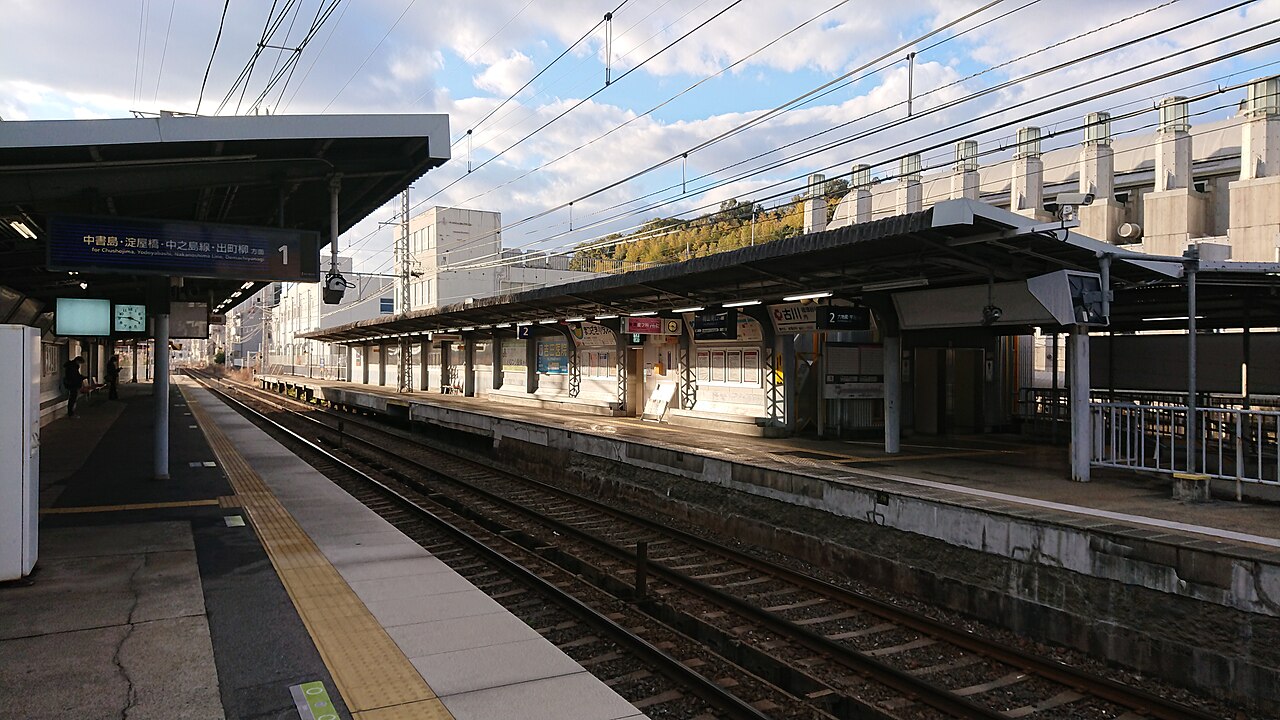
The corridor was conceived as a sightseeing line: the area it serves is dotted with celebrated temples — Daigo-ji, Manpuku-ji at Ōbaku, Mimuroto-ji, and the Byōdō-in at Uji — and the Japanese-language source describes the route as an excursion line to these scenic spots while also carrying commuters and students from southern Fushimi and northern Uji toward central Kyoto and Osaka. A track-laying licence for the route had been obtained in January 1907 by the Ujigawa Electric Tramway Company; Keihan Electric Railway took over that licence in November 1910, intending to build once its finances were stable. The original licence specified a 1,067 mm narrow gauge and placed Uji Station north of the national railway's Uji station, so Keihan applied a series of modifications before approval.
Construction was then brought forward for a specific reason. Emperor Meiji died on 30 July 1912 and was entombed at Fushimi-Momoyama; with the first-anniversary memorial rites due a year later and large numbers of worshippers expected, Keihan altered the planned route and accelerated the work so the line would open in time. According to the cited Japanese source, most land acquisition was completed during 1912 and the line was driven through in a rushed construction effort of only about four months. Keihan had purchased the route licence from the Ujigawa Electric Tramway for ¥8,000 (recorded on 22 November 1910); the construction licence was granted on 19 January 1913, and the Chūshojima–Uji line opened on 1 June 1913. Freight service began on 13 September 1914.
The line grew piecemeal over the following decades. Mimuroto Station opened on 1 February 1917; the station now spelled Ōbaku was renamed from Ōbakuzan in 1926. Because it ran beside the Uji and Yamashina rivers, the Chūshojima–Kowata section was a flood-prone stretch repeatedly inundated — the Japanese article lists events from the 1917 ‘Taishō Great Flood’ through the 1934 Muroto Typhoon and later storms — and flood protection was only completed after the construction of the Amagase Dam from the 1960s, together with levee raising and the relocation of Rokujizō Station onto an embankment in 1966.
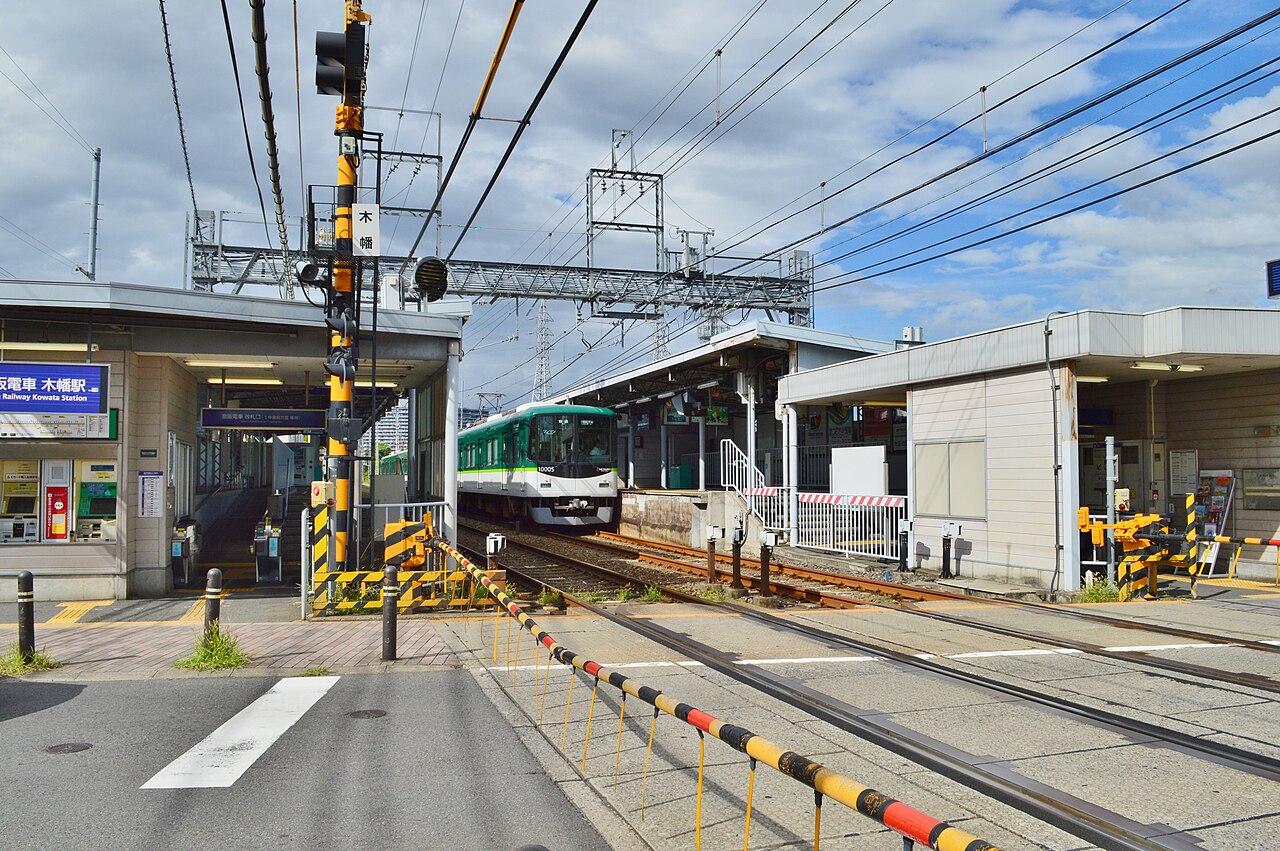
Corporate control changed twice in the 1940s: on 1 October 1943 a merger placed the line under Keihanshin Kyūkō Dentetsu (the Hankyū corporate group), and on 1 December 1949 a corporate separation made it the Keihan Electric Railway's Uji Line once more. All trains were lengthened to four cars on 11 December 1967, and ATS came into use on 29 January 1968. On 10 March 1978 the whole line was reclassified from a tramway under the Tramways Act to a railway under the Local Railway Act. As trackside districts were built up from the late 1950s the line shifted from a sightseeing route toward a commuter one, and from 1965 morning express trains ran through from Uji to Kyoto's Sanjō; the evening express was withdrawn in 1989.
The line was electrified at 600 V DC at opening. The English-language source records that the voltage was raised to 1,500 V DC in December 1983; the Japanese chronology dates the change precisely to 4 December 1983. Uji Station was relocated on 17 June 1995, shortening the line by 0.2 km — after which the source notes that six-car trains could no longer enter the Uji Line. Through-running to Sanjō was progressively cut: reduced to two weekday morning trains from 1 July 2000 (when Chūshojima became an all-day Limited Express stop) and abolished entirely on 6 September 2003.
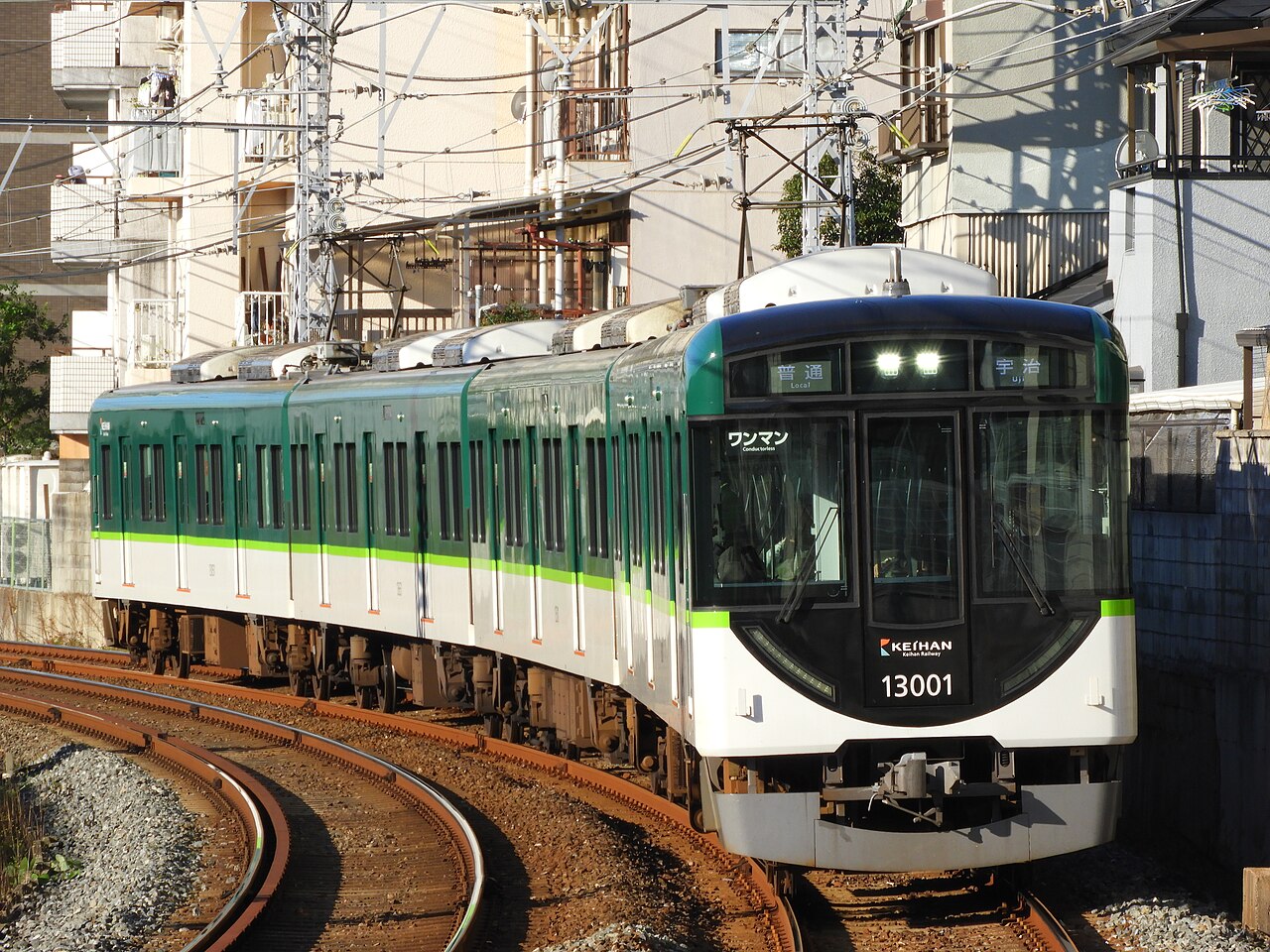
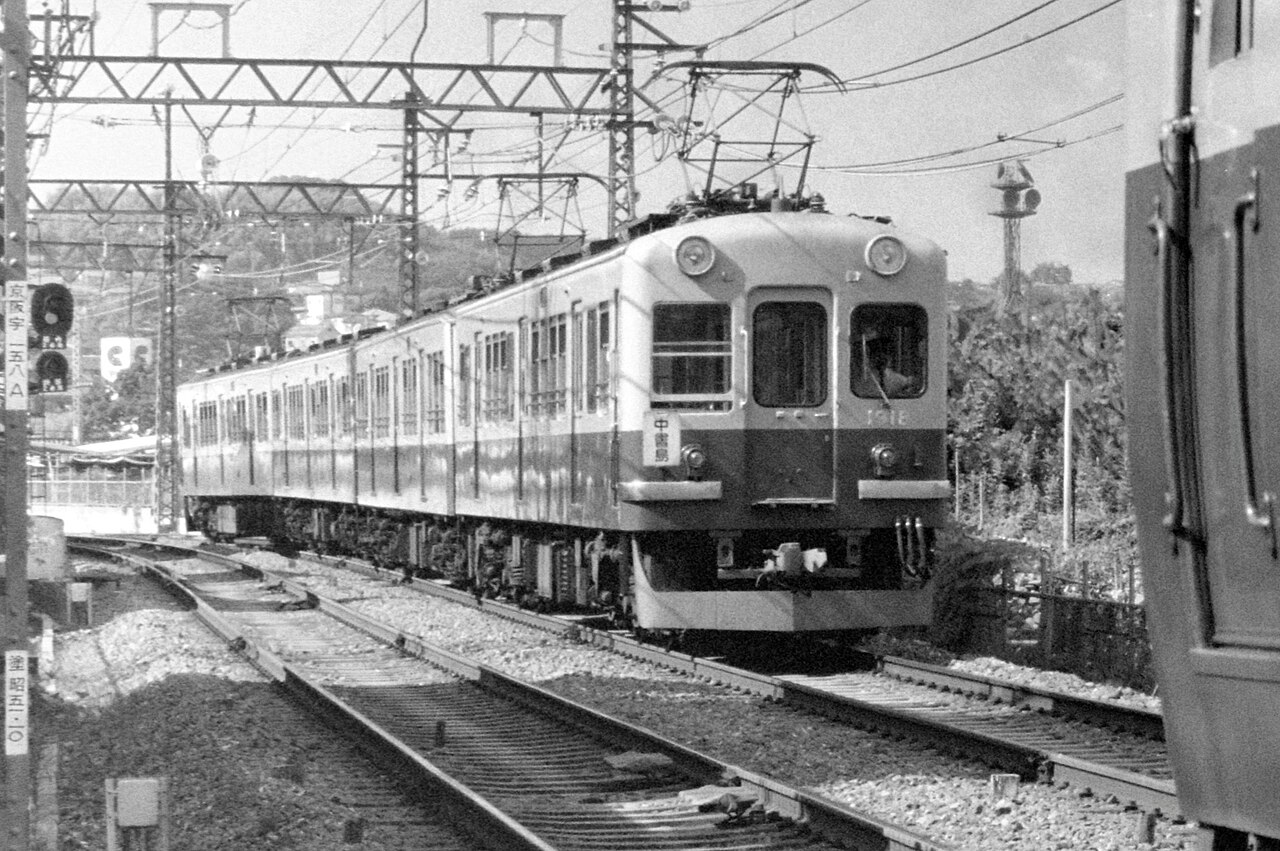
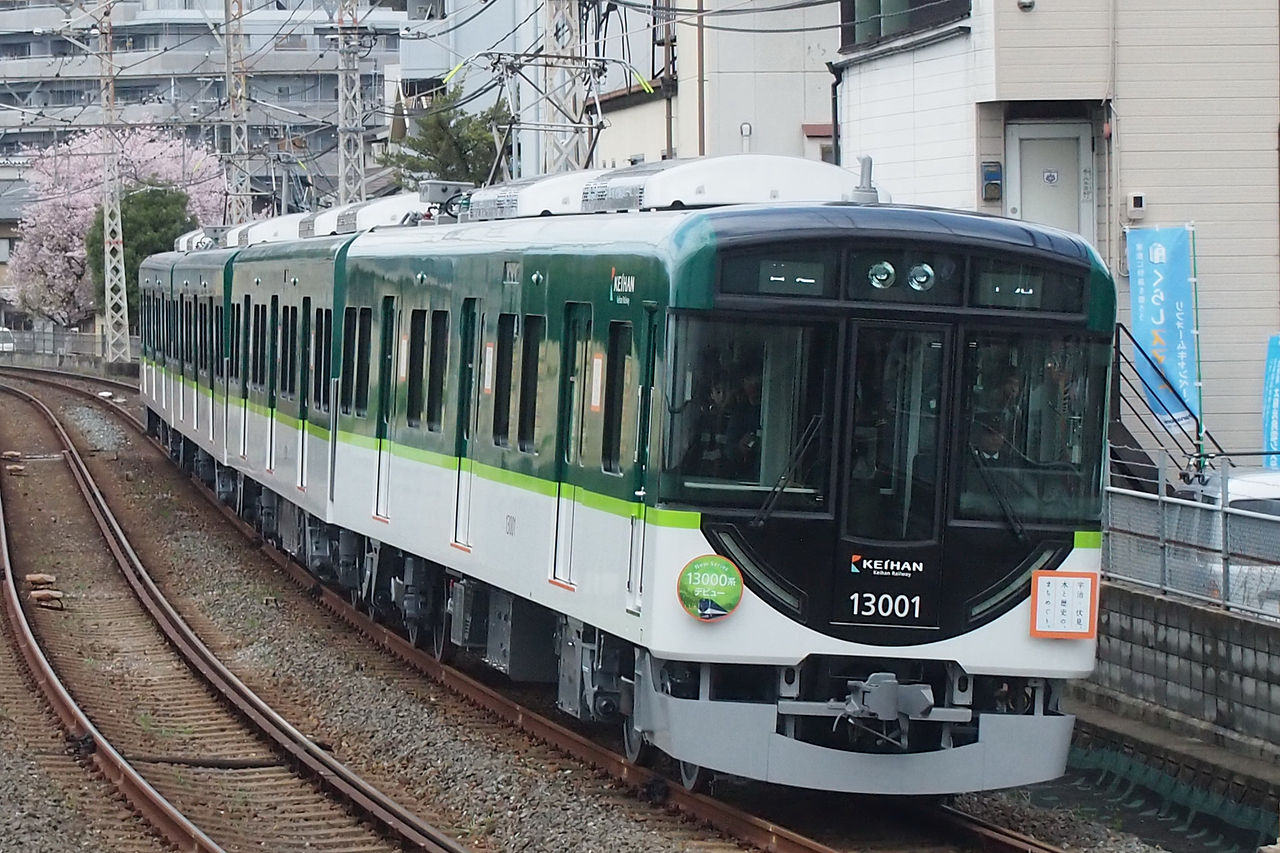
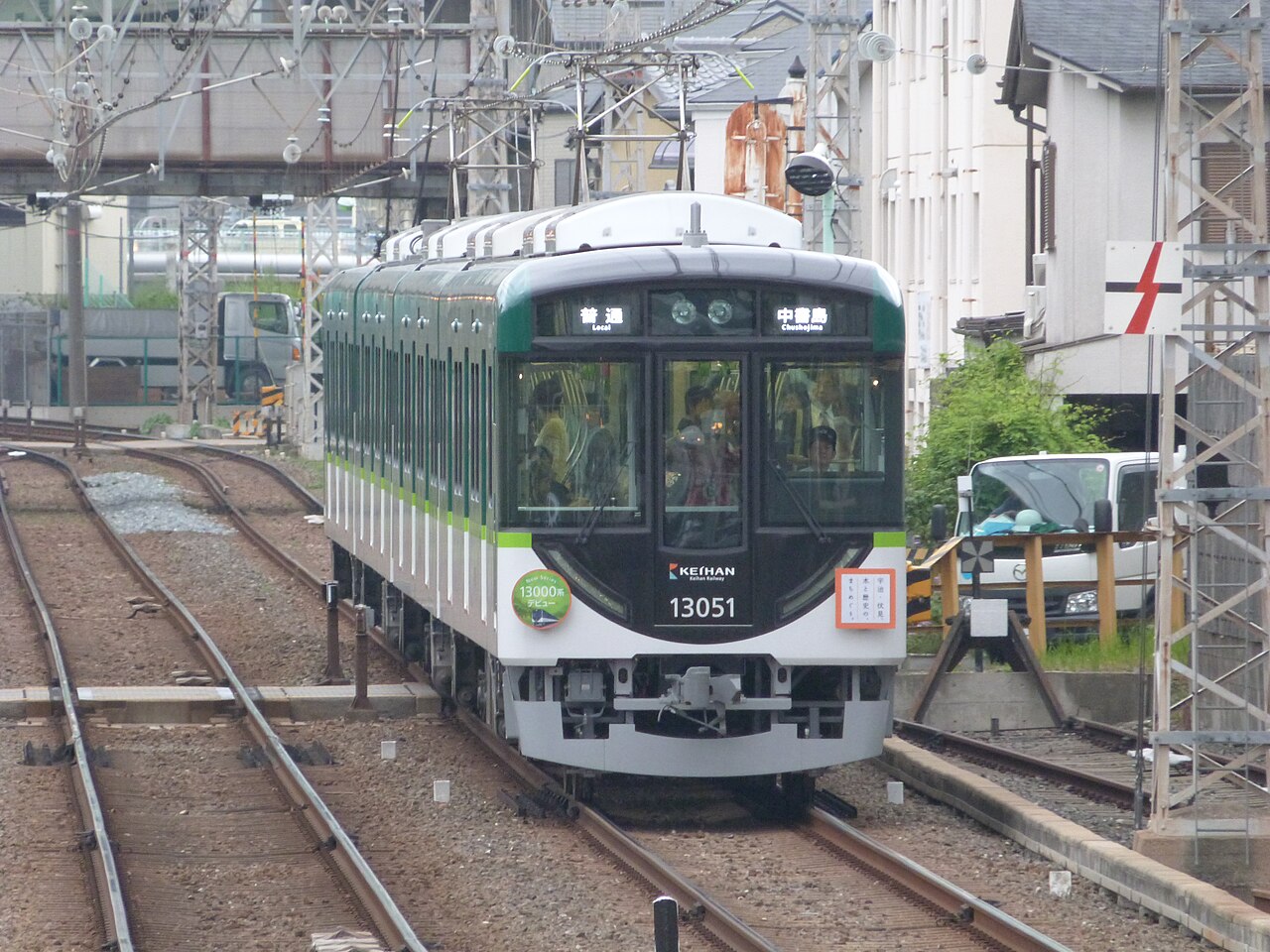
Today the line is worked by four-car local trains shuttling back and forth between Chūshojima and Uji, with connections to Keihan Main Line limited-express and rapid services at Chūshojima. New 13000 series four-car electric multiple units were introduced from April 2012, replacing the earlier 2600 series. One-man (driver-only) operation began across the whole Uji Line on 1 June 2013 — the fourth Keihan line to adopt it, after the Keishin Line (2002), the Ishiyama-Sakamoto Line (2003) and the Katano Line (2007) — and a special headmark marked the line's 100th anniversary that month. Station numbering was introduced on 1 April 2014, and the line's K-ATS protection system entered service line-wide on 4 February 2017.
Timeline
- 1907January: a track-laying licence for the route is obtained by the Ujigawa Electric Tramway Company.
- 1910November (22nd): Keihan Electric Railway acquires the route licence from the Ujigawa Electric Tramway for ¥8,000.
- 191319 January: the construction licence is granted. 1 June: the Chūshojima–Uji line opens, electrified at 600 V DC.
- 191413 September: freight service begins.
- 19171 February: Mimuroto Station opens. September–October: the ‘Taishō Great Flood’ inundates the Chūshojima–Rokujizō section.
- 1926Ōbakuzan Station is renamed Ōbaku Station.
- 19431 October: a corporate merger places the line under Keihanshin Kyūkō Dentetsu (the Hankyū group).
- 19491 December: a corporate separation makes the line the Keihan Electric Railway Uji Line.
- 196620 March: track near Rokujizō is relocated onto a raised embankment as part of Yamashina River levee works.
- 196711 December: all trains are lengthened to four cars.
- 196829 January: ATS (automatic train stop) comes into use.
- 197810 March: the whole line is reclassified from a tramway (Tramways Act) to a railway (Local Railway Act).
- 1983December: the overhead voltage is raised from 600 V DC to 1,500 V DC (JA chronology: 4 December).
- 198927 September: the evening rush-hour express from Sanjō to Uji is withdrawn.
- 199517 June: Uji Station is relocated, shortening the line by 0.2 km; six-car trains can no longer enter the line.
- 20001 July: through trains to Sanjō are cut to two weekday-morning services; Chūshojima becomes an all-day Limited Express stop.
- 20036 September: through-running to Sanjō is abolished.
- 2012April: 13000 series four-car EMUs are introduced, replacing the 2600 series.
- 20131 June: one-man (driver-only) operation begins line-wide — the fourth Keihan line to adopt it; a 100th-anniversary headmark is carried that month.
- 20141 April: station numbering is introduced on the line.
- 20174 February: the K-ATS protection system enters service line-wide.
Sources
Facts last verified 3 June 2026.
Gallery 6 photos
Every photo for this page — tap any image to view it full-size. All from Wikimedia Commons (credit under each).