History
The line began as an interurban electric railway. The Keiō Electric Tramway opened the Sasazuka–Chōfu section (12.1 km) on 15 April 1913, with the Yoyohata–Sasazuka section following on 11 October 1913. It extended in both directions, through-connecting the original Shinjuku-Oiwake terminus to Fuchū in 1916; until the gaps closed it ran connecting buses, which the Japanese source describes as the first bus operation in Tokyo. The line was laid along the Kōshū Kaidō, linking the highway's former post towns, whereas the competing government Chūō Main Line, opened in 1889 and nationalised in 1906, ran a straighter course well to the north.
The extension beyond Fuchū was built by a related company, the Gyokunan Electric Railway, which opened the Fuchū–Higashi-Hachiōji section (16.3 km; Higashi-Hachiōji is today's Keiō-Hachiōji) on 24 March 1925. To qualify for a government subsidy, Gyokunan built this stretch as a railway under the Local Railway Act rather than as a tramway, and to the Japanese standard narrow gauge of 1,067 mm, so the two companies' trains could not run through onto each other's tracks. The subsidy was refused on the grounds that the line competed with the Chūō Main Line. Keiō therefore absorbed Gyokunan on 1 December 1926, re-gauged the section to 1,372 mm (completed 1 June 1927), and began through operation to Higashi-Hachiōji on 22 May 1928. The line was progressively double-tracked from 1920, ending with Kitano–Keiō-Hachiōji on 3 June 1970, after which it was double-tracked throughout. Under wartime consolidation the company was merged into Tokyo Kyuko Dentetsu (Tokyu) in 1944, and in 1948, when the 'Greater Tokyu' combine was broken up, the Keiō lines were spun off into the newly independent Keio Teito Electric Railway.
The Tokyo-end approaches were rebuilt from the 1960s onward; sections east of Hatagaya had originally been street-running track on the Kōshū Kaidō. The Shinjuku underground station opened in 1963, the overhead voltage was raised to 1,500 V DC, limited-express service began, and the eastern terminus was shifted about 120 m toward Shinjuku and renamed Keiō-Hachiōji — all in 1963. The Shinjuku–Sasazuka segment was quadruple-tracked on 31 October 1978 with the opening of the Keiō New Line, when Hatsudai and Hatagaya moved onto the new line; through-running with the Toei Shinjuku Subway Line began in 1980. Keiō-Hachiōji Station was put underground in 1989, and the line around Chōfu was placed underground to remove the flat junction with the Keiō Sagamihara Line, the Chōfu-to-Kokuryō section completing in 2012.
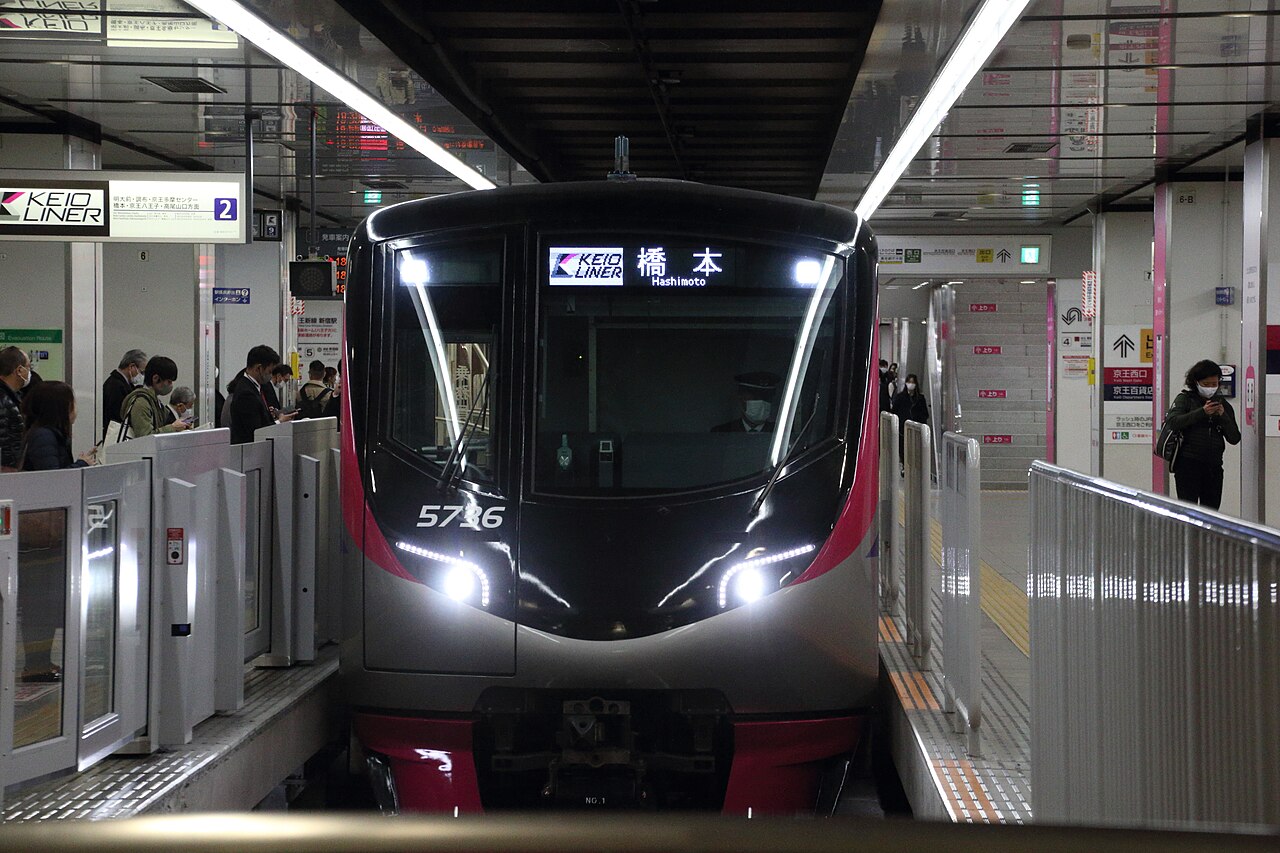
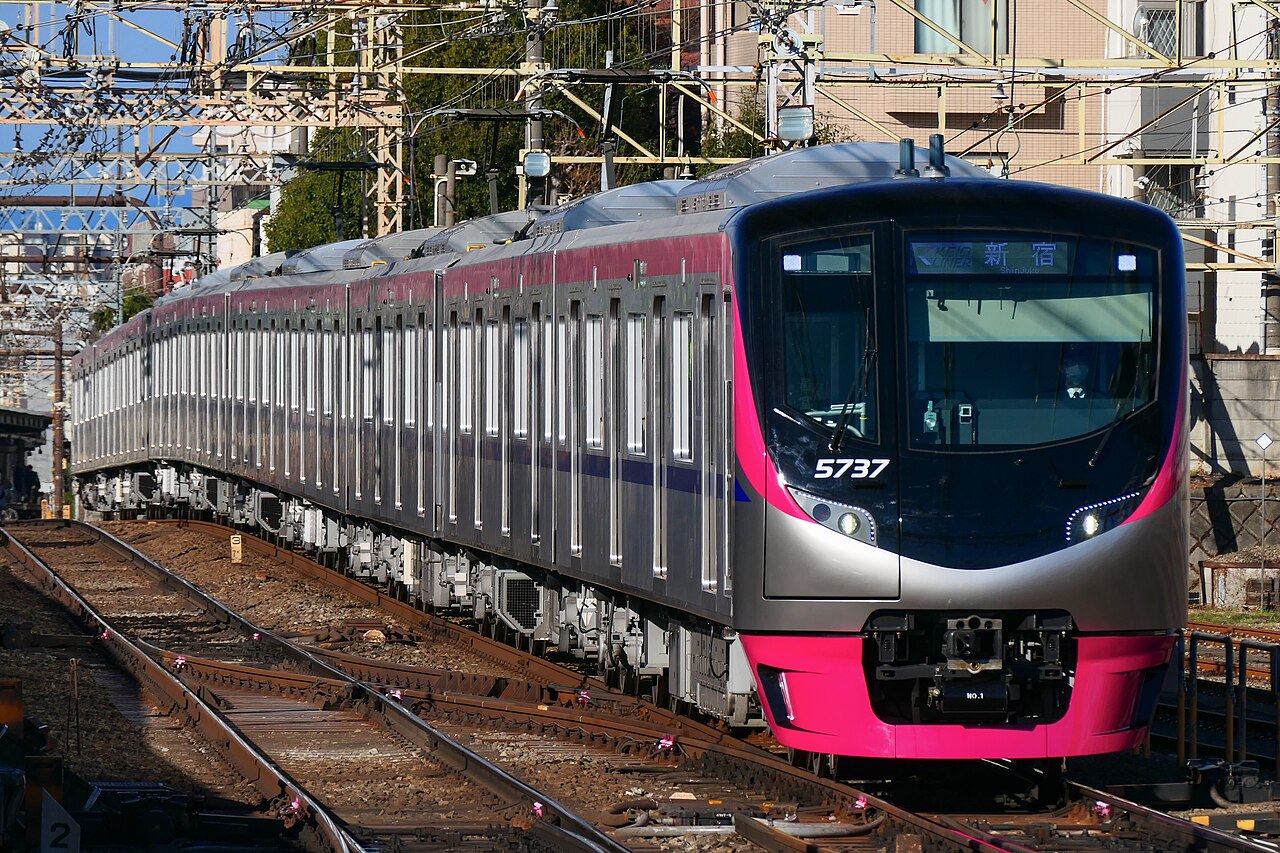
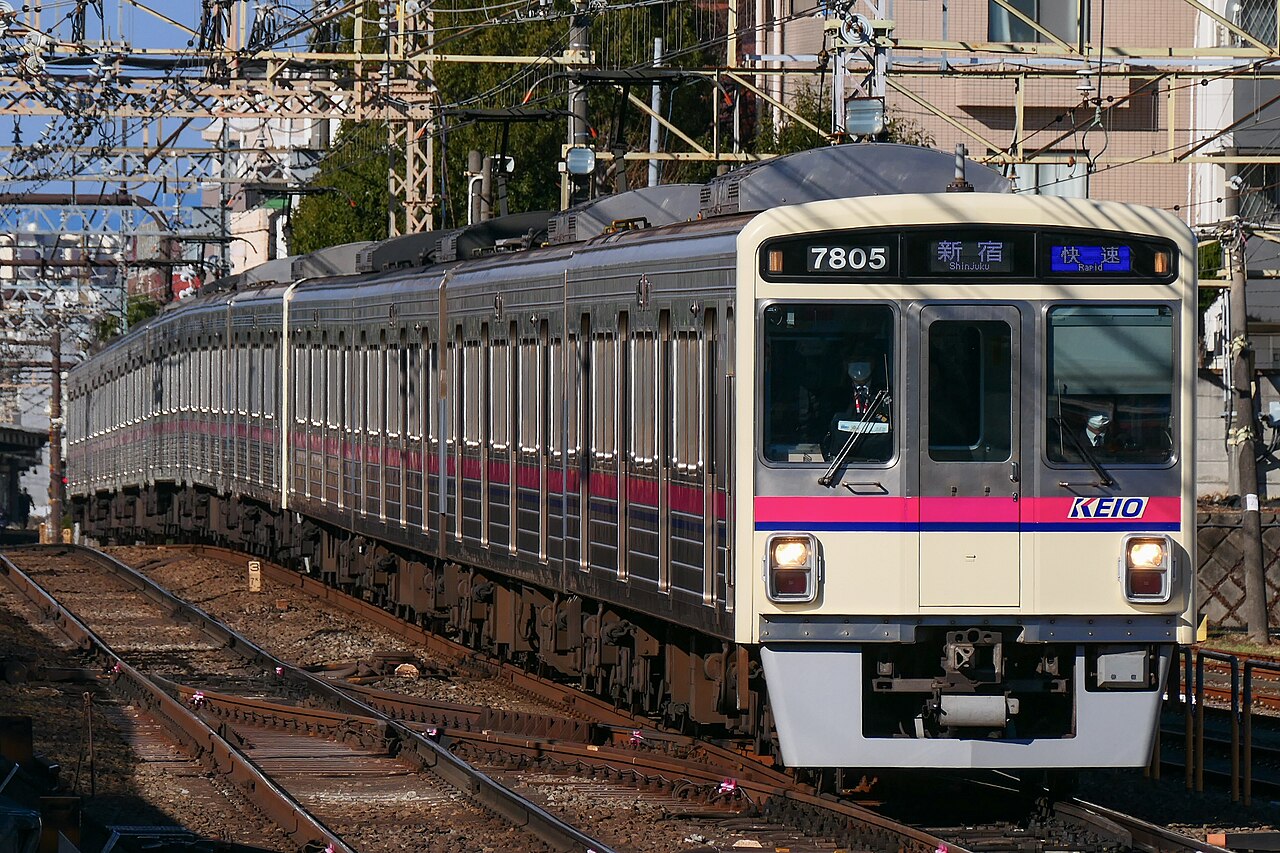
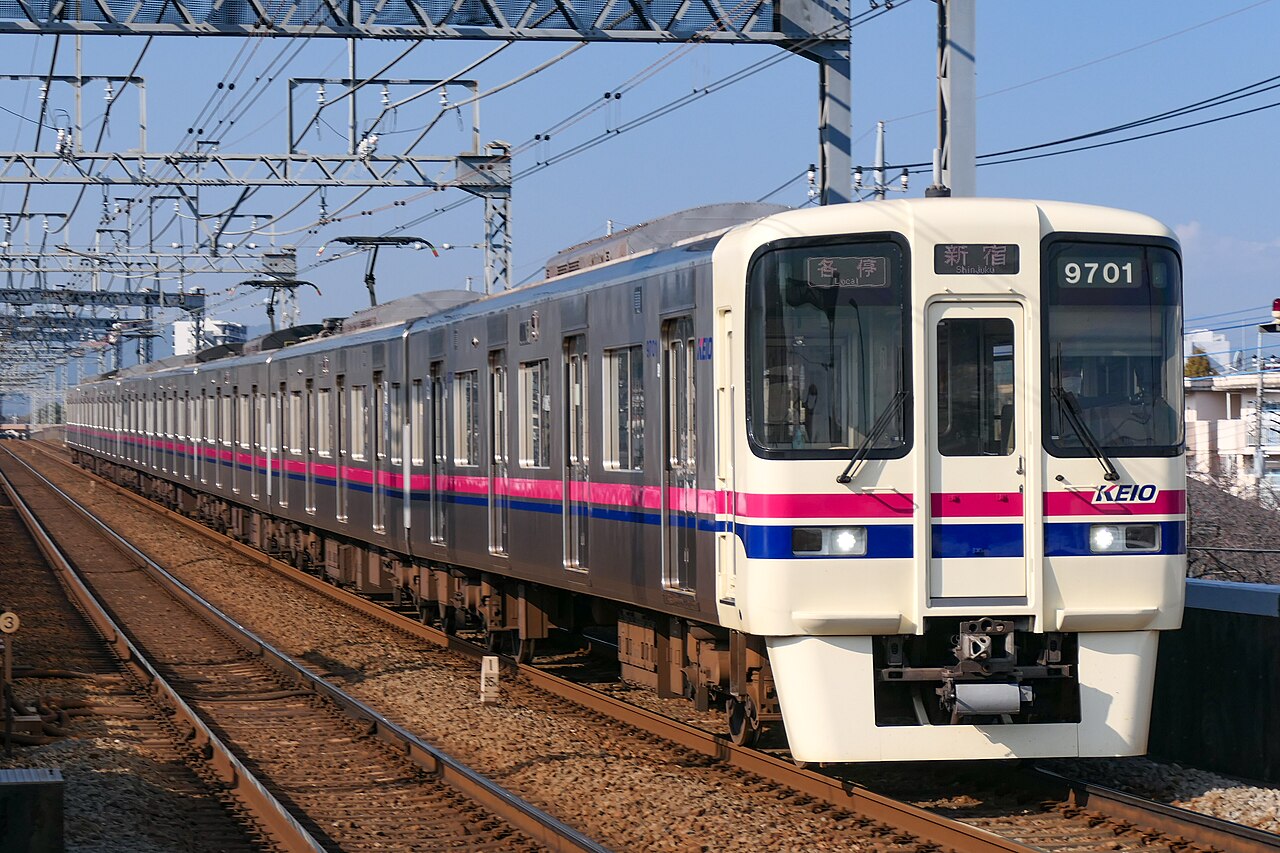
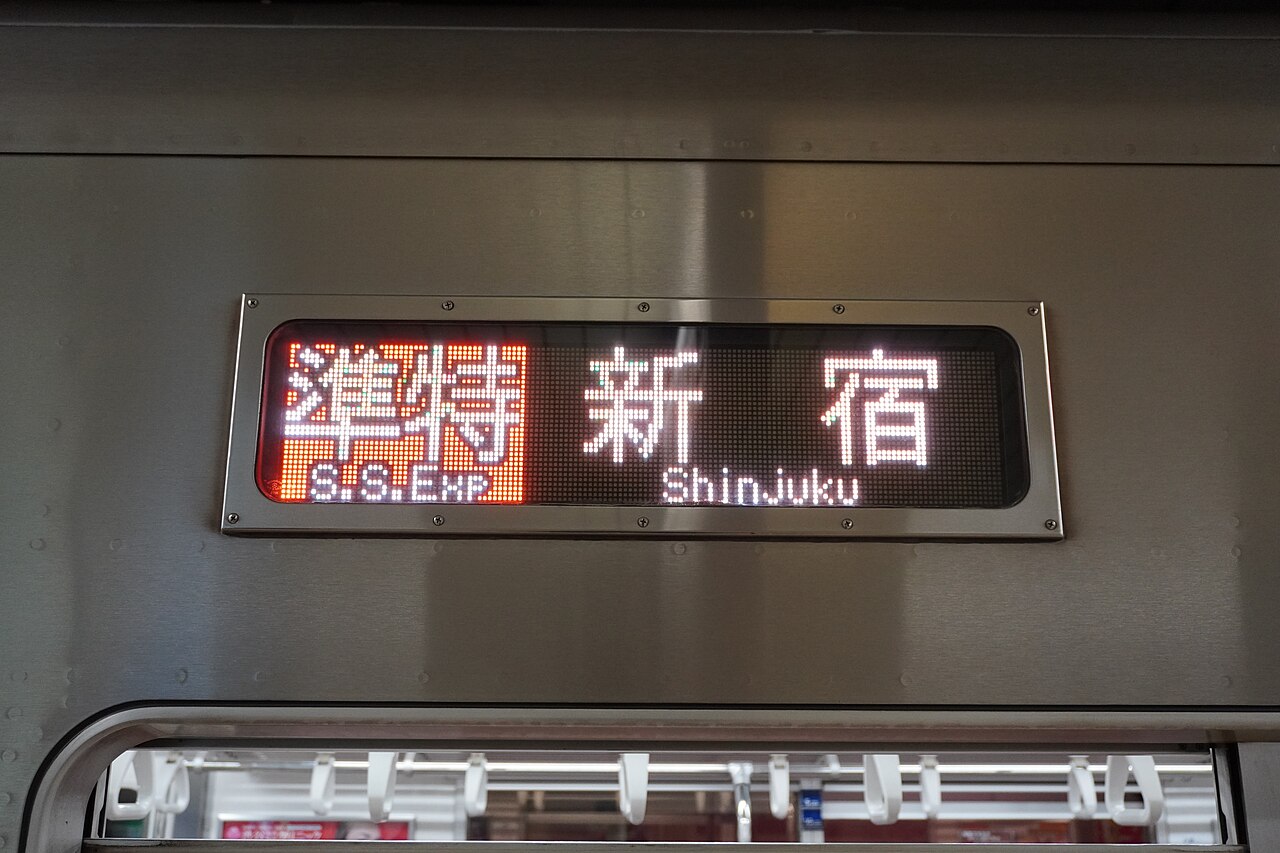
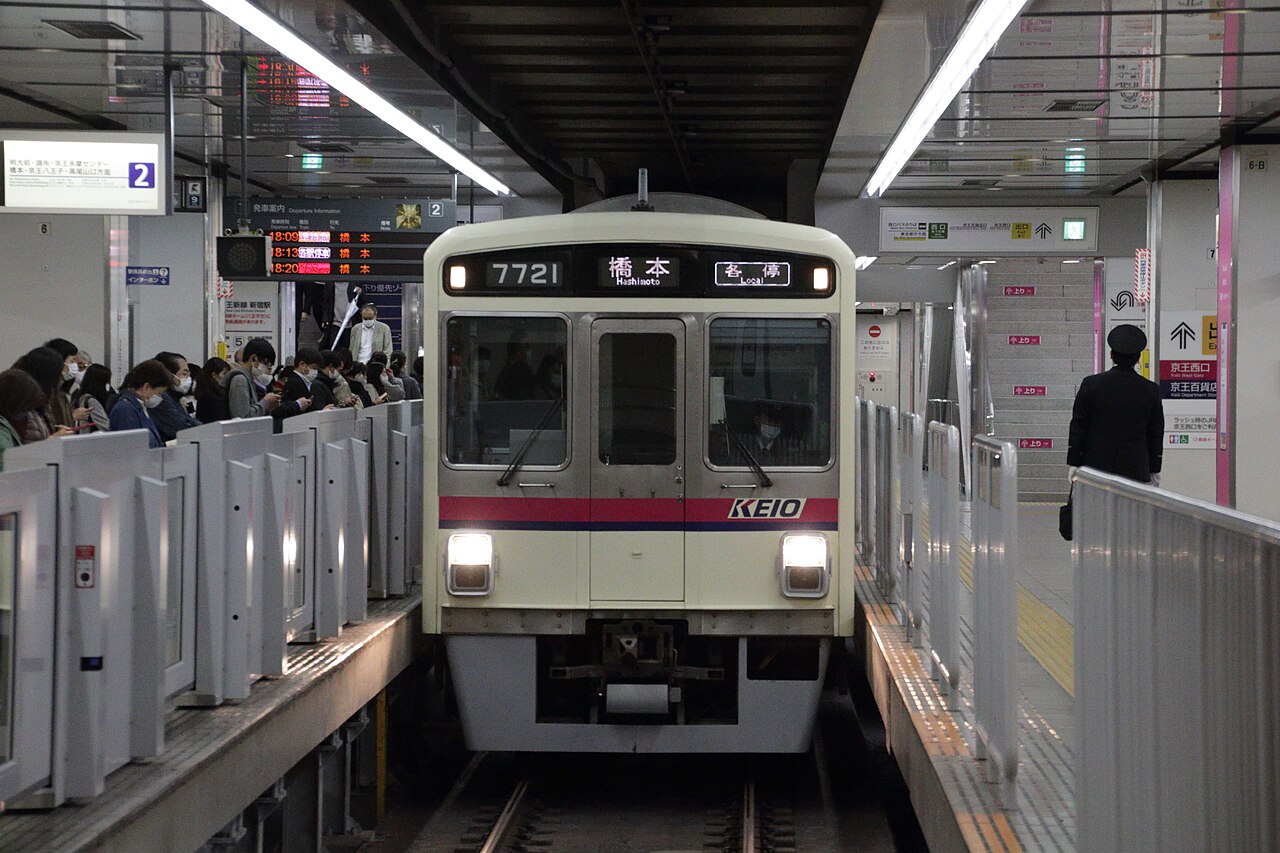
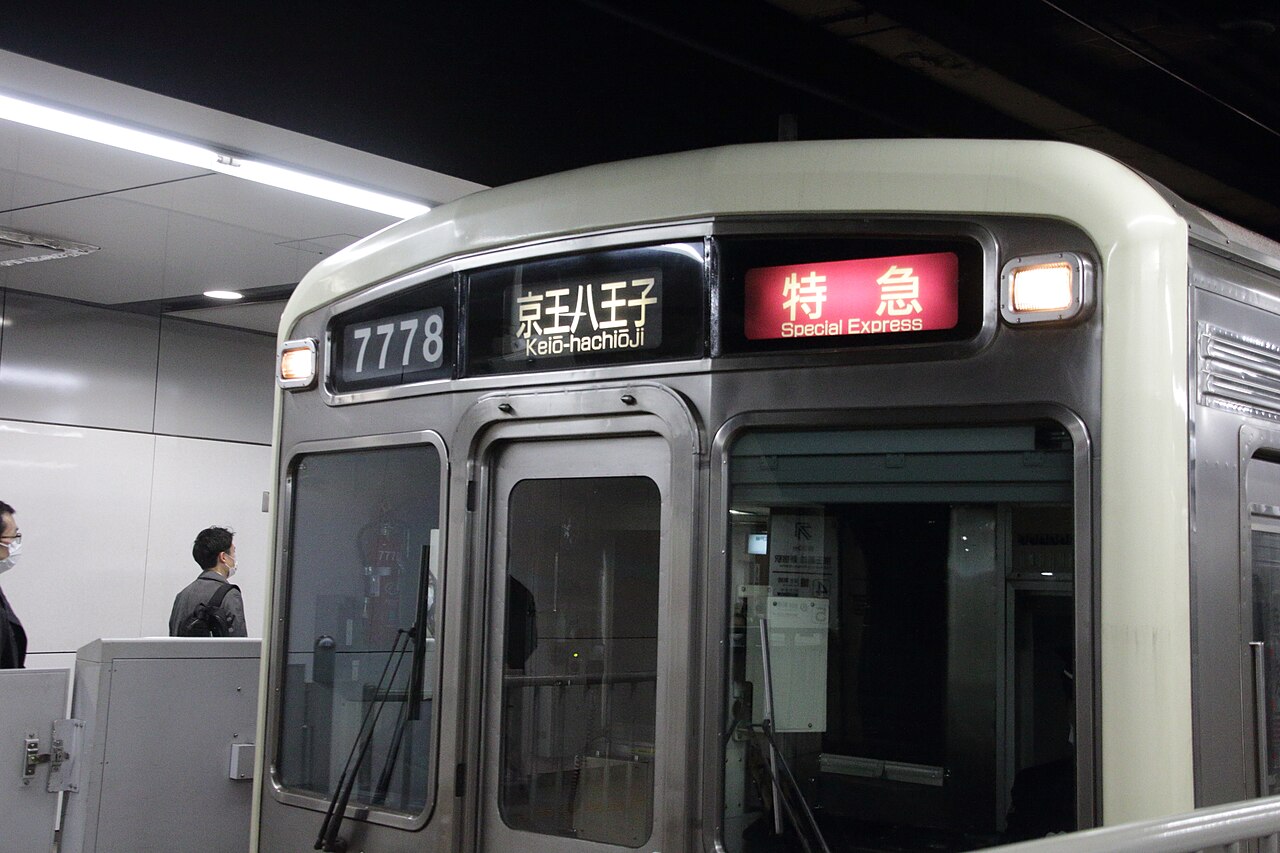
The operator was renamed from Keio Teito Electric Railway to Keio Corporation on 1 July 1998. Today the Keiō Line forms part of an interconnected network with through services to the Keiō New Line, Sagamihara Line, Keibajō Line, Dōbutsuen Line and Takao Line, plus the separate 1,067 mm-gauge Inokashira Line. Six grades of limited-stop service run alongside local trains — Rapid, Semi Express, Express, Special Express, the weekend-only Mt. TAKAO service, and the Keiō Liner, a reserved-seat, supplementary-fare service introduced on 22 February 2018 linking Shinjuku with Keiō-Hachiōji and with Hashimoto on the Sagamihara Line. A Special Express covers Shinjuku to Keiō-Hachiōji in 37 minutes. Through services carry visitors toward Mount Takao, which the Japanese source describes as having the highest number of mountain visitors in Japan.
The Keiō Line is heavily used and notably congested. The English Wikipedia infobox records a 2010 daily ridership figure of 1,349,238 (sourced from Keio via Train Media), and Keio's Shinjuku Station handles a daily average of over 700,000 users — second among private-railway terminals after Tokyu's Shibuya. In fiscal 2024 the busiest section was Shimo-Takaido to Meidaimae, with a morning peak-hour congestion rate of 143 percent. The line is also known for its level crossings: 25 of them lie on the 7.2 km between Sasazuka and Sengawa, which the Tokyo Metropolitan Government Construction Bureau classifies as 'akazu no fumikiri' ('crossings that never open') because they are shut to road traffic for more than 40 minutes in an hour. A continuous grade-separation project for that section is under way, its authorisation period extended by national notice in 2022 to the end of fiscal 2030.
Timeline
- 191315 April: the Keiō Electric Tramway opens the Sasazuka–Chōfu section (12.1 km); the Yoyohata–Sasazuka section (1.3 km) follows on 11 October.
- 1916The route from the Shinjuku-Oiwake terminus to Fuchū is through-connected; connecting buses had bridged the unfinished gaps.
- 192524 March: the related Gyokunan Electric Railway opens the Fuchū–Higashi-Hachiōji section (16.3 km), built to 1,067 mm gauge as a Local Railway Act line to seek a government subsidy.
- 19261 December: after the subsidy is refused (competition with the Chūō Main Line), Keiō merges Gyokunan.
- 19271 June: re-gauging of the Fuchū–Higashi-Hachiōji section from 1,067 mm to 1,372 mm is completed.
- 192822 May: through operation begins between Shinjuku-Oiwake and Higashi-Hachiōji.
- 1929The Fuchū–Nakagawara and Seiseki-Sakuragaoka–Kitano sections are double-tracked.
- 194431 May: under wartime transport consolidation the company is merged into Tokyo Kyuko Dentetsu (Tokyu).
- 19481 June: on the break-up of the 'Greater Tokyu' combine, the line passes to the newly independent Keio Teito Electric Railway.
- 19631 April: the Shinjuku underground station opens. 4 August: overhead voltage is raised to 1,500 V DC. 1 October: limited-express service begins between Shinjuku and Higashi-Hachiōji. 11 December: the eastern terminus is moved ~120 m and renamed Keiō-Hachiōji.
- 196421 April: the Nakagawara–Seiseki-Sakuragaoka section is double-tracked.
- 19703 June: the Kitano–Keiō-Hachiōji section is double-tracked, completing double-tracking of the entire Keiō Line.
- 197831 October: the Shinjuku–Sasazuka segment is quadruple-tracked with the opening of the Keiō New Line; Hatsudai and Hatagaya stations move onto the new line.
- 198016 March: mutual through-running with the Toei Shinjuku Subway Line begins.
- 19892 April: Keiō-Hachiōji Station is put underground.
- 19981 July: the operator is renamed from Keio Teito Electric Railway to Keio Corporation.
- 2012The underground section of the line from around Chōfu Station to Kokuryō is completed, removing the flat junction with the Sagamihara Line.
- 201822 February: the reserved-seat, supplementary-fare Keiō Liner service is introduced (Shinjuku to Keiō-Hachiōji and Hashimoto).
- 202215 March: a national notice extends the authorisation period of the Sasazuka–Sengawa continuous grade-separation project to the end of fiscal 2030.
Sources
Facts last verified 3 June 2026.
Gallery 6 photos
Every photo for this page — tap any image to view it full-size. All from Wikimedia Commons (credit under each).