History
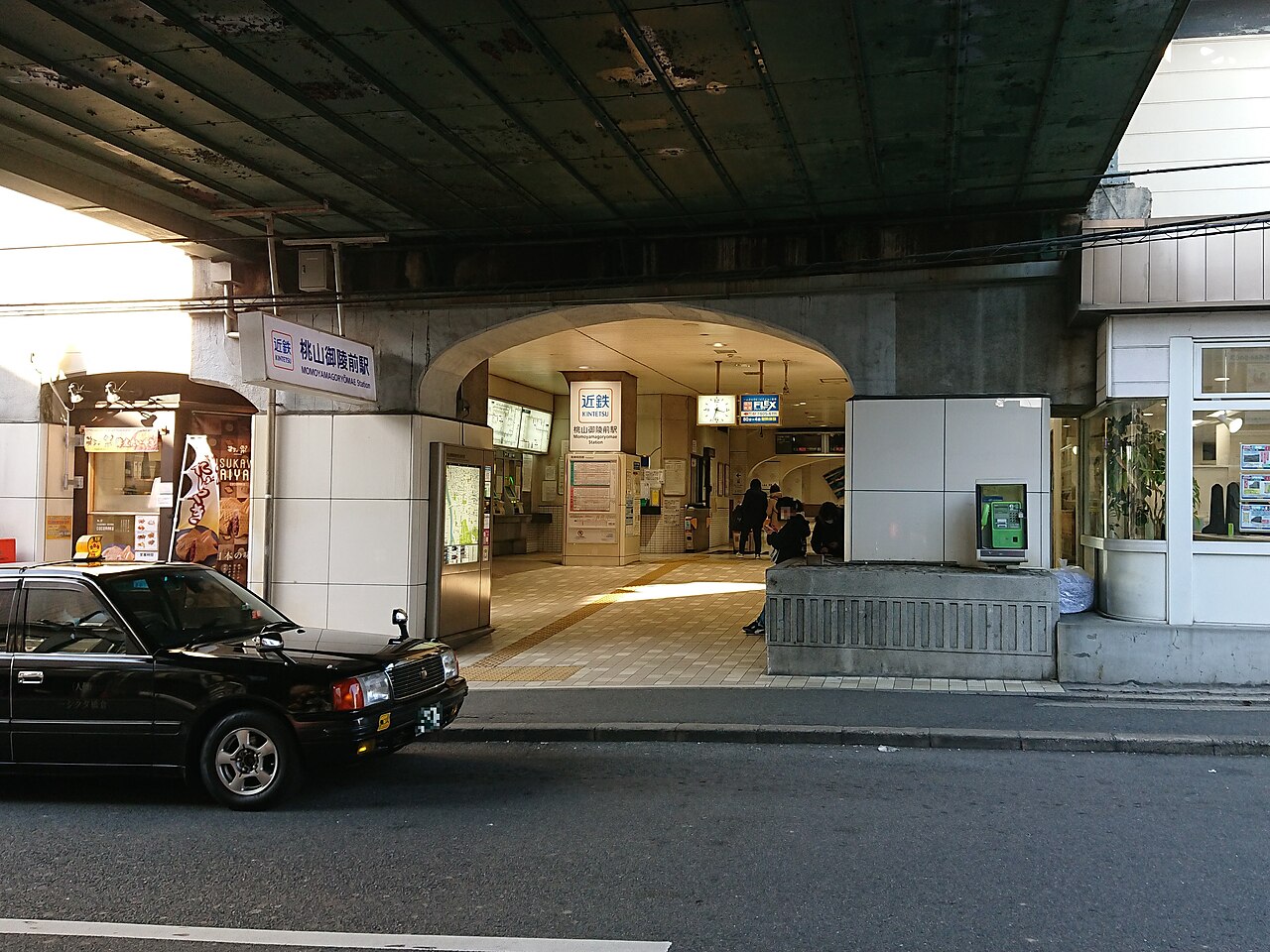
The line was built by the Nara Electric Railway (Nara Denki Tetsudo), a joint venture of the Keihan Electric Railway and the Osaka Electric Tramway (“Daiki,” a forerunner of Kintetsu), to connect two ancient capitals that until then had no private railway of their own. It opened in two stages in November 1928: the southern section from Momoyama-goryomae to Saidaiji (today’s Yamato-Saidaiji) entered service on 3 November 1928, and the remaining Kyoto–Momoyama-goryomae section opened on 15 November 1928, completing the route. It was built as a double-track line electrified at 600 V DC. The stretch between Kyoto Station and the present Kintetsu-Tambabashi Station was laid on the site of a former railway that had been rerouted — a line now known as the JR Nara Line. From its opening the railway ran through services onto the lines of the Osaka Electric Tramway, the Nara Line and the Unebi Line (present-day Kashihara Line). One legacy of the difficult route selection north of the Uji River is the Yodogawa truss bridge between Momoyama-goryomae and Mukaijima, described in Japanese sources as Japan’s longest single simple-truss span at 164.6 metres.
For its first decades the Nara Electric Railway also exchanged trains with the Keihan network. From 21 December 1945 its trains ran through at Tambabashi onto the Keihanshin Express (later Keihan) Kyoto line as far as Sanjo, and from 1 April 1947 Keihan trains ran the other way into Kyoto Station; these reciprocal Keihan through services lasted until 20 December 1968, when the shared Tambabashi arrangement was dissolved and Kintetsu’s Tambabashi station was separated out.
Ownership consolidated under Kintetsu over the early 1960s. As of September 1961 Kintetsu was the Nara Electric Railway’s largest shareholder, holding 980,000 of the company’s 1.9 million shares, while the Keihan Electric Railway held 710,000; under a deal between the two major shareholders the Keihan-held shares were transferred to Kintetsu in April 1962, and the company was merged into Kintetsu on 1 October 1963, at which point the route became the Kyoto Line.
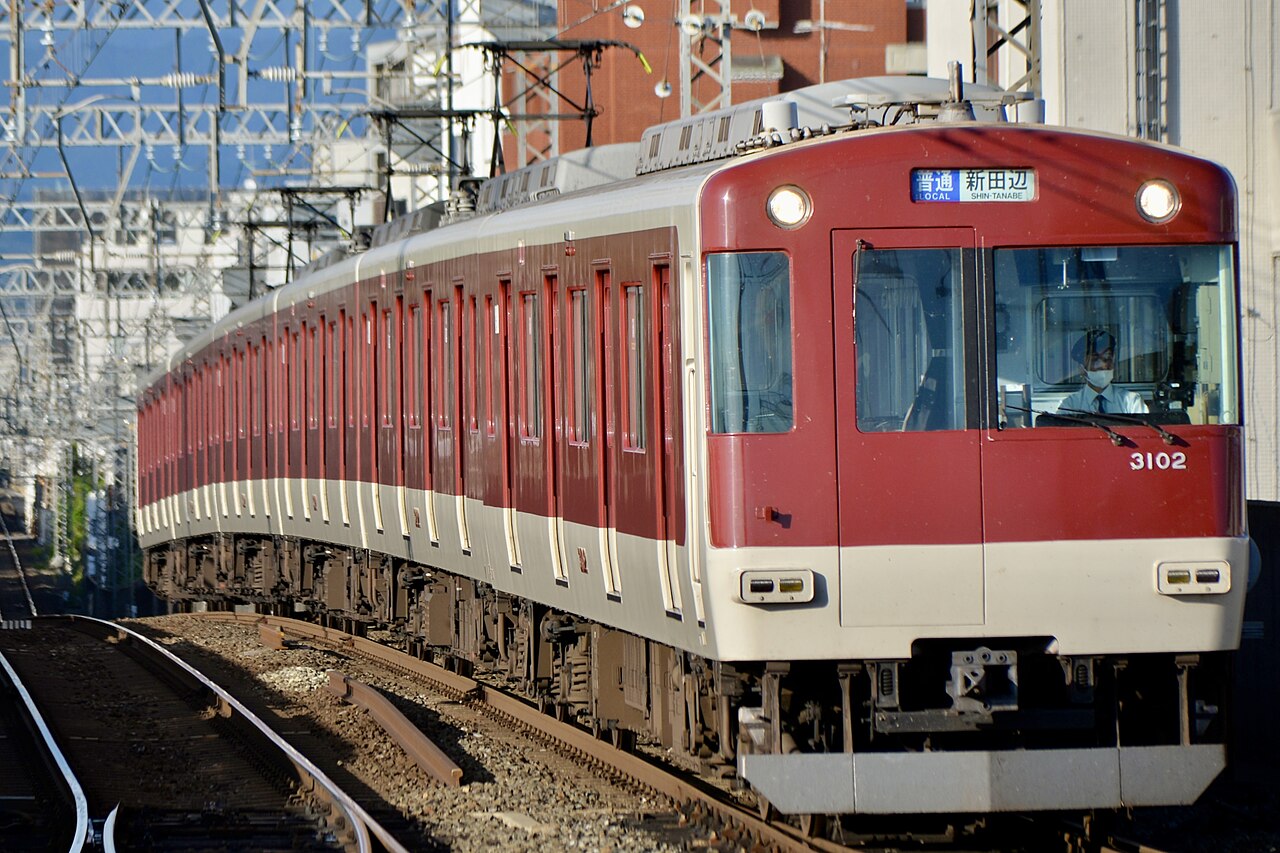
Infrastructure was upgraded through the post-war decades. The Kyoto–Toji section was elevated in September 1969, and on 21 September 1969 the catenary voltage was raised from 600 V to 1,500 V DC, the standard the line still uses. New suburban stations were added as the corridor developed, including Takanohara in 1972, and — as the Kansai Science City took shape along the southern part of the line — Kintetsu Miyazu in 1993 and Kizugawadai in 1994. Through running with the Kyoto Municipal Subway began on 28 August 1988, when reciprocal service with the subway’s Karasuma Line started (initially only as far as Kitaoji); the through-service section was extended on 24 October 1990 following the Karasuma Line’s Kitaoji–Kitayama extension.
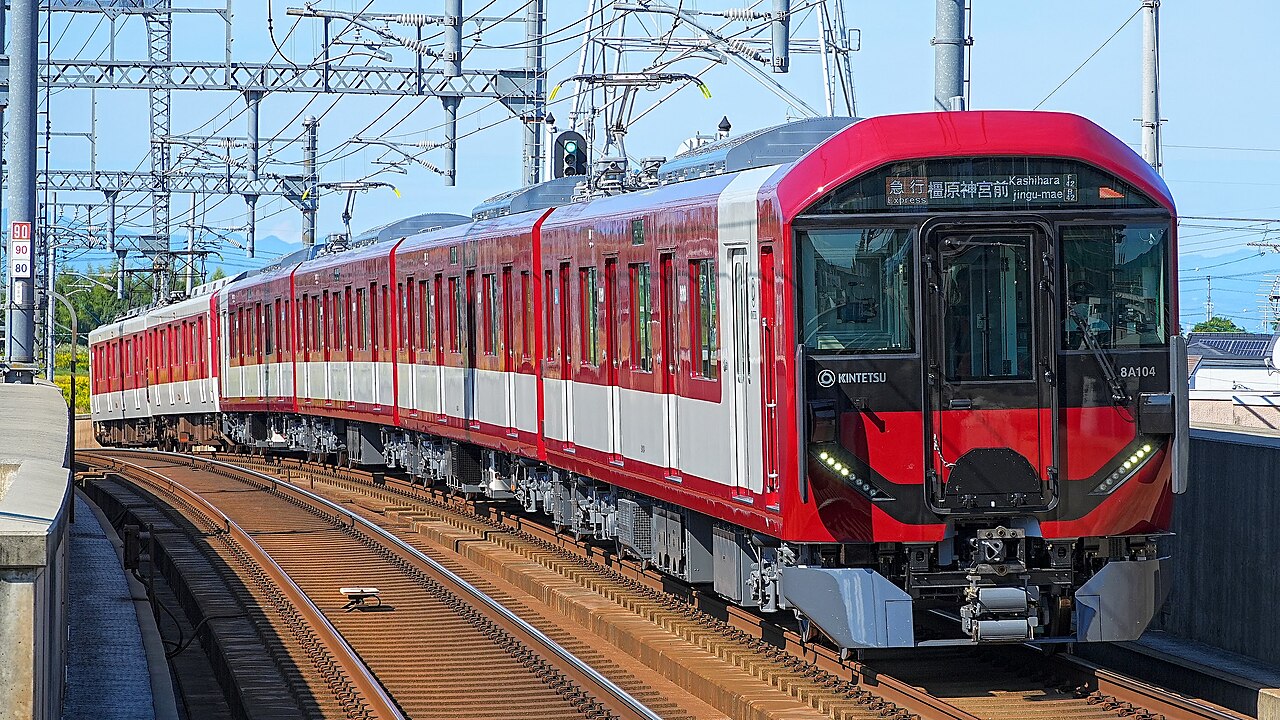
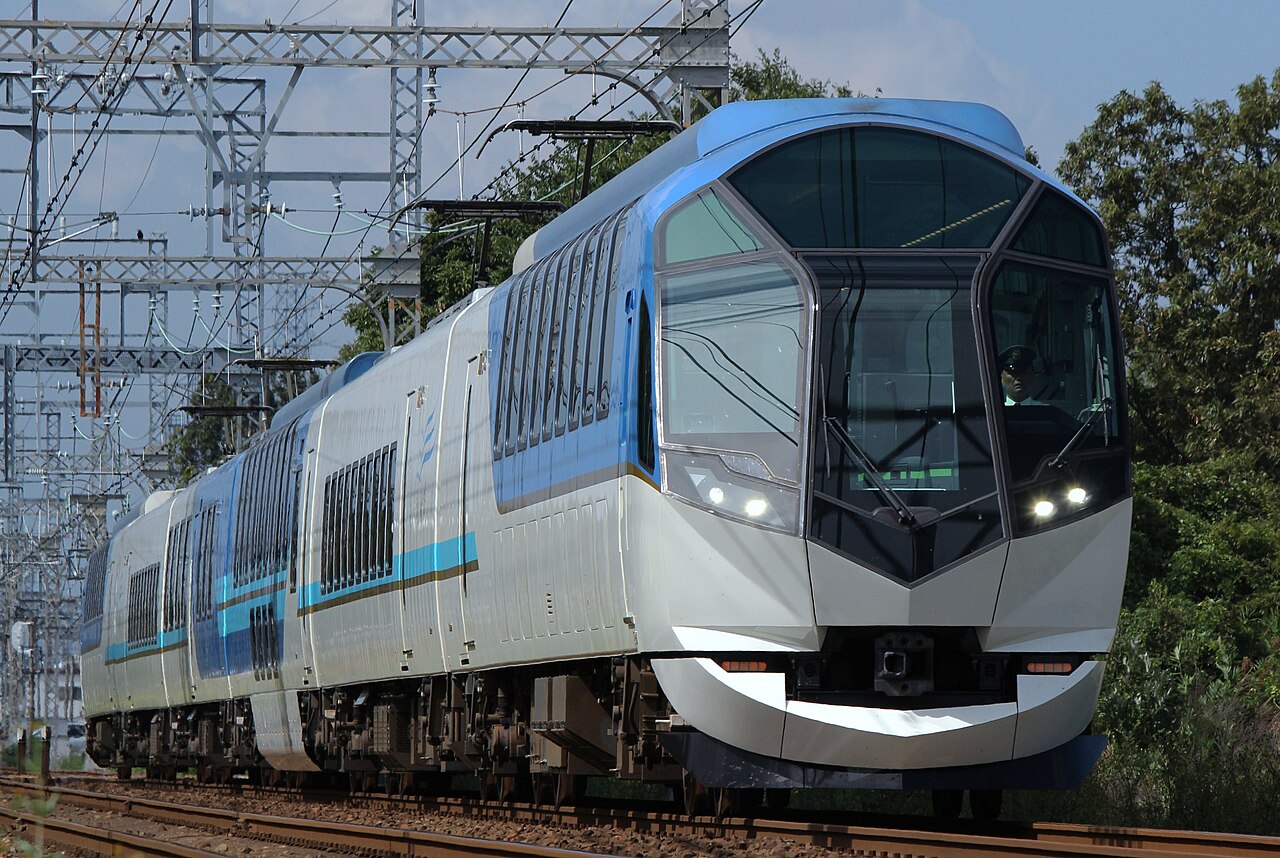
Today the Kintetsu Kyoto Line is built to standard gauge (1,435 mm), is double-track throughout, electrified at 1,500 V DC, and has a maximum operating speed of 105 km/h. It has 26 stations between Kyoto and Yamato-Saidaiji and runs limited express, express, semi-express and local services. Many trains continue beyond Yamato-Saidaiji — the foremost rail junction in Nara City, where the Kyoto, Nara and Kashihara lines meet — onto the Kintetsu Nara Line to Kintetsu Nara Station or onto the Kashihara Line, with limited expresses running through toward Kashiharajingu-mae and, via the Osaka Line, to the Ise-Shima region; some express and local trains also through-run from Takeda Station onto the Karasuma Line to Kokusaikaikan. The line functions both as a Kyoto commuter route and as a tourist artery between two of Japan’s major historic cities, competing with the parallel JR Nara Line, on which JR-West has run rapid services since 1991.
Timeline
- 19283 November: the Nara Electric Railway opens the Momoyama-goryomae–Saidaiji (present-day Yamato-Saidaiji) section; the Kyoto–Momoyama-goryomae section opens on 15 November, completing the line, built double-track at 600 V DC.
- 194521 December: Nara Electric trains begin through service at Tambabashi onto the Keihanshin Express (later Keihan) line toward Sanjo.
- 19471 April: Keihanshin Express (later Keihan) trains begin through running from Tambabashi into Kyoto Station.
- 1961September: Kintetsu is the Nara Electric Railway's largest shareholder, holding 980,000 of 1.9 million shares; Keihan holds 710,000.
- 1962April: the Keihan-held shares in the Nara Electric Railway are transferred to Kintetsu.
- 19631 October: Kintetsu merges the Nara Electric Railway and the route becomes the Kyoto Line.
- 196820 December: reciprocal through service with Keihan at Tambabashi ends and Kintetsu's Tambabashi station is separated out.
- 196921 September: catenary voltage is raised from 600 V to 1,500 V DC (the Kyoto–Toji section was elevated earlier in September).
- 197222 November: Takanohara Station opens.
- 198828 August: reciprocal through service with the Kyoto Municipal Subway Karasuma Line begins (initially as far as Kitaoji).
- 199024 October: the Karasuma Line through-service section is extended following the Kitaoji–Kitayama extension.
- 199321 September: Kintetsu Miyazu Station opens.
- 199421 September: Kizugawadai Station opens.
Sources
Facts last verified 3 June 2026.
Gallery 4 photos
Every photo for this page — tap any image to view it full-size. All from Wikimedia Commons (credit under each).