History
The line did not begin as a single project; it was assembled from segments built by several different companies. The first section, between Takadahonzan and Shiroko, was opened by the Ise Electric Railway on 10 September 1915, and at this period the line was worked by steam locomotives. It was progressively extended — from Shiroko to Chiyozaki on 9 January 1916 and to Kusu on 22 December 1917 — while the original line also reached Tsu to the south on 1 January 1917, and by 25 December 1930 the company had connected Kuwana, Tsu and Daijingumae near the Ise Shrine (since closed). Meanwhile a subsidiary of the Ōsaka Electric Tram, the Sankyu Rapid Electric Railway, opened a branch from the present Ise-Nakagawa to Hisai on 18 May 1930. The Ise Electric Railway fell into economic crisis around this time and was merged into the Sankyu Rapid Electric Railway on 15 September 1936; the branch was extended from Hisai to Tsu on 20 June 1938. The final link was supplied by the Kansai Rapid Electric Railway, also a subsidiary of the Ōsaka Electric Tram, which opened the section from Kuwana to Kintetsu Nagoya on 26 June 1938. On the same day Edobashi and Tsu were joined, completing the Nagoya Line as a through route.
Because of this piecemeal construction the line was built to two different track gauges. Edobashi became the boundary between a narrow-gauge section to its north and a standard-gauge section to its south; later in 1938 the boundary was moved to Ise-Nakagawa when the Ise-Nakagawa–Edobashi segment was itself narrowed. Through the wartime amalgamations — the merger of the Ōsaka Electric Tram and the Sankyu Rapid Electric Railway into the Kansai Rapid Railway in March 1941, and their incorporation into the Kintetsu Railway on 1 June 1944 — the line came under Kintetsu ownership. Kintetsu began running a paid limited express from Ōsaka Uehommachi to Kintetsu Nagoya in 1947, but passengers still had to change trains at Ise-Nakagawa because of the difference in gauge.
Two engineering campaigns shaped the modern line. Before 1956 the route through the city of Yokkaichi had many sharp curves where it linked the outlying JNR Yokkaichi Station with the city-centre Suwa Station; the curves capped the speed of limited express services, and rerouting works to straighten the line were completed in September 1956, with Suwa relocated and renamed Kintetsu Yokkaichi Station. The larger project was the unification of the gauge. Kintetsu planned from September 1958 to convert the narrow-gauge section to standard gauge so that trains could run through from Nagoya to Osaka. In 1959 the Ise-wan Typhoon severely damaged the line's infrastructure, and the reconstruction was carried out together with the gauge change; the line resumed operation on the new gauge 62 days after the typhoon struck. Through service from Ōsaka Uehommachi and Ujiyamada to Kintetsu Nagoya commenced on 12 December 1959. The former Ise Electric Railway route south beyond Edobashi, kept in service under Kintetsu, had by then become redundant and was closed in 1961.
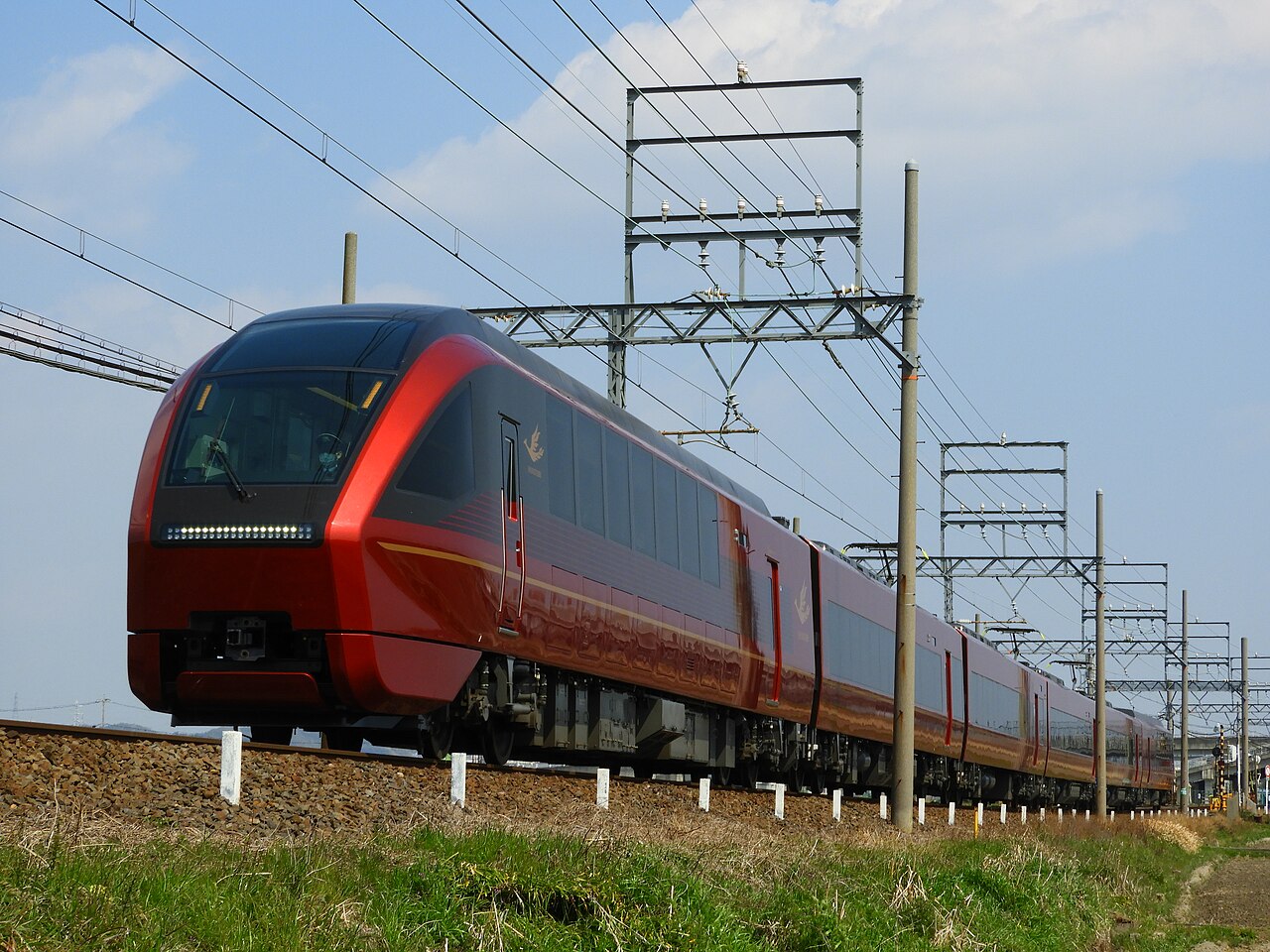
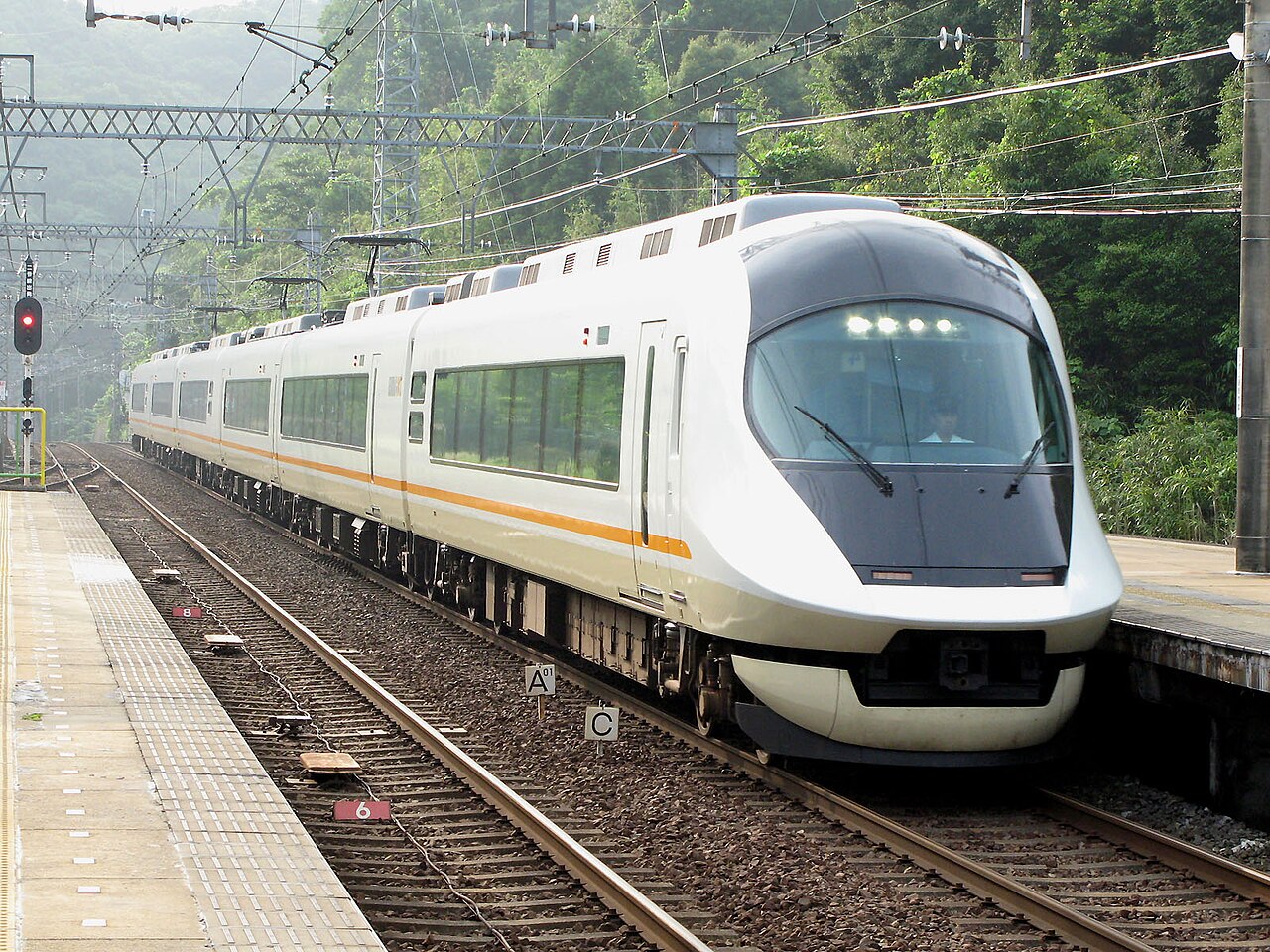
The gauge unification transformed the line's competitive position. Around the time through running began, the line's limited express service held 69.4 percent of the rail-transport market between Nagoya and Osaka; that share fell to 19 percent in 1966 following the opening of the Tōkaidō Shinkansen in 1964, before recovering as JNR repeatedly raised its fares from 1976. Limited express trains began running at a maximum speed of 120 km/h in 1988 with the introduction of the Urban Liner service and the Kintetsu 21000 series, and Hinotori services commenced with the introduction of the Kintetsu 80000 series in 2020.
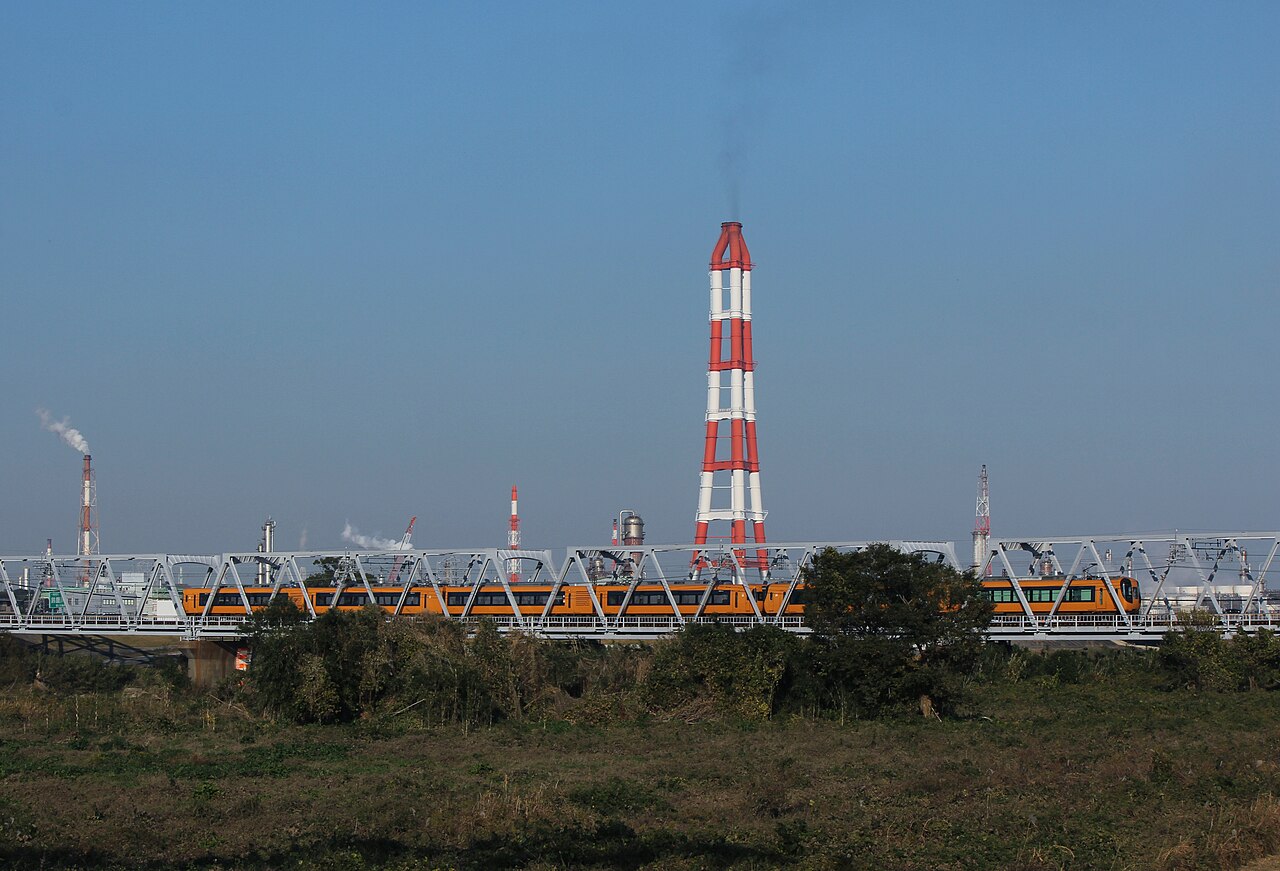
Today the Kintetsu Nagoya Line is double-tracked throughout, electrified at 1,500 V DC overhead, and laid to the 1,435 mm standard gauge (it used the 1,067 mm narrow gauge until 1959), with a maximum speed of 120 km/h across its 44 stations. As of September 2023 four classes of service operate — from most stops to fewest, local, semi-express, express and limited express — with local trains calling at every station and the semi-express terminating at Kintetsu Yokkaichi. Some express services run through onto the Kintetsu Yamada, Toba and Suzuka lines, and several named limited express services, including Hinotori, Shimakaze and Urban Liner, use the line. Via the Kintetsu Osaka and Namba lines, limited expresses run through to Ōsaka Namba; the Japanese-language article characterises the line as the principal Nagoya–Osaka (Meihan) trunk railway, second only to the Tōkaidō Shinkansen for travel between the two metropolitan areas. The line runs largely flat along the Ise plain and, unusually for a main line of its length, has almost no tunnels apart from the underground approach to Kintetsu Nagoya.
Timeline
- 191510 September: the Ise Electric Railway opens the first section, Takadahonzan–Shiroko, worked by steam locomotives.
- 19169 January: the line is extended from Shiroko to Chiyozaki.
- 19171 January: the original line reaches Tsu to the south. 22 December: extended from Kusu to Chiyozaki.
- 193018 May: the Sankyu Rapid Electric Railway (an Ōsaka Electric Tram subsidiary) opens a branch from present-day Ise-Nakagawa to Hisai. 25 December: Kuwana, Tsu and Daijingumae (near Ise Shrine; since closed) are connected.
- 193615 September: the financially troubled Ise Electric Railway is merged into the Sankyu Rapid Electric Railway.
- 193826 June: the Kansai Rapid Electric Railway opens Kuwana–Kintetsu Nagoya; Edobashi and Tsu are joined the same day, completing the Nagoya Line. Edobashi forms the narrow-/standard-gauge boundary, later moved to Ise-Nakagawa.
- 1941March: the Ōsaka Electric Tram and the Sankyu Rapid Electric Railway merge into the Kansai Rapid Railway.
- 19441 June: the line comes under Kintetsu Railway ownership through corporate incorporation.
- 1947Kintetsu begins a paid limited express from Ōsaka Uehommachi to Kintetsu Nagoya, still requiring a change of trains at Ise-Nakagawa due to the gauge difference.
- 1956September: rerouting works to straighten the sharp curves in Yokkaichi are completed; Suwa Station is relocated and renamed Kintetsu Yokkaichi.
- 1959The Ise-wan Typhoon severely damages the line; reconstruction is combined with the gauge change, and the line resumes on standard gauge 62 days after the typhoon. 12 December: through service from Ōsaka Uehommachi and Ujiyamada to Kintetsu Nagoya commences.
- 1961The redundant former Ise Electric Railway route south beyond Edobashi is closed.
- 1964Opening of the Tōkaidō Shinkansen; the line's limited-express share of Nagoya–Osaka rail traffic (69.4% earlier) falls to 19% by 1966.
- 1988Limited express trains begin running at 120 km/h with the Urban Liner service and the Kintetsu 21000 series.
- 2020Hinotori services commence with the introduction of the Kintetsu 80000 series.
Sources
Facts last verified 3 June 2026.
Gallery 3 photos
Every photo for this page — tap any image to view it full-size. All from Wikimedia Commons (credit under each).