History
The line was the founding route of the Osaka Electric Railway (Ōsaka Denki Kidō, known as Daiki), the direct corporate ancestor of today's Kintetsu Railway. It opened on 30 April 1914 between Uehommachi in Osaka and a temporary Nara terminus, as dual track electrified at 600 V DC. Two competing routes between Osaka and Nara already existed — the JR (then government) Kansai Main Line south of the Ikoma mountains and the Katamachi Line to the north — but both detoured around the range and were slower as a result. Daiki instead drove straight through the mountains, boring the original Ikoma Tunnel (3,338 m), described in the Japanese sources as Japan's first standard-gauge double-track tunnel. The work was so difficult, and the financing so strained, that the contractor Ōbayashi-gumi was pushed to the brink of collapse, and company founder Kiyochika Iwashita is said to have poured in his own private wealth to see it through. The tunnel let the Kintetsu route connect Osaka and Nara far more directly than the JR route, shortening journey times; the English-language description notes the line is more direct than the JR line between the two cities and, citing a 2004 survey in the Japan Railway & Transport Review, that it is highly regarded as the most important commuter rail route in the Kinki region.
Through the prewar and wartime decades the line and its operator were repeatedly reorganised. On 15 March 1941 the Osaka Electric Railway merged with the Sangu Express Railway to form the Kansai Express Railway, at which point the Nara Line was re-defined from the Uehommachi–Nara section to the Fuse–Nara section and many stations were renamed. On 1 June 1944 the Kansai Express Railway merged with the Nankai Railway to create the Kinki Nippon Railway (Kintetsu), the company that owns the line today. The line's worst disaster came soon afterward: on 31 March 1948 a train suffered brake failure on the downgrade inside the Ikoma Tunnel, ran away, and rear-ended a preceding train near Kawachi-Hanazono, killing 49 people.
From the mid-1950s Kintetsu rebuilt the line for heavy commuter traffic. By 1961 annual ridership had passed 100 million, with about 300,000 passengers carried per day. The Uehommachi–Fuse section was quadruple-tracked and separated from the Osaka Line on 8 December 1956. To allow larger rolling stock, a wider New Ikoma Tunnel (3,494 m) was bored, and on 23 July 1964 the line switched from the old tunnel to the new one, permitting big cars to run between Uehommachi and Ikoma. The catenary voltage was raised from 600 V to 1,500 V on 21 September 1969, allowing rolling stock to be shared with the Osaka and Nagoya lines. On 9 December 1969 the formerly street-running Aburasaka–Nara section was placed underground, Shin-Ōmiya Station opened, and Aburasaka Station closed.
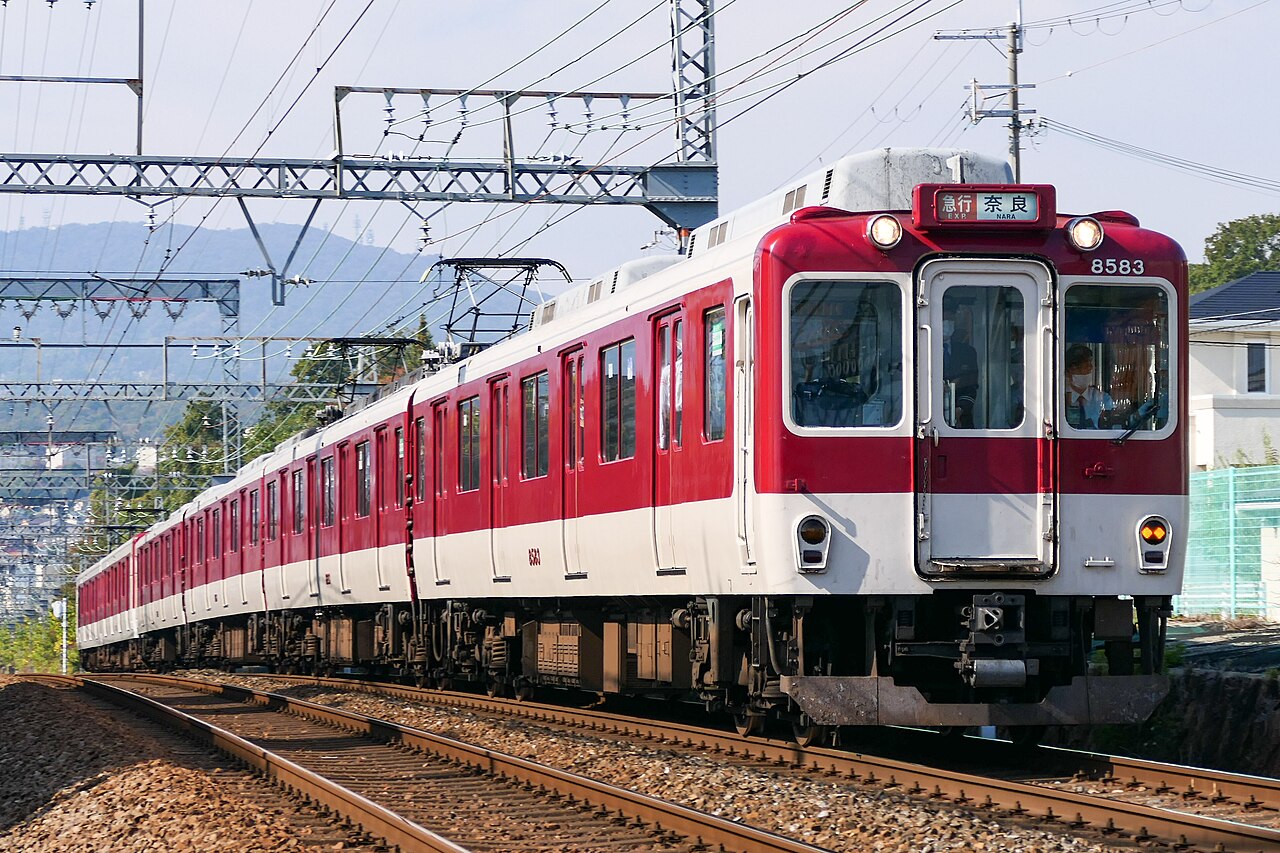
The line reached its modern form around 1970. On 1 March 1970 the Nara terminus, by then Kinki Nippon Nara, was renamed Kintetsu Nara, and on 15 March 1970 the underground Namba Line (2.0 km) opened, extending services through to Kintetsu Namba and shifting the line's effective starting point there from Uehommachi. A free (no-surcharge) limited express had run since 1956; it was abolished on 7 November 1972 and replaced by the Rapid Express (kaisoku kyūkō) service, while a paid limited express between Kintetsu Namba and Kintetsu Nara began on 21 September 1973. On 17 March 1980 the line introduced ten-car operation, described in the Japanese source as the first among Kansai's major private railways.
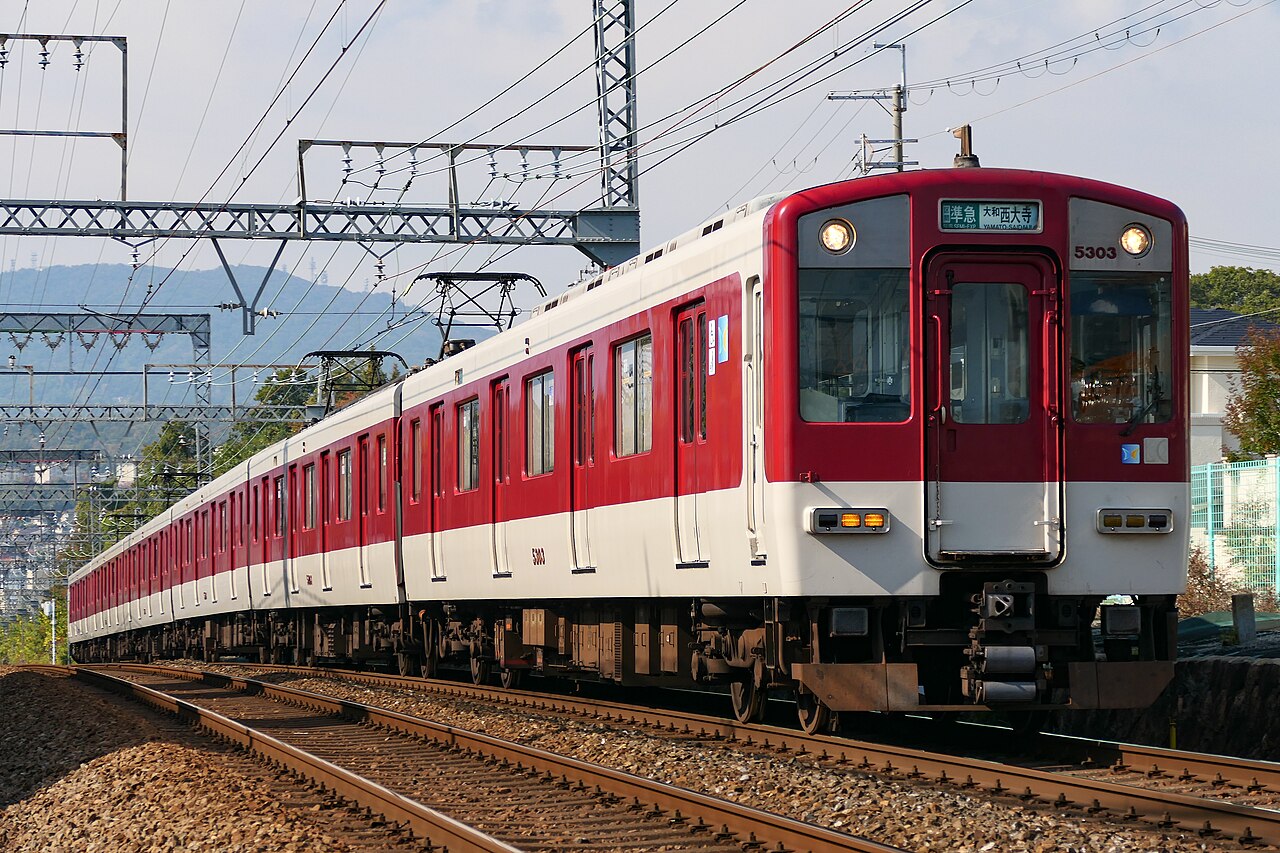
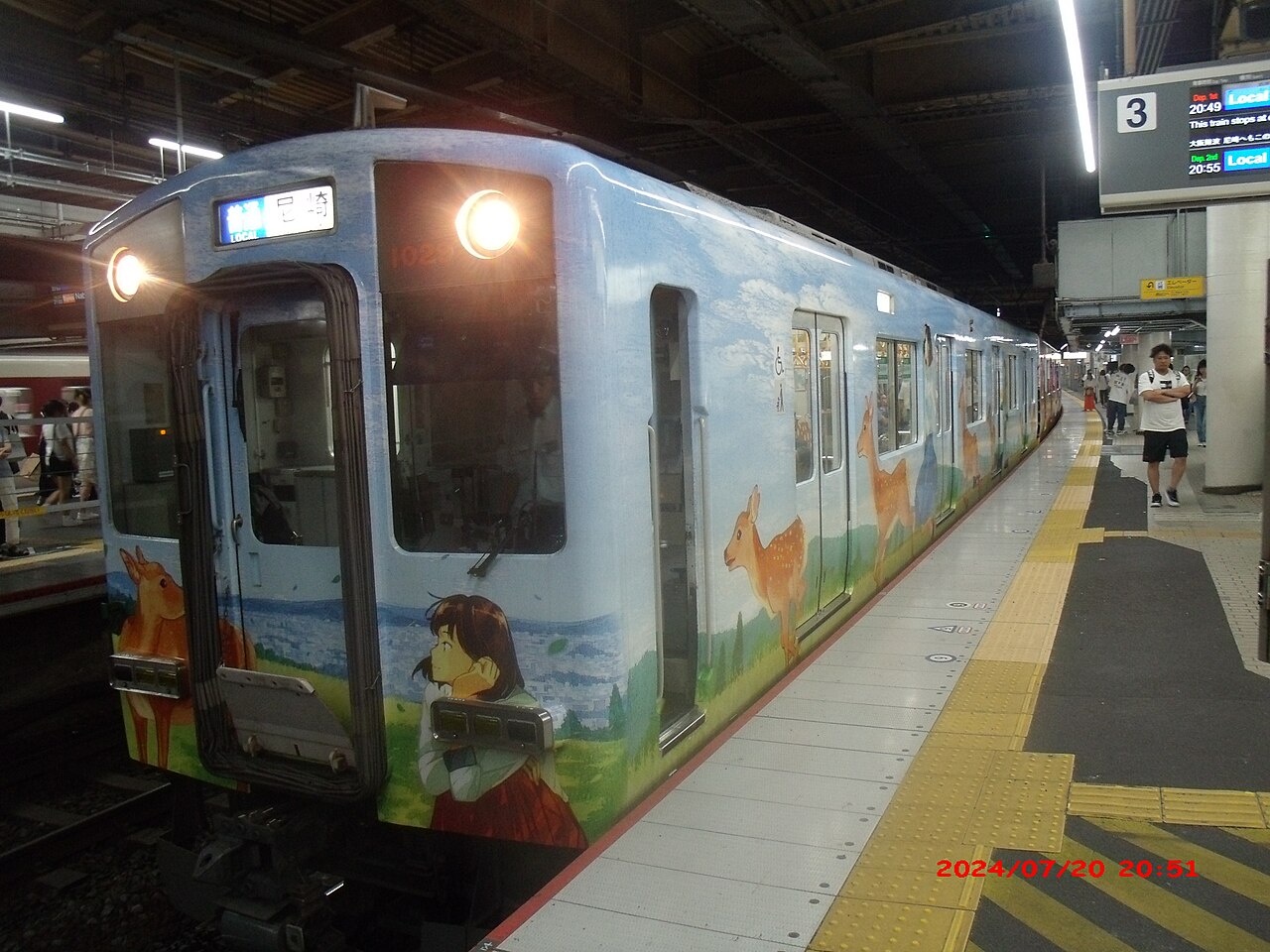
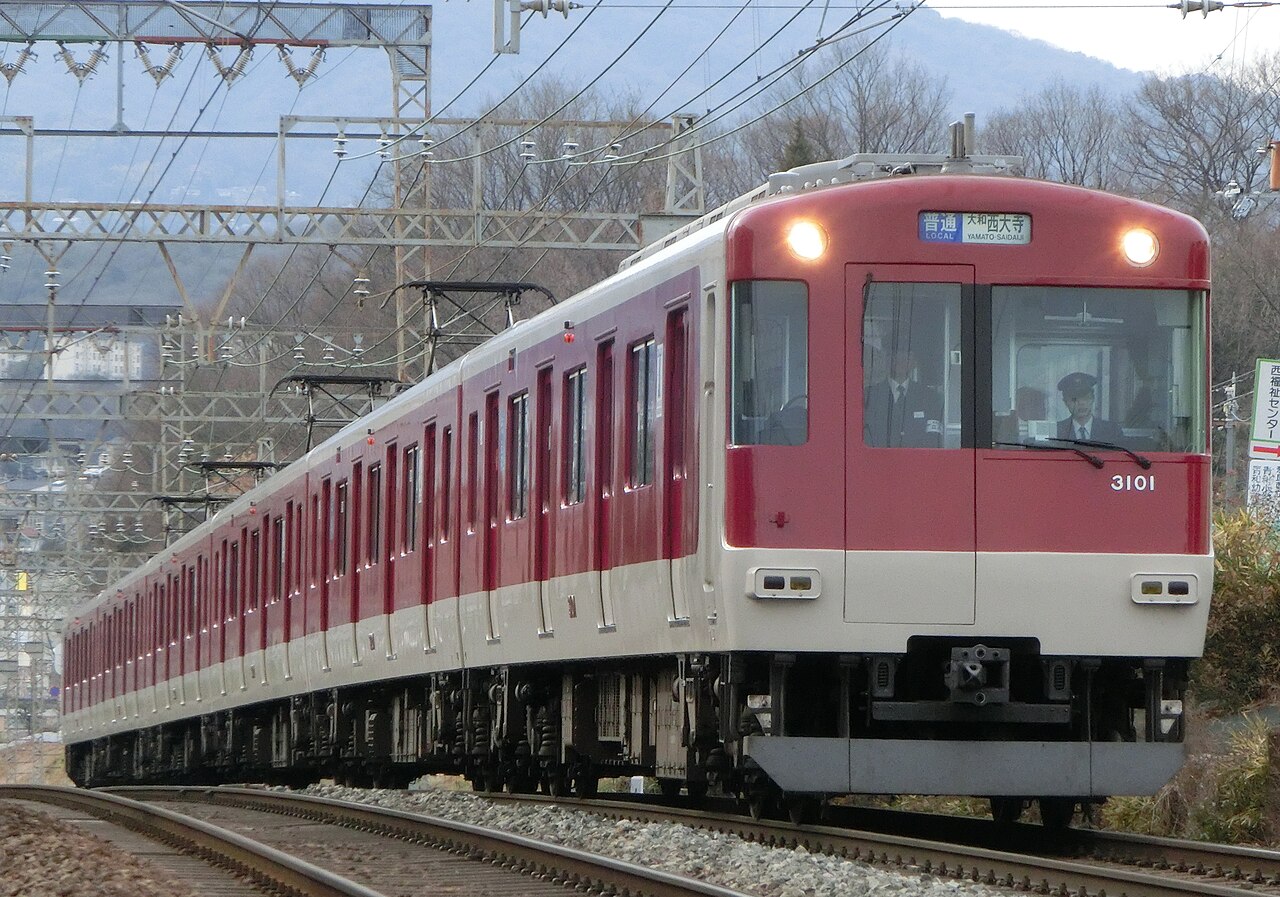
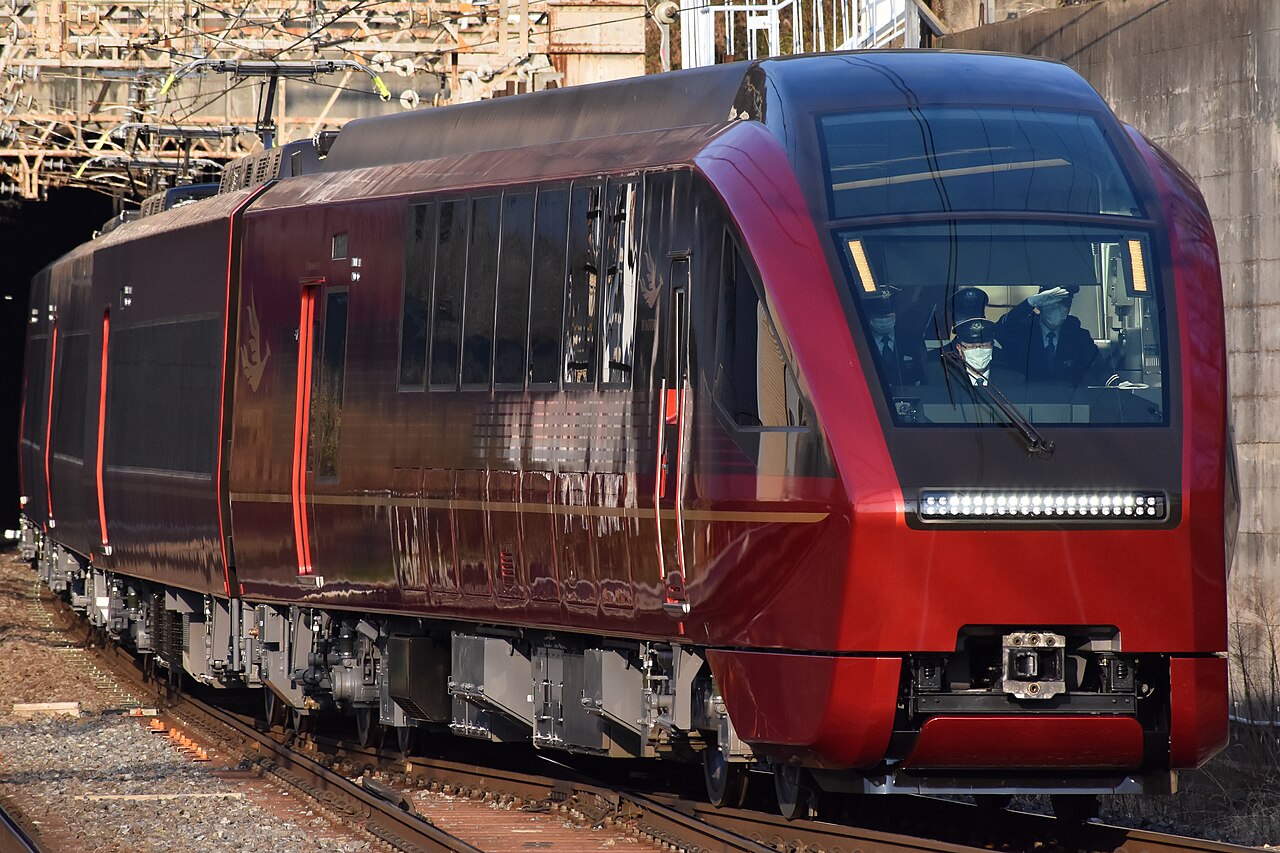
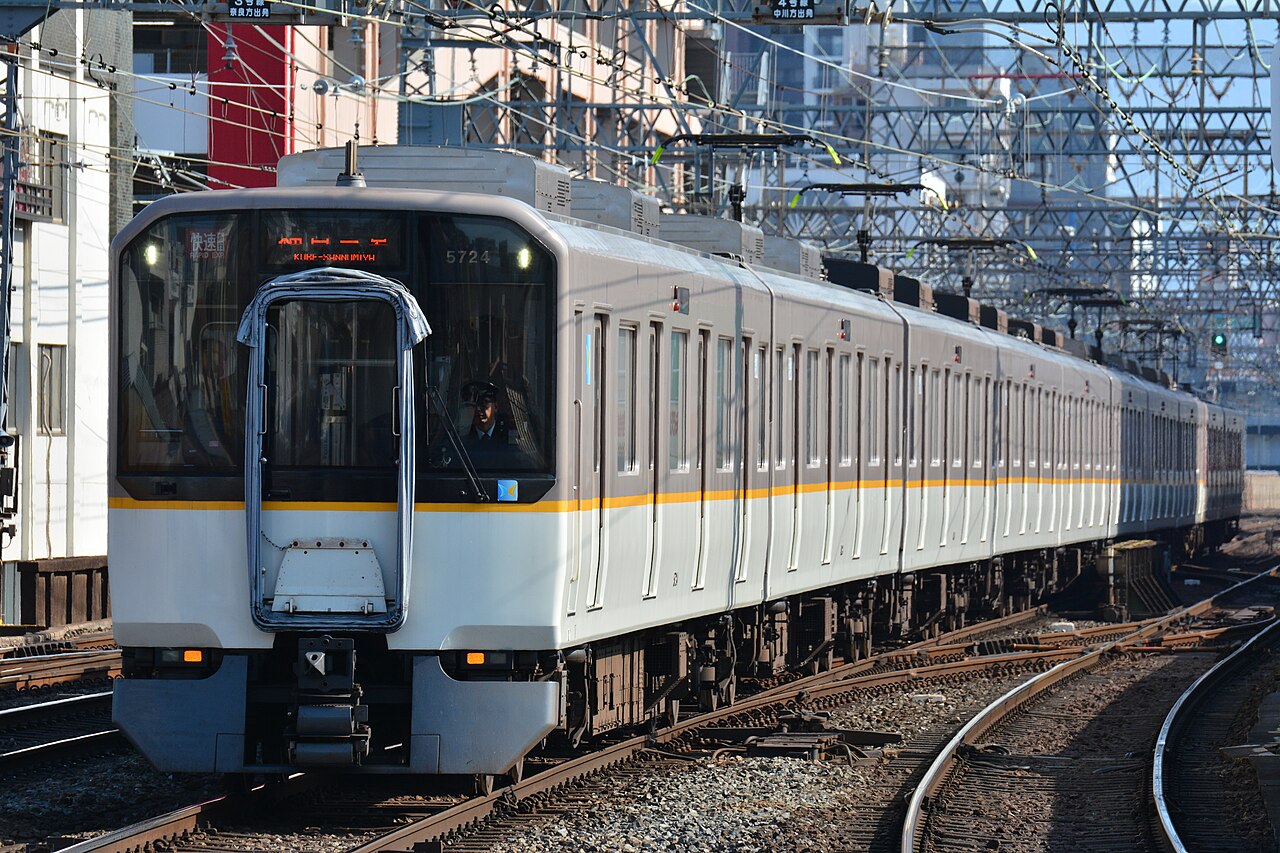
Today the Kintetsu Nara Line carries a full range of services — Limited Express, Rapid Express, Express, Semi-Express, Suburban Semi-Express and Local. Through Kintetsu's own Namba Line and the Hanshin Namba Line, which opened and began mutual through-operation on 20 March 2009, trains run beyond Ōsaka Namba toward Amagasaki, and Rapid Express services continue onto the Hanshin Main Line as far as Kobe Sannomiya; the Japanese source states the fastest of these link Kobe Sannomiya and Kintetsu Nara in the seventy-minute range. Between Yamato-Saidaiji and Kintetsu Nara, through trains of the Kintetsu Kyoto Line also operate. On the line-name section the most crowded stretch ran at a congestion rate of 114% in fiscal 2022 (Kawachi-Kosaka to Kawachi-Eiwa, 07:41–08:41). The passenger and operational Nara Line (Ōsaka Namba–Kintetsu Nara) measures 32.8 km over 24 stations. The route reached its centenary, measured from the 1914 Osaka Electric Railway opening, on 30 April 2014.
Timeline
- 191430 April: the Osaka Electric Railway (Daiki) opens its founding line between Uehommachi (Osaka) and a temporary Nara terminus, as dual track electrified at 600 V DC; the original Ikoma Tunnel (3,338 m) is described as Japan's first standard-gauge double-track tunnel.
- 194115 March: the Osaka Electric Railway merges with the Sangu Express Railway to form the Kansai Express Railway; the Nara Line is re-defined from the Uehommachi–Nara section to the Fuse–Nara section, with many stations renamed.
- 19441 June: the Kansai Express Railway and the Nankai Railway merge to form the Kinki Nippon Railway (Kintetsu).
- 194831 March: a train suffers brake failure on the downgrade in the Ikoma Tunnel, runs away and rear-ends a preceding train near Kawachi-Hanazono, killing 49 people.
- 19568 December: the Uehommachi–Fuse section is quadruple-tracked and separated from the Osaka Line.
- 1961Annual ridership passes 100 million, with about 300,000 passengers carried per day.
- 196423 July: the line switches from the old Ikoma Tunnel to the New Ikoma Tunnel (3,494 m), allowing large cars to run between Uehommachi and Kinki Nippon Ikoma.
- 196921 September: catenary voltage raised from 600 V to 1,500 V. 9 December: the street-running Aburasaka–Nara section is placed underground; Shin-Ōmiya Station opens and Aburasaka Station closes.
- 19701 March: Kinki Nippon Nara Station renamed Kintetsu Nara. 15 March: the underground Namba Line (2.0 km) opens; the line's effective starting point moves from Uehommachi to Kintetsu Namba.
- 19727 November: the free (no-surcharge) limited express is abolished and Rapid Express service begins.
- 197321 September: paid limited express service begins between Kintetsu Namba and Kintetsu Nara.
- 198017 March: ten-car operation begins — described in the Japanese source as the first among Kansai's major private railways.
- 200920 March: the Hanshin Namba Line opens and mutual through-operation begins; Kintetsu Namba is renamed Ōsaka Namba and Uehommachi is renamed Ōsaka Uehommachi.
- 201430 April: the line marks its centenary, measured from the 1914 Osaka Electric Railway opening between Uehommachi and Nara.
- 2022FY2022 congestion rate on the most crowded stretch of the line-name section: 114% (Kawachi-Kosaka to Kawachi-Eiwa, 07:41–08:41).
Sources
Facts last verified 3 June 2026.
Gallery 5 photos
Every photo for this page — tap any image to view it full-size. All from Wikimedia Commons (credit under each).