History
The line was not built as a single project. It was assembled from segments opened by four different private railway companies, which were later nationalised and stitched together by the Japanese Government Railways (JGR) and Japanese National Railways (JNR). At the eastern, Mie-Prefecture end, the Kansai Railway opened the first segment — its Tsu branch from Kameyama toward Tsu — on 21 August 1891, and the Sangu Railway opened a Tsu–Miyagawa section in 1893. Both of these companies were nationalised on 1 October 1907. At the western, Wakayama-Prefecture end, the Kiwa Railway opened the Wakayamashi–Wakayama segment in 1903; it was acquired by the Kansai Railway the following year. On the south-eastern coast the Shingu Railway opened a Kii-Katsuura–Miwasaki section in 1912 and extended it to Shingū in 1913, and that company was nationalised in 1934.
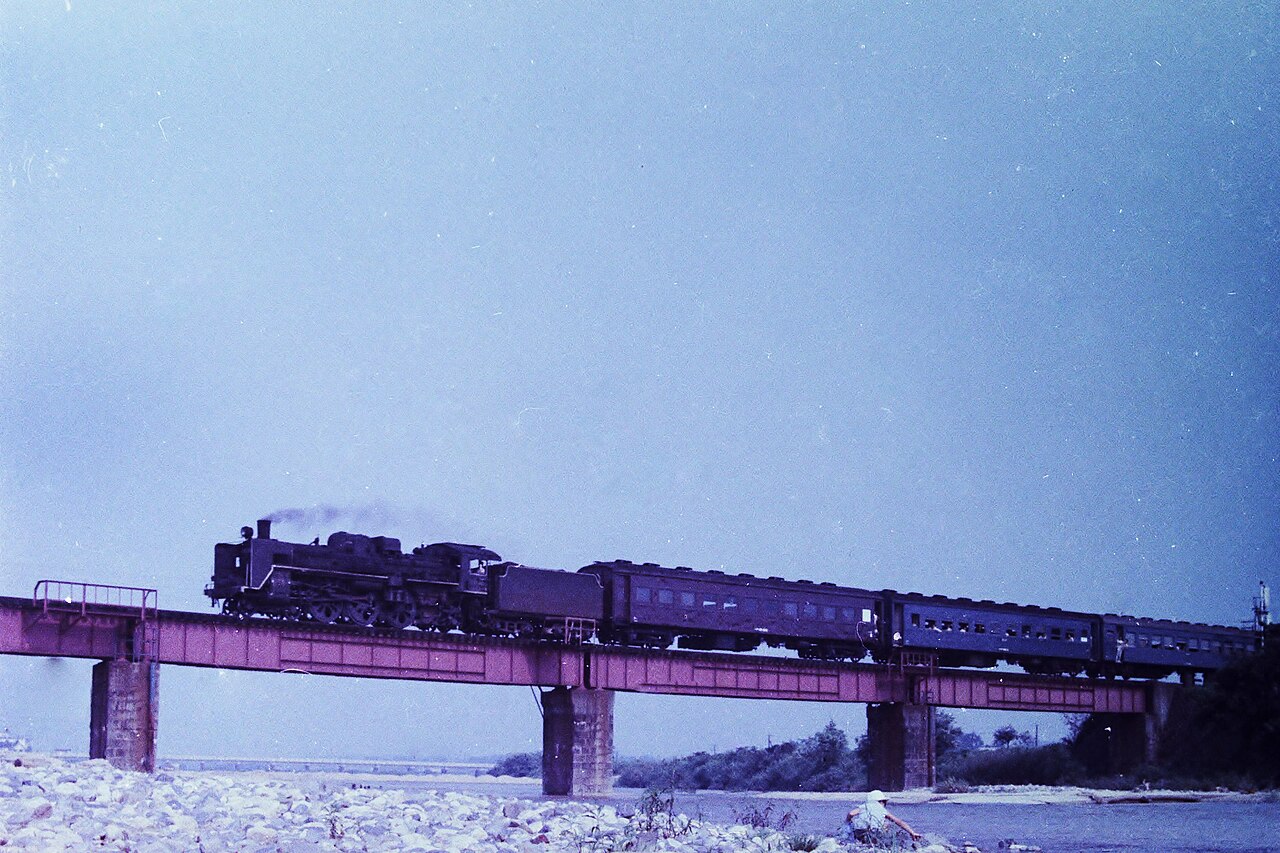
With the private predecessors absorbed, the government built the remaining coastal links over several decades, advancing from both ends and the middle. Working under the names Kisei East Line, Kisei West Line and Kisei Middle Line, the JGR pushed south from the Matsusaka area toward Owase, north and south from the Shingū district, and south from Wakayama, opening dozens of intermediate stations through the 1920s and 1930s. The hardest gap to close was the rugged Owase–Shingū coast, which the JNR opened in stages during the 1950s. The final link — the Mikisato–Atashika section — opened on 15 July 1959, joining the network end to end; the Kameyama–Wakayama route was thereupon designated the Kisei Main Line, and on the same day Kii-Kimoto Station was renamed Kumanoshi and Ōkaguchi was renamed Taki. Barely two months after completion, the Ise-wan (Isewan) Typhoon of 26 September 1959 washed away the Kushida River bridge between Tokuwa and Taki; a temporary bridge restored service on 17 October 1959.
Capacity work followed the same long arc. Two early double-track segments — Akogi–Takachaya (1909) and Matsusaka–Tokuwa (1911) — were actually returned to single track in 1944 so the recovered rail could be recycled for the war effort. Sustained double-tracking came later and only on the busiest stretch: the Wakayama–Kii-Tanabe corridor was progressively doubled through the 1960s and 1970s, with the Haya–Minabe segment in January 1978 completing the double-track Kii-Tanabe–Wakayama section. The rest of the line remains single track. Centralised traffic control (CTC) was introduced on the Shingū–Wakayama portion in March 1978 and extended over the Kameyama–Shingū portion in December 1983.
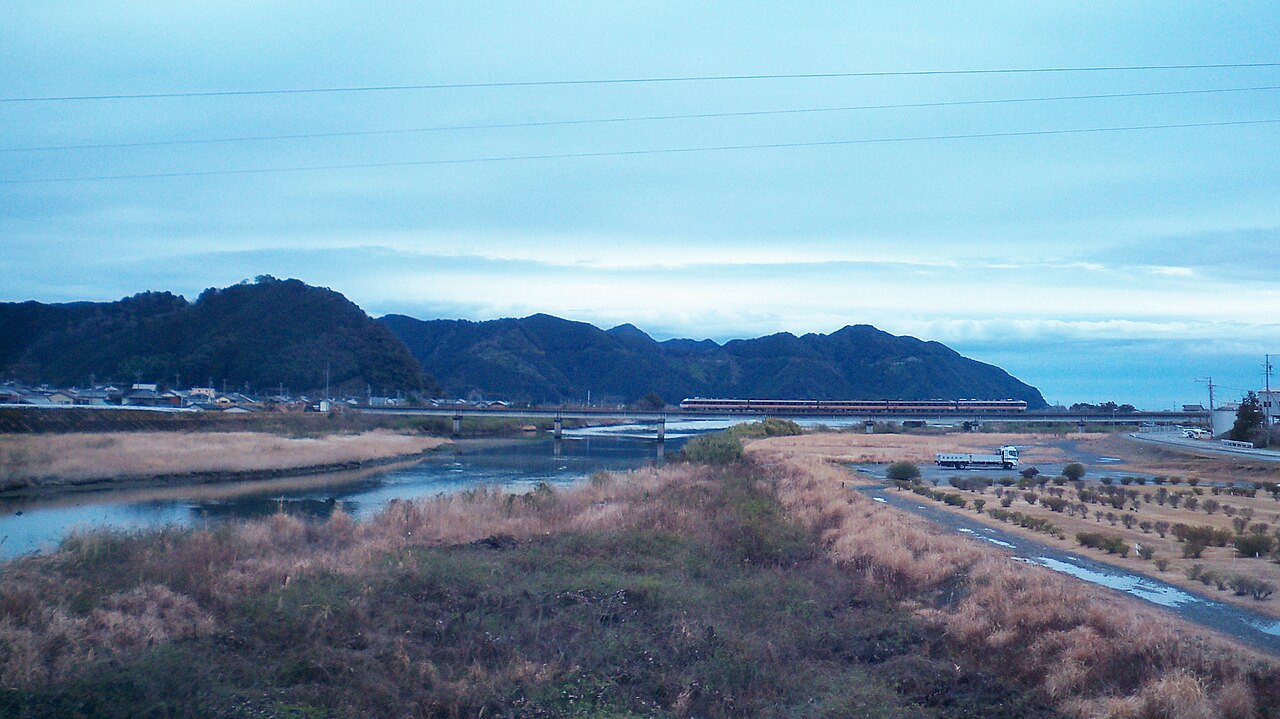
Electrification was confined to the western, Wakayama-side half. The Shingū–Wakayama(-So) section was electrified at 1,500 V DC and opened to electric service on 2 October 1978 — the same day the limited express Nanki began running between Nagoya and Kii-Katsuura and the Kuroshio was recast as a Tennōji–Shirahama/Shingū service — and the short Wakayama–Wakayamashi section was electrified on 1 October 1984. The Kameyama–Shingū half on the JR Central side was never electrified and remains diesel-worked. Long-distance freight, once a staple, was wound down: freight operations between Kii-Sano and Wakayama ended on 1 November 1986.
On 1 April 1987, with the breakup and privatisation of JNR, the line was split between two of the successor companies. The Central Japan Railway Company (JR Central) took over the Kameyama–Shingū section (180.2 km) and the West Japan Railway Company (JR West) took over the Shingū–Wakayamashi section (204.0 km), while Japan Freight Railway (JR Freight) became a category-2 operator over part of the route. That division still defines the line: JR Central runs the non-electrified eastern half from Kameyama to Shingū, and JR West runs the electrified western half from Shingū to Wakayamashi, where a roughly 1.0 km stretch approaching Wakayamashi Station is owned by the Nankai Electric Railway. The boundary between the two operators is at Shingū, where JR Central and JR West trains meet.
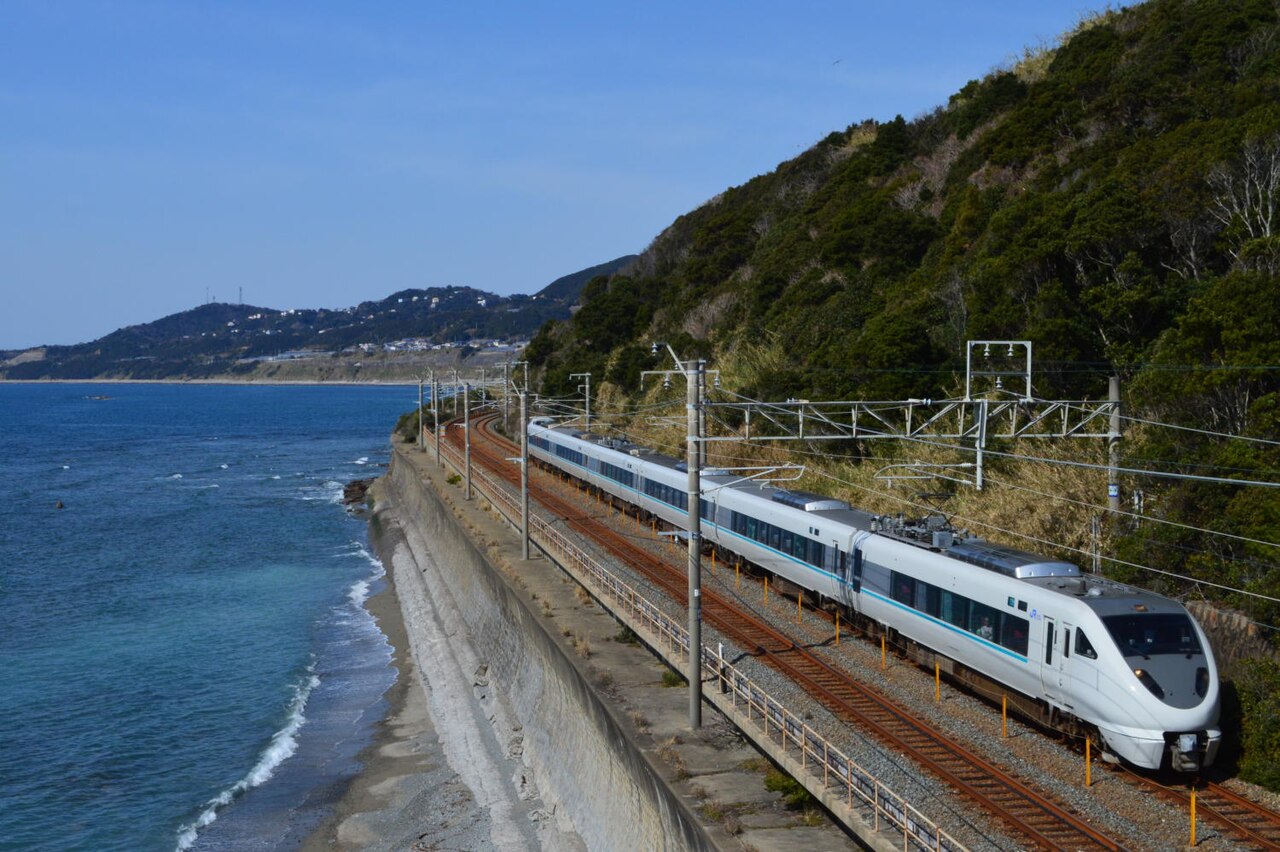
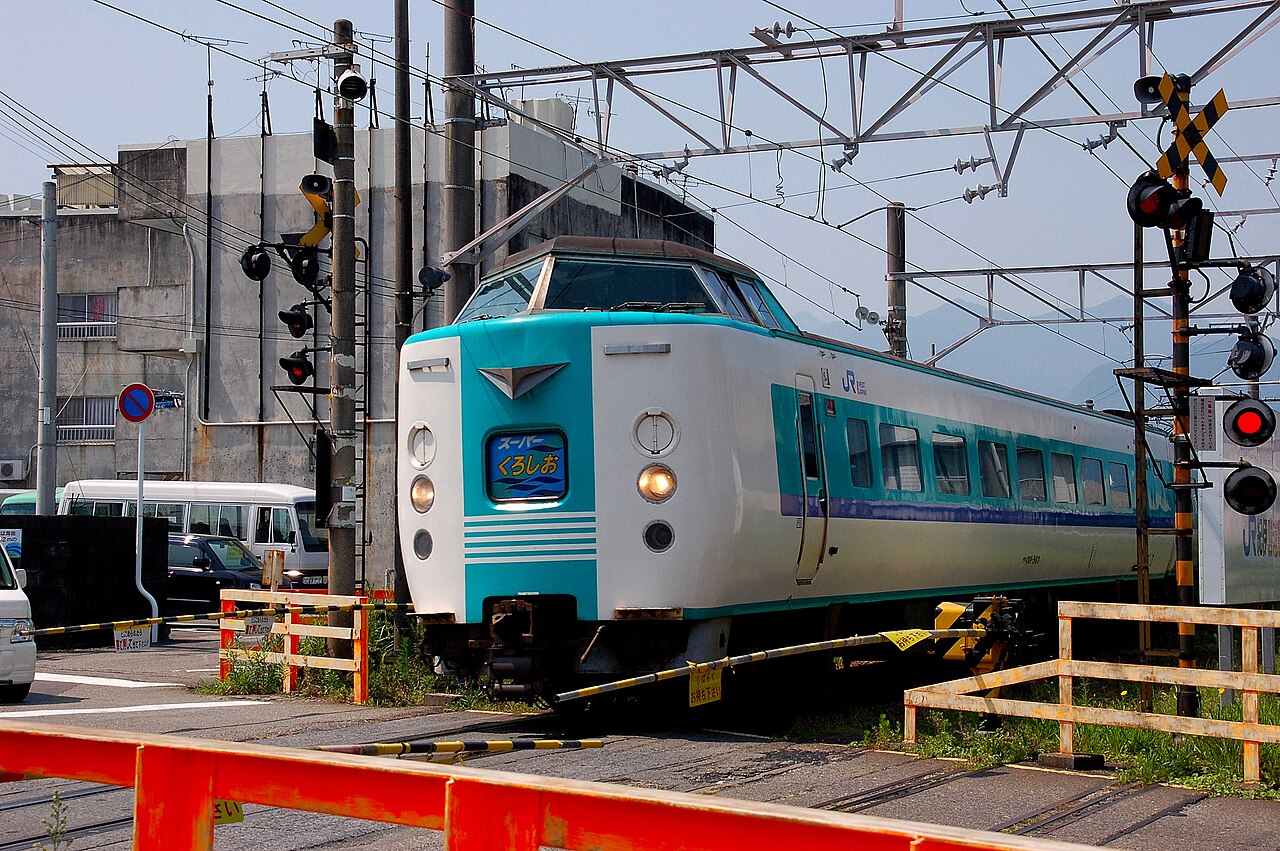
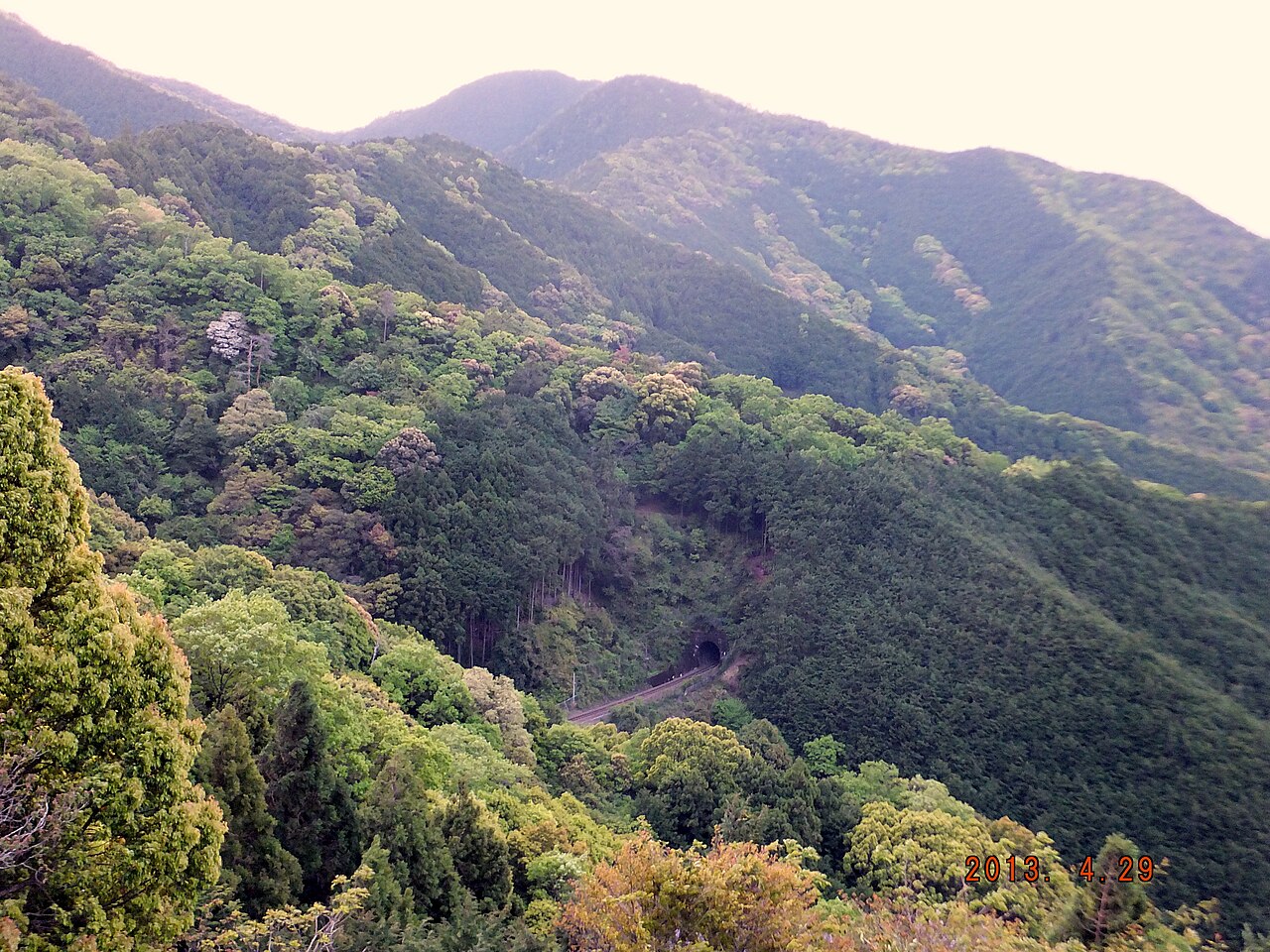
In service terms the line is both an inter-city limited-express corridor and a chain of local sections. The Nanki limited express links Nagoya with Shingū or Kii-Katsuura via the Kansai Main Line and the Ise Railway, with four return workings a day, and the Kuroshio limited express links Kyoto, Shin-Ōsaka and Tennōji with Shingū, with fifteen return workings a day; some JR West limited expresses use tilting trains to hold speed through the line’s many curves. Maximum line speed reaches 110 km/h on parts of the Kii-Tonda–Shirahama–Wakayama stretch for the 283/287/289-series limited-express sets, and is lower elsewhere. Local service is generally divided into segments around Shingū, Kii-Tanabe, Gobō and Wakayama. The Japanese-language source notes one striking superlative: with 180 tunnels totalling 68.9 km, the Kisei Main Line has the most tunnels of any single line in the JR Group (the source adds that, among lines operated by a single company, the San’in Main Line’s 176 is the most). The line has also seen incidents — most notably a train collision at Rokken Station on 15 October 1956 (the “Rokken accident”), during the construction era — and in recent years its quietest rural section, Shingū–Shirahama, has drawn attention after JR West disclosed that its 2019 transport density had fallen below 2,000 passengers per day.
Timeline
- 189121 August: the Kansai Railway opens its Tsu branch from Kameyama toward Tsu — the first segment of what becomes the Kisei Main Line. (Infobox opening date.)
- 1893The Sangu Railway opens the Tsu–Miyagawa section.
- 1903The Kiwa Railway opens the Wakayamashi–Wakayama section; the Kansai Railway acquires it the following year (1904).
- 19071 October: the Kansai Railway and the Sangu Railway are nationalised.
- 1912The Shingu Railway opens the Kii-Katsuura–Miwasaki section; it is extended to Shingū the following year (1913).
- 1934The Shingu Railway is nationalised.
- 1944The early double-track Akogi–Takachaya and Matsusaka–Tokuwa sections are returned to single track, the rail recycled for the war effort.
- 195615 October: a train collision at Rokken Station (the “Rokken accident”) occurs during the construction era.
- 195915 July: the final Mikisato–Atashika link opens, completing the line end to end; Kameyama–Wakayama is designated the Kisei Main Line. 26 September: the Ise-wan Typhoon destroys the Kushida River bridge (Tokuwa–Taki); a temporary bridge restores service on 17 October.
- 19651 March: the Kuroshio limited express begins operating (initially Nagoya–Tennōji).
- 1978January: double-tracking of the Kii-Tanabe–Wakayama section is completed (Haya–Minabe segment). March: CTC introduced on Shingū–Wakayama. 2 October: Shingū–Wakayama electrified at 1,500 V DC; the Nanki limited express begins (Nagoya–Kii-Katsuura) and the Kuroshio is recast as Tennōji–Shirahama/Shingū.
- 1983December: CTC extended over the Kameyama–Shingū section.
- 19841 October: the Wakayama–Wakayamashi section is electrified.
- 19861 November: freight operations between Kii-Sano and Wakayama cease.
- 19871 April: JNR is privatised. Kameyama–Shingū (180.2 km) goes to JR Central, Shingū–Wakayamashi (204.0 km) to JR West; JR Freight becomes a category-2 operator over part of the route.
- 20151 August: JR Central introduces KiHa 25 series DMUs on the Kisei Main Line (and Sangū Line), replacing KiHa 11 units.
Sources
Facts last verified 3 June 2026.
Gallery 6 photos
Every photo for this page — tap any image to view it full-size. All from Wikimedia Commons (credit under each).