History
A direct Tsuruga-Kyoto line had long been envisaged: a Hamaotsu-Miyake section was incorporated into the national railway's planned-line list as early as 11 April 1922, and the Hamaotsu-Shiotsu corridor became a survey line on 31 May 1962. In the meantime the locally financed Kojaku Railway operated a line between Hamaotsu and Omi-Imazu that ran roughly parallel to the planned route; its treatment became a sticking point, and the matter was settled by abolishing the Kojaku Railway and buying up its trackbed for partial reuse; its Hamaotsu-Omi-Imazu section closed on 1 November 1969. A groundbreaking ceremony for the Kosei Line was held on 12 January 1967. The line was built not by Japanese National Railways (JNR) directly but by the Japan Railway Construction Public Corporation, as a major-city traffic line, to provide a shorter, faster link between the Kansai region and the Hokuriku region than the longer route around the eastern shore of Lake Biwa.
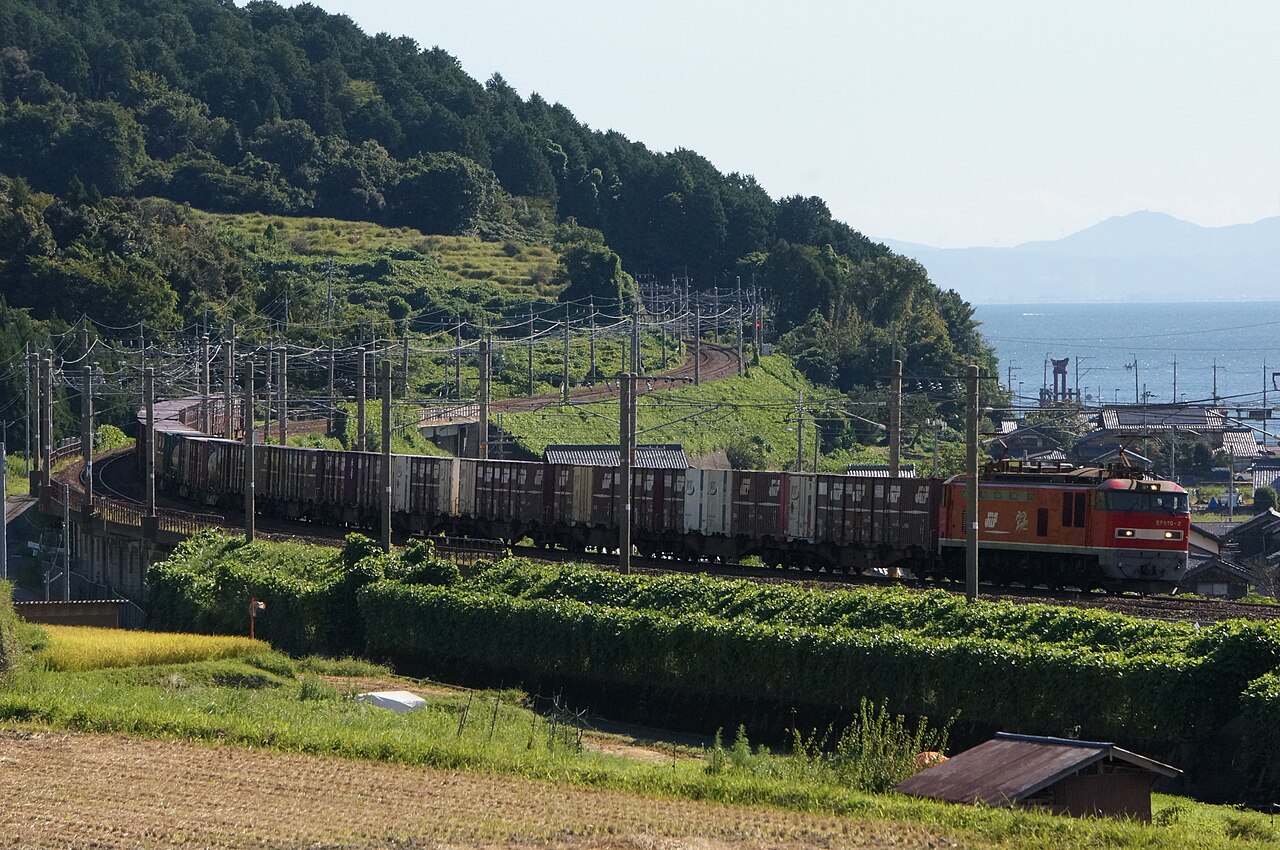
The Yamashina-Omi-Shiotsu line opened on 20 July 1974 as a fully double-tracked, electrified railway with centralised traffic control (CTC), the latter having been introduced on 13 June 1974. The opening was provisional: at first no limited express or freight trains ran. Freight service began on 1 October 1974, and on 10 March 1975 express services between Osaka and the Hokuriku and Tohoku regions were shifted onto the Kosei Line route. From the outset the whole line was electrified, but because Omi-Shiotsu Station was then on alternating current, an AC/DC changeover section was placed between Omi-Shiotsu and Nagahara, so the direct-current trains used in the Osaka-Kyoto area were confined to the Nagahara-Yamashina section. On 24 September 2006 the Omi-Shiotsu-Nagahara section was converted from AC to DC electrification together with the Tsuruga-Maibara section of the Hokuriku Main Line; the project cost 16.1 billion yen, of which the Shiga side contributed 7.5 billion yen and the Fukui side 6.8 billion yen toward equipment, while JR West paid 1.8 billion yen for new rolling stock. The conversion allowed the DC-only Special Rapid service to be extended beyond Omi-Shiotsu to Tsuruga on the Hokuriku Main Line from 21 October 2006, giving the line through operation over its entire length.
On 26 November 1985 a high-speed test run by a 381 series train on the Kosei Line recorded 179.5 km/h, the maximum-speed record for a Japanese conventional (non-Shinkansen) line; according to the Japanese Wikipedia article this record still stands. Because of a strong local downslope wind off the Hira Mountains known as the "Hira-oroshi," most of the open-air sections are built as cuttings, embankments, bridges or viaducts, and the exposed line experiences speed restrictions, suspensions or diversions onto the Biwako Line on more than twenty days a year. Wind has caused accidents: in October 1979 a freight train between Kita-Komatsu and Omi-Maiko was derailed by a typhoon gust, with two wagons falling off the viaduct, and in June 1997 three wagons standing at Hira Station were overturned. JR West has since installed windbreak fences along the line, completing them in March 2019.
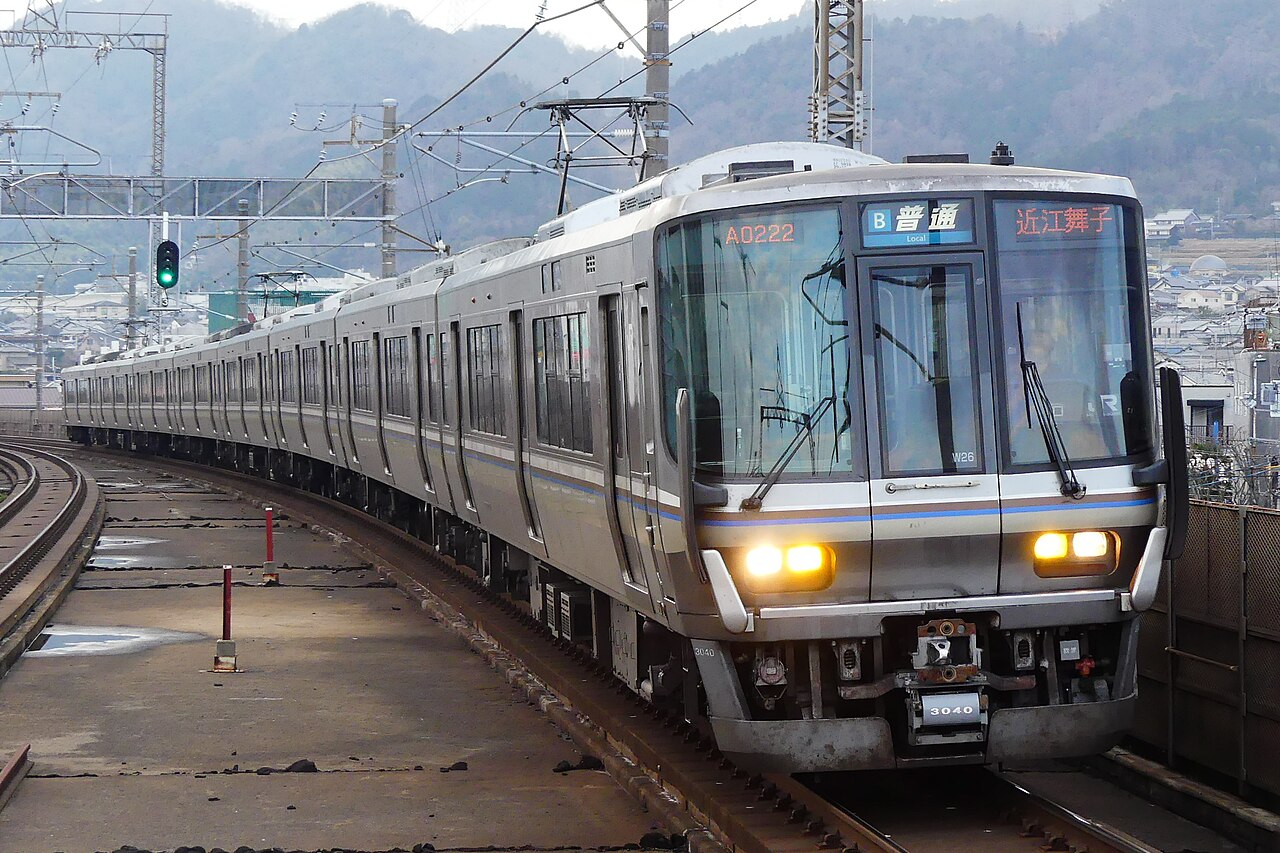
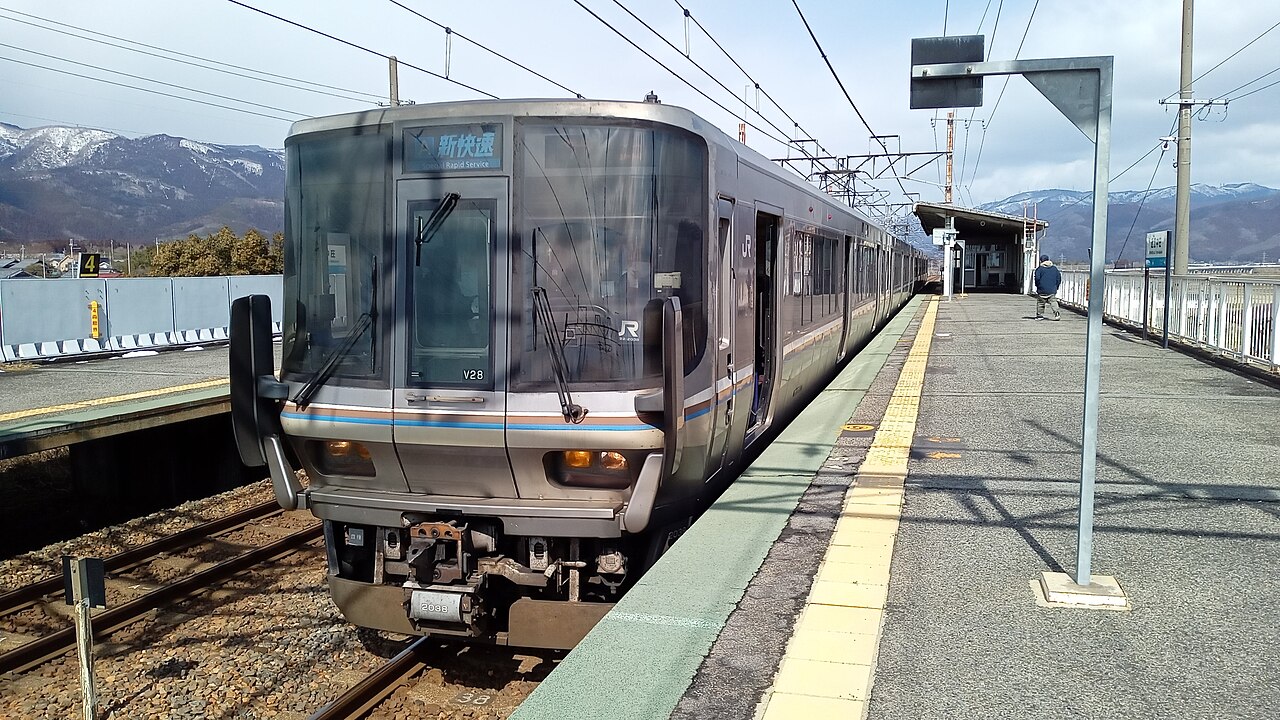
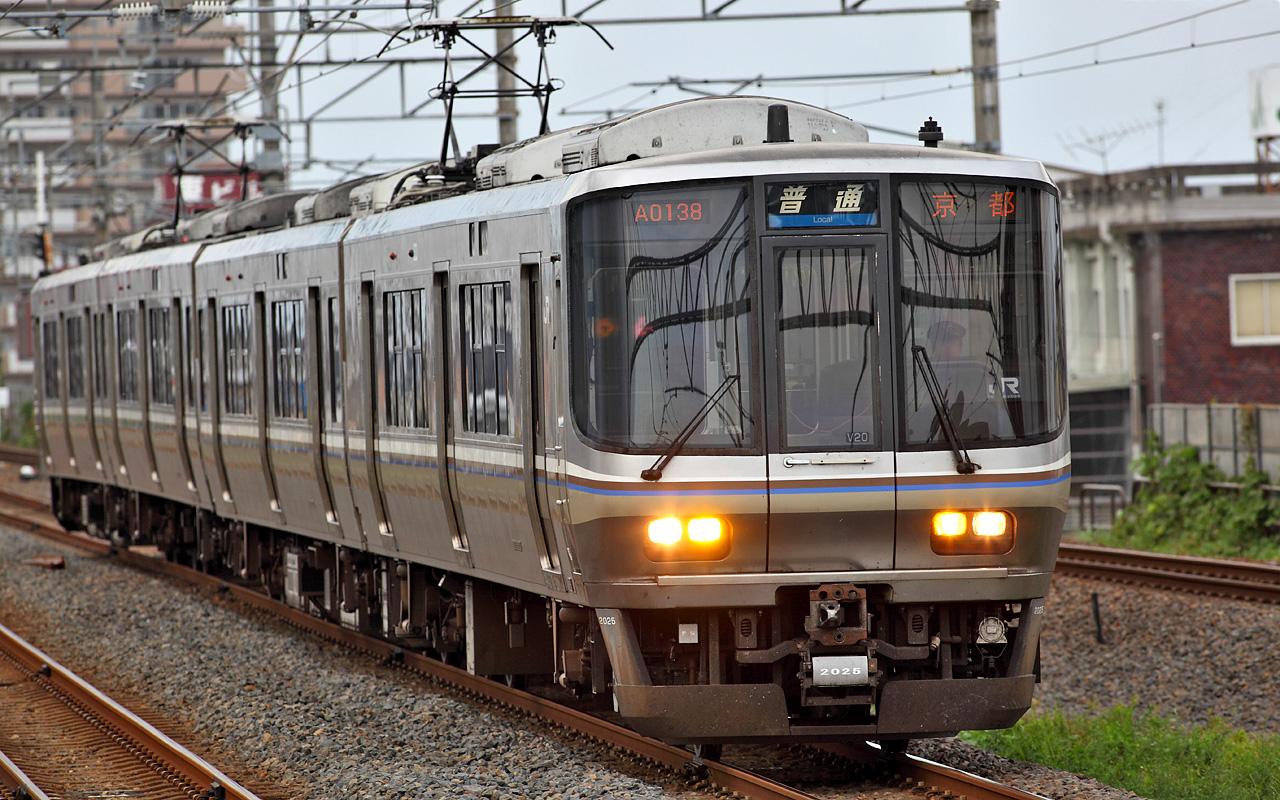
On 1 April 1987, with the privatisation of JNR, the line was taken over by JR West, with Japan Freight Railway (JR Freight) operating freight services over the whole line. The railway facilities, long owned by the Japan Railway Construction Public Corporation and its successor agency and leased to JNR and then JR West, were transferred to JR West for value in 2014 when the lease period ended. Today the line carries local, Rapid and Special Rapid services, the latter running through to the JR Kyoto Line, as well as the Thunderbird limited express between Kansai and the Hokuriku Shinkansen connection at Tsuruga, and JR Freight freight trains; together with the Hokuriku Main Line and other routes it forms part of the Sea-of-Japan trunk corridor. Only a few limited express trains stop at Katata or Omi-Imazu, with others skipping all stations on the line. The whole line lies within JR West's Urban Network and Kinki area. For fiscal year 2019 the average passenger throughput on the Yamashina-Omi-Shiotsu section was 36,753 passengers per day. Should the Hokuriku Shinkansen's "Obama-Kyoto route" be built south of Tsuruga, JR West is considering separating the Kosei Line as a parallel conventional line - a move opposed by Shiga Prefecture and lineside municipalities, and one that would be the first such separation within a major-city suburban fare zone.
Timeline
- 192211 April: the Hamaotsu-Miyake section is added to JNR's planned-line list, an early step toward a direct Tsuruga-Kyoto line.
- 196231 May: the Hamaotsu-Shiotsu corridor becomes a national-railway survey line.
- 196712 January: groundbreaking ceremony for the Kosei Line is held.
- 19691 November: the locally financed Kojaku Railway's Hamaotsu-Omi-Imazu line, whose trackbed was partly reused, is closed.
- 197413 June: centralised traffic control (CTC) is introduced. 20 July: the Yamashina-Omi-Shiotsu line (74.1 km) opens as a double-tracked, electrified railway - a provisional opening with no limited express or freight trains at first. 1 October: freight service begins.
- 197510 March: Osaka-Hokuriku/Tohoku express services are shifted onto the Kosei Line route.
- 1979October: a gust as a typhoon approaches derails a freight train between Kita-Komatsu and Omi-Maiko; two wagons fall off the viaduct.
- 198526 November: a 381 series high-speed test records 179.5 km/h, the maximum-speed record for a Japanese conventional line (per the JA article, still unbroken).
- 19871 April: on the privatisation of JNR, the line passes to JR West; JR Freight becomes the freight operator over the whole line.
- 19884 December: Ono Station opens.
- 19944 September: Eizan Station is renamed Hieizan Sakamoto.
- 1997June: three wagons of a freight train standing at Hira Station are overturned by a typhoon-driven gust.
- 200624 September: the Omi-Shiotsu-Nagahara section is converted from AC to DC electrification (project cost 16.1 billion yen). 21 October: Special Rapid/Rapid service is extended from Tsuruga, giving whole-line operation.
- 200815 March: Ogoto (Ogoto-onsen) and Nishi-Otsu (Otsukyo) stations are renamed.
- 2014July: with the lease period ended, the line's facilities are transferred from the railway-construction agency to JR West.
- 201916 March: one-man (driver-only) operation begins on the Omi-Imazu-Omi-Shiotsu section. March: windbreak-fence installation is completed.
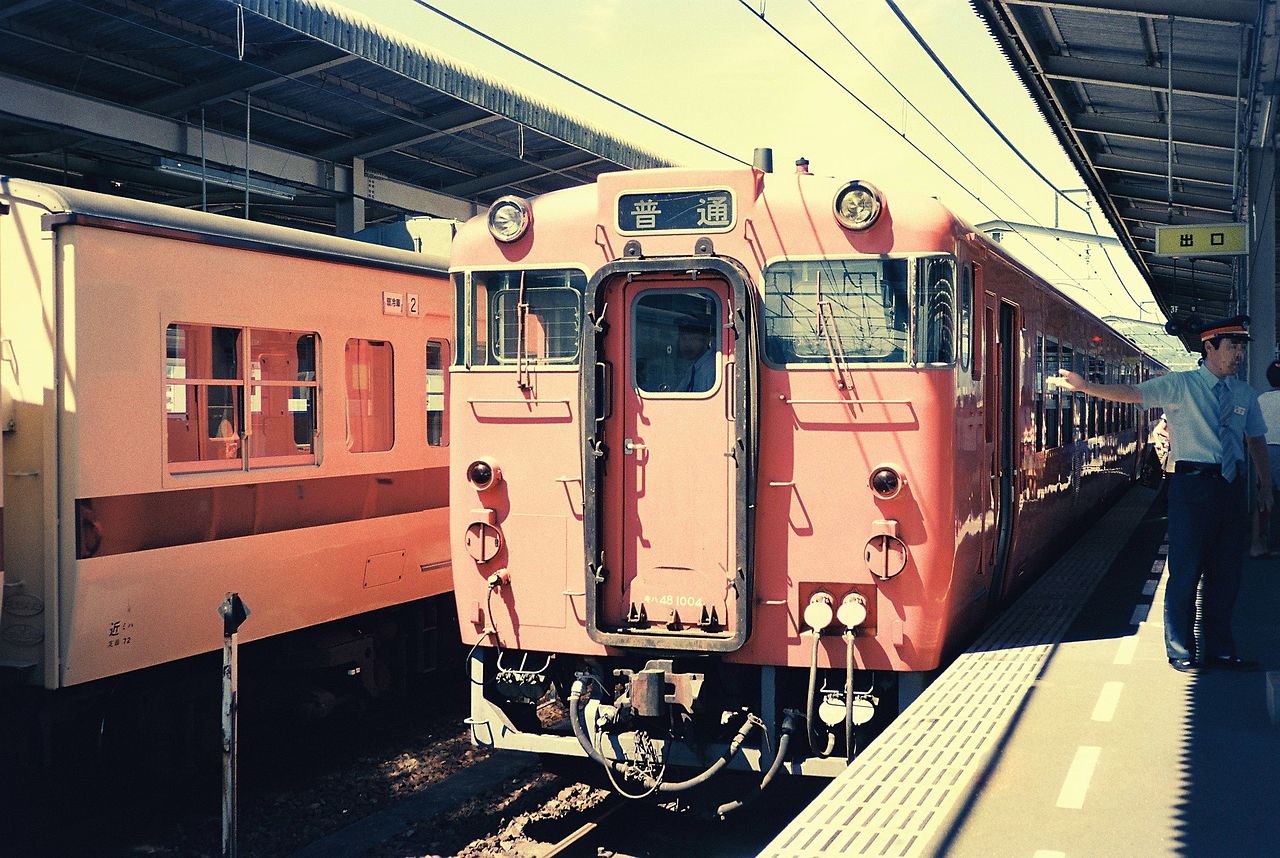
- 20231 April: the 113 and 117 series are withdrawn from service.
- 20251 April: the Katata-Yamashina section becomes a designated commuter (densha-tokutei) fare section.
Sources
Facts last verified 3 June 2026.
Gallery 4 photos
Every photo for this page — tap any image to view it full-size. All from Wikimedia Commons (credit under each).