History
Unlike a line built in one stroke, the Nagoya Main Line was assembled from segments of several earlier local railways, which fell into two historic halves: an Eastern section from Jingū-mae to Toyohashi and a Western section from Meitetsu Gifu to Oshikirichō, formally named the Eastern Line and Western Line in 1935. The Eastern half was built as a fast intercity railway by the Aichi Electric Railway. Because the government's Tōkaidō Main Line, completed by 1889, took a different route from the old Tōkaidō highway through the Aichi section, the company laid its line along the Tōkaidō corridor instead, building a high-speed intercity route that ran in almost a straight line. It opened in stages as the Arimatsu Line from Jingū-mae in 1917, was renamed the Toyohashi Line as it reached Toyohashi by 1927, and was electrified at 1,500 V. From Ina into Toyohashi the company built only a single track paralleling the Toyokawa Railway — a constraint that still limits service today, since the Hirai Junction–Toyohashi section is shared with the JR Iida Line and local trains terminate at Ina rather than at Toyohashi.
The Western half was formed from lines of the Nagoya Electric Railway, the Mino Electric Railroad and the Bisai Railway. The Nagoya Electric Railway opened the Sukaguchi–Biwajimabashi segment in 1914, and in the same year the Mino Electric Railroad opened a line near Kasamatsu that was extended to Shin-Gifu (today Meitetsu Gifu). In 1921 the Nagoya Electric Railway founded the Nagoya Railroad, handing its tramway network to the city of Nagoya and its heavy-rail network to the new company. The Bisai Railway's line was transferred to the Nagoya Railroad in 1925, and the company pushed on to connect Shin-Ichinomiya (now Meitetsu Ichinomiya) to Oshikirichō, then the western terminal in Nagoya, by April 1928. On 20 August 1930 the company merged with the Mino Electric Railroad to form the Meigi Railway. Because this half was stitched together from three separate railways, it threads through the centres of the towns it serves and carries frequent curves, in contrast with the straighter Tōkaidō Main Line.
After the present Nagoya Railroad (Meitetsu) was formed in 1935, the two halves were joined. Coinciding with the relocation of the government railway's Nagoya Station, Meitetsu extended the western section into Meitetsu Nagoya, and the east–west connecting line from Jingū-mae to Meitetsu Nagoya opened on 1 September 1944, despite wartime limits on steel supply. The two halves still could not run through, however, because the Western Line used 600 V electrification while the Eastern Line used 1,500 V, forcing a change at Kanayamabashi. In May 1948 the western (Meigi Line) voltage was raised to 1,500 V (on 12 May), and on 16 May 1948 the whole Toyohashi–Shin-Gifu route was renamed the Nagoya Main Line and through operation began; the line's official completion/naming date is given as 18 April 1948.
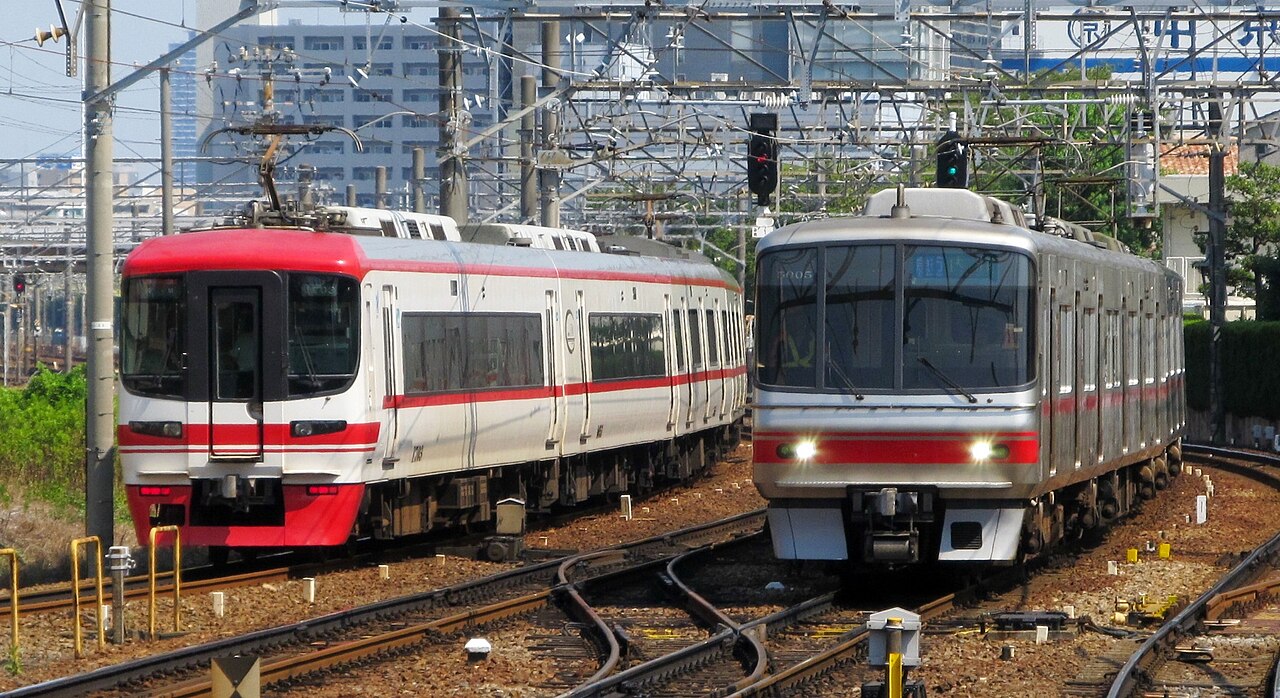
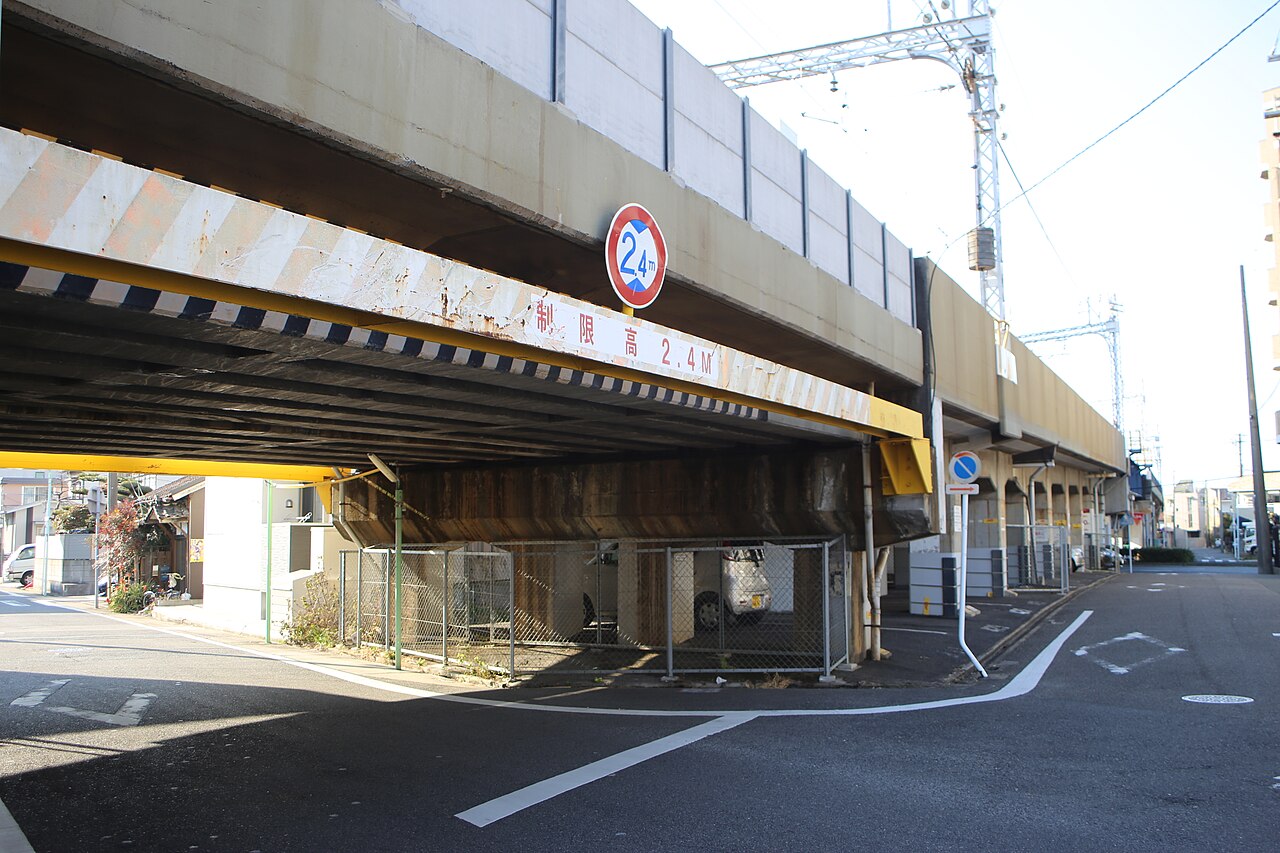
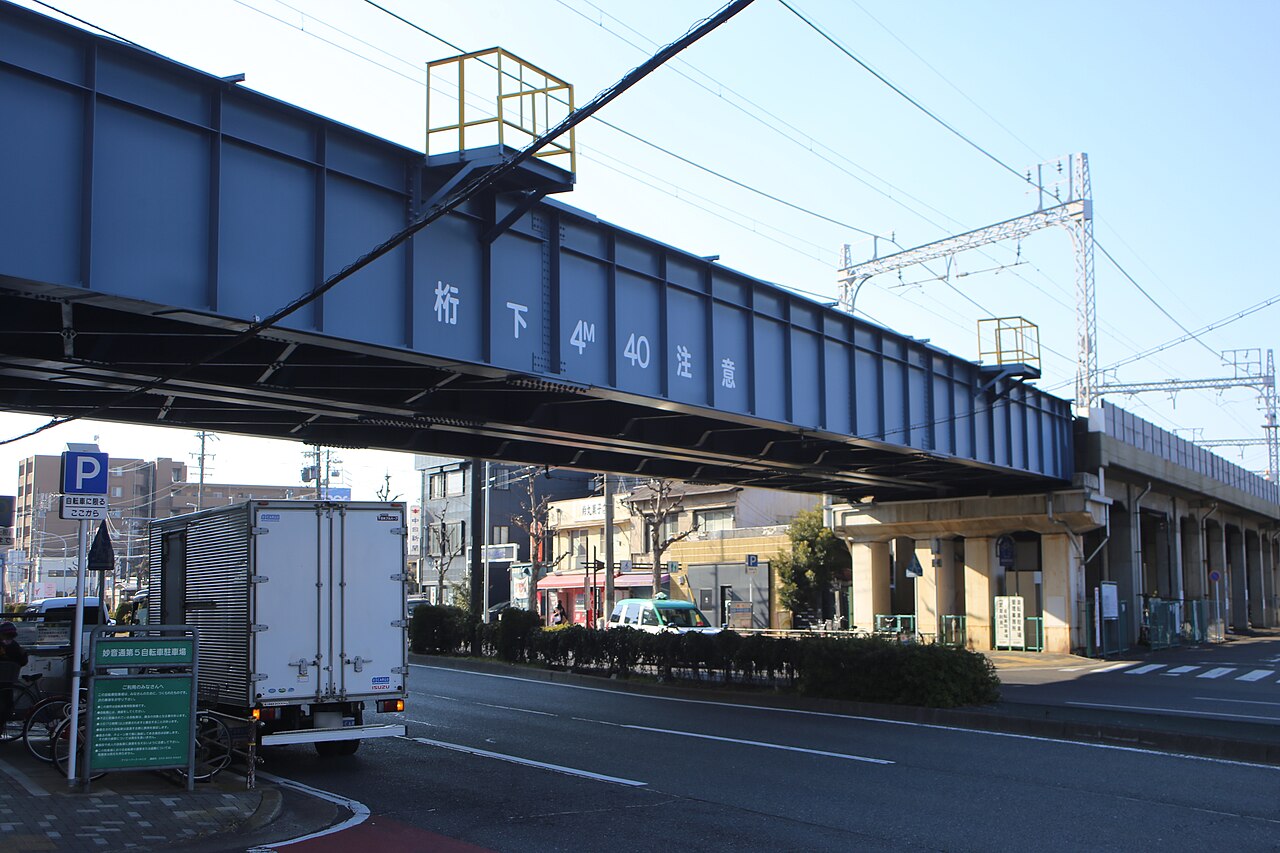
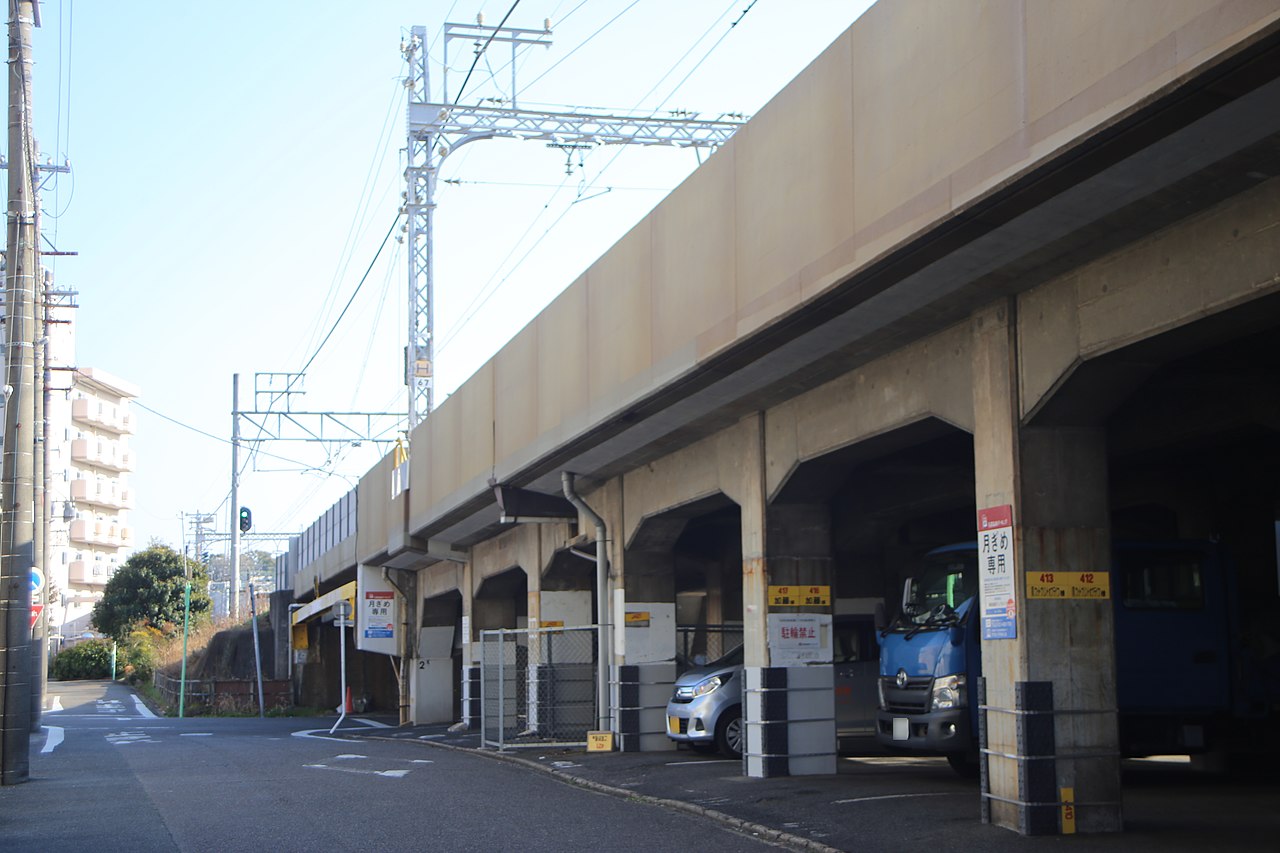
From then on Meitetsu invested to compete with the Tōkaidō Main Line of Japanese National Railways and its successor, the Central Japan Railway Company. After the Tōkaidō Main Line was electrified to Maibara in 1955, Meitetsu introduced new rolling stock such as the 5000 series and eased sharp curves. The 1959 timetable revision raised the maximum speed from 100 to 105 km/h, and the 5500 series introduced at the same time was the first train offering air conditioning at no extra fare. On 12 June 1961 the 7000 series "Panorama Car" debuted on one limited express per hour and raised the top speed of high-performance limited expresses to 110 km/h, and Meitetsu adopted its own automatic train stop (ATS) system in 1965. The Jingū-mae–Kanayama section was quadruple-tracked in 1990, the same year the operating speed was raised to 120 km/h on favourable sections (initially 1000 series all-reserved limited expresses). The line's maximum speed is 120 km/h (85 km/h on the Toyohashi–Hirai Junction section); for a narrow-gauge (1,067 mm) private-railway line this places it among the faster such lines. The area around Narumi Station was elevated in 2006 and the up line near Chiryū in 2023, with further grade-separation work continuing.
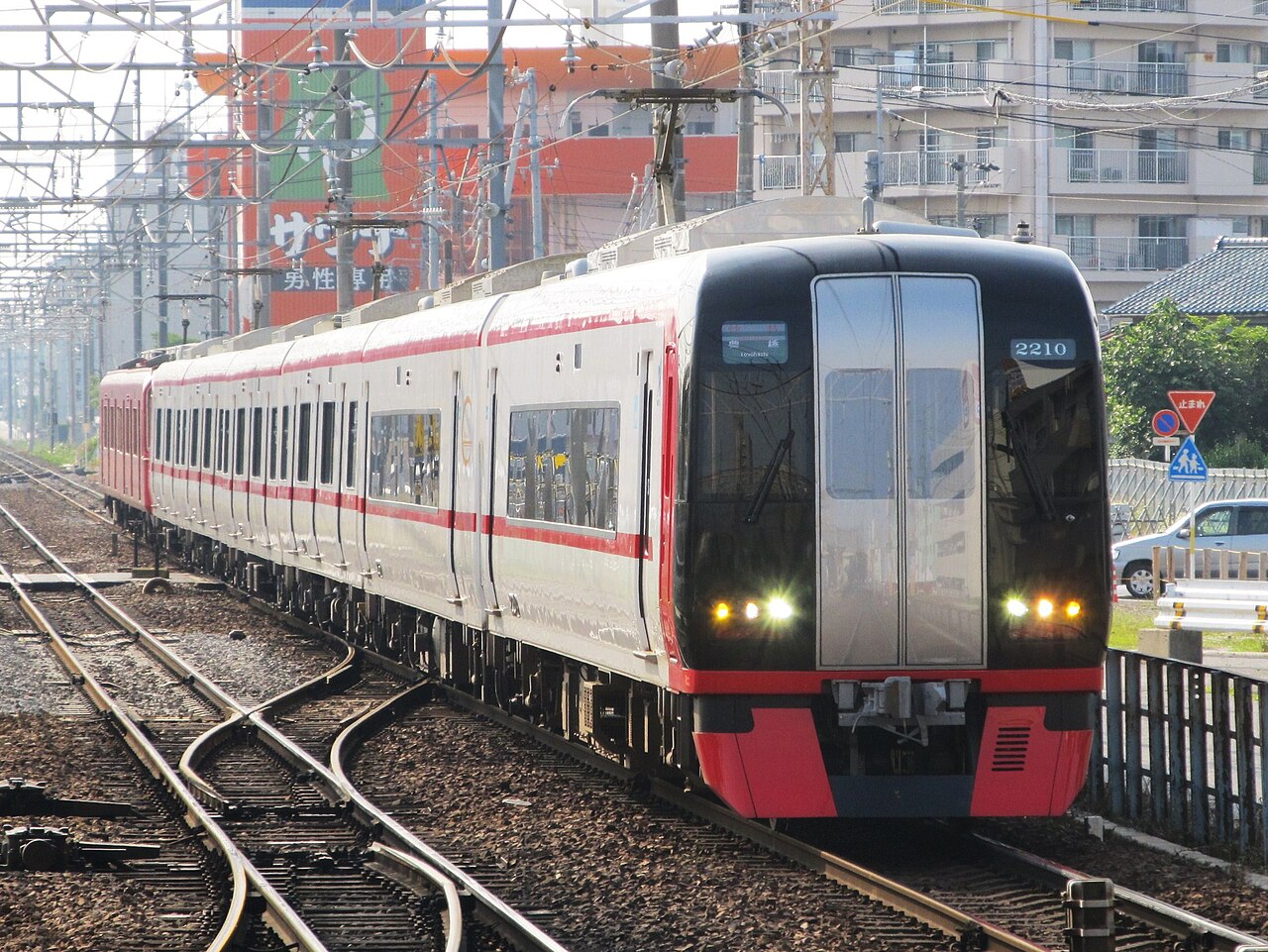
Seven service types run on the line today, from all-stations Locals up through Semi-Express, Express, Rapid Express, Limited Express, Rapid Limited Express and the μSKY Limited Express. The busiest station is Meitetsu Nagoya, an unusual pass-through terminal with only three platforms and two tracks through which trains to many Meitetsu directions are interlined. In fiscal 2022 the peak morning congestion was about 130 percent in the up direction (Sakō to Meitetsu Nagoya) and about 132 percent in the down direction (Jingū-mae to Kanayama). The Biwajima Junction, where up Nagoya Main Line trains cross down Inuyama Line trains at grade, remains a notable operational bottleneck. The line has also seen incidents over the years, including a 1958 collision and fire at Hitotsugi Station (the Hitotsugi level-crossing collision-and-fire) and a 2002 collision and derailment between Okuda and Ōsato.
Timeline
- 1914The Nagoya Electric Railway opens the Sukaguchi–Biwajimabashi segment (Western half); the line's official opening date is 23 September 1914. The Mino Electric Railroad also opens a line near Kasamatsu, extended to Shin-Gifu (now Meitetsu Gifu) the same year.
- 1917The Aichi Electric Railway opens the Eastern half as the Arimatsu Line from Jingū-mae (from 7 March).
- 1921The Nagoya Electric Railway founds the Nagoya Railroad, transferring its tramway network to the city of Nagoya and its heavy-rail network to the new company.
- 1925The Bisai Railway's line is transferred to the Nagoya Railroad.
- 1927The Eastern half reaches Toyohashi (Yoshida) and is renamed the Toyohashi Line; Jingū-mae–Toyohashi fully opens.
- 1928By April, Shin-Ichinomiya (now Meitetsu Ichinomiya) is connected to Oshikirichō, then the western terminal in Nagoya.
- 193020 August: the company merges with the Mino Electric Railroad to form the Meigi Railway.
- 1935The Eastern and Western sections are named the Eastern Line and Western Line; the present Nagoya Railroad (Meitetsu) is formed.
- 19441 September: the east–west connecting line Jingū-mae–Meitetsu Nagoya opens, joining the two halves (through running not yet possible due to differing voltage).
- 1948The western (Meigi Line) voltage is raised to 1,500 V on 12 May, and on 16 May Toyohashi–Shin-Gifu is renamed the Nagoya Main Line and through operation begins; the official naming/completion date is given as 18 April 1948.
- 1955After the Tōkaidō Main Line is electrified to Maibara, Meitetsu introduces new rolling stock (5000 series) and eases sharp curves to compete.
- 195824 November: the Hitotsugi level-crossing collision-and-fire — a three-wheeled truck collides with a limited express, which burns out.
- 1959Timetable revision raises the maximum speed from 100 to 105 km/h; the 5500 series, the first train with no-extra-fare air conditioning, is introduced.
- 196112 June: the 7000 series "Panorama Car" debuts on one limited express per hour, raising the high-performance limited-express top speed to 110 km/h.
- 1965Meitetsu adopts its own automatic train stop (ATS) system.
- 1990The Jingū-mae–Kanayama section is quadruple-tracked, and the operating speed is raised to 120 km/h on favourable sections (initially 1000 series all-reserved limited expresses).
- 200226 September: a collision and derailment between Okuda and Ōsato (the Nagoya Main Line collision-and-derailment).
- 2006The area around Narumi Station is elevated.
- 202321 March: the up line near Chiryū is elevated as part of continuing grade-separation work.
Sources
Facts last verified 3 June 2026.
Gallery 6 photos
Every photo for this page — tap any image to view it full-size. All from Wikimedia Commons (credit under each).