History
The line originated as a coal railway. In 1892 the Hokkaido Colliery and Railway Company opened the line from Muroran (the site of the present Higashi-Muroran) to Iwamizawa to link the coal mines of the Iwamizawa-Asahikawa region with Muroran Port; the Japanese-language record dates this first Muroran-Iwamizawa opening to 1 August 1892. The line was extended to the present Muroran in 1897. The Japanese government nationalised the Hokkaido Colliery Railway in 1906, and the line between the second Muroran Station and Iwamizawa was formally named the Muroran Main Line on 12 October 1909. The Higashi-Muroran-Muroran section was double-tracked in 1910.
The section between Oshamambe and Higashi-Muroran was opened between 1923 and 1928 as the Osawa Line (Choorin/Osawa-sen) by the Imperial Japanese Government Railways, which later became the Japanese National Railways (JNR). It was built to bypass the mountainous section of the Hakodate Main Line and to link the inland Iburi region to Muroran Port; the name derived from its termini, Oshamambe and Wanishi (the former name of Higashi-Muroran). The Oshamambe-Shizukari segment opened first on 10 December 1923, and the through route was completed on 10 September 1928. In 1931 the two lines were merged: the Oshamambe-Iwamizawa route became the main line and the Higashi-Muroran-Muroran route the branch, the whole being renamed the Muroran Main Line. In 1934 Hokkaido's first gasoline rail-car service began on the Muroran-Higashi-Muroran section.
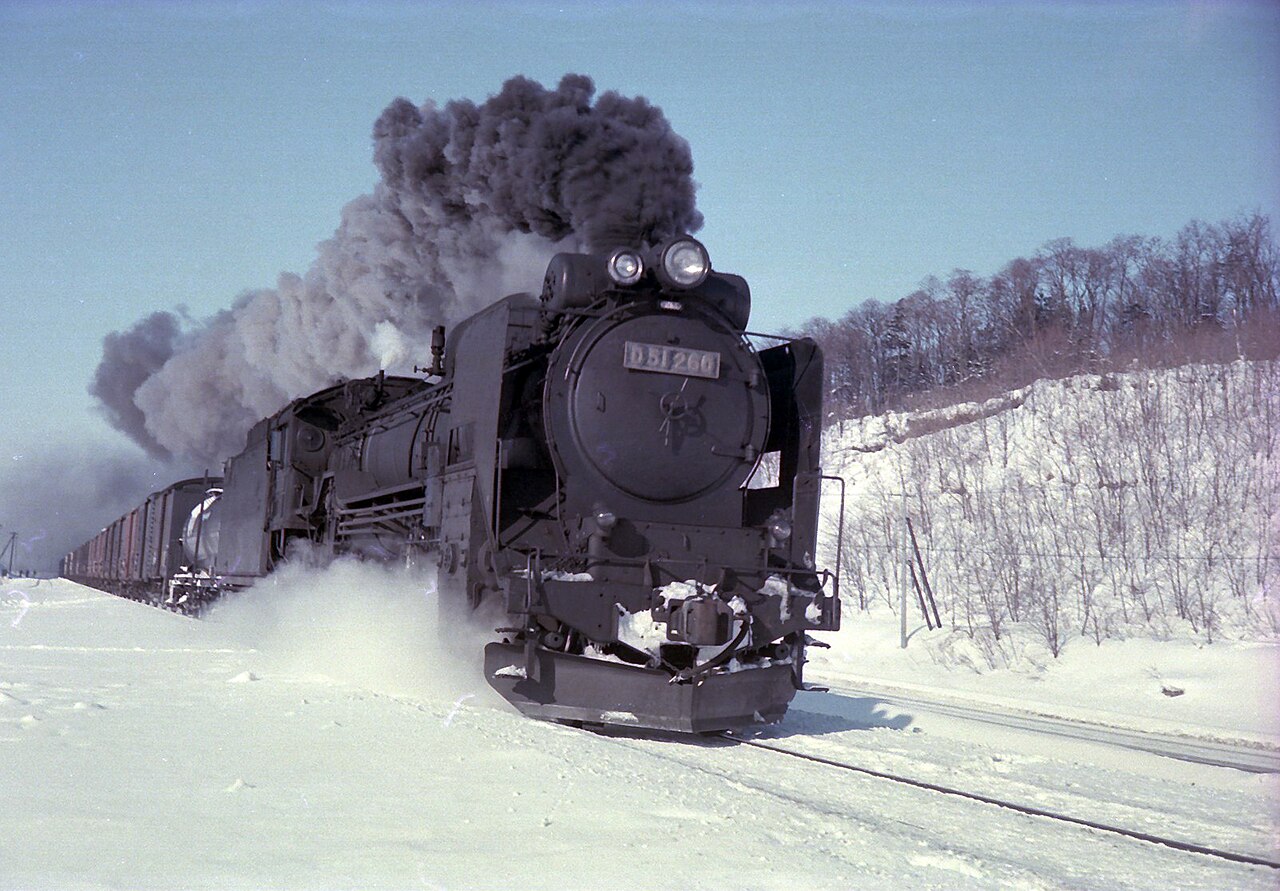
Initially the line functioned mainly as a freight artery for coal. Growing coal traffic drove decades of double-tracking: the Higashi-Muroran-Mikawa section was doubled in stages between 1920 and 1958, and the 42 km Oshamambe-Toya section was double-tracked between 1964 and 1975, a project that involved building ten new tunnels and realignments that shortened the route by 1.7 km. As coal mining declined, the line's principal traffic shifted to passengers from the 1960s. The last regular steam-hauled passenger service in Japanese National Railways operation ran between the second Muroran Station and Iwamizawa on 14 December 1975, hauled by locomotive C57 135. The Numanohata-Muroran section, 74.9 km, was electrified at 20,000 V AC 50 Hz on 1 October 1980 in conjunction with the electrification of the Chitose Line towards Sapporo.
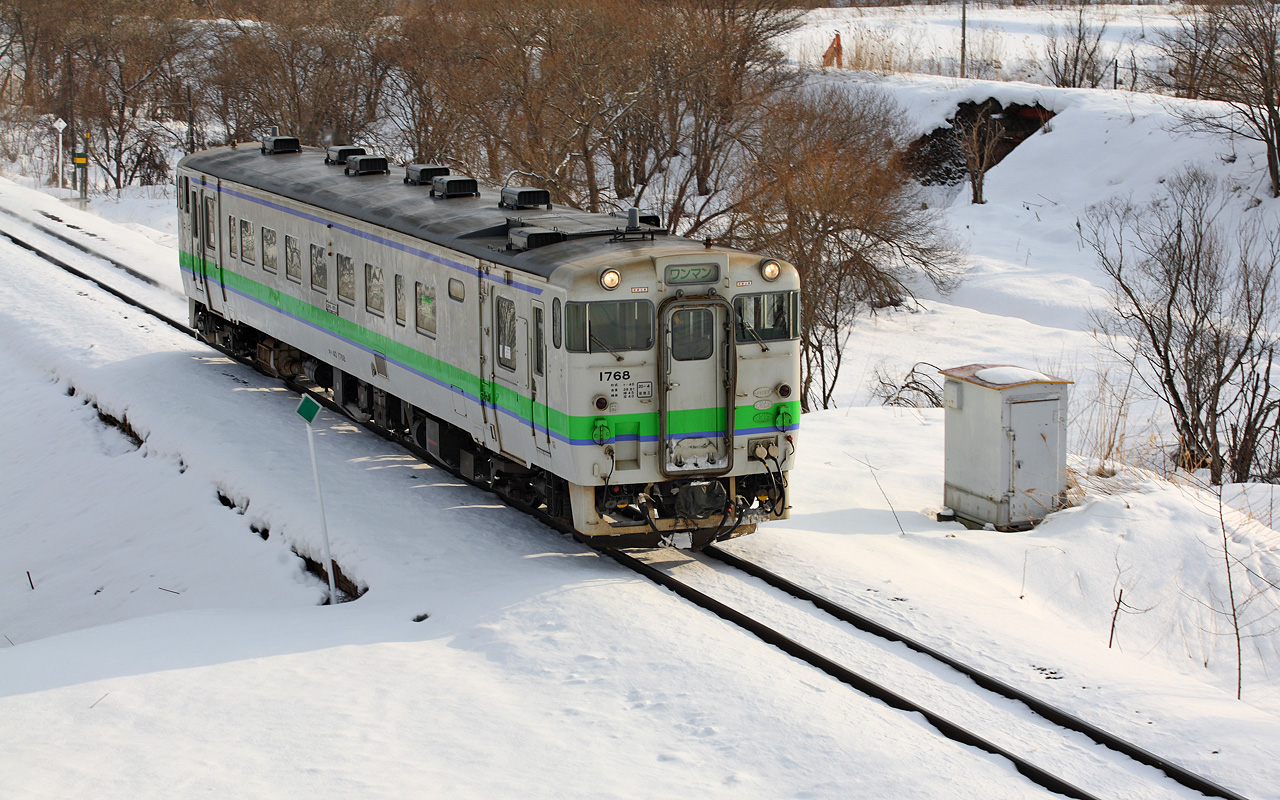
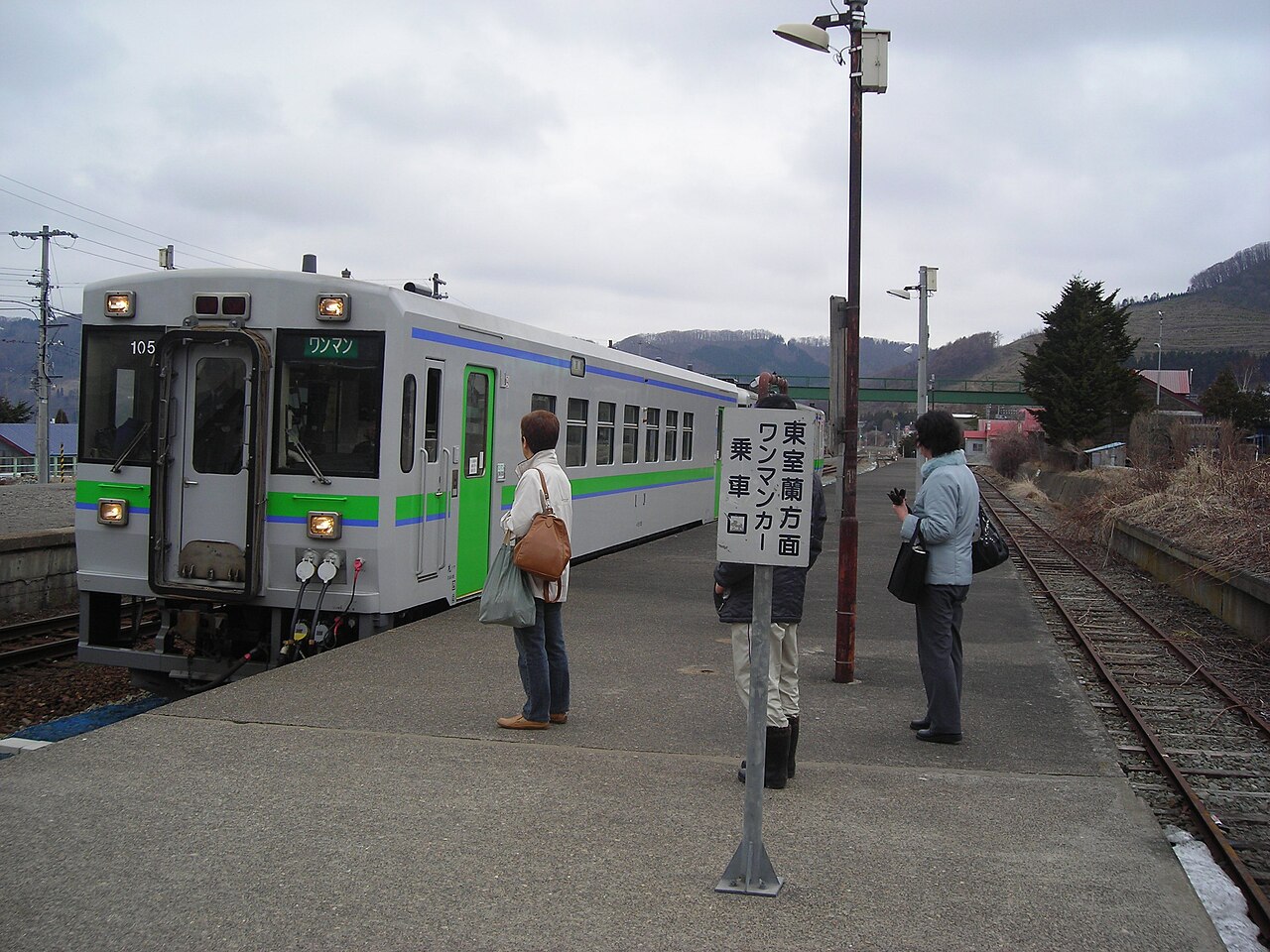
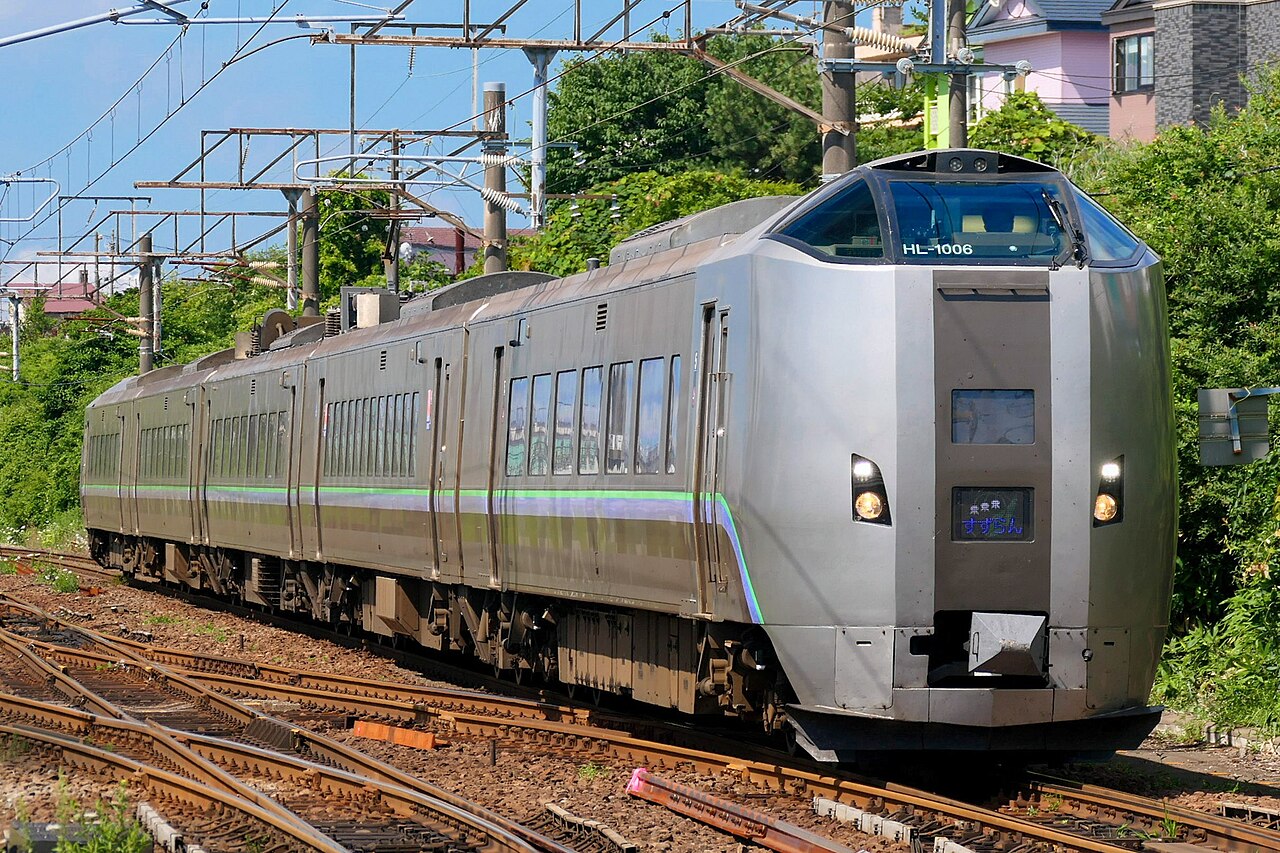
On 1 April 1987, with the privatisation of JNR, JR Hokkaido took over the whole line as the primary railway operator, while the Japan Freight Railway Company (JR Freight) became the secondary operator over the Oshamambe-Iwamizawa section. The Oshamambe-Numanohata portion forms part of the main link route between Sapporo and Hakodate, and the limited express services Super Hokuto and Hokuto run along it, together with the Suzuran between Sapporo and Muroran. Local services are operated with diesel multiple units such as the KiHa 40, KiHa 143 and KiHa 150, and 737 series electric multiple units were introduced on the electrified Tomakomai-Muroran section. The 211.0 km route has a maximum speed of 120 km/h between Oshamambe and Numanohata.
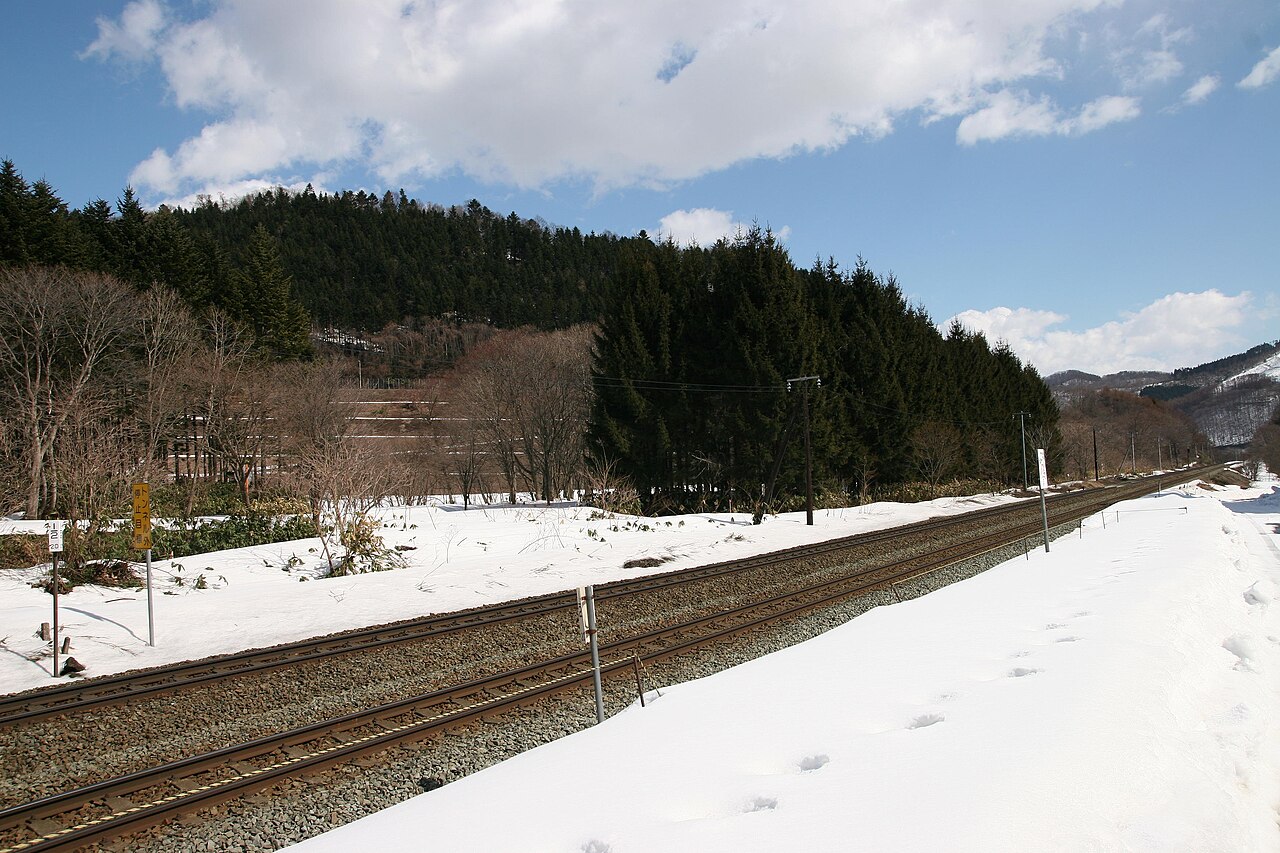
A notable distinction lies between Shiraoi and Numanohata: the Japanese-language source records this 28.736 km stretch as the longest straight railway section in Japan, while cautioning that the track is not necessarily perfectly straight throughout because of turnout-associated curves. The line has seen serious incidents over its history: on 31 March 1947 two trains collided head-on inside a tunnel near Shizukari, killing four people and injuring 41, and in 2000 the eruption of Mount Usu closed the Higashi-Muroran-Oshamambe section, with services restored in stages and full operation resumed on 8 June 2000. On 19 November 2016 JR Hokkaido's president announced plans to rationalise up to about 1,237 km, roughly half of the company's network, including the proposed conversion of the Tomakomai-Iwamizawa section to Third-Sector operation; without agreement from local governments, that section may face closure.
Timeline
- 18921 August: the Hokkaido Colliery and Railway Company opens the line from Muroran (now Higashi-Muroran) to Iwamizawa to link coal mines to Muroran Port.
- 1897The line is extended to the present Muroran Station.
- 19061 October: the Hokkaido Colliery Railway is nationalised; the second Muroran-Iwamizawa section becomes a government line.
- 190912 October: the second Muroran-Iwamizawa section is officially named the Muroran Main Line.
- 191027 December: the Higashi-Muroran (then Wanishi)-Muroran section is double-tracked.
- 192310 December: the Oshamambe-Shizukari segment of the government Osawa Line opens, the first part of the Oshamambe-Higashi-Muroran route.
- 192810 September: the through route is completed; the Osawa Line bypasses the mountainous Hakodate Main Line and links inland Iburi to Muroran Port.
- 19311 April: the Osawa Line is merged in; Oshamambe-Iwamizawa becomes the main line and Higashi-Muroran-Muroran the branch, renamed the Muroran Main Line.
- 19341 July: Hokkaido's first gasoline rail-car service begins on the Muroran-Higashi-Muroran section.
- 194731 March: two trains collide head-on inside a tunnel near Shizukari, killing four and injuring 41.
- 1958The Higashi-Muroran-Mikawa section completes its staged double-tracking that began in 1920.
- 197514 December: the last regular JNR steam-hauled passenger service runs between Muroran and Iwamizawa, hauled by C57 135. The 42 km Oshamambe-Toya double-tracking (begun 1964, with ten new tunnels, shortening the route 1.7 km) concludes.
- 19801 October: the 74.9 km Numanohata-Muroran section is electrified at 20 kV AC 50 Hz, with the Chitose Line.
- 19871 April: on JNR privatisation JR Hokkaido becomes primary operator of the whole line; JR Freight becomes secondary operator over Oshamambe-Iwamizawa.
- 2000The eruption of Mount Usu closes the Higashi-Muroran-Oshamambe section; full normal operation resumes on 8 June.
- 201619 November: JR Hokkaido's president announces plans to rationalise ~1,237 km (~50% of the network), including Third-Sector conversion of the Tomakomai-Iwamizawa section, which may otherwise face closure.
Sources
Facts last verified 3 June 2026.
Gallery 4 photos
Every photo for this page — tap any image to view it full-size. All from Wikimedia Commons (credit under each).