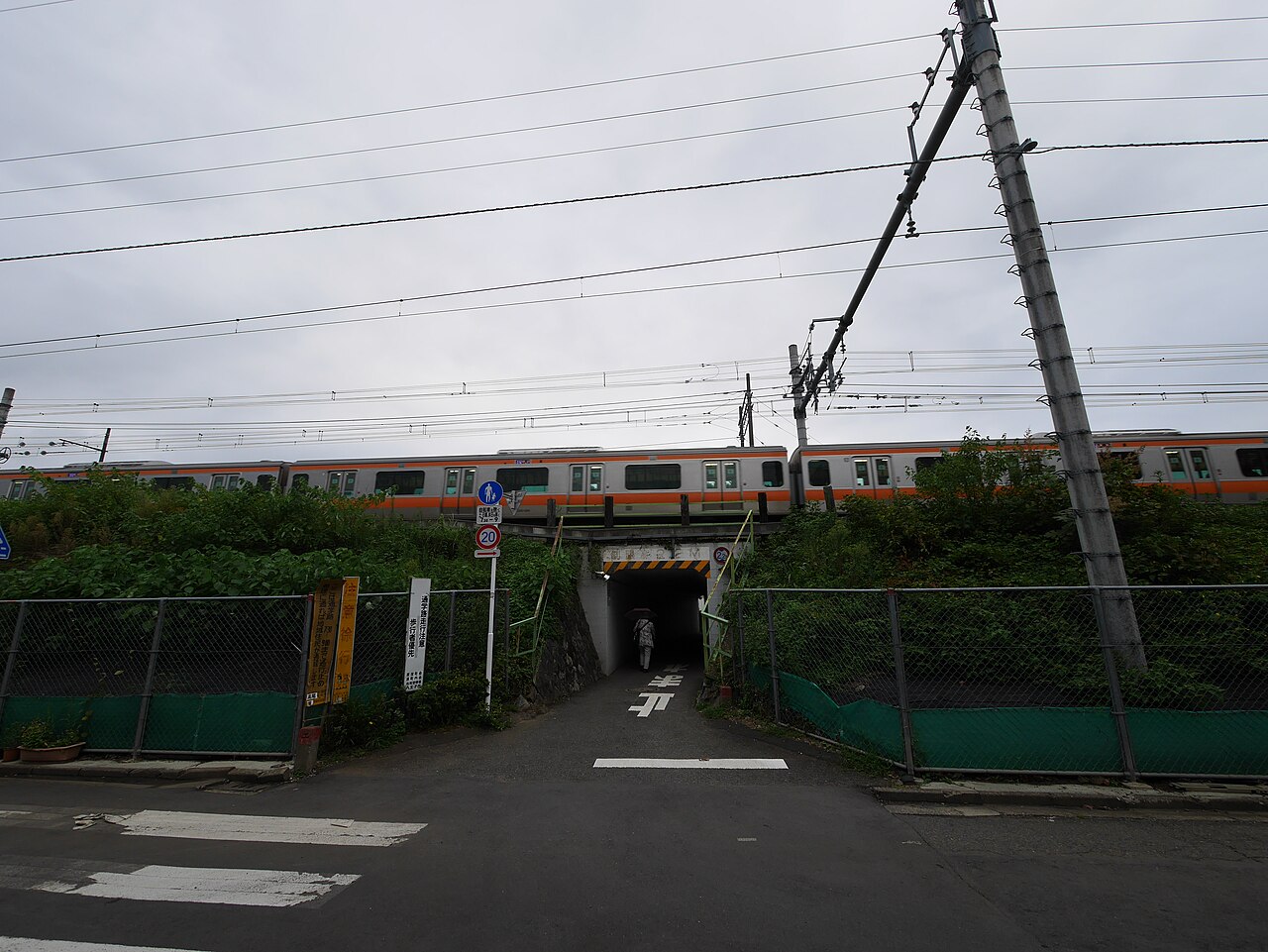
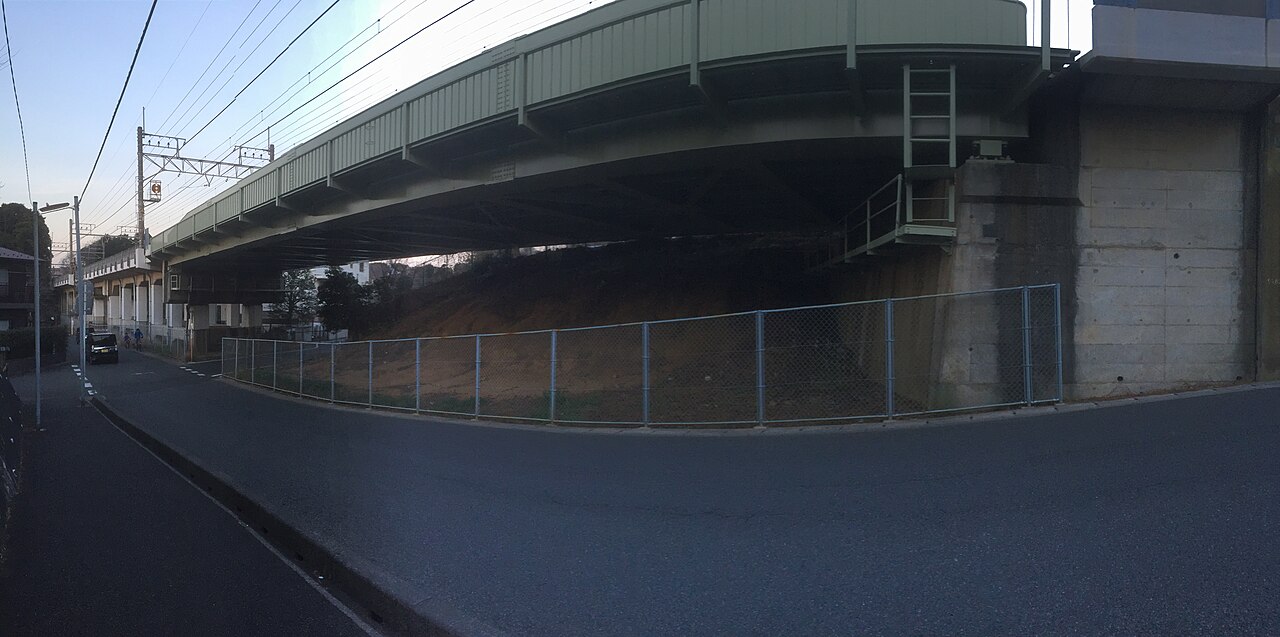
History
The route originated as a planned freight bypass of the congested Yamanote Freight Line, conceived as a "Tokyo Outer Loop Line" and incorporated into the 1927 Railway Construction Act, but the scheme was frozen for decades by the Second World War and its aftermath. As freight traffic on the Yamanote Freight Line grew again after the war, Saitama Prefecture applied in 1952 for an outer-belt route running Tokorozawa-Urawa-Nagareyama-Abiko, and in 1957 the Railway Construction Council resolved to build it under the provisional name "Gyokuyō Line" (玉葉線) - a name formed from one character each of Saitama (玉) and Chiba (葉). In 1964 the Transport Minister directed the Japan Railway Construction Public Corporation to build the line, treated as a major-city "D-line" transit project, and a groundbreaking ceremony was held at Minami-Urawa on 17 December 1965; the easternmost Shin-Matsudo-Nishi-Funabashi section was originally a separate project named the "Kogane Line" (小金線). Because much of the alignment ran through then-sparsely-populated districts, it was initially envisioned as a freight-only line; opposition from residents along the route, at a time of intense landowner conflict over Narita Airport, led the railway authorities to agree to provide passenger service as well.
The first section, between Fuchūhommachi and Shin-Matsudo, opened on 1 April 1973, with passenger and freight operation beginning together. Services used six-car 101-1000 series EMUs that were specially modified to meet government fire-resistance regulations for trains running through long tunnels, the line including the 4,380 m Higashi-Murayama Tunnel between Shin-Kodaira and Shin-Akitsu and the Kodaira Tunnel between Shin-Kodaira and Nishi-Kokubunji. In its early years service was sparse - roughly 40-minute intervals during the daytime off-peak and 15-to-20-minute intervals at the morning peak - reflecting the line's origin as a freight route with passenger trains slotted between freight workings. The southern freight-only segment from Fuchūhommachi to Tsurumi opened on 1 March 1976, and the eastern section from Shin-Matsudo to Nishi-Funabashi opened for passengers on 2 October 1978, completing the through route. Diverting freight onto the new line reduced freight traffic on the Yamanote Freight Line, which in turn made possible the later introduction and expansion of passenger services such as the Saikyō Line and the Shōnan-Shinjuku Line over that corridor. Notably, despite carrying the Musashino name and traversing the Musashino district and the Musashino Terrace, the line does not pass through the city of Musashino itself.
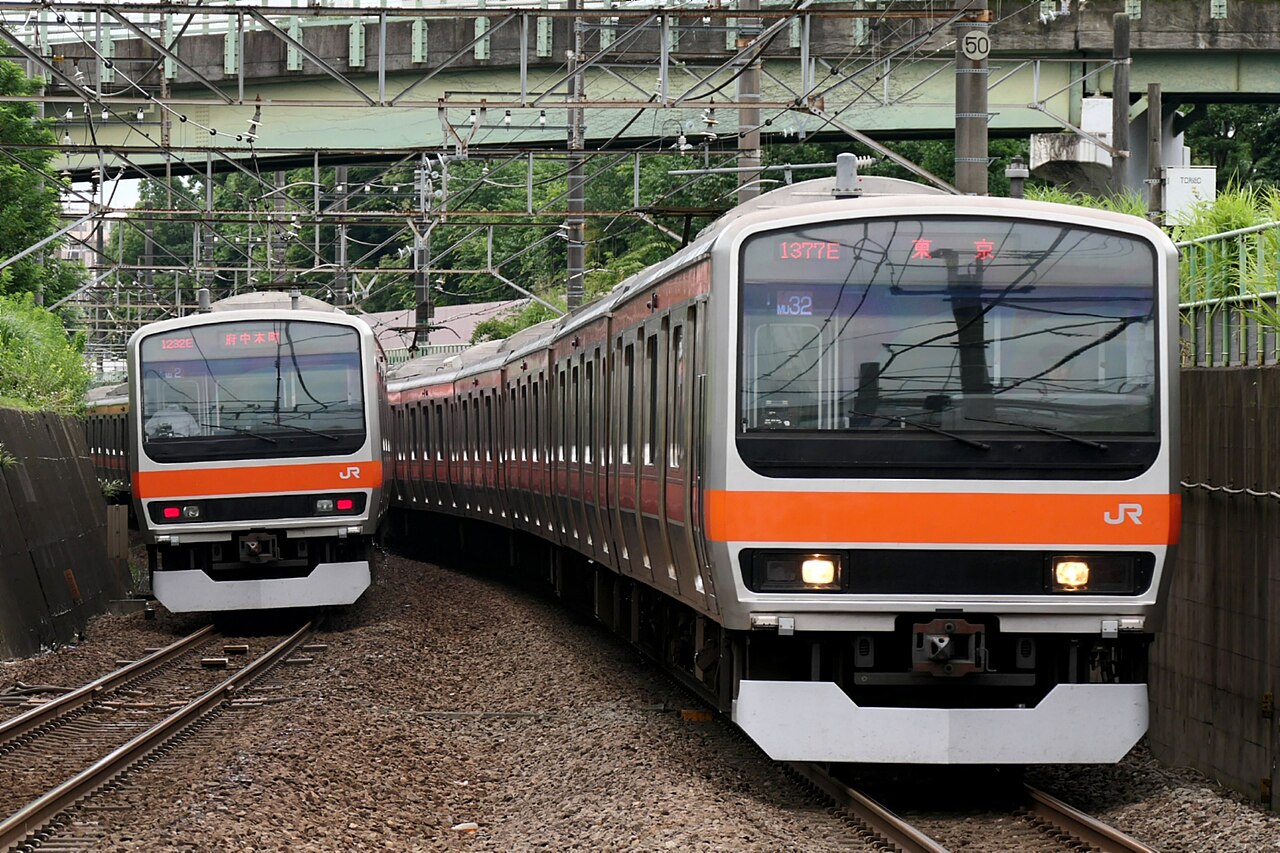
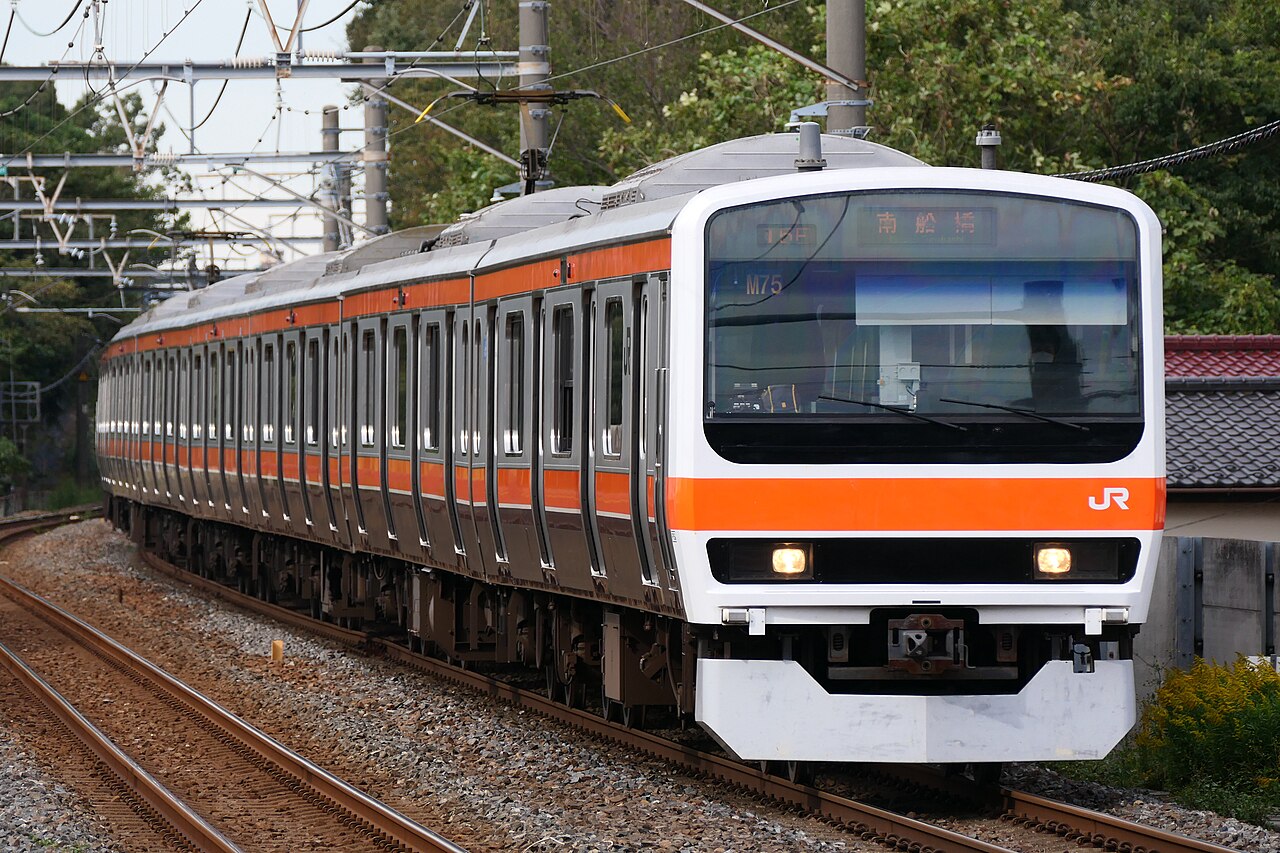
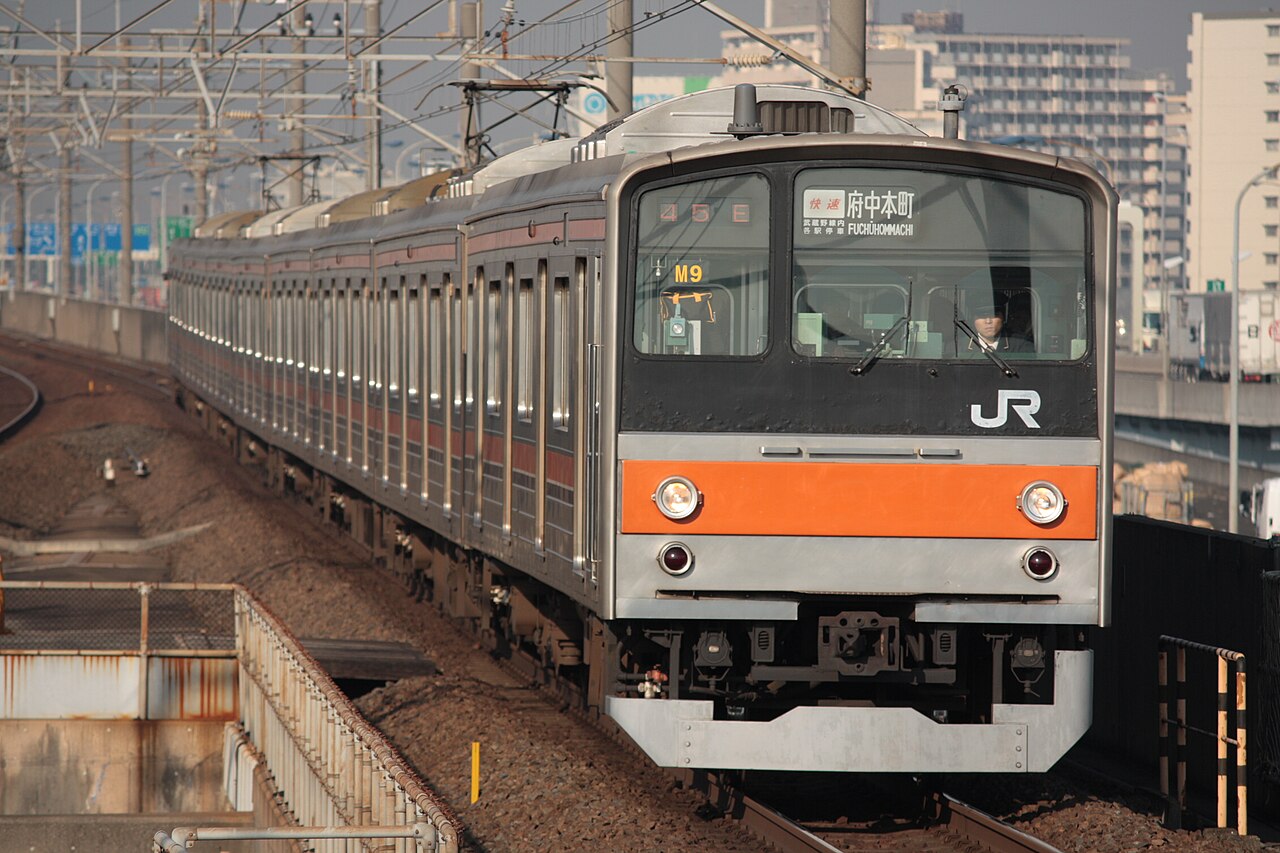
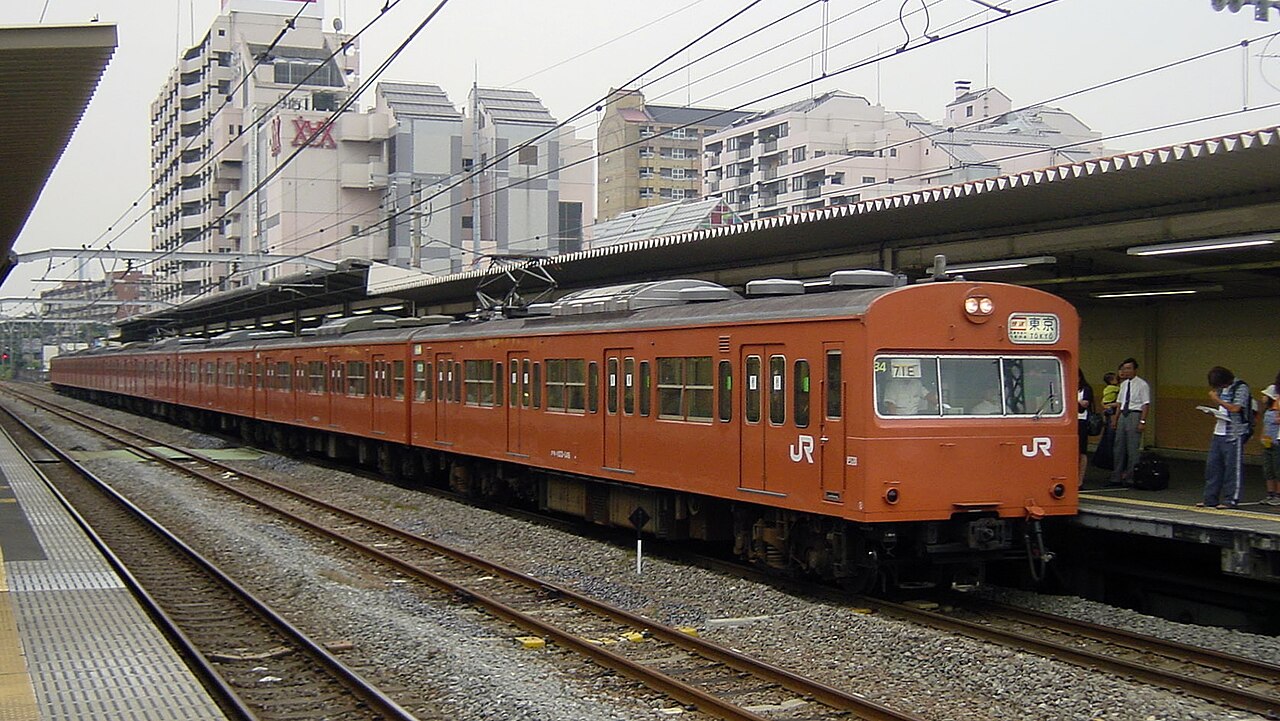
Through-running with the Keiyō Line commenced on 1 December 1988, after the Keiyō Line's second-phase section opened, allowing some trains to continue past Nishi-Funabashi toward Tokyo. Today most Musashino Line trains are locals making all stops, with some continuing onto the Keiyō Line to Tokyo, Minami-Funabashi or Kaihimmakuhari; additional services include the "Musashino" and "Shimōsa" trains, which use freight-line connections to reach Ōmiya. On 1 April 1987, with the privatisation of Japanese National Railways, the line passed to JR East, with JR Freight taking up Type-2 operation. Rolling stock evolved from the original 101-1000 series (1973-1986) through the 103 series - lengthened from six to eight cars under the 1 December 1996 timetable revision - the 201 series, and the 205 series, the latter withdrawn from the line by 19 October 2020 and subsequently sent to operate in Indonesia. The current fleet comprises eight-car 209-500 series (from December 2010), E231-0 series (from November 2017) and a single E231-900 series set (from 20 July 2020) EMUs. Station numbering using the route symbol JM (JM10 to JM35) was introduced on 20 August 2016 across the passenger section. The line carried 1,064,613 passengers per day on a 2015 basis. Looking ahead, in June 2025 JR East and Seibu Railway announced a plan to begin mutual through-running between the Seibu Ikebukuro Line and the Musashino and Keiyō lines by fiscal 2028, using a connecting line near Shin-Akitsu Station.
Timeline
- 1927The route is incorporated into the Railway Construction Act as a planned "Tokyo Outer Loop Line" freight bypass of the Yamanote Freight Line.
- 195227 May: Saitama Prefecture applies for an outer-belt route running Tokorozawa-Urawa-Nagareyama-Abiko.
- 19573 April: the Railway Construction Council resolves to build the line under the provisional name "Gyokuyō Line" (玉葉線).
- 1964April: the basic plan is presented and the Transport Minister directs the Japan Railway Construction Public Corporation to build the line.
- 1965Construction begins (EN: November 1965); a groundbreaking ceremony is held at Minami-Urawa on 17 December (JA).
- 19731 April: the first section, Fuchūhommachi-Shin-Matsudo (57.5 km), opens with passenger and freight service; six-car 101-1000 series EMUs, fire-resistance-modified for long tunnels, enter service.
- 19761 March: the southern freight-only segment Tsurumi-Fuchūhommachi (the Musashino South Line) opens.
- 19782 October: the eastern section Shin-Matsudo-Nishi-Funabashi (14.3 km) opens for passengers, completing the through route.
- 19871 April: JNR is privatised; the line transfers to JR East, with JR Freight taking up Type-2 operation.
- 19881 December: through-running with the Keiyō Line begins after the Keiyō second-phase section opens.
- 19961 December timetable revision: all Musashino Line 103 series sets are lengthened from six to eight cars.
- 200510 December: the 103 series is withdrawn from service.
- 2010December: 209-500 series eight-car EMUs enter service on the line.
- 201620 August: station numbering (route symbol JM, JM10-JM35) is introduced on the passenger section.
- 2017November: E231-0 series eight-car EMUs enter service.
- 202019 October: the 205 series is withdrawn from the line (later operated in Indonesia). A single E231-900 series set enters service on 20 July.
- 2025June: JR East and Seibu Railway announce a plan for mutual through-running between the Seibu Ikebukuro Line and the Musashino/Keiyō lines by fiscal 2028, via a connecting line near Shin-Akitsu.
Sources
Facts last verified 3 June 2026.
Gallery 6 photos
Every photo for this page — tap any image to view it full-size. All from Wikimedia Commons (credit under each).