History
The line began as a private venture. It originated from a plan applied for in 1919 to build a railway primarily to carry gravel dredged from the bed of the Tama River; a licence was granted and the operating company was renamed the Nambu Railway, which was established on 29 March 1921. The first section, between Kawasaki and Noborito, opened on 27 March 1927, and the line was completed in five stages between 1927 and 1930: Kawasaki–Noborito on 27 March 1927; Noborito–Ōmaru (near present-day Minami-Tama) on 1 November 1927; Ōmaru–Bubaigawara (then called Yashikibun) on 11 December 1928; Bubaigawara–Tachikawa on 11 December 1929; and the Shitte–Hama-Kawasaki branch on 25 March 1930. Passenger trains used electric multiple units (EMUs) from the very beginning, and apart from the freight branch the whole line was electrified from the start. Freight initially consisted mainly of gravel from the Tama River; once the railway reached Tachikawa and connected with the Ōme Electric Railway, limestone became a principal commodity. The railway came under the control of the Asano zaibatsu — whose founder Asano Sōichirō already controlled the Ōme Railway — allowing limestone to be carried from the group's own quarry in western Tokyo to its cement plant in Kawasaki entirely over its own lines, greatly shortening the haul. At full opening, the 35.5 km Kawasaki–Tachikawa journey took one hour and ten minutes.
From the 1930s onward, factories established themselves along the route and the population of the corridor grew rapidly, turning the Nambu Railway into a commuter carrier. On 1 April 1944 the line was nationalised under wartime private-railway acquisition — it was judged militarily important as a route linking the Tōkaidō Main Line and industrial zone with the Chūō Line, as a carrier of strategic limestone, and as serving military facilities and key factories along its course — and became the Nambu Line of the Japanese Government Railways. Despite postwar calls for its return to private hands, it remained part of the Japanese National Railways (JNR), which was formally established on 1 June 1949, until privatisation in 1987.
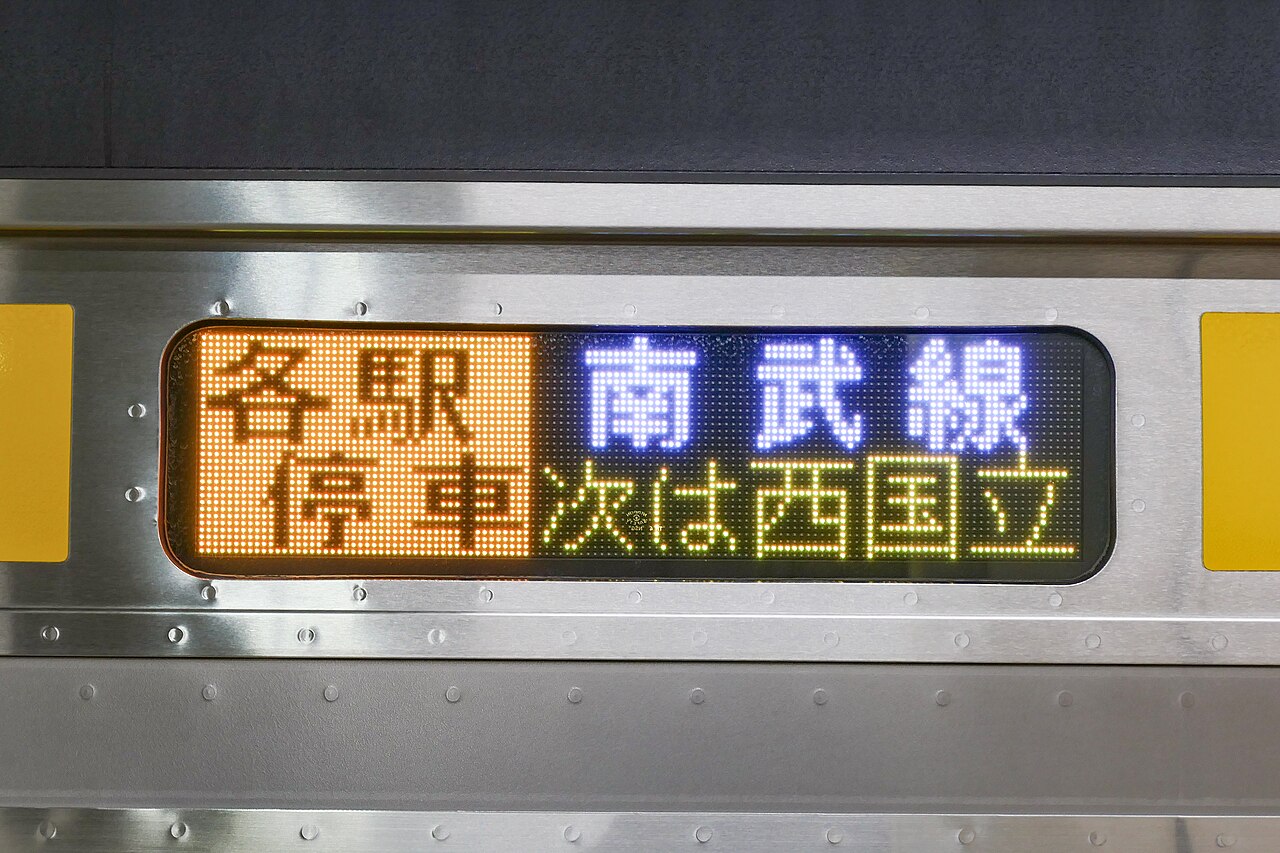
The postwar expansion of the Tokyo urban area converted most of the farmland along the line into residential districts and sharply increased passenger traffic. JNR strengthened capacity by lengthening trains and double-tracking the route, completing six-car operation and the double-tracking of the whole line (apart from the Tachikawa station area) by 30 September 1966; the track structure was reinforced partly to allow 800-tonne-class freight trains to run. Limited-stop "Rapid" services between Kawasaki and Noborito, calling additionally at Musashi-Kosugi and Musashi-Mizonokuchi, began on 15 December 1969 but were discontinued in the timetable revision of 2 October 1978. After a gap of 33 years, Rapid services between Kawasaki and Tachikawa with more stops resumed on 9 April 2011, postponed from the originally scheduled 12 March because of the 2011 Tōhoku earthquake and tsunami. Freight traffic on the main line declined after the parallel Musashino Line opened in 1976 and after limestone freight was discontinued in 1998, although the Nambu Branch Line remains a major freight route. The complete double-tracking of the line, including the Tachikawa station bottleneck, was finished on 24 October 1999.
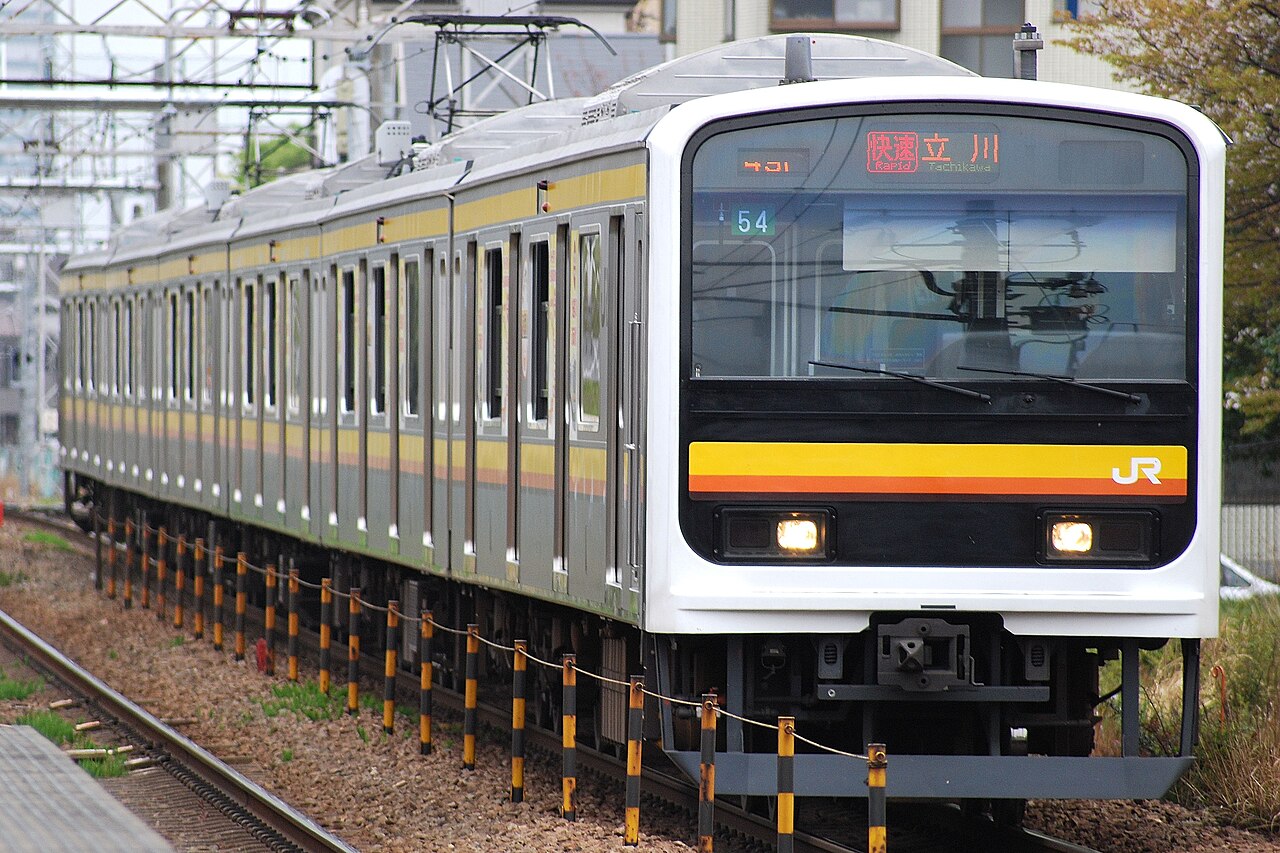
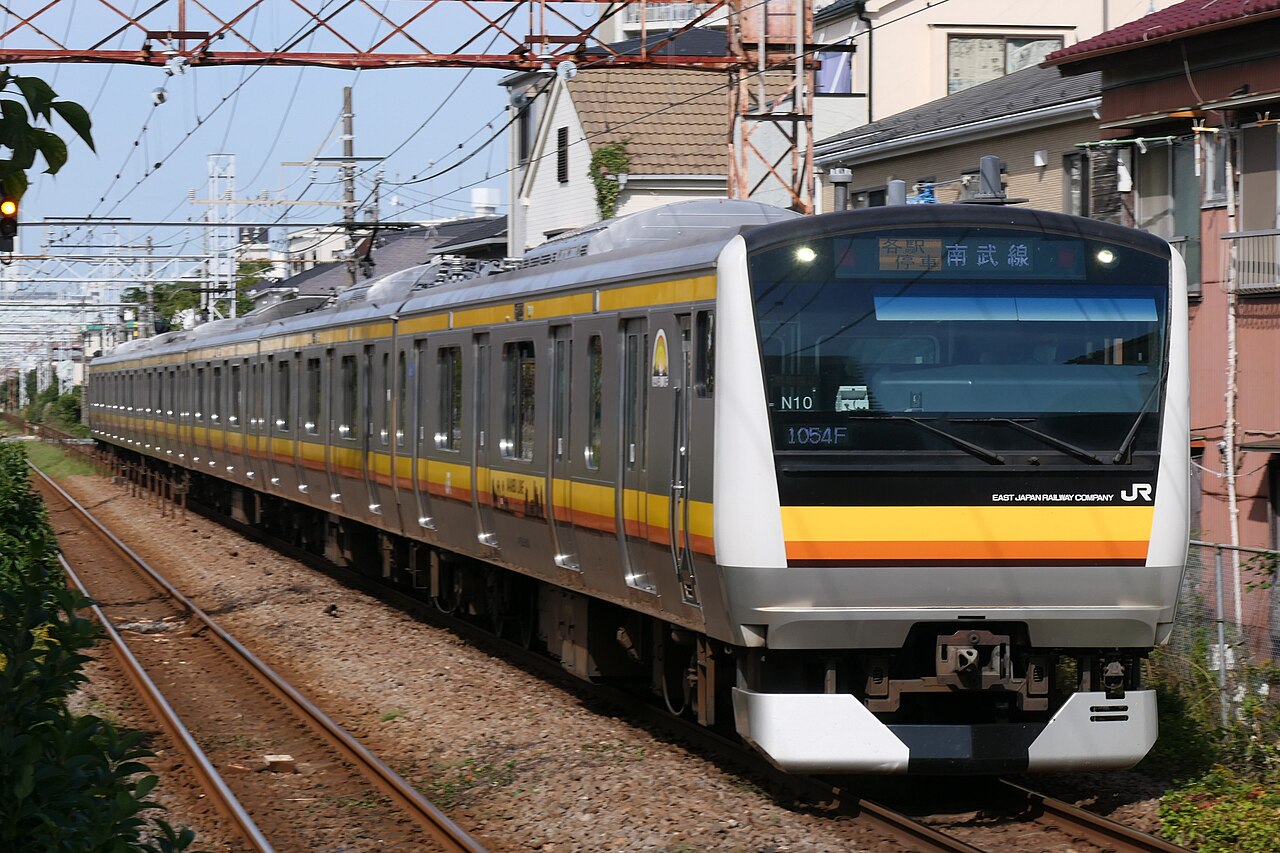
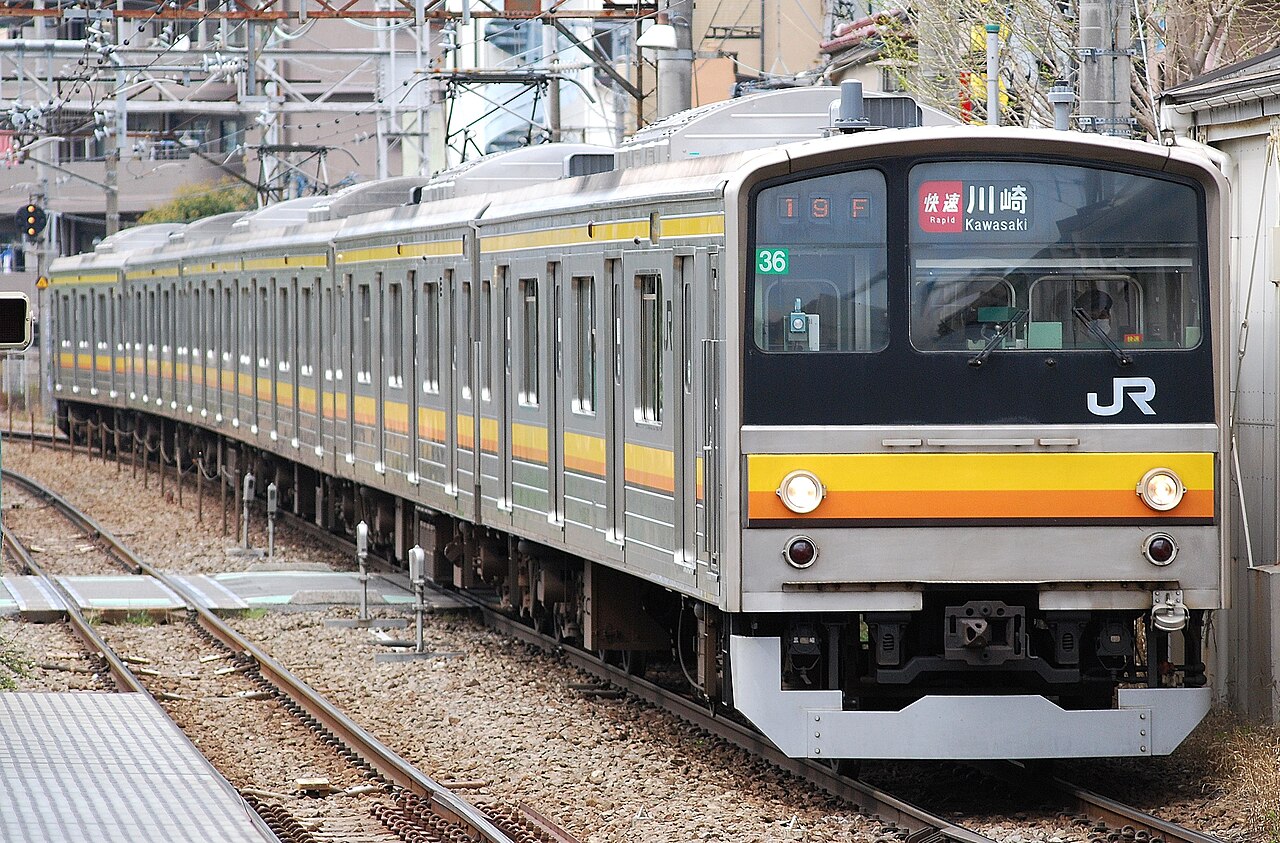
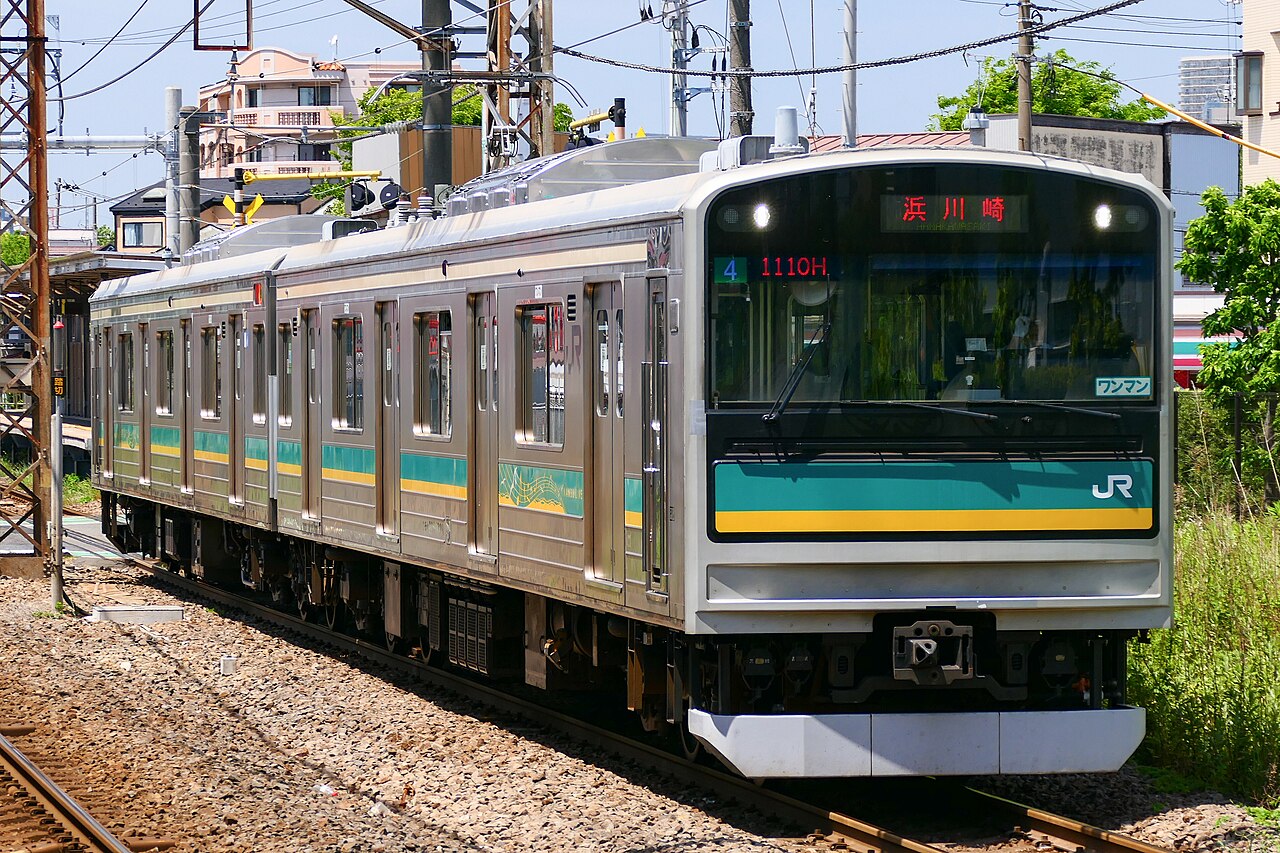
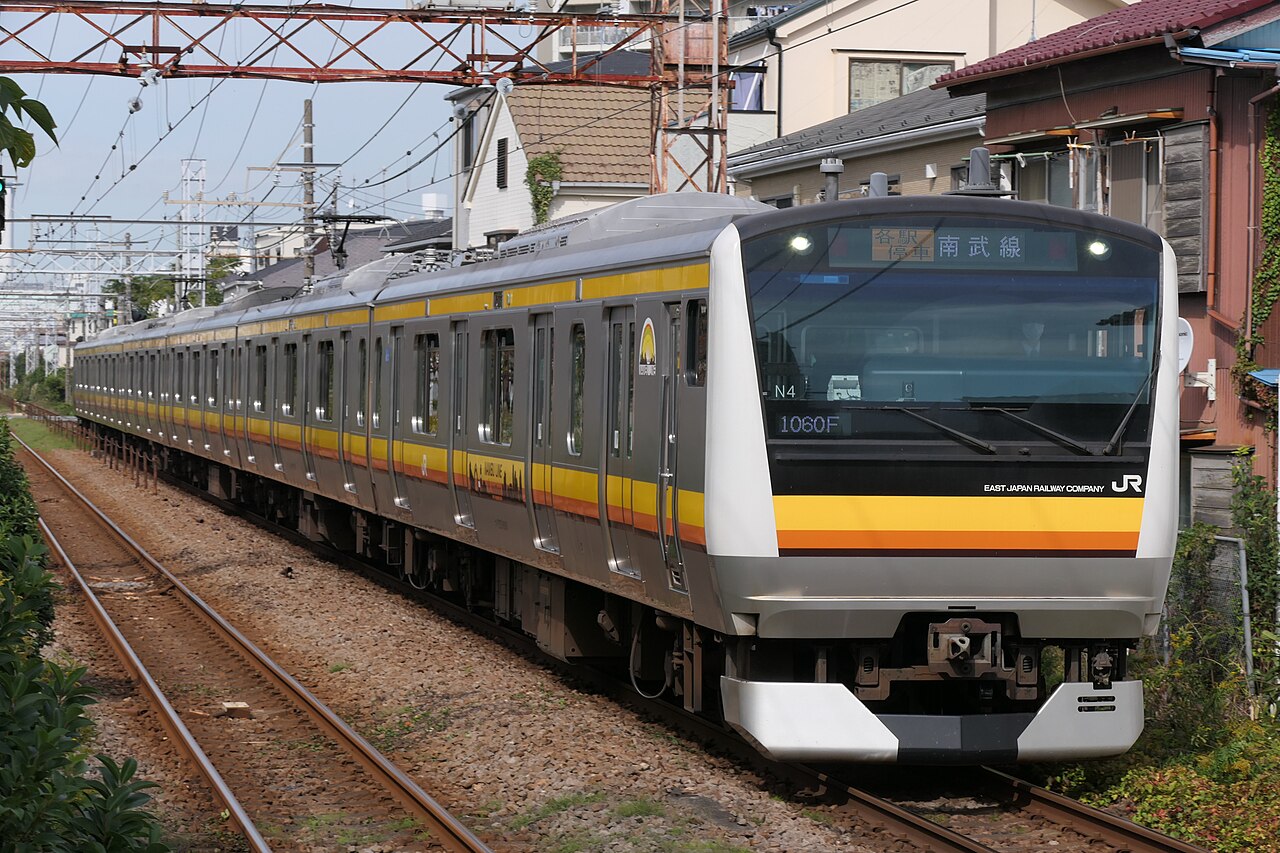
Rolling stock has turned over many times. Early postwar 20-metre cars (from 1963) gave way to 101 series sets, which had displaced all older stock by 1978; the 101 series was in turn replaced by 103 series and 205 series trains, and after the formation of JR East the 209 series entered service in 1993. The 205 series operated from 11 March 1989 until its main-line sets were withdrawn in December 2015 and January 2016, with some cars subsequently transferred to Indonesia. E233-8000 series EMUs began revenue service on 4 October 2014, and by 15 March 2017 the Kawasaki–Tachikawa main-line fleet had been standardised on the E233 series; the branch line is worked by 205-1000 series (since August 2002) and E127-0 series (since September 2023) two-car sets. Station numbering, assigning the route symbol JN (main-line stations JN01–JN26 and branch stations JN51–JN54), was introduced on 20 August 2016, and the Kawasaki–Tachikawa section began driver-only "wanman" operation on 15 March 2025. The line carried 840,241 passengers per day on a 2015 basis.
The Nambu Line's history also includes notable incidents. On 7 August 1962 a train struck a small truck at a level crossing between Kuji and Tsudayama and then collided with an oncoming train in a double collision, killing three people and injuring 154. On 9 October 1971 an incendiary device planted at a level crossing near Yanokuchi set fire to a crossing board in an act of sabotage targeting a passing United States military jet-fuel freight train.
Timeline
- 192129 March: the private Nambu Railway is established (originating from a 1919 plan for a line to carry gravel from the Tama River).
- 192727 March: the first section, Kawasaki–Noborito, opens. Passenger EMUs are used from the start; apart from the freight branch the line is electrified from opening.
- 192811 December: Ōmaru–Bubaigawara (then Yashikibun) section opens.
- 192911 December: Bubaigawara–Tachikawa section opens, completing the Kawasaki–Tachikawa main line (35.5 km, then a 1h10m journey).
- 193025 March: the Shitte–Hama-Kawasaki branch opens, finishing the five-stage build.
- 19441 April: the line is nationalised under wartime private-railway acquisition and becomes the Nambu Line of the Japanese Government Railways.
- 19491 June: the Japanese National Railways (JNR) is established and succeeds the line.
- 19627 August: a level-crossing double collision between Kuji and Tsudayama kills 3 and injures 154.
- 196630 September: six-car operation and double-tracking of the whole line (except the Tachikawa station area) are completed.
- 196915 December: limited-stop Rapid services begin between Kawasaki and Noborito (stopping additionally at Musashi-Kosugi and Musashi-Mizonokuchi).
- 19719 October: an incendiary device planted at a level crossing near Yanokuchi burns a crossing board in an act of sabotage targeting a passing US military jet-fuel freight train.
- 1976The parallel Musashino Line opens, after which freight traffic on the Nambu Line declines.
- 19782 October: the Kawasaki–Noborito Rapid service is discontinued in the timetable revision.
- 19871 April: JNR is privatised; the line is succeeded by JR East, with JR Freight as Type-2 operator.
- 198911 March: 205 series EMUs enter revenue service.
- 19931 April: 209 series EMUs enter service after the formation of JR East.
- 1998Limestone freight on the main line is discontinued; the Nambu Branch Line remains a major freight route.
- 199924 October: complete double-tracking, including the Tachikawa station bottleneck, is finished.
- 20119 April: Rapid services between Kawasaki and Tachikawa resume after 33 years, postponed from 12 March due to the 2011 Tōhoku earthquake and tsunami.
- 20144 October: E233-8000 series EMUs begin revenue service.
- 201620 August: station numbering (route symbol JN; main line JN01–JN26, branch JN51–JN54) is introduced. Main-line 205 series sets finish service (Dec 2015 / Jan 2016), with some cars transferred to Indonesia.
- 201715 March: the Kawasaki–Tachikawa main-line fleet is standardised on the E233 series (E233-8500 set introduced).
- 202515 March: the Kawasaki–Tachikawa section begins driver-only "wanman" operation.
Sources
Facts last verified 3 June 2026.
Gallery 5 photos
Every photo for this page — tap any image to view it full-size. All from Wikimedia Commons (credit under each).