History
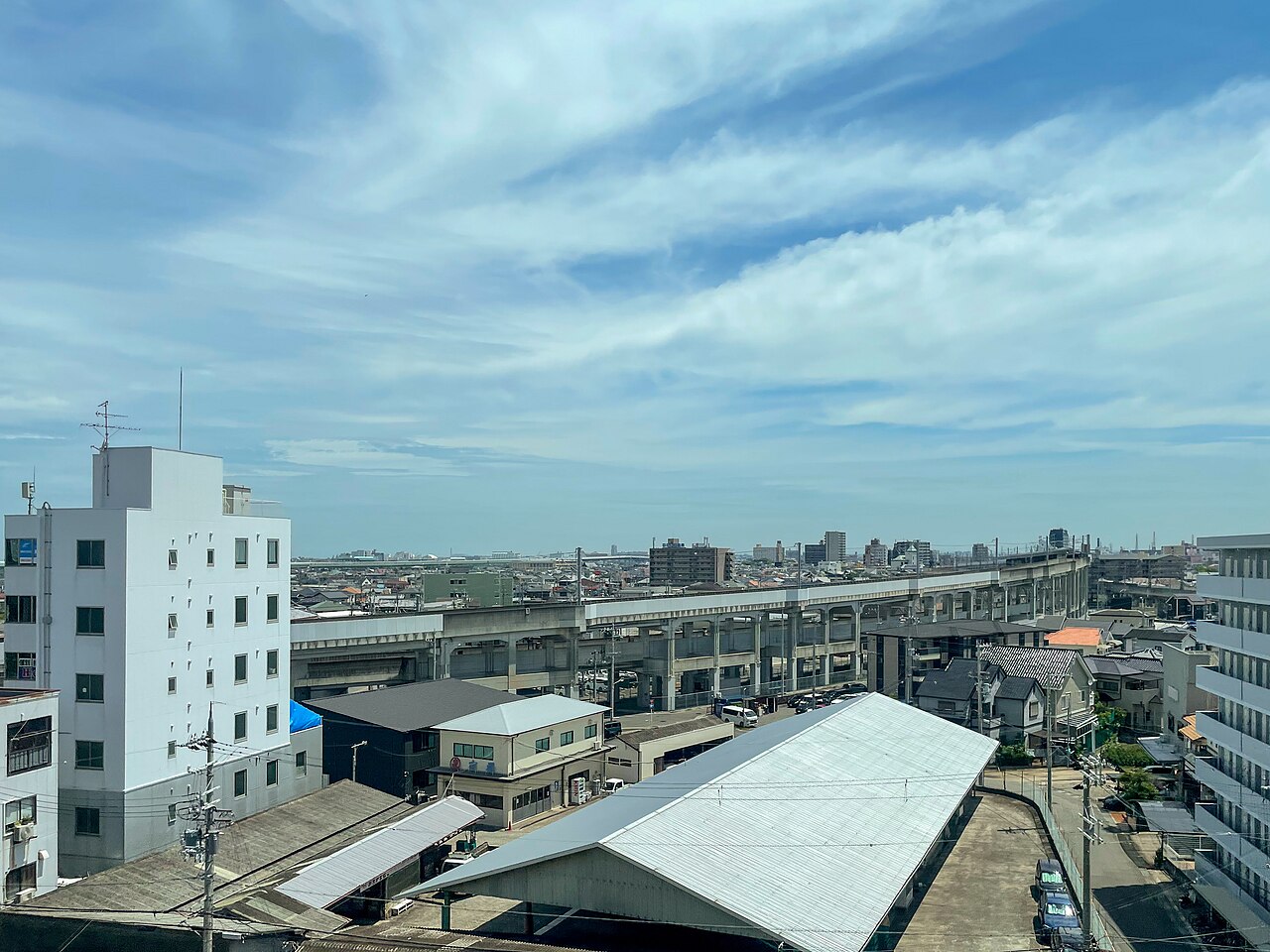
The line was conceived as a dedicated airport-access railway. Licences were granted on 2 December 1987: Nankai received a Category-1 railway business licence for the Izumisano–Rinkū Town section and a Category-2 licence for the Rinkū Town–Kansai Airport section, while the Kansai International Airport company (as it then was) received a Category-3 licence for the Rinkū Town–Kansai Airport section. This split arrangement persists today — between Rinkū Town and Kansai Airport (6.9 km) Nankai operates as a Category-2 operator over infrastructure whose Category-3 owner is New Kansai International Airport Co., Ltd., whereas on the Izumisano–Rinkū Town section (1.9 km) Nankai is the Category-1 operator that both owns and runs the line.
Land acquisition began in April 1988. Acquiring the roughly 30,000 square metres of land proved extremely difficult — it coincided with continuous grade-separation works for the Nankai Main Line at Izumisano, with sharply rising land prices, and with construction-schedule pressures — and the project cost swelled from an initial estimate of about ¥18.4 billion to a final figure of more than ¥37.5 billion, over double the original projection.
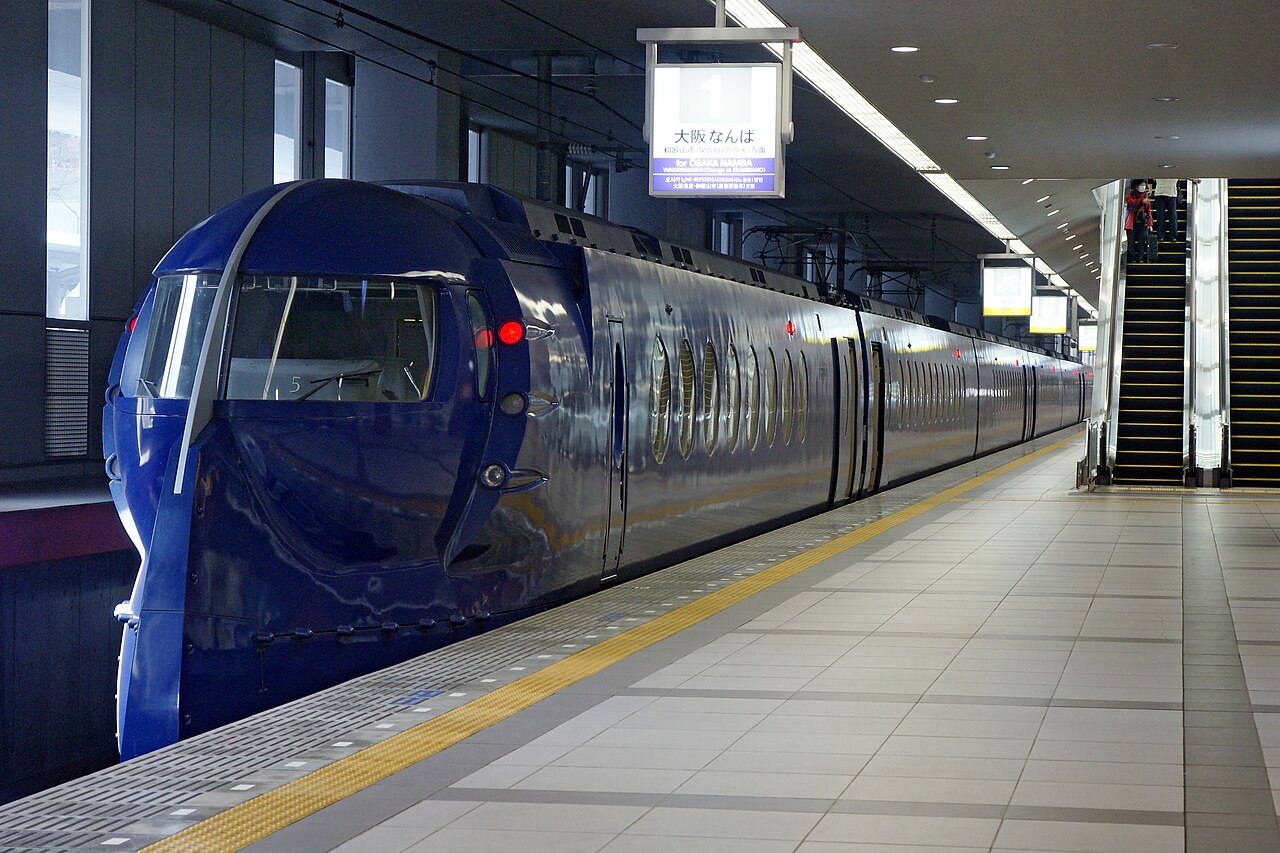
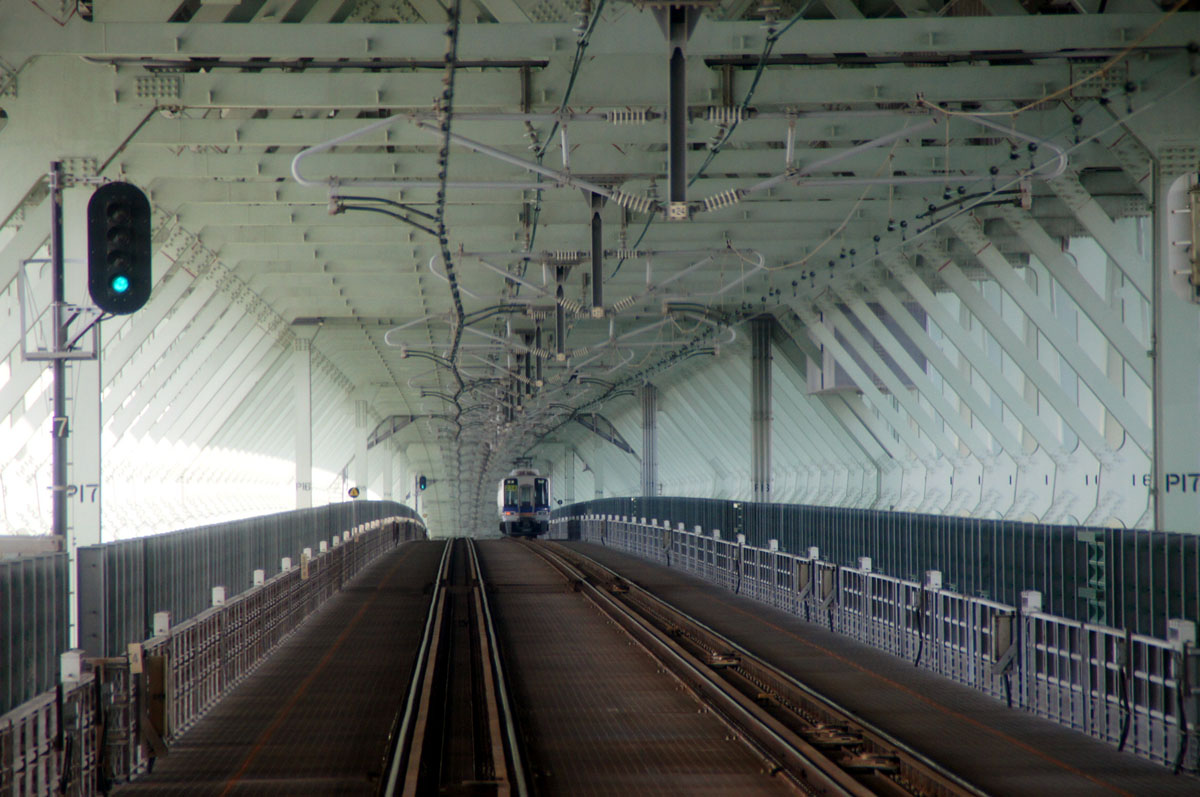
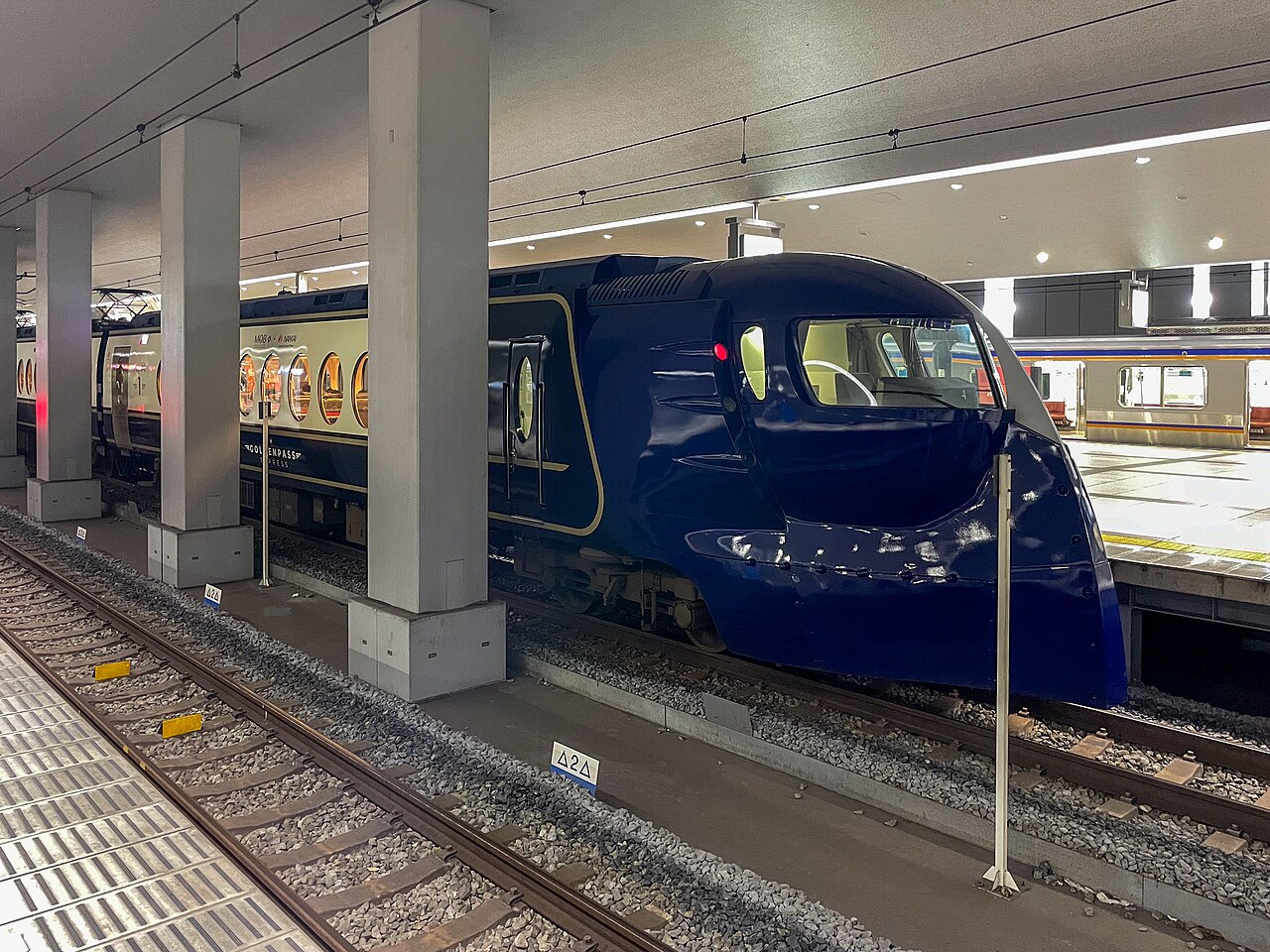
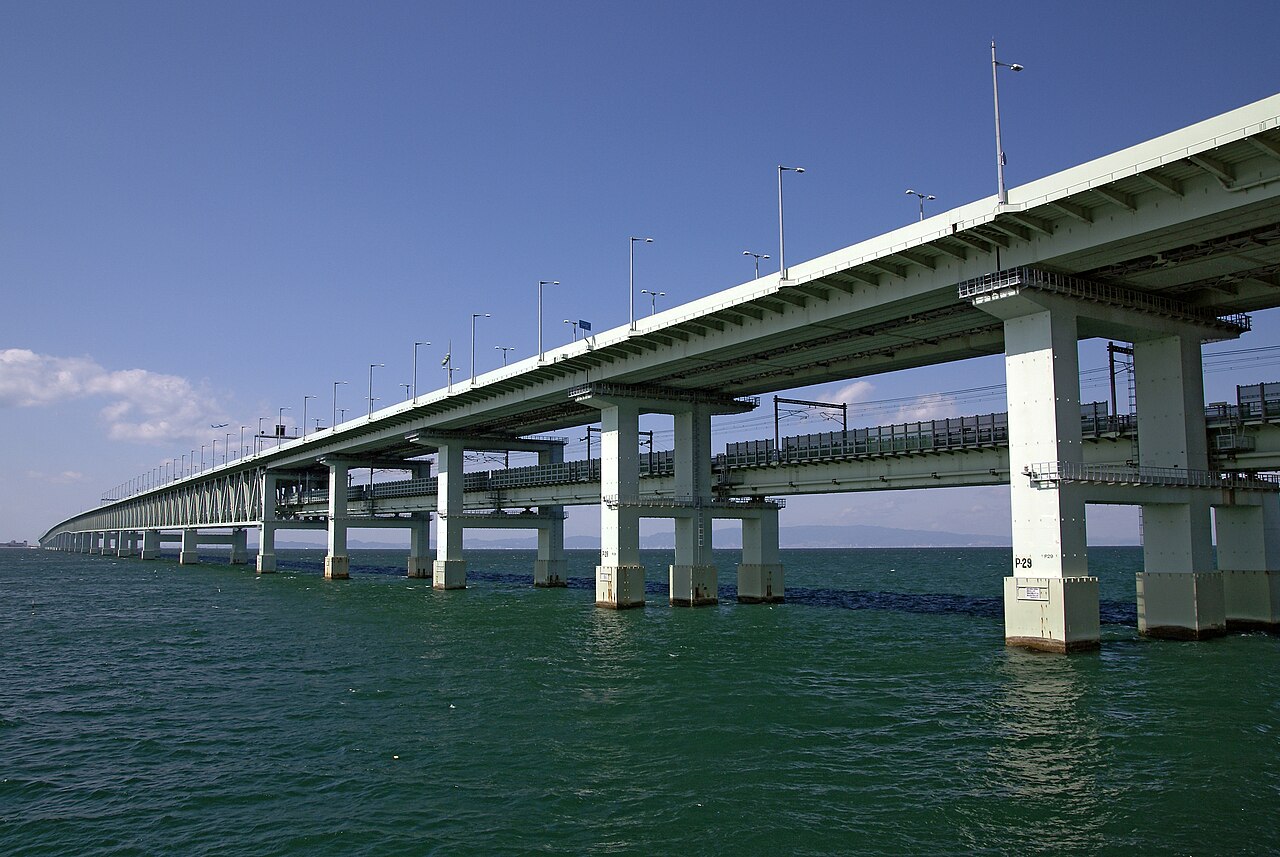
The section between Izumisano Station and Kansai Airport Station opened on 15 June 1994. It opened ahead of the airport itself in order to carry construction and airport staff. Kansai International Airport opened on 4 September 1994, and on the same day Nankai began running its airport limited-express service, the rapi:t, using the 50000 series. The line's defining structure is the Kansai International Airport Bridge: between Rinkū Town and Kansai Airport (excluding the station precincts themselves) the Nankai line shares track with the JR West Kansai Airport Line, and the two operators' tracks merge to cross the 3,750-metre, double-deck road-over-rail bridge spanning Osaka Bay.
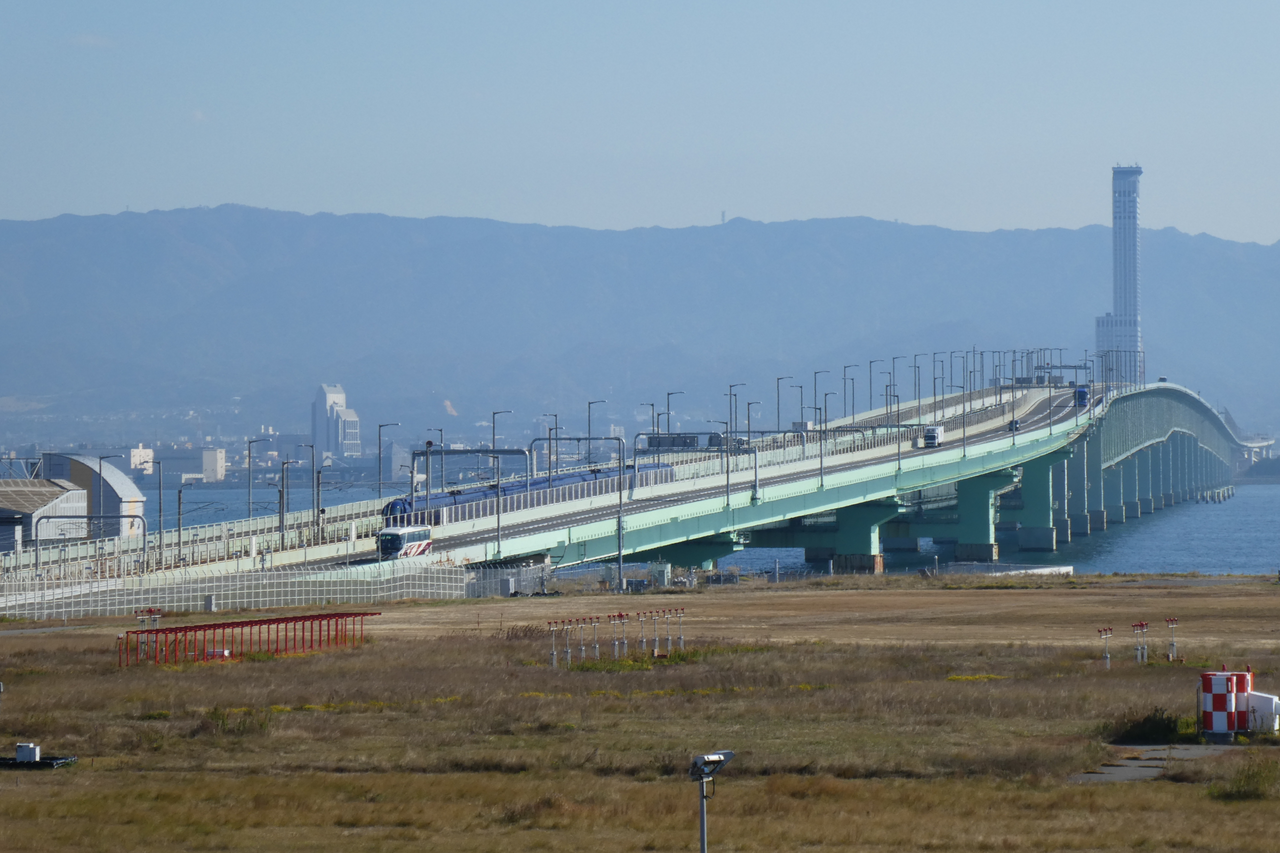
A notable characteristic of the line is how much of it runs over water: according to the Japanese-language sources, about 42.6 percent of its total length is over the sea, making it one of only a handful of Japanese railway lines on which the over-sea portion accounts for a quarter (25 percent) or more of the whole — a group that also includes the JR Kansai Airport Line with which it shares track, the Meitetsu Airport Line serving Chūbu Centrair, and the JR Honshi-Bisan Line over the Great Seto Bridge.
Several events have shaped the line since opening. During the Great Hanshin-Awaji Earthquake on 17 January 1995, a train was stranded and immobilised between Rinkū Town and Kansai Airport before operations resumed at 14:20. From 2003 the rapi:t limited express, which had previously run through Rinkū Town without stopping, began calling there to serve the adjacent outlet mall (Rinku Premium Outlets). On 27 November 2005 the elevation works around Izumisano Station were completed, removing every level crossing from the line and allowing all-day operation of local trains. On 31 May 2013 the line's automatic train stop system was changed from the ATS-N type that had been in use since opening to ATS-PN. On 4 September 2018, during Typhoon No. 21, a tanker that had been moored near the airport drifted in the strong winds and struck the Kansai International Airport Bridge, damaging it and cutting the line; service resumed between Izumisano and Rinkū Town on 8 September, and the Rinkū Town–Kansai Airport section reopened, restoring the full line, on 18 September 2018.
The line is double-tracked throughout and electrified at 1,500 V DC. The maximum speed is 120 km/h for limited-express trains on the airport bridge and 110 km/h elsewhere, with all other trains limited to 110 km/h across the whole line. Today services are centred on the Namba-bound rapi:t limited express and Airport Express trains running through onto the Nankai Main Line, supplemented by local trains, with all Nankai trains stopping at every one of the line's three stations.
Timeline
- 19872 December: railway business licences granted — Nankai as Category-1 operator (Izumisano–Rinkū Town) and Category-2 operator (Rinkū Town–Kansai Airport); Kansai International Airport company as Category-3 operator (Rinkū Town–Kansai Airport).
- 1988April: land acquisition begins; ~30,000 m² proves hard to acquire and project cost rises from an initial est. of ~¥18.4 billion to a final >¥37.5 billion (over double).
- 199415 June: Izumisano–Kansai Airport section opens, ahead of the airport, to carry staff. 4 September: Kansai International Airport opens and the rapi:t limited express begins operating.
- 199517 January: during the Great Hanshin-Awaji Earthquake a train is stranded between Rinkū Town and Kansai Airport; service resumes at 14:20.
- 2003The rapi:t limited express, which had passed through Rinkū Town, begins stopping there to serve the adjacent outlet mall.
- 200527 November: grade-separation works around Izumisano Station are completed, removing all level crossings from the line; local trains operate all day.
- 201331 May: the automatic train stop system is changed from ATS-N (in use since opening) to ATS-PN.
- 20184 September: during Typhoon No. 21 a drifting tanker strikes the Kansai International Airport Bridge, cutting the line. 8 September: Izumisano–Rinkū Town reopens. 18 September: Rinkū Town–Kansai Airport reopens, restoring the full line.
Sources
Facts last verified 3 June 2026.
Gallery 5 photos
Every photo for this page — tap any image to view it full-size. All from Wikimedia Commons (credit under each).