History
It is one of the oldest surviving private railway lines in Japan. The Namba–Yamatogawa section (Yamatogawa station has since closed) was opened on 29 December 1885 by the Hankai Railway, a company separate from the present-day Hankai Tramway. Because the railway was built using rolling stock and rails handed down from the government-run Kamaishi Mine Railway (abolished in 1883), it opened with the unusual gauge of 838 mm (2 ft 9 in in the English-language sources). The line was extended to Sakai in 1888, and the Namba–Sumiyoshi section was double-tracked in 1892.
In 1897 the then-separate Nankai Railway opened the Sakai–Sano (present-day Izumisano) section, and on 15 December that year the Namba–Sakai section was regauged to 1,067 mm, allowing through operation as far as Ozaki. The Hankai Railway transferred its operations to the Nankai Railway in 1898, and the line was pushed onward toward Wakayama. With the opening of the Kinokawa river bridge and the Kinokawa–Wakayamashi section on 21 March 1903, the through route between Namba and Wakayamashi was completed. In 1906 express trains began running, and a dining service was operated aboard the steam-hauled Wakayama express — described in the English-language source as the first dining car on a private railway in Japan, and in the Japanese source as a rare undertaking among Japan's surviving major private railways.
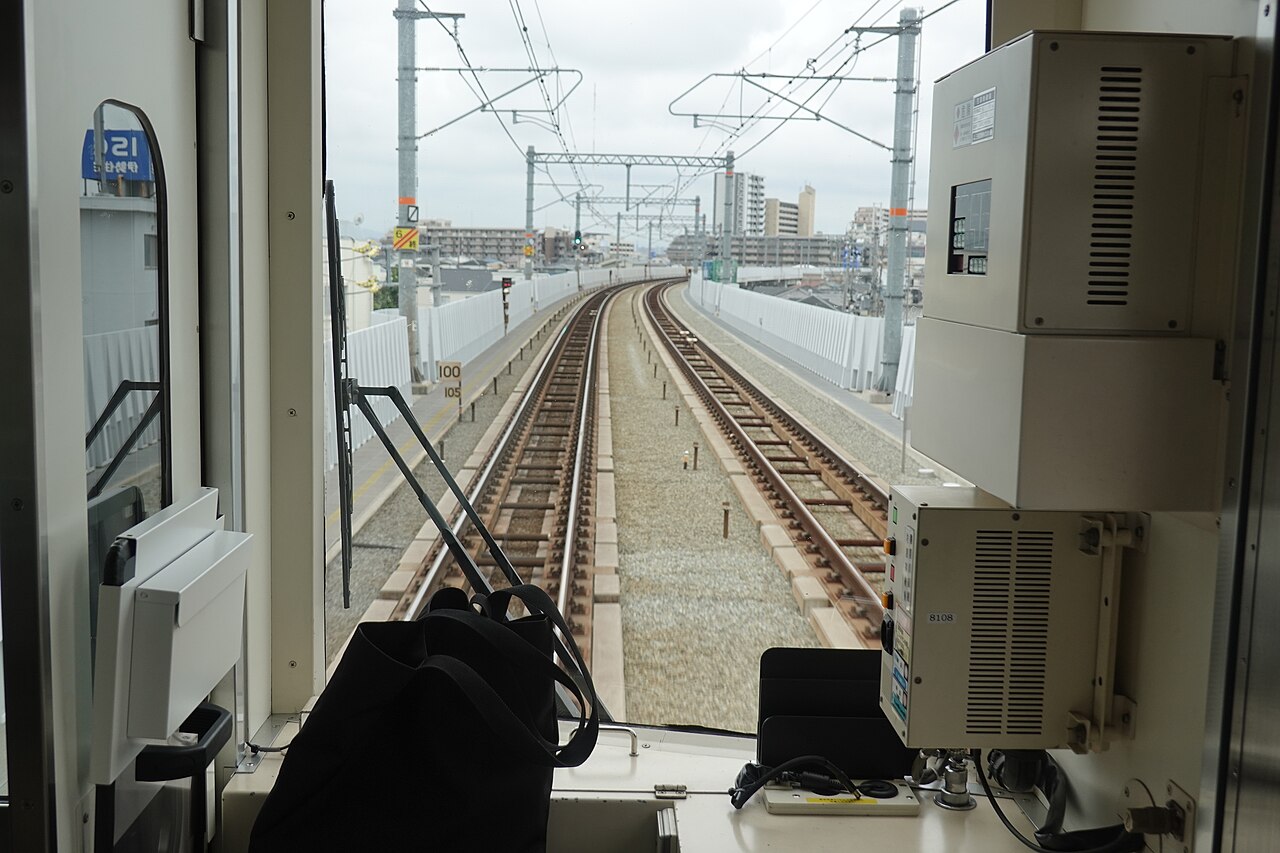
Modernisation followed steadily. Electrification at 600 V DC began on the Namba–Hamaderakoen section in 1907 and was completed across the whole line in 1911. Double-tracking, carried out section by section, was finished line-wide on 2 December 1922. From the late 1930s the company began elevating the urban approaches — the short stretch around Imamiyaebisu was raised in 1938 — and the Namba terminus and its inner tracks were grade-separated by 1980. The overhead voltage was raised from 600 V to 1,500 V on 10 October 1973.
Corporate ownership shifted during and after the Second World War. On 1 June 1944 the line passed to Kinki Nippon Railway (Kintetsu) through a wartime merger, and on 1 June 1947 it was separated out again and transferred to the newly formed Nankai Electric Railway, which has operated it ever since. The competing Hanwa Electric Railway, built parallel to the Nankai route in 1929–1930, triggered fierce competition that prompted Nankai to run what the Japanese source calls Japan's first air-conditioned electric train (the 2001 type) between 1936 and 1937; that rival line was nationalised in 1944 and became today's JR West Hanwa Line, which still runs parallel on the inland (mountain) side.
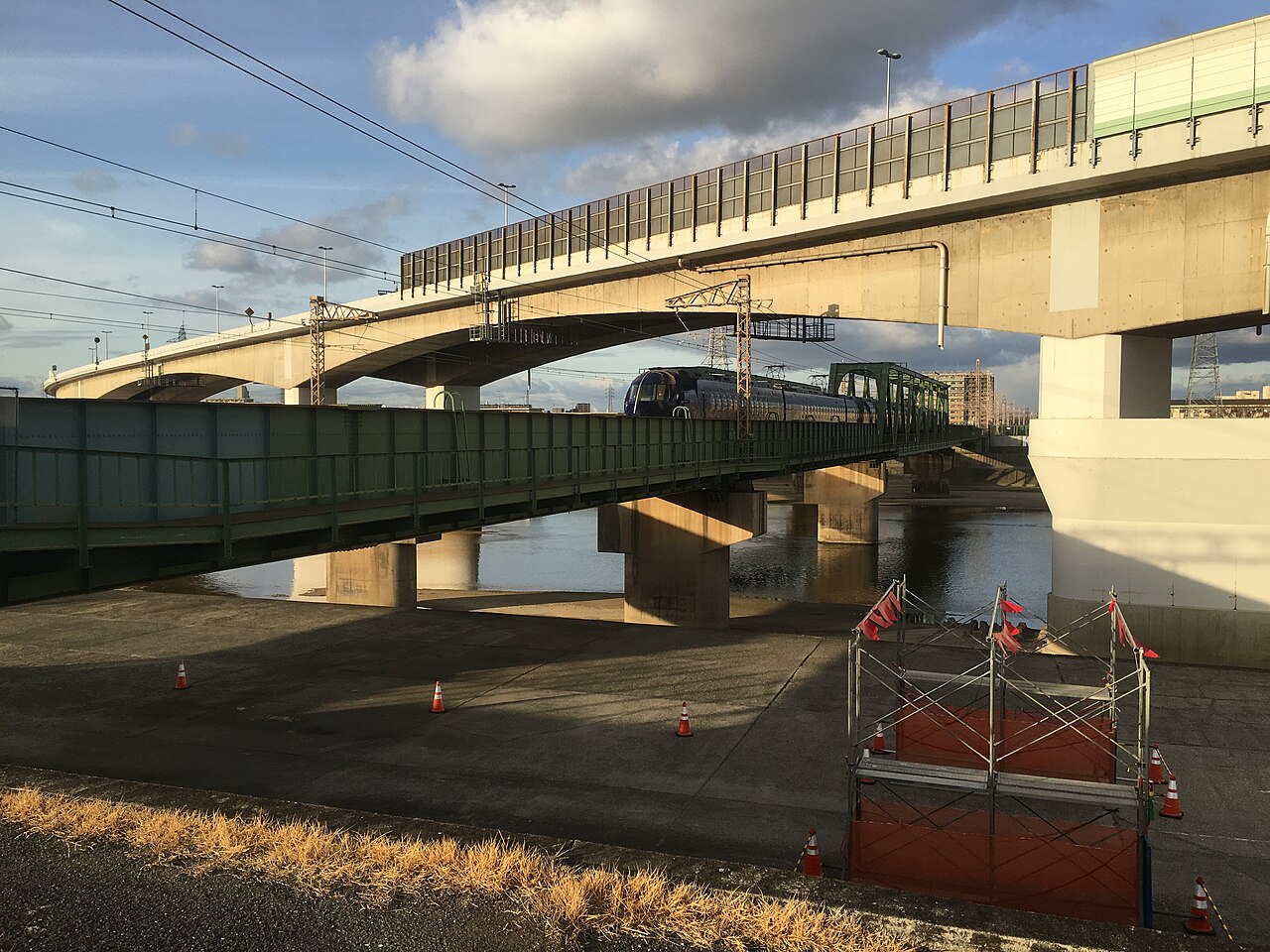
The line saw a sequence of accidents in the 1960s that reshaped its safety equipment. On 1 April 1967 a Wakayamashi-bound express struck a stranded truck at a level crossing between Tarui and Ozaki and fell from the Notogawa bridge, killing five. On 18 January 1968 a Namba-bound express ran past a signal and collided head-on at Tengachaya, injuring 296. In the wake of these incidents Nankai installed automatic train stop (ATS) across the whole line on 1 April 1968.
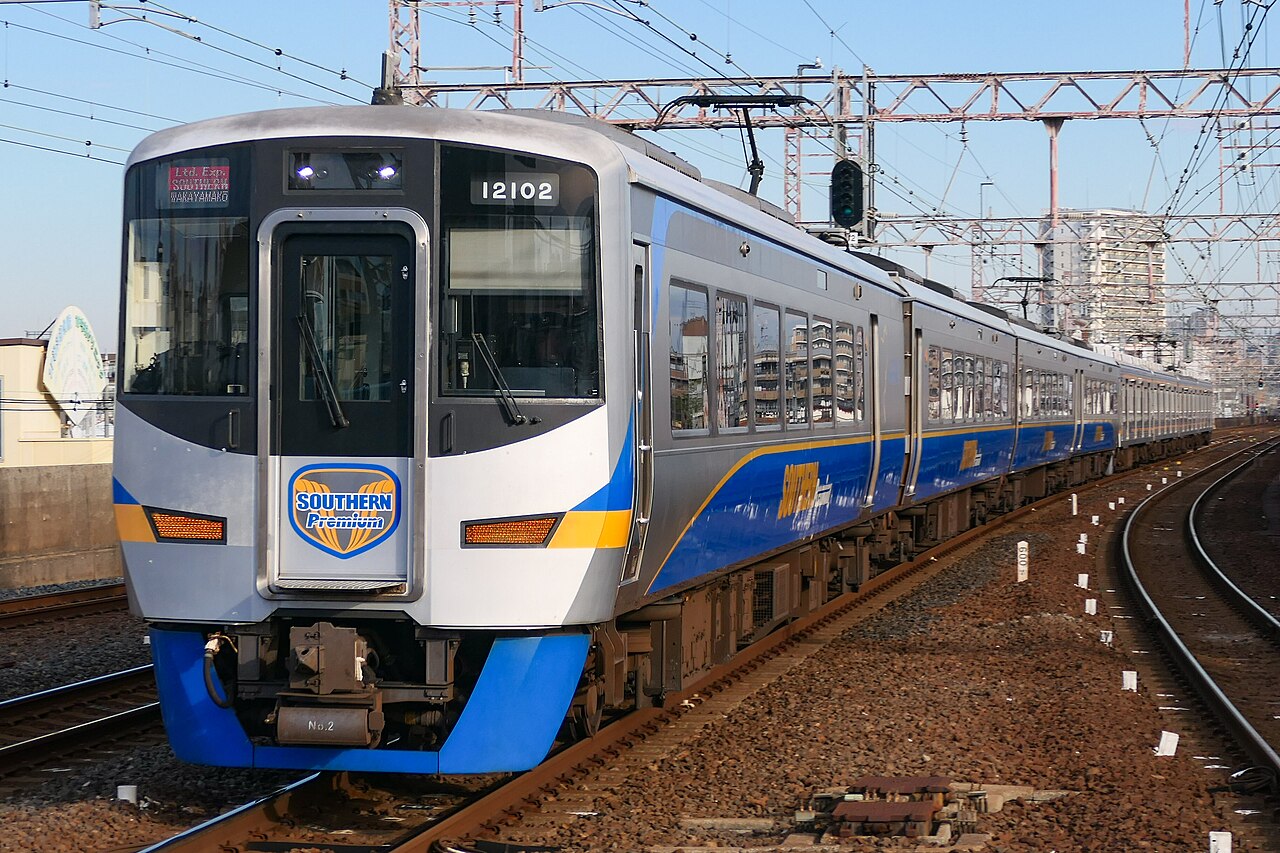
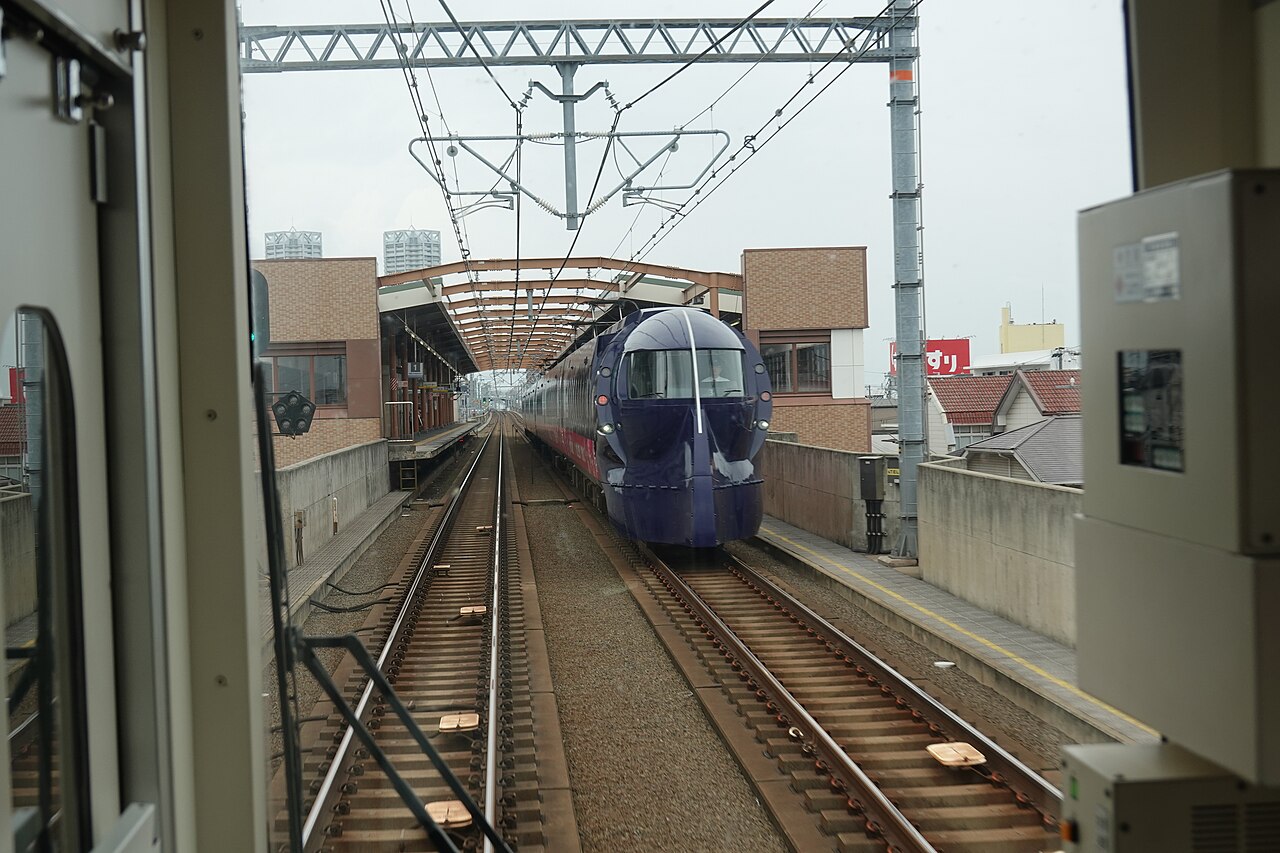
The line's modern limited-express identity took shape from the mid-1980s. The Limited Express “Southern” began on 1 November 1985, coupling fare-free non-reserved commuter cars to reserved cars built specifically for the service (the 10000 series). On 12 November 1989 the maximum speed was lifted from 105 km/h to 110 km/h and eight-car operation began. When Kansai International Airport opened on 4 September 1994, Nankai launched the airport Limited Express “rapi:t” using purpose-built 50000 series trains — running as the nonstop rapi:t α and the major-stop rapi:t β — alongside an Airport Express service; the Airport Line itself had opened provisionally on 18 June 1994. The English-language source notes that Nankai and Kintetsu are the only two private operators in the Kansai region to run fare-charging limited-express trains.
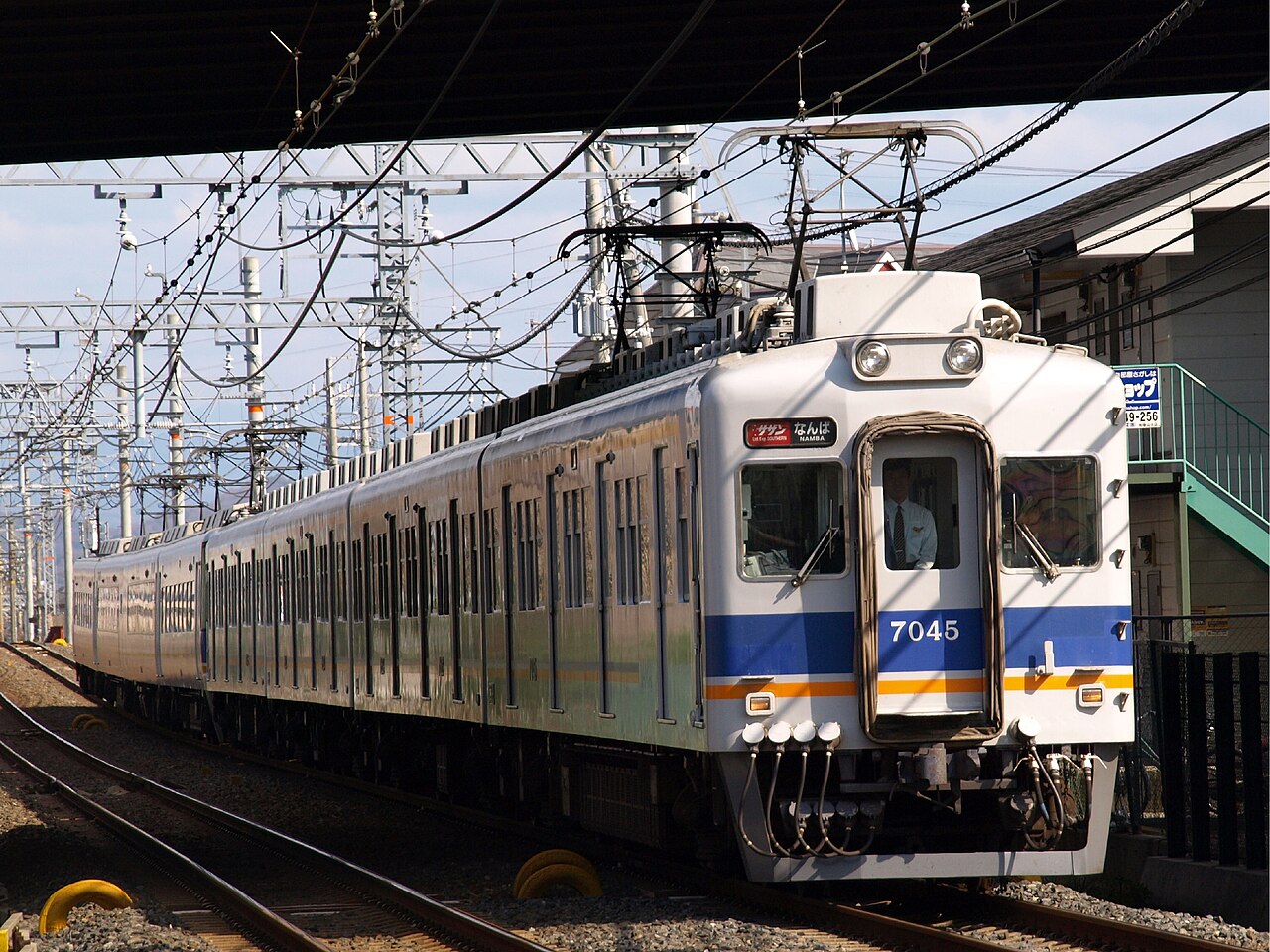
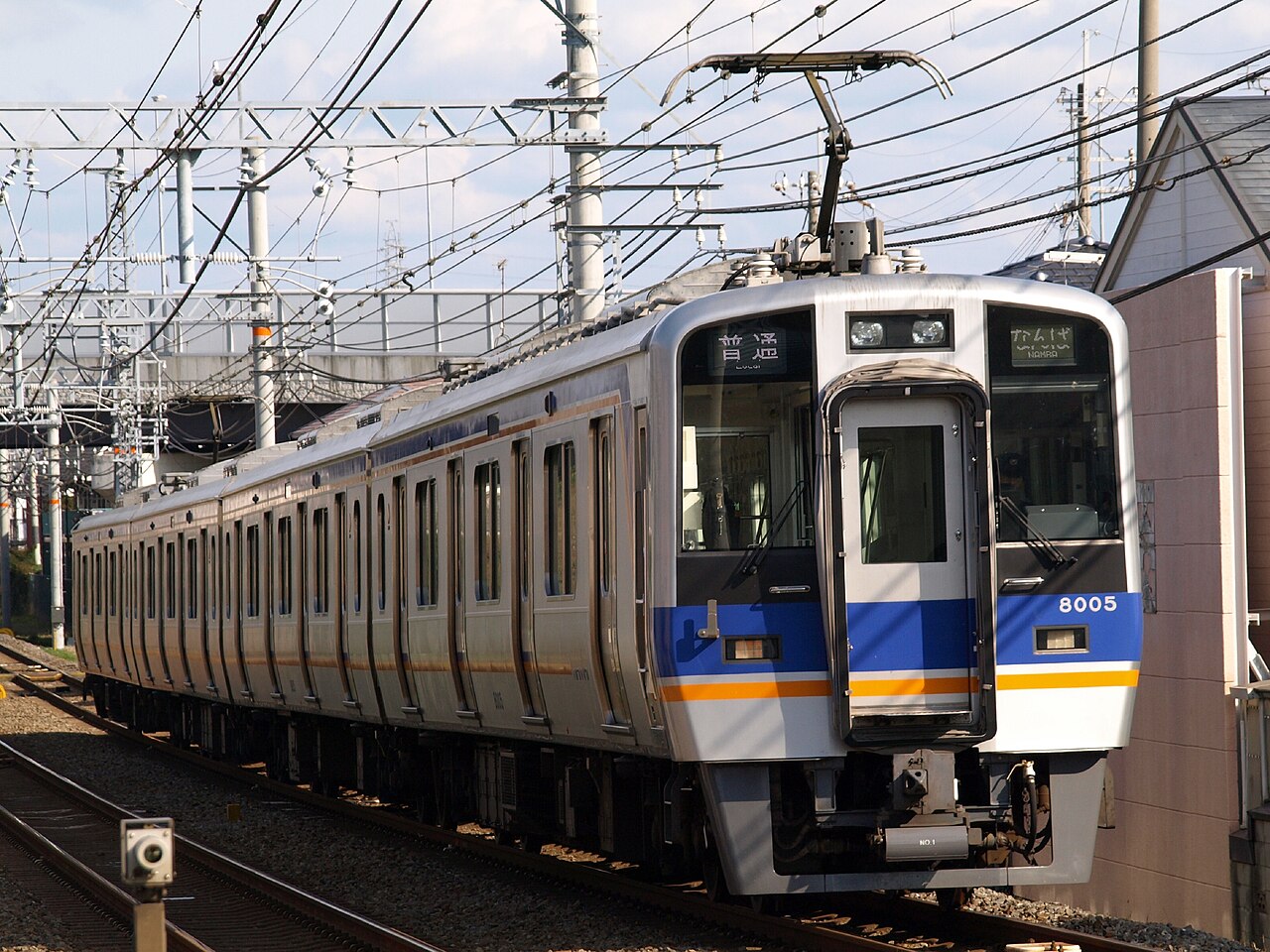
Today the Nankai Main Line is both an intercity link between Osaka and Wakayama and the principal access route to Kansai International Airport via the connecting Airport Line, with its Namba terminus — set in the Minami entertainment district — serving as a gateway for the many airport users, including inbound foreign tourists. Through the Wakayamako Line it also reaches Wakayama Port, where the Nankai Ferry to Tokushima forms a connecting route between the Kansai region and Shikoku. Services on the line comprise the Limited Express “Southern,” the Airport Limited Express “rapi:t,” Express, Airport Express, Sub-Express, Semi-Express and Local trains. Grade-separation work has continued into the 2020s; the elevation of the Ishizugawa–Hagoromo section is still under way, with the switch-over to elevated tracks now targeted for the end of fiscal 2030 (around March 2031) per the most recent project document cited in the source, the completion date having slipped from earlier targets (and the source's own chronology still listing an older March 2028 figure). The newest station on the line, Wakayamadaigakumae, opened on 1 April 2012.
Timeline
- 188529 December: the Hankai Railway opens the Namba–Yamatogawa section (838 mm gauge); the start of the present Nankai Main Line.
- 188815 May: the line is extended from Yamatogawa to Sakai (Azumabashi); Yamatogawa station closes.
- 189229 December: the Namba–Sumiyoshi section is double-tracked.
- 18971 October: the Nankai Railway opens the Sakai–Sano (present-day Izumisano) section. 15 December: Namba–Sakai is regauged from 838 mm to 1,067 mm and through operation begins to Ozaki.
- 18981 October: the Hankai Railway transfers its operations to the Nankai Railway.
- 190321 March: the Kinokawa bridge and the Kinokawa–Wakayamashi section open, completing the through route between Namba and Wakayamashi.
- 190623 April: express services begin; a dining service is run aboard the steam-hauled Wakayama express — the first dining car on a private railway in Japan per the EN source; a rare undertaking among surviving major private railways per the JA source.
- 191121 November: electrification (at 600 V DC, begun on the Namba–Hamaderakoen section in 1907) is completed across the whole line.
- 19222 December: double-tracking is completed line-wide (Kyoshi–Kinokawa section doubled).
- 19441 June: through a wartime company merger the line becomes part of Kinki Nippon Railway (Kintetsu).
- 19471 June: the line is separated from Kintetsu and transferred to the newly formed Nankai Electric Railway.
- 19671 April: a Wakayamashi-bound express strikes a stranded truck at a Tarui–Ozaki level crossing and falls from the Notogawa bridge, killing five.
- 196818 January: a Namba-bound express passes a signal and collides head-on at Tengachaya, injuring 296. 1 April: automatic train stop (ATS) is installed across the whole line.
- 197310 October: the overhead voltage is raised from 600 V to 1,500 V DC.
- 19851 November: the Limited Express "Southern" begins, using newly built 10000 series reserved cars coupled to fare-free non-reserved cars.
- 198912 November: the maximum speed is raised from 105 km/h to 110 km/h and eight-car operation begins.
- 199418 June: the Airport Line opens provisionally and Airport Express service begins. 4 September: Kansai International Airport opens and the airport Limited Express "rapi:t" (50000 series; rapi:t alpha nonstop, rapi:t beta major-stop) begins.
- 20121 April: Wakayamadaigakumae, the newest station on the line, opens; the all-non-reserved limited express is discontinued.
- 2028Ishizugawa–Hagoromo elevation (planned): the chronology lists a March 2028 target, but the source body's most recent cited document (2025) now schedules the switch-over to elevated tracks for the end of fiscal 2030 (around March 2031), having slipped from earlier targets.
Sources
Facts last verified 3 June 2026.
Gallery 5 photos
Every photo for this page — tap any image to view it full-size. All from Wikimedia Commons (credit under each).