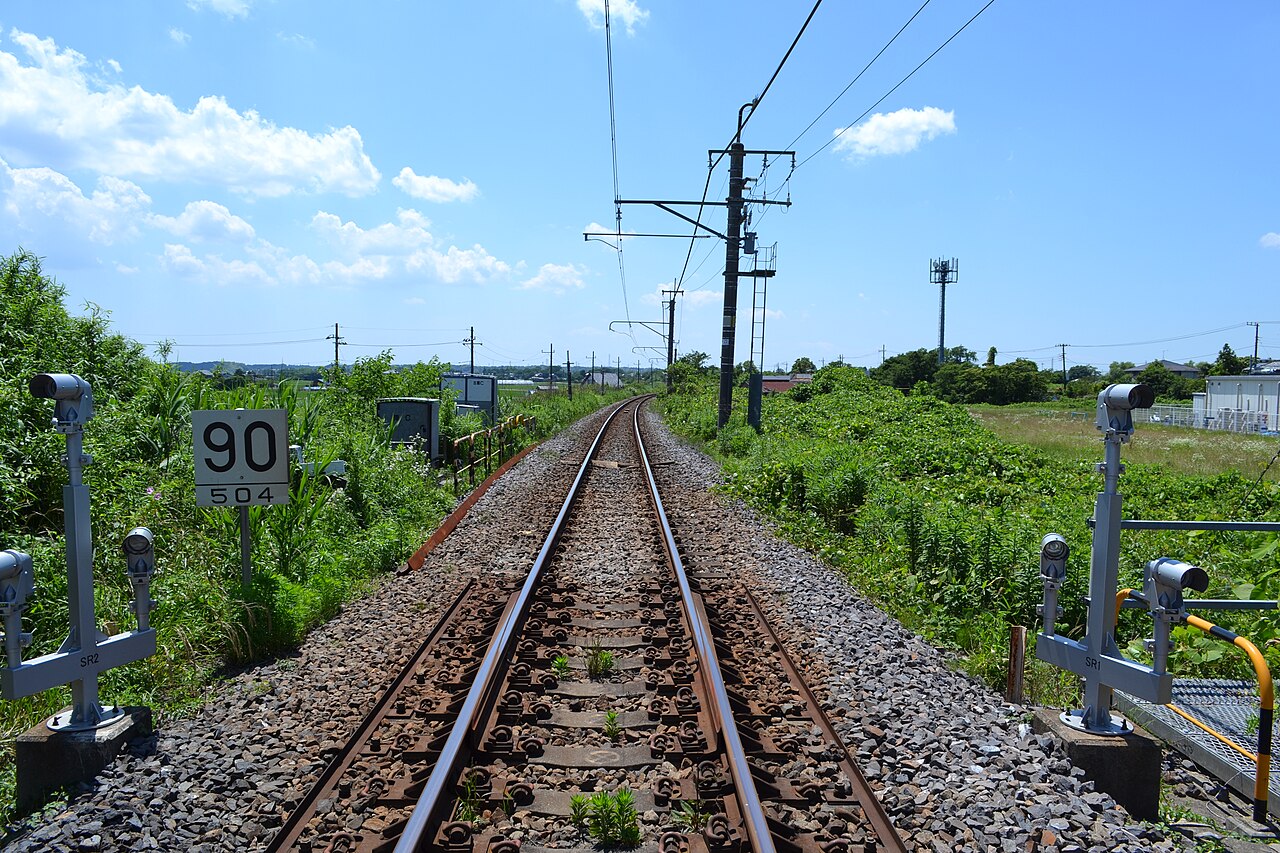
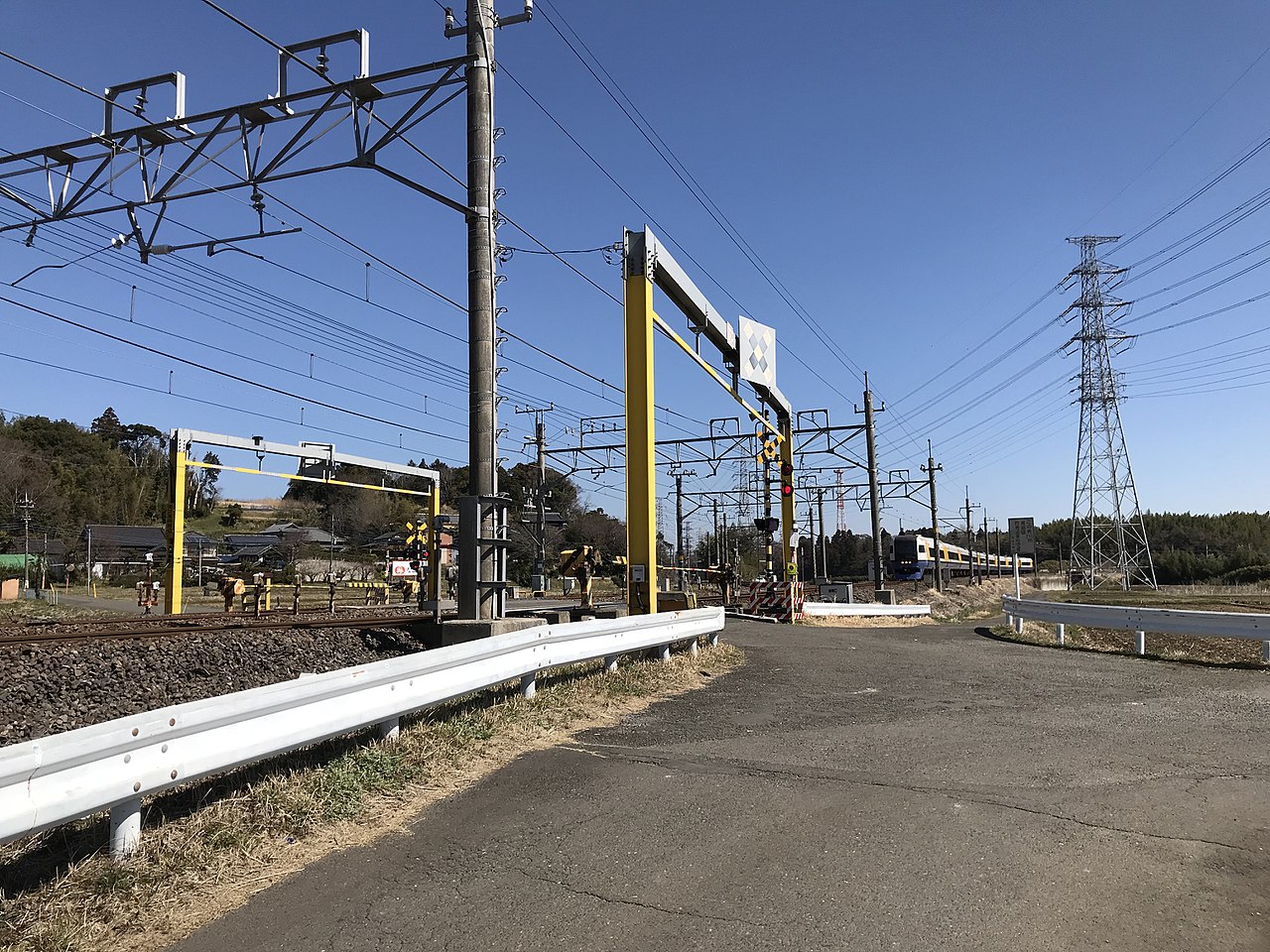
History
The origins of the line lie in the pilgrim and freight traffic of the region: Narita was long the destination of worshippers bound for Narita-san Shinshō-ji, and Sawara, on the Tone River, had been a busy river-transport town whose water trade declined as the Meiji government modernised the old highways. A predecessor company chartered in the 1890s — Narita Railway (成田鉄道), which had begun as Shimōsa Railway before a name change in 1895 — opened the first section, Sakura to Narita, on 19 January 1897. The line was pushed eastward almost at once: Narita to Namegawa opened on 29 December 1897 and Namegawa to Sawara on 3 February 1898. A branch from Narita toward Abiko followed, reaching Ajiki on 2 February 1901 and Abiko on 1 April 1901; this branch is still commonly called the Abiko Line (我孫子線). Through services from Ueno over the Nippon Railway onto the Narita Railway began on 1 March 1902, knitting the pilgrimage route into the wider network.
Narita Railway was nationalised on 1 September 1920, at which point the Sakura–Abiko and Narita–Sawara sections became the state-operated Narita Line. The main line reached its full present extent in the early Shōwa years, when the state extended it east of Sawara: Sawara to Sasagawa opened on 10 November 1931 and Sasagawa to Matsugishi on 11 March 1933, completing the 75.4 km Sakura–Matsugishi route.
Modernisation came in the postwar decades. The Sakura–Narita section was electrified at 1,500 V DC overhead in 1968 (28 March), the year automatic signalling was also extended over that stretch. Electrification of the Abiko branch followed in 1973 — the English-language source gives 1 October 1973 (the Japanese chronology records the Narita–Abiko energisation on 28 September) — and the Narita–Matsugishi section was electrified in 1974 (26 October). Double-tracking of the busy Sakura–Narita segment, driven by the approach of the new Tokyo international airport at Narita, was carried out in stages and completed in 1986. Freight operations were withdrawn in this period, ending on the Narita–Abiko branch on 1 February 1984 and on the Katori–Matsugishi section on 1 November 1986.
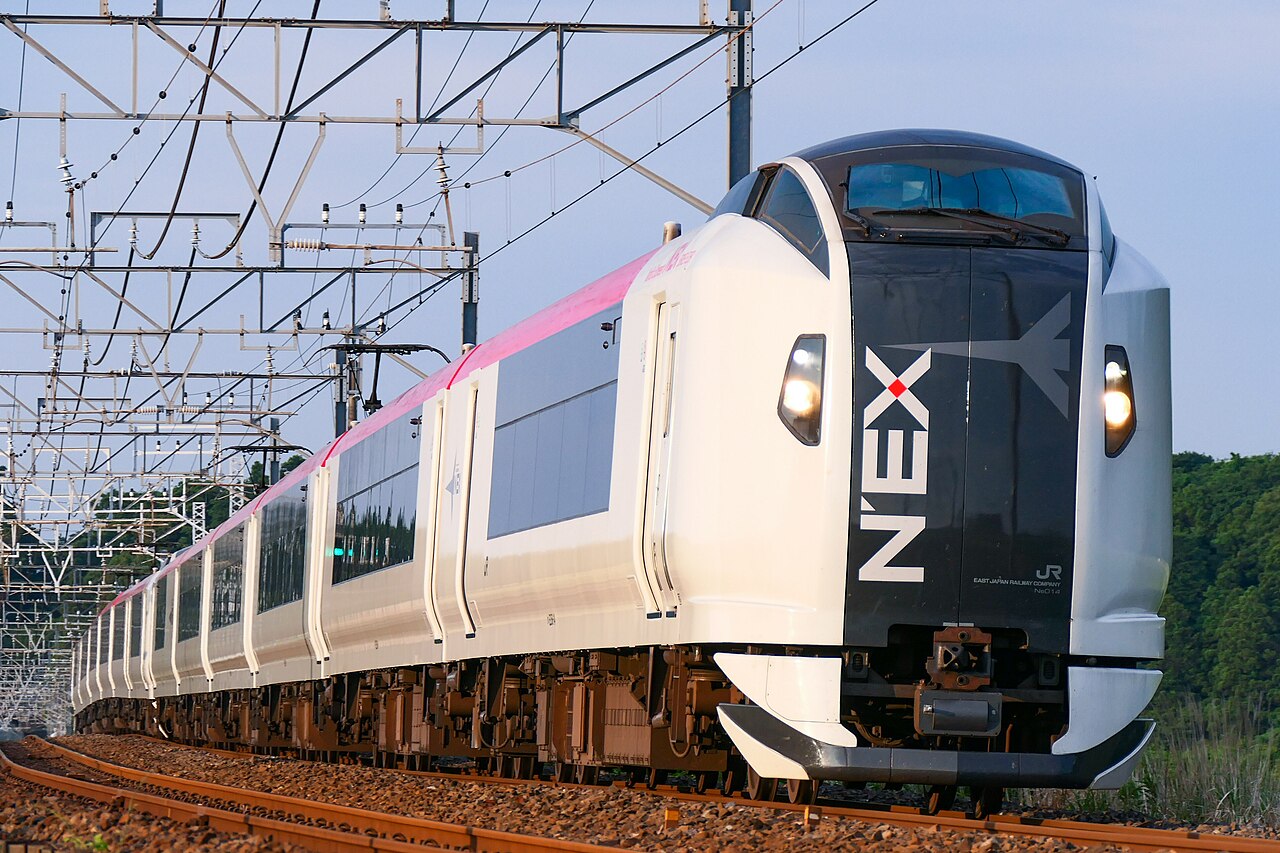
Upon the privatisation of Japanese National Railways on 1 April 1987, the Narita Line passed to JR East. The line's most prominent modern addition is the Airport Line (空港線, Kūkō-sen), the branch from Narita to Narita Airport Terminal 1 Station, which opened on 19 March 1991 as an electrified line equipped from the outset with CTC and ATS-P signalling; at 10.8 km from Narita to the airport station, this branch is owned not by JR East but by a separate company, Narita Airport Rapid Railway, which permits both JR East and Keisei Railway to run passenger trains over it. The Abiko branch measures 32.9 km from Narita to Abiko.
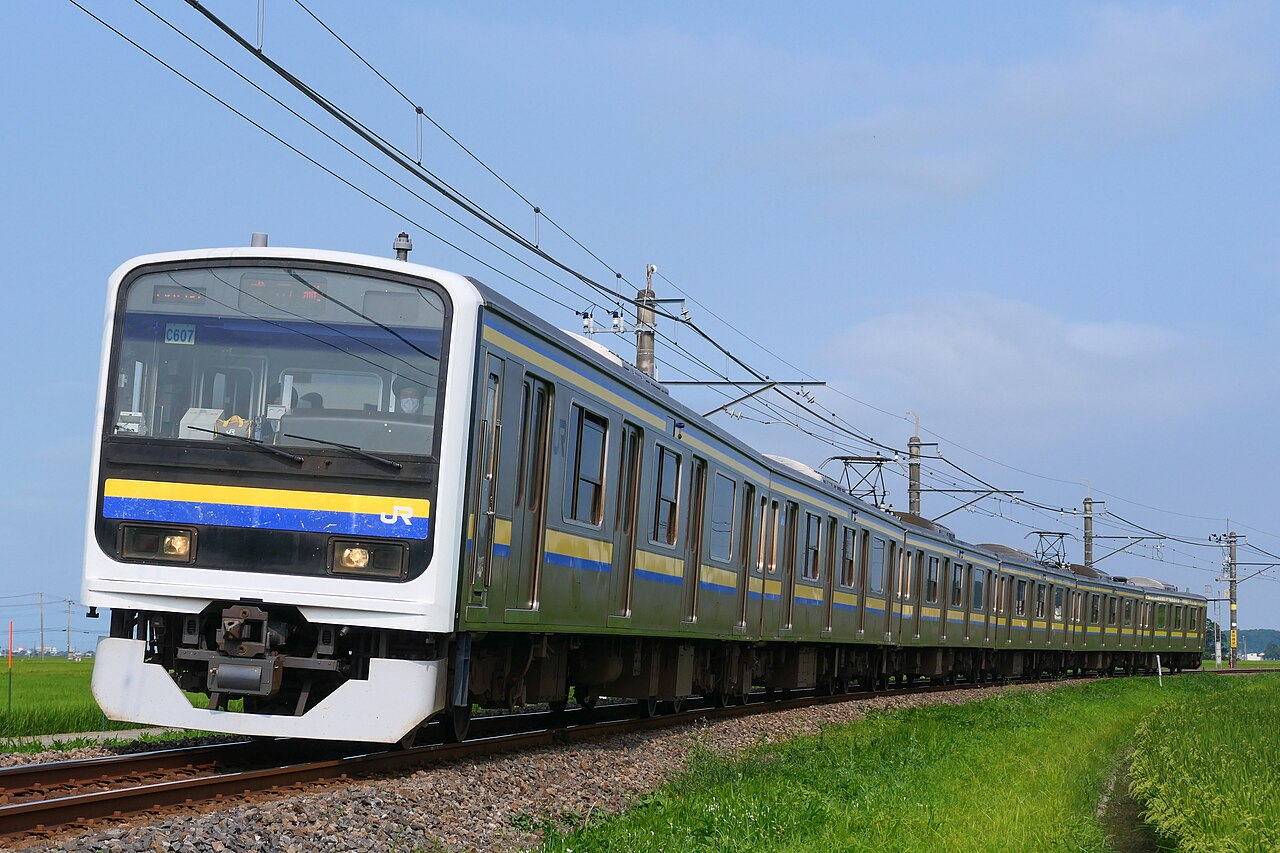
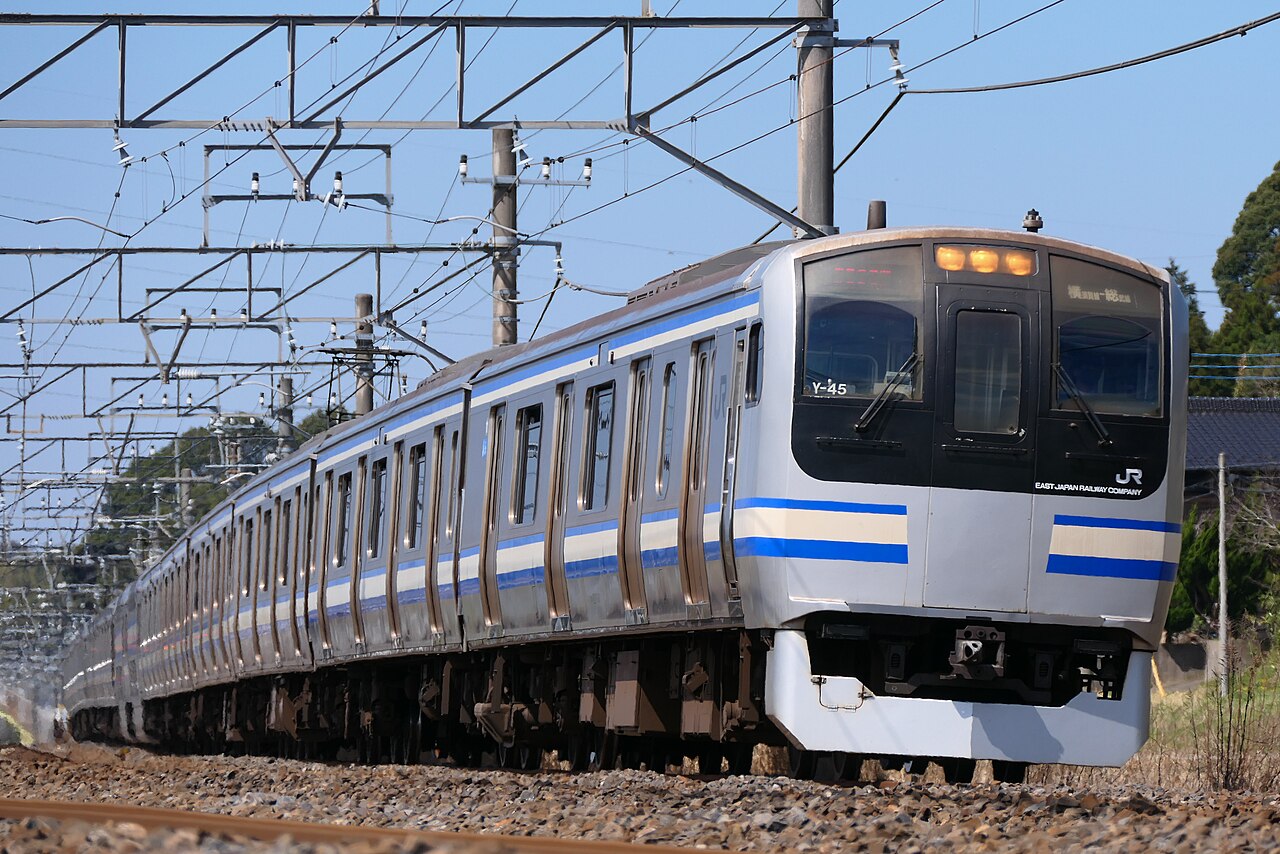
Today the Narita Line carries a mix of local and rapid services, with through-running onto adjoining JR East lines: the Sakura–Narita Airport corridor carries the line symbol "JO," Abiko-branch trains run through to central Tokyo, and the airport branch forms one of the rail approaches to Narita International Airport. The line is laid to 1,067 mm narrow gauge and electrified throughout at 1,500 V DC, with a maximum speed of 120 km/h for premium services on the main line; it is double-tracked between Sakura, Narita and the airport-line junction and single-track elsewhere. One notable incident occurred in the early hours of 10 March 2011, the day before the Tōhoku earthquake and tsunami, when a freight train carrying ethylene oxide derailed and overturned near Namegawa Station.
Timeline
- 189719 January: the first section, Sakura–Narita, opens (built by Narita Railway). Narita–Namegawa follows on 29 December.
- 18983 February: the line is extended from Namegawa to Sawara.
- 1901The Narita–Abiko branch (Abiko Line) opens: Narita–Ajiki on 2 February, Ajiki–Abiko on 1 April.
- 19201 September: Narita Railway is nationalised; the Sakura–Abiko and Narita–Sawara sections become the state-operated Narita Line.
- 193110 November: the Sawara–Sasagawa section opens (main line extended east of Sawara).
- 193311 March: the Sasagawa–Matsugishi section opens, completing the 75.4 km Sakura–Matsugishi main line.
- 196828 March: the Sakura–Narita section is electrified at 1,500 V DC overhead.
- 1973The Abiko branch is electrified (EN source: 1 October 1973; JA records the Narita–Abiko energisation on 28 September).
- 197426 October: the Narita–Matsugishi section is electrified.
- 19841 February: freight operations end on the Narita–Abiko branch.
- 1986Double-tracking of the Sakura–Narita section is completed (24 February). Freight ends on the Katori–Matsugishi section on 1 November.
- 19871 April: Japanese National Railways is privatised; the Narita Line transfers to JR East.
- 199119 March: the Airport Line branch (Narita–Narita Airport Terminal 1, 10.8 km) opens as an electrified, CTC- and ATS-P-signalled line owned by Narita Airport Rapid Railway.
- 201110 March: a freight train carrying ethylene oxide derails and overturns near Namegawa Station, the day before the Tōhoku earthquake and tsunami.
Sources
Facts last verified 3 June 2026.
Gallery 6 photos
Every photo for this page — tap any image to view it full-size. All from Wikimedia Commons (credit under each).