History
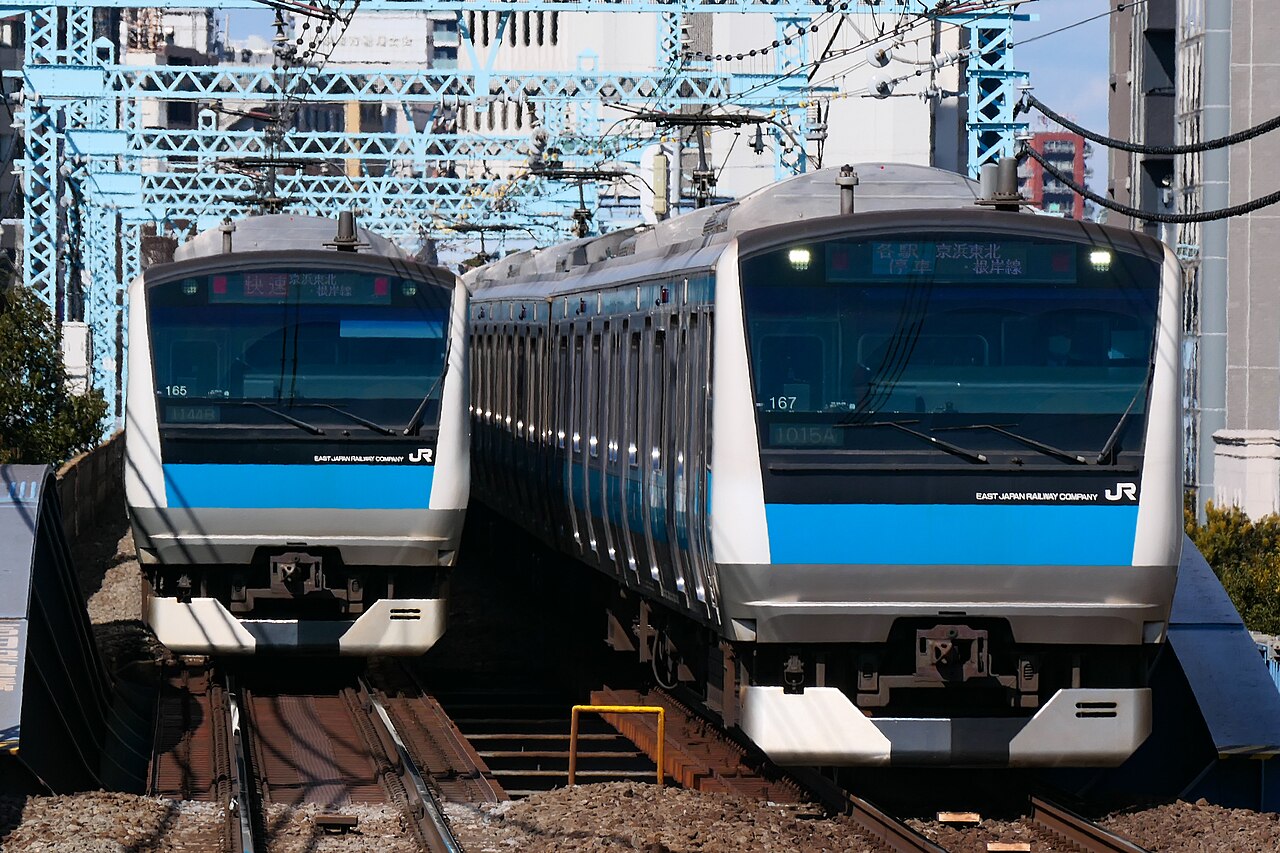
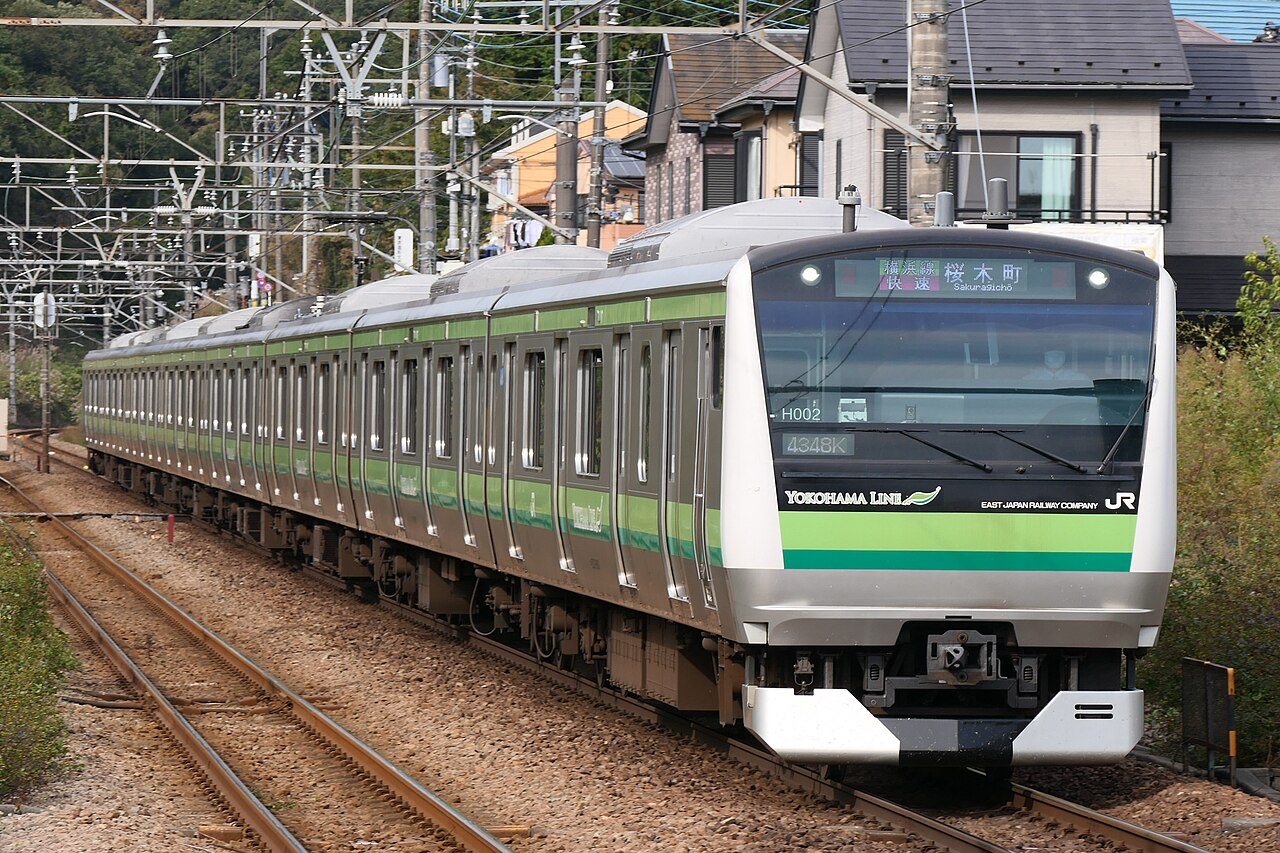
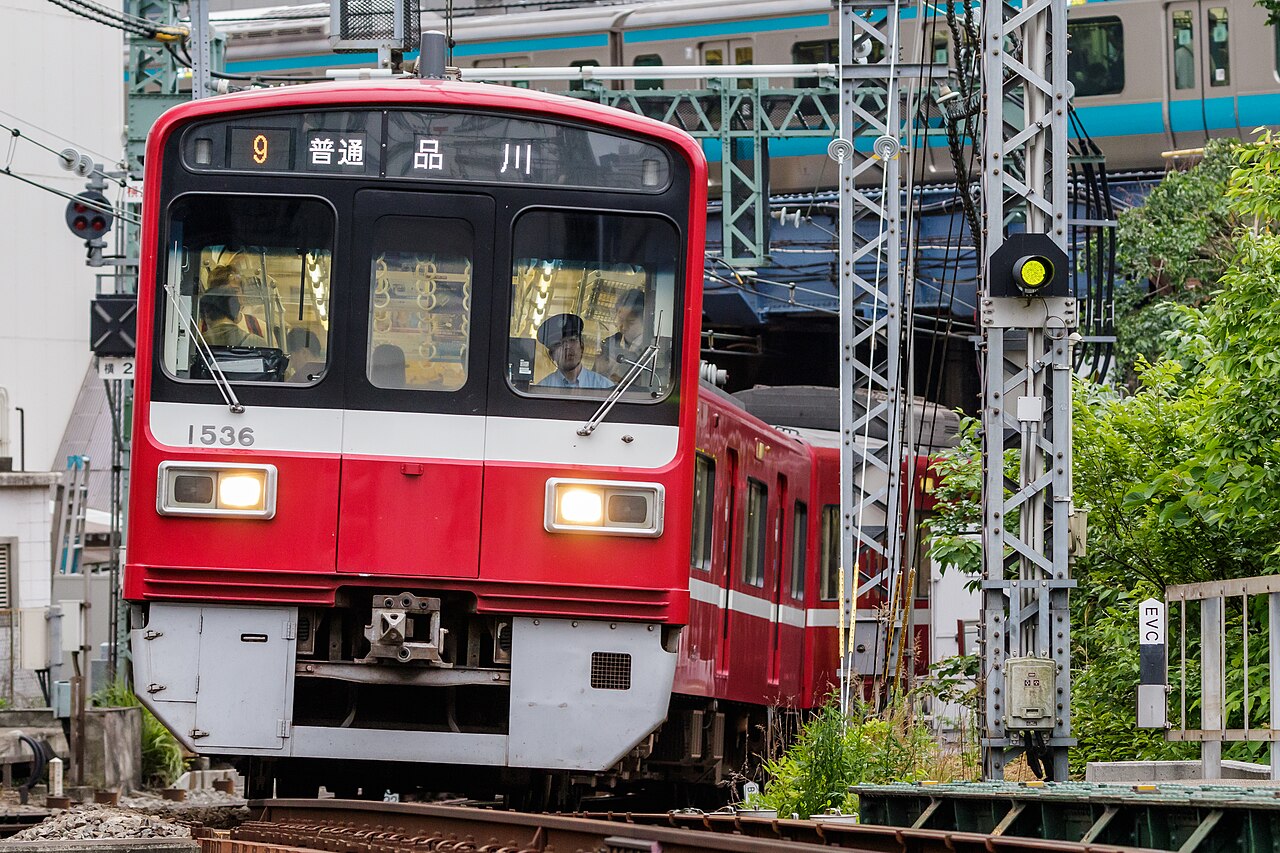
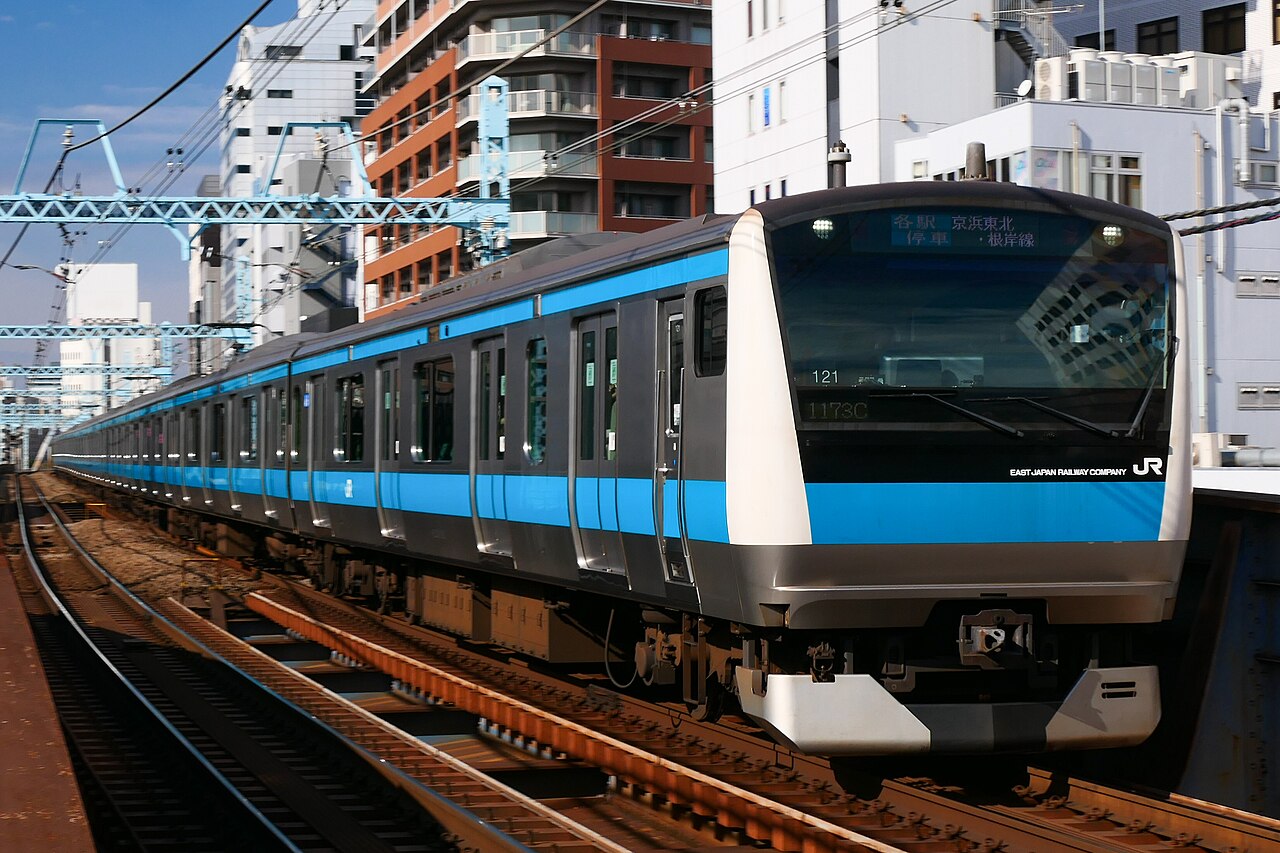
The Negishi Line does not exist as an independent service. All passenger trains operate a through service onto the Keihin-Tōhoku Line past Yokohama toward Kamata, Tokyo, Minami-Urawa and Ōmiya, so the combined Ōmiya–Ōfuna corridor is commonly presented as the "Keihin-Tōhoku–Negishi Line" on system maps and station guides; the trains are recognisable by their light-blue stripe, the line's map colour. Some Yokohama Line trains also run through onto the Negishi Line, linking Yokohama's north-western wards and the Machida, Hachiōji and Sagamihara areas to the central and southern parts of the city.
The line's history is layered, because its northern end is among the oldest railway in Japan while its southern half is a product of the 1960s–70s. The oldest station, Sakuragichō, was opened by the Japanese Government Railways on June 12, 1872 as the first railway terminal in Yokohama — the Yokohama end of Japan's first railway line (then named Yokohama Station, today Sakuragichō). That segment belonged to the Tōkaidō Main Line. The route was extended toward Kōzu on July 11, 1887, with trains reversing at Yokohama via a switchback; a bypass between Kanagawa and Hodogaya opened on August 1, 1898, and the branch was named the Tōkaidō Main Line Branch Line on October 12, 1909. Takashimachō Station opened on December 20, 1914 as the terminus of the electrified Keihin Line, the predecessor of today's Keihin-Tōhoku Line. A new Yokohama Station opened on August 15, 1915, the old Yokohama station was renamed Sakuragichō, and Keihin Line service reached Sakuragichō on December 30, 1915.
A southward extension to Ōfuna was planned from 1920 but scrapped after the Great Kantō earthquake of 1923. The project was later revived on an entirely different alignment: a railway from Sakuragichō to Kita-Kamakura was added to the Railway Construction Act on March 31, 1937, and this provision became the legal basis for the present-day Negishi Line. Construction of the Sakuragichō–Ōfuna route — provisionally called the "Ōdai Line" — was carried out by the Japan Railway Construction Public Corporation (today's Japan Railway Construction, Transport and Technology Agency). According to the corporation's construction record, the Sakuragichō–Isogo section cost ¥5.96 billion and the Isogo–Ōfuna section ¥14.4 billion.
The Negishi Line proper took shape in stages. On May 19, 1964 the line was extended from Sakuragichō to Isogo (7.5 km), opening Kannai, Ishikawachō, Yamate, Negishi and Isogo stations, and the Yokohama–Isogo route was named the Negishi Line after one of the new stations. The Takashima freight line opened on June 1, 1964, returning freight to the route after a nearly fifty-year absence, and 103 series trains entered service in October 1965. The line was extended from Isogo to Yōkōdai (4.6 km) on March 17, 1970, and the final section from Yōkōdai to Ōfuna (8.0 km) opened on April 9, 1973, completing the line; freight service between Ōfuna and Isogo began on October 1, 1973. According to the Japanese-language account, the new southern line replaced the parallel Yokohama city tram and dramatically improved access, with a Yokohama–Ōfuna journey of about 30 minutes serving both the Negishi Bay industrial coast and the newly developed hillside bedroom suburbs of Yōkōdai and Kōnandai.
Freight service between Ōfuna and Isogo ceased on February 1, 1984, and Automatic Train Control was adopted on the line shortly before (January 29, 1984). On April 1, 1987 the Japanese National Railways were privatised: ownership of the Negishi Line passed to JR East, while Japan Freight Railway (JR Freight) took over freight operations as the second-class operator over the 20.1 km between Sakuragichō and Ōfuna. The E233-1000 series entered service from December 22, 2007; Digital ATC (D-ATC) was introduced between Yokohama and Ōfuna on August 14, 2009; and a women-only car was added on April 19, 2010. The Tokyo Metropolitan Area Traffic Control system (ATOS) has been in use since 1998. Today the line is served by E233-1000 series trains (Keihin-Tōhoku Line stock) and E233-6000 series trains used on Yokohama Line inter-running services, and the entire route lies within the Suica IC-card area for the Tokyo metropolitan region.
Two incidents on the line are recorded in the sources. The Sakuragichō train fire occurred on April 24, 1951. On May 20, 1970, a 103 series train derailed between Shin-Sugita and Yōkōdai, injuring two people.
Timeline
- 1872June 12: Sakuragichō (then named Yokohama Station, the oldest station on the line) opens, as the Yokohama terminal of Japan's first railway line; the segment belongs to the Tōkaidō Main Line.
- 1909October 12: the Kanagawa–Yokohama–Hodogaya branch is designated the Tōkaidō Main Line Branch Line.
- 1915August 15: a new Yokohama Station opens and the old Yokohama station is renamed Sakuragichō.
- 1923An earlier (1920) plan to extend the line to Ōfuna is scrapped after the Great Kantō earthquake.
- 1937March 31: a Sakuragichō–Kita-Kamakura railway is added to the Railway Construction Act — the legal basis for the present-day Negishi Line.
- 1964May 19: the line is extended Sakuragichō–Isogo (7.5 km) and the Yokohama–Isogo route is named the Negishi Line. June 1: the Takashima freight line opens, returning freight after a ~50-year absence.
- 1965October: 103 series trains are introduced to the line.
- 1970March 17: the line is extended Isogo–Yōkōdai (4.6 km). May 20: a 103 series train derails between Shin-Sugita and Yōkōdai, injuring two people.
- 1973April 9: the final section Yōkōdai–Ōfuna (8.0 km) opens, completing the line. October 1: freight service begins between Ōfuna and Isogo.
- 1984February 1: freight service between Ōfuna and Isogo ceases; Automatic Train Control is adopted shortly before (January 29 per the JA source).
- 1987April 1: JNR is privatised; the Negishi Line passes to JR East and JR Freight takes over freight (2nd-class operator, Sakuragichō–Ōfuna 20.1 km).
- 2007December 22: E233-1000 series trains enter service.
- 2009August 14: Digital ATC (D-ATC) is introduced between Yokohama and Ōfuna.
- 2010April 19: a women-only car is introduced on Keihin-Tōhoku–Negishi Line services.
- 1951April 24: the Sakuragichō train fire occurs.
Sources
Facts last verified 3 June 2026.
Gallery 6 photos
Every photo for this page — tap any image to view it full-size. All from Wikimedia Commons (credit under each).