History
The line was built as a link between central and eastern Hokkaido by the Hokkaido Government Railway (北海道官設鉄道, Hokkaidō Kansetsu Tetsudō). Construction proceeded from two directions. In the west, the government-run Tokachi Line was extended south from the Furano area: the Shimo-Furano (now Furano) to Shikagoe section opened on 2 December 1900, reaching Ochiai in 1901 and, with the Ochiai–Obihiro section on 8 September 1907, completing a through route across the Karikachi pass. In the east, the Hokkaido Government Railway's Kushiro Line opened its first section between Shiranuka and the original Kushiro Station on 20 July 1901 — the oldest-opened part of the present Nemuro Main Line — and was progressively extended west to Obihiro, completed on 21 October 1905. In 1909, under the state railway's line-naming scheme, the Tokachi and Kushiro lines were merged into the Kushiro Line.
On 10 November 1913 a new 57.6 km line opened between Takikawa and Shimo-Furano, moving the western origin from Asahikawa to Takikawa and shortening the route; the through line was renamed the Kushiro Main Line, and the original Asahikawa–Furano section was split off as the Furano Line. The EN source notes the 1913 Furano–Takikawa opening shortened the route by 53.5 km. First-class sleeping accommodation was added to the Hakodate–Kushiro train in 1911, and a dining car from 1916.
Construction then continued east of Kushiro. The Kushiro (second station) to Hama-Akkeshi section opened on 1 December 1917, followed by Akkeshi–Attoko on 25 November 1919 and Attoko–Nishi-Wada on 10 November 1920. On 5 August 1921 the final Nishi-Wada to Nemuro section (10.2 km) opened, completing the line through to Nemuro; the whole Takikawa–Nemuro route was simultaneously renamed the Nemuro Main Line.
The mountainous interior was later rebuilt to ease its steep grades and to accommodate dam construction. In September–October 1966 a new line opened between Ochiai and Shintoku via the newly built Kami-Ochiai Junction (the new section adding 28.1 km), including the 5,790 m Shin-Karikachi tunnel, which bypassed the original Karikachi-pass alignment with its 1907 tunnel and 1-in-40 (2.5%) grades; the old Ochiai–Shinai–Shintoku line was abolished. A separate realignment between Kanayama and Higashi-Shikagoe was carried out in 1966 in connection with the Kanayama Dam. In 1971 a refrigerated container express began running between Kushiro and Tokyo. A further new tunnel and alignment opened near Atsunai in 1990, and a deviation near Shimanoshita associated with the construction of the Takisato Dam opened in 1991, when Takisato Station was abolished.
The line's long decline on its mountain section was triggered by the opening of the Sekishō Line between Shin-Yūbari and Shintoku on 1 October 1981, which became the main route between central and southeastern Hokkaido and shortened the distance from stations east of Shintoku to Sapporo. Almost all express trains were rerouted via the Sekishō Line, and ridership on the Furano–Shintoku segment fell sharply — from 4,664 passengers a day in 1980 to 654 a day in 1985, and to only 152 a day by 2015, most of them senior high school students. Torrential rainfall from Typhoon Lionrock on 31 August 2016 damaged the section between Higashi-Shikagoe and Kami-Ochiai Junction, and the Higashi-Shikagoe–Shintoku passenger service was replaced by a bus. After the four lineside municipalities between Furano and Shintoku gave up on maintaining the segment, JR Hokkaido submitted a notice of abolition on 31 March 2023, and on 1 April 2024 the Furano–Shintoku section (81.7 km) was closed, splitting the line in two; JR Freight abolished its Higashi-Shikagoe–Kami-Ochiai Junction operation and the Kami-Ochiai Junction–Shintoku stretch was absorbed into the Sekishō Line. The JA source records that this made the Nemuro Main Line the first JR line bearing the "Main Line" (本線) name to be split for a reason other than the partial abolition or third-sector conversion of a parallel conventional line accompanying a Seibi-Shinkansen opening (as occurred on the Shin'etsu, Tōhoku and Kagoshima main lines), and only the second "Main Line" — after the Shin'etsu Main Line — to be split by an abolished section converted to buses rather than transferred to another operator.
On 1 April 1987, with the privatisation of Japanese National Railways, JR Hokkaido took over the Takikawa–Nemuro line as a Class-1 railway operator, while JR Freight became a Class-2 operator over the freight sections. Following the 2024 closure the line is operated in two parts — Takikawa to Furano, and Shintoku to Nemuro (via Obihiro and Kushiro). The JA route data give the current operating length as 362.1 km in total, comprising Takikawa–Furano (54.6 km) and Shintoku–Nemuro (307.5 km); the EN infobox states a line length of 386.2 km. The maximum speed is 120 km/h on the Shintoku–Kushiro section, with lower limits of 95 km/h (Takikawa–Furano), 85 km/h (Kushiro–Attoko) and 80 km/h (Attoko–Nemuro).
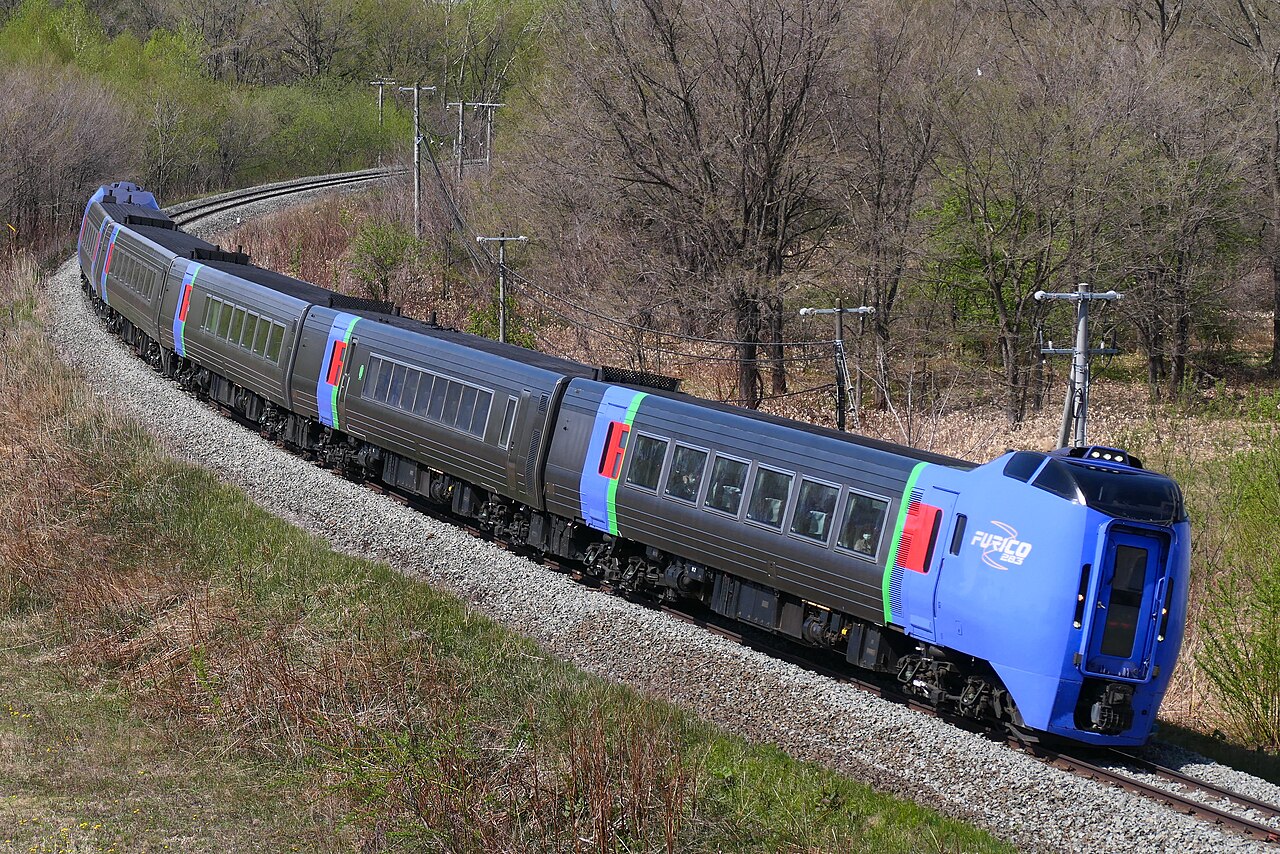
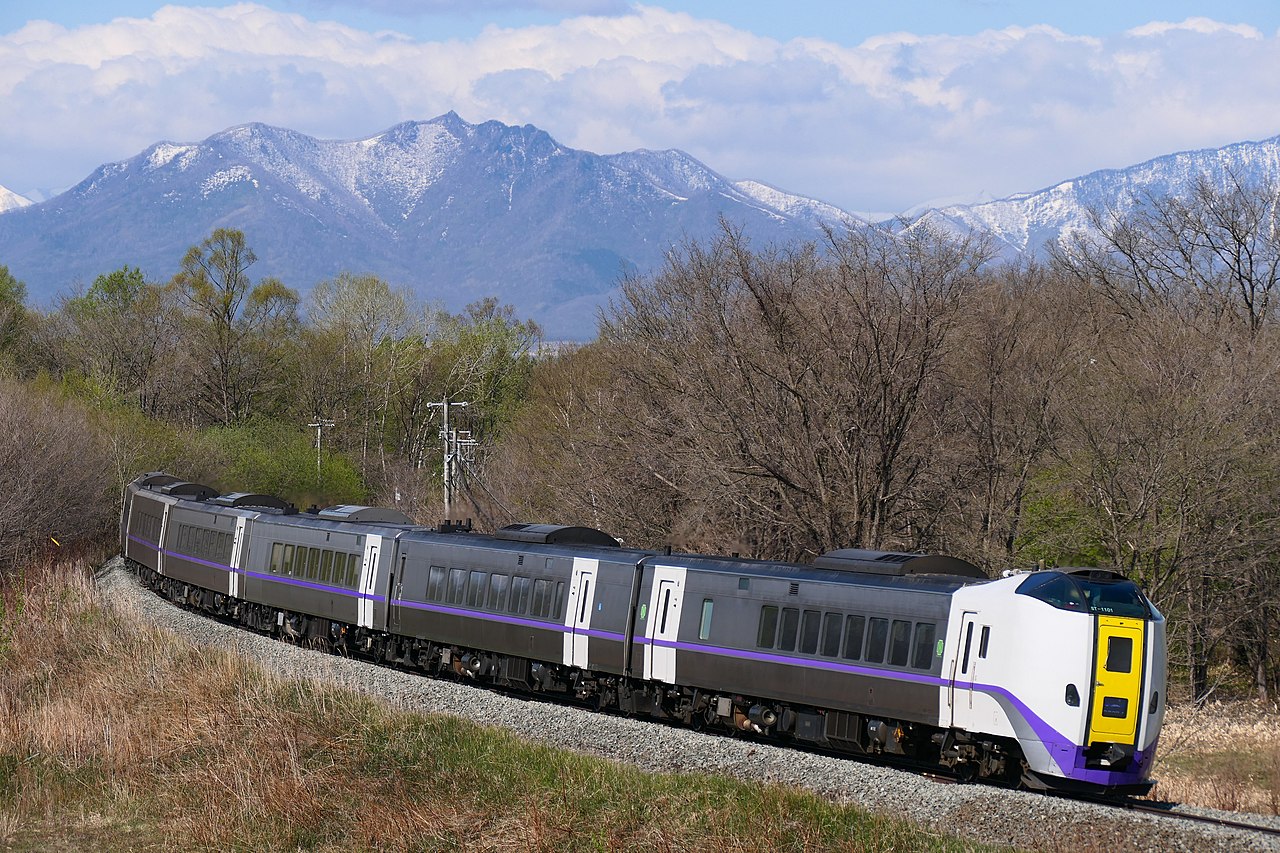
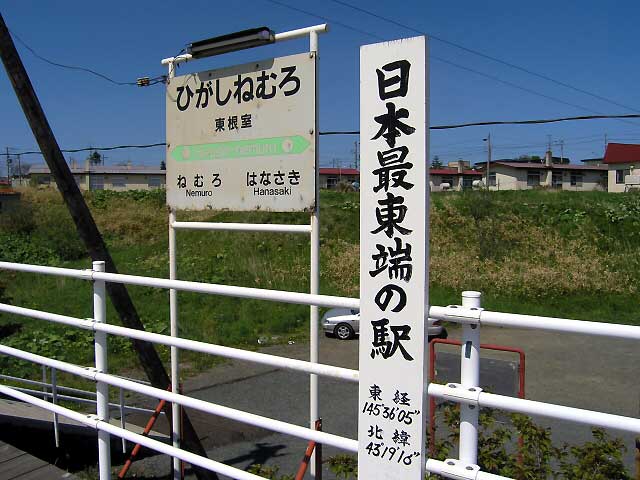
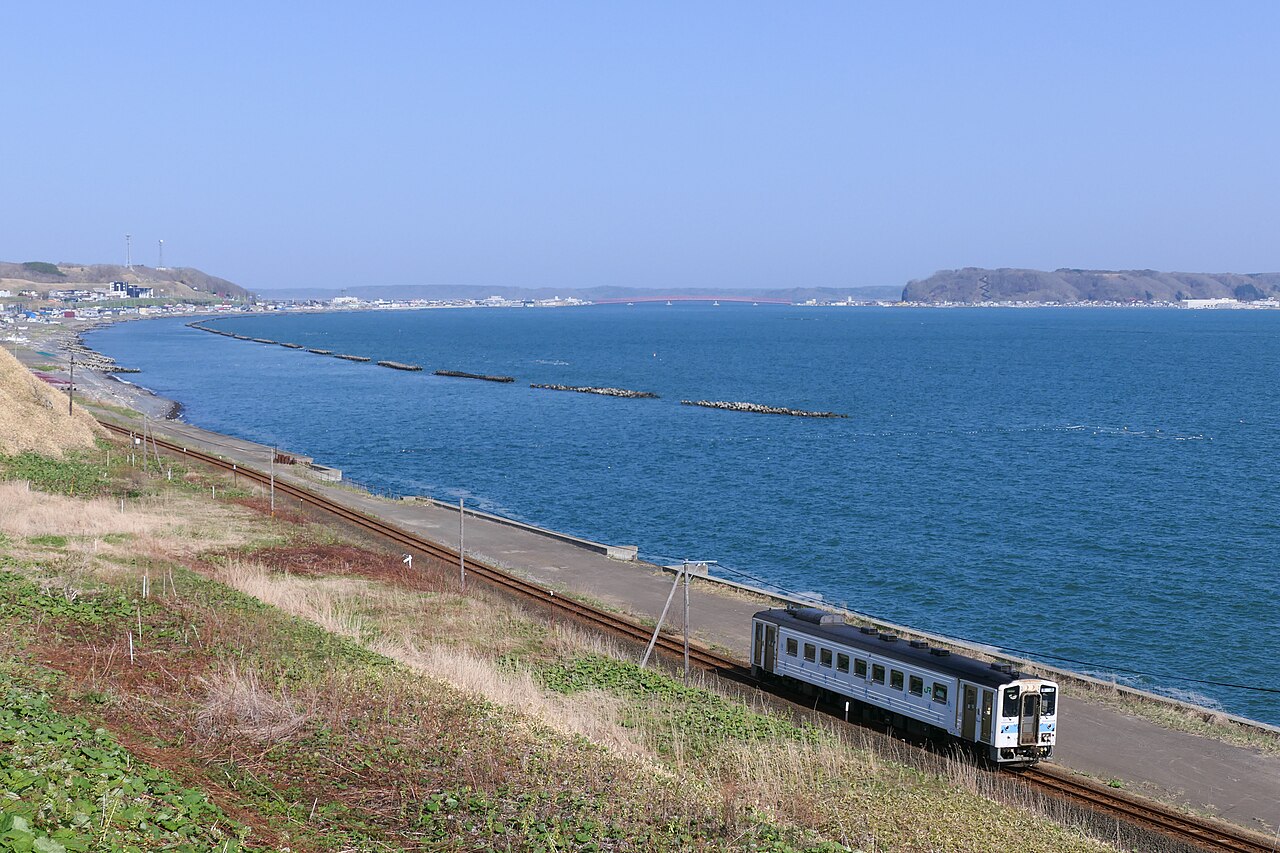
Today the Shintoku–Obihiro–Kushiro segment forms part of the trunk route between Sapporo (via the Sekishō Line) and eastern Hokkaido: the limited express Ōzora runs between Sapporo and Kushiro and the Tokachi between Sapporo and Obihiro, both routed via the Sekishō Line. The Takikawa–Furano and Kushiro–Nemuro segments are local lines; the Kushiro–Nemuro segment has carried the official nickname Hanasaki Line (花咲線, Hanasaki-sen) since 1 July 1991. As of late 2022 the Hanasaki Line saw frequent delays and cancellations caused by deer incursions. Notable incidents on the line include the derailment and overturning of the rear two cars of the limited express Ōzora No. 3 near Shoro Station on 13 April 1976, and the wind-induced derailment of the up limited express Ōzora No. 10 between Nishi-Shintoku Junction and Hironai Junction on 22 February 1994, in which 28 people were injured.
Timeline
- 19002 December: the Hokkaido Government Railway's Tokachi Line opens the Shimo-Furano (now Furano)–Shikagoe section.
- 190120 July: the Hokkaido Government Railway's Kushiro Line opens its first section, Shiranuka to the original Kushiro Station — the oldest-opened part of the present line.
- 190521 October: the Obihiro–Toshibetsu section opens, completing the Kushiro Line through to Obihiro.
- 19078 September: the Ochiai–Obihiro section opens, completing a through route across the Karikachi pass.
- 190912 October: under the state railway line-naming scheme, the Tokachi and Kushiro lines are merged into the Kushiro Line.
- 19111 July: first-class sleeping accommodation is added to the Hakodate–Kushiro train.
- 191310 November: a new 57.6 km Takikawa–Shimo-Furano line opens, moving the origin to Takikawa; the route is renamed the Kushiro Main Line and the Asahikawa–Furano section is split off as the Furano Line. EN notes the route was shortened by 53.5 km.
- 19161 April: a dining car is added to the Hakodate–Kushiro train.
- 19171 December: the line east of Kushiro opens its first section, Kushiro to Hama-Akkeshi (47.8 km).
- 19215 August: the Nishi-Wada–Nemuro section (10.2 km) opens, completing the line to Nemuro; the whole Takikawa–Nemuro route is renamed the Nemuro Main Line.
- 1966September–October: a new Ochiai–Kami-Ochiai Junction–Shintoku line opens (+28.1 km) with the 5,790 m Shin-Karikachi tunnel, bypassing the 1907 Karikachi tunnel and its 1-in-40 grades; the old line is abolished. A Kanayama–Higashi-Shikagoe realignment is also built for the Kanayama Dam.
- 19711 May: a refrigerated container express begins running between Kushiro and Tokyo.
- 19811 October: the Sekishō Line opens (Shin-Yūbari–Shintoku), becoming the main route to eastern Hokkaido; most express trains are rerouted off the Furano–Shintoku segment, triggering a steep ridership decline (4,664/day in 1980 to 654/day in 1985).
- 19871 April: JNR is privatised; JR Hokkaido takes over Takikawa–Nemuro as a Class-1 operator and JR Freight becomes a Class-2 operator over the freight sections.
- 19911 July: the Kushiro–Nemuro segment is given the official nickname Hanasaki Line. 22 October: a Nokanan–Shimanoshita realignment for the Takisato Dam opens and Takisato Station is abolished.
- 199422 February: the up limited express Ōzora No. 10 is blown off the track between Nishi-Shintoku Junction and Hironai Junction, injuring 28 people.
- 201631 August: Typhoon Lionrock rainfall damages the Higashi-Shikagoe–Kami-Ochiai Junction section; the Higashi-Shikagoe–Shintoku passenger service is replaced by a bus.
- 20241 April: the Furano–Shintoku section (81.7 km) is abolished, splitting the line in two; JR Freight abolishes Higashi-Shikagoe–Kami-Ochiai Junction and the Kami-Ochiai Junction–Shintoku stretch is absorbed into the Sekishō Line.
Sources
Facts last verified 3 June 2026.
Gallery 3 photos
Every photo for this page — tap any image to view it full-size. All from Wikimedia Commons (credit under each).