History
The oldest portions of the route trace back to two predecessor companies. The second Kyushu Railway (Kyūshū Tetsudō) opened the first stretch — Fukuoka (today Nishitetsu Fukuoka (Tenjin)) to Kurume (today Nishitetsu Kurume) — on 12 April 1924, already as a 1,435 mm-gauge, electrified, double-tracked line. The company envisioned extending south through the coal-mining city of Ōmuta and onward to Kumamoto, but after the line reached Ōmuta in 1939 the Kumamoto extension was abandoned, owing to difficulty securing a corridor and a lack of cooperation on the Kumamoto side (per the Japanese article). A separate segment, Tsubuku–Daizenji, had been opened in 1912 by the Ōkawa Railway at 1,067 mm narrow gauge; when the Kyushu Railway absorbed the Ōkawa Railway on 22 June 1937, that section was incorporated, and on 1 October 1937 the Tsubuku–Daizenji stretch was regauged to 1,435 mm while the Daizenji–Yanagawa section opened.
Construction southward proceeded in stages: Kurume–Tsubuku opened on 28 December 1932 (single-tracked), Yanagawa–Nakashima on 1 September 1938, Nakashima–Sakaemachi on 1 October 1938, and finally Sakaemachi–Ōmuta on 1 July 1939, completing the through line between Fukuoka and Ōmuta. The portion north of Nishitetsu Kurume had been double-tracked from the outset, whereas the section south of Kurume opened single-tracked for reasons of cost and was only progressively doubled over the following decades.
Wartime consolidation gave the line its modern operator. On 19 September 1942 the Kyushu Electric Tramway (Kyūshū Denki Kidō) merged the Kyushu Railway together with several other Fukuoka-area railway companies, and on 22 September 1942 the Kyushu Electric Tramway was renamed Nishi-Nippon Railroad, the line becoming its Ōmuta Line. Postwar development concentrated on capacity and speed. Double-tracking advanced in steps — Nishitetsu Kurume–Shikenjōmae in November 1951, Kuranaga–Nishitetsu Ginsui on 20 March 1960, Sakaemachi–Ōmuta on 21 June 1961, Hiraki–Kuranaga on 20 November 1965, and Mizuma–Ōmizo on 15 January 1997 — and centralised traffic control (CTC) was commissioned across the whole line on 10 June 1974. The limited express maximum speed, raised in stages over the postwar period, reached 100 km/h, and on 16 February 2008 the line's maximum speed was increased from 100 km/h to 110 km/h, its present ceiling.
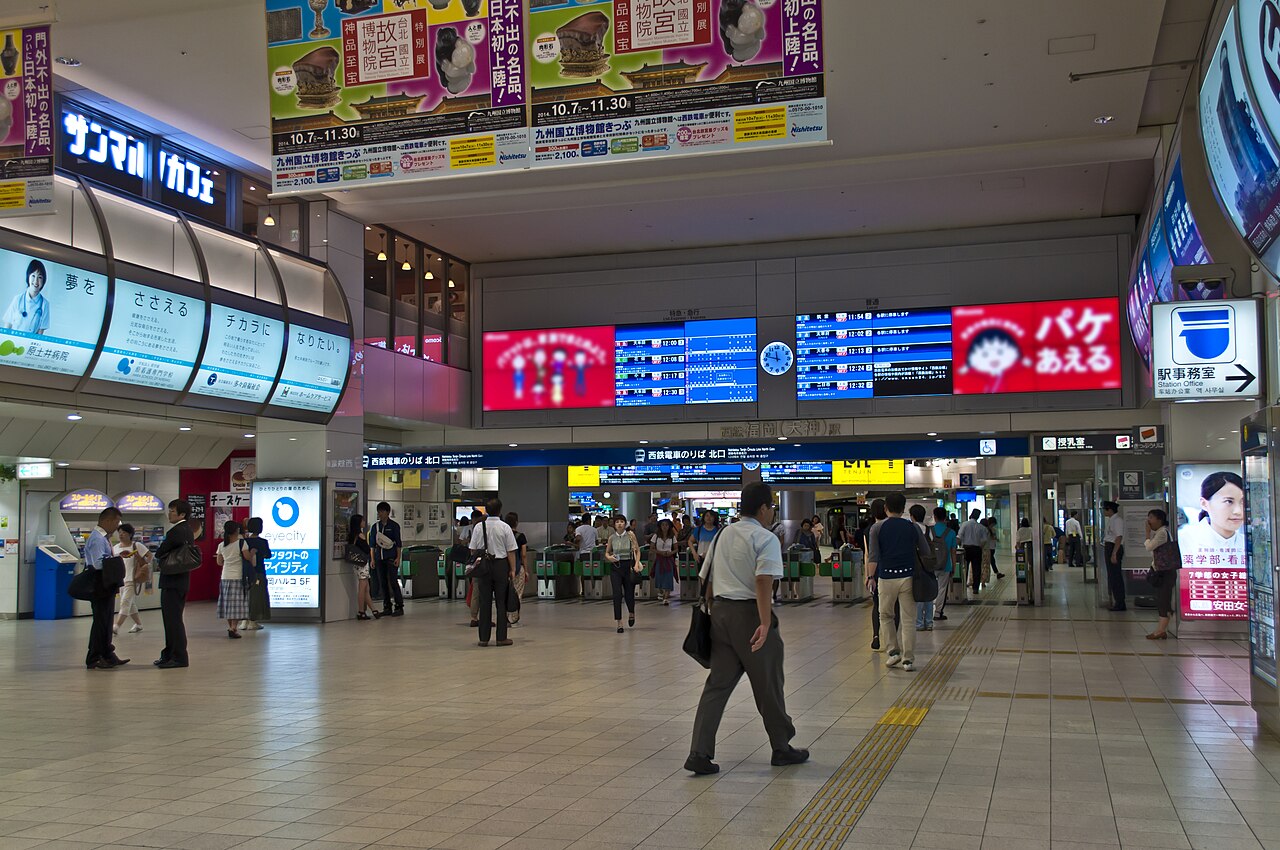
On 1 January 2001 the line's proper name was changed from the Ōmuta Line to the Tenjin Ōmuta Line, and at the same time Nishitetsu Fukuoka Station was renamed Nishitetsu Fukuoka (Tenjin) Station — the parenthetical added to make clear that the terminal sits in the Tenjin district of downtown Fukuoka. Among the stations of Japan's major private railways (ōte shitetsu), the Japanese article notes that Nishitetsu Fukuoka (Tenjin) is the westernmost and Ōmuta the southernmost.
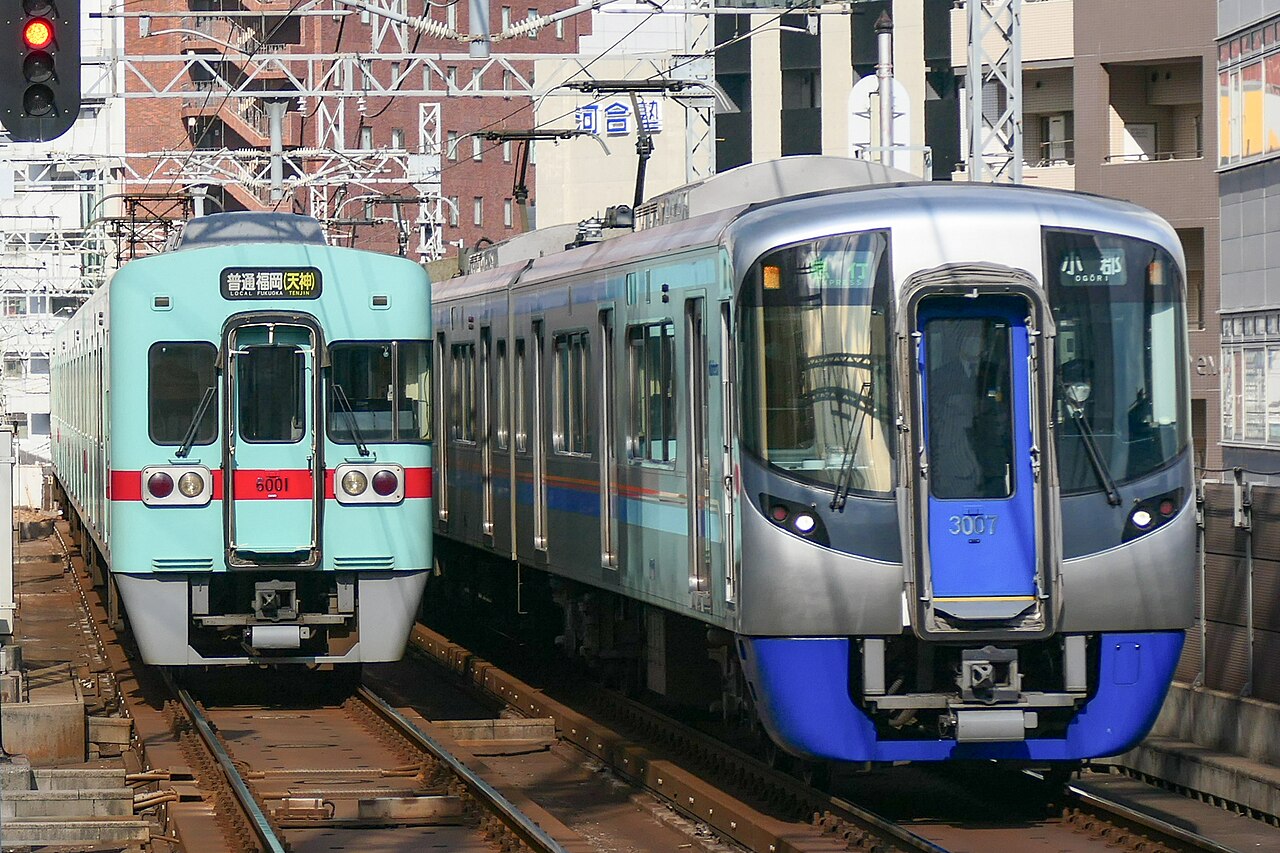
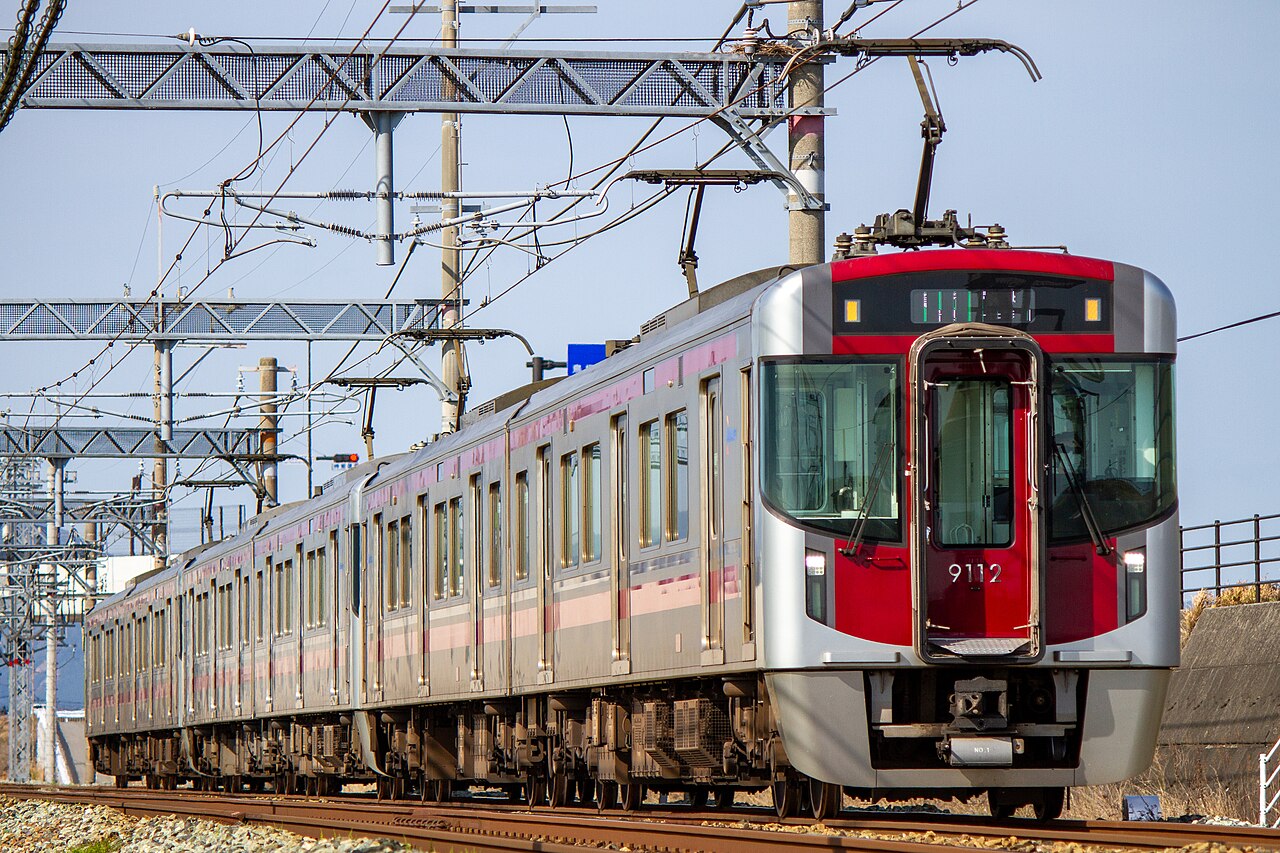
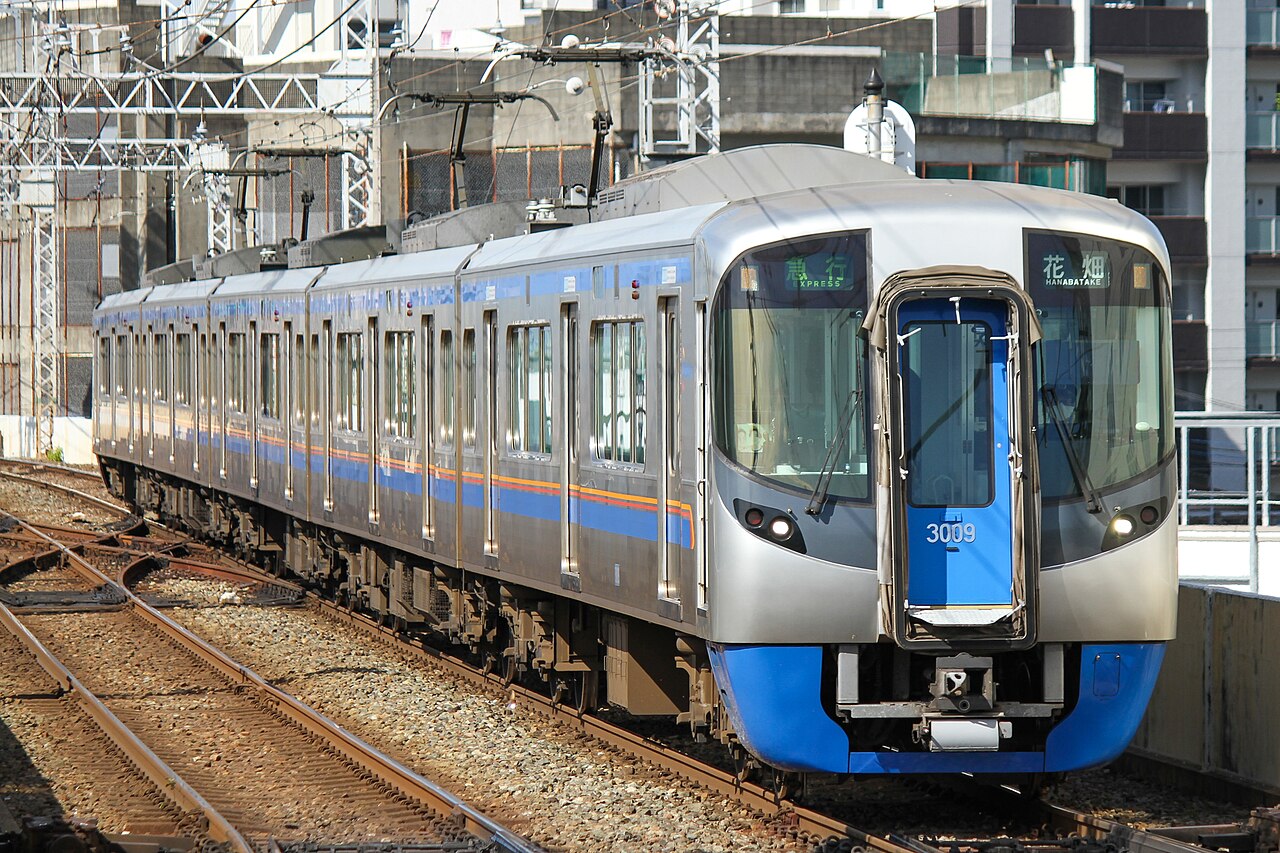
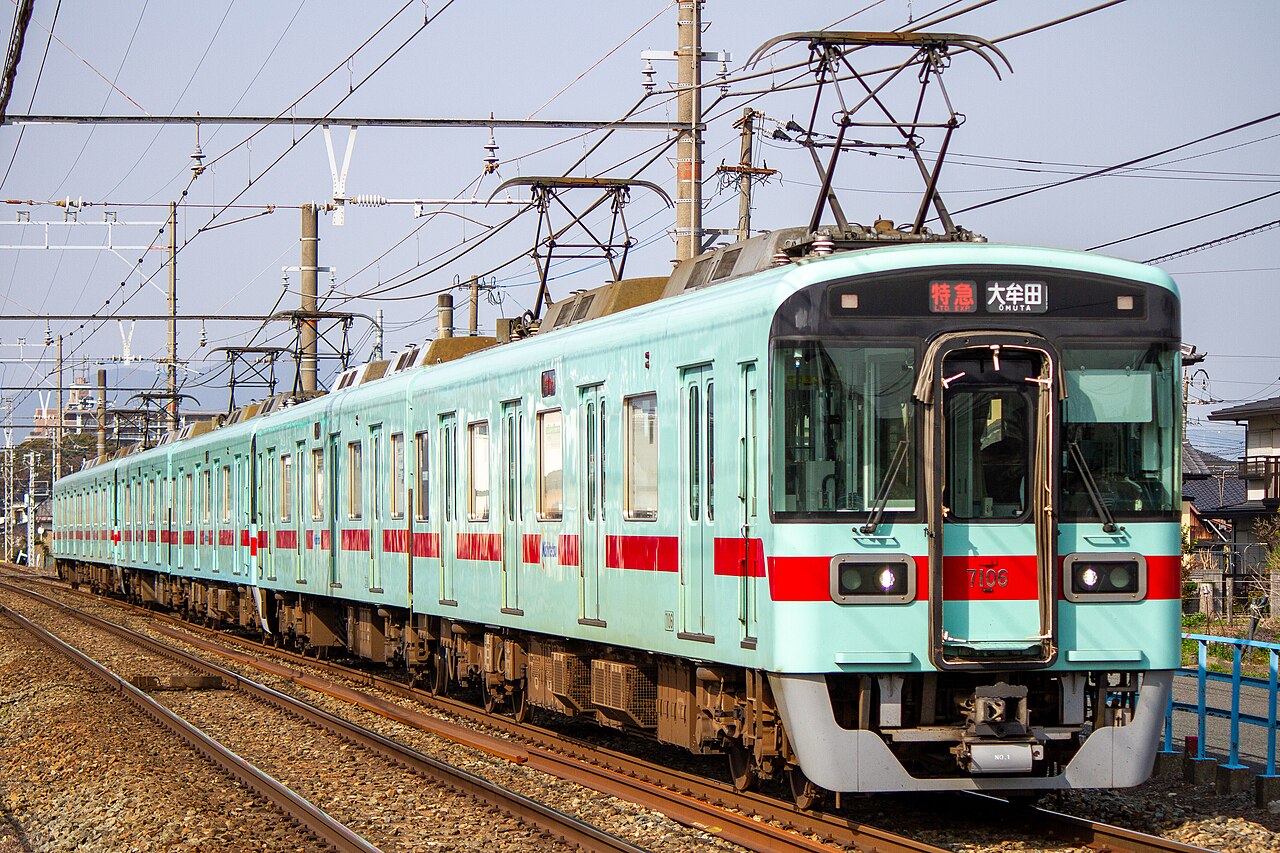
Today Nishitetsu operates Local, Express (kyūkō) and Limited Express (tokkyū) services on the line, with Limited Expresses running between Nishitetsu Fukuoka (Tenjin) and Ōmuta at two per hour per direction in the daytime. The Dazaifu Line and the Amagi Line branch from it as feeders, and some Local services run through onto the Amagi Line. New three- and two-car 9000 series electric multiple units were introduced on the line from March 2017. Recent infrastructure work has included grade-separation projects: the Zasshonokuma–Shimoōri section was elevated on 28 August 2022, removing a number of level crossings, and a new station, Sakuranamiki, opened on 16 March 2024.
One notable safety event is recorded: on 15 May 2018 an inbound Local train departed Shirakibaru Station with a door not fully closed and continued in that state as far as Zasshonokuma; the Japan Transport Safety Board treated it as a serious incident, and there were no injuries (per the Japanese article).
Timeline
- 1912The Tsubuku–Daizenji section is opened by the Ōkawa Railway at 1,067 mm narrow gauge (later incorporated into this line).
- 192412 April: Fukuoka (now Nishitetsu Fukuoka (Tenjin)) – Kurume (now Nishitetsu Kurume) opens, built by the second Kyushu Railway as a 1,435 mm-gauge, electrified, double-tracked line.
- 193228 December: Kurume – Tsubuku opens, single-tracked.
- 193722 June: the Ōkawa Railway is merged into the Kyushu Railway. 1 October: the ex-Ōkawa Tsubuku–Daizenji section is regauged from 1,067 mm to 1,435 mm and Daizenji – Yanagawa opens.
- 19381 September: Yanagawa – Nakashima opens. 1 October: Nakashima – Sakaemachi opens.
- 19391 July: Sakaemachi – Ōmuta opens, completing the through Fukuoka–Ōmuta line.
- 194219 September: the Kyushu Electric Tramway merges the Kyushu Railway and other Fukuoka-area companies. 22 September: it is renamed Nishi-Nippon Railroad, and the line becomes its Ōmuta Line.
- 1951November: Nishitetsu Kurume – Shikenjōmae double-tracked.
- 196020 March: Kuranaga – Nishitetsu Ginsui double-tracked.
- 196121 June: Sakaemachi – Ōmuta double-tracked.
- 196520 November: Hiraki – Kuranaga double-tracked.
- 197410 June: centralised traffic control (CTC) commissioned on the entire line.
- 199715 January: Mizuma – Ōmizo double-tracked.
- 20011 January: the line is renamed from the Ōmuta Line to the Tenjin Ōmuta Line; Nishitetsu Fukuoka Station is renamed Nishitetsu Fukuoka (Tenjin) Station.
- 200816 February: the maximum speed on the line is increased from 100 km/h to 110 km/h.
- 2017March: new three- and two-car 9000 series EMUs introduced on the line.
- 201815 May: an inbound Local train departs Shirakibaru with a door not fully closed and runs to Zasshonokuma; treated as a serious incident by the Japan Transport Safety Board, with no injuries.
- 202228 August: the Zasshonokuma – Shimoōri section is elevated, removing several level crossings.
- 202416 March: a new station, Sakuranamiki, opens.
Sources
Facts last verified 3 June 2026.
Gallery 6 photos
Every photo for this page — tap any image to view it full-size. All from Wikimedia Commons (credit under each).